Đọc phiên bản tiếng Việt tại đây.
You have worked across numerous materials – stone, iron, wood, etc. – yet have chosen to remain closely bound to ceramics as an inseparable part of your artistic identity. What affinities do you find between the nature of earth and fire and the reflections embedded within your practice?
For me, ceramic practice contains within it the logic of the five elements. Water softens clay, allowing the material to absorb and retain the memory of every gesture. Ceramic glaze carries wood ash and metallic oxides, while fire assumes the role of tempering, fusing and binding all components into a unified whole. That interplay becomes a dialogue between the quieter depths of the inner self and the violent frictions of lived experience – a place where fragility and inevitability meet to give rise to a final form.
Large-scale ceramic sculpture presents enormous challenges. How did you solve that complex technical problem in your work?
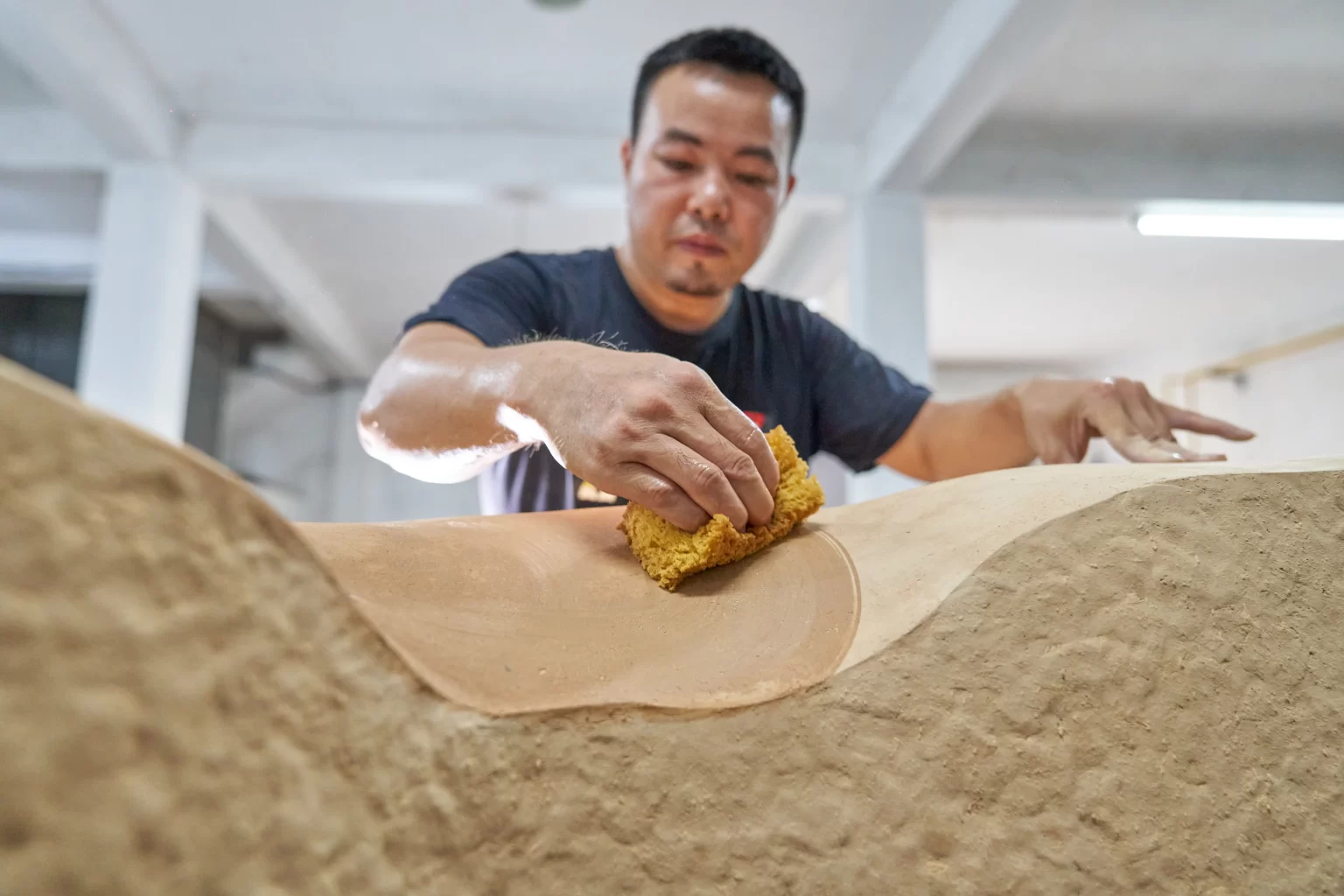
When dealing with monumental works, I invariably rely on 3D modeling to calculate their structure. Every detail, from the kiln’s dimensions to the work’s load-bearing capacity during gas firing, is documented. With sculptures standing two to three metres high, materials such as iron, aluminium or bronze would be easier to handle, since mechanical systems already exist to assist with forming; meanwhile, ceramics are subject to the uncompromising constraints of physics and chemistry throughout the firing process. This forces the artist to apply technology and technical knowledge with absolute precision.
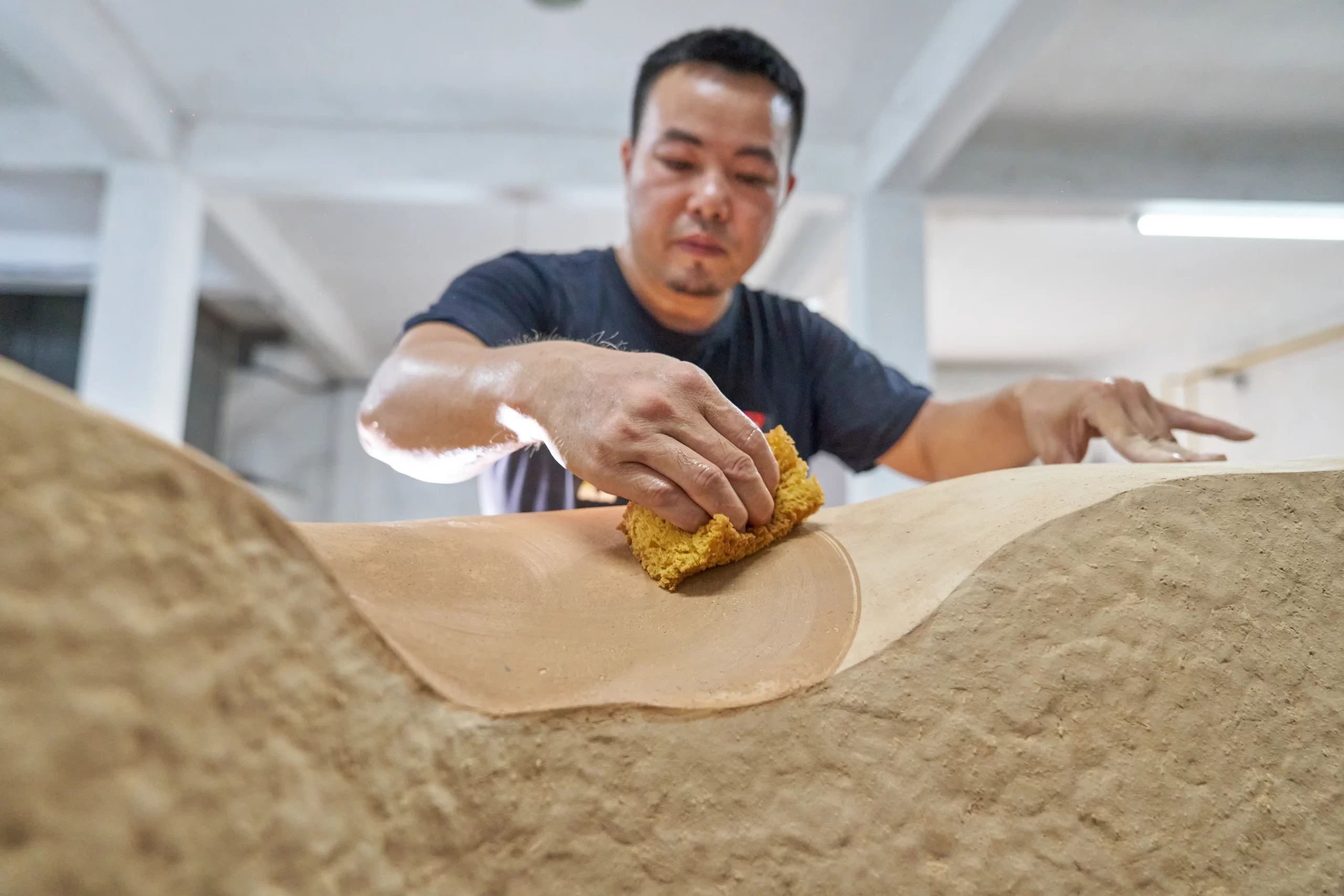
I often have to revise the design repeatedly before and throughout the making process, ensuring that once the form begins to take shape, the clay still retains its essential material properties. It is a process of negotiation and considerable trade-off: making, accumulating experience, and teaching myself at the same time. Through that process, I have distilled a body of knowledge that I believe can be passed on to the next generation.
Looking back from your earliest exhibitions to the present, how has the conceptual thread of your personal practice shifted over time?
Looking at the broader trajectory of my practice, it is rooted in reflections on nature – seeds, sprouts, and the cycle of creation, growth, and decay. In the early stages, my works leaned toward expression and guiding the viewer. Over time, I have increasingly gravitated towards a reduction of form, allowing the concept to settle within the very structure of the work itself. The shift lies not in a change of subject matter, but in a transformation of approach: from shaping forms to constructing experiences, from explanation to suggestion. The works therefore become quieter, yet also more open.
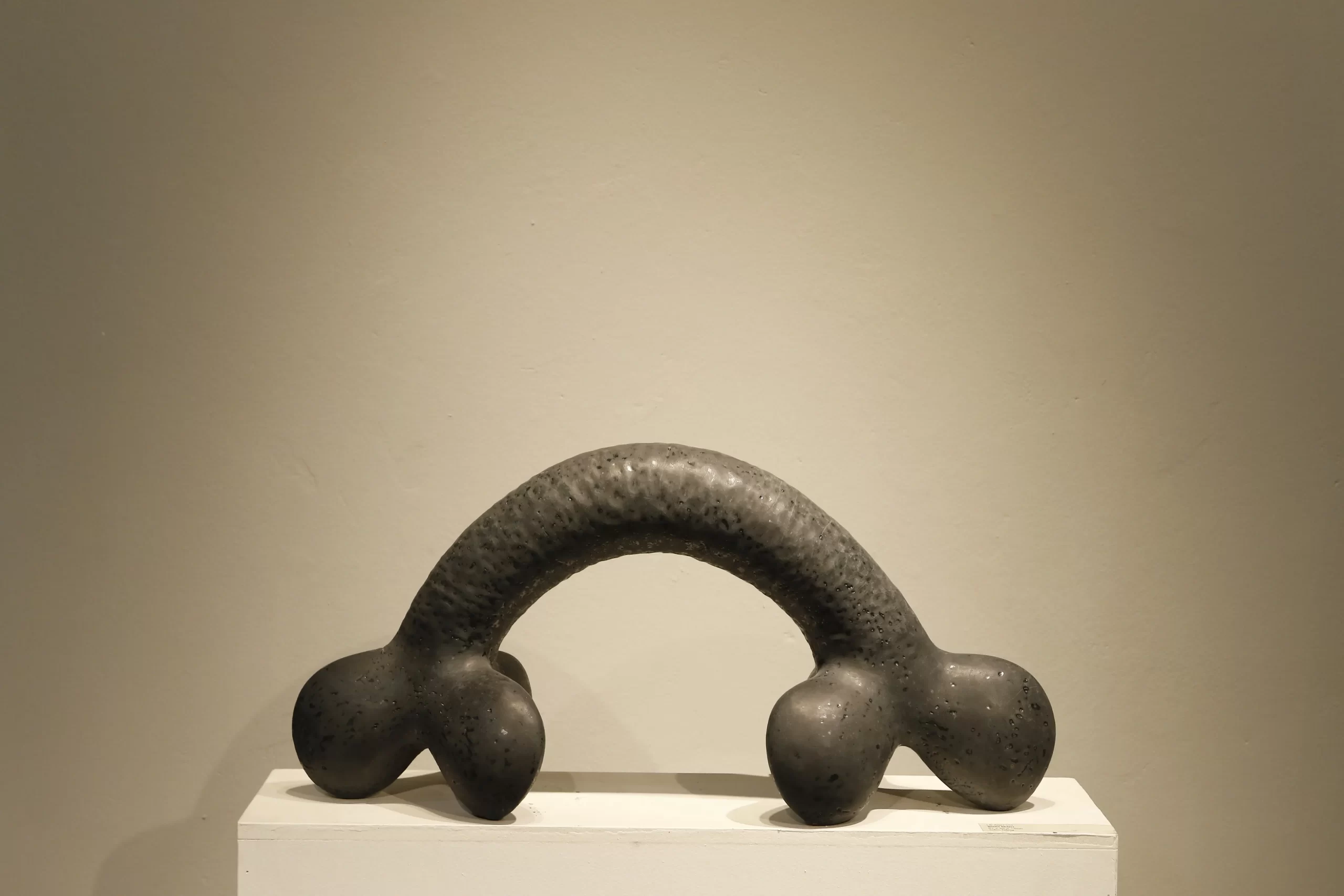
Take, for instance, the work “Inside the Earth, Under the Skin” currently installed in the grounds of the Flamingo Museum of Contemporary Art: the removal of detail here is a process of distillation aimed at articulating the deepest essence of form and materiality. When form is reduced to its barest state, material exceeds its role as a mere enclosing shell; it begins to operate as a living symbol through which interiority and the physical world continuously mirror and act upon one another. In other words, the work is at once an inward journey and a means by which the artist redefines material through a distinctly personal sculptural language.
You previously mentioned the systemic lack of an academic theoretical foundation for ceramics in Vietnam. More specifically, what does this technical gap consist of?
At art schools in Vietnam, ceramics has never really been taught as an independent discipline with a coherent academic framework in the way woodblock printmaking or silk painting are. Most ceramic artists in Vietnam grow up, train, and enter the profession through self-directed trial and error – learning by experimentation, then extracting lessons from failure, rather than working against an established body of standardised reference material.
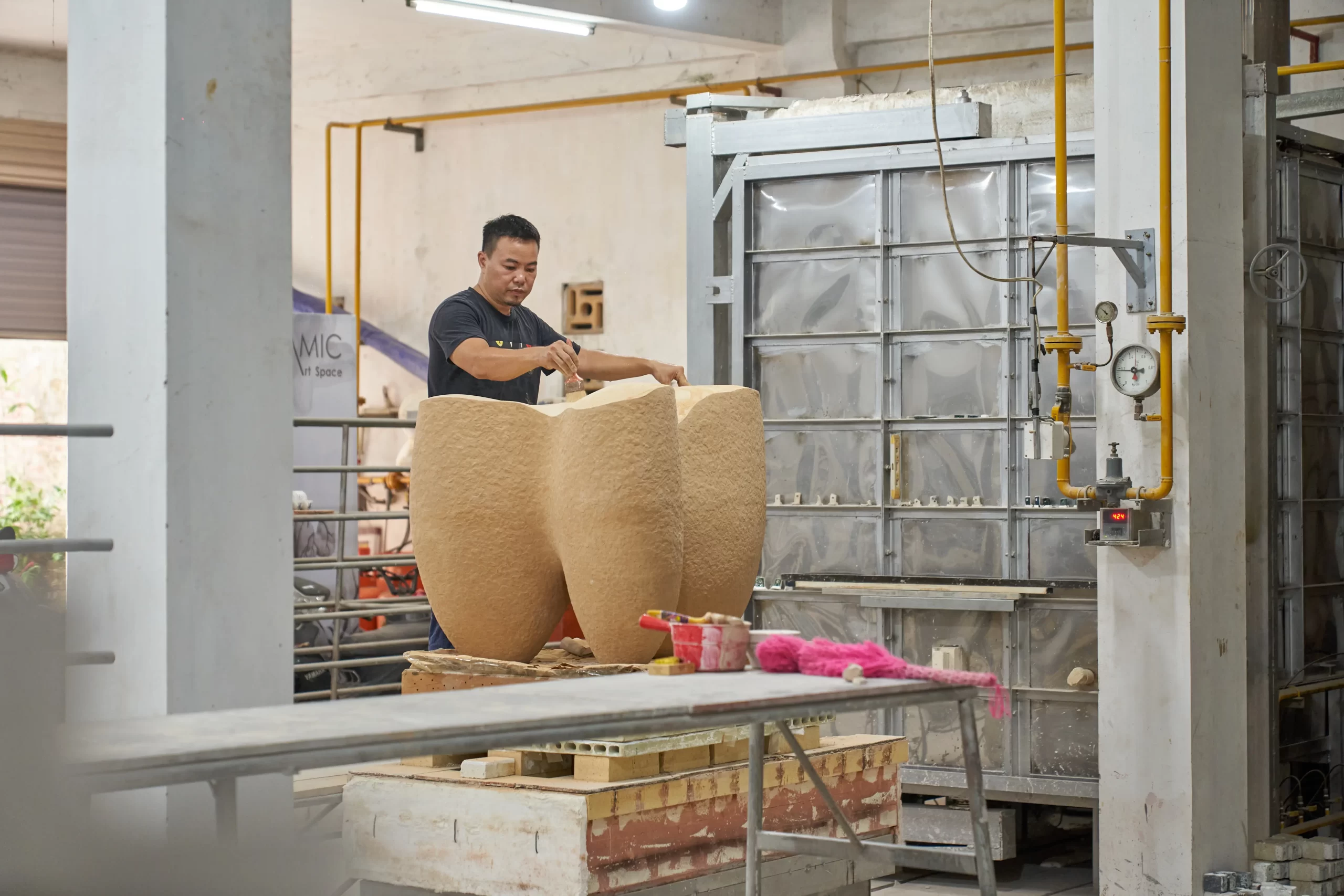
Specialised research into ceramic techniques remains scarce, with almost no rigorous scientific documentation. Abroad, highly technical programmes teach clay treatment under specific conditions and precise oxide ratios for glazes. Locally, this knowledge gap remains largely unaddressed. I myself am still on a journey to master this medium – from firing to form-making – to achieve my desired results. Together with my collaborators, we hope to systematise our records into an “encyclopaedia” for future generations, contributing to closing the gap currently facing Vietnam’s ceramic art community.
Alongside your artistic practice, you also founded Bat Trang Ceramic Art Space. What was your core objective in creating this space?
From the outset, Bat Trang Ceramic Art Space pursued two aims simultaneously: to build a shared working environment for artists engaging with ceramic practice and experience, and, through those very practices, to open a natural pathway for ceramics into the terrain of contemporary art. At its core was the desire to create a space sufficiently open for both ambitions to coexist and evolve. Within it, artists can experiment, enter into dialogue, and push the limits of the material, enabling ceramics to move beyond more conventional modes of approach.
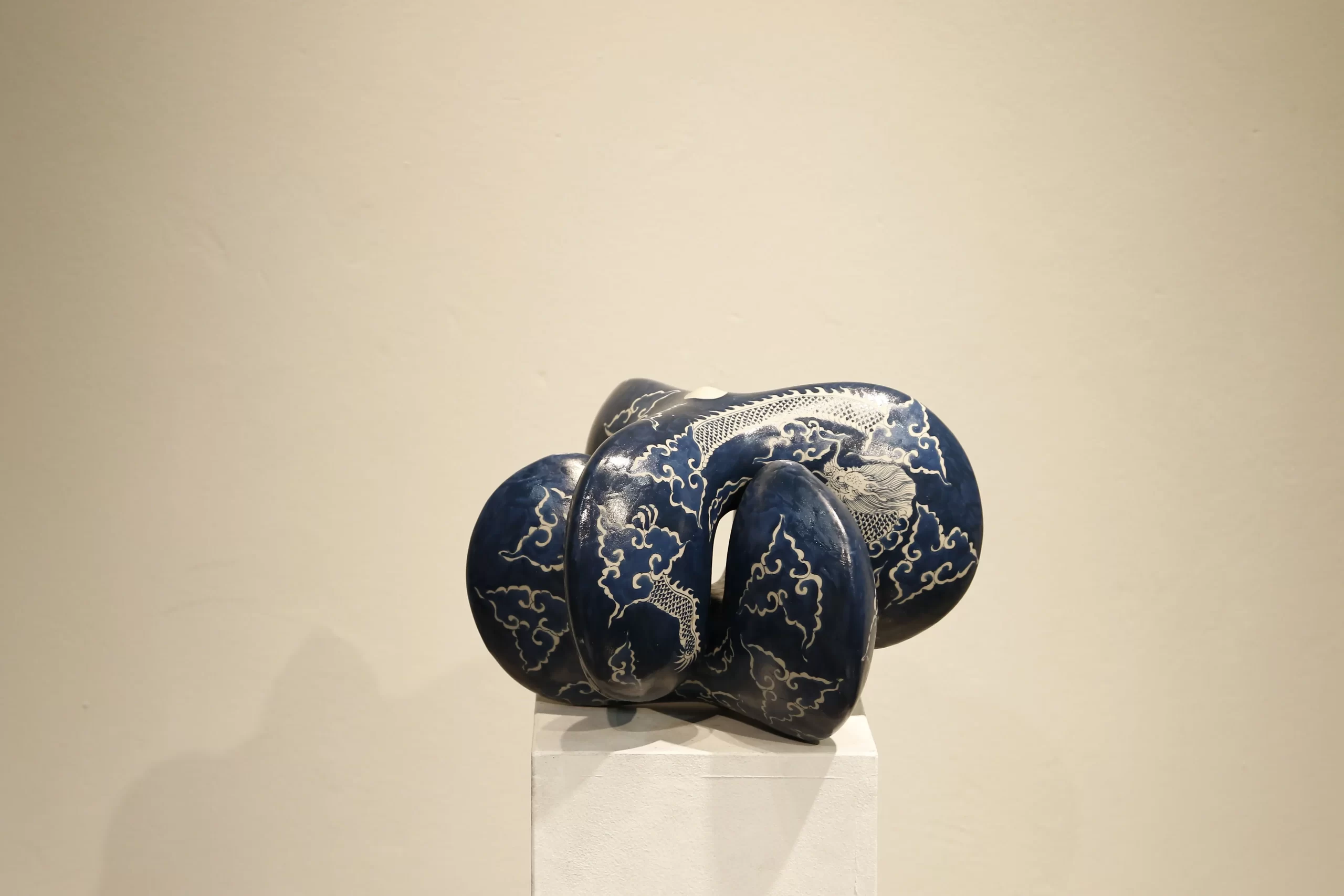
As someone born into the Bat Trang ceramic tradition, how have you orchestrated this endeavour? What advantages does such a space offer to artists in their creative practice?
For me, facilitation does not mean prescribing what artists ought to do; rather, it means keeping the space open so that it can function as a site of experimentation and practice. My role is simply to establish the foundational conditions – kilns, materials, workshops, alongside conversations and exchanges around the craft – while each artist must discover their own path. Most important is the maintenance of a shared ethos: respect for the material, acceptance of risk, and resistance to rushing towards results. For artists devoted to ceramics, this is a long journey.
The advantage of such a space lies in its ability to shorten the distance between idea and practice. Artists can experiment, fail, and begin again within a familiar ecosystem that offers technical exchange, practical support, and a context in which the work can be evaluated. Ceramics inherently demand time and patience. Within a shared environment, that process becomes more continuous and more charged with energy, allowing ideas not to fracture or dissipate, but to be sustained and carried through to completion.
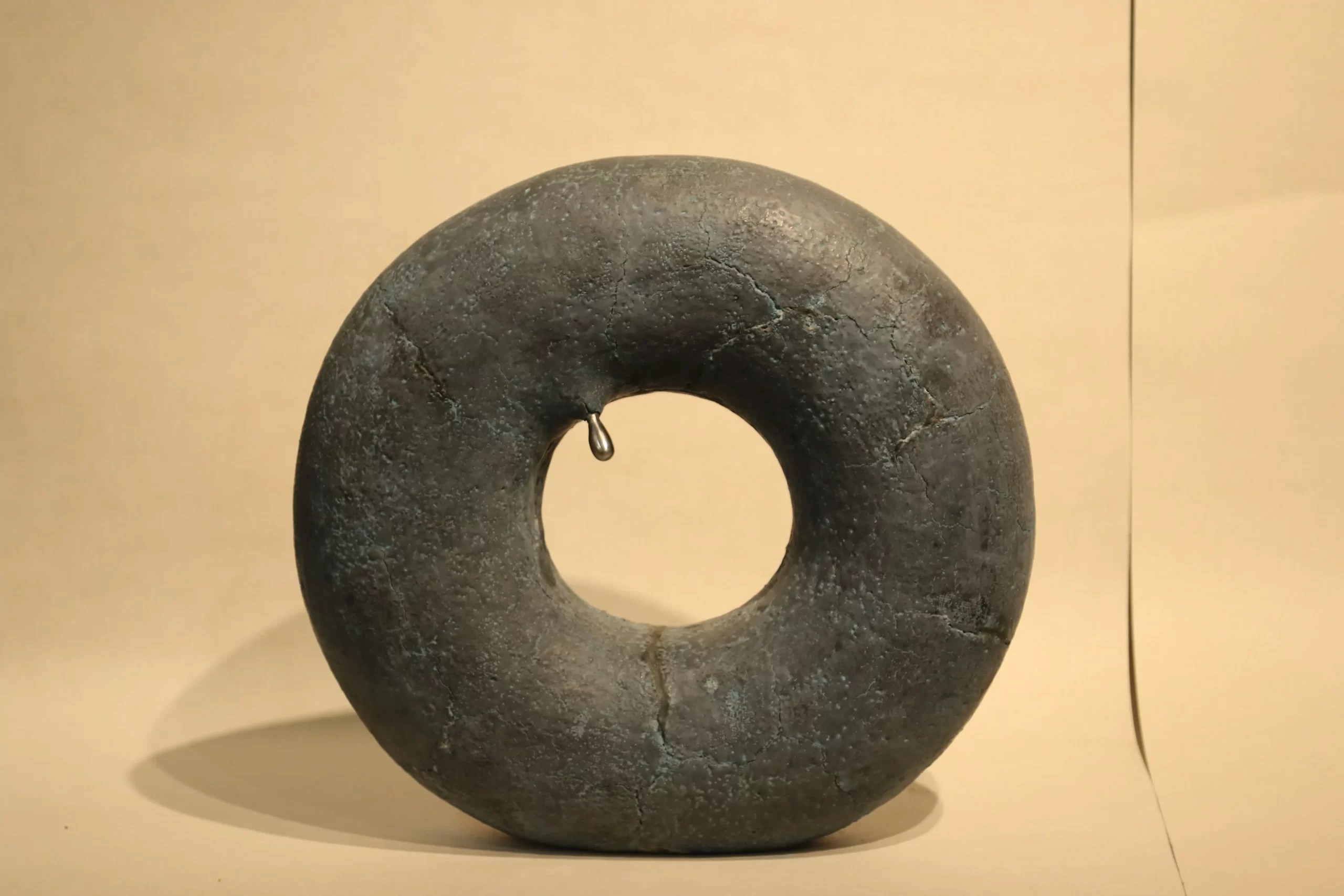
Ceramics, by nature, involve considerable risk and unpredictability, particularly during the firing process. How does Bat Trang Ceramic Art Space help artists with limited experience in ceramics harness the contingencies of temperature and firing?
Bat Trang Ceramic Art Space provides artists with access to a complete experimental environment – from instruction in foundational techniques such as forming and glazing, to firing support and encouragement to observe each kiln cycle firsthand. Through this process, artists gradually familiarise themselves with the material and discover concrete approaches suited to their own practice, while also recognising which stages or dimensions of ceramics they may wish to pursue more deeply. From there, each individual develops a mode of expression aligned with their own artistic intentions and visual language.
Thank you for the conversation.
Words: Tâm Phạm
Translation: Art Nation