What is your vision when putting a combination of 3 artists and 1 gallery together for each rotation? Do they need to project a similar energy and practice, or is a contrasting approach the way forward?
Each iteration within Arte Fare attempts to maximise community, and to answer whether this model might be a viable, sustainable path for arts workers. The formula invites one gallery or alternative space, plus one foreign artist, and two artists based in Vietnam. That blueprint allowed for an immediate, natural dialogue to occur, without having to force the issue. I deliberately grouped exhibitors who might complement one another, in terms of this potential. This could mean placing an emerging conceptual artist with a more seasoned artist, a Vietnamese painter with a New York painter, or scheduling a particular gallery with a specific sculptor who might have potential future interest in one another. Generally speaking, I tried to select the best work I could access at the time.
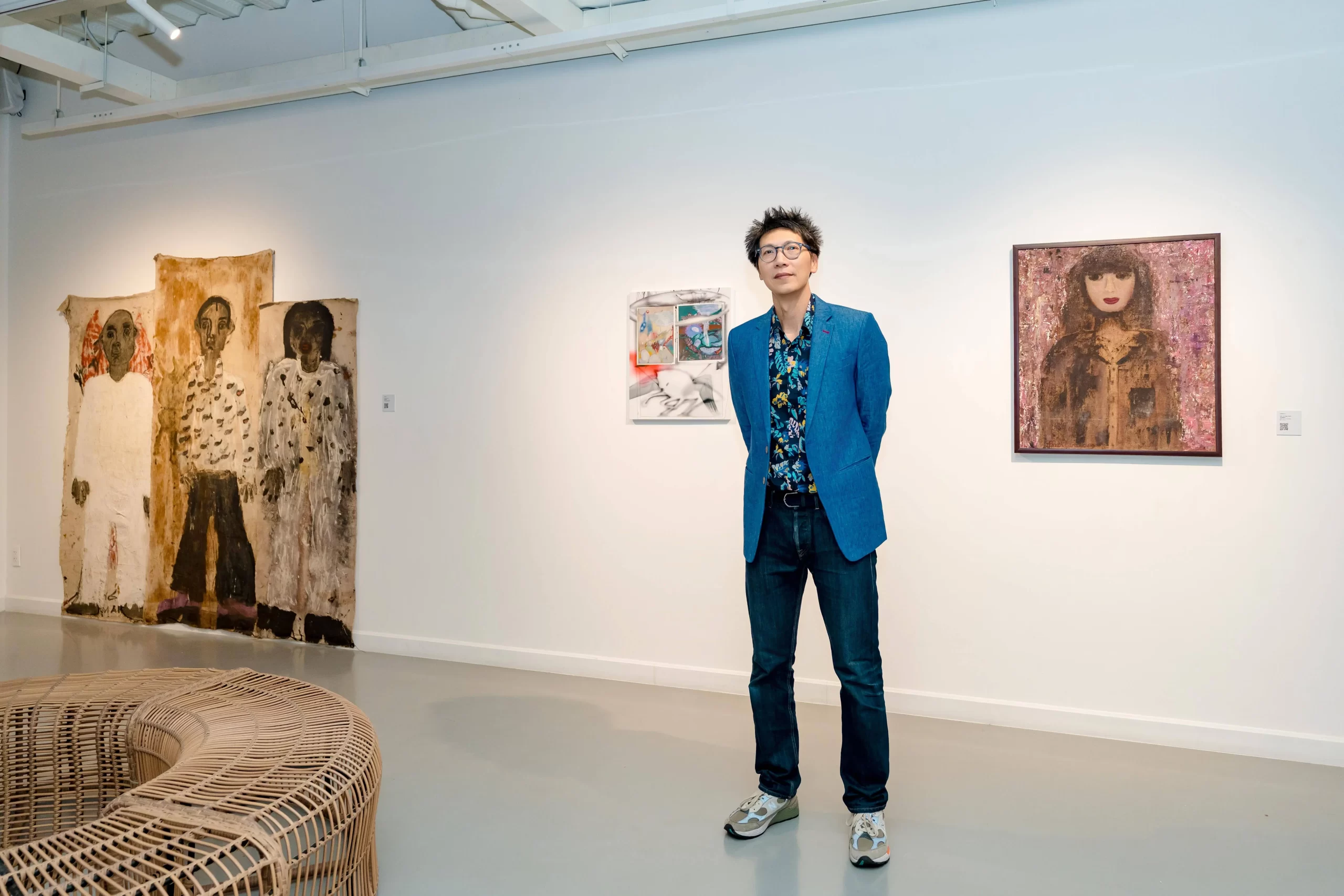
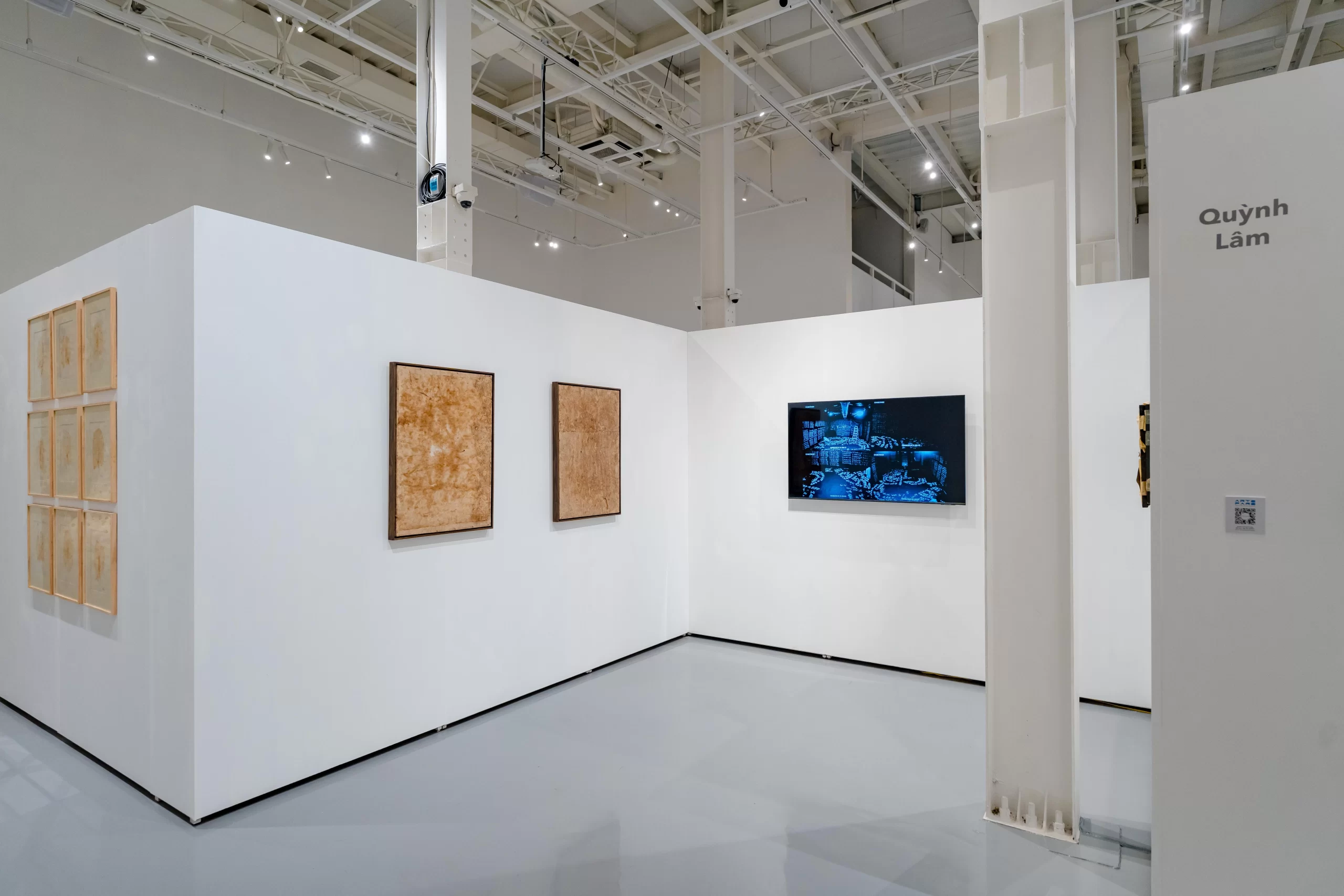
Across successive iterations, some art spaces and collectives have also taken quite different approaches. Is there a theoretical framework or set of participation criteria that they need to meet?
Besides individual artists doing solo presentations, the invited galleries and collectives were given more or less free rein to do as they pleased with their booths. Some chose solo presentations as well, while others went with group shows. Because I invited them, I already felt comfortable that I could trust them to make an interesting presentation based on a track record of the quality of artists they’ve worked with. So there was no strict theoretical framework that was applied to them. Beyond that, part of the participation criteria asked exhibitors to be in their booths a reasonable number of hours each of the four days, to engage directly with visitors. This ended up being an experiment in itself, and quite a few exhibitors were not as present daily as I had hoped. I did my best to compensate in their absence, but that direct investment needs to be prioritised next time. I definitely believe that artists missed out on important conversations and connections by relaxing this time investment.
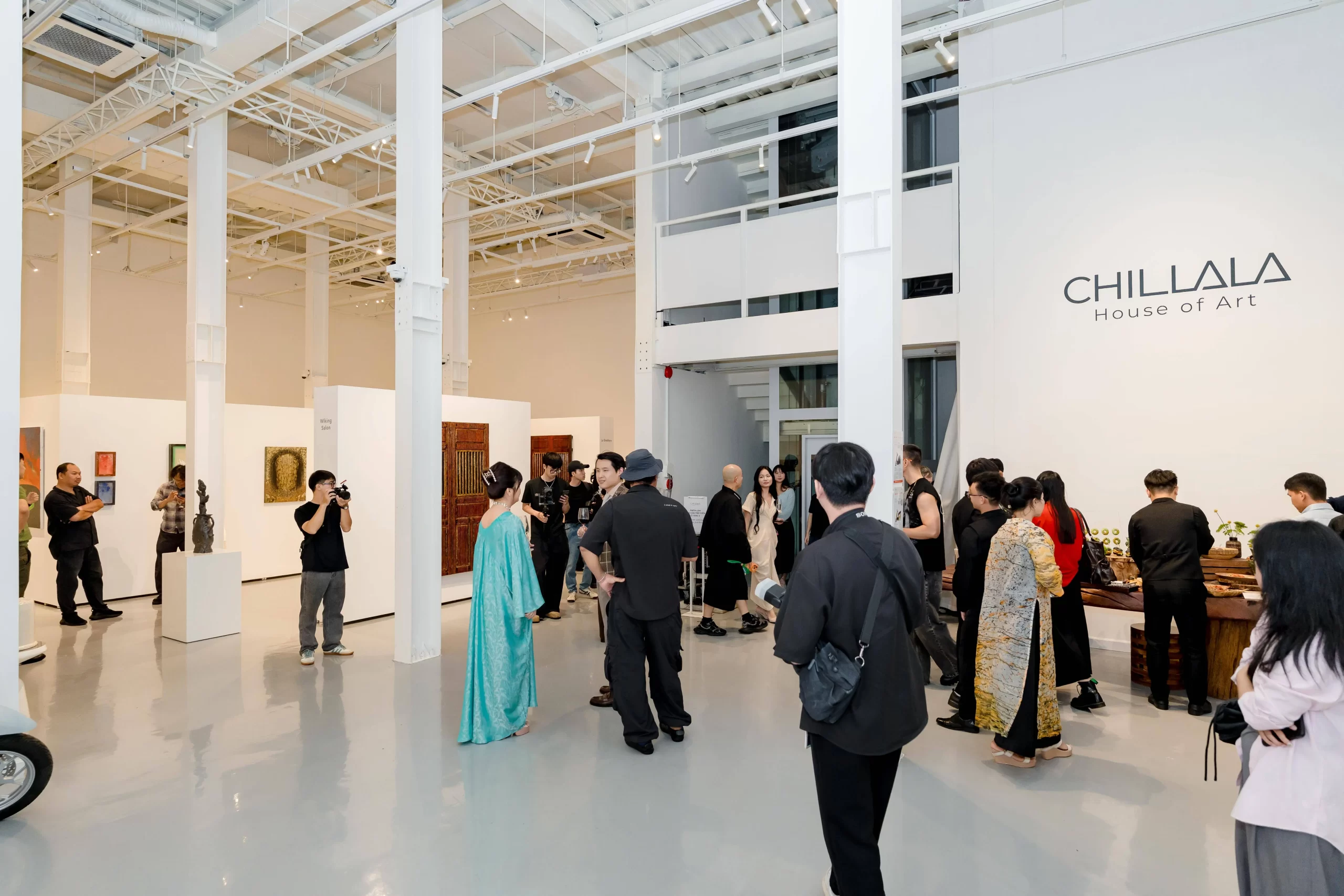
As the fair director, what expectations did you have when you handed over the “booth grammar” to artists? How did you balance artists’ creativity within their spatial booth with Arte Fare’s overall direction?
Expectations just meant that I was open to the artists and exhibitors trying different things, not only in how they handled the installation of works in their booths, but also how they might deal with the public differently from how a seasoned gallerist might. A very young artist might have no clue, and that could be an advantage, while others were more strict and some more free-wheeling. Their own vision was key, and my role was mainly to accommodate their plans. My curatorial input arose when I felt the exhibitor needed a stronger selection of works, or when their editing choices might be reconsidered. I made it clear that I would advise them as necessary, to maintain a curatorial presence that I feel most art fairs omit, to negative effect. Whether they took seriously what I had to say was purely up to them. That independence is important, and even if I had an idea what each was showing, I left the door fairly open to discovery and being surprised.
For some artworks that could not be hung on the wall but had different spatial requirements, how did you manage the installation process to maintain the artistic idea in a limited space?
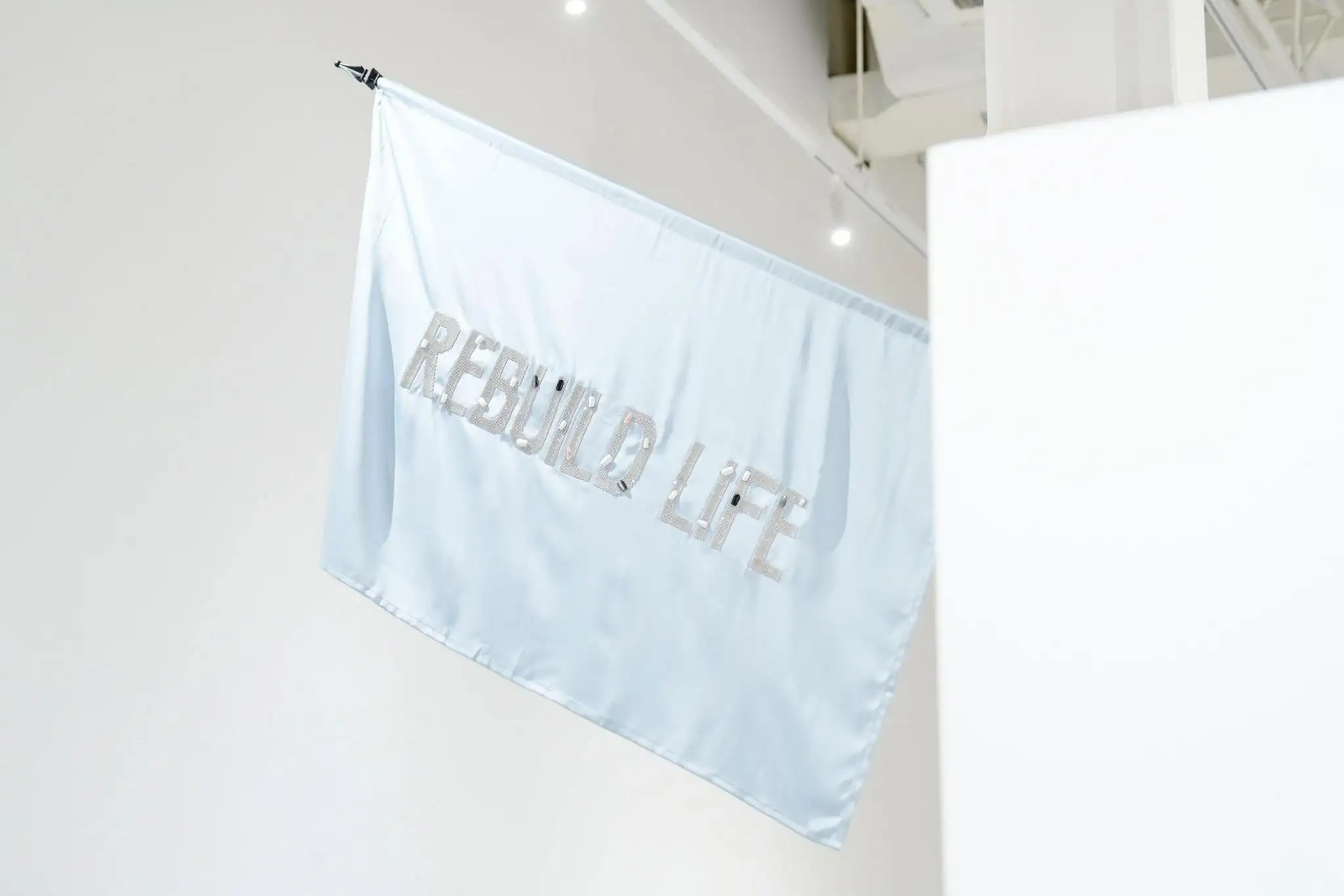
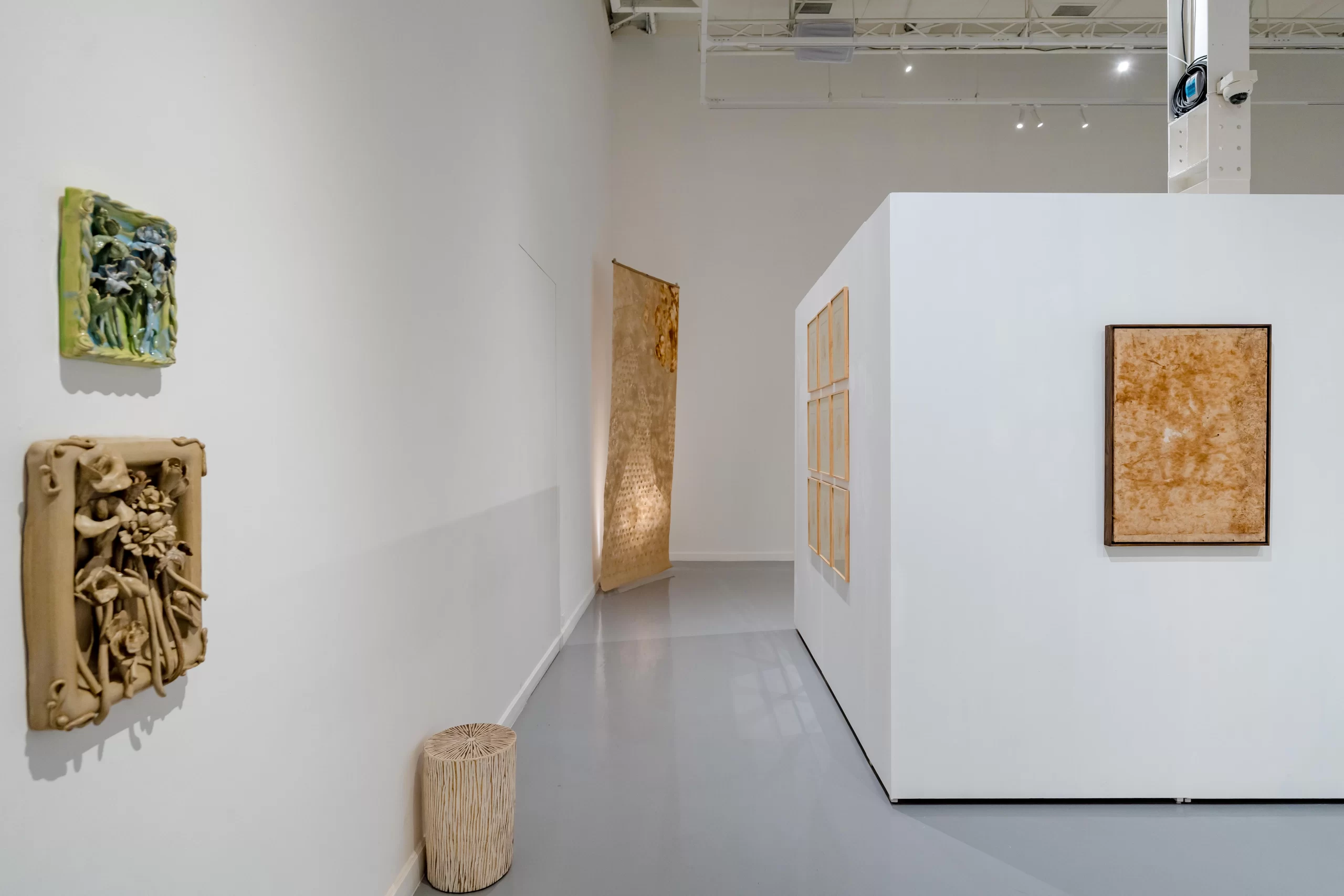
To be honest, that was never a real problem. I already knew that the size of the booth and its layout were very flexible to work with. If an artist miscalculated and brought more works than could fit, we just reduced the number shown. Solutions were always available. Le Quy Tong wanted to hang a flag piece that would rise above the sight line of his booth and the works inside it without intruding visually on the adjacent booths. As it turned out, the obstructive column in his booth had the perfect, ready-made spot for mounting the flagpole. Chinh Ba’s paper work, nearly three meters tall, had to be suspended from the ceiling, outside the booth itself and past the perimeter I preferred to keep – for the post-rotation group show. But adapting and accommodating are the name of the game.
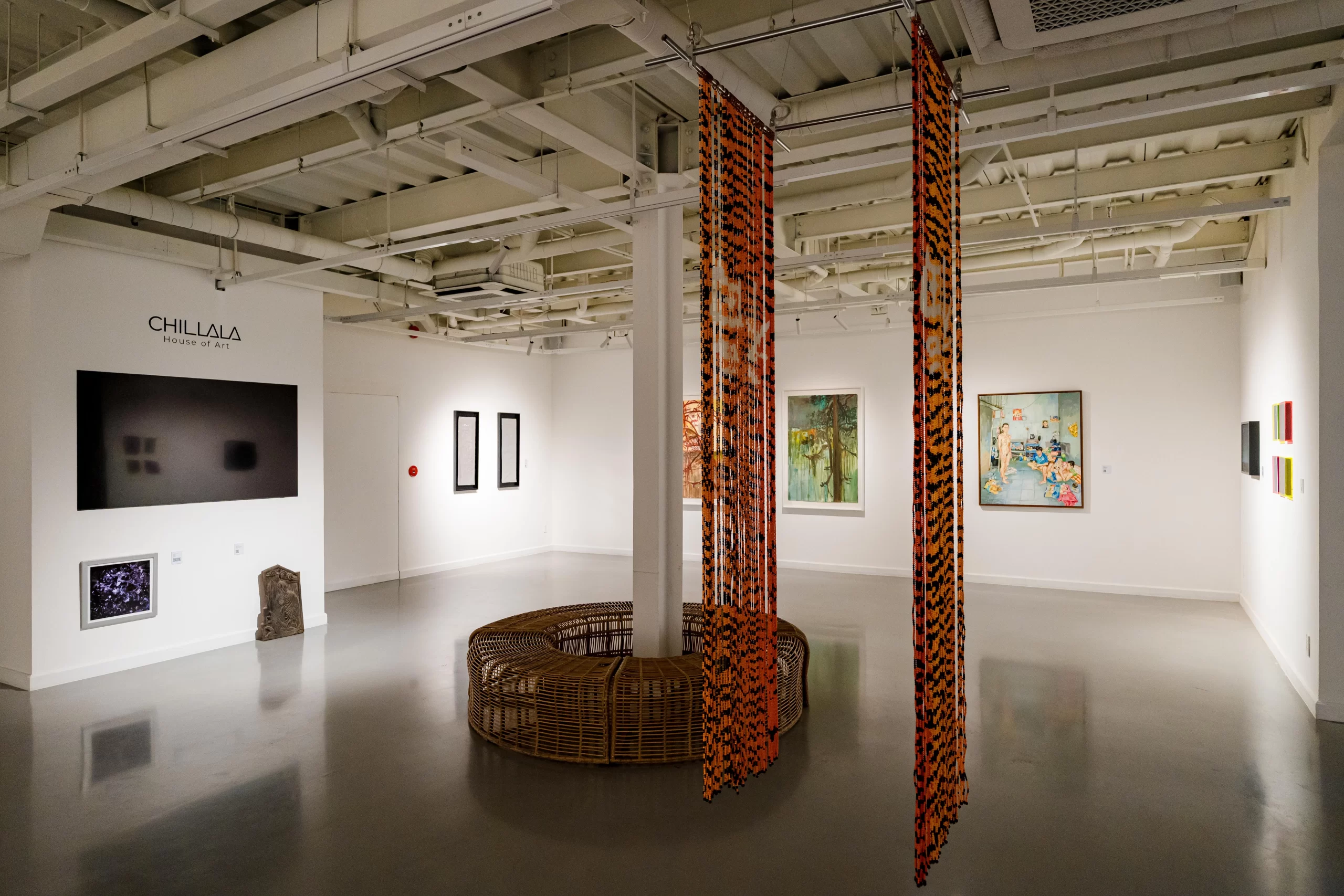
Organising the booths into the “卐” (swastika) was a great idea to manage artworks within Chillala’s space. What were the pros and cons of this idea? Could you share the inspiration behind it?
The swastika configuration was perfect for how I originally conceived Arte Fare. It signified a rotational format, with symbolic references to harmony, renewal, and good fortune – all things welcome at an art fair. I am of course well aware of its other connotations, usurped as it was by Western barbarism, and I respect the resistance against that cultural contamination. Because there were only four booths, the layout and position were identical for everyone. A natural flow was created from one artist to the next, without a harsh division that is more common.
Compared to a traditional art fair, which has already been fast-changing, Arte Fare takes it up a notch through a 5-day rotation with impromptu activities. How does Arte Fare open up new viewing experiences for art spaces like Chillala – House of Art?
Arte Fare asks the commercial space – Chillala, in this case – to take a risk. It has to keep bringing an audience and collectors back, again and again, within a very short time frame. It’s demanding, and the exhibitors likewise have no real control over who comes and goes, or whether they miss important visitors. Chillala’s 9 AM – 9 PM opening hours also required stamina. We had five separate public openings, one for each rotation, and each group flew by. I think the energy and swiftness of those transitions rubbed off on the viewers, as there were many repeat visitors who allowed themselves to get caught up in all the fun and excitement, which was real and palpable. A small number even made it to all five rotations.
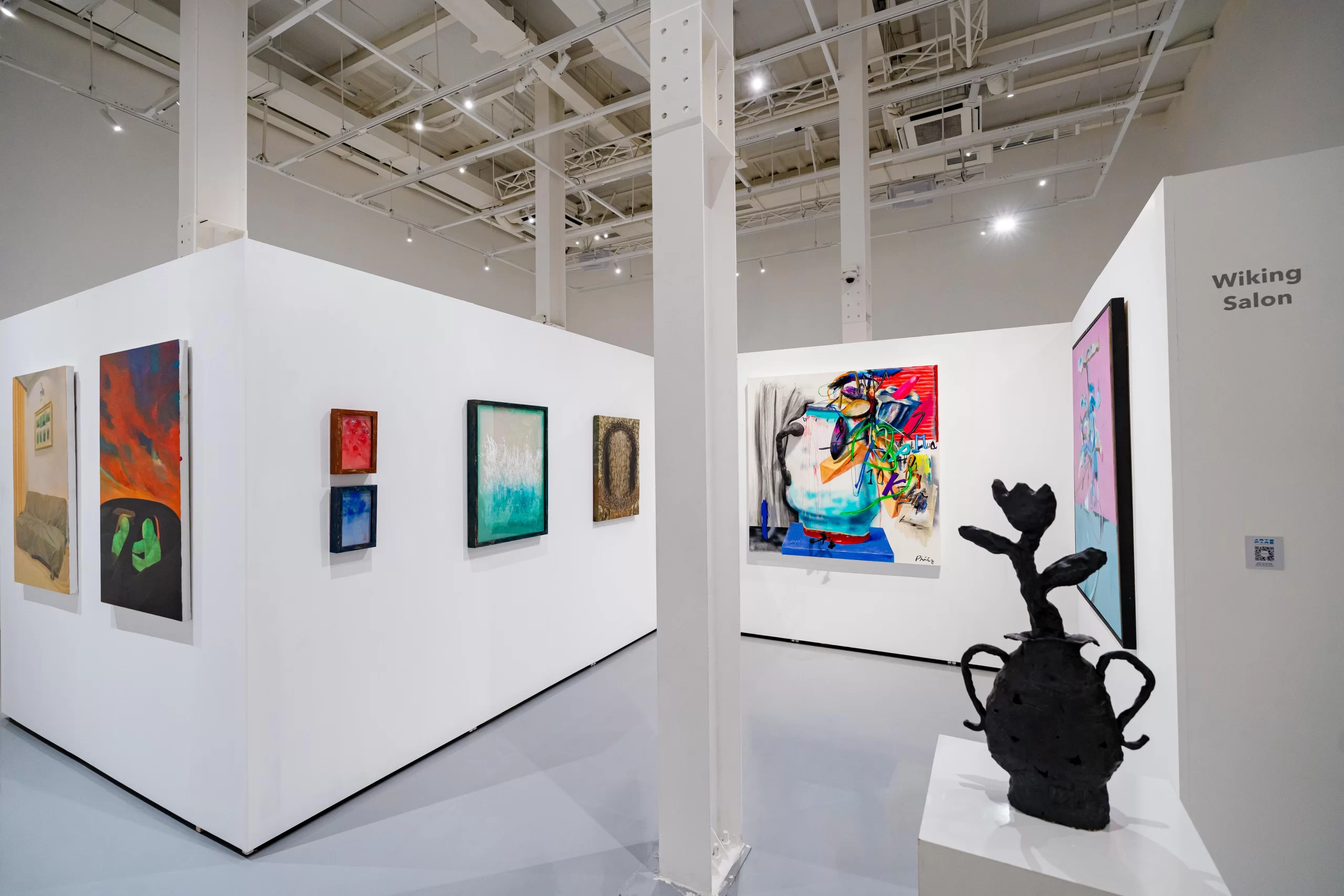
It was captivating to see some works remain on Chillala’s surrounding main walls after each iteration, which could be considered an installation of their own. Do you think that these selected works brought out new possibilities for an art fair model – for example, as an archive – rather than for commercial purposes?
After each turnover, I selected a few of the strongest works from the preceding group to hang on the external walls around the booths. These acted as a curated exhibition within the exhibition, one that produced a dialogue between the groups, evolving with each rotation. Depending on the makeup of the participants, I would continually change and relocate the works to encourage conversation. If a group was particularly diverse in painters, for example, I took advantage of that to create an even broader dialogue about the medium by installing specific paintings on the surrounding walls. This also played the role of an archive in real time, as a form of curatorial note-taking. It was both a visual catalogue and a visual essay. I wouldn’t call it a full-on curated show by itself, though. And these peripheral works were still for sale, which helped to give preceding artists continued visibility through the run of the exhibition, as well as allowing potential collectors to see remnants of the shows they might have earlier caught and missed.
Arte Fare must have broadened new horizons on how we should view an art fair from viewers’, collectors’, art spaces’, and artists’ perspectives, especially on how we can collaborate. Can Arte Fare lay a foundation for a stronger supporting network for art professionals, galleries and collectors in the future?
I think it is important to take such risks. At the same time, the investment Arte Fare requires is clearly much more forgiving than that of the traditional model, where the exhibitor would first and foremost be paying a hefty booth fee. We got rid of that, and the fact that Arte Fare slots into a gallery’s regular programming schedule makes it simple to replicate and worth trying. From a commercial perspective, it opened my eyes further to the current existing network, where art and sustainability align in Ho Chi Minh City. Collaboration is essential to this model, and I was rather pleased that cooperation and the sharing of resources were not issues at all. But Arte Fare itself is intentionally controlled from a structural standpoint, leaning on diligent curatorial engagement while giving exhibitors generous attention and trust. It’s a model I would like to test outside Vietnam, though I might discover that it could only work in a city such as Ho Chi Minh City, where it is feasible to mobilise resources quickly with our fairly ambitious art community. That remains to be seen.
Thank you for sharing with us!
Words: Trao, Dao Hoa