Đọc phiên bản tiếng Việt tại đây.
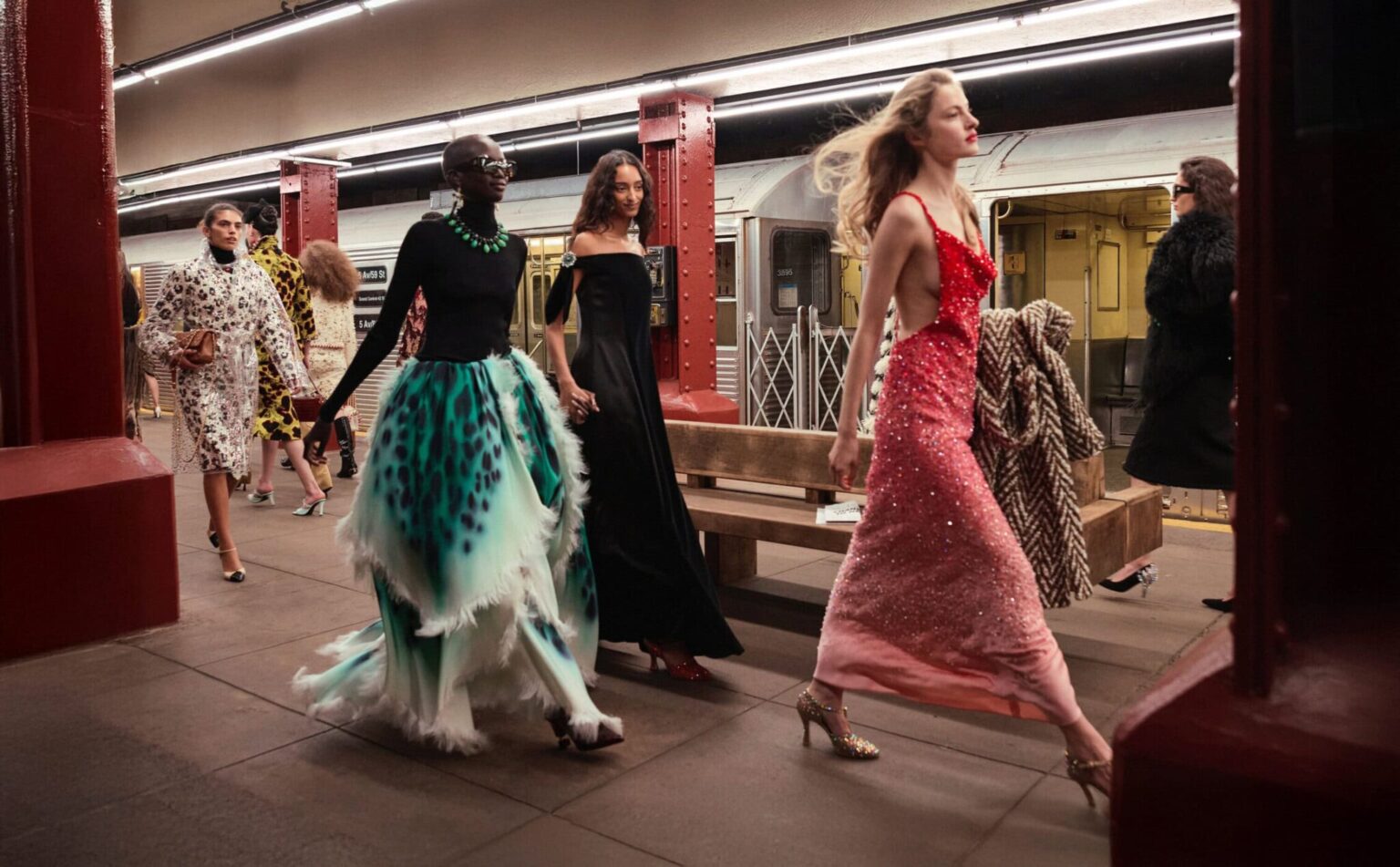
The Chanel Métiers d’Art 2026 collection can be understood as an ideal point of convergence for a shared cultural memory. Once each year, Chanel steps away from the spectacle of the conventional runway to undertake another mission entirely: paying tribute to its network of master artisans. This tradition began in 2002 under Karl Lagerfeld, when cities across the world became stages for cultural voyages dedicated to safeguarding artisanal métiers threatened by industrial modernity. Eight years after the final Métiers d’Art collection staged in New York under the late Karl Lagerfeld, Chanel Métiers d’Art 2026 revisits the spirit of urban America through the lens of cinema and popular culture. At Bowery subway station in New York, emblematic characters drawn from cinematic classics such as “The Trespasser” (1929), “Tonight or Never” (1931), and “Breakfast at Tiffany’s” (1961), among others, appear to step directly out of ordinary life, generating the sensation of a multi-strand film narrative unfolding in real time. Current Creative Director Matthieu Blazy deliberately selected one of the city’s most quotidian settings for his debut Métiers d’Art presentation as a tribute to the artisans working within the Paraffection ecosystem.
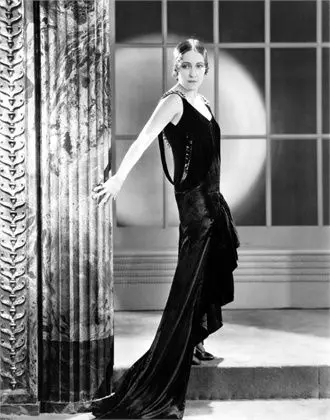
The collection unfolds through a series of deliberately orchestrated contrasts, each detail contributing another fragment of New York past and present. Chanel returns viewers to the golden age of Hollywood through the figure of Marion Donnell in “The Trespasser” (1929). Though clothed in fluidly feminine silhouettes, Donnell’s character conceals a resilient inner force amid precarious circumstances before rebuilding her life anew in New York. Counterbalancing that softness is a classical masculinity embodied through Rhett Butler in “Gone with the Wind” – one of the films most familiar to generations raised during and after wartime in Vietnam. The black drape suit, with its broad shoulders and lightly cinched waist, bears the unmistakable imprint of the 1930s and reflects masculine aspirations toward authority amid the psychological turbulence of the Depression era. Significantly, the look was presented by transgender model Alex Consani, opening a more layered perspective on gender and power in the contemporary moment.
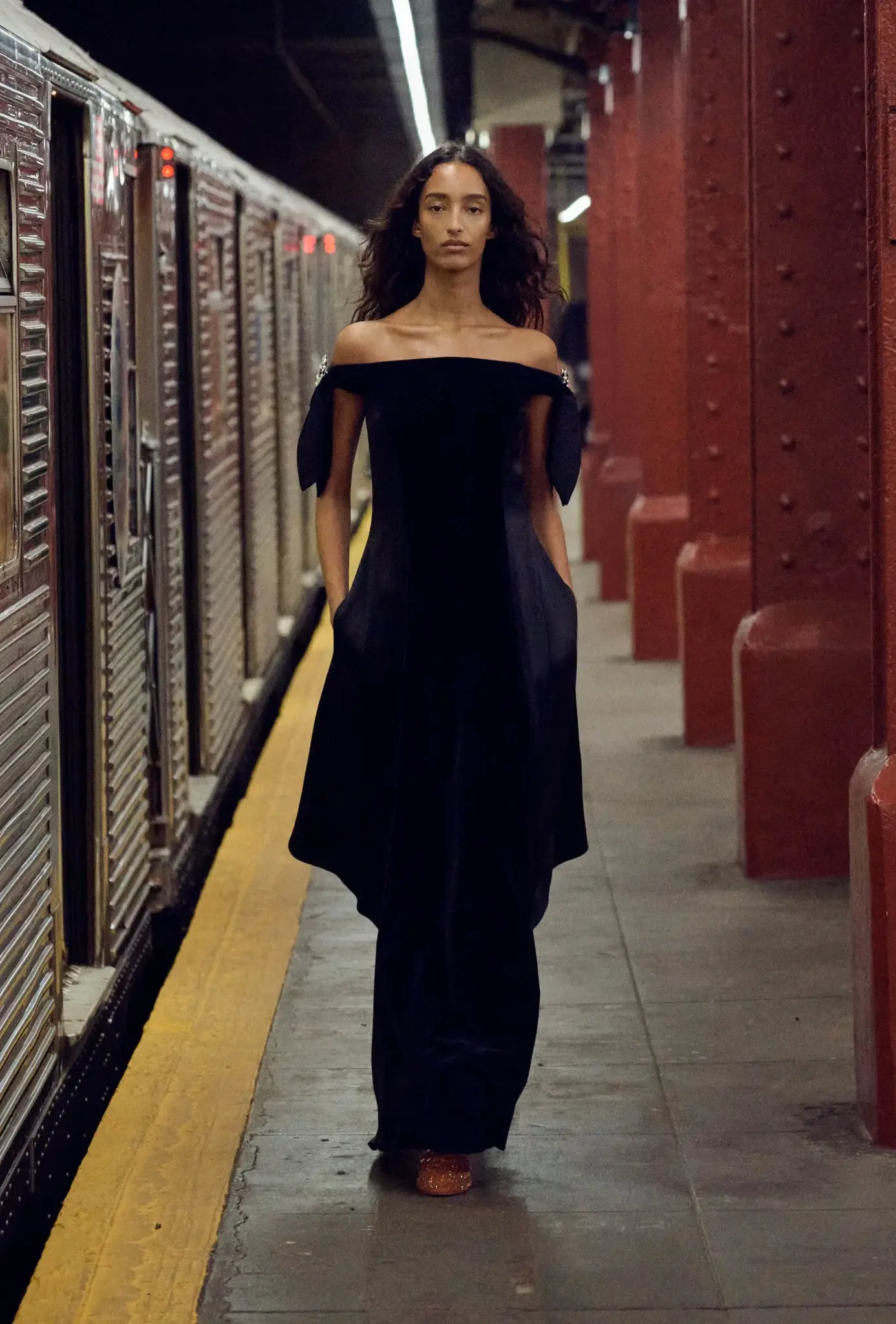
Alongside these ruptures, Chanel continues to preserve elegance and authority as guarantors of its core values. The classic black tweed suit recalls former First Lady Jackie Kennedy, long regarded as an icon of cultural diplomacy. Likewise, Diana Vreeland – associated here with a minimalist black design accented by a red silk sash at the waist and Chanel’s signature pearls – remains among the foundational figures of the American fashion-magazine empire. Together, these references evoke for Vietnamese audiences an indirect yet enduring memory of American democratic culture and politics shaped through decades of mediated reception.
Running parallel to Hollywood’s influence was the rapid expansion of American multimedia culture during the 1960s–1980s. Chanel introduces pop-inflected colours such as cherry red, mustard yellow, cobalt blue, alongside reflective metallic textiles and densely embroidered sequins that mirror the neon signage of Times Square in New York. Set against this radiance are the graffiti-covered walls of Brooklyn, one of the earliest cradles of street art, born from immigrant working-class communities and political resistance movements alike. This convergence becomes a measure of American history’s accumulated density, where bold dreams continuously overlap. That same spirit is pursued through the use of “trompe l’œil”. Chiffon silk is embroidered at an unusually dense gauge, producing surfaces with firmness and raised texture to create a “false denim” material that retains silk’s signature lightness despite its rugged appearance. The tension between silk’s luxurious nature and denim’s raw utilitarian origins, which was historically developed for America’s 19th century labouring classes, becomes a clear articulation of the democratic spirit and irreverence Chanel seeks to convey through the 2026 collection.
Elsewhere, the pronounced recurrence of leopard motifs functions as a partial legitimisation of Coco Chanel’s own personal mythology, given the pattern’s longstanding association with her image. The palette also draws upon superhero comic-book iconography that entered Vietnam prior to the 2000s, from the red leather boots with white stripes inspired by Wonder Woman (1941) to the spiderweb motifs of Spiderman (1962), refined here into beadwork tracing across plunging black gowns to create a more seductive silhouette. Together, these elements recall a formative era of cultural adaptation in Vietnam, allowing audiences to revisit a particularly radiant fragment of American history.
Matthieu Blazy does not present an unfamiliar America. Rather, Chanel Métiers d’Art 2026 operates through cultural hybridity, bringing together spatial, temporal, and class fragments that have already circulated through Vietnam for decades. These fragments have gradually entered the viewer’s consciousness through repeated encounters with local aesthetic frameworks, producing a compelling “grey zone” in which comic-book heroes and Hollywood mythology have become formative components of collective memory across generations – now reimagined through the elevated language of haute artisanal craft. The collection ultimately raises a broader question concerning cultural survival itself. We are not merely passive recipients of successive waves of foreign culture; we simultaneously recreate and redefine them through our own sensibilities.
Words: Hồng Ánh
Translation: Art Nation