Đọc phiên bản tiếng Việt tại đây.
“For those who were born in southern Vietnam in the late 1990s or earlier, their childhood memories still echo with the beautiful melodies of cai luong in its heyday. […] Cai luong entered childhood with its allure and wonder; those innocent children had already begun to understand that life was larger than home and school […].”¹
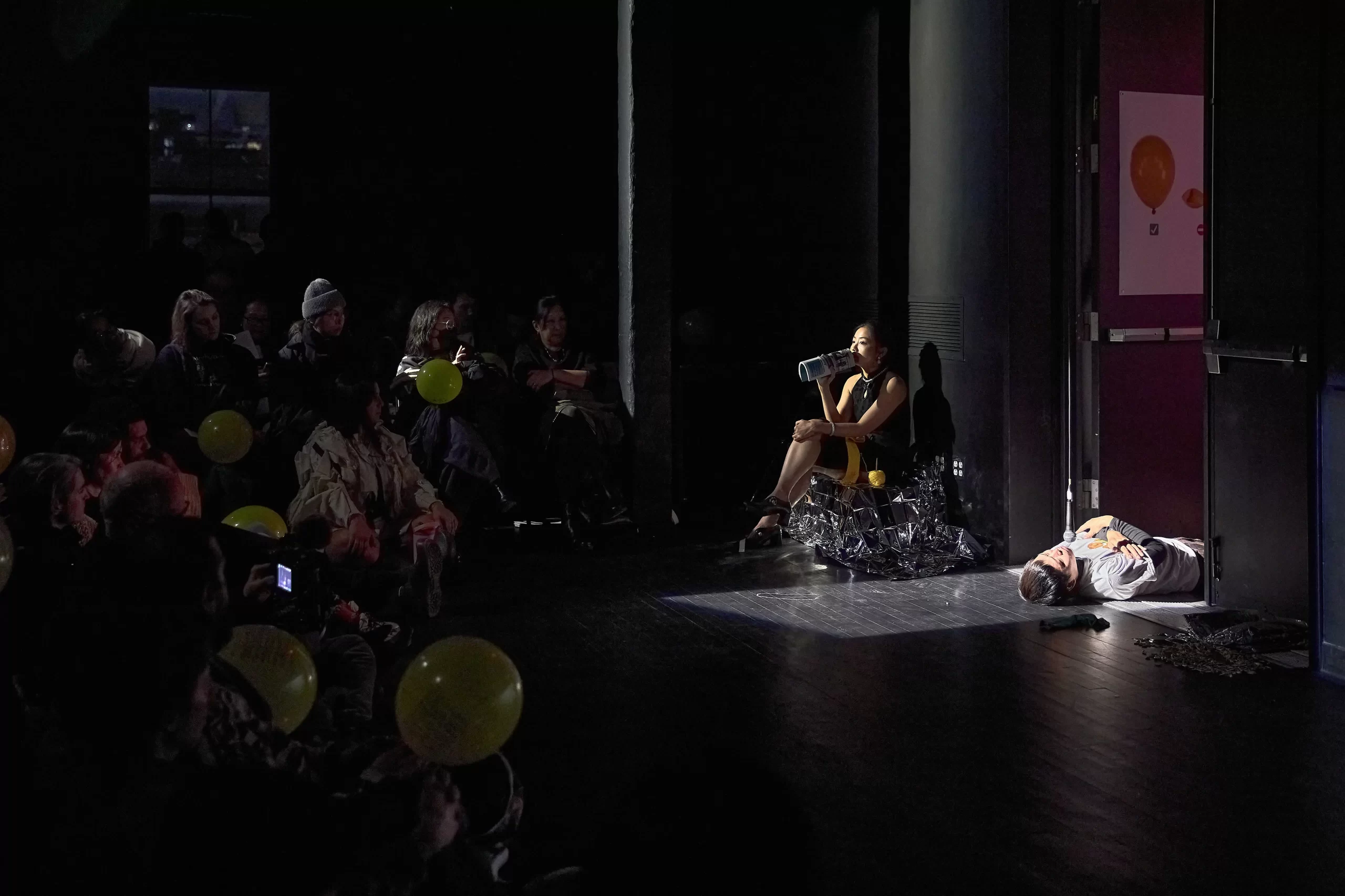
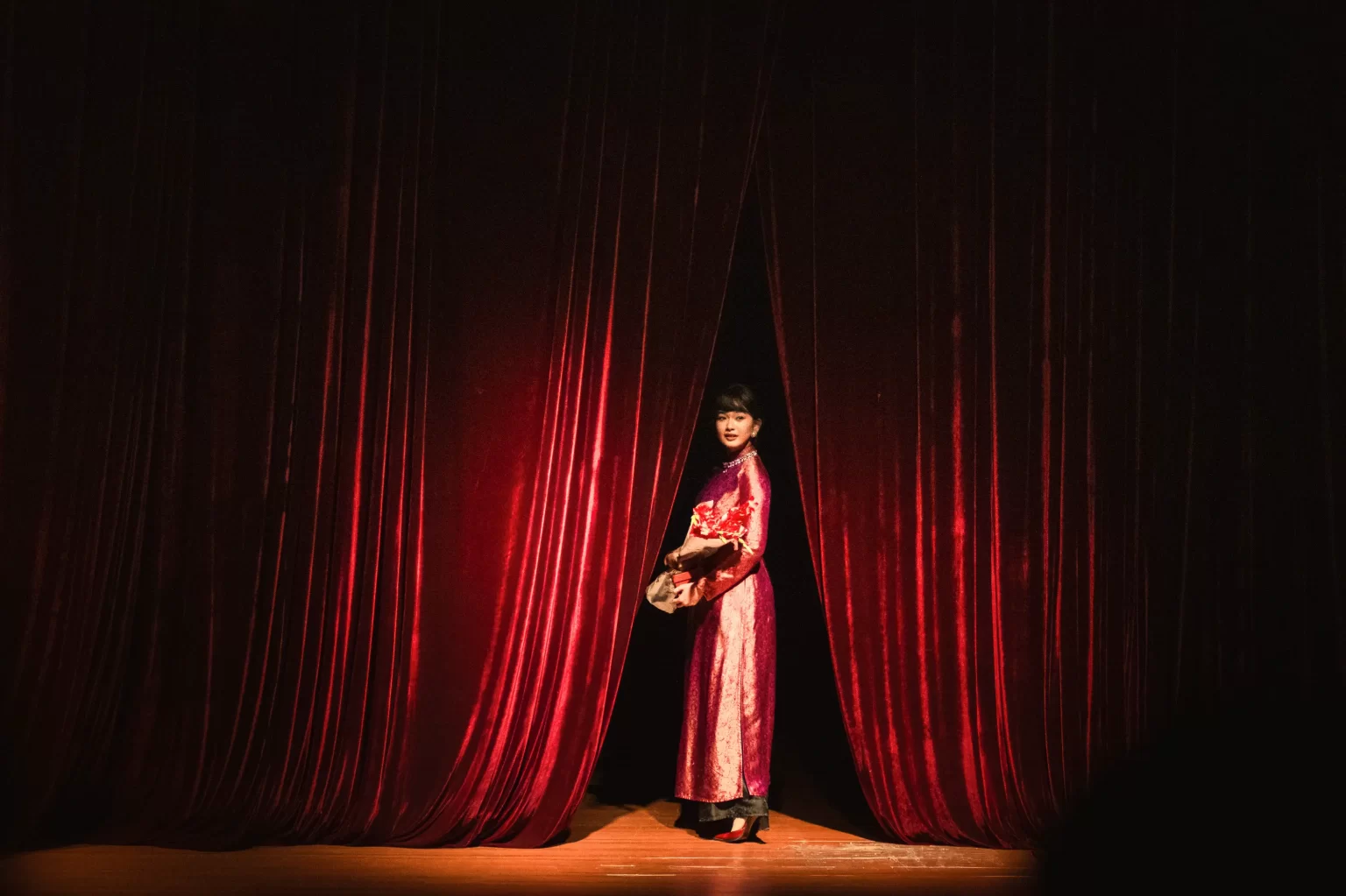
Curtain Call opens in a decaying theatre gradually fading into oblivion. In this space, Lan meets Kim, a cai luong performer carrying memories of the theatre in its prime. Between past and present, between what is disappearing and what remains, Curtain Call is an invitation to step beneath the faint glow of a stage haunted by its bygone shimmer, journeying alongside the characters to rediscover what seemed irrevocably lost to time.
Though born and raised in France, Hai Anh spent weekends watching cai luong on cassette tapes alongside her paternal grandmother,² her childhood nourished by the ritual much like any child growing up in Vietnam. But instead of sparking lighthearted laughter, the songs moved her grandmother deeply and left Hai Anh bewildered. Tales of artists leaving everything behind to join travelling troupes,³ the age-old dismissal of artists as social outcasts, and families forbidding children from a career in the arts were all too familiar, given how precarious creative life was in Vietnam at the time. But even before Hai Anh had the chance to confess her own artistic dreams, the unrelenting cycle of life overtook her grandmother and caused cai luong to vanish from her world for a time.
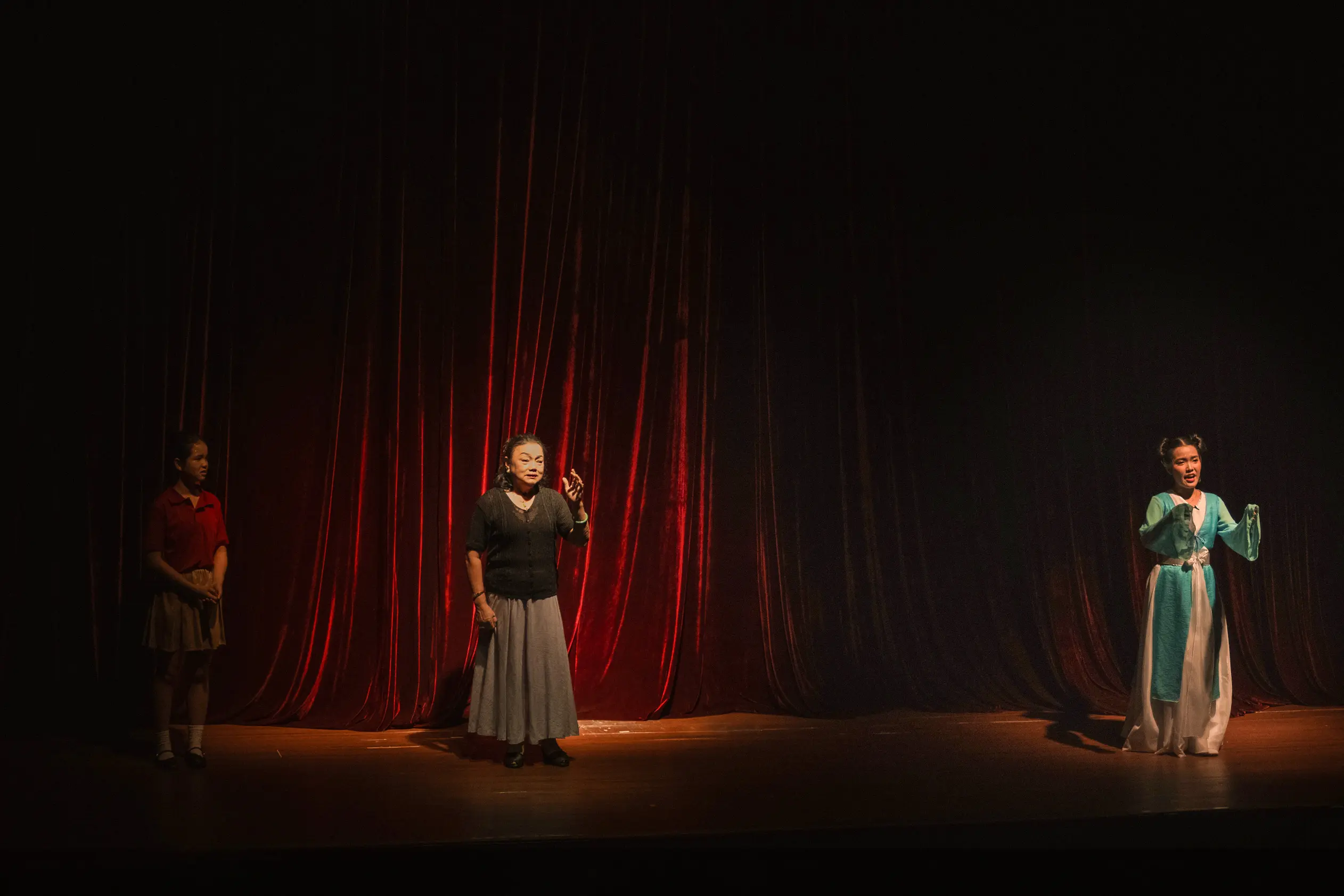
By the 2020s, a long-established art form like cai luong had come to be classified as traditional. Yet when actress Bao Nghi, in the role of eleven-year-old Kim – a rising star during the theatre’s zenith – finished her aria, a thunderous wave of applause erupted from the audience as though welcoming a pop star of our time, drowning out the production’s diegetic canned applause originally meant for Kim. The response begged a reconsideration of cai luong’s contemporaneity: after all, shouldn’t its “time” have passed? Electric with delight, the crowd was immediately carried straight into the setting of Curtain Call – the 1960s, cai luong’s supposed golden era.
Once again, the very idea of what counts as a contemporary art form needs reexamining. Referring to cai luong as a “genre” inadvertently sorts performance practices along a qualitative timeline rooted in little more than stereotypes. Yet the first definition of cai luong to appear on the signboard of the Tan Thinh theatre troupe in 1920 already asserted its cross-form mobility:
“Reform songs and stages in step with progress
Pass down plays and tales to stand with civilisation.”⁴
On this basis, cai luong can be understood as a self-questioning practice, always looking ahead and behind within a web of relations with other performing arts such as hat boi (classical Vietnamese opera) and cheo (northern Vietnamese sung folk theatre). It reflects the pressing concerns of each social period, continually transforming song and dance in order to address audiences in a tone of empathy. In its effort to “contemporise”, then, cai luong does not stand still but continues to renew itself in response to present tastes and remain “of-the-moment”.
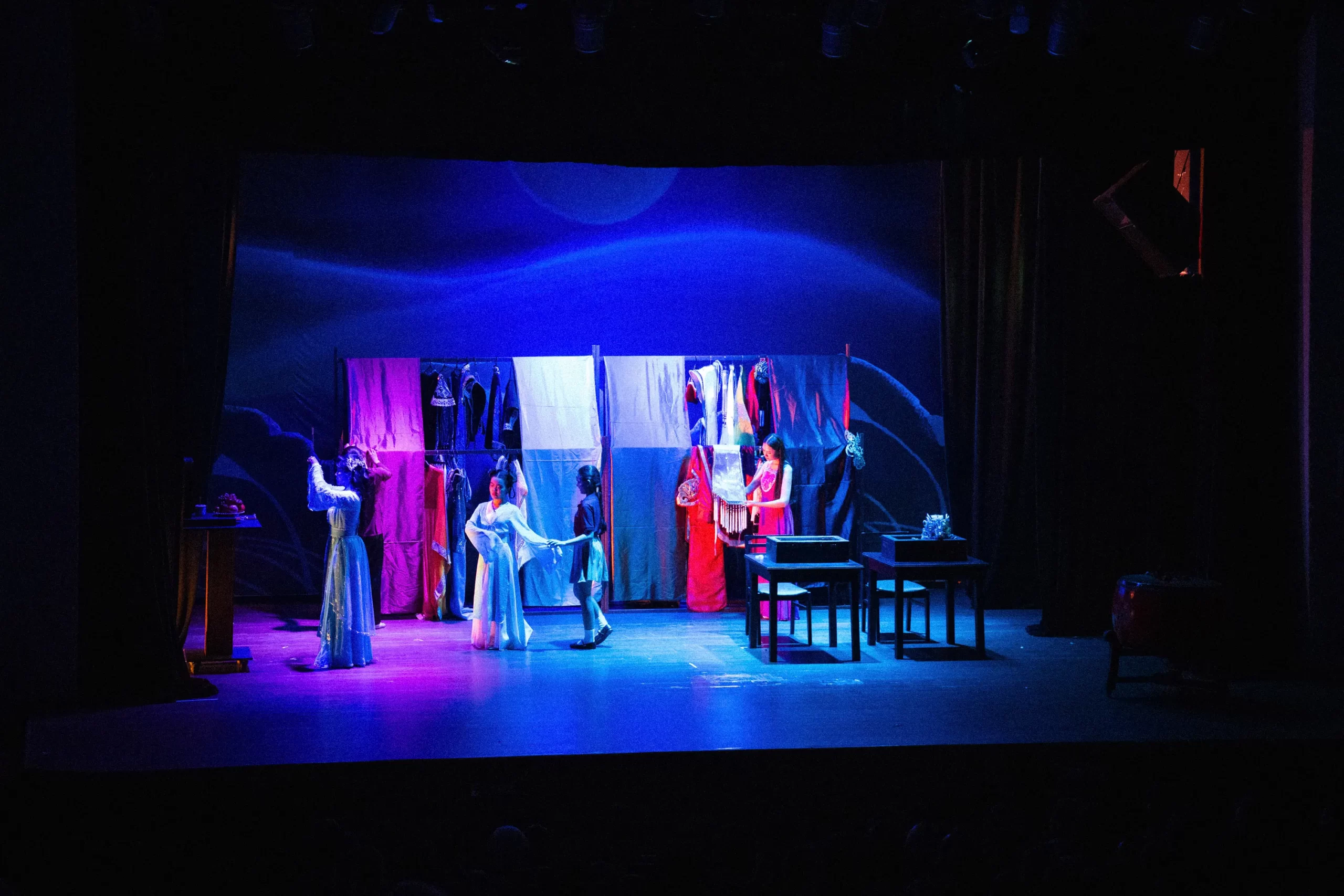
When writing the cai luong sequence for Kim’s two arias, Hai Anh initially wanted to restage an existing work. The idea had to be set aside because no work could be found that suited the plot while meeting the other criteria. Through Lan, Hai Anh seemingly brought a personal wish to life: to share the colourful world of theatre with a friend her own age. The promise that Lan would see Kim again and return her butterfly hair⁵ clip indirectly opened other facets of Kim’s life to her. As viewers follow Kim’s journey through Lan’s eyes, they also gain a window into the precarious existence of cai luong artists of the era.
Set cai luong’s capacity for movement alongside experimental theatre, and similarities of form are still visible. To speak of cai luong is not simply to invoke famous productions now remote in the past, but to enter a broad field still rich with possibilities. In engaging with cai luong as a genre rather than with the domestic market, Hai Anh’s efforts reveal curiosity and a desire to understand its craft and lived world, rather than direct participation in reconstruction or heritage preservation. When she began writing in 2020, Hai Anh wanted to bring this fragment of memory into the script, but the difficulty of learning Vietnamese, together with the challenge of researching a form so rich in dialogue, left blank placeholders on the page: “SCENE […], cai luong SEQUENCE”. Yet cải lương remained generous enough to admit experiments that could reveal new dimensions within what already existed, beyond what playwright and audience alike could predict: adjustments to the sung text, spatial design, interaction between actors and audience, among others. Judged by its flexibility in staging and performance and its willingness to embrace risk, the proximity of cai luong to experimental theatre becomes clearer still – a development within modern theatre, popular in France and now flourishing in Vietnam.
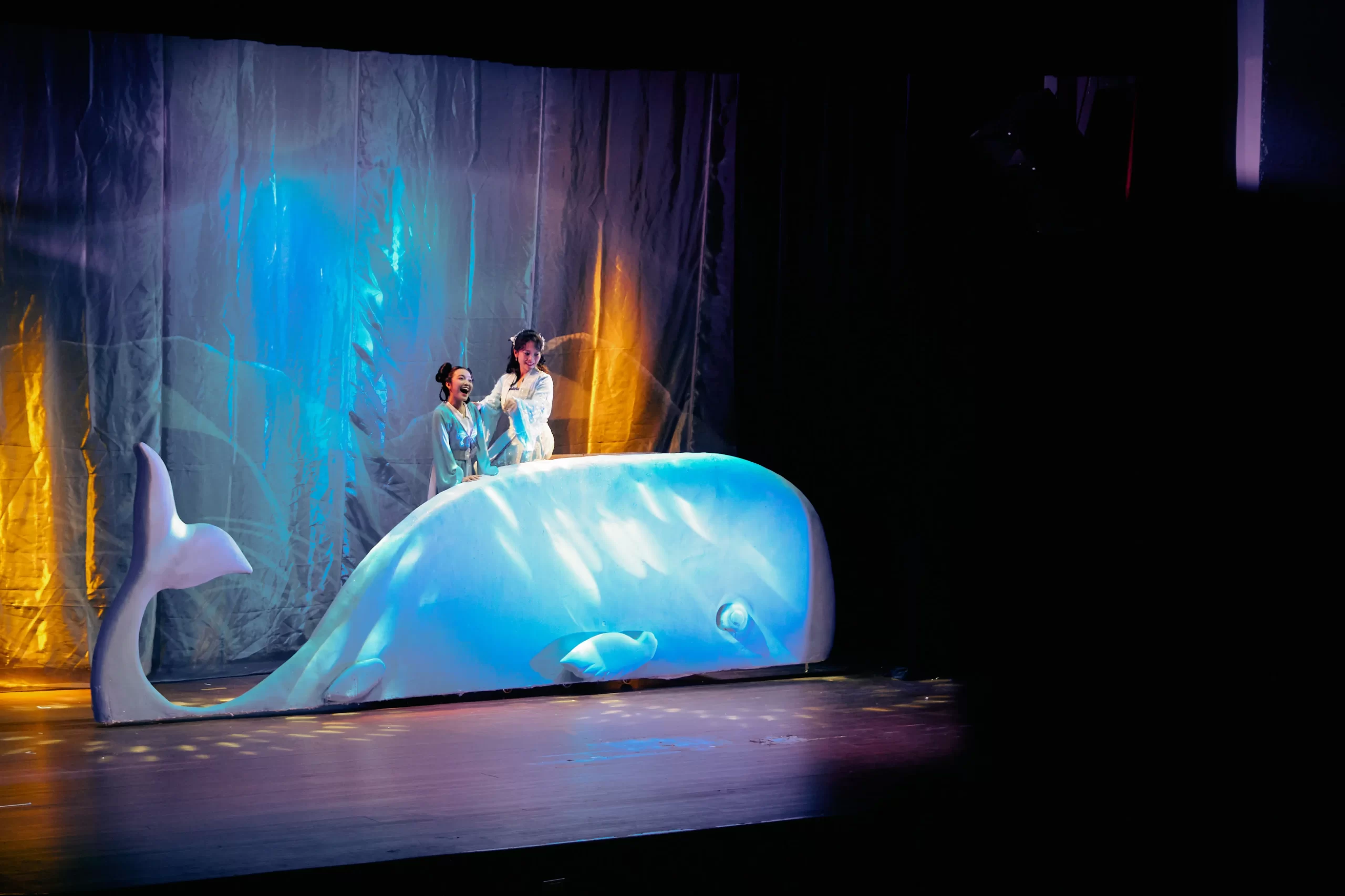
By coincidence, that blank section became the fortunate affinity that brought together the expertise of actors and semi-professional and professional cai luong playwrights and lyricists – with roots in Ben Tre and southern voices, allowing the life of cai luong to take shape within the group itself through lively conversations. To preserve the essential spirit of cai luong at its peak in the 1960s, casting performers with a distinctly southern Vietnamese accent was non-negotiable, especially for the sixty-year-old Kim. Ly Kieu Hanh, a cai luong artist whose career had once stalled under the pressures of making ends meet, returned to the stage lights and taught the art to Bao Nghi, Ky Thao and Hai Anh. In Bao Nghi, Ly Kieu Hanh saw an image of her own first steps into the performing profession. Once a prominent television face, Bao Nghi also carried the talent and passion passed down across generations in her own family, allowing her to absorb cai luong remarkably quickly over six months, despite having had little previous contact with the form.
At the same time, the script of Curtain Call underwent repeated revisions: almost every workshop brought a rewritten scene or exchange. Working alongside Hai Anh and the actors through the writing and rehearsal of the cai luong sequence was composer Nguyen Thanh Phuong. He is a prominent figure in Saigon’s performing-arts community, a long-time student of Ly Kieu Hanh and roughly Hai Anh’s age. With Nguyen Thanh Phuong’s support, Hai Anh’s understanding of cai luong extended beyond the visual surface for the first time. When homophones or synonyms escaped her, Nguyen Thanh Phuong would check them with Ly Kieu Hanh on her behalf. Together, they agreed to keep the existing cai luong melodies, alter parts of the lyrics and refine the wording so that it sat naturally in a southern Vietnamese voice:
“Send⁶ a smile to the one who stays behind
Sorrow still resounds; turn away, turn in haste.”⁷
If Hai Anh was curious about how society saw Kim after the rises and falls of her career, Nguyen Thanh Phuong also wanted to keep telling stories of overlooked lives: here, Kim’s motherless childhood and, more broadly, the harsh lot of women in earlier times. Generations of Vietnamese schoolchildren know “The Tale of the Woman of Nam Xuong” from Nguyen Du’s Collection of Strange Tales.⁸ Faced with questions left unanswered – “Before Vu Nuong jumped into the river, what was she thinking, and what unfinished wish did she leave behind? How would Vu Nuong’s child go on living after his mother suddenly left without saying goodbye?”⁹ – Nguyen Thanh Phuong wanted cai luong to become the medium through which Kim could speak to the audience about the tragedy endured by a child left without a mother. In Hai Anh’s original plan, Curtain Call was to be a stage for many women across generations. In the end, however, Kim’s life alone, together with the audience’s response to her, fulfilled Nguyen Thanh Phuong’s wish to honour lives buffeted by adversity, while condensing and illuminating dimensions of the cai luong world on either side of the curtain that Hai Anh had never known.
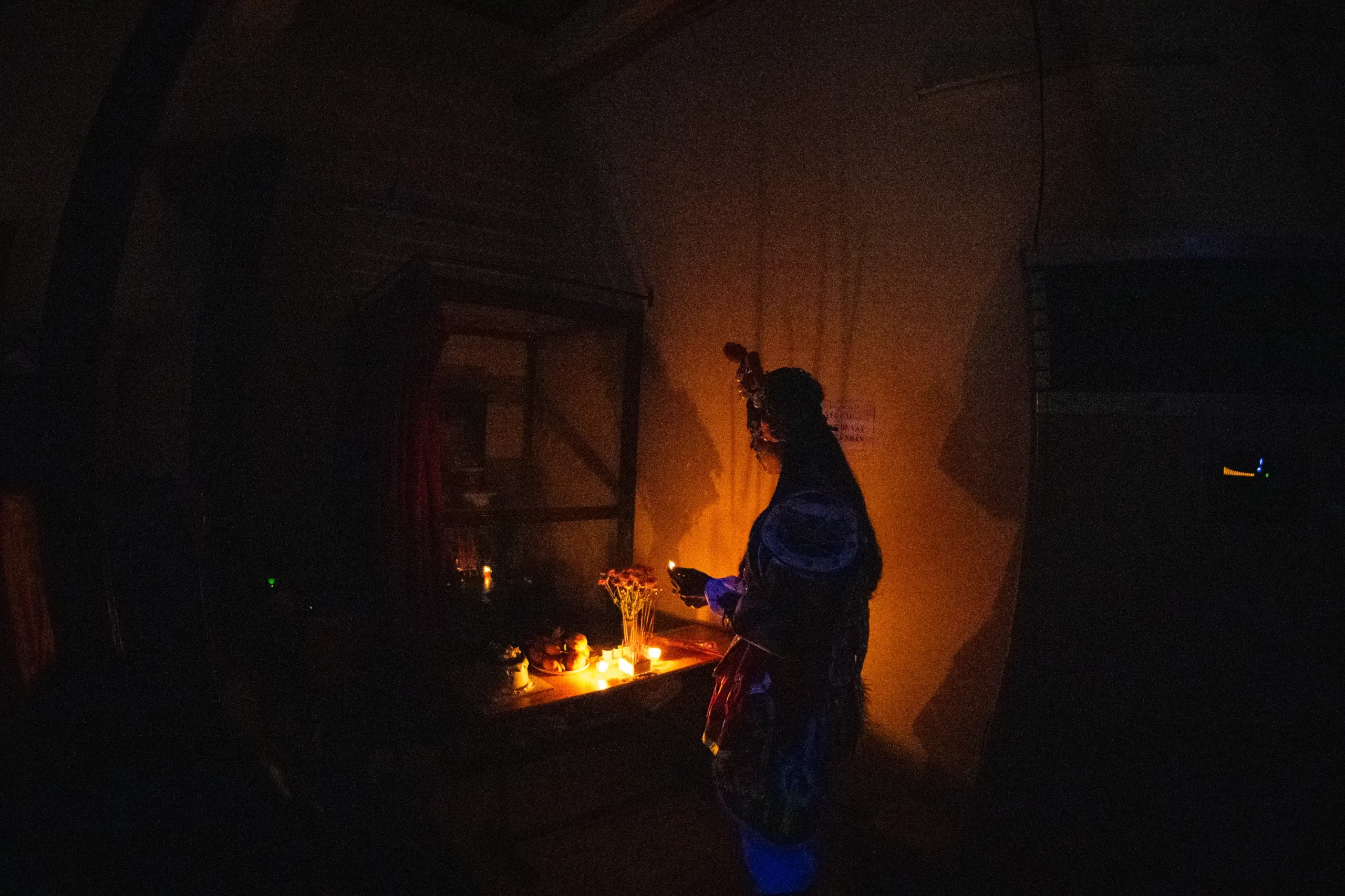
Curtain Call succeeded in forging a connection with its audience: by stirring curiosity about the play through opening-day fringe activities (themselves part of Hai Anh’s theatre-going experience in France), by choosing a venue suited to most audience members, and by deepening the bond between audience and team during a cai luong exchange evening. That success also drew on the experience of numerous theatre advisers in Vietnam and internationally, among them Leon Quang Le, head of the Thien Ly cai luong troupe. On opening night, a bat¹⁰ quietly watched the entire performance. Near the end, when artist Viet Linh sent words to her daughter, Hai Anh could imagine that if her grandmother was watching her granddaughter from afar, she could now answer with confidence by writing the next chapter of a dream handed down through the family for decades.
Words: Trinh Nguyễn
Translation: Art Nation
[1] Nguyen Thanh Phuong, “Writing Cải Lương for a Childhood Dream”, Ném Space (2026).
[2] Hai Anh, “Director’s letter”, Nem Space (2026).
[3] Generali Vietnam, “Live The Life You Desire”, YouTube (2020).
[4] Nguyen Thi Thu Hong, “The Art of Cải Lương in Southern Vietnam”. Southern Women’s Museum (2021).
[5] In various cultures worldwide, such as East Asia or ancient Greece, the butterfly is regarded as a symbol of rebirth and hope.
[6] “Gởi” là cách nói thông dụng của “gửi” tại miền Nam. Ngoài ra, khi biểu diễn, từ “vang” và “vội” trong câu lý nêu trên được diễn viên hát thành “dang” và “dội” khi biểu diễn.
[7] Excerpt “Chieu quan ai”, Curtain Call (2026), Nem Space.
[8] Nguyen Du, “The Story of the Woman from Nam Xuong”, Literature 9, vol. 1, 6th ed., Vietnam Education Publishing House (2011), pp. 43–48.
[9] Nguyen Thanh Phuong (2026).
[10] According to the cultural symbolism of the Five Blessings, the bat is an animal that represents good fortune.