Đọc phiên bản tiếng Việt tại đây.
One summer afternoon, walking along Truong Sa Street under the prickly heat, I could almost see from afar the gentle swaying of lanterns, a sight which has long vanished from the Mid-Autumn nights of my adulthood. Eventually, a sultry breeze carrying the scent of sun-dried bamboo had led me to the small workshop of Khoi Dang Tac Khi.
Lighting lanterns, awaiting the moon
At a table by the door, Son was absorbed in studying the designs of mythical creatures they have built up and preserved through the turning of seasons. Around him were bamboo hoops in every conceivable shape: some hung in overlapping layers like swaying birdcages; others still laying dormant in wooden moulds, waiting to take form.
I had the good fortune to speak with Son and his wife, Thuy. Both had grown up beneath lantern-lit skies on Mid-Autumn nights, and together they founded Khoi Dang Tac Khi to keep alive the flame of traditional craft of lantern-making– a vividly coloured handmade toy gradually disappearing from modern life.
It all started with old documentary photographs of the Mid-Autumn Festival in Hanoi in the early 20th century which Thuy happened to come across. From there, Son sets each bamboo rib in place, creates the first sketch, then meticulously adjusts them over and over until the rough frame gradually emerges, matching the shape he has had in mind. Sitting admist the still-disconnected curves and lines of the bamboo laying on the veranda, he stayed focused until the lantern took its final shape.
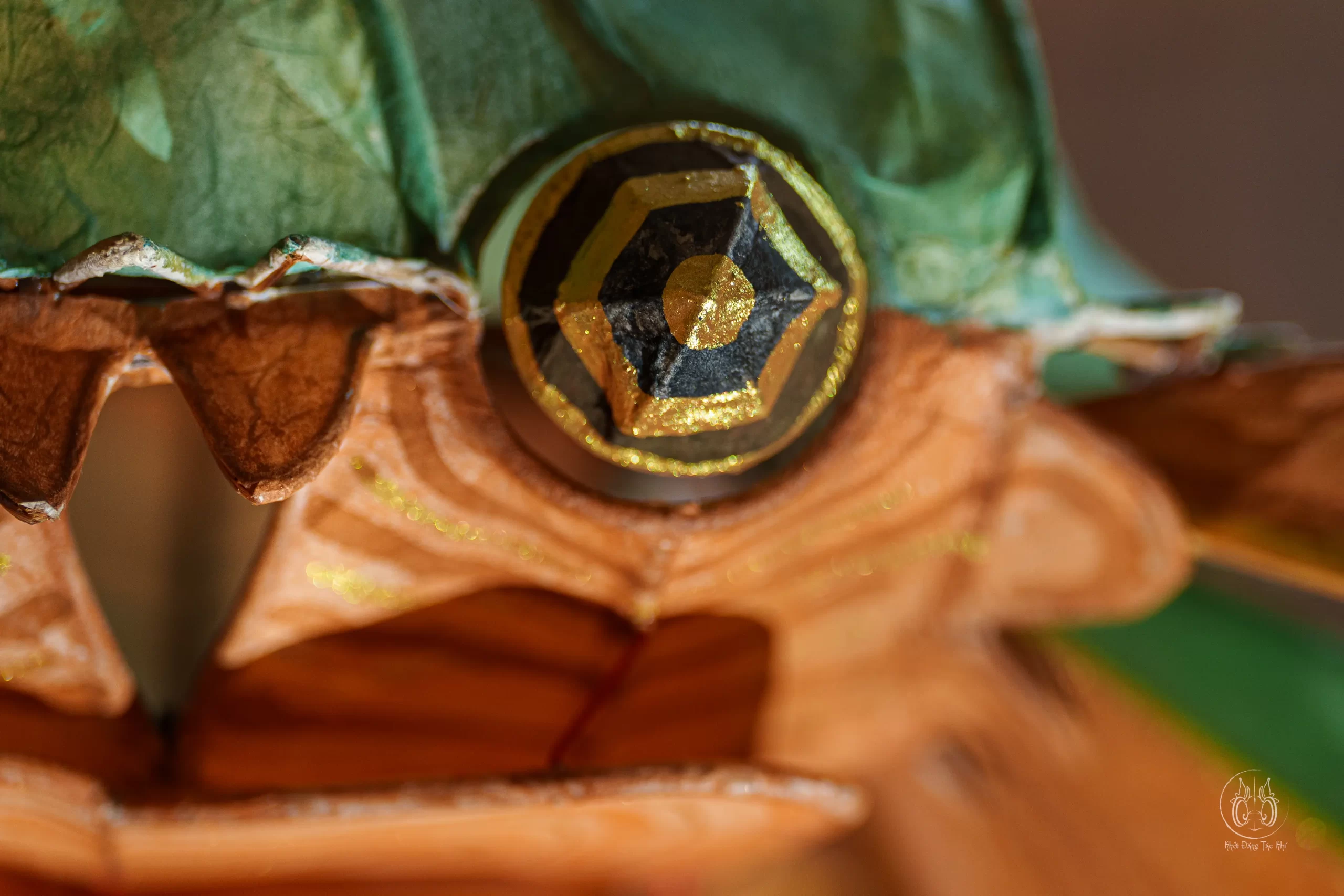
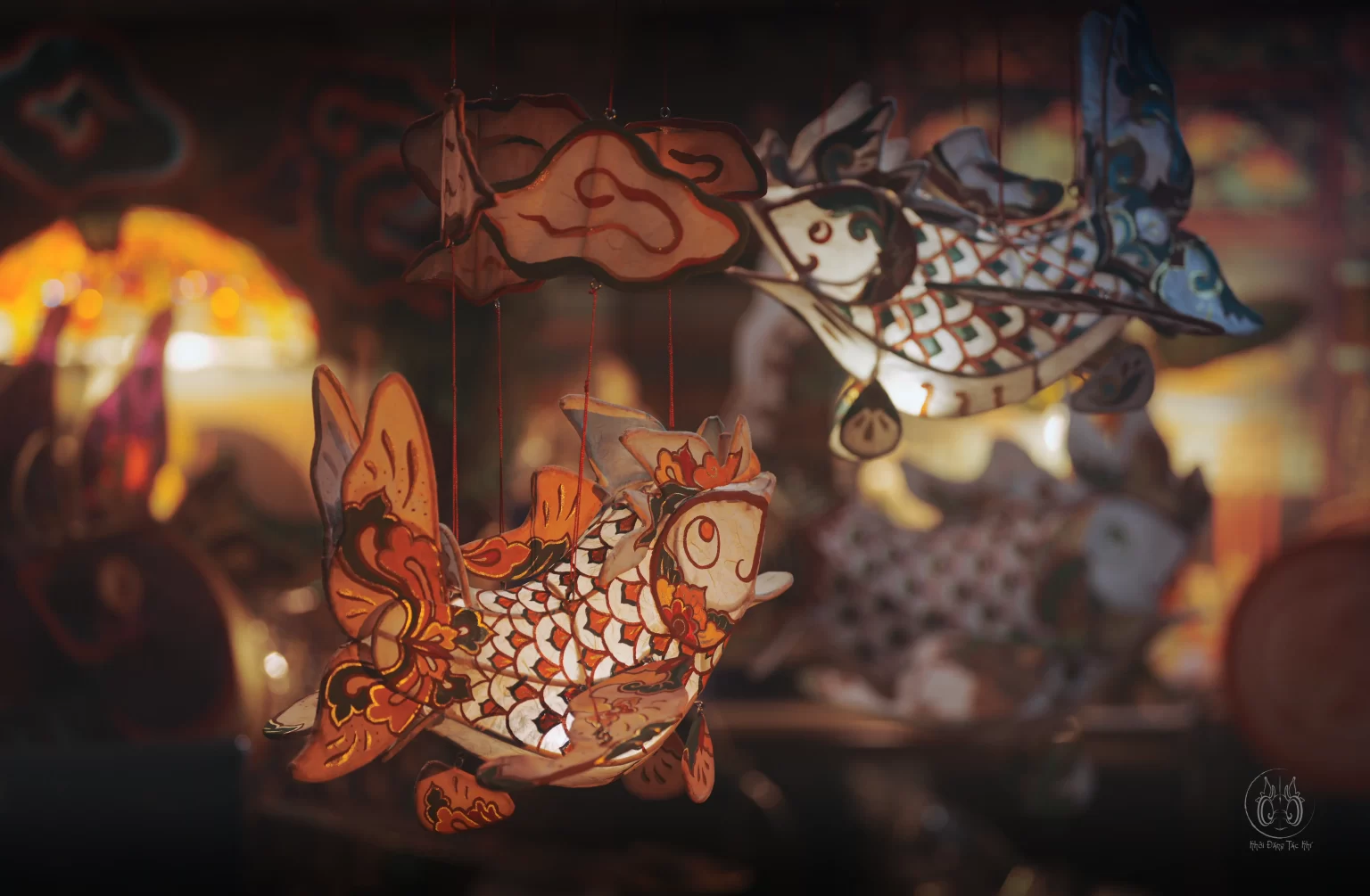
We could not stop wondering. From old black-and-white photographs, so faded they seemed little more than shadows of themselves, how could Son and Thuy bring crabs and carps back into life in such vivid shapes, colours and patterns? I carried the question upstairs to find Thuy. The scene before me was a visual feast, so crowded that it felt as though I could touch a lantern simply by stretching out my arm. The fan stirred gently; the murmur of conversation seemed to come from dragon-headed fish, crab claws and butterfly wings swaying slowly in the air.
Thuy was painting a Ly-period mandarin-duck lantern. “Covering a lantern takes two full days. Getting even one brushstroke wrong means having to start again.” Once she sits down to work, she stays with that lantern until the end of the day. After years of making lanterns, one grows accustomed to such slowness, the same kind of patience as waiting for the moon to come round.
Seven parts tradition
Lantern remaking, in Thuy’s and Son’s view, is a bridge between two shores: 70% tradition and 30% innovation. The seven parts belong to form. The workshop returns to old archival images, then researches reliefs and carvings in ancient communal houses, pagodas, shrines and temples across the country – places where generations of craftspeople have left their fingerprints – in order to reconstruct those forms in lanterns.
The leg joints of the crab lantern, the wing joints of the butterfly lantern, at a closer look, are more than arbitrary shapes. Thuy explained that people in East Asia once read images through written characters. The crab, whose shell markings resemble written strokes, came to be associated with Giap – first, as in Giap At Binh Dinh (the first four Heavenly Stems), or in Trang nguyen cap de (attaining the highest distinction in the imperial examinations). A crab lantern, then, became a wish for examination success and glory. The butterfly, she continued, was “diep” (蝶), which is homophonous with the character for advanced age (耋), conveying a wish that elders live and enjoy blessings among their children for a long time.
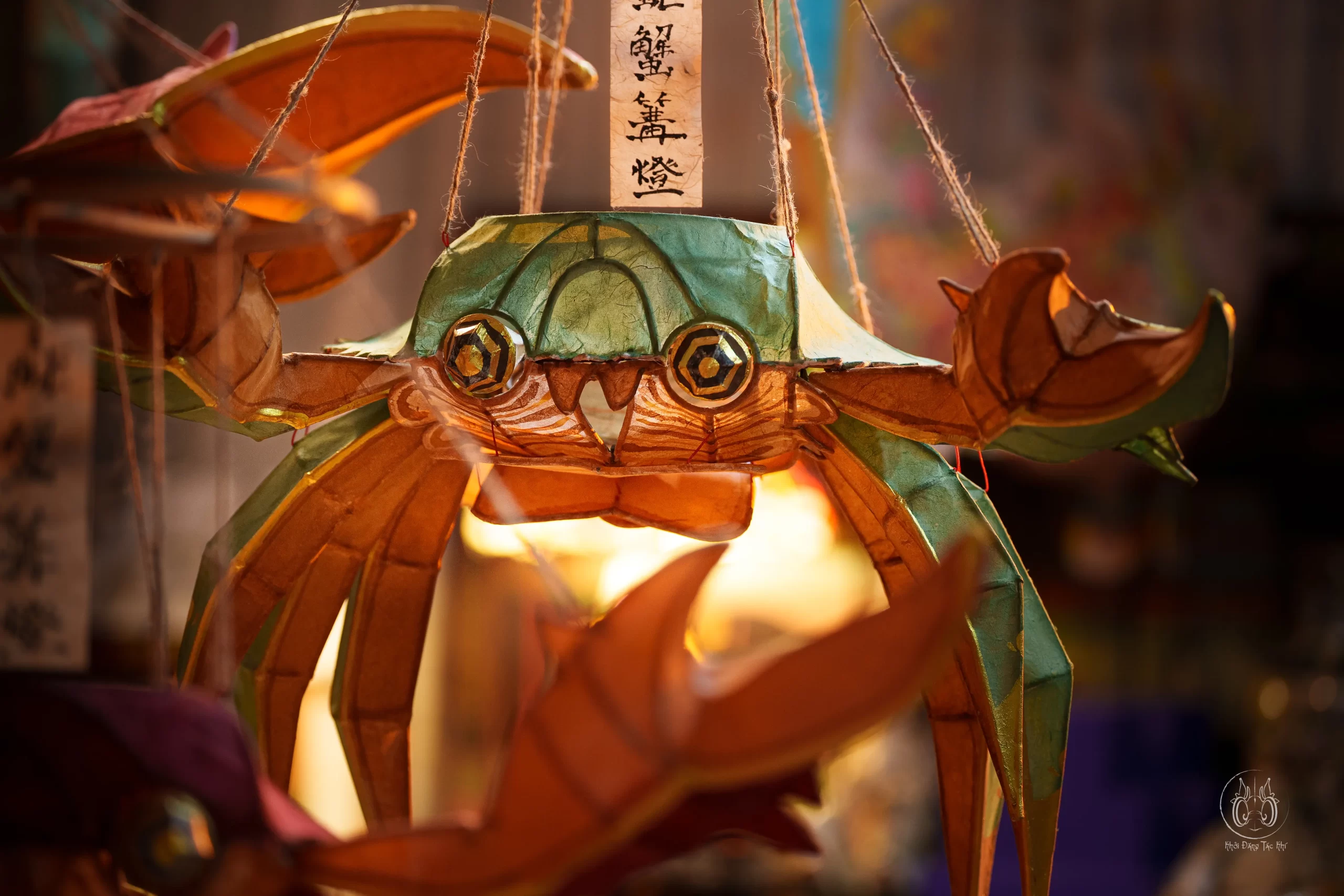
This is the spirit of East Asian art, a visual tradition rich in pictorial symbolism, surrounding human life with beneficent energy and blessings for the household. The seven parts devoted to form therefore demand a long process of tracing origins, reconnecting each design with the feng shui principles and auspicious meaning of the symbol.
Three parts innovation
Elaborate lanterns appear almost exclusively at the Mid-Autumn Festival. The fragility of their materials virtually bars them from longevity, the way a picturesque landscape could be left hanging for years on an old house wall. If the craft is to remain alive, it must find a place in today’s life: it must enter everyday spaces, be touched and used, and be regarded as a natural part of contemporary living. The remaining three parts of lantern reconstruction, then, must belong to the present – to the craft’s viability.
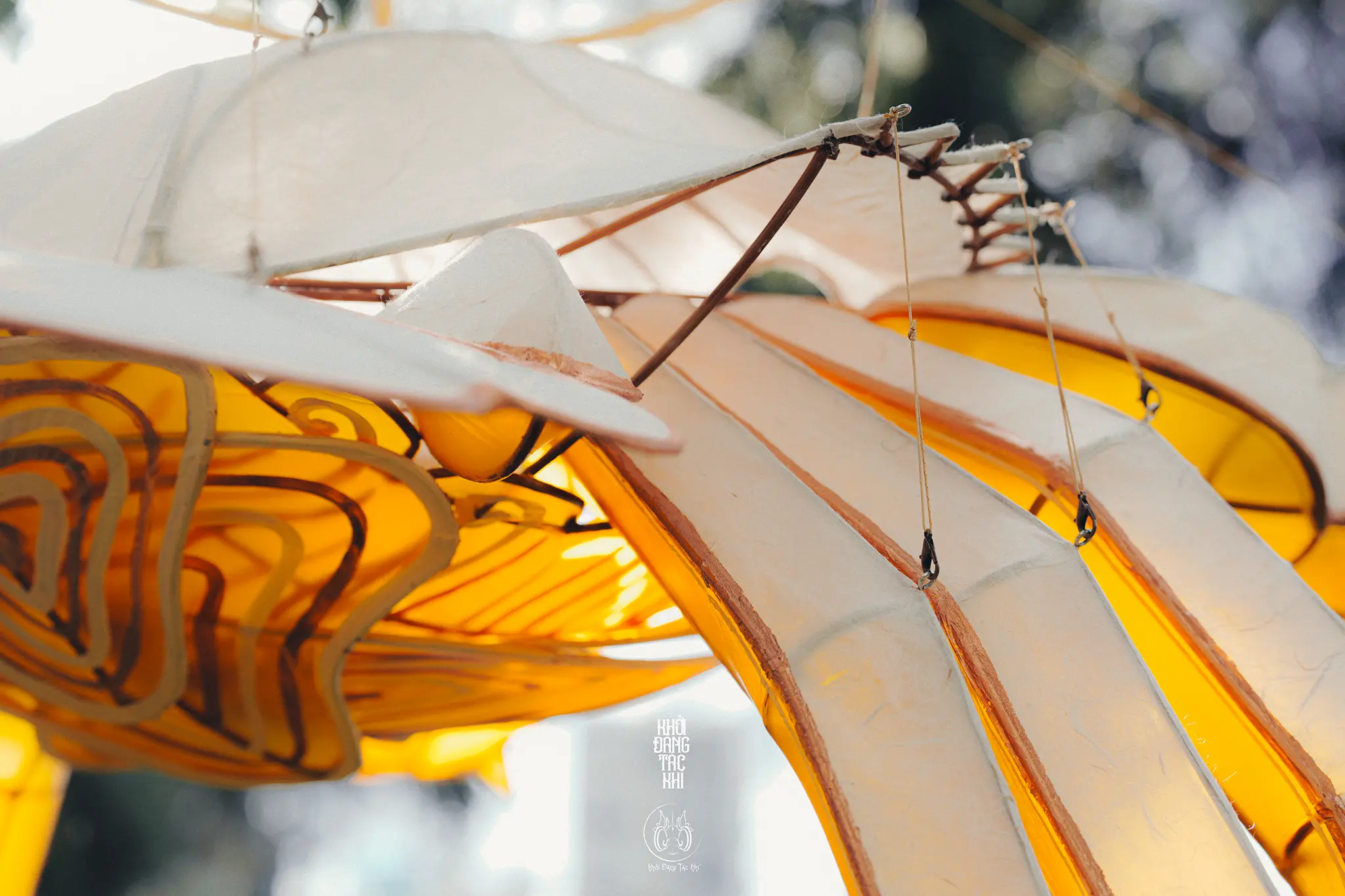
With archives so sparse, and the only remaining clues lay in old French records, the couple had no choice but to find their way in the dark: testing bamboo, steel wire and rattan, one material after another, until they settled on bamboo rods – thin, round, brown, heat-resistant and capable of taking a smooth, even curve. It was as though this, finally, was what earlier makers had once held in their hands, only for time to leave no one behind to tell the story.
Colour was another search equally demanding. The historical record survives almost entirely in black and white. To restore the lanterns’ shimmer and brilliance, Thuy drew on her architect’s eye, then sought further clues in historic embroideries – among the rare places where original tones have survived – bringing those colours back to life once more on the paper skin of the lantern.
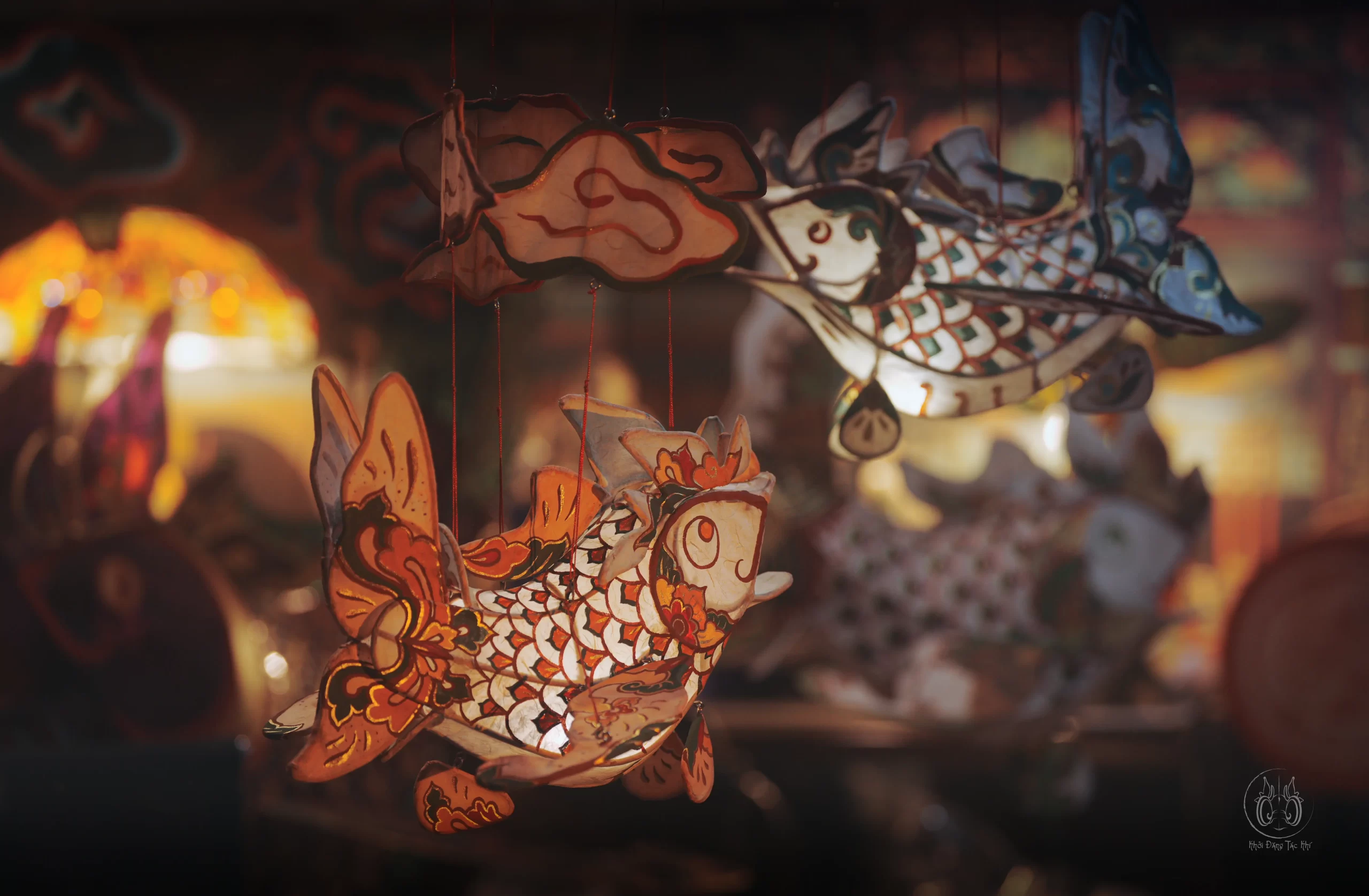
I asked Thuy how long it took to plan and complete a new lantern design.
“At least six months,” she replied.
For the past sixty or seventy years, hardly anyone has remade such complex lantern forms. It is common to use flat bamboo strips or wire frames to speed up the process and make things easier. Instead, she chooses bamboo –the hard and slow path – because she wants to create a lantern refined from the inside out, one capable of echoing the essence of traditional craftsmanship.
The frame is not the only thing artisans pay close attention to. It is also crucial to choose the right material to cover the lantern.. Covering the lantern frame with cellophane is quick, and far cheaper. But speed and cost-reduction were never quite a reason for them to compromise. She told me about do paper, a traditional Vietnamese paper, an experiment begun only at the start of this year. Naturally monochromatic, Do paper must first be dyed and then left to dry before it can be draped on a frame; the process lasts for more than four hours, demanding considerable patience. Where cellophane lets light pass through in glittering translucence to cast eye-catching shadows, do paper softens into matte, muted tones – and it is precisely this quality that offers a freer canvas to play with colour.
Revisiting the old to understand the new
What they are doing, in the end, is not an attempt to produce something more exquisite than the predecessors did. They simply want to return to the lantern its refinement that has long been its own, allowing that inherited form to breathe within life today, amid streets that have changed countless times. Perhaps, I think, this is the hardest thing of all: to build upon tradition without losing the heart and soul that has given it value for generations.
There is, however, one worry they cannot conceal: no cultural infrastructure yet provides a solid enough foundation to give lantern-making a secure place. No one knows how much appeal traditional toys will retain for children growing up in the digital age. I find myself wondering whether they might be among the last generations still straining to preserve a traditional craft that is quietly receding into Mid-Autumn nights of the past.
“Over more than a century, the disposition of modern Vietnamese people has changed greatly. Rising material living standards have swept people into a cycle of speed, convenience and efficiency, distancing them from the emotional values of East Asian tradition and from benevolence, righteousness, propriety, wisdom and trustworthiness,” Thuy said. “Crafts passed down orally and through observation, such as lantern-making, are terribly fragile – they do not live in books, and they can never be recorded in full. They reside entirely in the hands that make them, in every stroke that smooths a bamboo strip and every fold of paper. And hands do not live forever.”
But perhaps, the spirit does. “The name ‘Khoi Dang Tac Khi’ evokes the making and awakening of ‘khi’ (vital force), through the act of ‘khoi dang’ (raising the lantern). It is an invisible energy, yet also a resilient inner force of a nation, built up through the depth of history and culture so that they can move confidently through the upheavals of the future, rather than chasing shallow material values,” she explains.
A thousand years to keep the flame
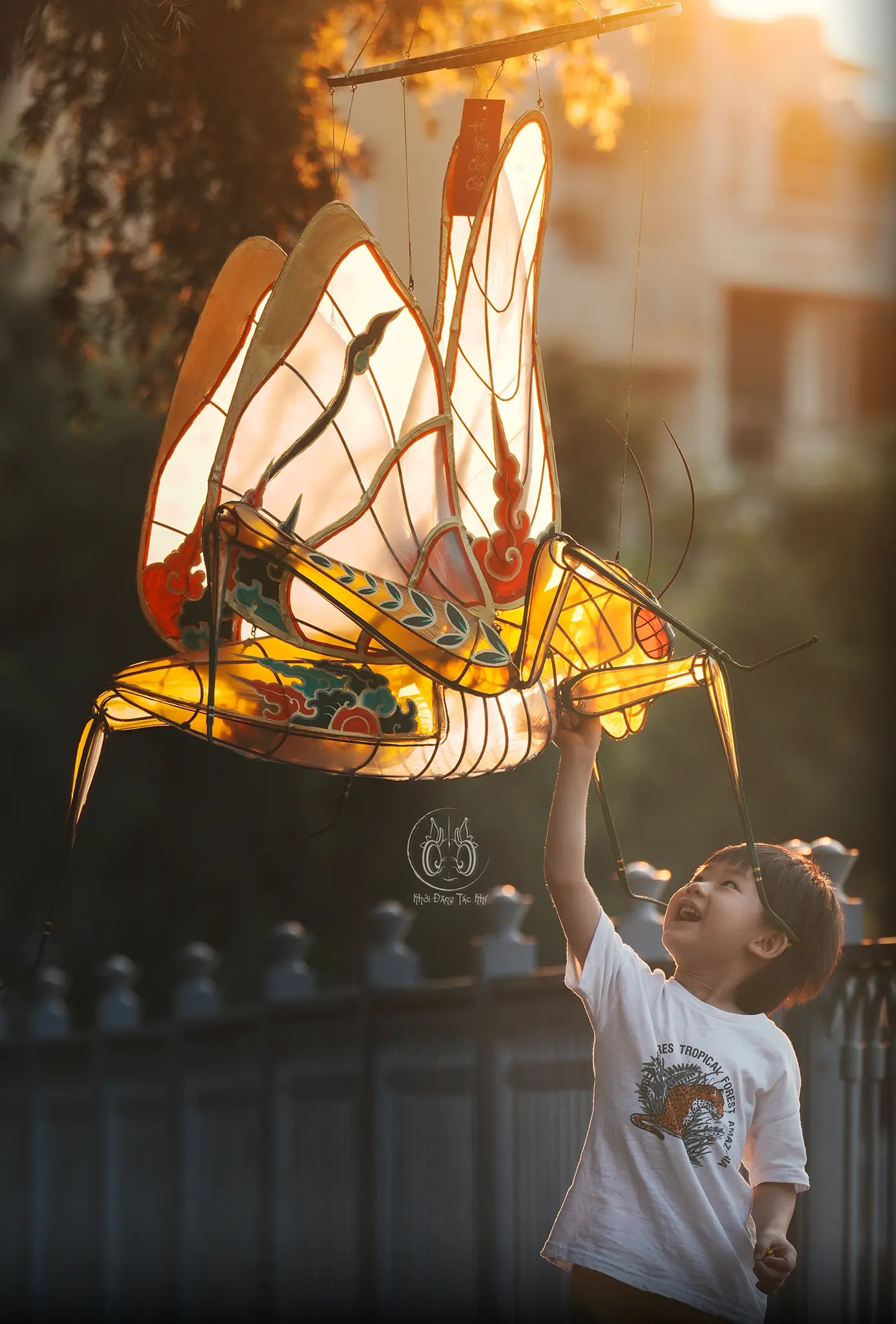
As her hands moved with each stroke of brush, Thuy spoke of her young son, who grew up amid the smell of glue and fresh paper, and the gentle clatters of bamboo throughout long afternoons. From an early age, he has been accustomed to seeing his mother sit for hours beside a lantern frame, to colour-stained fingers, to the atmosphere of a workshop at once busy and still. Perhaps to him, a lantern is not a product but a part of childhood, nurturing him everyday. Each lantern holds a lesson – a way for Son and Thuy to gradually bridge the gap between generations. That childhood joy – the bond between their and these toys – will grow into an early life lesson on cherishing humble materials and the hands that toil over them from dawn till dusk.
It is, indeed, an arduous journey, but the couple believe that future generations like their son will have more opportunities to touch these lanterns. Seeing how bamboo ribs are bent evenly by hand, layers of paper painstakingly applied, calibrated strokes of colour painted and repainted, one shall begin to handle traditional craftwork more gently. And perhaps, through such small encounters, people will save up a place in their mind for handmade objects, which have always become a quiet part of their life. Handicraft is no longer static in memories of a bygone time, but moving towards the future.
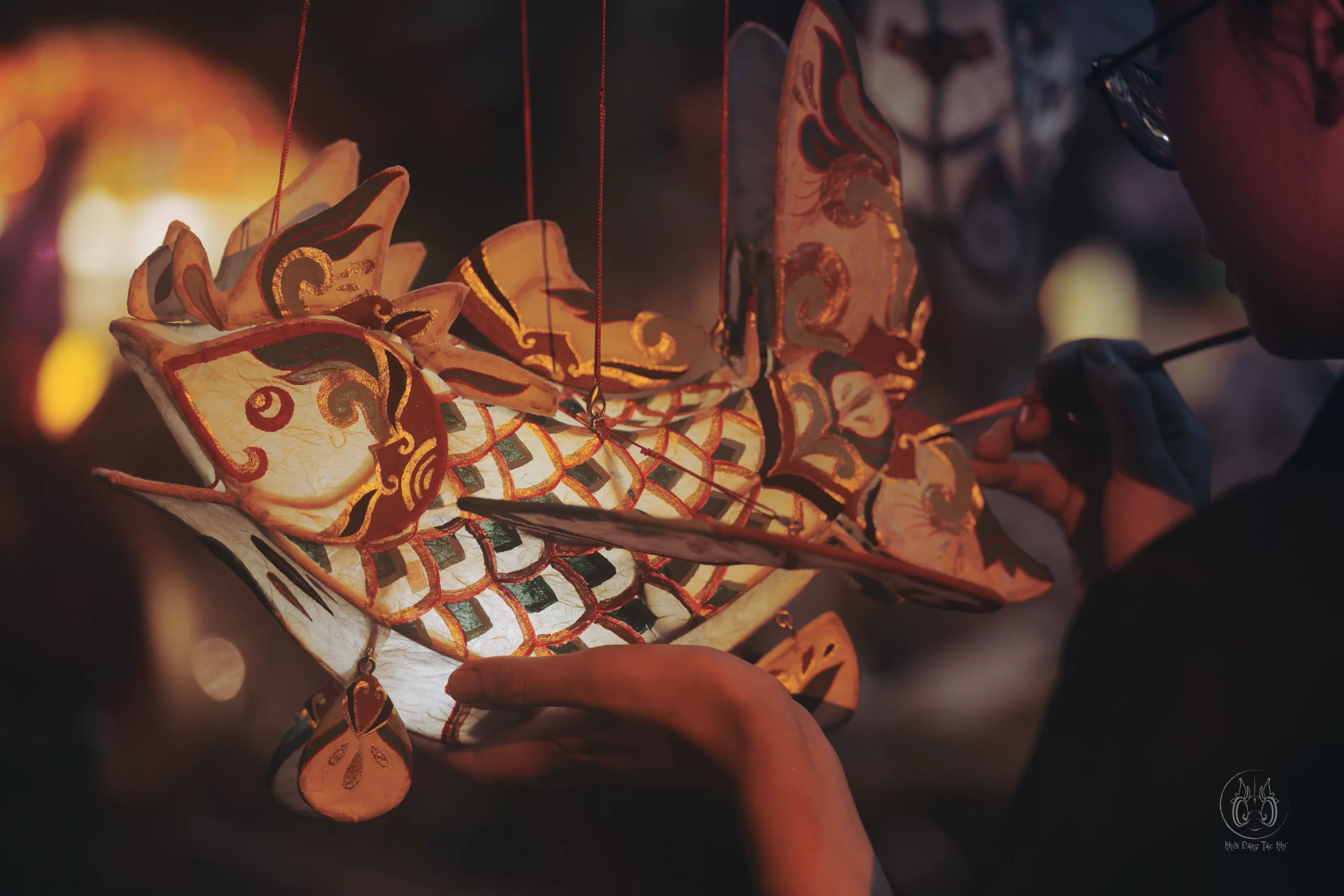
All through the conversation, every subtle shift in their voices and sparks in their eyes revealed something deeper, beyond the volume of production, beyond the success of any particular design, lay a hope that the patient labor of “cultivating people” would one day bear fruit, so that the rustic beauty inherent in every lantern could be preserved for future generations. It may all begin with the joyful laughter of their son on an afternoon amidst a clutter of colored paper and bamboo strips.
Words: Nguyen Nguyet Toc Tien
Translation: Art Nation