Đọc phiên bản tiếng Việt tại đây.
You completed a degree in Poetry and Literature. Do you still write poetry yourself?
Not really, at least not in the way I did at university. Poetry still finds its way into my writing, but almost by accident. I wouldn’t describe myself as a poet anymore.
Even with “Tham Lai,” the moments where my own voice comes through only work within the framework of a press release. That form gives me something to push against, but it also lets the personal slip through in a way that feels honest rather than indulgent. Curatorial writing tends to hide behind academic language, so when something personal surfaces, it lands differently.
Though I’m always conscious of the line. If those same poetic moments I wrote stood alone, I’d find them a little too corny.
I want, and therefore I am.
Without desire there is no forward motion, no reason to make
anything, no spirit animating a life.
Longing not as a symptom of lack, longing as an engine.
To want is to move, to move is to accumulate things.
“If love is fated, you’ll chew it red.”
The stain is still deepening.¹
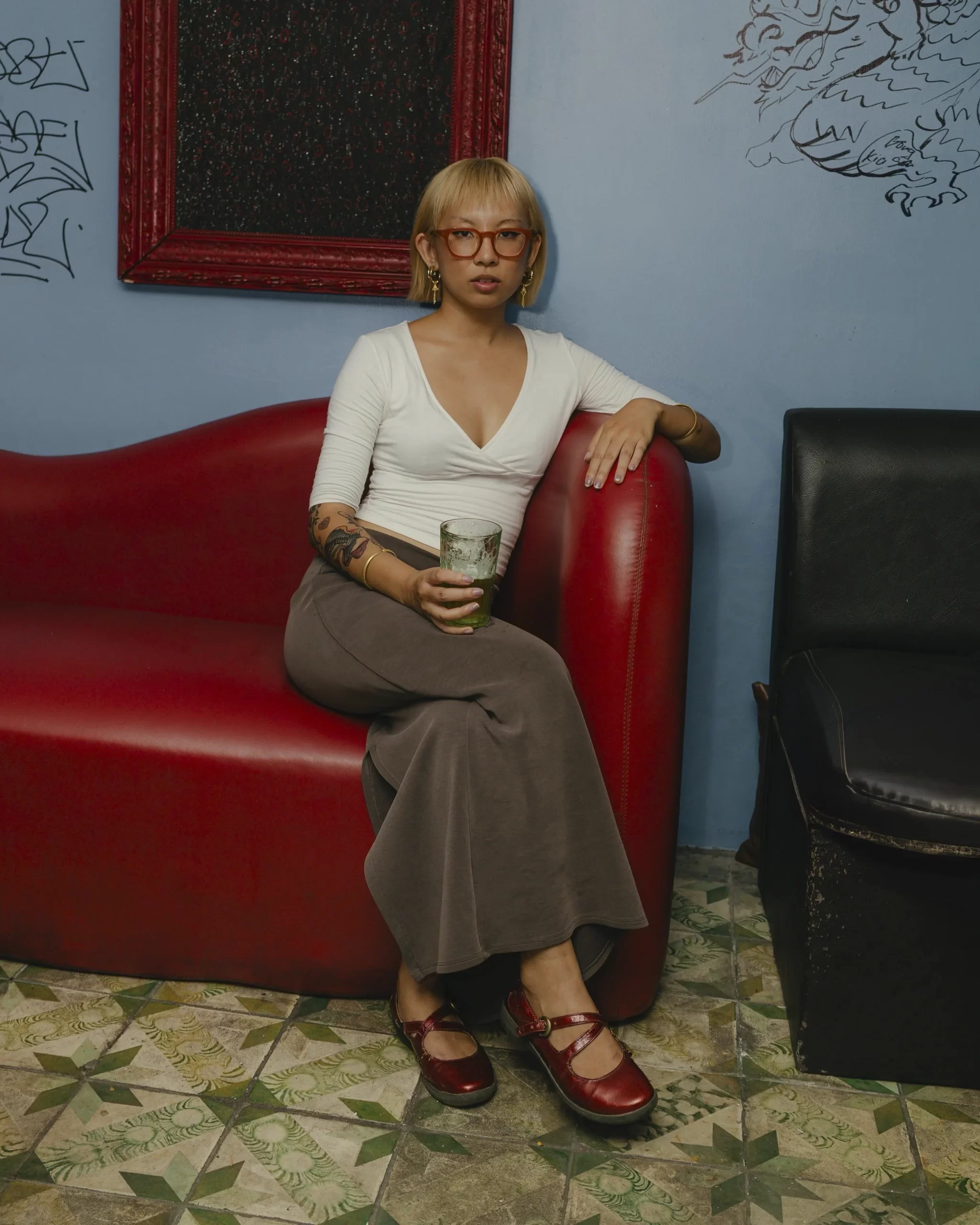
You seem quite conscious of the line between corniness and seriousness.
I don’t think seriousness and corniness are opposites. Something can be both at once. A lot of what moves me is corny in some sense, excessive, unguarded, and completely sincere. That sincerity is what makes it serious. But in my own work, that line is something I’m always negotiating. A lot of my curatorial practice involves revisiting subjects that are often dismissed or overlooked, whether that’s kitsch, Vietnamese art, or cultural forms outside dominant Western frameworks.
For many Vietnamese, “Moi An Trau” (Offering Betel) is almost an introductory poem. My initial assumption was that your attraction to it might come from a kind of distant reading of Vietnamese culture as a Viet Kieu.
I think that framing is quite reductive. The range of experiences within the Vietnamese diaspora and domestically is so vast that a distant reading was never the only possible starting point. That said, I did expect people to underestimate the choice.
The poem is familiar to many, but it contains a complex lineage of storytelling, gender, and desire. And then there’s the tension between the Vietnamese original and its English translations, some of which fundamentally alter the meaning. And for many Viet Kieu, those translations were also our first introduction to Ho Xuan Huong and to Vietnamese poetry more broadly. That difference fascinated me. Two versions of the same poem that don’t quite say the same thing, perhaps reflecting different kinds of longing, or perhaps reflecting the impossibility of saying certain things in another language at all.
I also relate to Ho Xuan Huong herself. Her work was repeatedly misread, rewritten, or attributed to others. There’s a long history of women’s voices being mediated through somebody else’s language.
Mời ăn trầu
Quả cau nho nhỏ miếng trầu hôi
Này của Xuân Hương mới quệt rồi
Có phải duyên nhau thời thắm lại
Đừng xanh như lá bạc như vôi.²
Let’s talk more about “duyen” (fate). The way you connect it to longing feels closely tied to duration, something unfolding over time. How do you think about time in relation to “duyen”?
I consider longing as a form of progress. If you don’t want something, you don’t move towards it. Desire becomes a driving force. And in Vietnamese, longing and “duyen” are not really separable. The longing exists because the connection is already fated.
There’s a line in the poem, “Có phải duyên nhau thời thắm lại,” that gets translated as “If love is fated, you’ll chew it red.” Something shifts in that translation. The word “duyen” has no English equivalent. It speaks to fate, to a destined connection that persists, the inevitability of certain bonds. The English translation lands on the act: chewing betel until your teeth stain red, passion made physical, the labours of love. But the Vietnamese lingers on the bond itself, and on “thắm lại,” the becoming red again, the staining that happens through repetition.
That repetition is important. “Duyen” doesn’t operate on your timeline, but on its own. Western longing can sometimes feel endless, like labour without resolution, because it places the burden of outcome on the person doing the longing. “Duyen” redistributes that burden. It carries the belief that what is meant to happen will eventually happen, that time itself is working toward something. If you have “duyen” with someone, you’ll meet again. It might not be now. But the connection persists across time rather than being consumed by it. There’s comfort in that, a sense of trust that some things exist beyond your control.
So for me, it is “duyen” that makes the unresolved bearable. It doesn’t end the longing; it gives you a reason to stay in it.
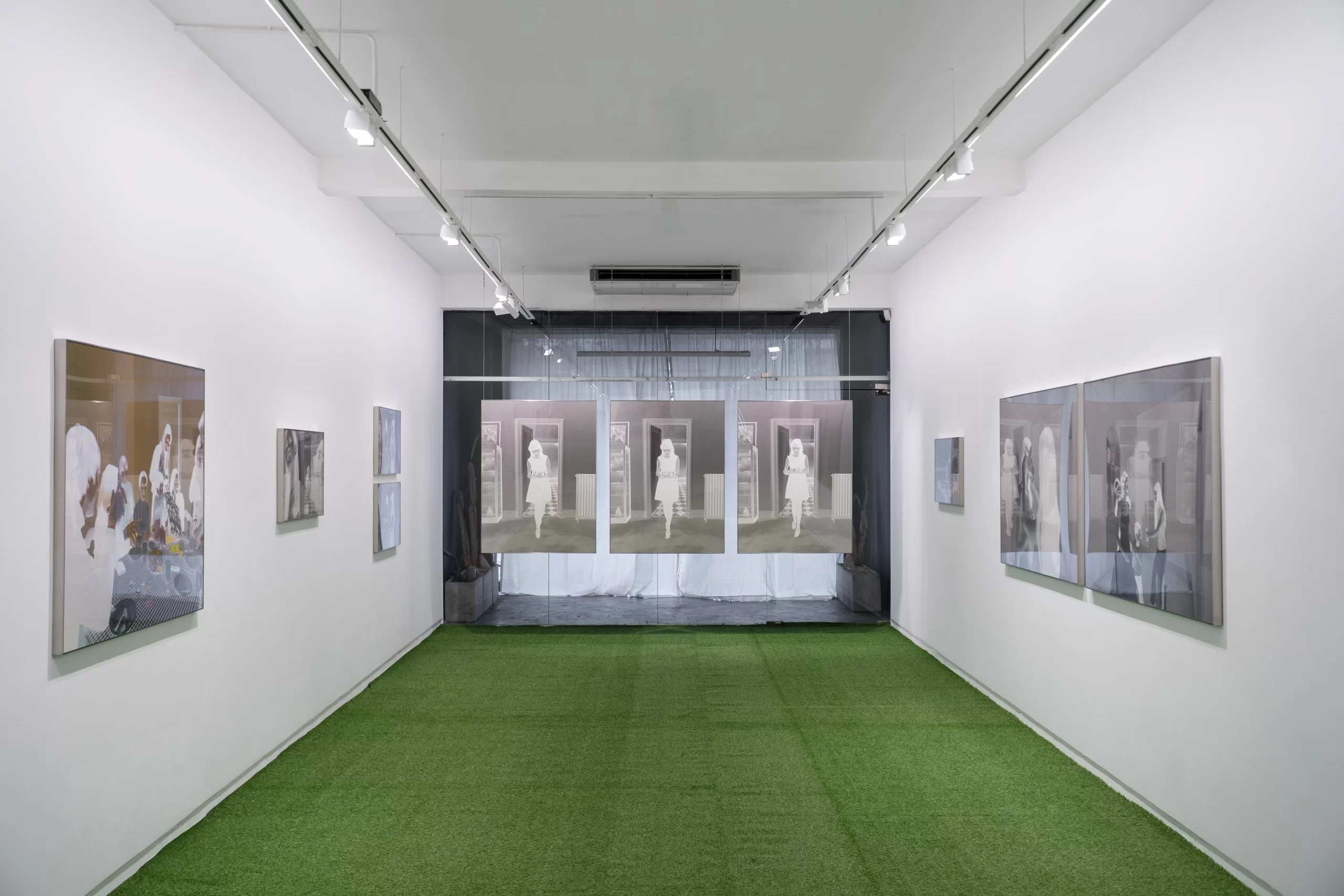
And yet, despite that sense of comfort, I still felt a current of discomfort running through the exhibition. Tuong Danh’s “Lan Su Ho” (Lion-Tiger-Qilin), for instance, seems to emerge from a rupture within traditional mythology.
Absolutely. Discomfort is necessary for transformation. Maybe “duyen” provides a broader framework, but discomfort is what actually pushes people forward.
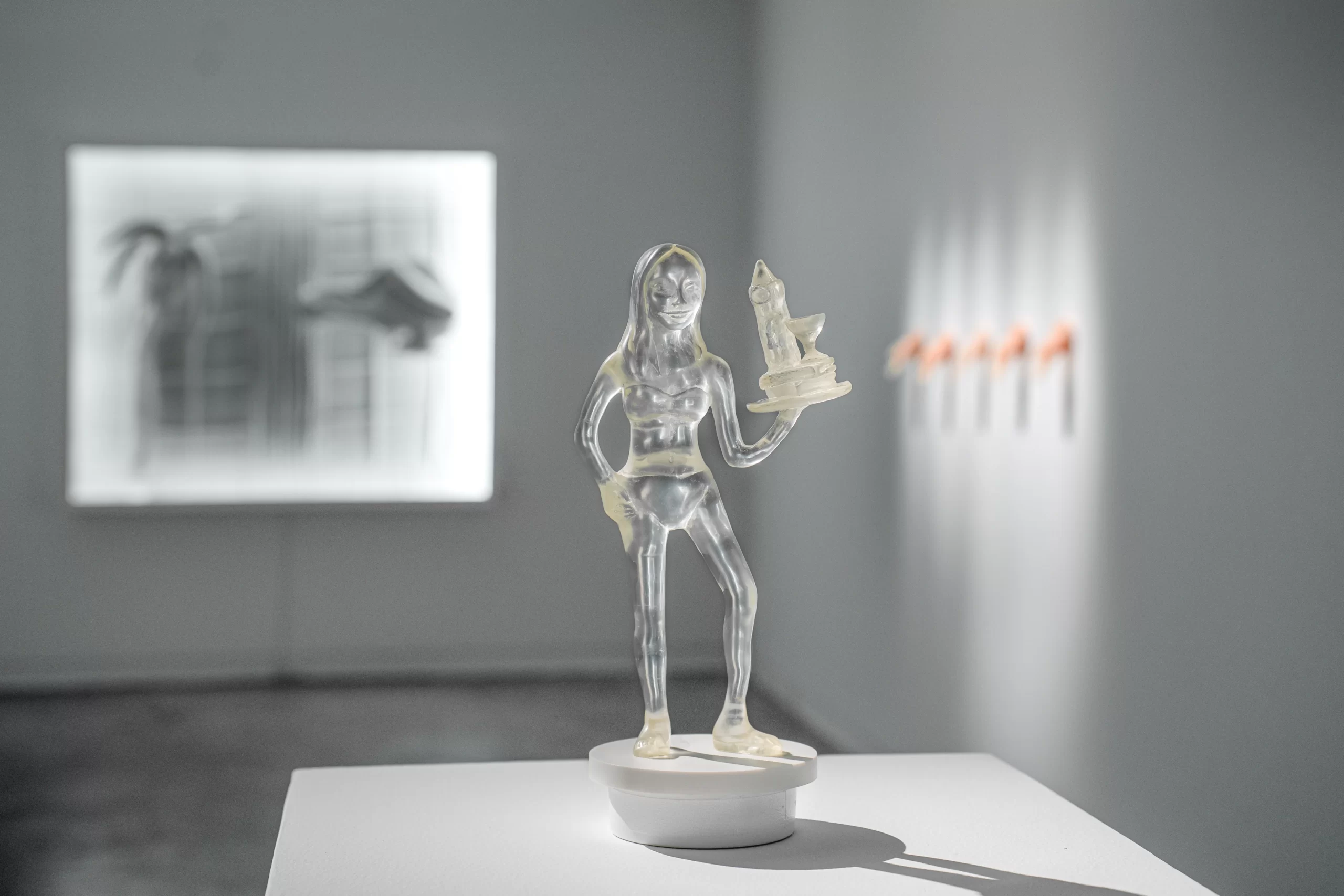
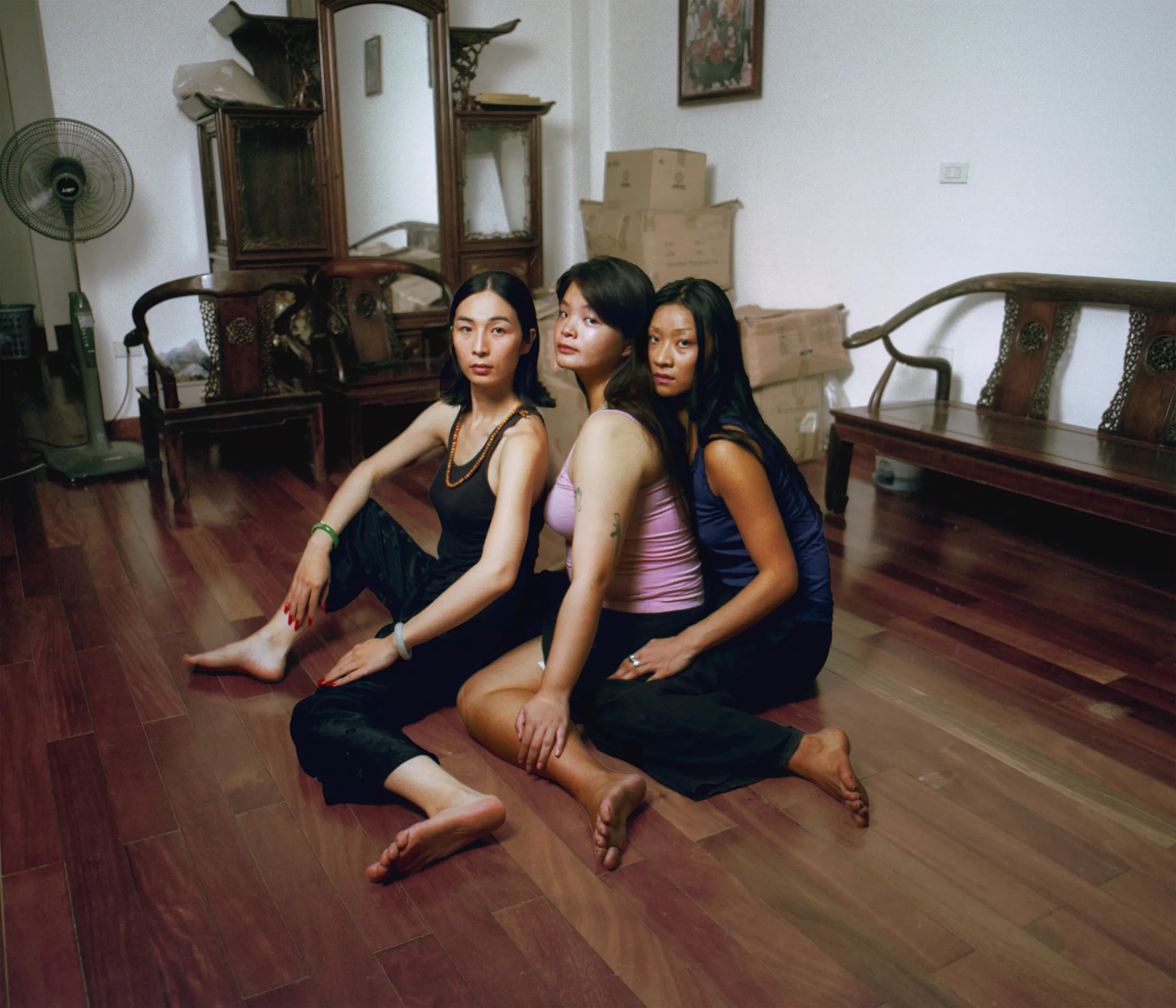
Tuong Danh is creating new myths because she doesn’t fully see herself reflected in the existing ones. Her work comes from that tension, from the rupture within traditional mythology rather than a smooth continuity with it. With Van Nhi, the discomfort is around impermanence and the fear of losing certain forms of intimacy, the anxiety of things slipping away before they can be held. Anh Phuong’s work sits with the desires and labour of Vietnamese women within service economies, the weight of what is expected and what is suppressed. And Xuan is reconstructing fragments of family history, working with what remains when memory is incomplete.
None of those works would exist without discomfort. Desire and discomfort are connected. Longing becomes productive because something remains unresolved.
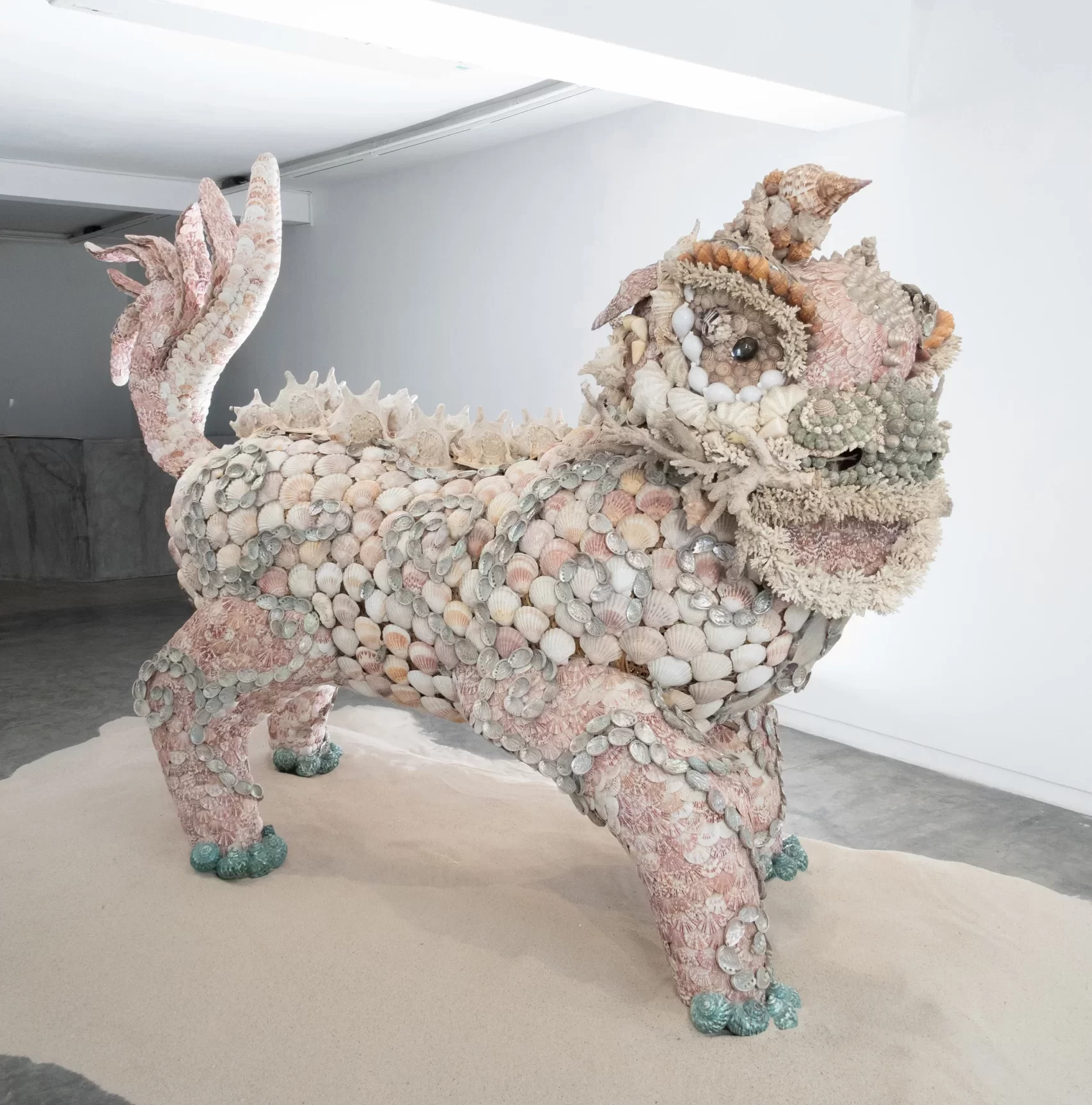
So, in a sense, the exhibition is constructing a new way of imagining womanhood?
In some sense, yes, though I think of it less as construction and more as expansion. The womanhood in this exhibition isn’t being built from scratch; it’s already rooted in history and culture. What I hoped people would take away is a sense of that rootedness alongside the possibility of reinvention. That these things aren’t in opposition.
That’s also why I deliberately avoided making romantic longing the exhibition’s central subject. I wanted longing to appear across every aspect of life: history, labour, migration, intimacy, mythology. Because that breadth is part of what Vietnamese womanhood actually is, it carries the weight of culture and history while simultaneously finding new ways of being within and beyond it.
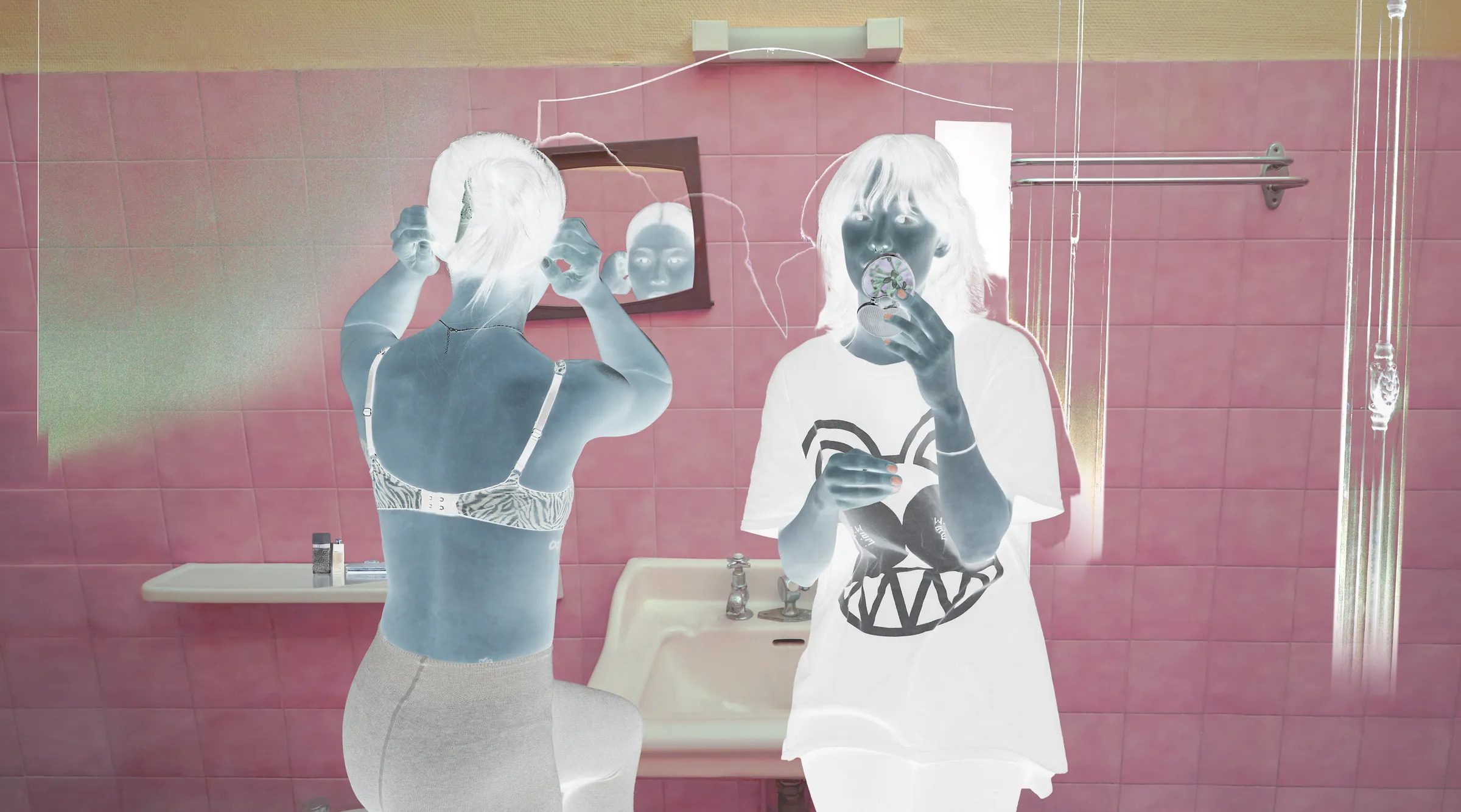
The title “Tham Lai” evokes becoming red again. There’s the betel stain in Ho Xuan Huong’s poem, and even your own name carries associations with redness. Did colour ever become a curatorial consideration for the exhibition?
Initially, I considered incorporating many red elements throughout because of the betel imagery. But I eventually realised that doing so would push everything back towards romantic symbolism, and I was trying to move away from that.
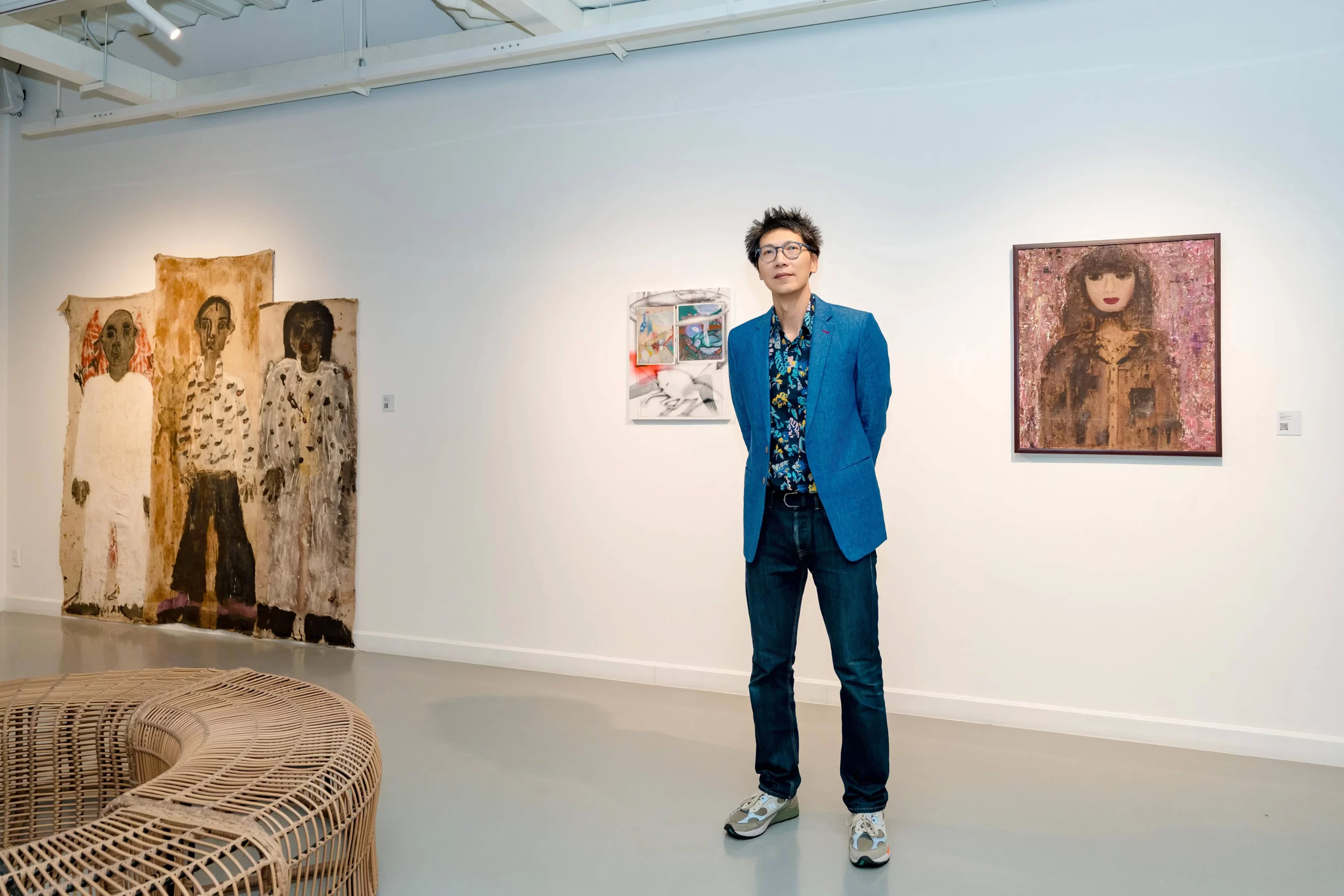
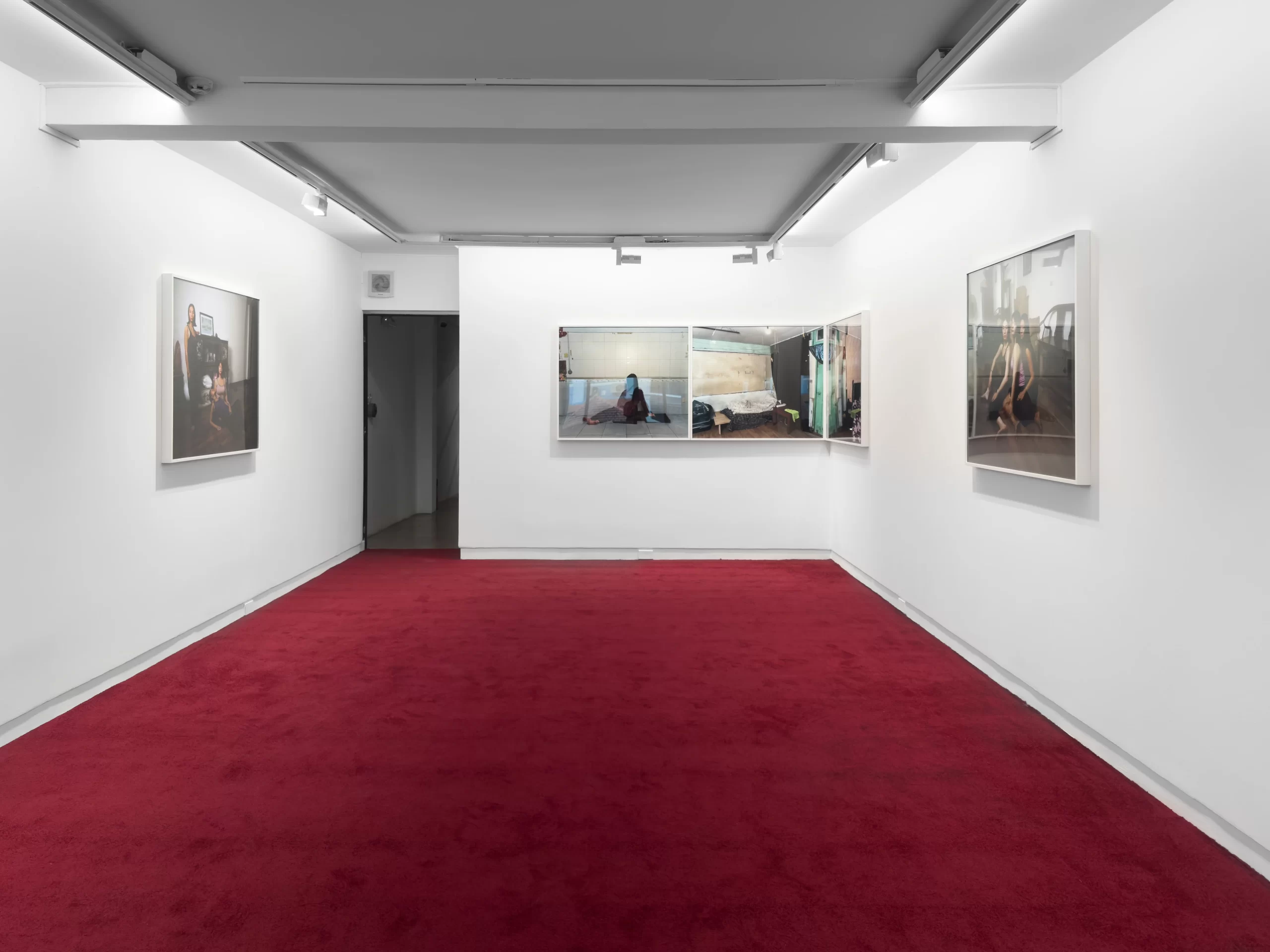
There is a visual cohesion to the exhibition, but it comes from somewhere else. These are all young artists working within the same or adjacent communities in Vietnam right now. Each artist had their own room, which gave that individuality space to breathe. But the deeper connections between the works exist at the level of ideas rather than aesthetics.
So how did the exhibition come together?
Honestly, very chaotically, though that’s only part of the story.
I had been sitting with these ideas for years. I first encountered the poem a long time ago, and a lot of what the exhibition explores are questions I’ve turned over in my personal life. It wasn’t until I started planning the exhibition that everything began to click into place, which felt very “duyen” in itself.
All four artists were already friends with one another independently of me. When I invited them into the exhibition, everyone immediately agreed because they genuinely wanted to show together. That felt important. I wanted the exhibition to reflect a sense of community built through care rather than competition. Sometimes exhibitions come together within a timeline you don’t previously know about. The ideas and the relationships have to develop first, and then suddenly the conditions are right.
Exhibition-making is also intense labour. How do you think about labour within exhibition-making and the art world more broadly?
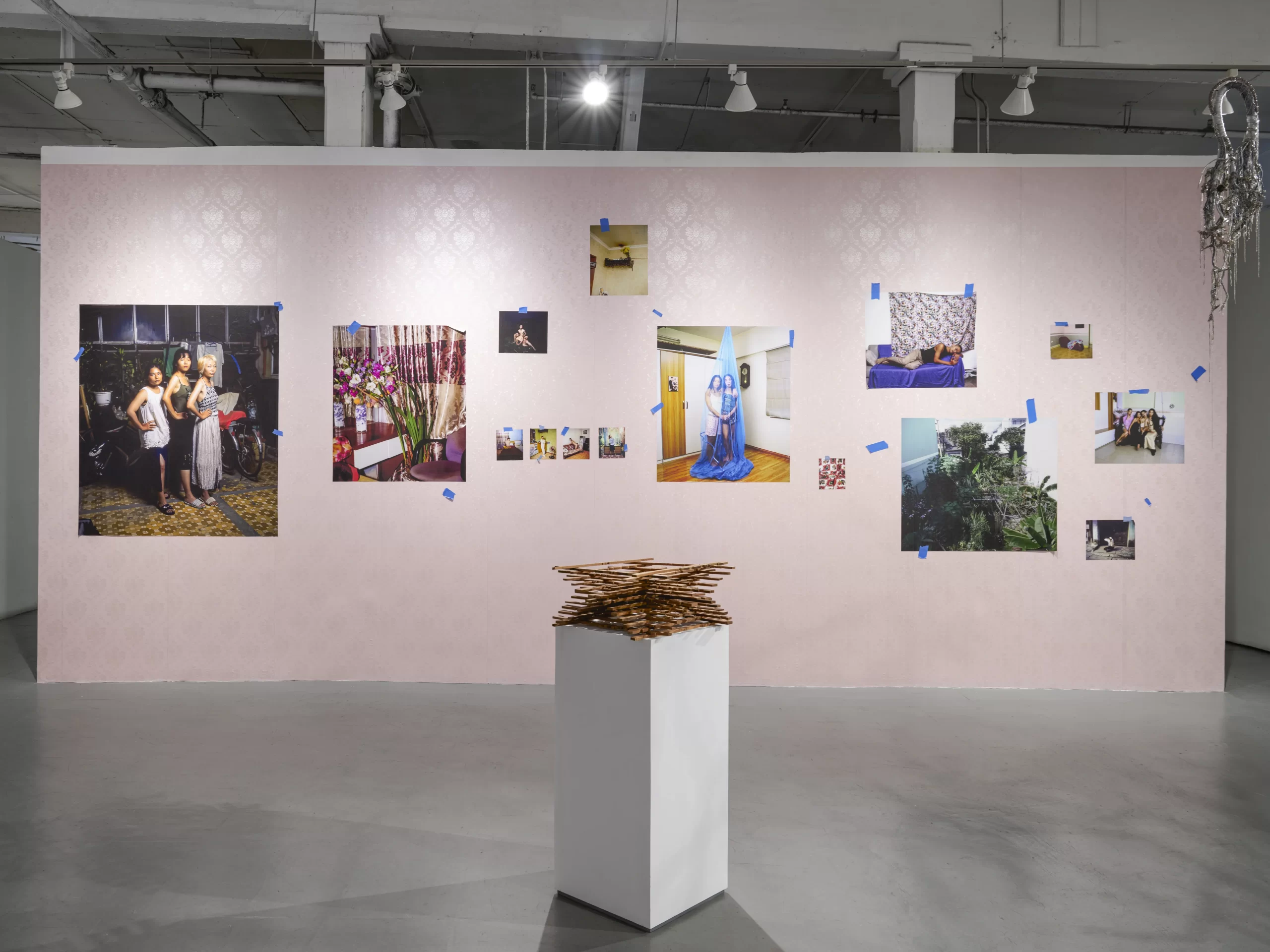
Labour in the art world is deeply undervalued, particularly invisible labour. That’s why I care so much about credits and acknowledgements in exhibitions. People often imagine curating as purely conceptual work, when in reality much of it is administrative, logistical, emotional, and translational. Exhibitions are collective constructions: installers, fabricators, translators, gallery assistants, registrars, artists, craftspeople. So much labour disappears behind a single curatorial name, especially forms of feminised labour that often go unseen and unacknowledged.
What you talk about these relationships reminds me of the Vietnamese art scene in the 1990s, which was sustained largely through friendships and personal networks. Today, though, some younger practitioners are critical of that model because it can also be exclusionary.
I think both things can be true. Friendship can be beautiful, but it can also be uncritical. Though I’d say that tension exists in every art scene, not just Vietnam’s. Exclusion through informal networks is hardly unique to this context. If anything, I think it’s worth being careful about applying that critique selectively to non-Western scenes when it’s just as present in New York or London. At the same time, I don’t think I’ve been in Vietnam long enough to make a definitive judgement about the scene. I’m still learning how to participate in it myself.
You’ll be returning to the United States soon. What will you miss most about being in Vietnam?
The sense of hope. In New York, it can sometimes feel as though everything has already happened. You’re constantly reinventing existing conversations. In Vietnam, things still feel remarkably open. There’s room for experimentation because so much remains undefined.
And honestly, I’ll miss simply being around Vietnamese people. But I don’t really think of myself as leaving permanently. My practice already exists between Vietnam and New York, and I expect that to continue. More and more young Vietnamese artists and cultural workers are building lives across multiple places now, and I think that movement is generative. It expands what Vietnamese art can be and who it can speak to.
Our sincere thanks to Anh Dao Ha for taking the time to speak with us.
Words: Nguyen Hoang Gia Bao
[1] Excerpt from “Tham Lai” (2026) curatorial text, written by Anh Dao Ha for the exhibition “Tham Lai” at Galerie Quynh.
[2] The Vietnamese original of “Offering Betel” (Mời ăn trầu) has been retained in the English version of this interview to preserve the tension between the poem’s original language and its translations.