Đọc phiên bản tiếng Việt tại đây.
Even while you were a student at Vietnam University of Fine Arts in Hanoi, you took part in the exhibition New Story – New Artists (1995) at Salon Natasha, showcasing the Untitled series. What led you to begin using text as both material and a mode of expression at a time when experimental art received little encouragement?
By the mid-1990s, along with the country’s integration following Renovation reforms and the emergence of the Internet, influences from Western modern and contemporary art were arriving in Vietnam in a rush. During that period, a German lecturer at the Vietnam University of Fine Arts, Veronika Radulovic, brought in a great deal of material on international modern and contemporary art to introduce and teach. I remember that around 1993–94, the school also hosted exchanges with foreign art groups and mounted exhibitions of works so novel that I had never seen anything like them in Vietnam, even in books.
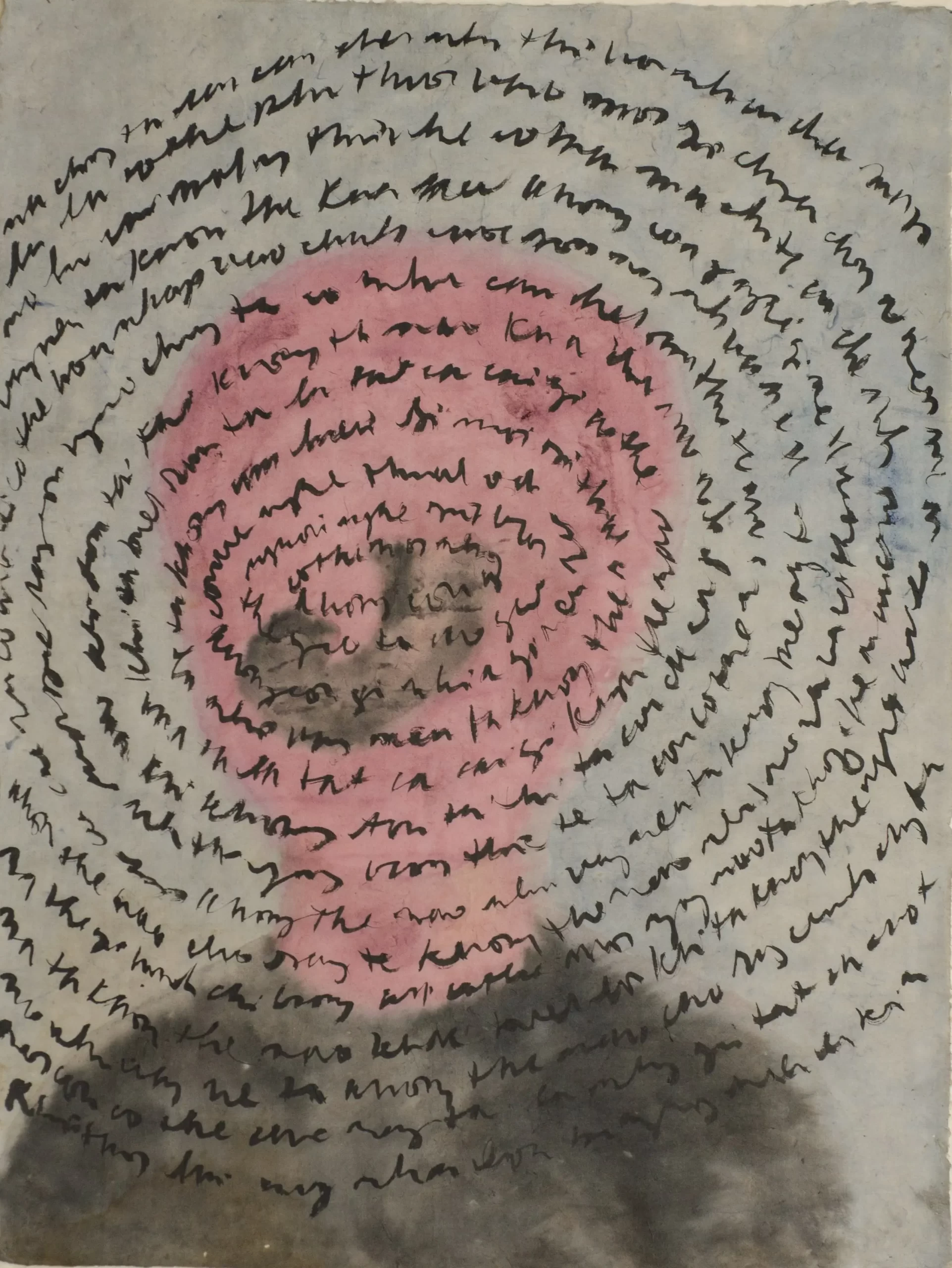
We came of age within that artistic environment. Compared with the rest of the world, it was perhaps behind the times and somewhat conservative, but it was enough to ignite our desire to experiment with something new. One of the central impulses of Western art was its turn towards individuality. Under that influence, I began asking myself: who am I, where do I come from, and where do I stand amid the wider movements of the world? I was born at a Buddhist temple called Thay Temple, so Buddhism became a point of origin for my encounters with art. As I explored Vietnamese history, religious art and Buddhism in particular, I encountered Chinese and Sino-Nom characters – signs that, to me, were abstract and carried a fractured cultural memory. At the same time, experimental tendencies in art around the world were increasingly bringing information and signs into artistic practice. I saw myself then as a perceiver, wanting to understand what kind of value or energy might emerge from those strings of words once they could no longer be deciphered.
Globally, waves of text-based practice and non-linguistic marks had been taking shape and spreading since the 1960s. How much did those international currents influence your practice at the time?
My friends and I were all deeply interested in the formative works of Western Conceptual art, for example Dada in the early 20th century, or avant-garde movements in art and music from the 1930s to the 1950s. Those artists’ manifestos were simple, yet they carried very strong individual creativity. The Vietnam University of Fine Arts was very open, creating many opportunities for exchanges with artists from Australia and Germany, including Veronika Radulovic. Nguyen Luong Tieu Bach was another teacher who spoke openly and regularly with students, helping us develop our thinking about artistic practice. That was an opportunity few students at other schools had at the time. Most artists outside the school had access to only a handful of books, rather than the more direct exposure we had through watching performance documentation on tapes and discs. This access lasted only a short time, roughly two years, from 1995 to 1997.
Unlike many contemporaneous practices, the characters in your work do not set out to raise issues literally on the page, but move more fluidly through concentric circles and continuous spirals. Was this a way of conveying your point of view through a sensibility distinctly your own?
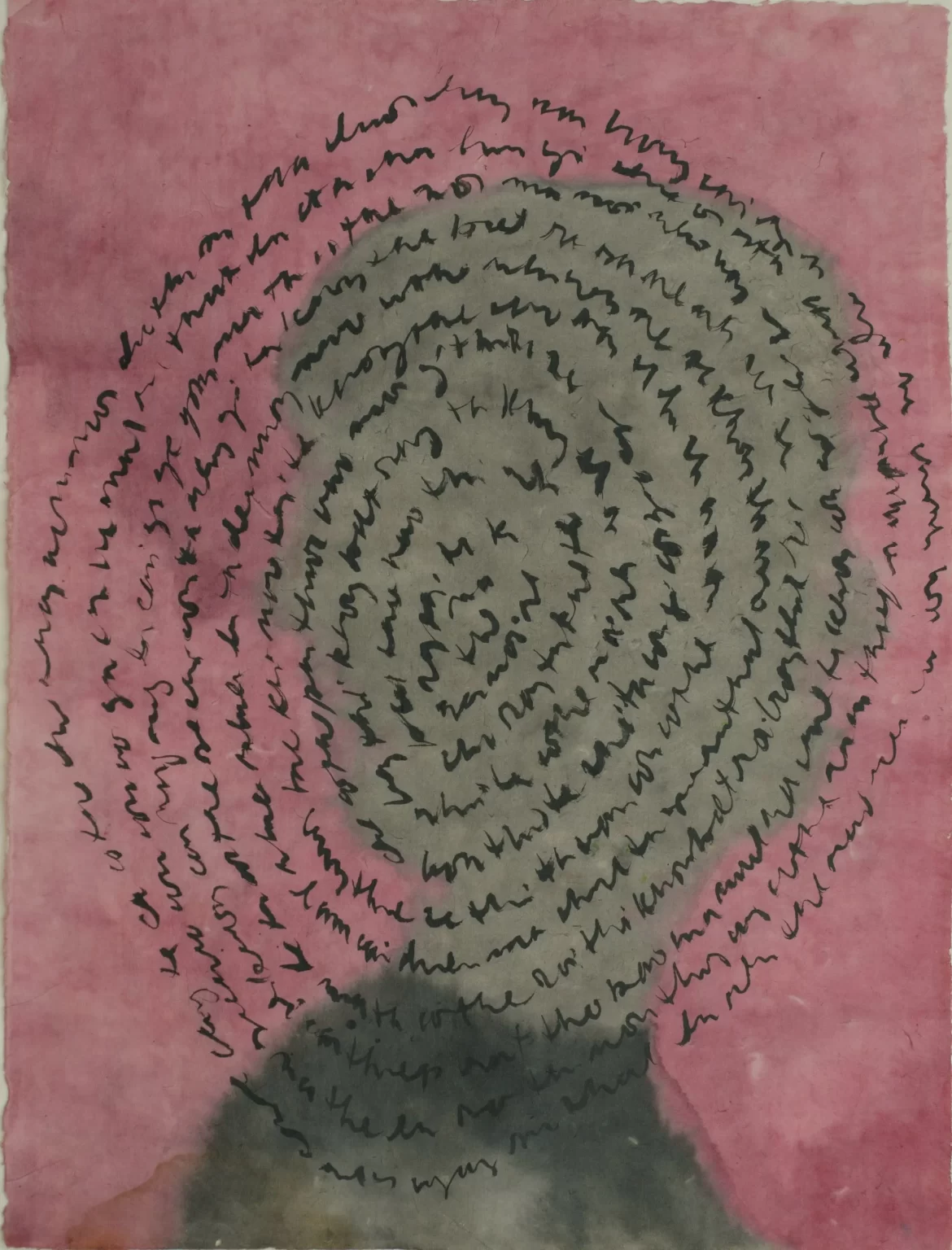
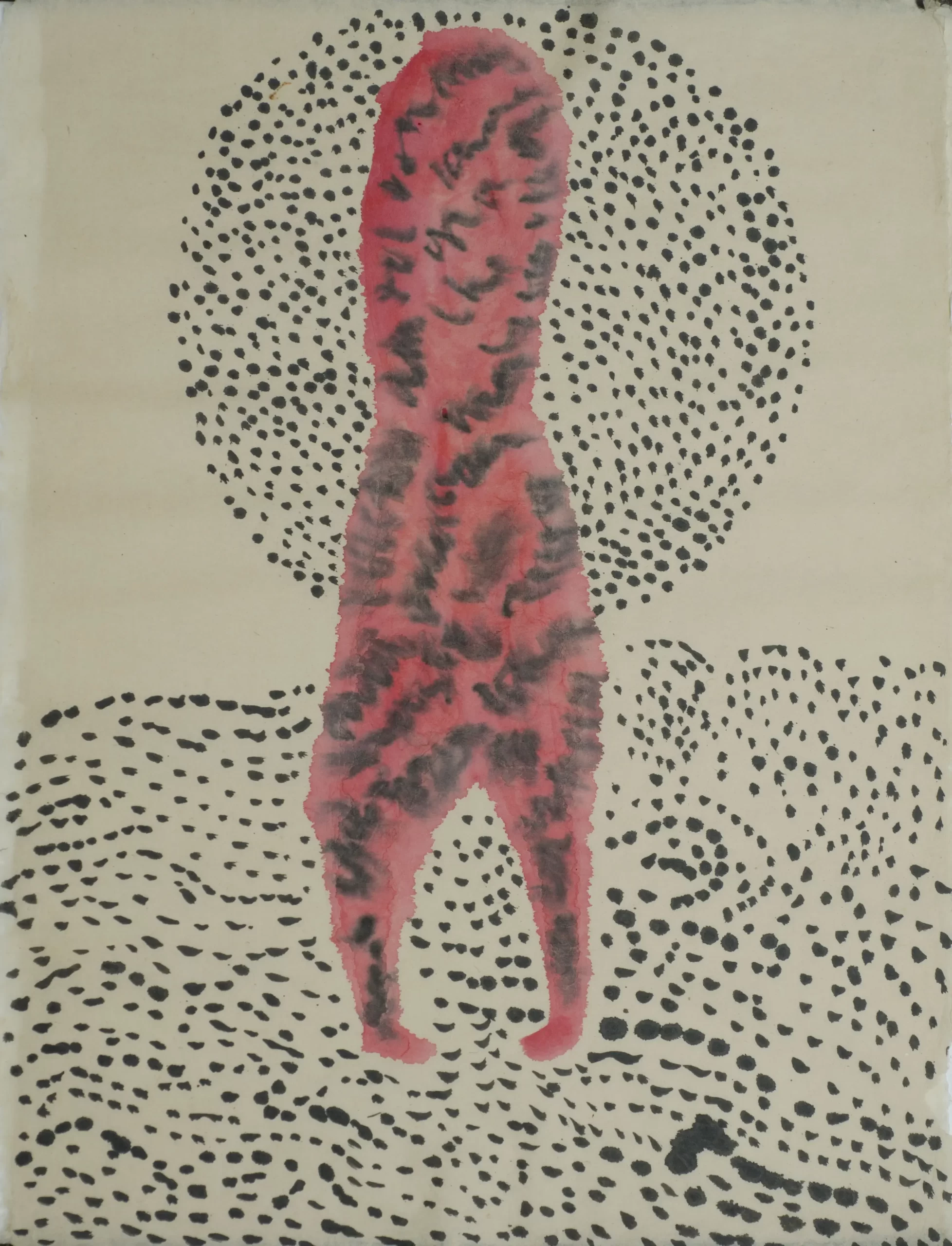
At the time, as life around me was changing, ideas came in a rush – overlapping, circling and constantly turning. Thought moved faster than writing or images, faster than anything one wanted, or was able, to draw. I felt that if I could not contain all those thoughts within a painting, I might as well write them out. But because the language of art is, at heart, a language of visual perception, I did not want viewers to read the words; I wanted them to sense the flow of thought through composition, form and line. I chose continuous writing without diacritics, reflecting the intensity and urgency of my own thoughts.
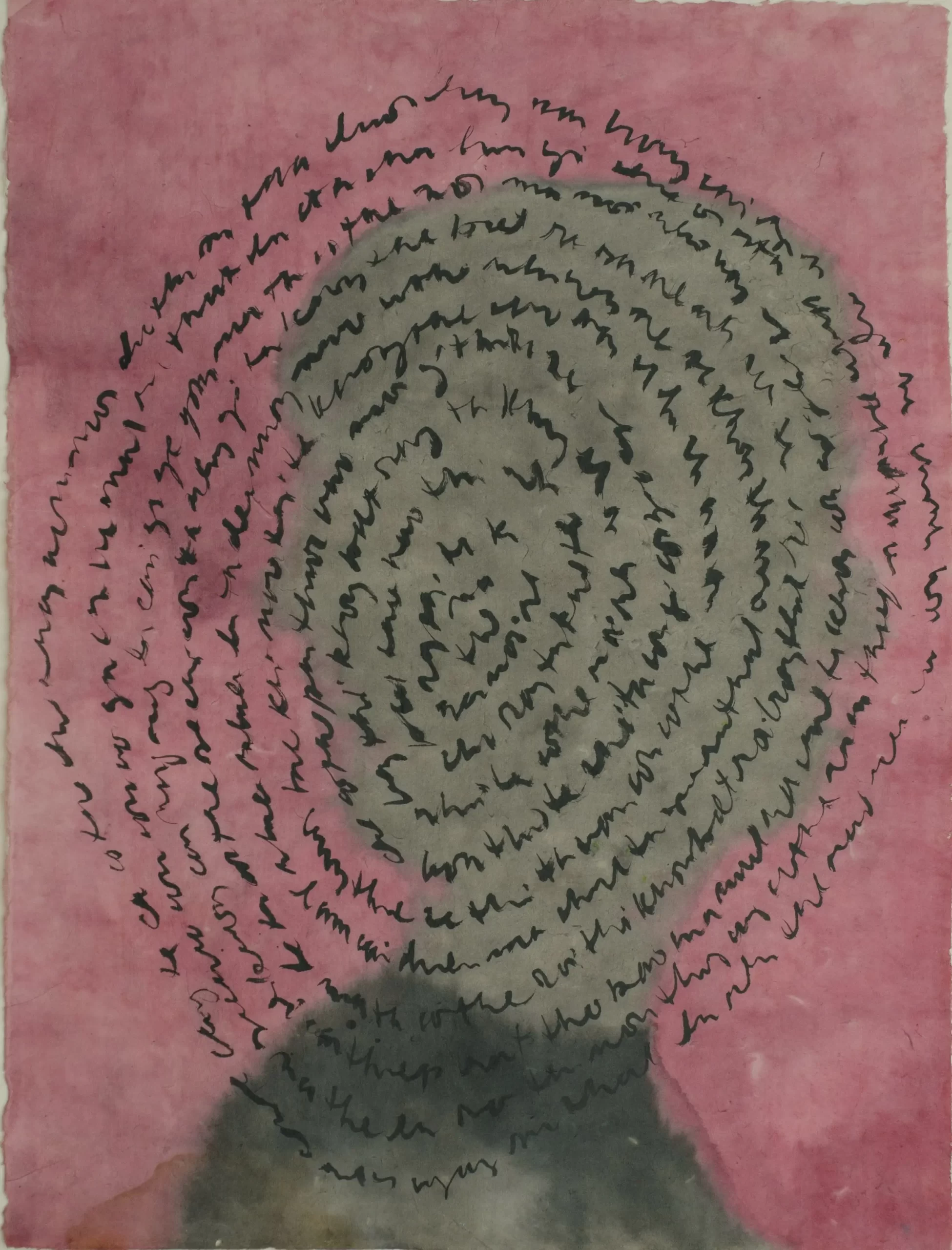
It was precisely because of that abundant, almost excessive energy that I sought balance in statues of the Buddha. I let the written line follow the meditative seated posture of a Buddha, forming spirals that traced a stream of thought moving continuously deeper inward, towards the centre of the composition, until there was nowhere left to write. I believe art always contains a part of “thần” – the spontaneous, animating dimension of artistic creation – alongside a part of “nhân” – the human, trainable dimension of artistic making. If “nhân” belongs to skills that can be trained, “thần” is a natural emergence that even the artist cannot control. That “thần” is also a core element of Eastern art.
The characters in your Untitled series were made with a calligraphy brush on dó paper, a traditional Vietnamese handmade paper. Could you explain why you chose those materials and how they shaped your practice?
When I was a student, oil paint was the principal medium for painting within the Western academic art conventions I was taught at the university. But both oil paint and lacquer – especially lacquer – were very expensive. My friends and I also wanted to resist and break away from the conventions of academic art. Because we had limited means, the most accessible materials at the time were do paper, Chinese ink and watercolour. Almost inadvertently, those choices aligned with the Eastern and Buddhist sensibility of my practice.
Although I was not a Buddhist and had no formal knowledge of Sino-Nom calligraphy, I found in do paper and Chinese ink a liberation of the “spirit”. Handmade do paper is inherently difficult to control if you want the precise realism of Western Renaissance painting, but it is extremely well suited to freedom and loosening the mind. For streams of thought I did not want others to read, I just needed to drag the brush a little faster: the ink would blur, the writing would break apart and immediately become indecipherable. Because I was also influenced by Western avant-garde currents and their questions directed towards the individual, this approach allowed me to confront myself directly, without anything else intruding.
During the same period, you were also active alongside colleagues such as Truong Tan, Nguyen Van Cuong, Nguyen Minh Thanh, and others. Do you remember the conversations or exchanges that helped shape the highly distinctive expressive character of your pioneering generation?
Back then, we often gathered together, wandered around and lingered at tea stalls talking about art. We did not discuss our work head-on; we would only gently touch on questions of art-making, try to help each other sharpen our own aesthetic judgement, and ponder which tendencies seemed promising and might go further. In contemporary art, standards such as having the “correct form” or “correct lighting” had already been dismantled, so there was little point debating right and wrong or advising one another by those measures. Without ever saying it aloud, we more or less understood that art-making was a private domain. Yet because we were together every day, we inevitably influenced one another through the very atmosphere we shared, like a constant undercurrent. Whenever we went out, we would stage this performance or try that idea. All of it was new to us; we had no technology for documenting images, nor were we doing any of it for a particular audience – everything came from pure enjoyment and a desire to expand our creative capacities. Looking back, it was a happy period: we were friends spending time together, putting our hearts into art. The writings we brought into our works were the most truthful expressions of each of our individual artistic sensibilities.
It was through those fortuitous bonds among friends, together with the exchanges we had with foreign artists and lecturers, that I came to know of and take part in exhibitions at Salon Natasha. Founded by artist Vu Dan Tan and his wife, Natasha Kraevskaia, it was one of the few places dedicated to contemporary art at the time, championing unconventional work and the individual vision of the artist.
In recent years, amid global information saturation, textual elements have ironically appeared far less in your practice than they did in the early period, as you have returned to more purely image-based work. Does this reflect a change in how you receive and respond to the world, or is there another reason?
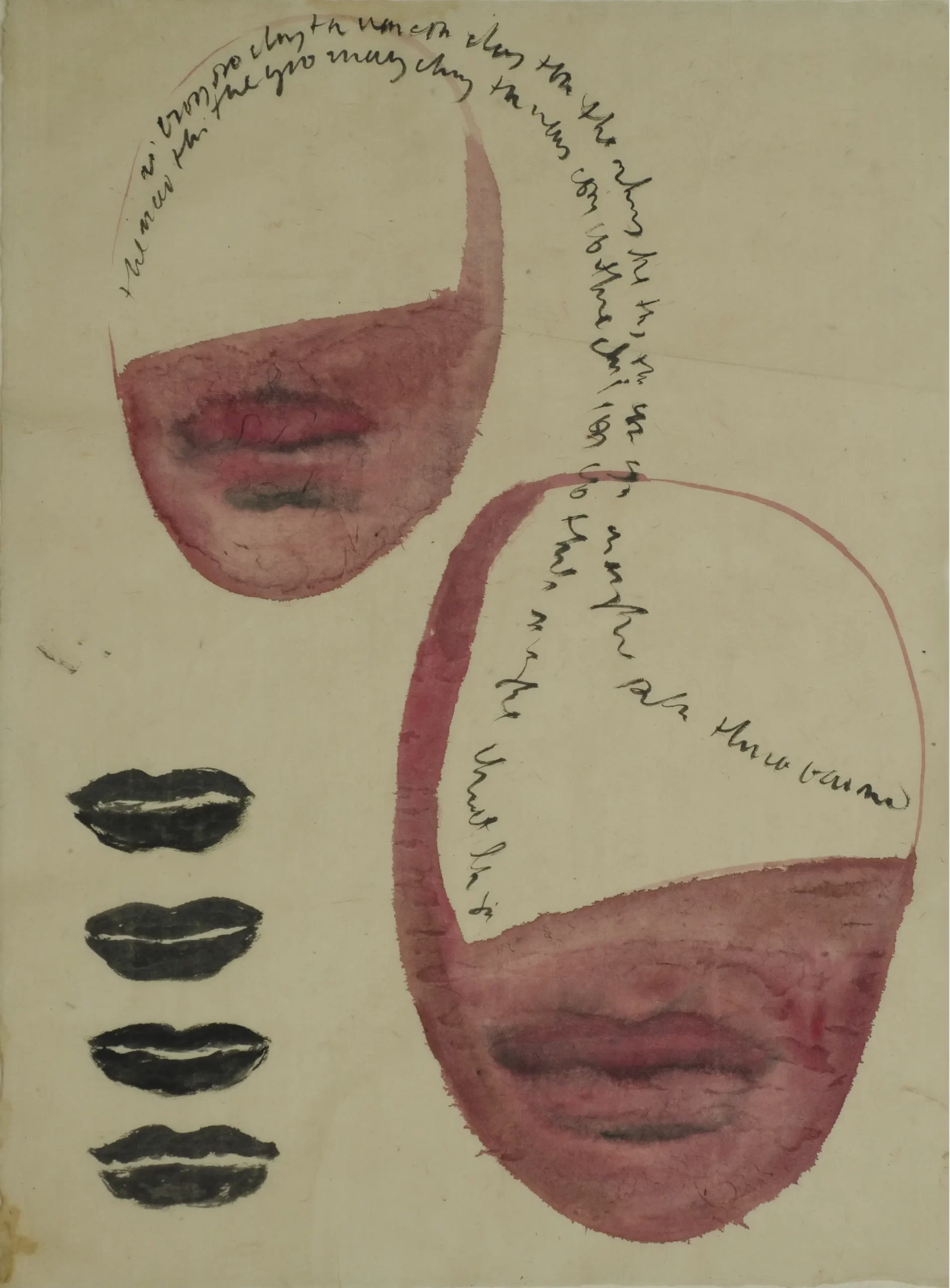
There has certainly been a shift, but it has happened in a gradual, almost physical way, so gently that I did not notice the difference myself. Across every phase of my work, I have continued to take the individual as my root, turning towards my inner world rather than outwards, like someone endlessly digging deeper into himself.
If writing once appeared in my practice as a way of releasing the streams of thought and intense energy of youth, now I think I want to recover what painting is missing. For me, making art requires the artist to develop skill and a solid foundation; when you look at an artwork, you should be able to sense its history, its internal logic, and its standards. In the 1990s, from the perspective of a young person, the wind from the West swept in like an irresistible storm. Now that storm has passed. The more peaceful I become, the more I want to move with natural forces. Change is an inevitable law of life.
Words: Bảo Ngân & Nhật Anh
Translation: Art Nation