Đọc phiên bản tiếng Việt tại đây.
The fourth edition of the Thailand Biennale (Biennale) took place in Phuket under the title “Eternal [Kalpa]”. What is the meaning behind this title, and in what ways did it reflect the port city of Phuket as the destination and landscape of this edition?
The concept derives from an old Hindu interpretation of time: it is one day in the life of the Creator-God, Brahma- 1,000 Mahayuga, or 4,320,000,000 human years – until Shiva destroyed that creation with the fire of the Kalpa. One Kalpa is equal to the duration of Brahma’s light, and when that world is destroyed, darkness falls. At dawn, a new world is created, beginning a new Kalpa. The theme “Eternal [Kalpa]” highlights the enduring bond between humans and nature across historical epochs. It addresses the pressing challenges that arise from our technological, ecological, and economic realities, which increasingly push our coexistence with nature into a deadlock.
Phuket is a city with distinctive characteristics shaped by nature itself. Notable sites include Promthep Cape, a picturesque viewpoint renowned for its breathtaking sunsets – reflecting the image of Kalpa – where the sun meets the horizon. Historically, Phuket has served as a resource hub, driving cultural and lifestyle transformations. A pivotal moment came during the modern mining era, which significantly drained local resources, especially tin. Once mining declined, tourism took the reins, transforming Phuket into a haven for relaxation and healing. This shift underscores the evolving relationship between resource use and conservation in Phuket. Additionally, unseen aspects such as abandoned buildings and natural areas in need of restoration – left behind by the heavy commotions of the tourism industry – add another layer to this story. The concept of time is central here, as it helps us understand the importance of preservation and sustainability.
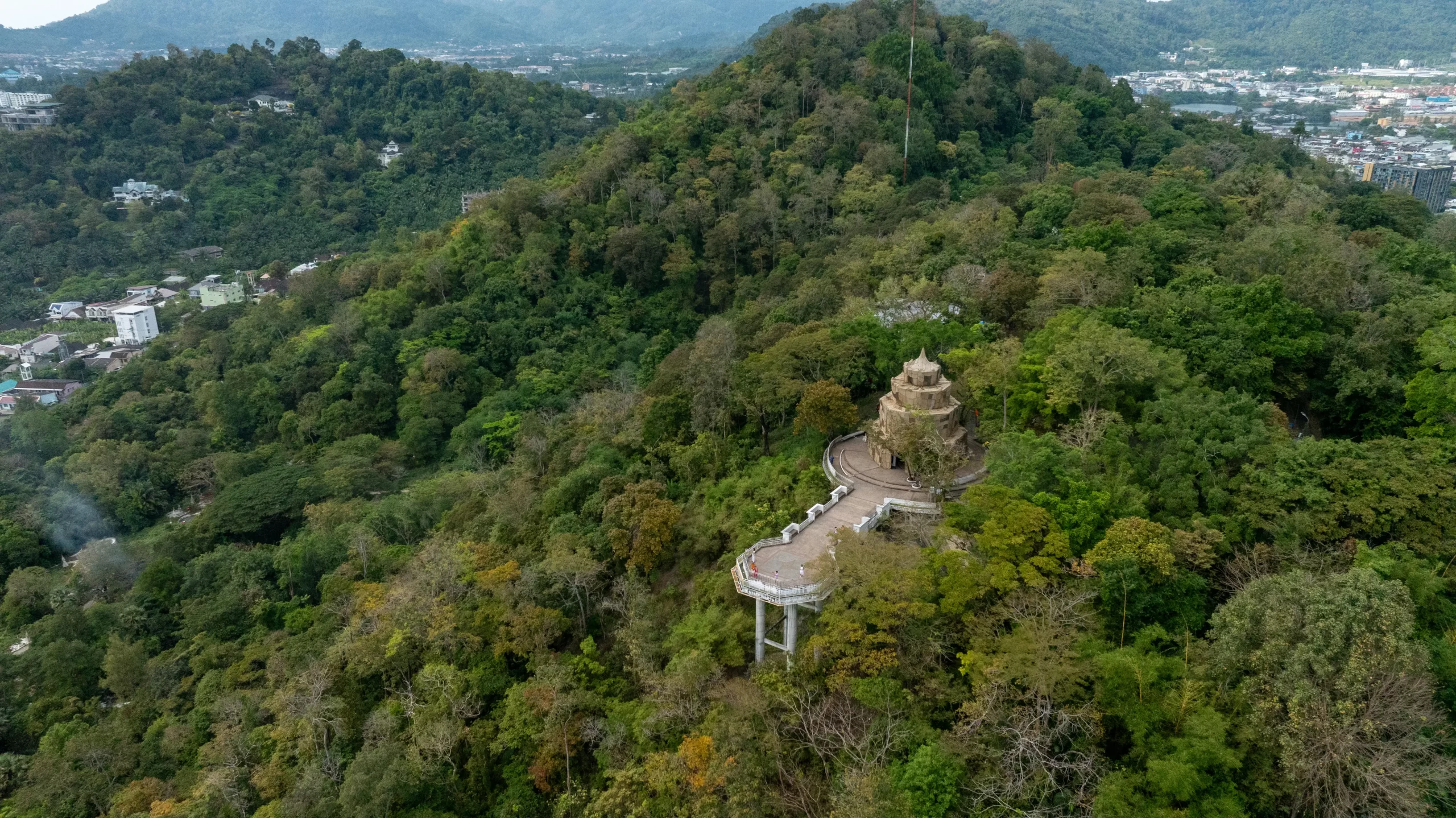
A defining aspect of this edition of the Biennale is its engagement with 19 former industrial and civic vestiges across the island – from the Chao Fah Former Power Station, Bangkok Bank Former buildings to the Former Kathu Liquor Distillery. Could you walk us through the decision of reconstructing these venues, and how these architectural landmarks contribute to the artistic direction of the Biennale?
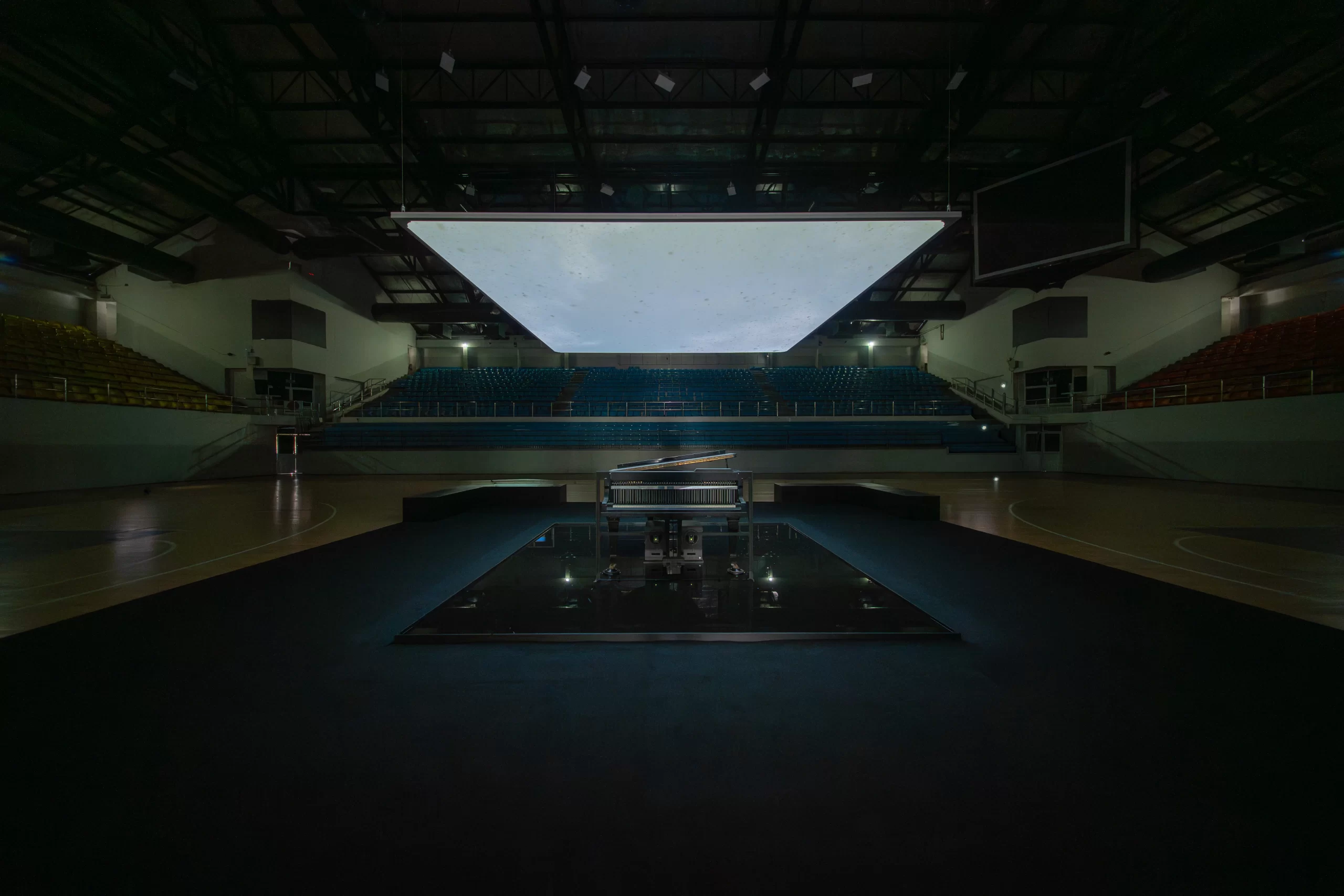
During the initial stage of surveying the area for the Biennale, we didn’t limit ourselves to spaces related solely to the tourism industry. Instead, we explored various historical sites that offered a richer understanding of Phuket. Each building tells its own story, reflecting the city’s evolving way of life. These historical links, once viewed only from one perspective, opened our eyes to a vibrant city playing a vital role in human history. For instance, Poonphol Plaza, built during an economic boom funded by IMF loans, was completed just as the Asian financial crisis – known as the “Tom Yum Goong” crisis in Thailand – was beginning. The Poonphol Plaza had not been used until our exhibition, which was the first time it served its purpose as an art space. Similarly, Chao Fah Power Station exemplifies a turning point, highlighting the shift from mining – Phuket’s main source of income – to the decline of local businesses in the 1970s, largely replaced by tourism. Baan Phra Aram, or Turtle House, was once an office and ticket counter for Thai Airways, but closed permanently during the COVID-19 pandemic. Another notable venue is Baan Luang Amnat in Kathu district, where Luang Amnat Nararak, a Chinese leader, sparked one of Thailand’s biggest vegetarian festivals. Saphan Hin park, once a pier, was expanded using reclaimed land built over layers of debris and waste buried underneath; today, it hosts a 4,000-seat gymnasium, which also serves as an exhibition venue. This space provided a setting for reflecting on the shared memories of the tsunami disaster in Southern Thailand, with the installation by Ryuichi Sakamoto and Shiro Takatani as a centerpiece: a piano found in a northern Japanese prefecture, its keys triggered automatically by a mechanism that responds to tectonic plate movements. Each location in the exhibition holds its own story from different periods, and by connecting these images into a larger panorama, we reveal overlapping timelines that reflect the ongoing evolution of the city and its people.
This edition features many impactful multimedia and multisensory installations by renowned artists such as Andrew Thomas Huang, Taloi Havini, Ayoung Kim, etc., alongside emerging faces, including Vietnamese representative Thuy Tien Nguyen. How does this curatorial vision work in tandem with the participating artists and the selection of artworks shown in the Biennale?
We selected the participating artists for this exhibition based on the aspirations of their work and how well it aligns with our theme. While technological impact is a major factor contributing to threats to humanity – beyond the realms of war and nuclear weaponry – the most pressing concern lies in the environmental effects of technology and its direct and indirect role in human destruction and devastation. Consequently, most of the exhibited works either utilise or incorporate narratives related to these technologies. What’s particularly interesting is the overlapping and contrasting themes that emerge between the artists’ interests and the technologies they explore.
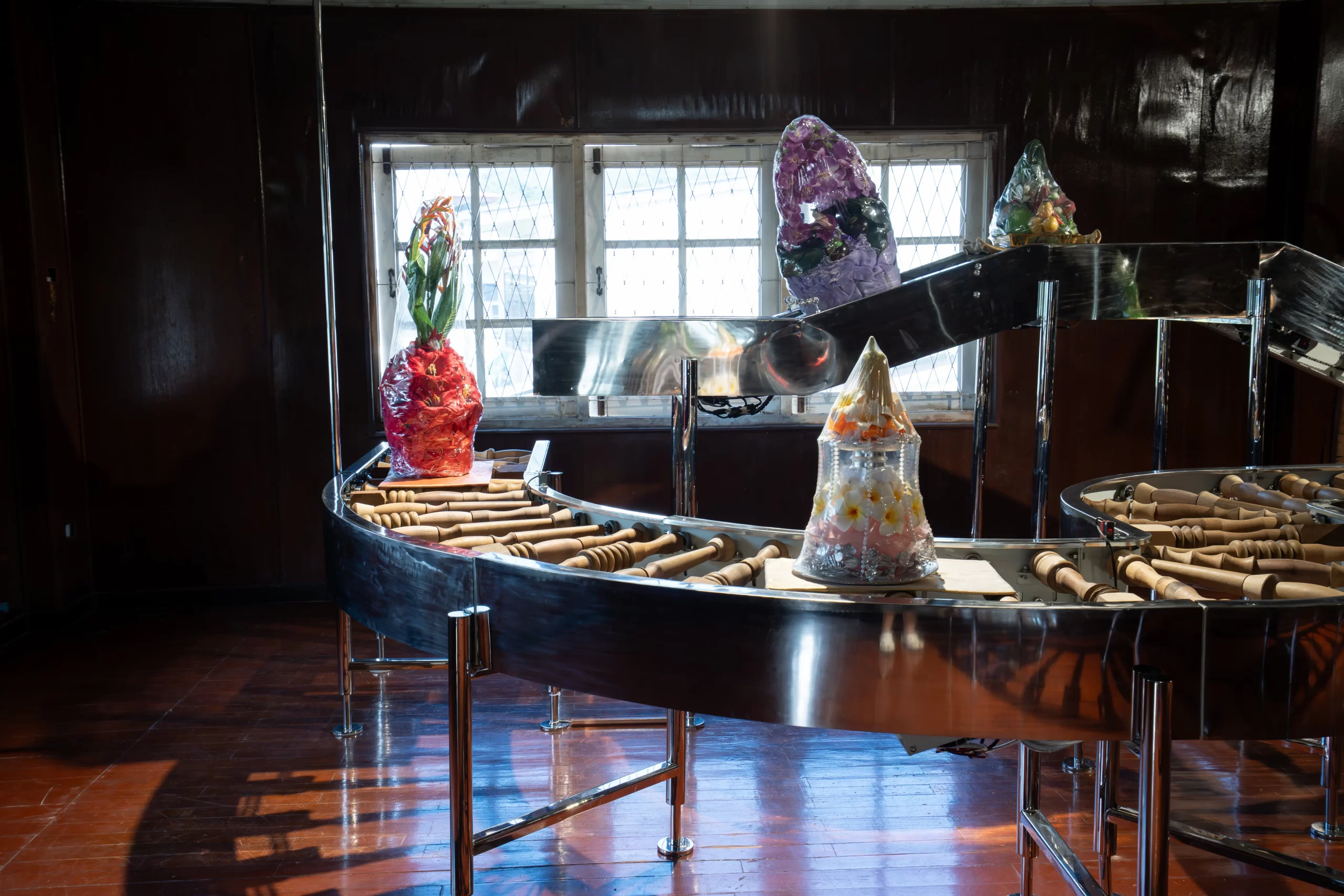
Reinterpreting these stories – whether memories or legends – through contemporary media breathes new life into them, offering them more clarity and providing a more nuanced framework for examining reality. Vietnam representative artist Tien Thuy Nguyen and her installation “Press Club”² (2025) revisit memories of emotion and personal or shared family histories. This large-scale kinetic installation featured stainless steel along with reclaimed wooden balusters and door frame beams sourced from architectural sites around Phuket. The artist systemised them into a conveyor belt for flower bouquets, accompanied by sound components featuring Vietnamese songs looped in the background inside the abandoned Mellow Pillow Hotel. These cross-narratives starkly contrast with the reality each of us carries – an existence filled with shared memories that can sometimes be so painful that they become hidden away in the most mysterious places. The artworks not only evoke those memories but also revive them, giving us the courage to face reality more openly.
The dialogue of “Eternal [Kalpa]” expands to honour crafts and cultural artefacts, ritual ceremonies and forgotten voices within contemporary narratives. Could you elaborate on the curatorial direction for connecting the local craft practices featured in the Biennale with the overarching concept?
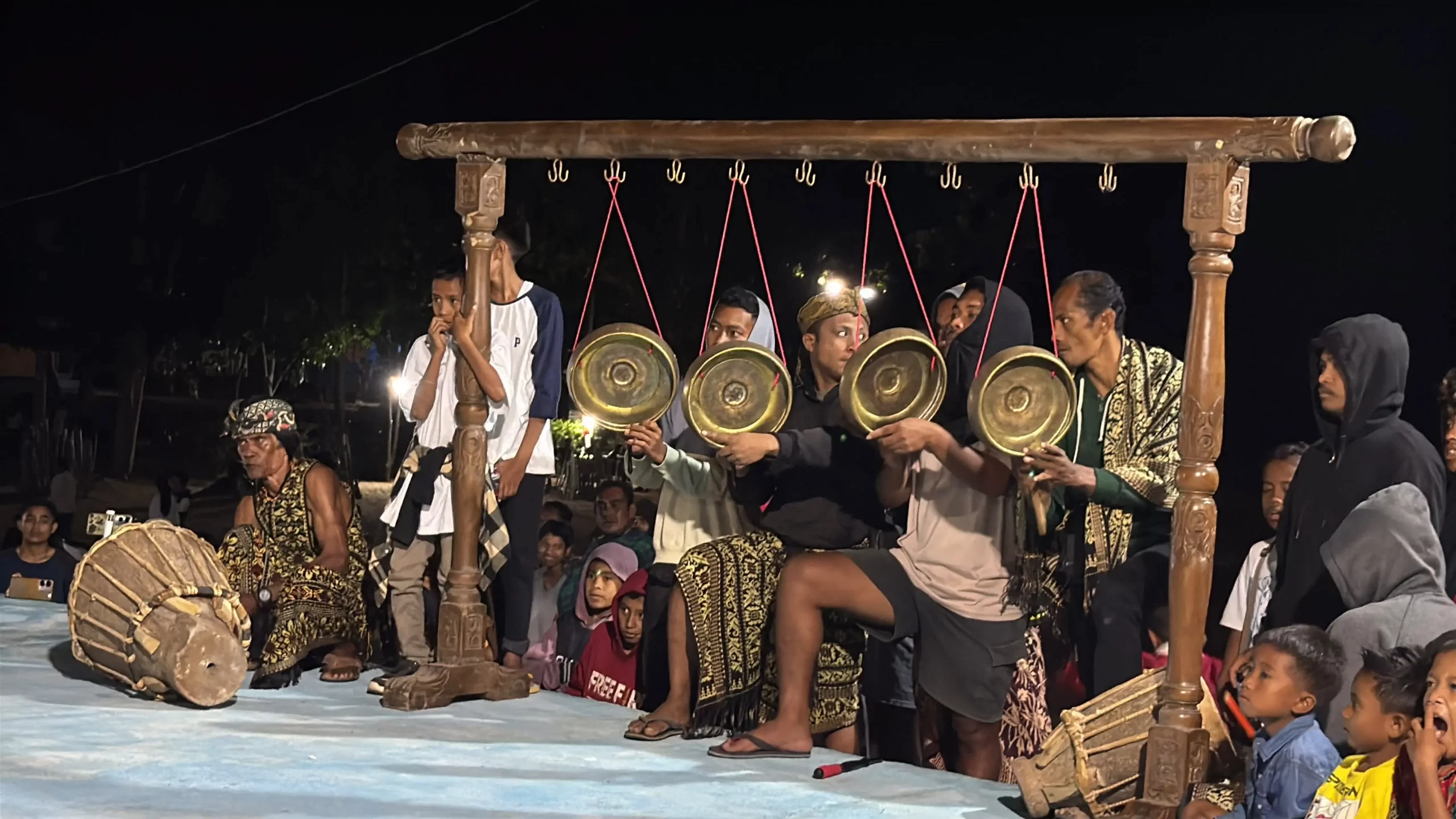
The presence of craftsmanship and local narratives in this exhibition is not a form of tourism-tinted nostalgia, but rather a political act intended to affirm the existence of diverse cultures in the rhythms of time. Cultural practices have never been a collection of silent artefacts behind museum glass; these are living entities carrying the memories of the earth, the water, and the people. When an international artist arrives in Phuket and collaborates with local artisans and cultural conservators, it is a collision of two worlds: on one side, the freedom of artistic concept; on the other, the discipline and reverence for the material.
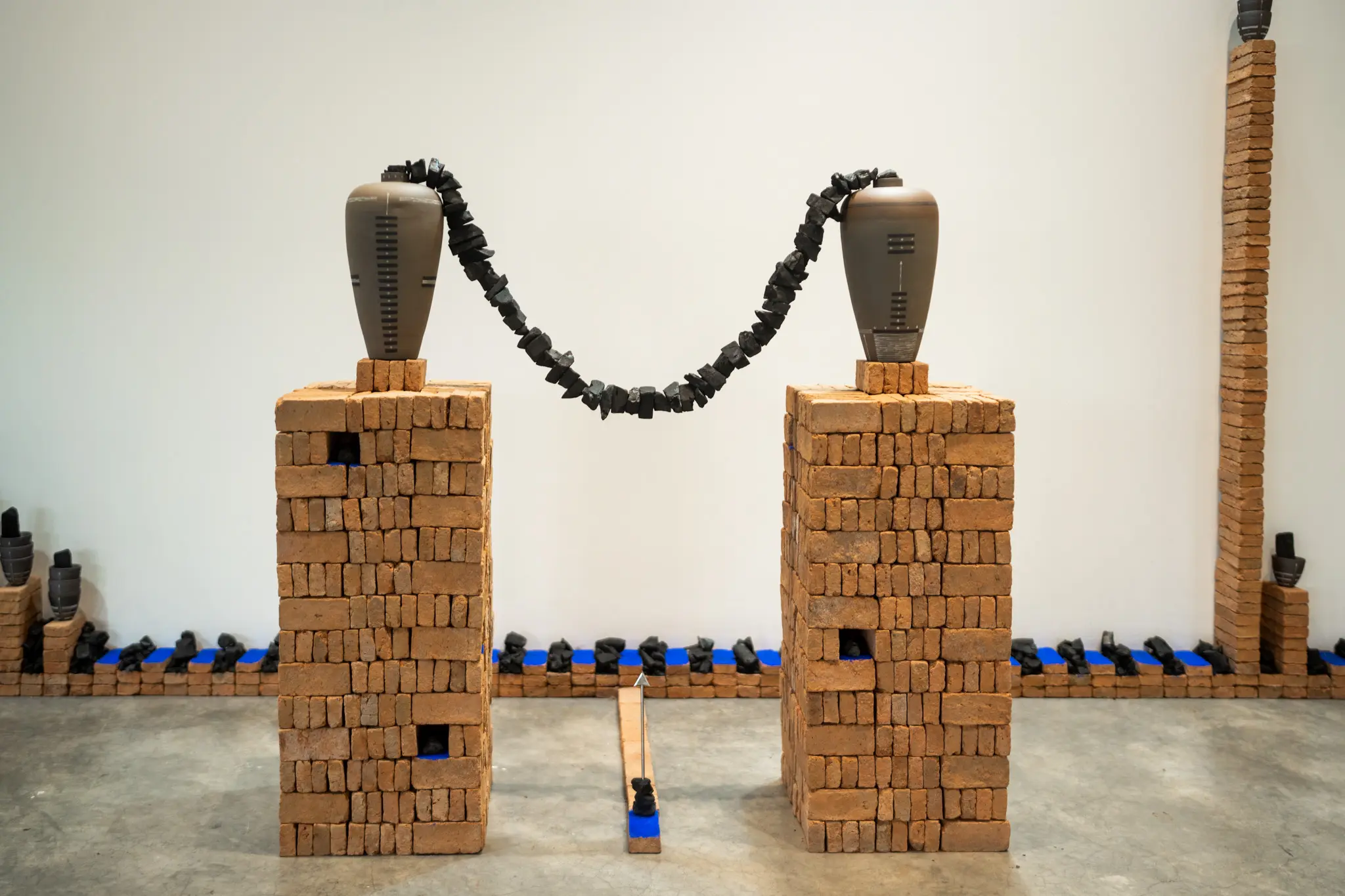
Luana Vitra and her ceramic works “Birth Calculation” (2025) featured Phuket ceramics and raw materials with geological dialogues, connecting with the land’s extractive histories of mining. The work is also deeply resonant with Vitra’s own upbringing in Contagem, a Brazilian industrial city similarly shaped by the scars and stories of mining. Vitra’s refined craftsmanship and interplay of materials allow the work to become a sensory pathway where the spectator encounters the memory of the Earth itself.
The local narrative is woven into the documentary installation of Zheng Maler “Seagrass Kra Chang” (2025). The artist collective featured the story of seagrass – a food source for dugongs, with conservation efforts achieved through working with Phuket Marine Biological Center to create growing areas for seagrass. This project later evolved into a public programme within the scope of the Biennale, where groups of volunteers gathered for seagrass planting along the Laem Tang Khen beach.
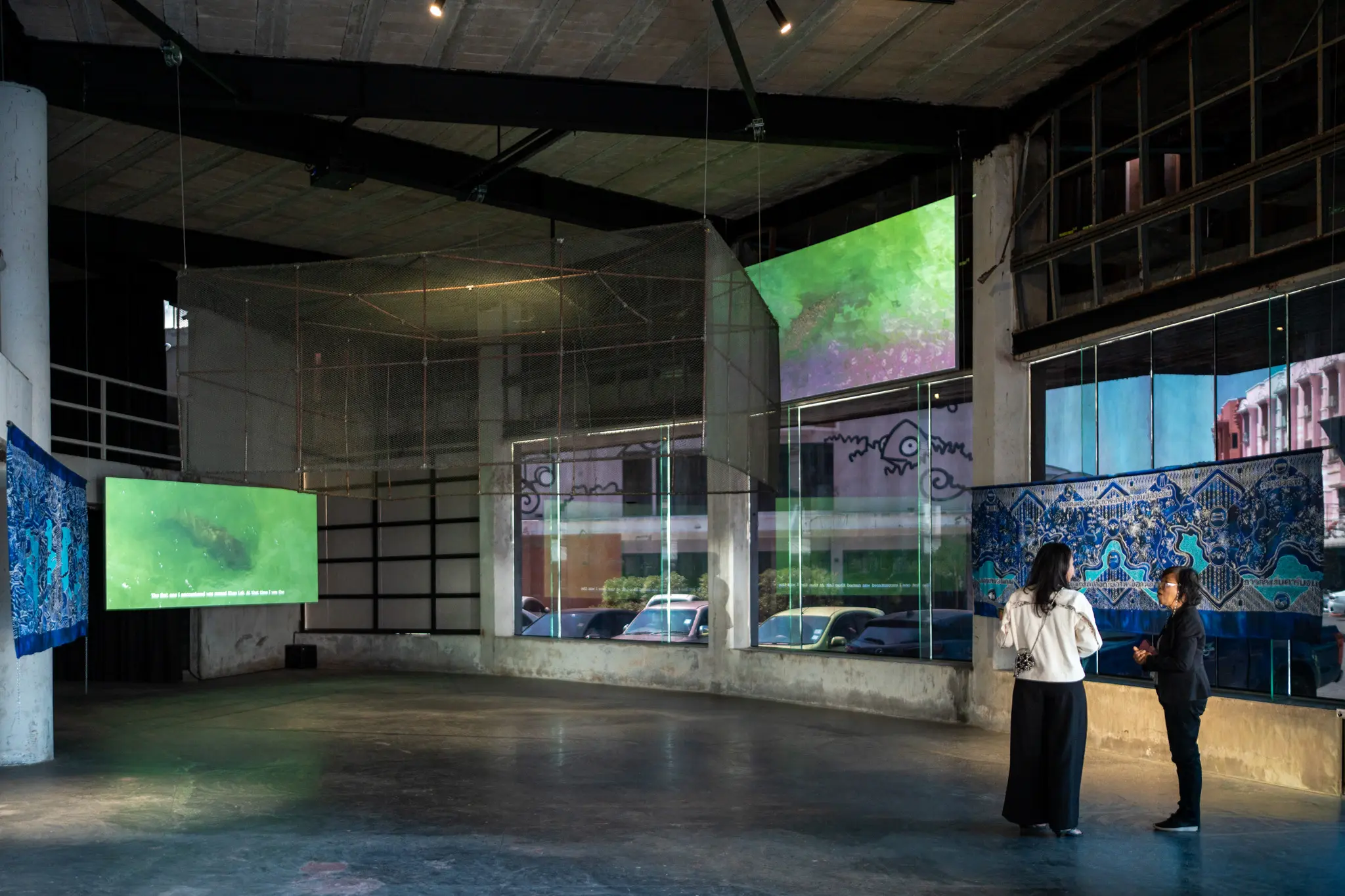
Bespoke clothing and textile also contributed to the success of the Biennale, where Phuket batik artisan Ying Batik collaborated with Isabel Sicat of TOQA to release a fashion collection of uniforms in colourful hybrid motifs of Phuket and Southeast Asia. The collection was dressed by 120 cultural actors, from curators to docents, local supporters and onsite workers. As said, traditional techniques are not fragile relics but are robust enough to carry the weight of contemporary fashion and cultural storytelling.
These collaborations serve as a rhythmic ritual. They challenge the fast-paced, ephemeral nature of the global art market by demanding a slower, more considered engagement with the world. We are not just showing art; we are showing the labour of love, the discipline of the hand, and the enduring power of stories that have finally found their way into the light.
Words & Translation: Mary Le
[1] Arin Rungjang is a pioneering contemporary conceptual artist from Thailand. His projects often explore migration and the intersection between grand narratives and personal stories. He serves as the Artistic Director for the Thailand Biennale Phuket 2025.
[2] The original English title is retained at the artist’s request.