Đọc phiên bản tiếng Việt tại đây.
Your research trajectory has been significantly shaped by your encounter with Vietnamese ceramics exported into the Philippines in the 14ᵗʰ and 15ᵗʰ centuries. Could you bring our readers back to that moment of discovery?
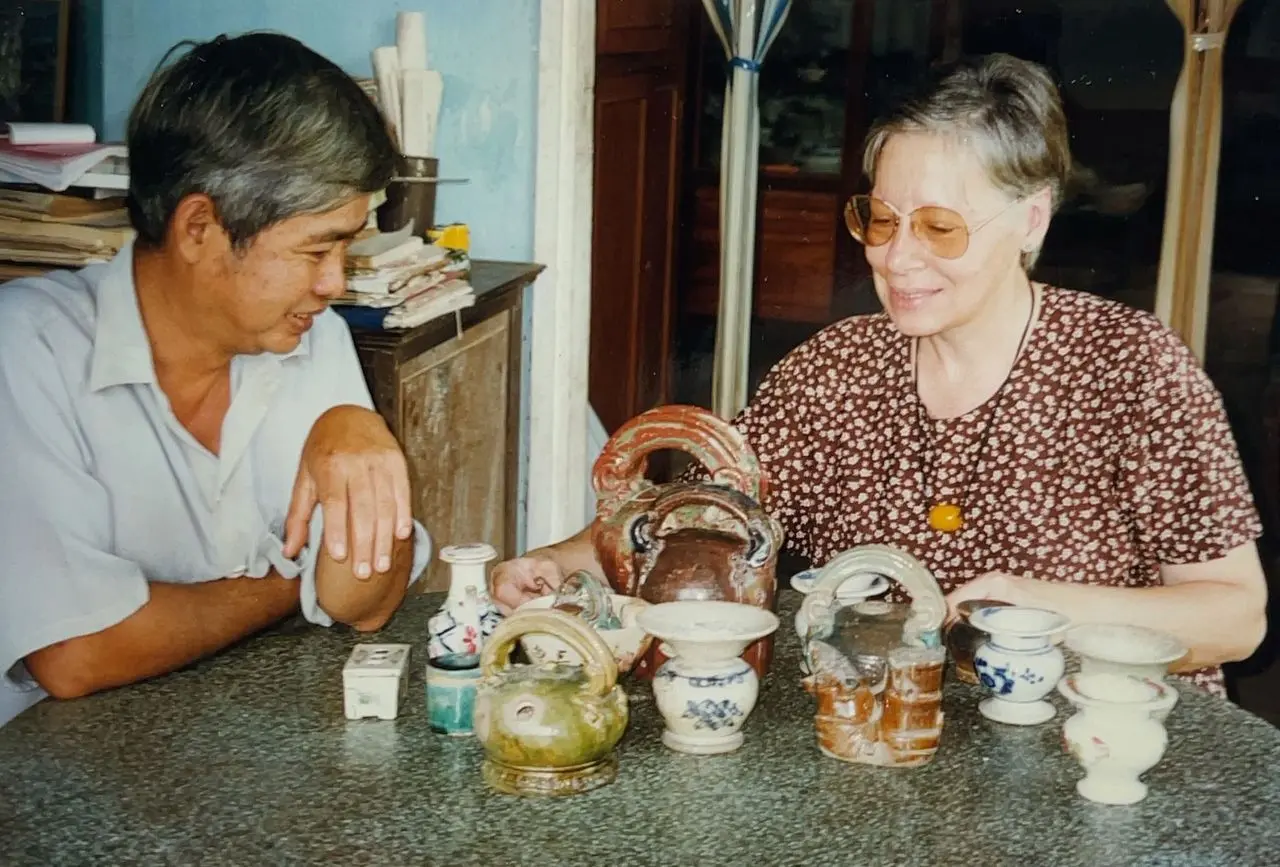
My earliest connection with Vietnamese culture began in the 1960s when I married Nguyen Kim Long from Sadec, recipient of a Colombo Plan Scholarship. From Australia we moved to Papua New Guinea for four years and moved again in 1979 to the Philippines where we lived for 20 years. At that time spouses of foreign employees were not permitted to work. When friends suggested I join a group called Museum Volunteers of the Philippines, I casually attended a lecture given by a group member.¹ The topic was “Trade Ceramics in the Philippines” about which I knew nothing. After watching a stream of Chinese ceramics projected onto the screen, suddenly a different group appeared, modest in size, blue-and-white, described as Vietnamese imported in the 14ᵗʰ and 15ᵗʰ centuries. This marked the beginning of my journey.
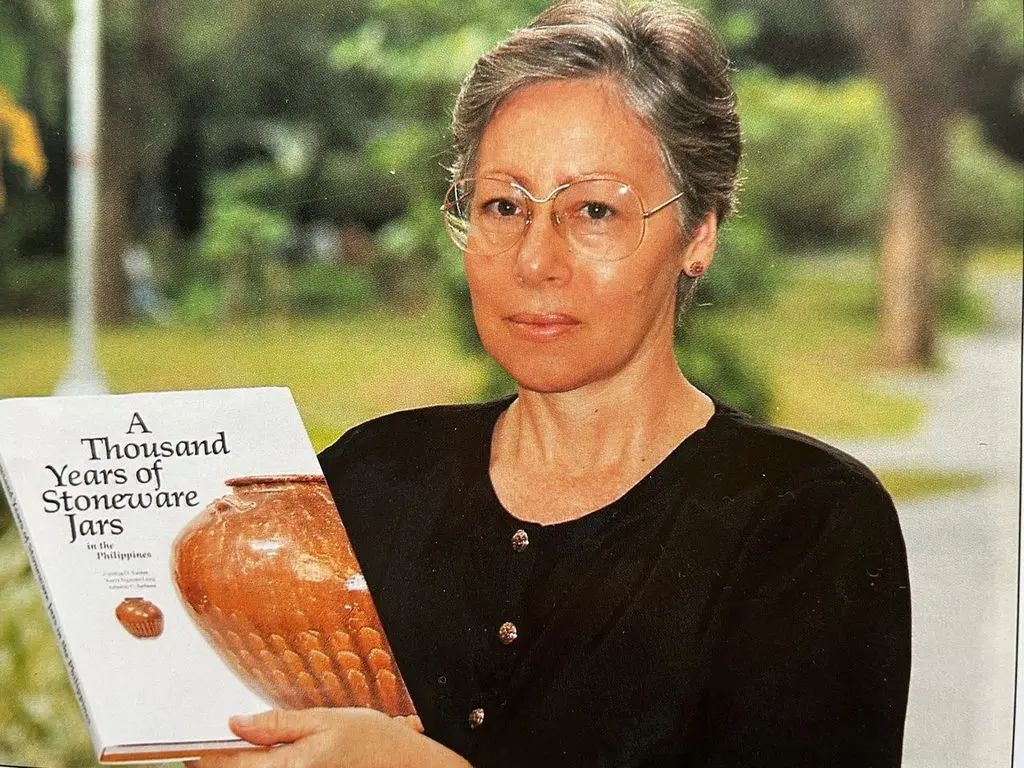
I soon joined The Ceramics Society of the Philippines and learnt to identify imported Vietnamese ceramics, although at that time, little was known about them. My curiosity about the kiln sites that had produced those export ceramics would have to wait until the 1980s when excavations began in Hai Duong province. Some years later I met the late Tuyet Nguyet, publisher and founding editor of the Hong Kong-based international magazine “Arts of Asia” and she encouraged me to write on the arts of Vietnam, and in 1999 I became a Contributing Editor of the magazine.
When you began your research in the 80s, English-language literature on Vietnamese arts was relatively sparse and often framed by Western-centric assumptions. Looking at the landscape today, would you say the field has progressed in any manifest respects?
The historical lack of respect towards Vietnamese arts in conjunction with Sinocentric perspectives are deep-rooted, so resolution of this issue takes time. One example serves to illustrate: Statuary transported to France by Gustave Dumoutier shown at the Universal Exhibition of Paris in 1889 was subsequently offered to various museums but thereafter neglected in following decades, leading to doubts about whether they had been inventoried. Mistaken attribution saw them exhibited as Chinese, dated Five Dynasties (907-960) or Song (960-1279).² There are now attempts to rectify this untoward event. Incremental improvements can be seen: Vietnamese experts have engaged with some overseas museums in correcting attributions – and more of this would help – while some non-Vietnamese working in this field are now proficient in Vietnamese, but miniscule in number. I think it is correct to say most major museums around the world are now more aware of these problems. Since few researchers outside Vietnam have the necessary expertise, formal twinning arrangements could help address this issue. Vietnam’s current generation of young researchers, empowered by strong linguistic skills, are uniquely positioned to take the lead and tackle these challenges.
Having visited various artisans at work, how do you perceive the intersection between art and craft in the context of Vietnamese art history? Does such a clear-cut distinction truly exist, in your view?
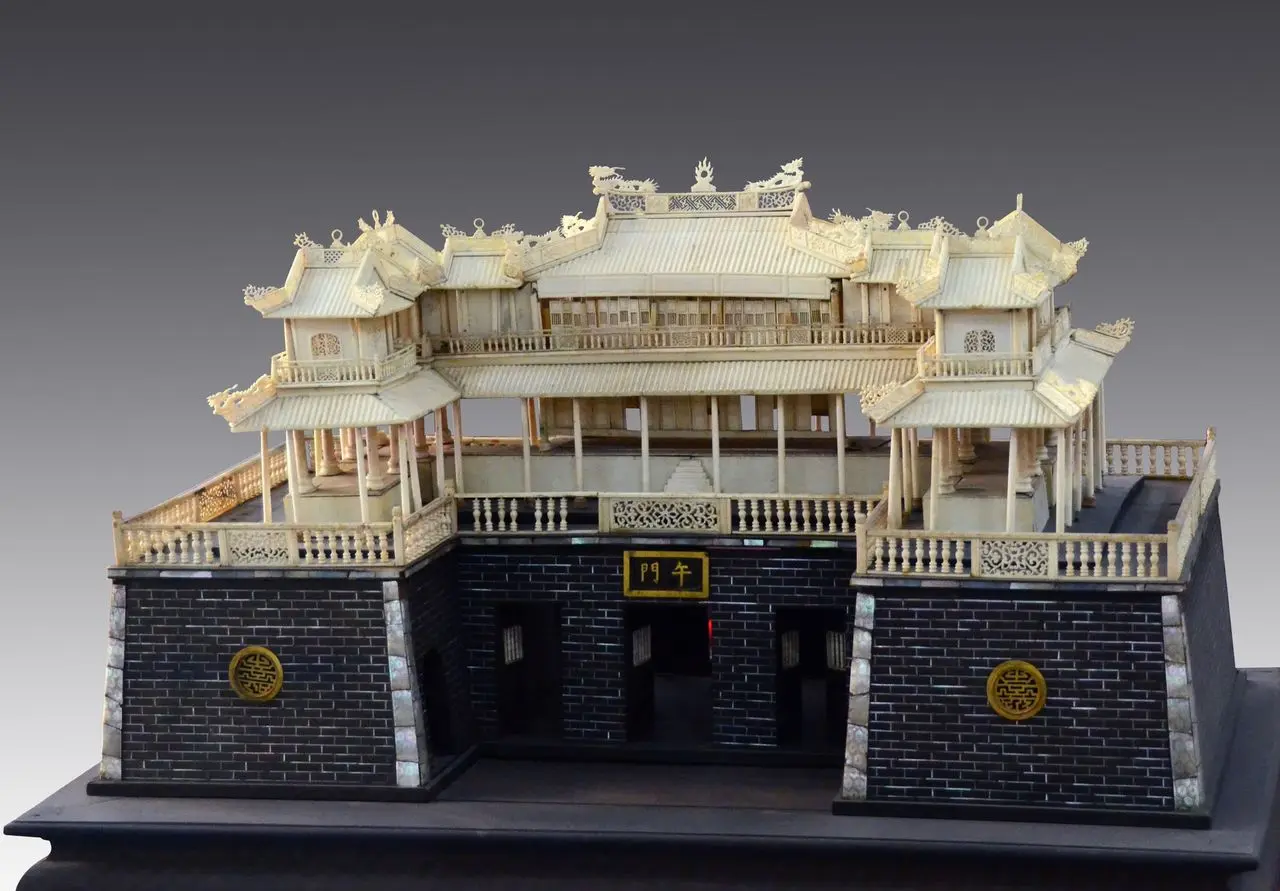
I consider the several terms used to categorise the arts confusing. French teachers at L’Ecole des Beaux-arts de l’Indochine introduced the term ”fine arts,” a European concept associated with aesthetics rather than anything practical, and its use would cleave Vietnam’s traditional concept of art craft. “Plastic arts” is another term that gained currency in Vietnam. Commonly associated with ceramics or sculptures, the term can also include visual arts that create the illusion of form, as in some paintings. My preference is the term “visual arts,” which embraces all art forms associated with the sense of sight with no distinction between fine, decorative, or applied arts.
In a recent interview, your artist daughter, Mai Nguyen-Long, mentioned that she “came to view [your] research and publications as an act of resistance to counter the erasure and destruction [you] experienced to achieve understanding.”³ Do you see your work in this light?
My research on the visual arts of Vietnam has a singular purpose – to bring knowledge of Vietnamese arts to the English language, international world. When I began my research, there was a truly deplorable lack of information. Particularly galling were publications which either omitted Vietnam altogether or referenced it in a few terse sentences, dismissing its arts as derivative of those of China and repeating cliches that originated in the French colonial period. Vietnam has had to contend with serious setbacks consequent on colonialism, successive destructive wars, and political constraints. For the researcher, the lack of an ordered archival system and the loss of records require patience and simply working with what is available.
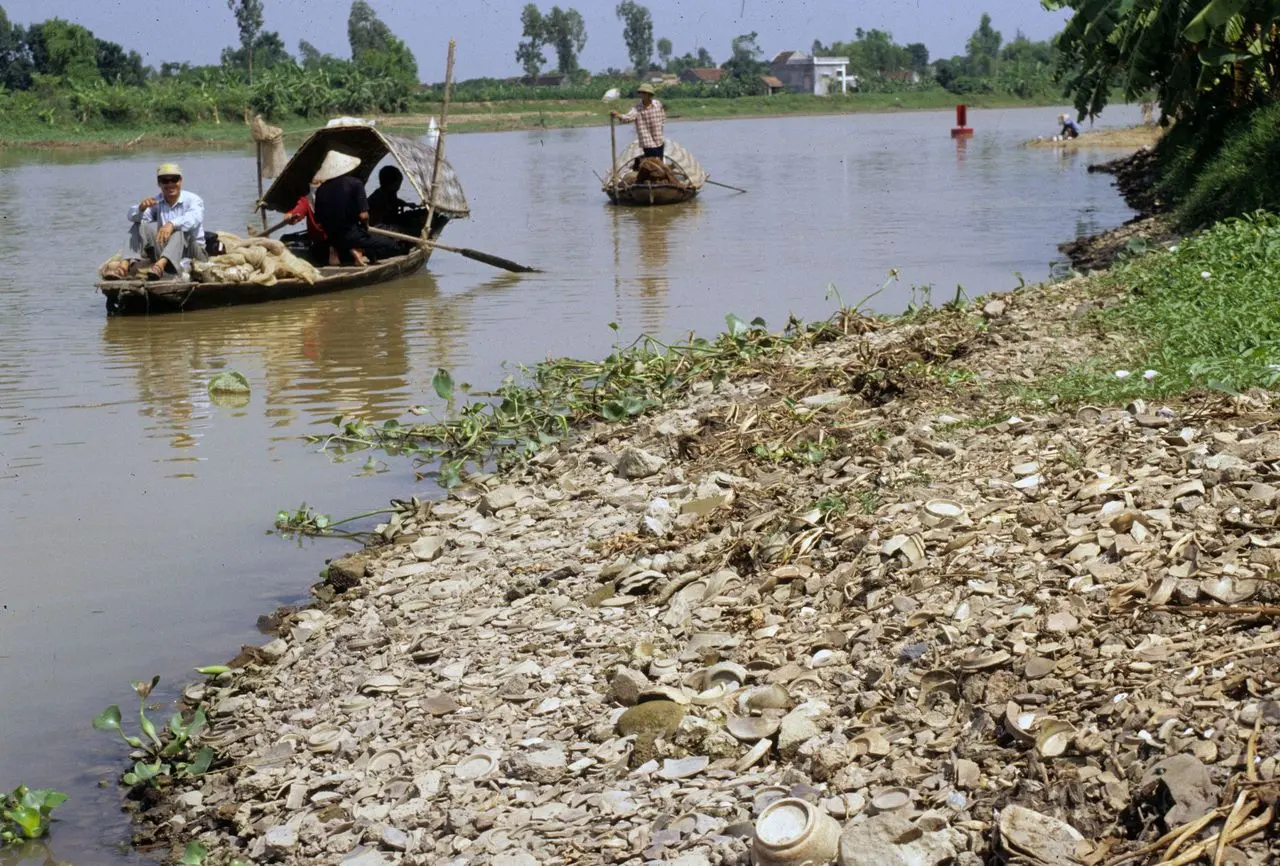
But, think of it for a moment: could any written record from antiquity match the stunning visual impact of dancers carved on stone and wooden beams, emerging from the ground into our present era as testaments to the Cham artisans’ contributions in the Ly Dynasty? In the past, priorities and financial constraints led to the deterioration of vulnerable stored artifacts in the Royal Antiquities Collection of the Nguyen Dynasty, but this has now been rectified. I actively seek out information on such happenings, and am deeply indebted to Vietnam’s researchers, past and present. To improve my understanding, I visited excavation sites, artisan workshops, artists’ studios, and always sought opportunities to examine artifacts. At this point, I must acknowledge my husband for his assiduous translations of Vietnamese language publications important to my research. He has also served as my photographer and has translated into English important books on the arts.⁴
Your recent major work, “Vietnam Visual Arts in History Religion & Culture” serves as the successor to your earlier book “Arts of Vietnam 1009-1945” (2013). What do you consider the most vital inclusions and/or revisions in this new edition?
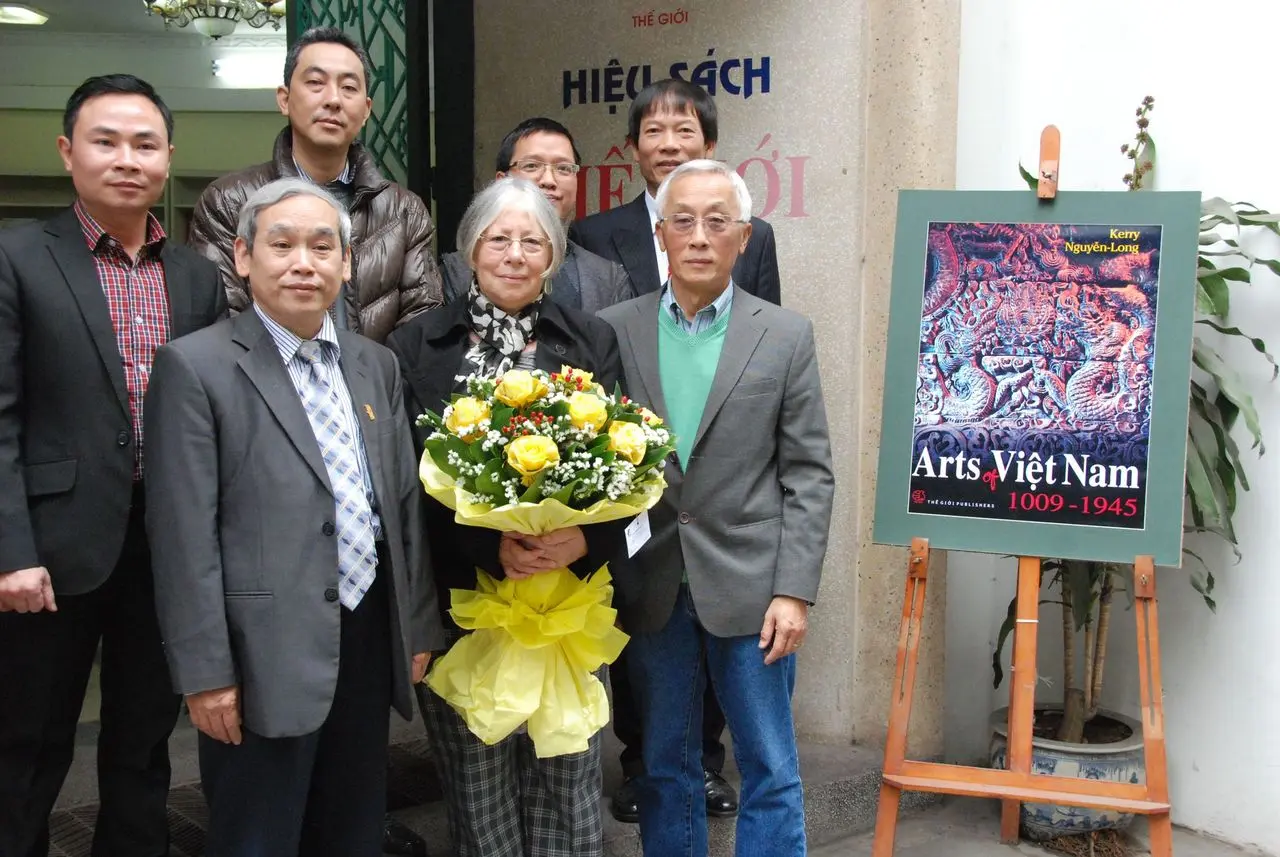
Major revisions to my 2023 publication included conclusions from two major archaeological sites, the Ba Dinh excavation site in Hanoi and the Cham Island shipwreck site off Hoi An – described as the most important archaeological sites in the nation’s history. The final report on the Ba Dinh site was published in 2020, long after 2013, which was the year “Arts of Vietnam 1009-1945” was published.⁵ Although the book had dealt with both subjects, it was without the benefit of final reports, and in view of that, a rewrite was important to present the findings with sufficient strength and clarity.
On the Cham Island site, the final report on dating was particularly important since it was early established the shipwreck was a virtual time capsule with ceramics on board, deemed co-eva and of different qualities. In a later publication, chief archaeologist Mensun Bound poetically described the cargo as a single grand artistic statement and went on to write: “Although it was a style that had one eye resolutely fixed on China it was a style uniquely and indefeasibly Vietnamese.”⁶ He also wrote of the best painted ceramics: “Occasionally in a nation’s history, when circumstances are right, everything comes together in a sunburst of creativity. And so, it was in Vietnam at the time of the Hoi An wreck, not only because it gives us a precious keyhole-size glimpse of life in the Red River Delta as it was 500 years ago, but more than that, because it represents a discrete, synchronized moment of a nation in renaissance. A moment that has been largely lost to learning because of an absence of material knowledge.”⁷ Perfectly enunciated! I understood the significance of this site very early on, but with the final report on dating finally accessible, I was compelled to rewrite.
Your last chapter mentions the exposure of Vietnamese artists to Japanese art in the 1940s – a connection you’ve previously traced from Tran Van Can’s earlier work to Phung Pham’s later woodcuts. In your view, what insights could we gain from a more robust pan-Asian comparative framework?
In fact, the relationship between Vietnam and Japan is longstanding. In earlier centuries, the Japanese were intrigued by Vietnam’s ceramics with their so-called rustic style (moc mac), which gelled with tea ceremony philosophy; it is suggested that most of them arrived in Japan in the late sixteenth century.⁸ Furthermore, the journal “Vietnam Cultural Window,” March 2002 issue features a short article that includes information on a vocational school in Hanoi founded by the Hanoi Chamber of Commerce where two Japanese instructors trained local teachers and taught lacquer painting and metal casting. But I could find no other information. At this same time, other Vietnamese artists were also interacting with Japan’s artisans. Hoang Trong Phu (1872-1940), Governor of Ha Dong from 1910, sent artisans to Japan to study lacquer, silverware, and carpentry. Despite his work promoting Ha Dong’s crafts, including authoring a book detailing its 136 crafts, his efforts seem largely forgotten. These brief references suggest there is much more to both share and learn from working within such a pan-Asian framework.
Looking ahead, what are some research gaps you think are worthwhile to address in future Vietnamese arts scholarships?
At this present time in Vietnam’s history, there is so much opportunity and various subjects waiting for systematic research, from ivory, silver and jewellery crafts across the centuries, to production centres such as in Sa Dec. Neither am I aware of any diachronic research on Vietnam’s furniture. Hoang Trong Phu’s contribution also warrants research. Equipped with new technologies and competence in different foreign languages, the new generation of assiduous researchers will bring to light new information and new perspectives as never before.
Words: Ace Lê & Nhật Anh
Translation: Nhật Anh
[1] Museum Volunteers of the Philippines is a group primarily composed of expatriate women who, unable to follow their original professions, dedicate their time to studying Philippine history, culture, and arts.
[2] Pierre Baptiste, “Une statue de Quan Âm à mille bras au musée Guimet À propos d’une réattribution (A Thousand-Armed Avalokiteśvara Statue at the Musée Guimet: Regarding a Re-attribution,” in “Arts du Vietnam: nouvelles approches (Arts of Vietnam: New Approaches),” Presses Universitaires de Rennes (2015), pp. 205-212.
[3] Janet McKenzie, “Mai Nguyen-Long – Interview,” studio international (2026).
[4] They include: “Bat Trang Ceramics 14th-19th Centuries” by Phan Huy Le, Nguyen Dinh Chien, and Nguyen Quang Ngoc, The Gioi Publishers (1995); “Handbook of Vietnamese Ceramics with Inscriptions from the Fifteenth to Nineteenth Centuries” by Nguyen Dinh Chien, National Museum of Vietnamese History (1999); “Vietnamese Blue and White” by Bui Minh Tri and Kerry Nguyen-Long, Social Sciences Publishing House (2001).
[5] Tong Trung Tin, “Thang Long Civilization – Archaeological Evidence,” Hanoi Publishing House (2020).
[6] Mensun Bound and Mark Frary, “Wonders in the Deep: Extraordinary Shipwreck Discoveries from Spanish Gold to Shackleton’s Bible,” Simon & Schuster UK Ltd. (2024), pp. 101.
[7] Ibid
[8] Louise Allison Cort, ”Vietnamese Ceramics in Japanese Contexts” in “Vietnamese Ceramics: A Separate Tradition,” edited by John Stevenson and John Guy, Arts Media Resources with Avery Press, 1997, pp. 63-83.