Đọc phiên bản tiếng Việt tại đây.
In the early 20th century, Paris was not merely a city, but the acknowledged capital of modernism, exerting a powerful attraction upon artists from across the world. By tracing the trajectories of Japanese and Vietnamese artists working within overlapping networks in Paris, “As the Ground Holds” examines forms of modern painting deeply rooted in inherited traditions. Leonard Tsuguharu Foujita, Zenzaburo Kojima, Le Pho and Mai Trung Thu did not arrive in Paris as followers, but as independent thinkers. Each developed a distinctive artistic practice that contributed to the heterogeneity of the period’s cultural landscape. At the same time, the exhibition opens up a geo-aesthetic space of displacement, in which cultural identity is brought into productive relation with new modes of thought accumulated through life abroad.
This geo-aesthetic conception of displacement is encapsulated in the title “As the Ground Holds”. Here, the word ‘ground’ evokes both the homeland from which the artists had departed and the material support upon which a painting is constructed. Displacement rendered visible what had previously remained unseen: artistic and cultural conventions absorbed instinctively from childhood were no longer unconscious givens, but became intentional choices when placed alongside the conventions of the unfamiliar worlds into which the artists had entered. Their position between two cultural territories became both a privilege and a source of creative agency, enabling them to formulate artistic languages that emerged from memories of home while remaining open to the horizons of modernity.
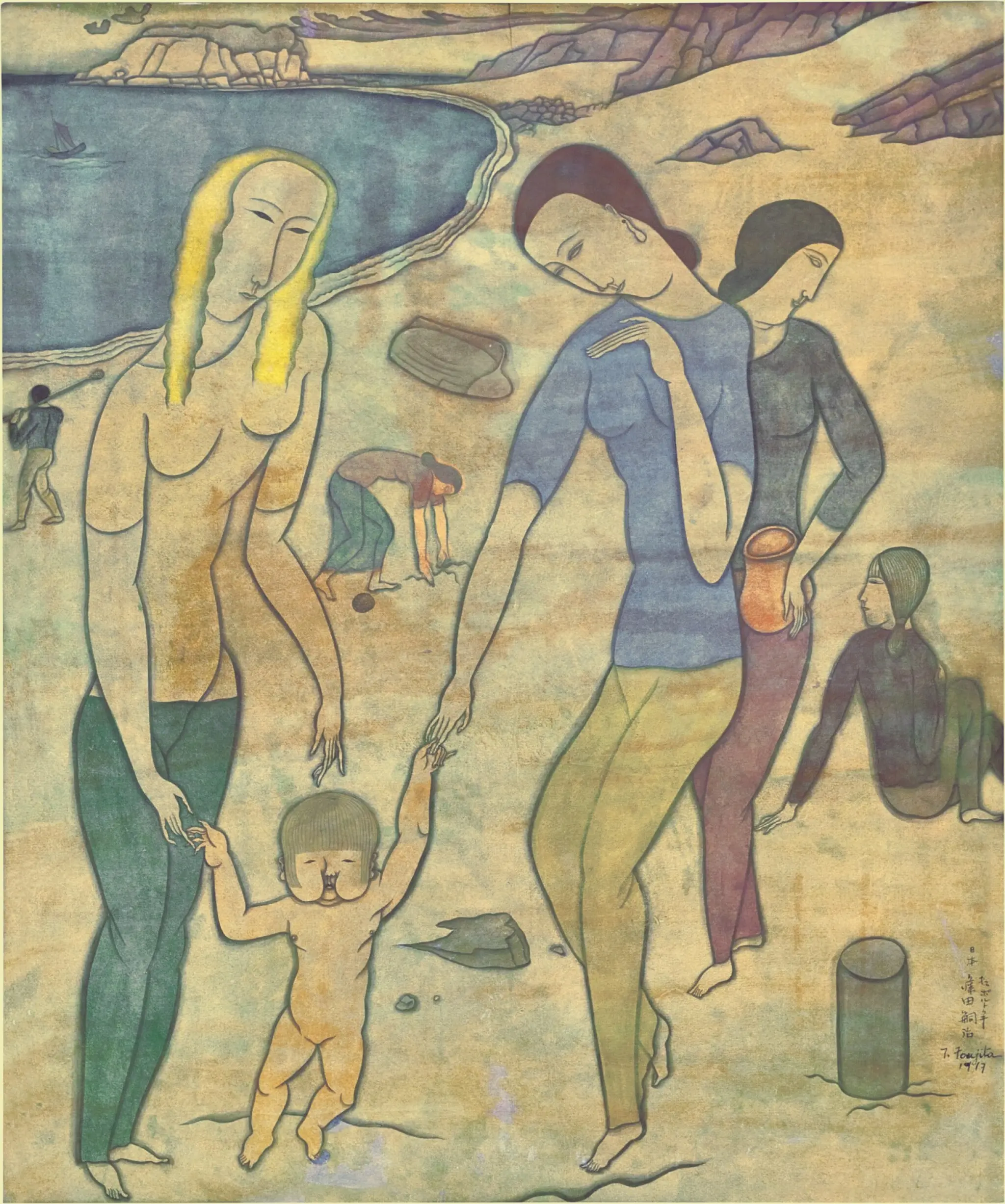
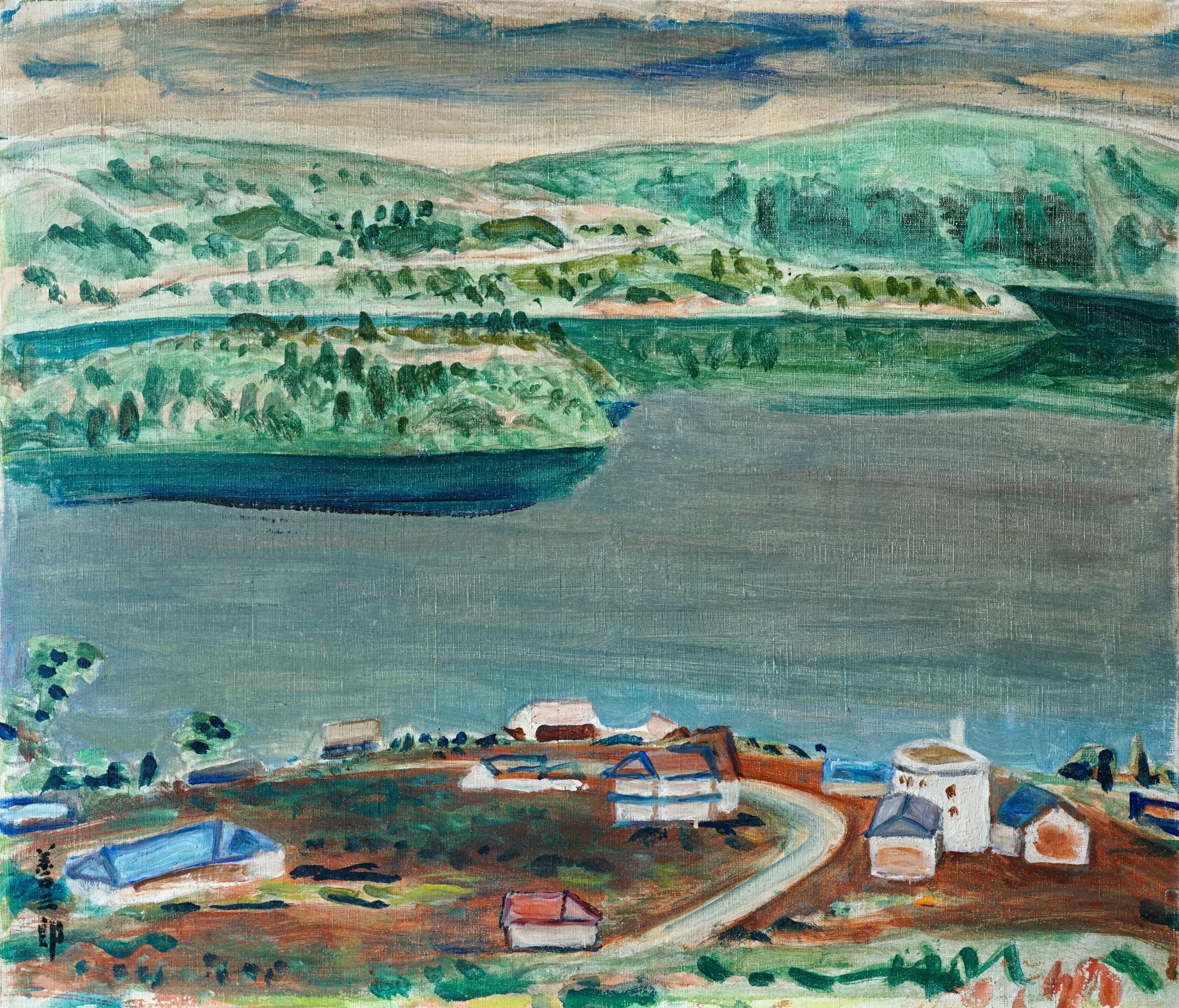
Leonard Tsuguharu Foujita and Zenzaburo Kojima were Japanese artists who arrived in Europe conscious of representing an independent nation with a long cultural history and considerable international influence. They were acutely aware of the standing of Japanese art, particularly through Japonisme, which, from the late 19th century onwards, had fostered cultural exchange from Asia to Europe rather than solely from Europe to Asia.
For Foujita, this exchange found expression in his distinctive milky-white ground (nyūhakushoku) the result of painstaking research into reconciling Japanese pictorial traditions with the material properties of Western oil paint. The surface recalls both Japanese porcelain (jiki) and the tonal refinement of ink painting (sumi-e). At the same time, it demonstrates how Japanese aesthetics could expand the very definition of modern painting through the artist’s material experimentation. Kojima’s European sojourn between 1925 and 1928, by contrast, deepened his engagement with Fauvism, particularly their approaches to composition and the construction of pictorial space. Upon returning to Japan, he began transforming these lessons into a renewed vision of yōga (Western-style painting). His works consequently acquired greater structural solidity and spatial depth, while continuing to articulate the relationship between humanity and nature through a distinctly East Asian aesthetic sensibility. Modernism, in this context, did not supersede tradition; rather, it enabled tradition to discover new forms of expression.
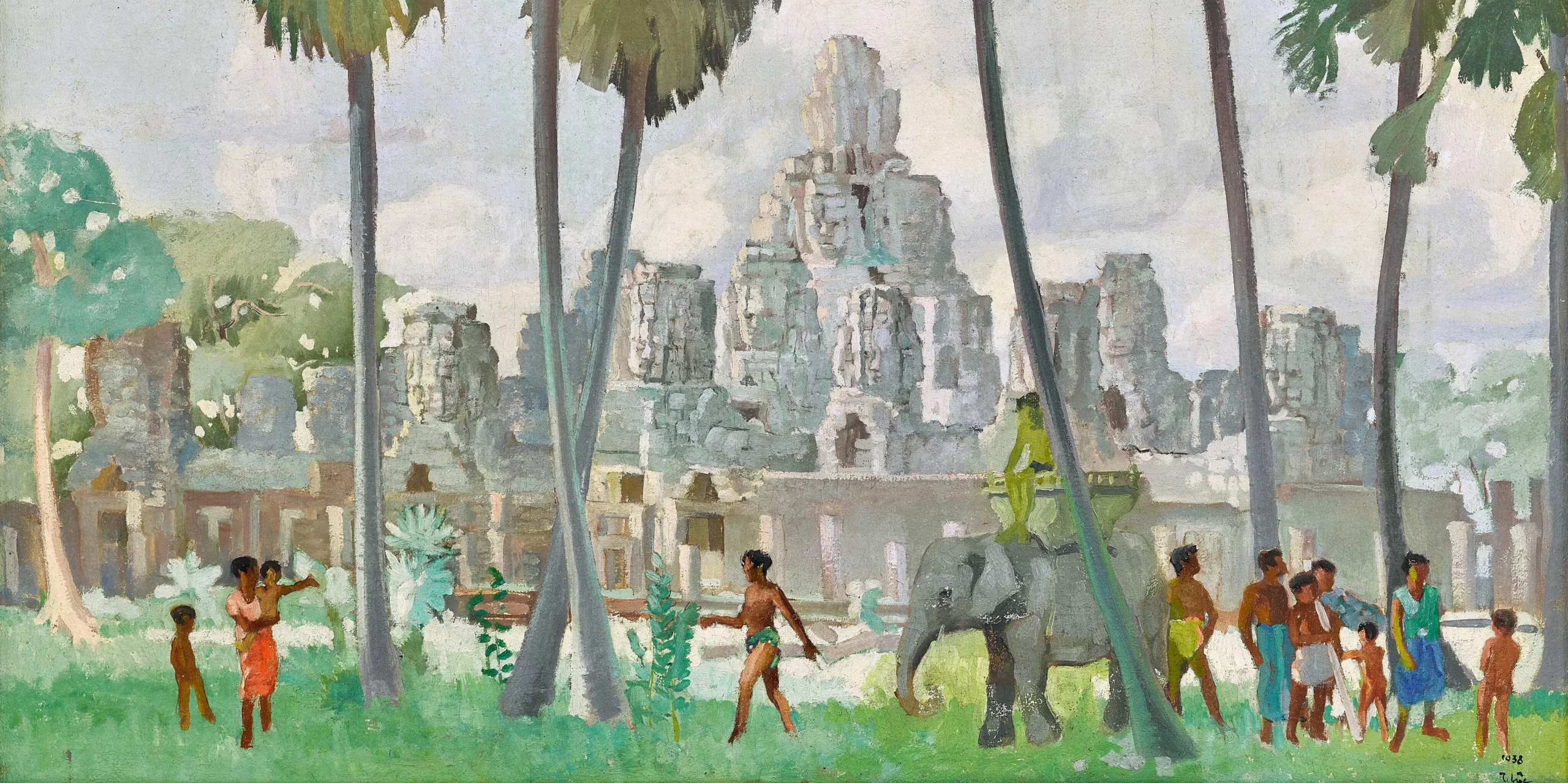
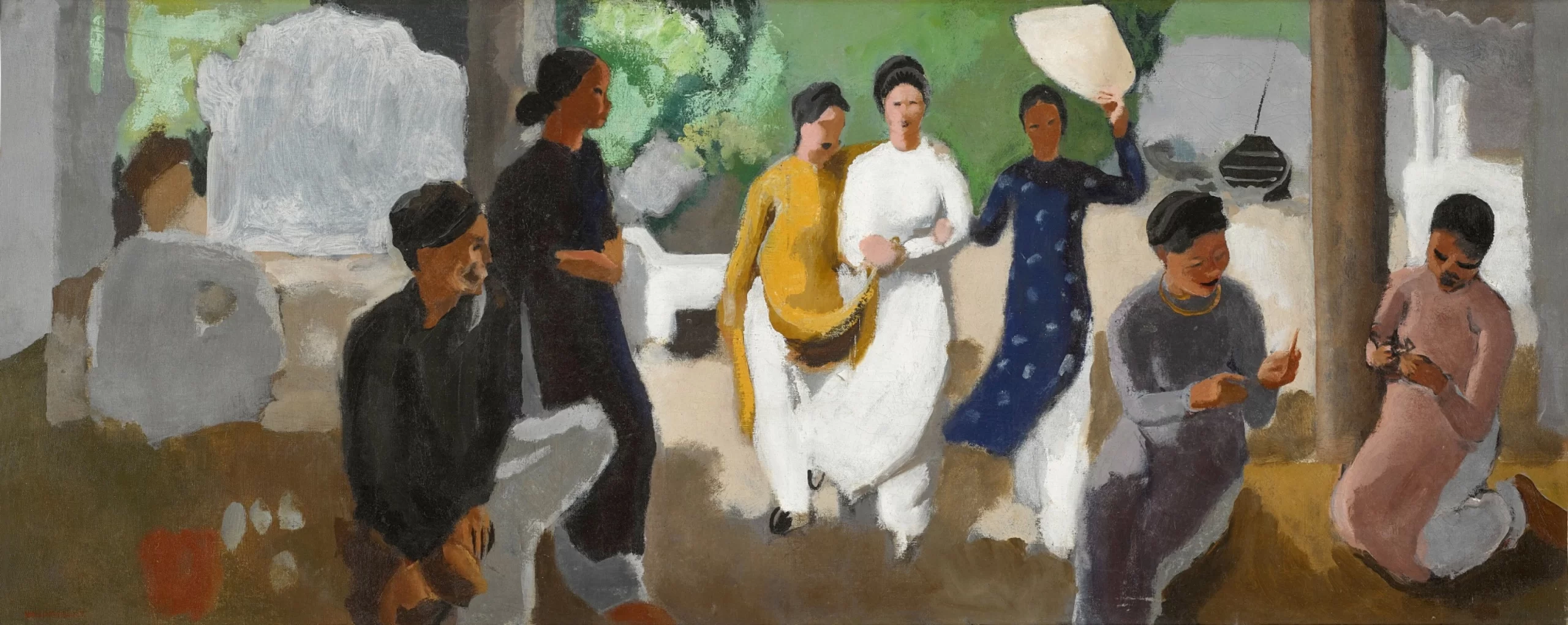
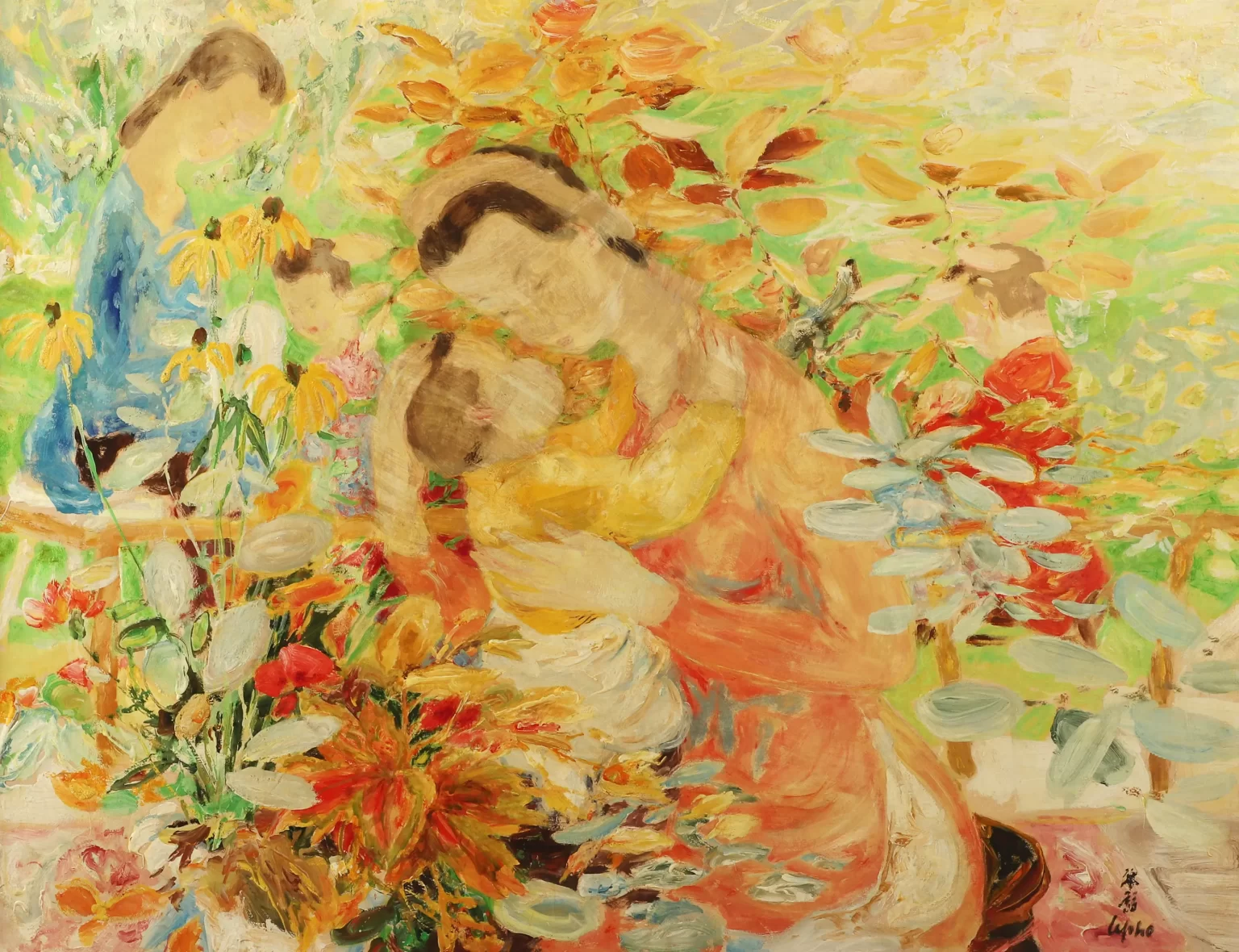
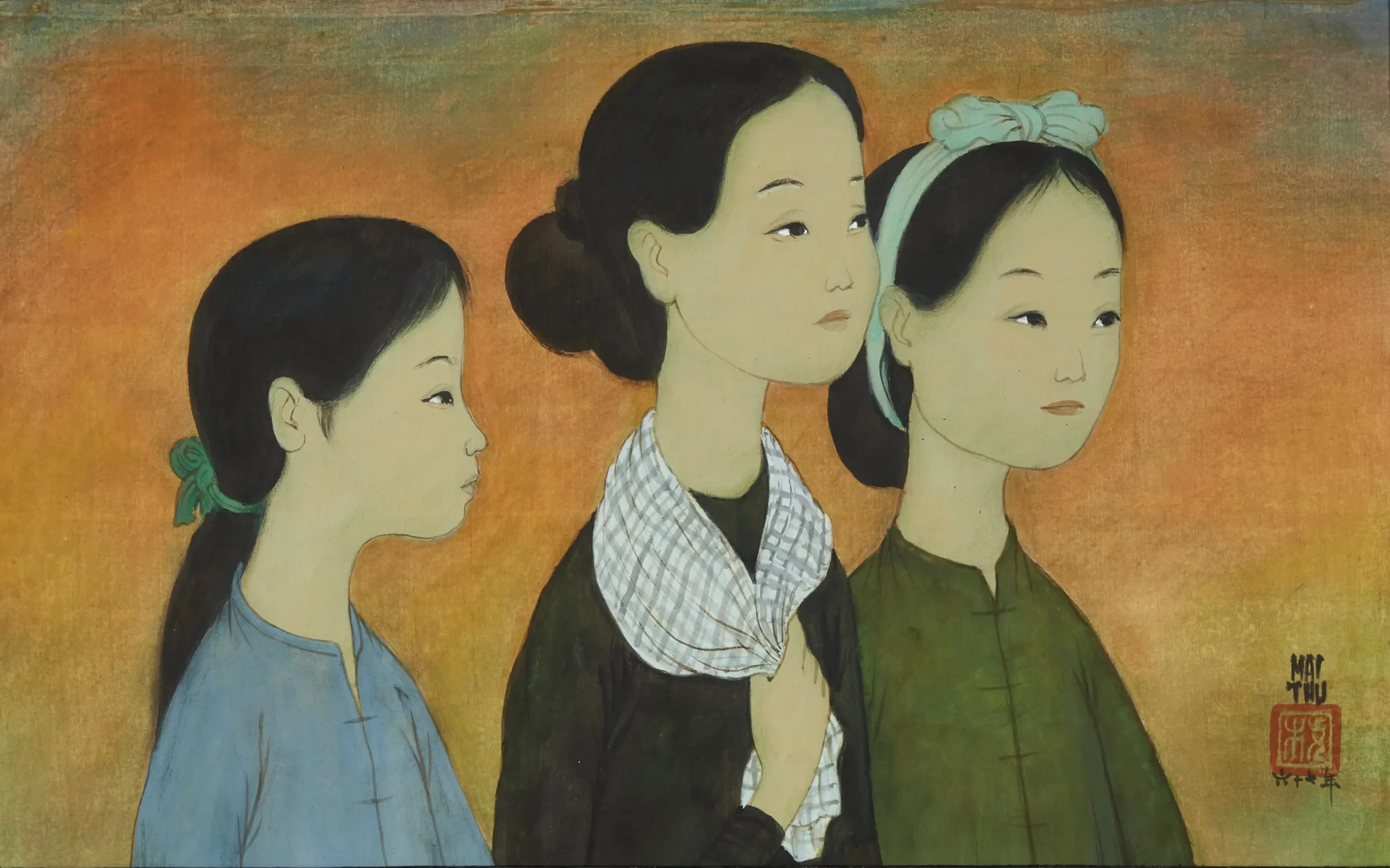
From Vietnam, Le Pho and Mai Trung Thu belonged to a generation of painters trained at the Indochina School of Fine Arts who settled in France during the 1930s. Their integration into the Parisian art world extended the history of Franco-Vietnamese cultural exchange established during the colonial period. In the work of both artists, nostalgia for their homeland persists as an enduring current, frequently embodied in images of women and children, as well as intimate scenes of everyday Vietnamese life. Combined with Western approaches to composition, light and pictorial form, the Vietnam they brought to Paris was one reconstructed through memory and the experience of living abroad.
Within the exhibition, works are installed in direct visual dialogue. A 1928 nude by Henri Matisse is placed alongside a nude painting by Foujita in the same year. African and Oceanic masks are juxtaposed with one of Foujita’s stylised figurative works from 1917. Paintings by Foujita and Le Pho are presented in parallel, recalling the joint exhibitions they held in France between 1957 and 1959. Elsewhere, a 1967 work by Mai Trung Thu, reflecting upon the Vietnam War, is positioned opposite a post-war work by Foujita. Both employ images of women and children as conduits of hope and as affirmations of humanity’s most profound emotional bonds.
According to Rishika Assomull – Senior Director of Villepin Hong Kong – what connects the four painters is not a shared stylistic vocabulary, but their understanding of cultural identity as a continuously evolving process shaped through deliberate acts of selection. “They showed us that modernism could hold multiple material histories at once, allowing traditions to coexist on the same surface rather than replacing one with another. In that sense, material becomes a geography of memory: silk stayed true to Vietnam, Foujita’s grounds to Japan, carrying the homeland through touch and process as much as through image”. It is precisely here that “As the Ground Holds” raises broader questions about how we understand the geography and influence of art. Modernity emerges within the exhibition as the product of multidirectional movement. Vietnamese and Japanese artists did not simply receive aesthetic ideas from multiple sources; they also retained the memories and aesthetic foundations of their homelands, continually reconstituting their artistic practices and contributing to an expanded understanding of painting’s plurality.
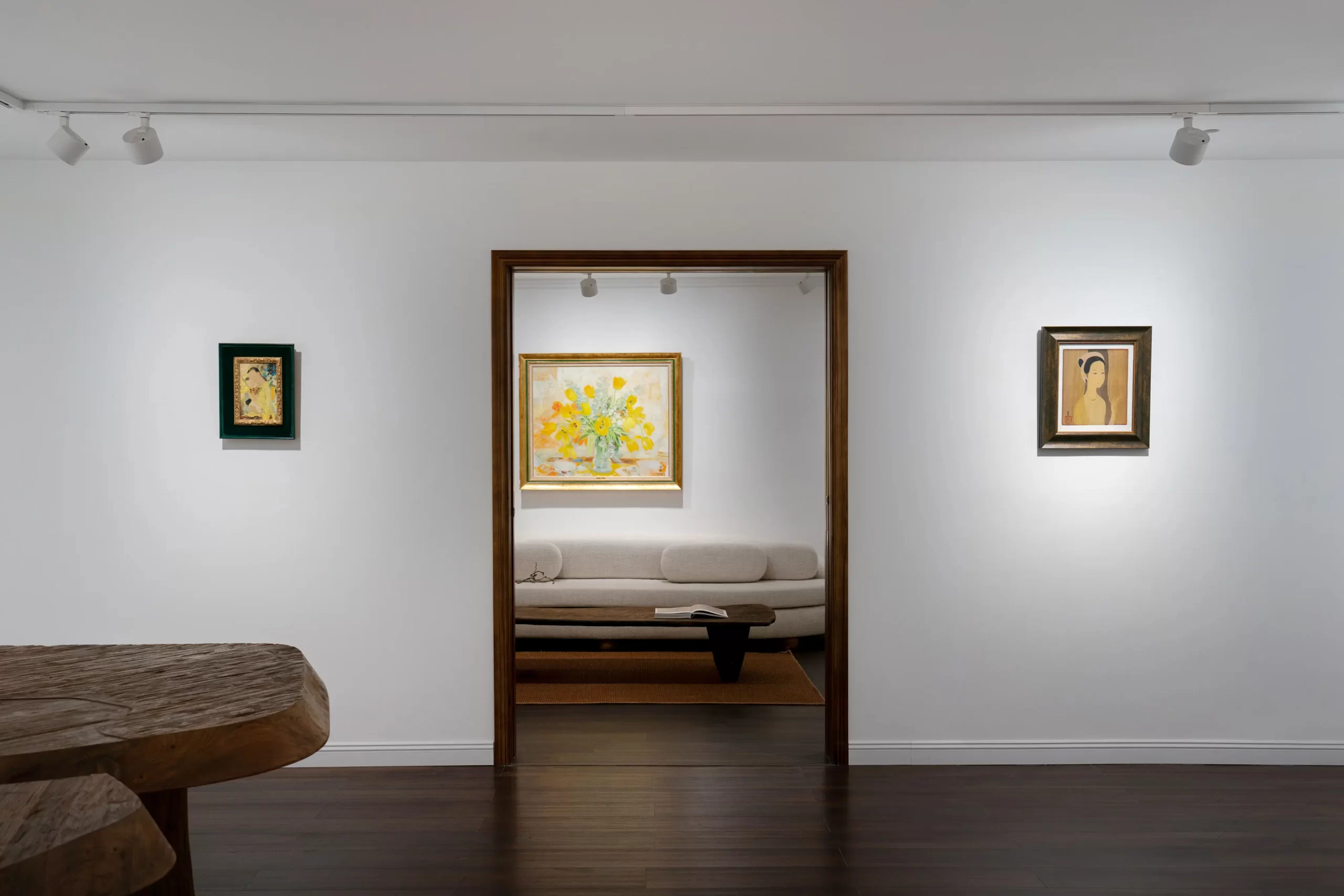
The exhibition also marks an important stage in Villepin’s long-term commitment to Vietnamese art. Rather than approaching artists as isolated figures, the gallery pursues a strategy of legacy-building through sustained scholarly research, exhibitions, academic publications, institutional partnerships and the placement of works within significant museum collections. In recent years, Villepin has progressively situated Vietnamese artists within broader international narratives. In “Worlds Within: Art as Refuge” (2025), for example, Le Pho was placed in dialogue with Myonghi Kang, Fernando Zobel and Zao Wou-Ki. In “As the Ground Holds” (2026), Le Pho and Mai Trung Thu are considered within the wider context of Asian artists working in twentieth-century Paris. Through its international programme and the development of new platforms beyond Hong Kong, Villepin seeks to extend critical discussions of cultural exchange, guided by the conviction that Vietnamese art deserves to be recognised and studied from a more prominent position within the global art-historical landscape.
Words: Tâm Phạm
Translation: Art Nation