Đọc phiên bản tiếng Việt tại đây.
Hoang Sung (1926–2018) occupies a singular position as both film director, propaganda officer and painter, whose legacy of market scenes – often referred to as the “Sung markets” – exerted a profound influence within the Vietnamese art scene in the latter half of the twentieth century. Across a wide range of media, from silk painting and watercolour to lacquer, he maintained a remarkably consistent approach to realism. On one hand, he balanced simplicity of subject matter with forms of social observation grounded in cultural depth. On the other hand, without succumbing to technical display, his methods of staging scenes, organising crowds and regulating pictorial space through form and colour reveal a hybrid sensibility shaped by the two disciplines to which he devoted nearly half his life.
PAINTING AS CULTURAL ARCHIVE
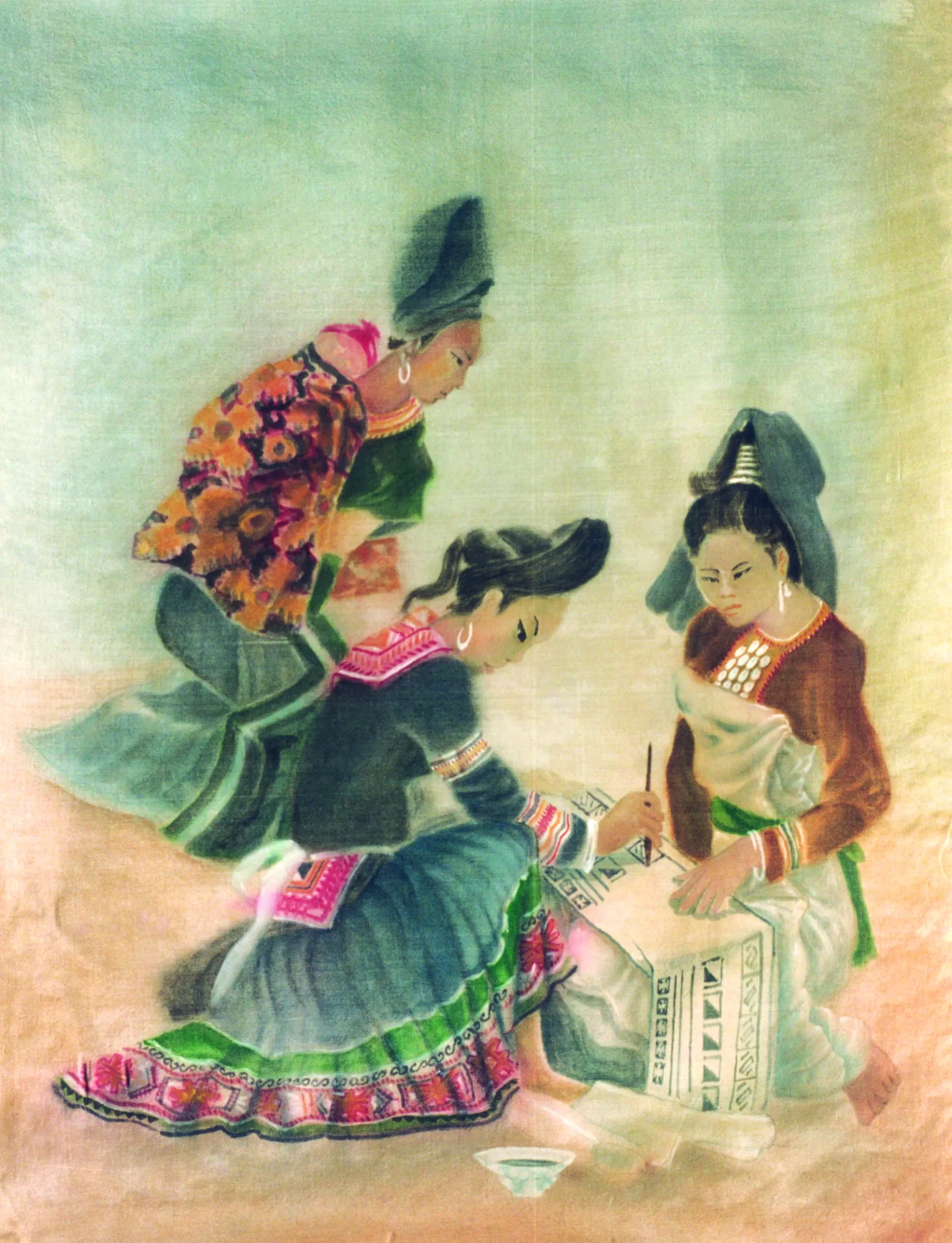
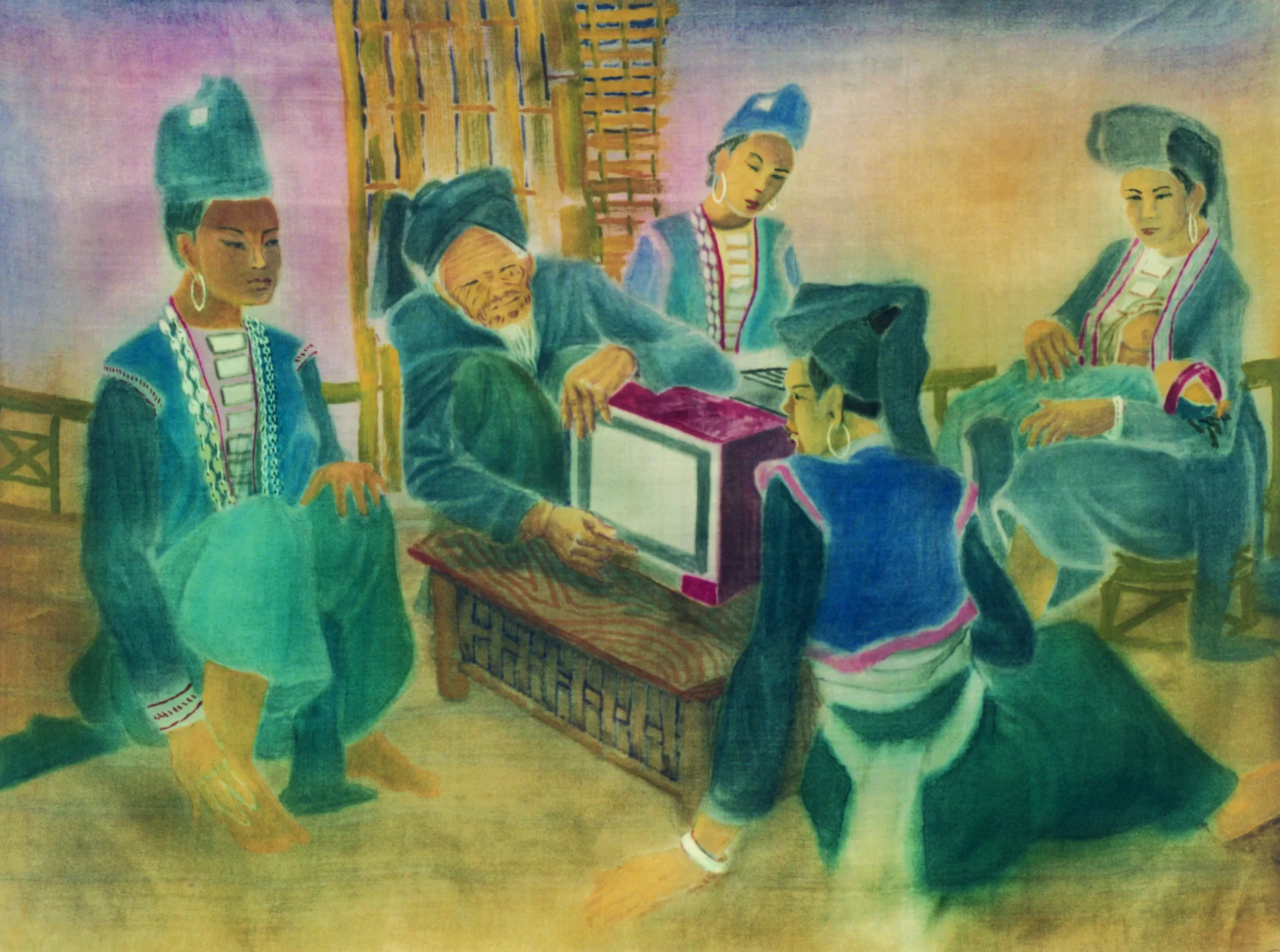
Throughout his artistic practice, Hoang Sung rarely gravitated towards subjects of overt drama or tension. Instead, he quietly turned to humble and vernacular fragments of daily life, approaching reality through a gradual process of contemplation and attentive observation. From the 1960s through the mid-1980s, he frequently depicted young women from the rural north of Vietnam, many of whom he had encountered while working in northern midland and mountainous provinces such as Vinh Yen and Phu Tho. Through his brush, he rendered not only highland women in traditional ethnic dress, but also urban women in ao dai with equal intimacy, stripping away ornamental excess in favour of the authenticity of ordinary moments. Alongside portraiture, this period also saw him painting landscapes that captured the beauty of fishing villages and mountainous regions encountered during his travels for work. Most works from this phase were executed in watercolour on silk, punctuated by occasional oil and pastel works on paper.
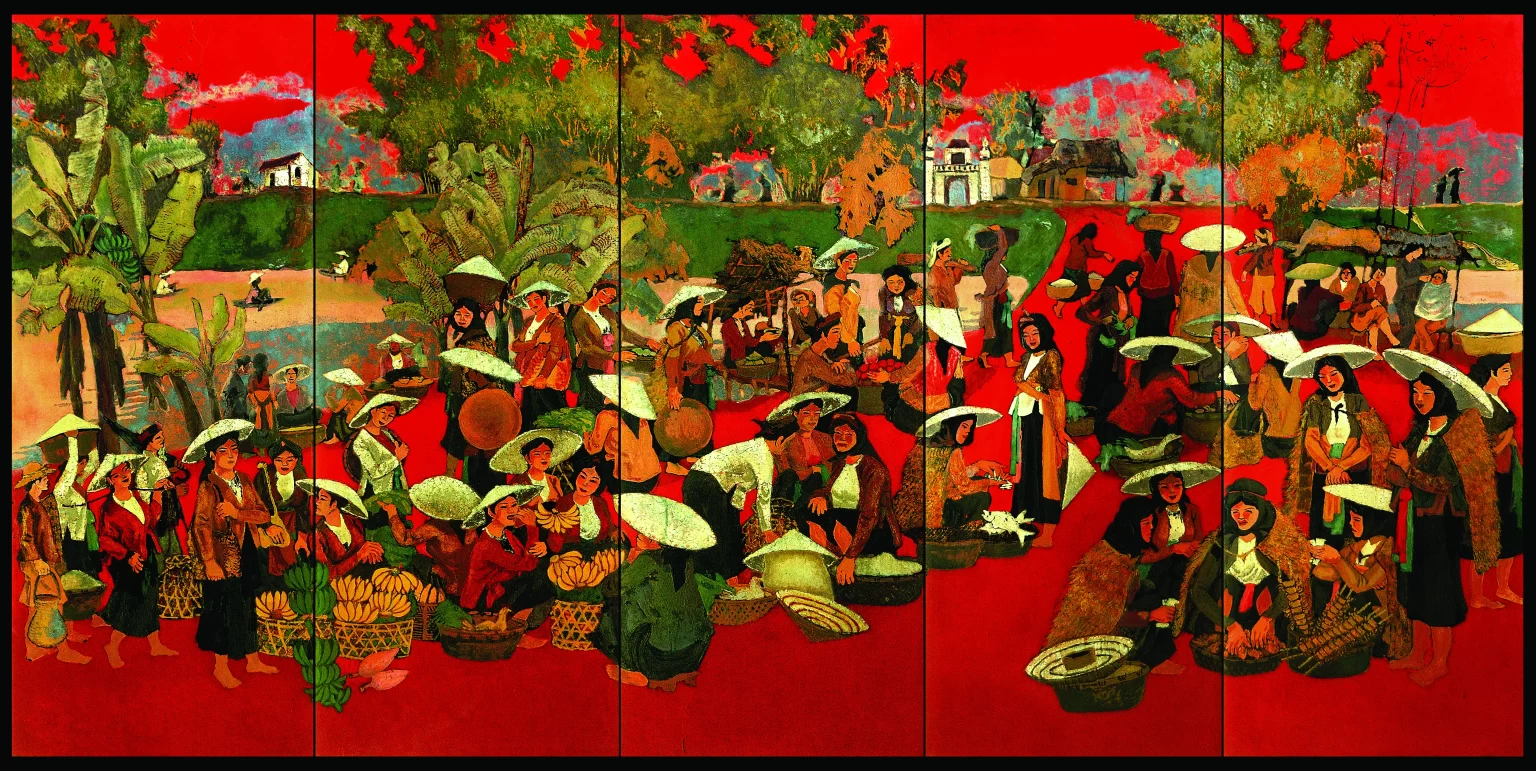
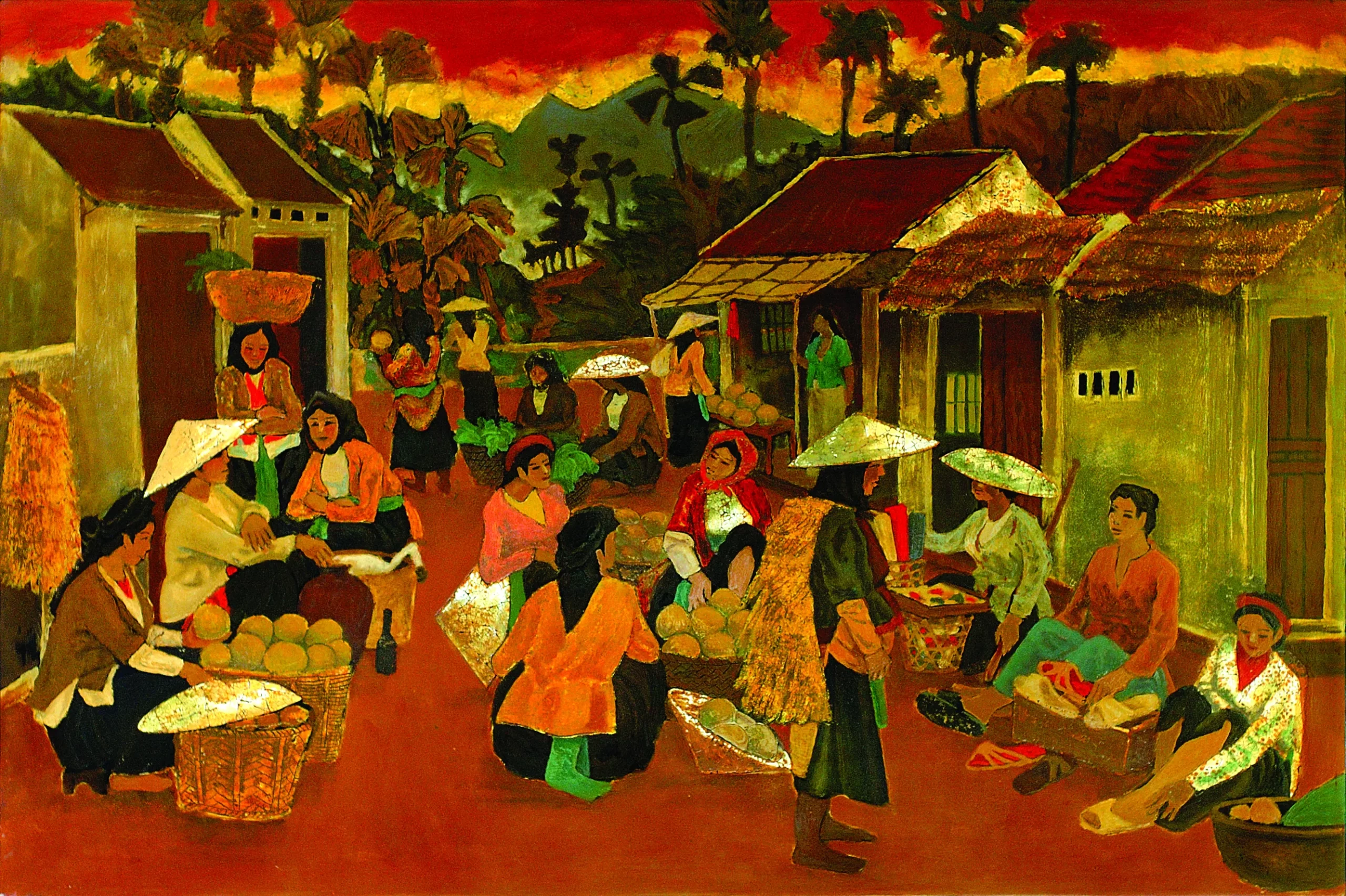
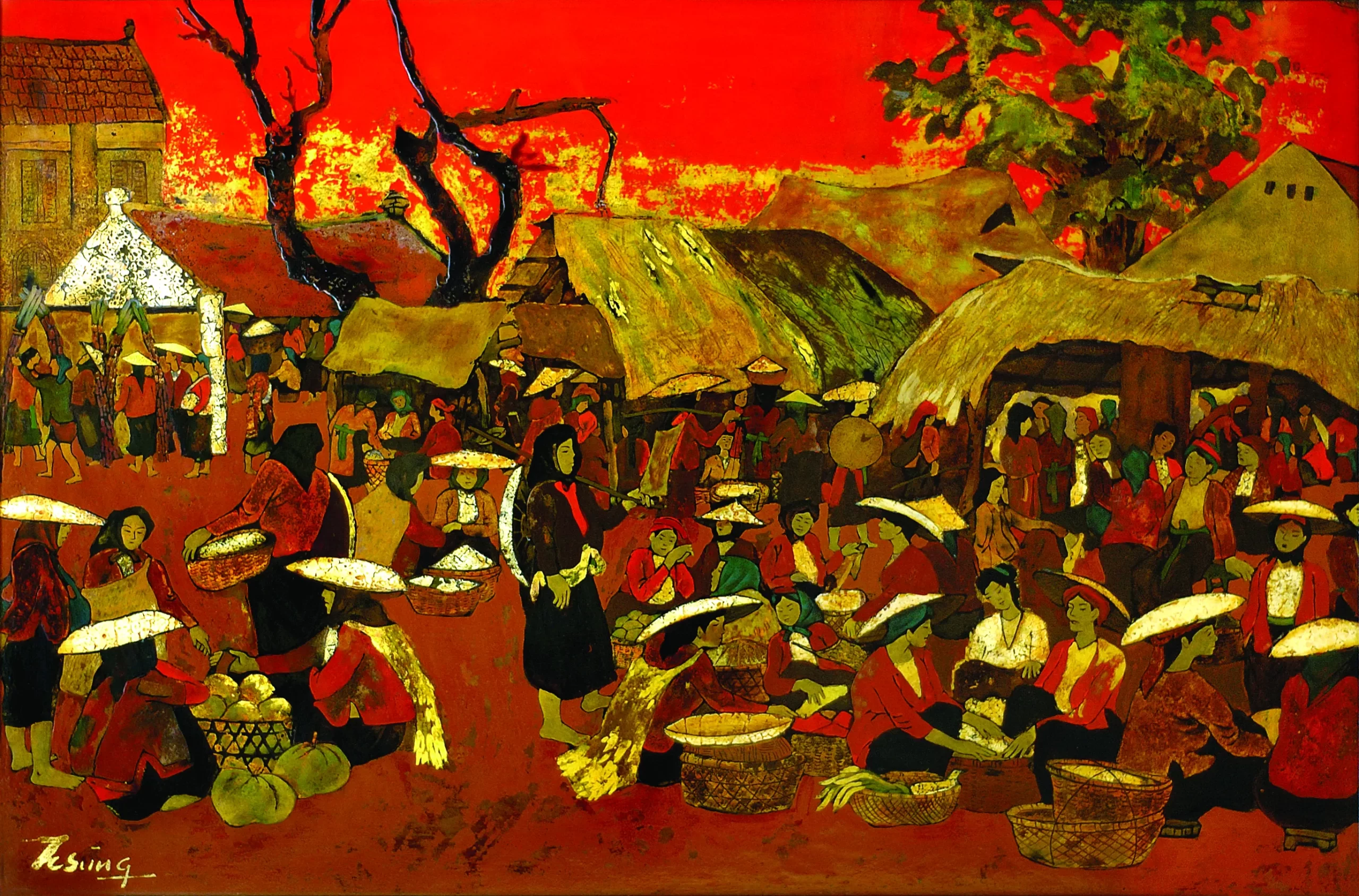
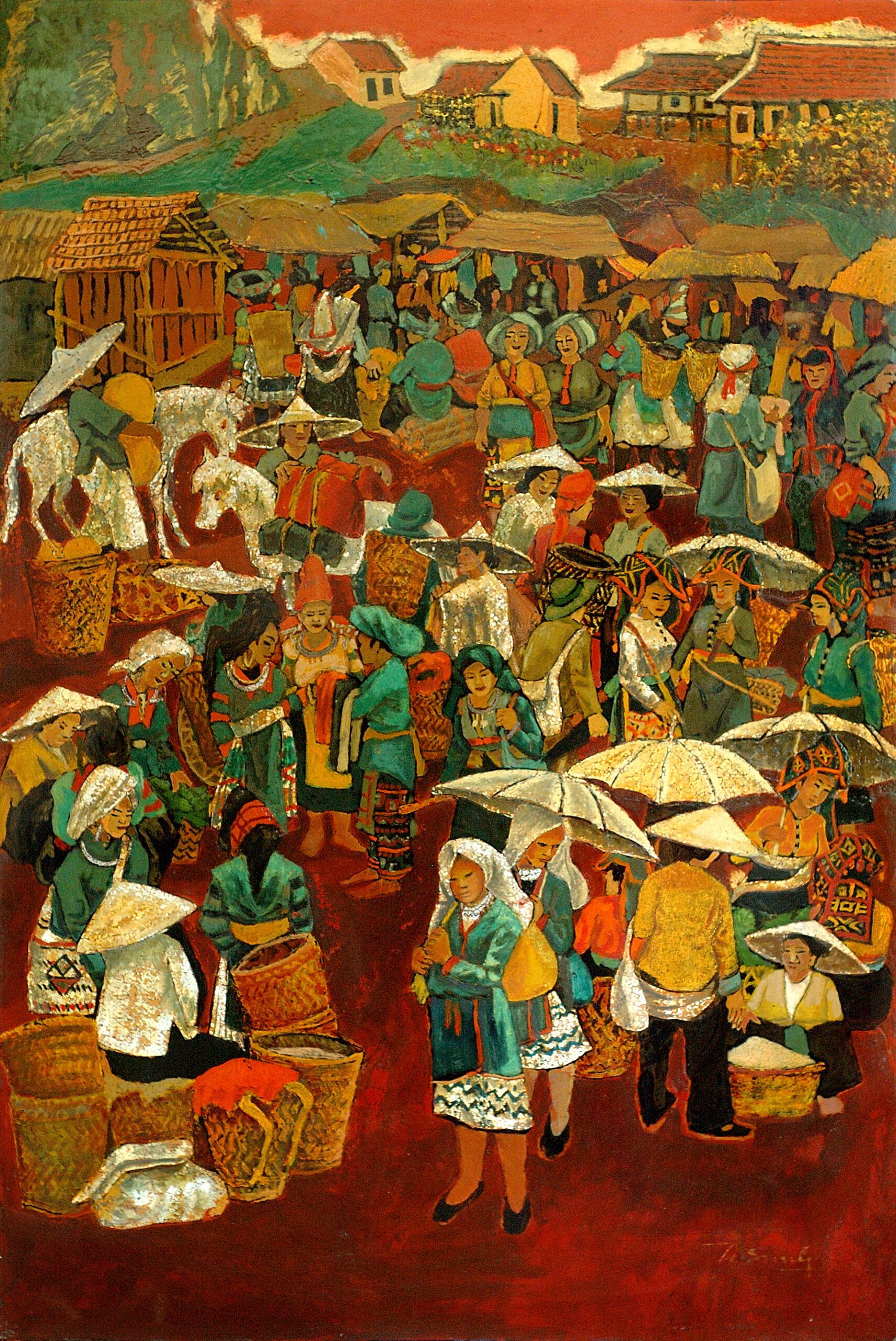
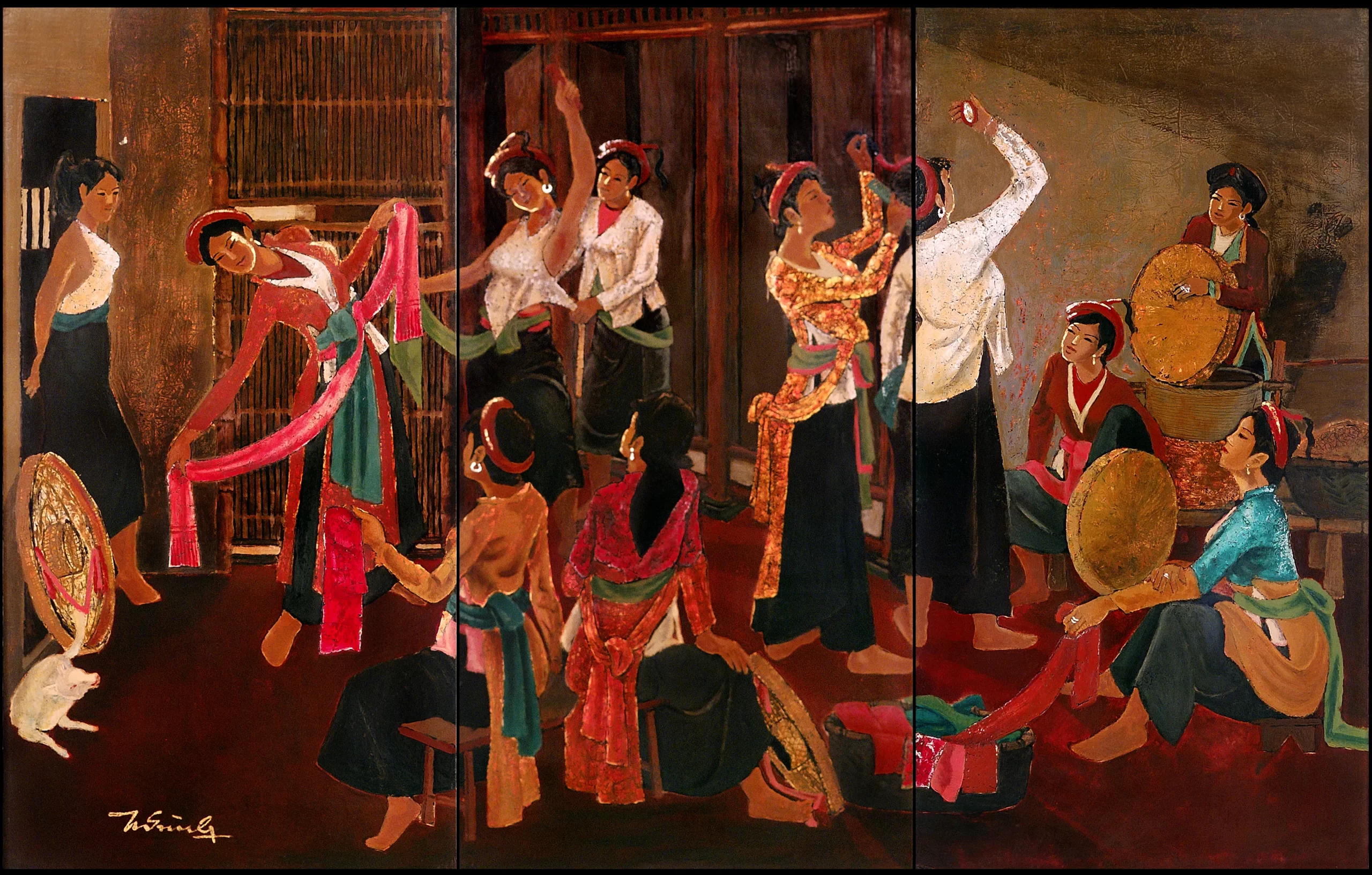
From the latter half of the 1980s onwards, Hoang Sung shifted towards more complex spatial structures, focusing increasingly on market scenes that would later gain broad recognition both within Vietnam and internationally. Working primarily in lacquer, he became fascinated by the bustling atmosphere of commerce and exchange, depicting markets ranging from Mia market in Son Tay and Dam Hong market in Hanoi to remote frontier regions such as Bac Ha in Lao Cai and Phong Tho in Lai Chau. Each painting exceeded the function of documenting spaces of trade, becoming instead a cultural portrait of a particular locality, saturated with the collective memory of generations of Vietnamese people. In lacquer especially, he repeatedly returned to scenes of temple pilgrimage, lakeside urban life and mountain weddings. This artistic attitude, rooted in ordinary life and attentive to underlying cultural currents, ultimately defined Hoang Sung’s distinct path: quiet, restrained and deeply sincere.
THE MISE-EN-SCÈNE OF COMPOSITIONAL LANDSCAPING
In April 1960, Hoang Sung was sent by the Vietnamese state to the Soviet Union to study film directing at the All-Union State Institute of Cinematography (VGIK) in Moscow. Upon returning to Vietnam, he spent nearly a decade working in cinema, producing notable films such as “Phao dai xanh” (The Green Fortress)”, “Kham Pha – Nang Nga” (Kham Pha and Nang Nga), “Cuu tau” (Rescue the Ship) and the animated film “Giac mo hoa” (The Flower Dream). In 1972, he was reassigned to managerial and creative work in television broadcasting. These turns in his career became the conditions through which he approached the pictorial plane as a dynamic visual field, intertwining cinematic staging with painterly structure and form. Two key characteristics make this especially evident: his orchestration of crowd compositions and his simultaneous layering of multiple temporalities within a single pictorial surface.
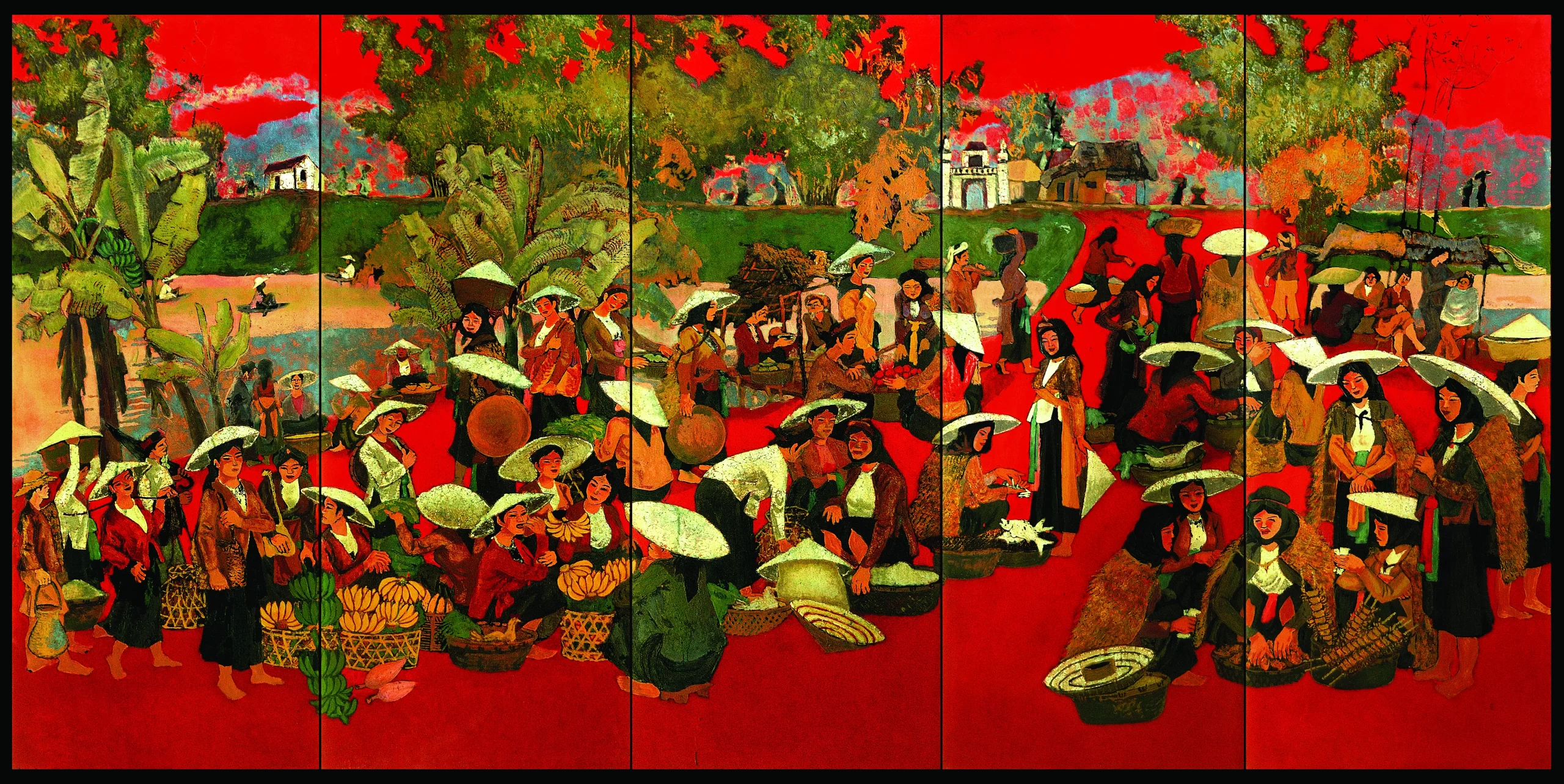
First, the organisation of crowds was not an isolated strategy but one that Hoang Sung deployed consistently across numerous works and contexts. Representative examples include “Phung market” (1991), “Dam cuoi nguoi Dao do” (Red Dao Wedding Procession) (1992), “Cho Que” (Village Market) (1994), “Cho Phong Tho 1” (Phong Tho Market 1) (1996), “Ho Thien Quang” (Thien Quang Lake) (2001), “Hat Xam” (Xam Singing) (2001), among others. In “Phung Market” alone, the number of figures reaches approximately seventy, while “Cho ven do” (Suburban Market) (2000) contains nearly 60 people across multiple generations. Rather than allowing these crowds to descend into visual chaos, Hoang Sung established a multi-focal order. His scenes are carefully staged so that each group of figures functions like an independent sequence, yet remains linked through minor details and a continuous visual rhythm, producing a form of narration closely aligned with cinematic language. In “Cho ven de song Hong” (Market by the Red River Dike) (1993), for example, the peaceful landscape of the northern Vietnamese countryside is interwoven with multiple simultaneous vignettes: stalls selling crabs and fish, fruit vendors, roadside barbers, porters returning from the market and boatmen drifting downstream. Although he depicted large numbers of figures, the overall composition retains a sense of openness and equilibrium between panoramic space and clusters of everyday activity.
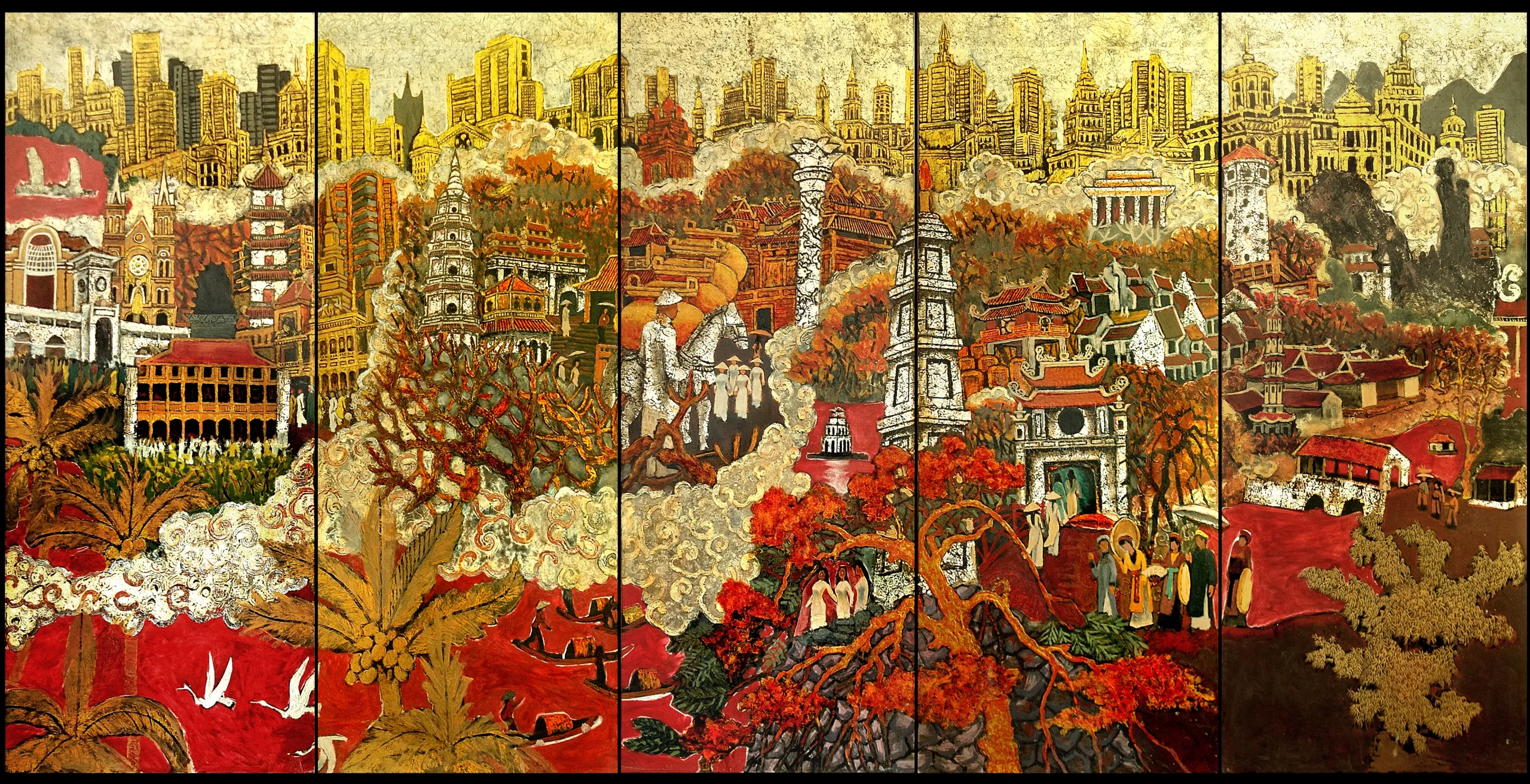
Equally significant is the modernity of Hoang Sung’s multidimensional layering of imagery. The clearest example appears in “To quoc toi” (My Country)” (1998). Along the vertical axis, the artist not only deftly marshals linear perspective but also organises the composition into three expressive spatial registers. The lowest layer serves as the cultural bedrock – an allegory of heritage; the middle layer embodies the movement of contemporary life; and the uppermost layer projects a vision of the future. Through this structure, he condenses the transformation of the nation across time, presenting multiple historical moments simultaneously upon a coherent and uninterrupted pictorial surface. Horizontally, each layer further explores the diversity of its subjects. This approach resonates strongly with cinematic montage, where the superimposition of images generates meanings that exceed the expressive value of any single frame.
GREEN INTERLUDES AS VISUAL MODULATION
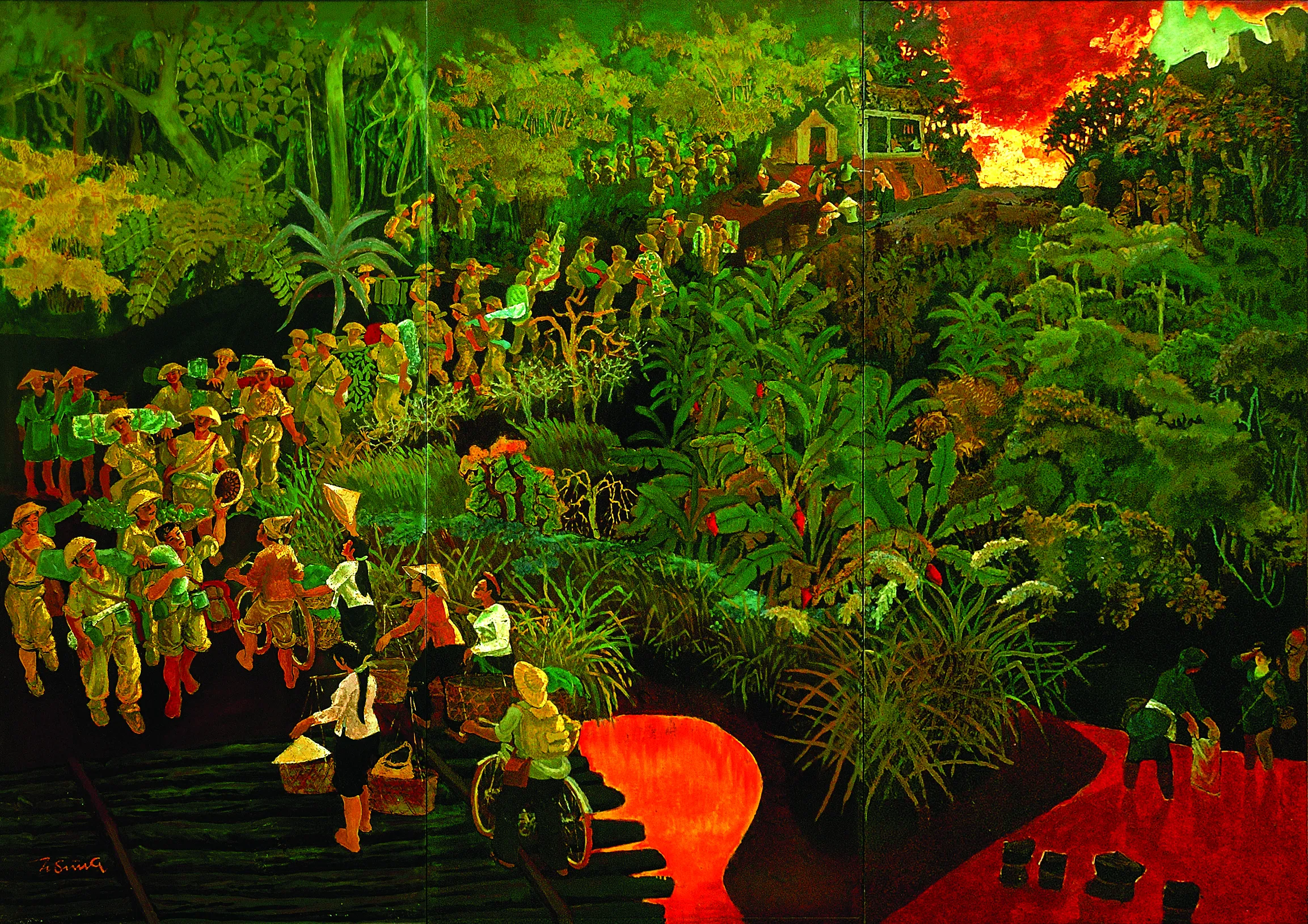
Focussing solely on his lacquer practice, it was only after retirement that Hoang Sung was finally able to devote himself fully to researching and practising the medium. He mastered the traditional lacquer palette of vermilion, shell red, black lacquer, reddish-brown, gold and silver. Beyond this, he increasingly employed cool tonal fields characterised by blue and green as a means of regulating visual rhythm and balancing the painting’s overall atmosphere. These two colours recur throughout many works and became almost a signature element within his lacquer palette. They appeared both in the costumes of figures – reinforcing continuity across compositional zones and in receding background planes to intensify focus on the foreground. This chromatic strategy enabled his paintings to sustain a delicate equilibrium between the material depth characteristic of lacquer and the sensory bustle and ceaseless movement of everyday life.
By combining intimate everyday vignettes with richly narrative spatial structures, Hoang Sung preserved within his paintings a sequence of visual chronicles imbued with Vietnamese cultural identity across villages and cities alike over many decades. Through this body of work, he secured a singular position within the history of modern Vietnamese art.
Words: Tâm Phạm
Translation: Art Nation