Đọc phiên bản tiếng Việt tại đây.
Marking the 140th anniversary of the artist’s birth, the collection traces his illustrious six-decade career, offering a rare insight into one of the most distinctive and influential figures of the School of Paris. Foujita first rose to prominence within the Montparnasse art community in Paris during the 1920s. He moved in the same circles as Amedeo Modigliani and Pablo Picasso, and counted among his contemporaries such celebrated artists as Chaïm Soutine, Henri Matisse and Fernand Léger.
Foujita became renowned for a distinctive style that blended traditional Japanese painting techniques with European influences, earning him a reputation as a cultural bridge between East and West. His subject matter also encompassed themes that have long captivated audiences, ranging from self-portraits and female nudes to depictions of cats and everyday scenes of Parisian life.
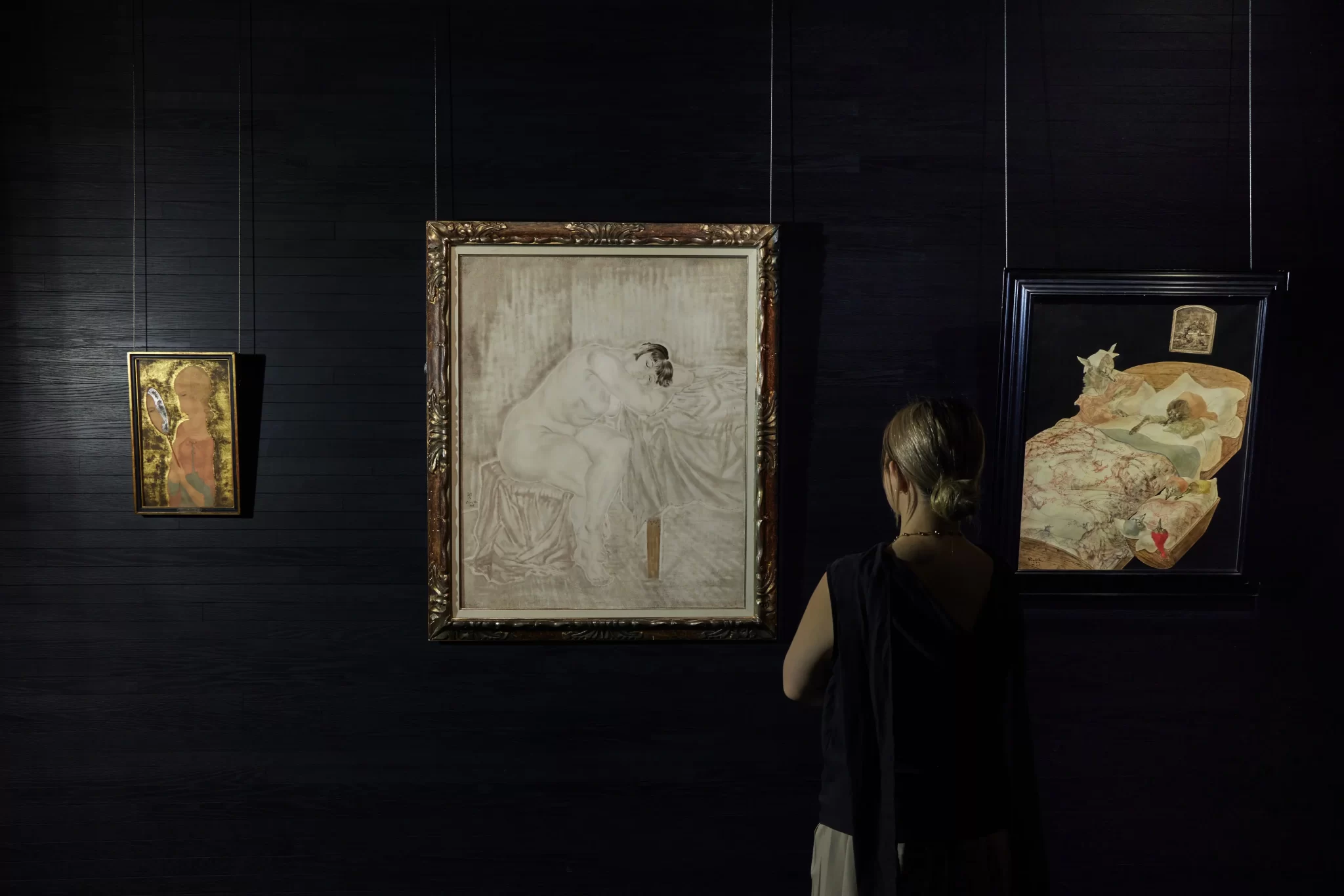
The Foujita Lexicon collection is the result of more than three decades of dedicated collecting by the Lewis family. Their enduring connection to Foujita’s work reflects his singular place in art history and the lasting influence of his practice. Spanning every major period of his career, the collection showcases the artist’s remarkable achievements across a wide range of mediums, subjects and geographical contexts.
“The Foujita Lexicon, the most comprehensive collection of Foujita’s masterpieces ever presented in Asia, offers a rare opportunity to appreciate the aesthetic vision of this French artist of Japanese origin. It further affirms Léonard Tsuguharu Foujita’s position as one of the defining figures of twentieth-century art,” said Evelyn Lin, Chairman of Modern and Contemporary Art at Sotheby’s Asia.
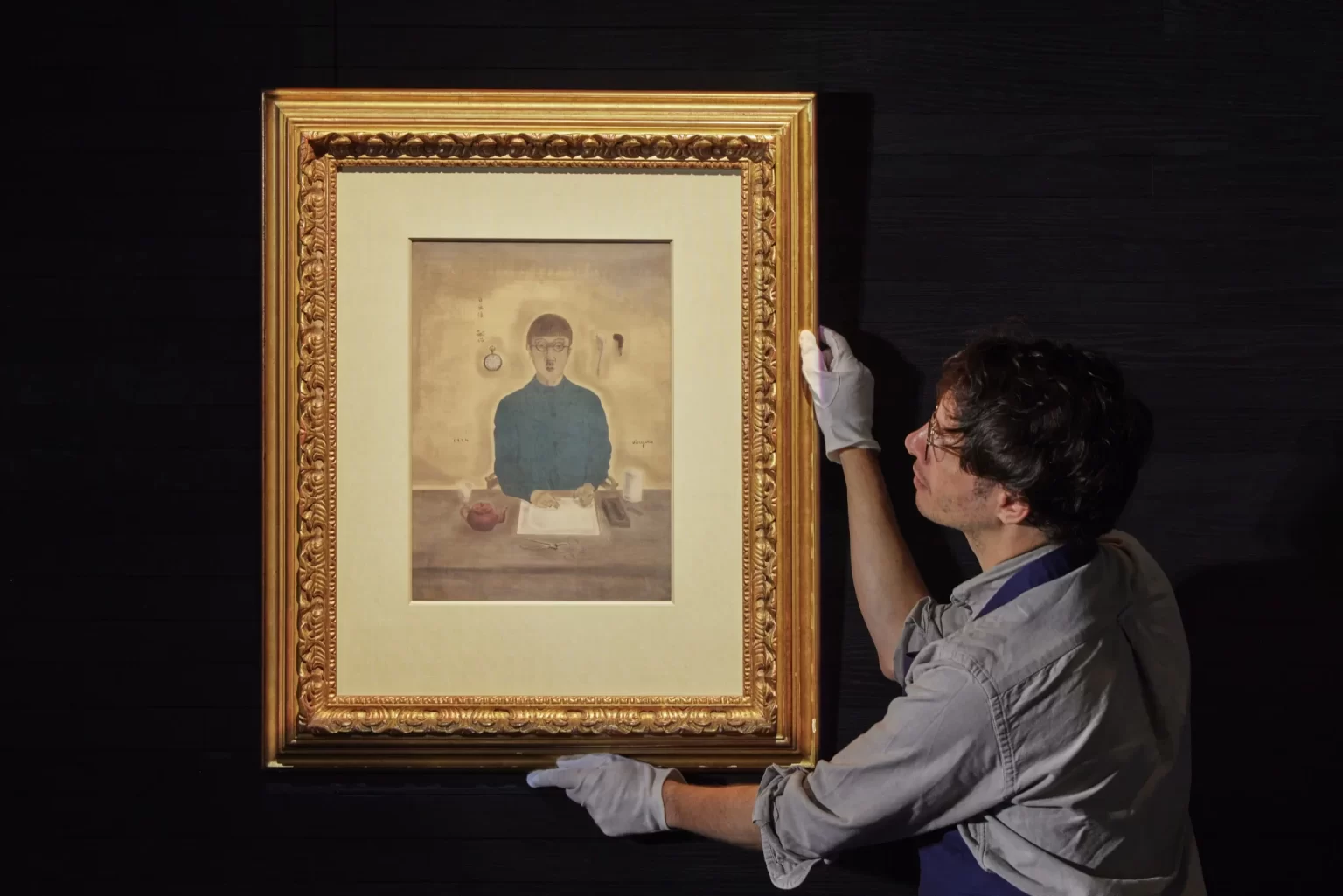
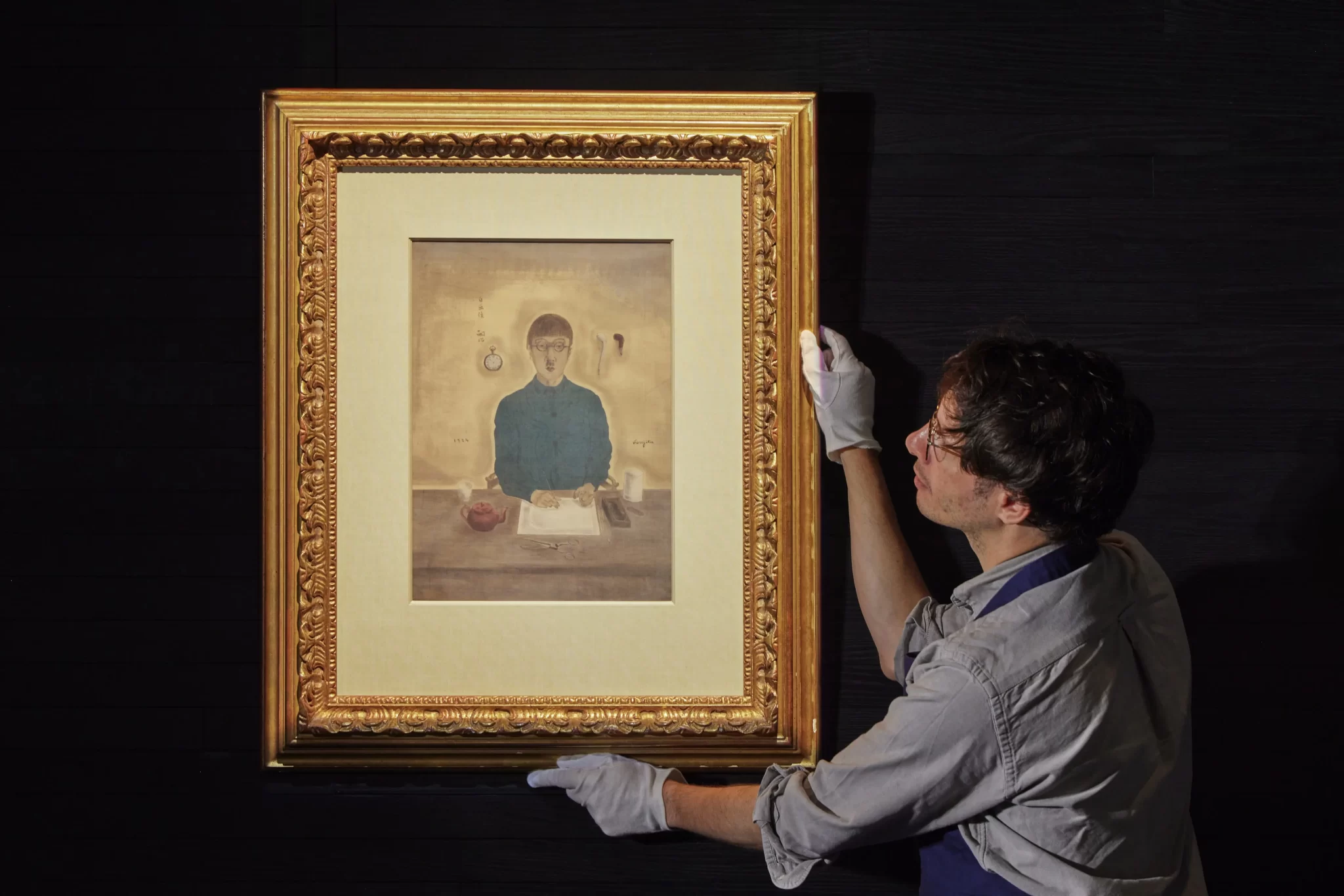
Among the 15 masterpieces in the collection, Mon portrait is a landmark self-portrait created during the height of Foujita’s fame in Montparnasse. Throughout his career, self-portraiture served as an important means through which he shaped and presented his public image. Mon portrait captures the artist at a moment when he was emerging as one of the leading figures of the School of Paris.
Foujita surrounds himself with distinctly Japanese objects alongside elements of everyday European life on his desk. Traditional East Asian calligraphy tools appear alongside Western objects, forming a visual statement of the cultural harmony he sought to create. The painting also captures the artist’s instantly recognisable appearance through his bowl-cut hairstyle, round glasses and cigarette holder.
With its delicate calligraphic lines on silk and masterful treatment of negative space, the work occupies a significant place in Foujita’s oeuvre. Self-portraits of this calibre are exceptionally rare at auction and seldom appear on the market.
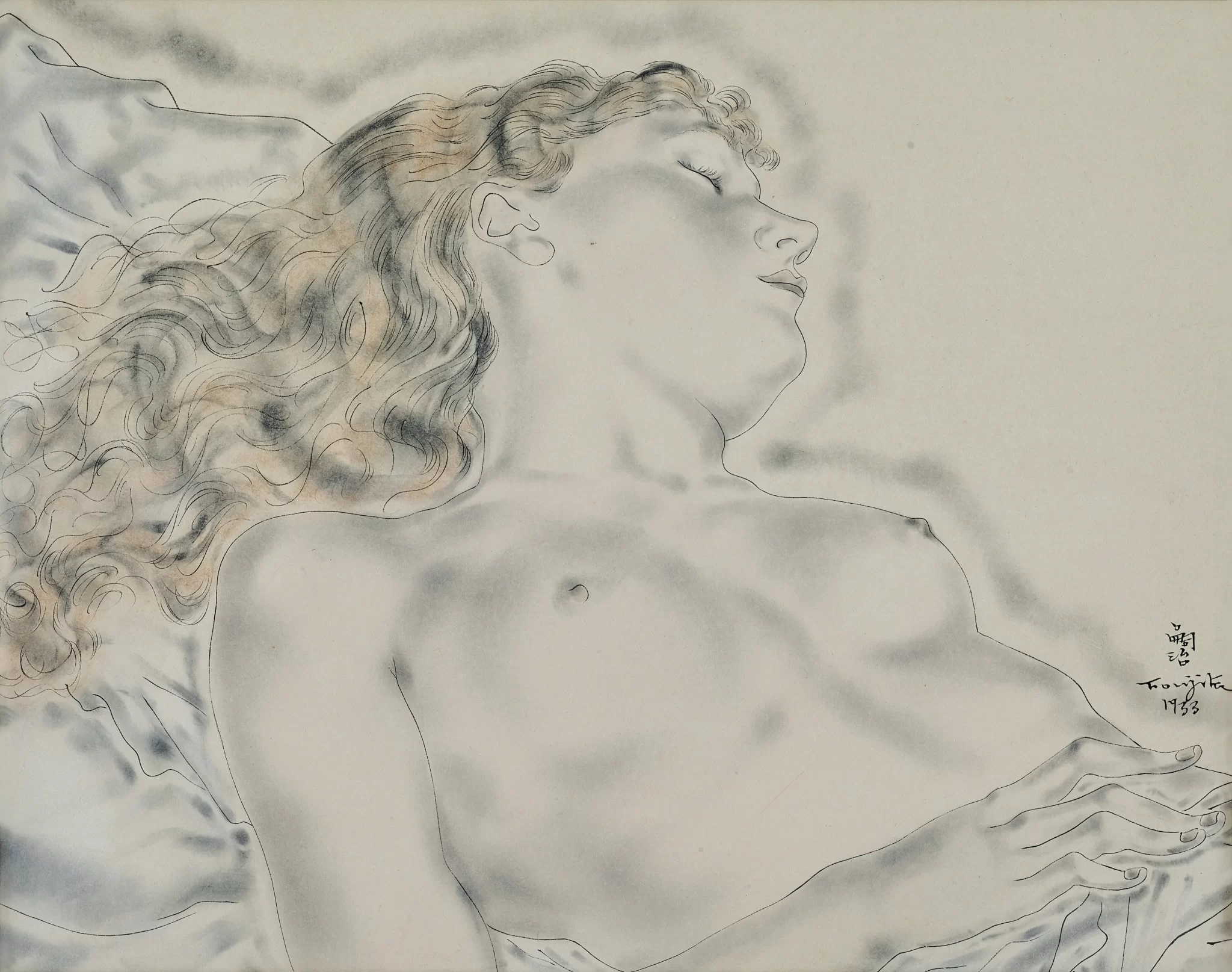
Another highlight of the auction is Madeleine endormie (c. 1930), a work of particular significance to the Lewis family, as it was the first painting by Foujita they acquired in 1992. Madeleine endormie laid the foundation for what would become one of the most important private collections devoted to the artist’s work.
One of four pivotal works by Foujita, Le rêve – Hommage à La Fontaine is an exceptionally rare painting. Drawing inspiration from the French fable tradition, the work depicts a family of foxes sleeping peacefully in a serene setting. The intimate and lifelike portrayal of the foxes demonstrates not only Foujita’s masterful skill but also his sensitive nature. The painting offers a glimpse into the late artist’s inner world, revealing its optimism and gentleness.
Hommage à La Fontaine was created in 1949, a turning point in both the artist’s life and career. Foujita painted the work during his stay in New York, a period that marked his reunion with family and the revival of his artistic career. After his wife, Kimiyo, joined him in the United States, the couple began preparing for a solo exhibition at the Mathias Komor Gallery.
The exhibition was a great success, restoring Foujita’s standing in the international art market and paving the way for his eventual return to Paris. As one of only four fox paintings he produced during his nearly two-year stay in the United States (1949–1950), Hommage à La Fontaine represents a brief yet significant chapter in his artistic journey.
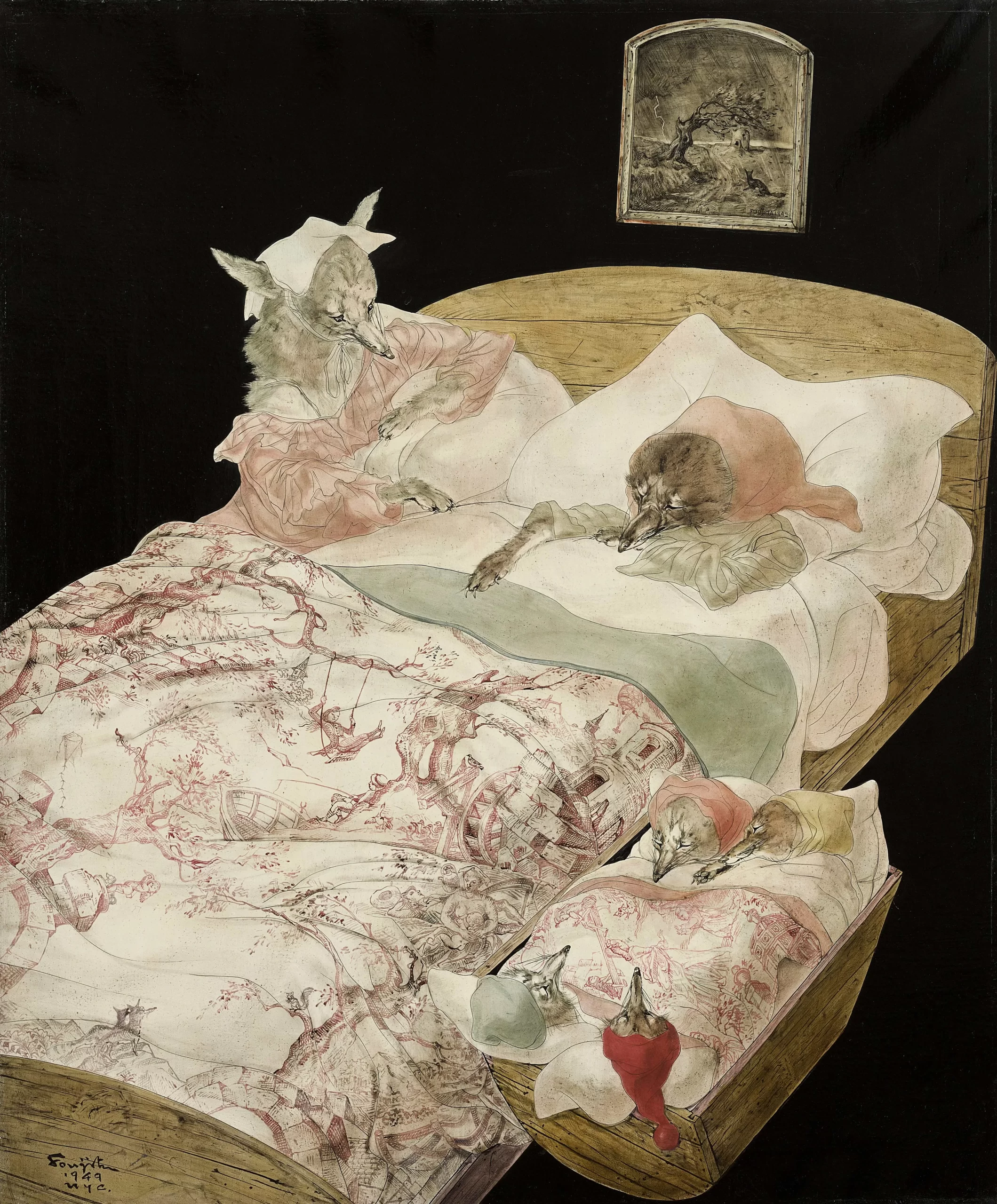
Above the fox family, Foujita incorporates an image inspired by Jean-François Millet’s Gust of Wind, depicting a fox struggling against a storm. Set against the tranquillity of the family’s den, this subtle contrast further highlights the painting’s themes of shelter, harmony and rebirth.
“Foujita holds a special place in our collection. From the first drawing we acquired in 1992 to the most recent work we added nearly 25 years later, his distinctive aesthetic vision and approach to art have continued to inspire our passion for collecting. Foujita’s works sit harmoniously alongside those of other modern masters in our collection, such as Modigliani and Picasso, while retaining a character entirely their own.
“We are delighted to see Foujita’s works brought together here, and hope they will inspire the public in the same way they have nurtured our own passion for art,” said a representative of the Lewis Collection.
Written and translated by: Hoa Le