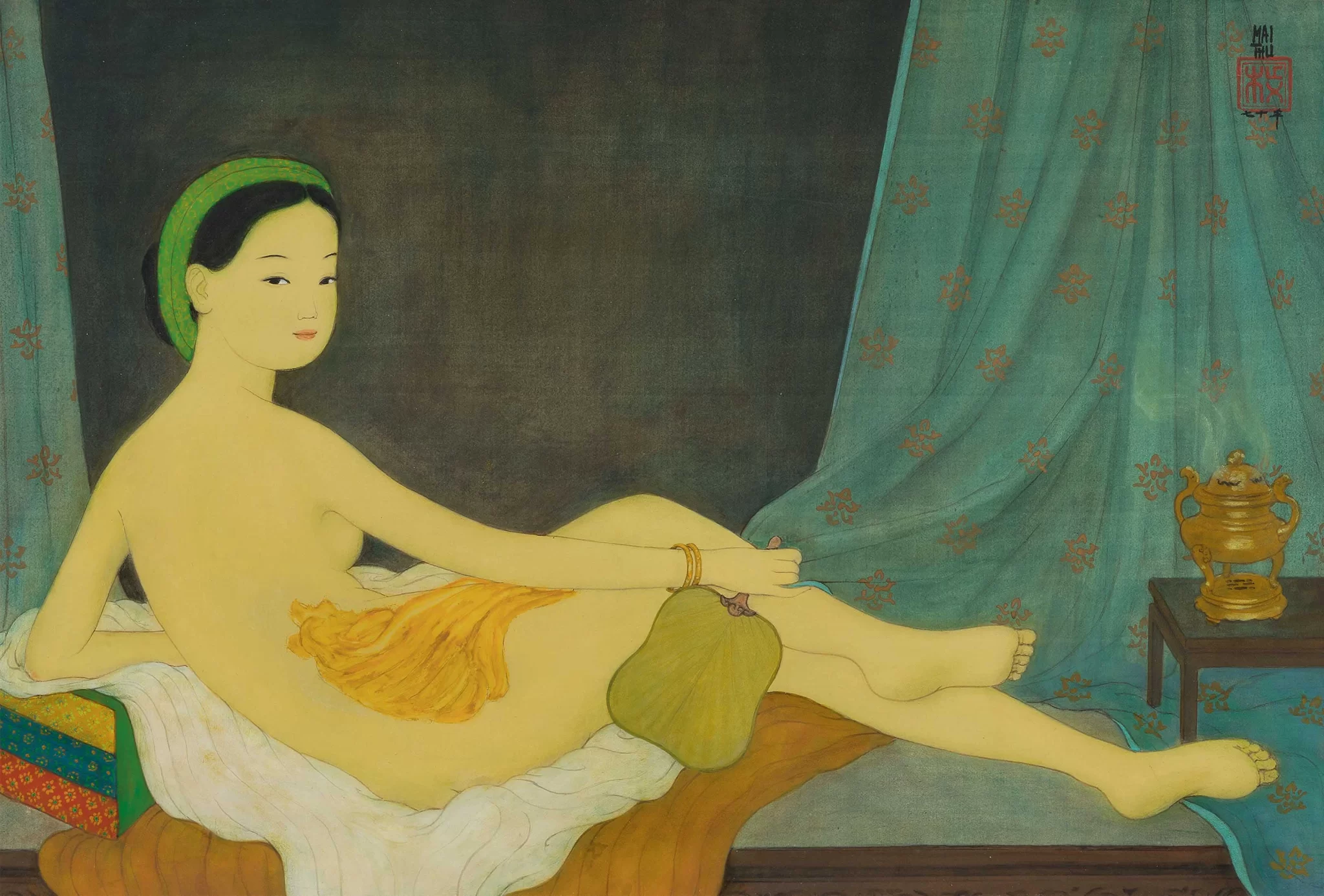
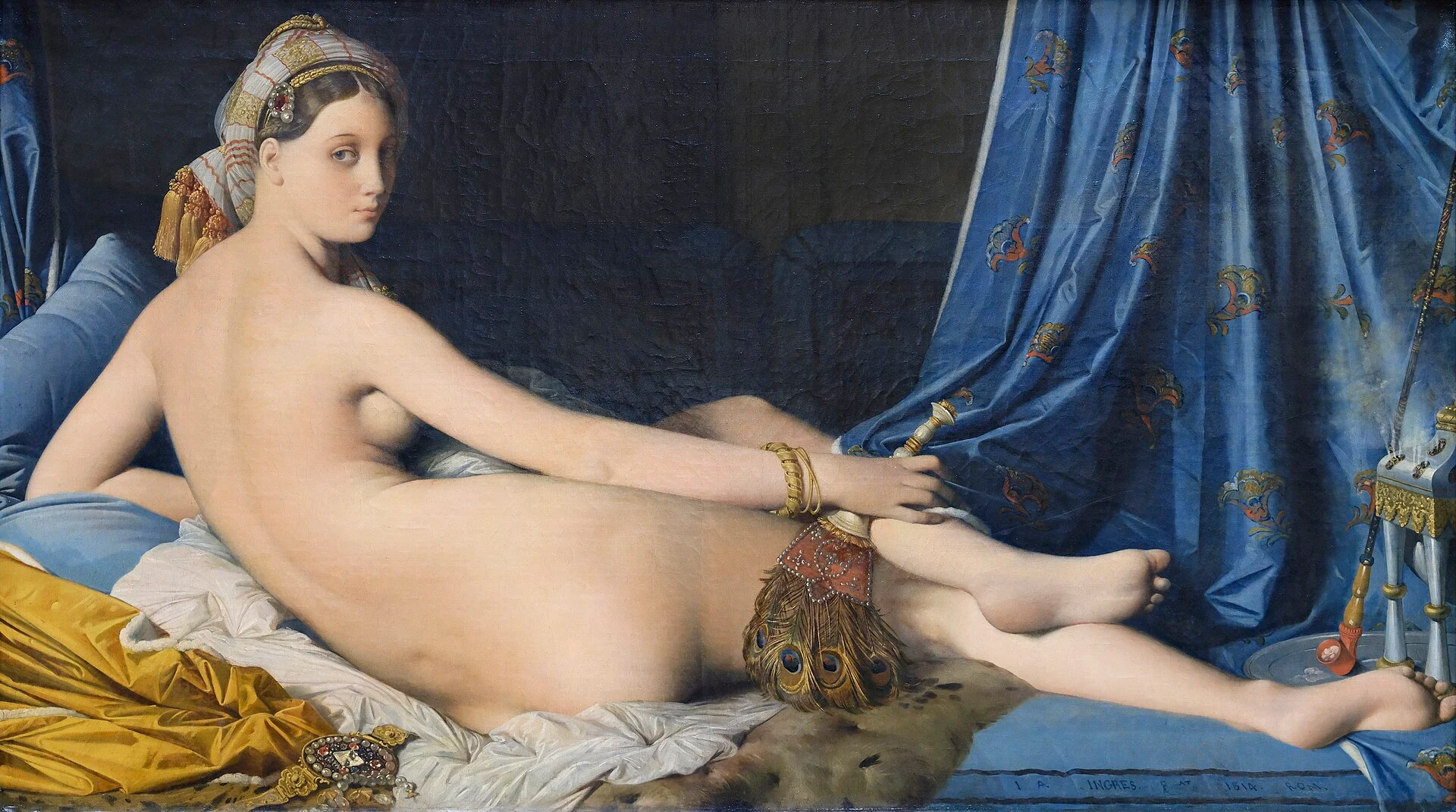
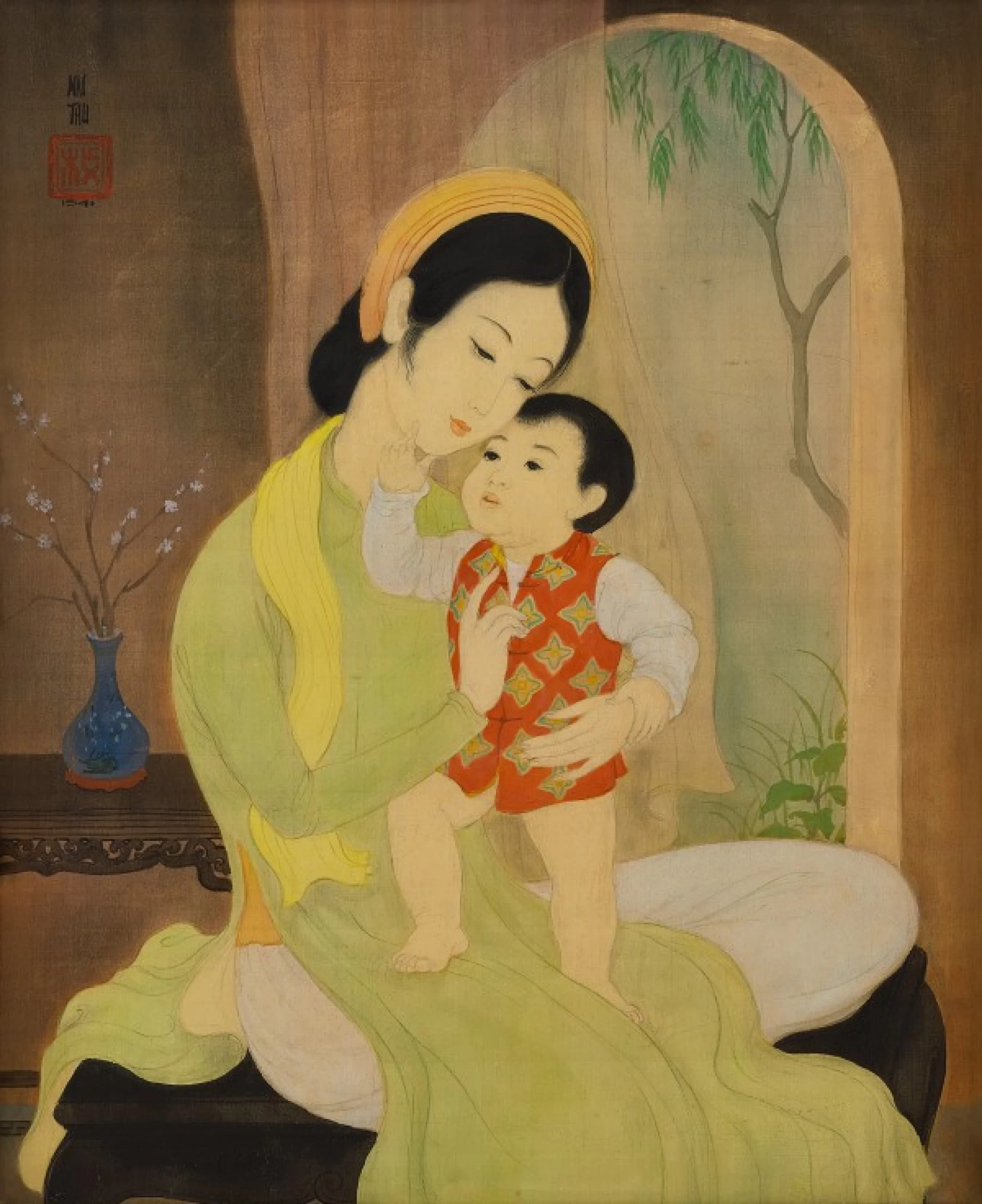
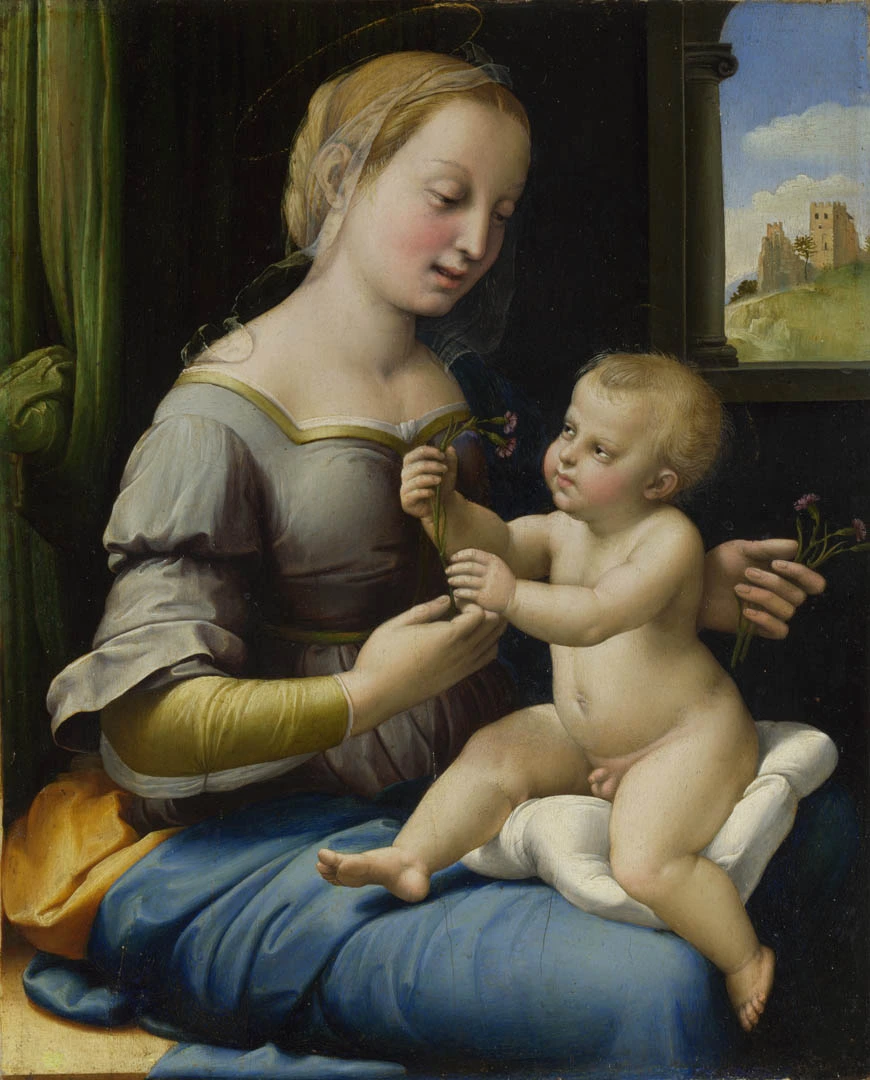
Among the tứ kiệt trời Âu (the four celebrated Vietnamese painters who made their careers in Europe), Mai Trung Thu is often regarded as the artist most deeply imbued with Vietnamese culture, one who remained passionately committed to preserving Vietnamese identity across artistic disciplines. Strongly rooted in Vietnamese cultural identity, he frequently Vietnamised celebrated works from the Western painting tradition. Other examples include Nu (Nude) (1970), inspired by Jean-Auguste-Dominique Ingres’s La Grande Odalisque (1814), and Mother and Child in a Garden (1971) and Mother and Child (c. 1970s), inspired by classical depictions of the Madonna and Child, such as Raphael’s Madonna of the Pinks (c. 1506–1507). Perhaps his most recognisable reinterpretations, however, are those based on Leonardo da Vinci’s Mona Lisa (c. 1503–1506).
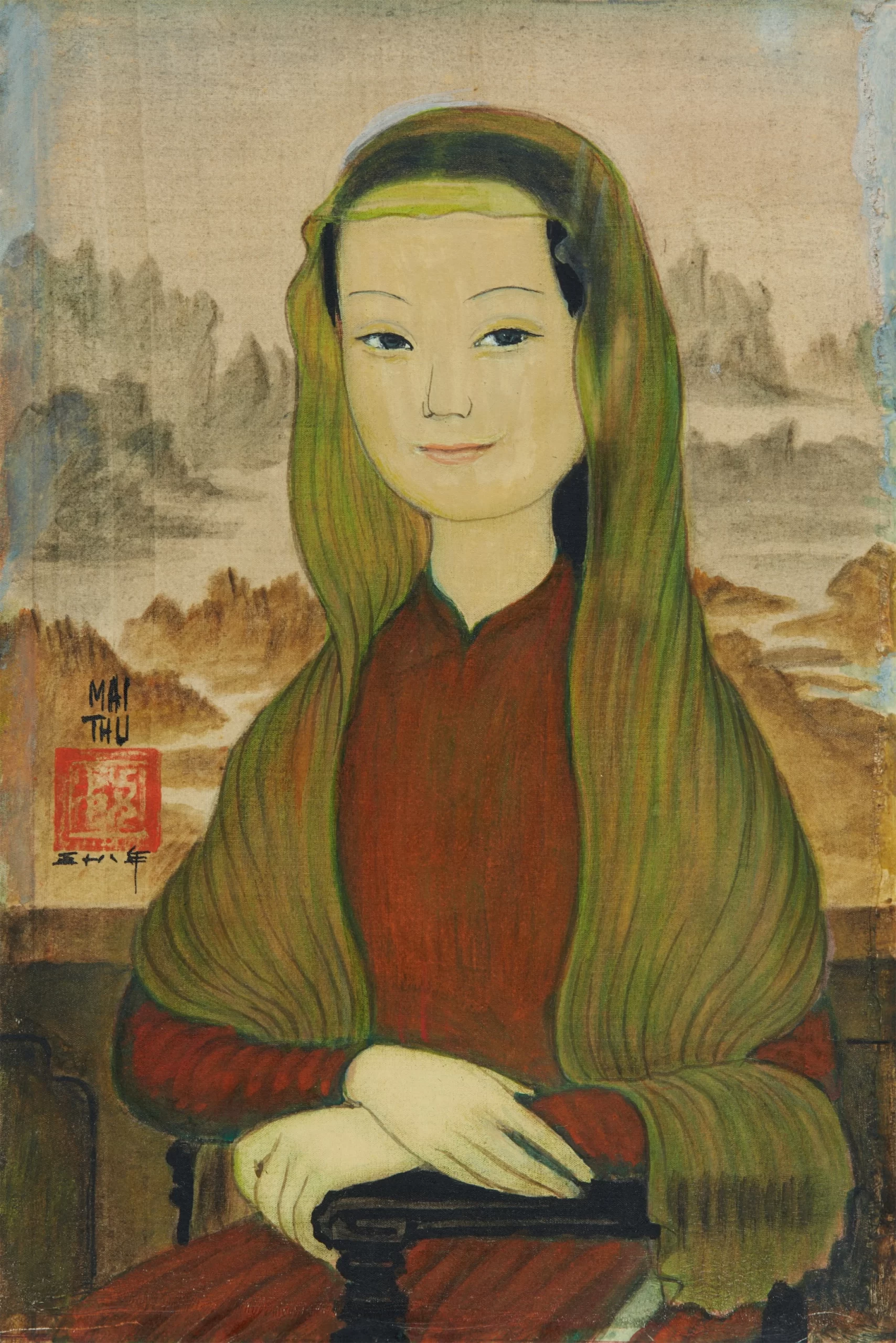
The Mona Lisa painted in 1958 appeared at Sotheby’s Singapore’s Modern & Contemporary Art sale on the afternoon of 2 July 2023. The painting sold for SGD 304,800, approximately USD 225,410, against a pre-sale estimate of SGD 130,000–200,000. It was the third of Mai Trung Thu’s Mona Lisa paintings to appear on the market, all three having been offered at Sotheby’s. Chronologically, however, it was the first he created. All three works are executed in ink and gouache on silk and presented in frames made by the artist himself. Although their dimensions differ, each retains the height-to-width ratio of Leonardo’s original.
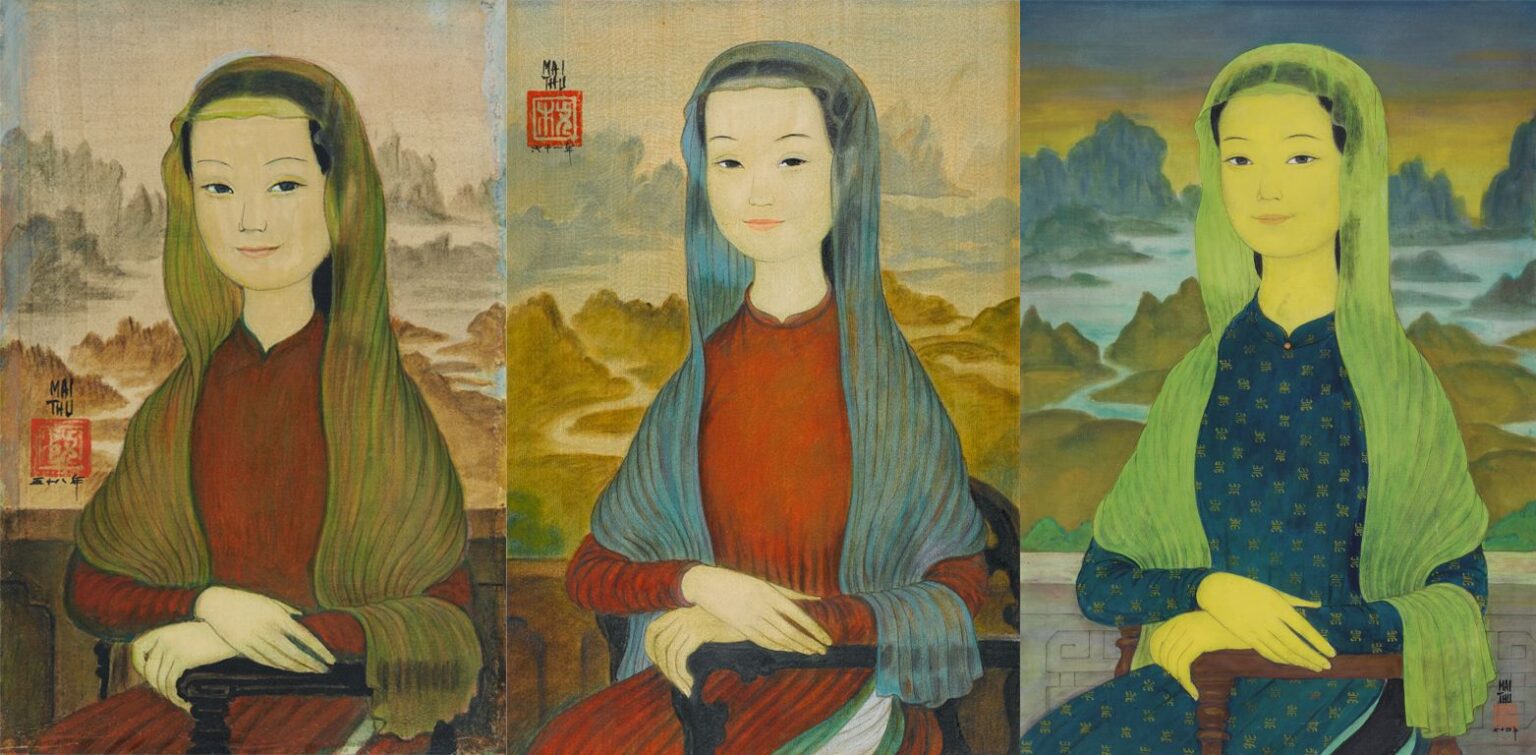
Measuring 34.5 × 27.6 cm, the 1958 painting is the middle-sized of the three. Its Mona Lisa has black hair and willow-leaf-shaped eyes, and wears a deep-red áo dài Le Mur – a modernised Vietnamese long dress associated with the 1930s dress-reform movement—beneath an olive-green silk veil that falls down her body. The sitter’s face still reveals the artist’s preliminary pencil sketches and the ink lines he repeatedly revised, a characteristic feature of many of Mai Trung Thu’s silk paintings from the 1950s to the 1970s. Following the original composition, she sits on a wooden chair on a balcony, both the chair and balcony decorated with East Asian motifs. The landscape behind her likewise echoes Leonardo’s original, combining Western academic oil-painting conventions with East Asian ink-wash painting. A red artist’s seal bearing the name Mai Thu and the year “1958”, written in Chinese characters, appears beside her right shoulder. The painting is accompanied by a certificate of authenticity from Mai Lan Phuong, the artist’s daughter, and the Mai-Thu Committee.
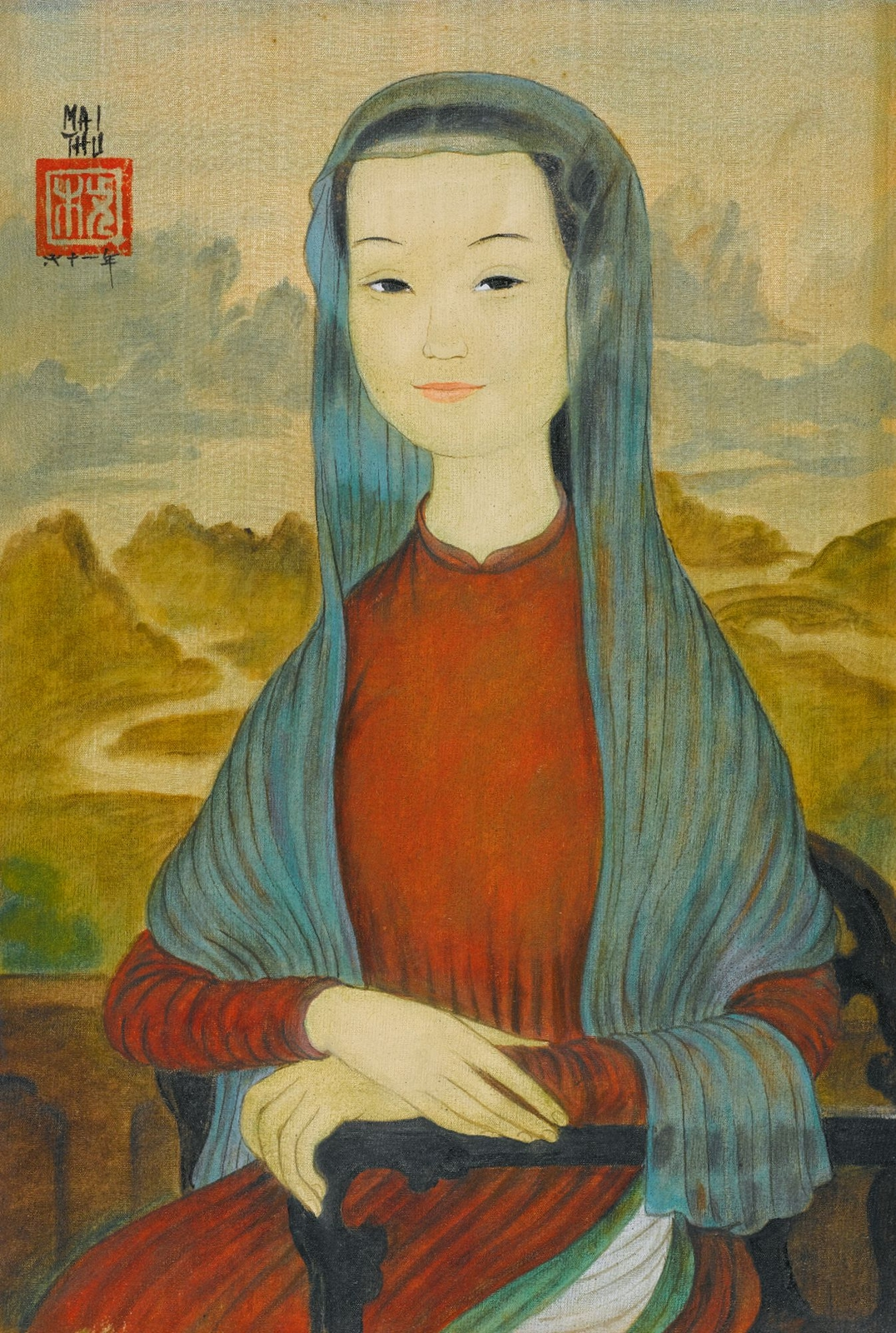
The 1961 painting is a smaller version of the 1958 work, measuring 25 × 17.5 cm. It was exhibited in Paris at the Salon de Noël in the same year, shortly after its completion. Here, the veil changes to blue, harmonising with the mountain ranges in the background and creating greater colour contrast, as well as a fresher sense of space. The áo dài is redesigned with a round neckline; below the thighs, a green inner áo dài panel stands out against the white linen trousers. More of the chair’s back is visible, and its ornamentation features softer, more flowing curves than in the earlier painting, enhancing the sitter’s femininity and grace. The red artist’s seal moves to the upper-left corner. Sotheby’s sold this version in 2010 for HKD 137,500, equivalent to approximately USD 17,500 at the time.
Finally, the 1974 version is the largest, measuring 53.5 × 37.5 cm. It first appeared at Sotheby’s in 1998 and returned to the market at Christie’s in 2021, selling for HKD 5,625,000, approximately USD 717,000 at the time. In this painting, the palette shifts towards cooler tones, set against the warm, golden hue of the sitter’s skin. Her veil becomes a vivid green, while the ao dai turns deep blue, decorated with a simplified chu tho motif – an auspicious design based on the Chinese character for longevity—and finished with a round neckline and red buttons. The white linen trousers have become black. Perhaps the young woman has now become a mature woman, having experienced certain upheavals in life. The blue-green wash of the mountain range behind her seems to evoke Ha Long Bay. The glow of the sunset suggests that this is still the same woman, now simply more contemplative with age. The balcony and wooden chair have accordingly returned to more angular, square motifs, shedding the decorative curves that lent the previous version its elegance. The artist’s seal, too, has moved, now occupying the more discreet position of the lower-right corner.
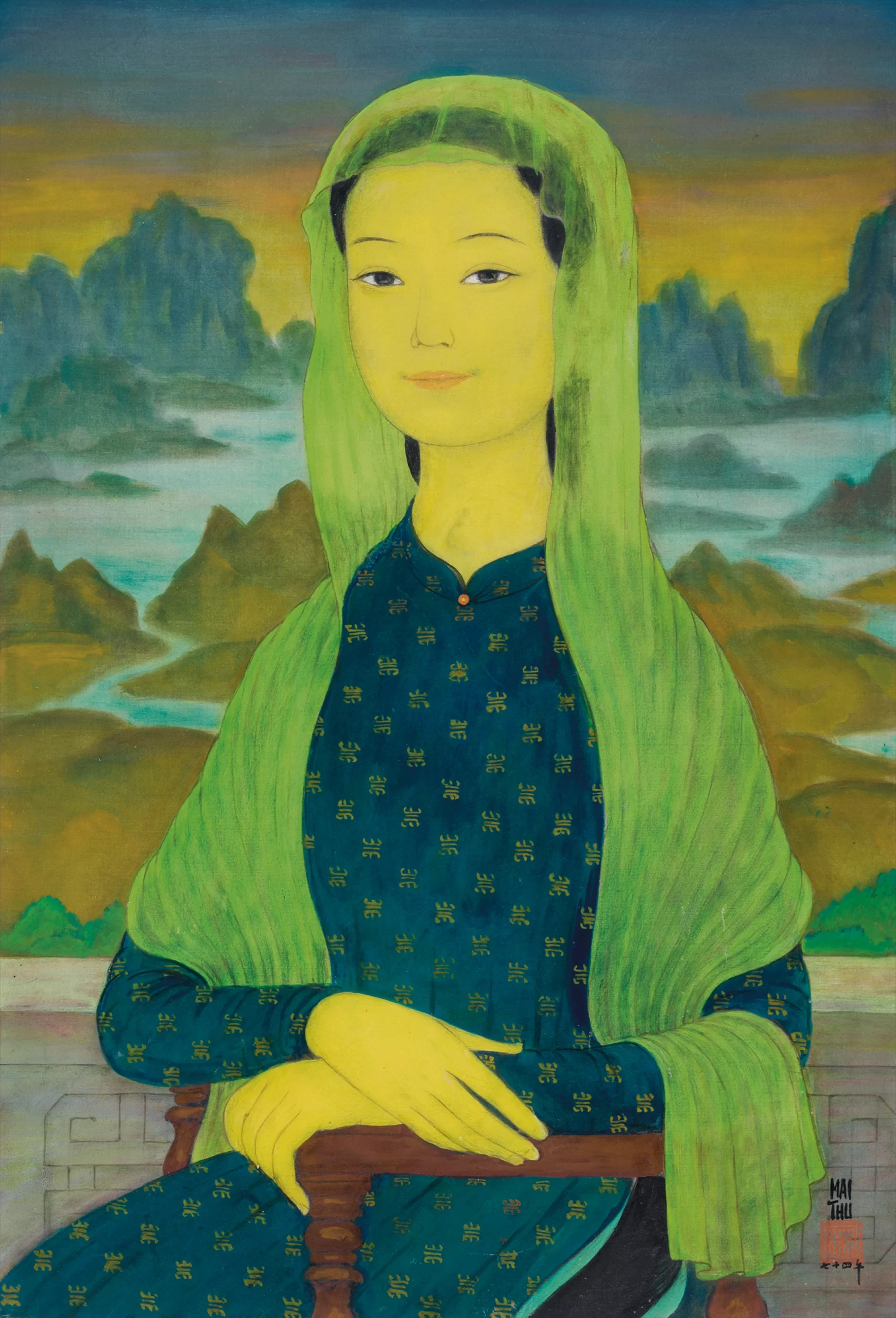
These can therefore be understood as three distinct paintings of the same figure, each conveying different intentions and reflections. The final version has been repatriated to Vietnam and is now on display at Quang San Art Museum in Ho Chi Minh City, where it is open to the public.
Words: Ace Le
Translation: Art Nation