Đọc phiên bản tiếng Việt tại đây.
In the context of postwar Vietnamese art, Tran Luu Hau (1928–2020) occupies a distinguished position. He belonged to a generation of artists who came of age during the resistance wars, received rigorous academic training, and maintained a long association with Vietnam’s socialist realism formal art-education system. Yet, over the latter half of his career, he distinctively transformed his visual lexicon towards the realm of liberal, self-reflective, and deeply expressive. If his early works remained rooted in representational painting, placing him among the so-called “resistance quartet” of Nhan-Hoa-Hau-Kiem, his later practice progressively reduced the legibility of form, allowing colour and gesture to emerge as autonomous pictorial forces. In doing so, he became a leading figure in the development of abstract painting in Northern Vietnam in the post-Renovation period.
From the “resistance quartet”…
Born in 1928 in Ninh Binh, Tran Luu Hau belonged to the first generation of Vietnamese painters to receive formal artistic training during the resistance period. In 1945, following the outbreak of war, he joined the Viet Minh in the Cau Giay area and the Dong Da self-defence forces in Hanoi. In 1946, he travelled to the Viet Bac resistance zone, where he worked as an officer in the Propaganda Division of the Vinh Phuc Information Bureau. It was there, recognised with an aptitude for painting, that he was chosen to enrol in the Resistance Fine Arts Course (1950–1953), led by To Ngoc Van. Following his outstanding graduation, Tran Luu Hau was sent by the state to Moscow to continue his studies at the Surikov Institute of Fine Arts (1955–1962), specialising in stage design. Upon returning to Vietnam, he taught at the Hanoi University of Fine Arts (1962–1988), and assumed a succession of important positions within the Vietnam Fine Arts Association, including Member of the Executive Committee and Chair of the Graphic Arts Specialisation Council for its second term (1983–1989), and Member of the Secretariat and Chair of the Arts Council for its third term (1989–1994). In 2001, he was awarded the State Prize for Literature and Arts.
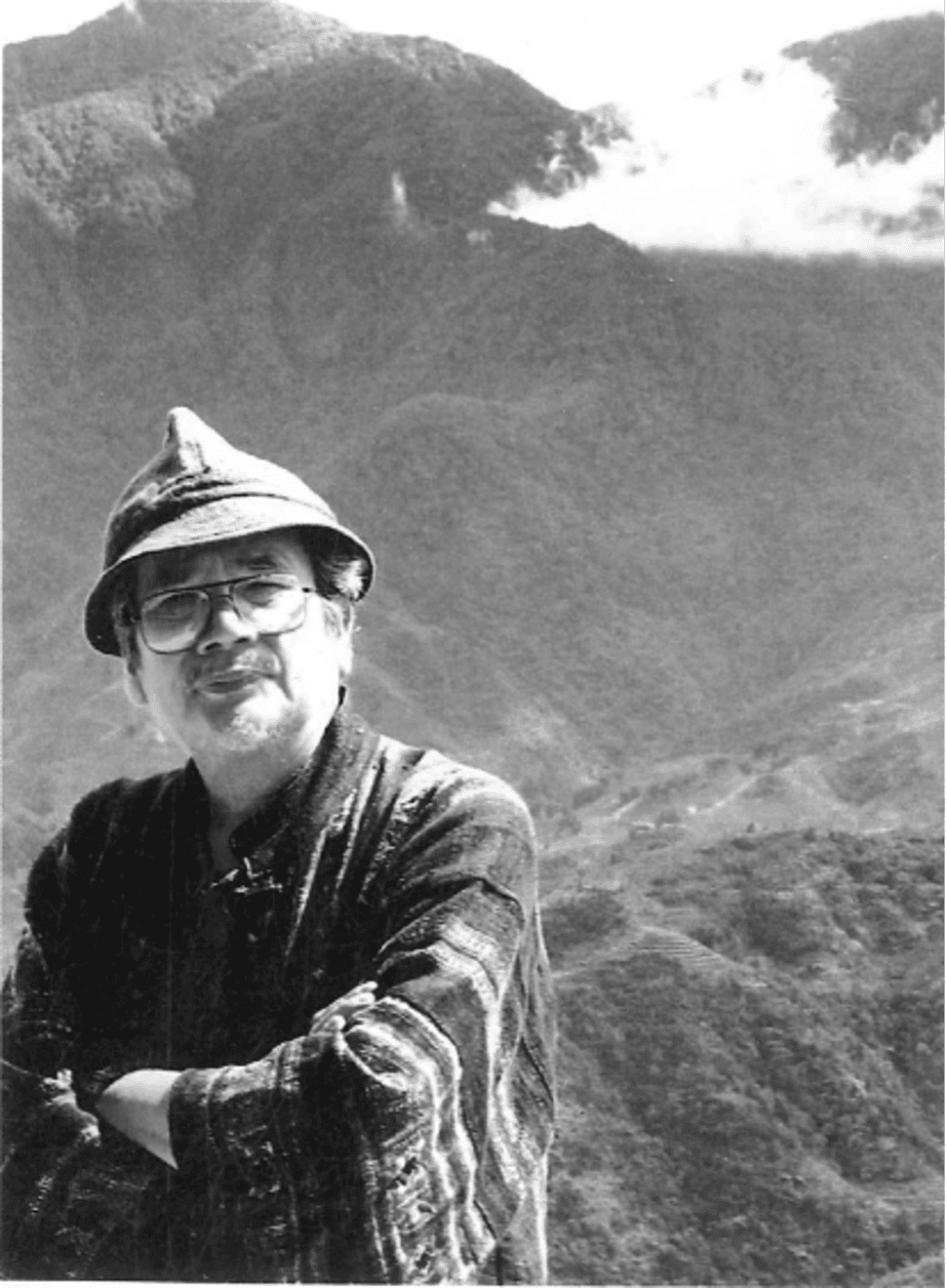
During the early decades of his career, Tran Luu Hau worked predominantly within a realist idiom, addressing themes of resistance, everyday life, mountainous regions, landscape, and social activities. Works such as Soldiers Returning to the Muong Village (1976), recipient of a B Prize at the National Fine Arts Exhibition; Boats and Mountains (1978), now in the collection of the Vietnam National Fine Arts Museum; and Hmong Women Embroidering (1982–85), also in the museum’s collection, establish his position as a significant figure within the realist and socialist-realist currents that came to prominence in Vietnam during the mid-twentieth century. The 1970s and 1980s were also a period in which Tran Luu Hau undertook numerous stage-design projects across the country. He was awarded a Gold Medal for stage design at the National Professional Theatre Festival for the production Nguyen Trai in Dong Quan. Together with Luu Cong Nhan, Le Huy Hoa, and Nguyen Trong Kiem, he came to be recognised as one of the four outstanding painters of his generation of resistance artists.
…To the breakthrough of post-Renovation Abstraction
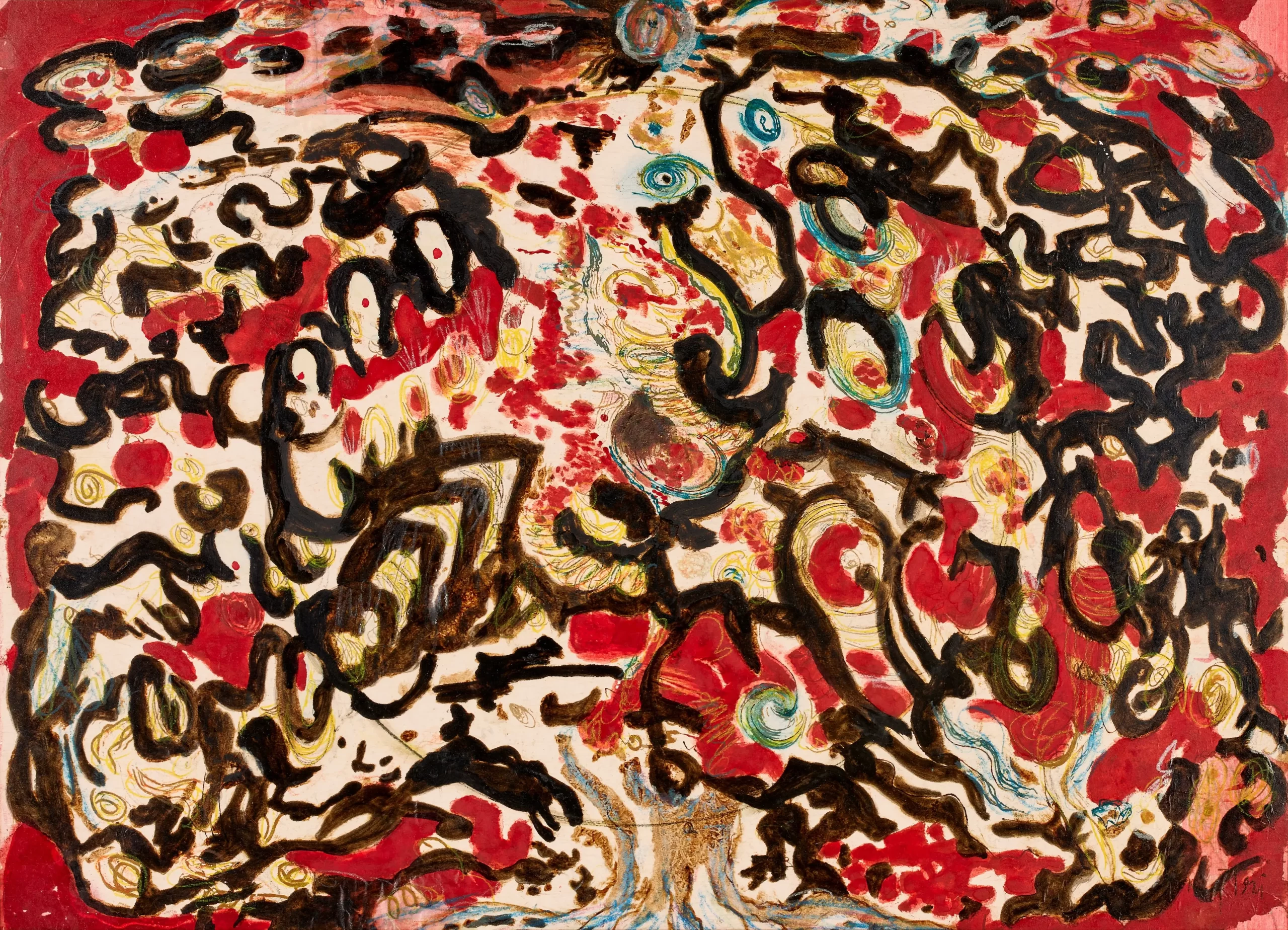
Beginning in the late 1980s, and particularly amid the cultural transformations associated with Renovation, Tran Luu Hau’s painting underwent a pronounced shift. His subjects remained seemingly familiar–streets, the sea, trees, flowers, and young women – but their visual treatment gradually moved from realism toward semi-abstraction and, ultimately, abstraction. In this transition, Tran Luu Hau emerged as a pioneering figure of the movement. During the 1990s and 2000s, he entered one of the most prolific periods of his career, travelling extensively throughout Vietnam on field trips, from Cat Ba to Vung Tau and from Da Lat to Sapa. He also began mounting numerous exhibitions, bringing his work to a broader public and attracting considerable attention from audiences and collectors both in Vietnam and abroad.
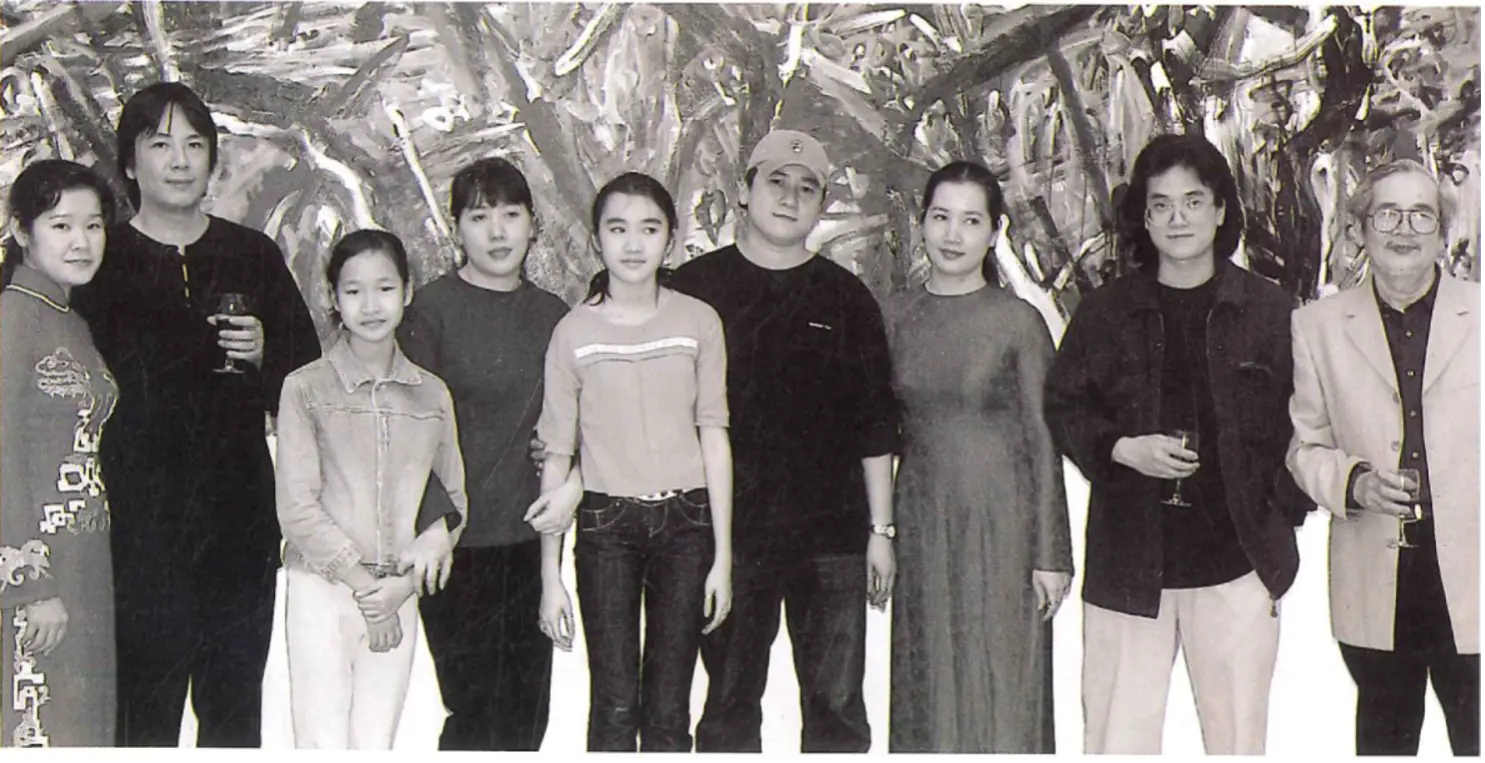
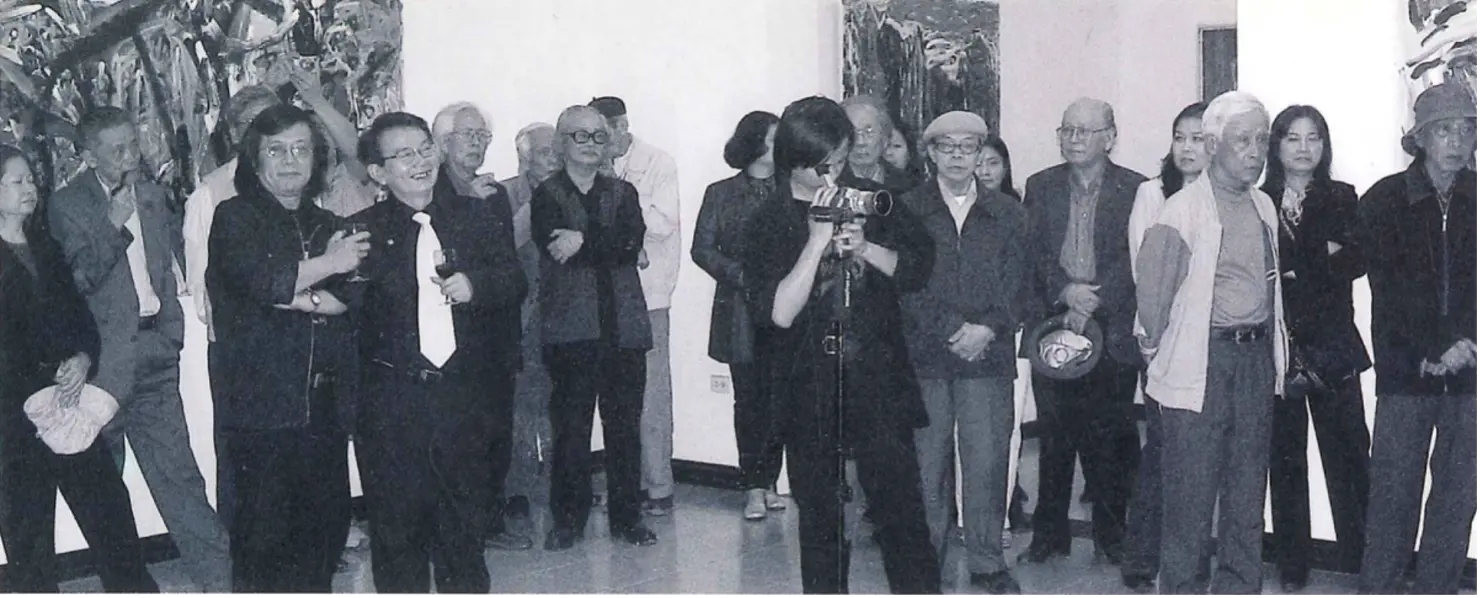
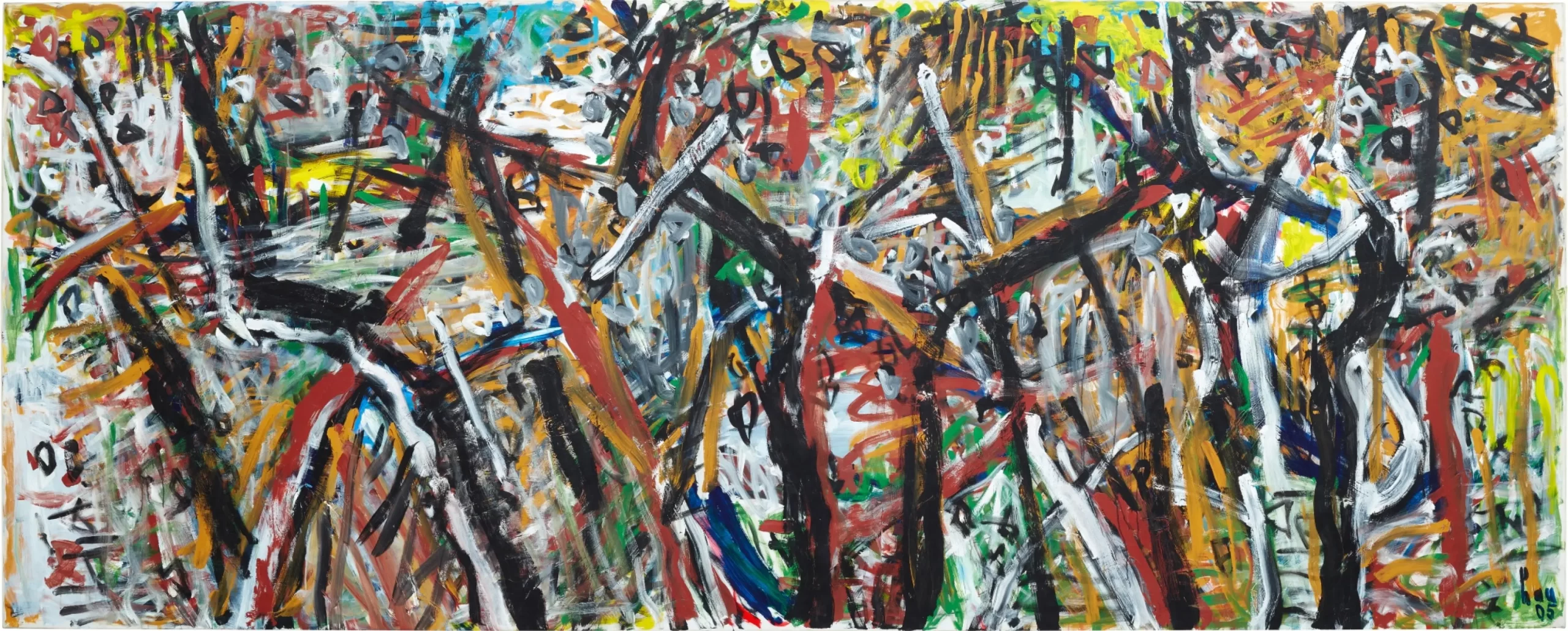
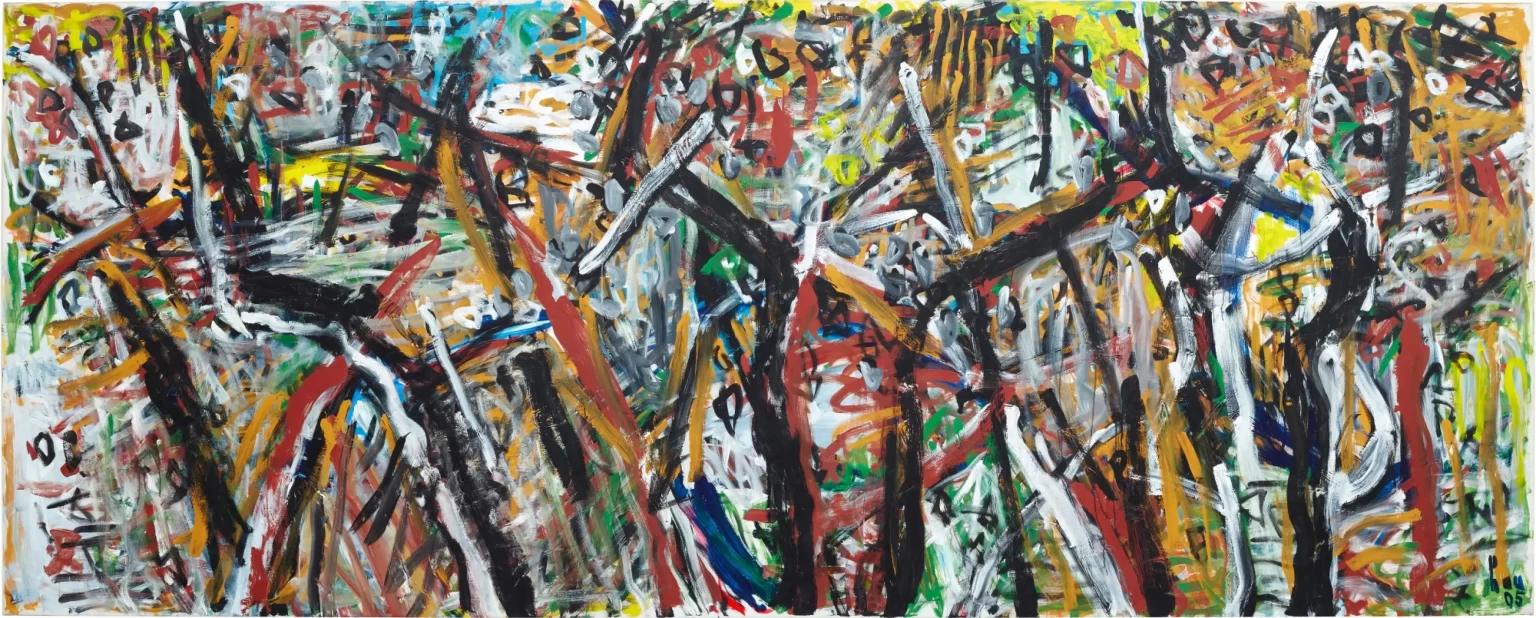
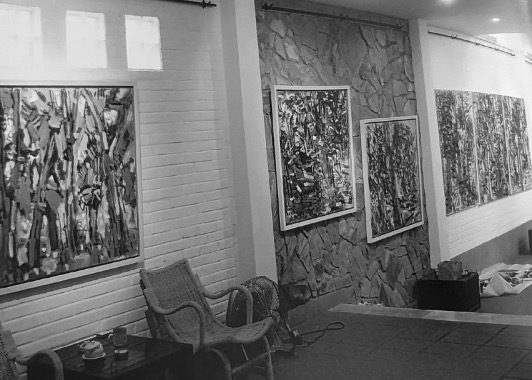
What changed was not so much what he painted as how he saw and painted it. The years 2003–2005 constituted a pivotal period in the formation of the distinctive abstract visual language for which Tran Luu Hau became known. Among the most significant works of this period is the large-scale acrylic on canvas Park 15¹, measuring 160 × 405 cm – probably the largest painting of his career. The work was presented as the centrepiece of his solo exhibition at 29 Hang Bai Exhibition House in Hanoi in April 2005.
His specialty in stage design may have played an important role in shaping this abstract vocabulary. Park 15 can be understood as a monumental landscape stage set, drawing the viewer into an expansive pictorial space of form and colour. The visible world is reduced to impressions of tree trunks and canopies, interspersed with light and fragments of foliage. Line and brushwork become elongated, commanding, decisive, and liberated. Pure, raw palettes are juxtaposed with remarkable confidence, generating intense contrasts and a dense chromatic rhythm. Colour no longer serves the representation of natural light; instead, it produces its own pictorial situation. Landscape, in this sense, becomes merely the “pretext” for the construction of a visual state. The brushstroke no longer functions simply to delineate the contours of objects; it becomes a direct trace of emotions and movements. The monumental canvas, in turn, becomes a stage upon which such emotions and movements unfold. Painting thus moves from the descriptive toward the expressive.
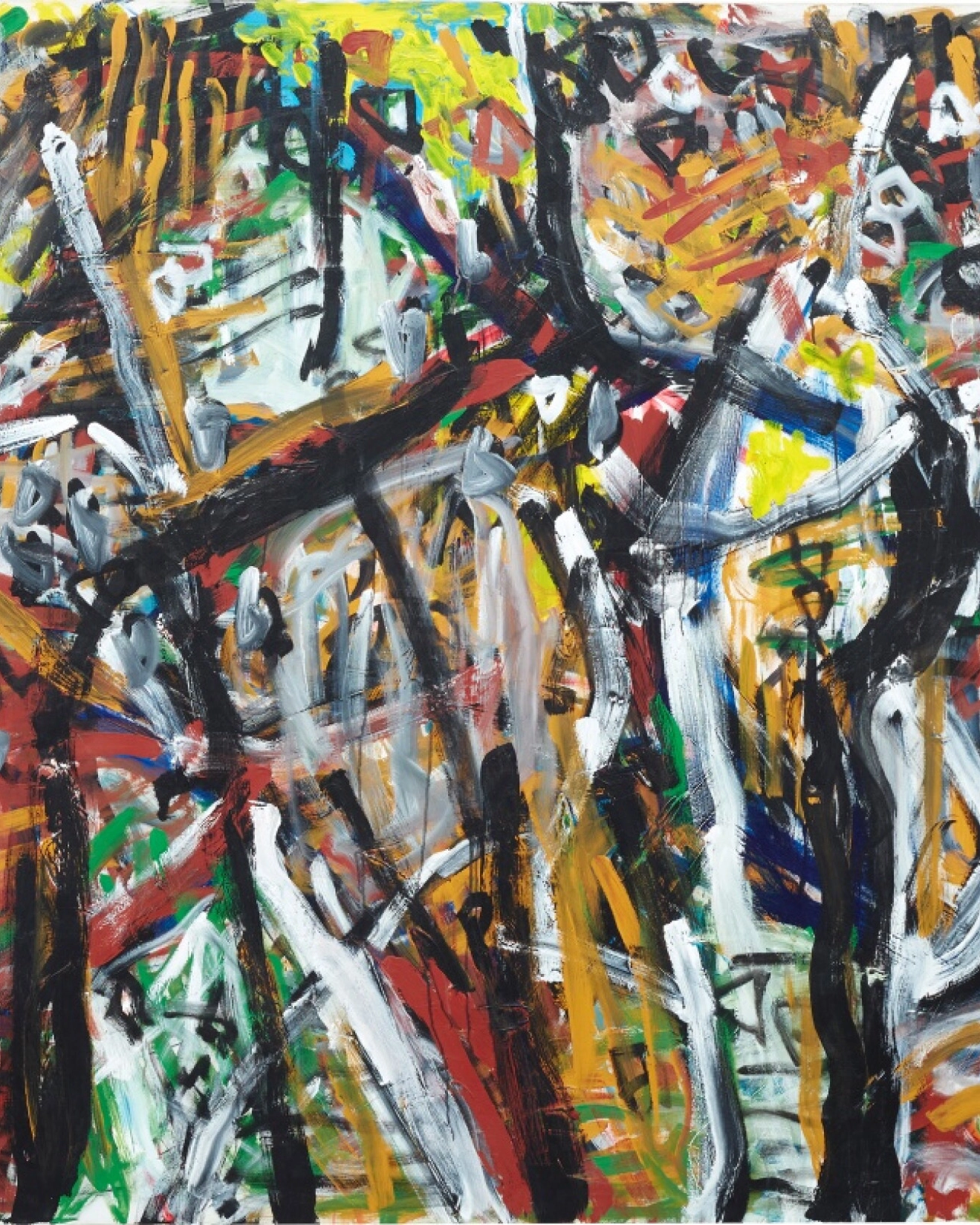
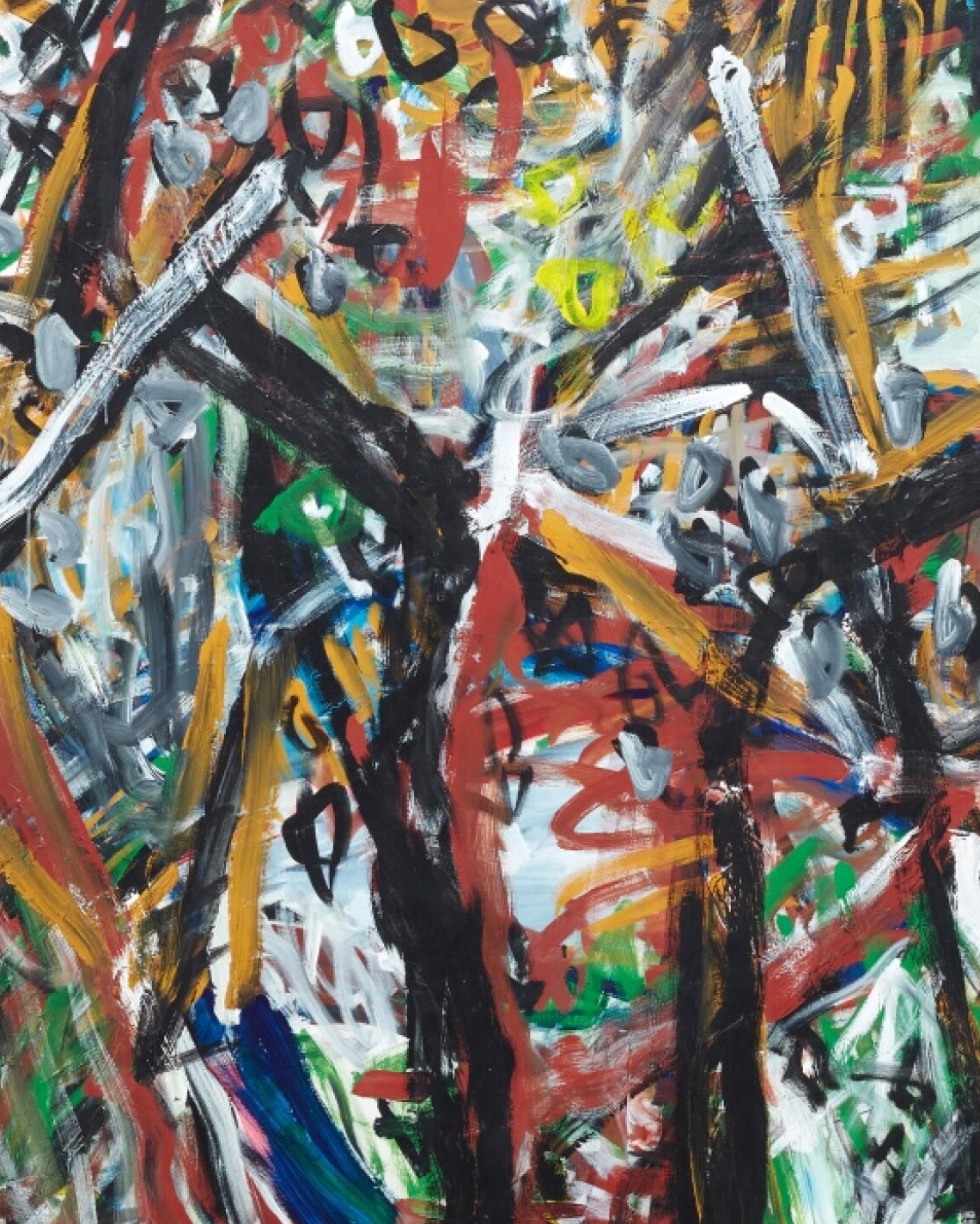
Tran Luu Hau did not need to become wholly “abstract” in order to arrive at an abstract sensibility. What matters in his painting is the liberation of painting from the obligation to illustrate. Seen retrospectively, his artistic trajectory can also be understood as a process of personal liberation. He came of age at a time when Vietnamese painting was strongly shaped by the demands of realism and by the expectation that art fulfil a defined social function. Rather than rejecting this inheritance, however, he gradually expanded its limits from within. For this reason, Tran Luu Hau is often regarded as one of the pioneering artists of the post-Renovation period, contributing to the dismantling of the assumption that artists of the resistance generation were necessarily bound to a conservative or prescribed visual language. His willingness to venture beyond those inherited conventions opened new possibilities and inspired subsequent generations of artists to pursue their own artistic paths. Perhaps it was this quality that prompted Luong Xuan Doan, speaking on behalf of the Vietnam Fine Arts Association following Tran Luu Hau’s death in 2020, to describe him as “a great teacher of Vietnamese art”.²
The work will appear at Modern Day Auction of Sotheby’s Hong Kong (12:00 PM HKT).
Words: Ace Le
[1] Tran Luu Hau (2005), Fine Arts Publishing House, pp.20–21.
[2] Luong Xuan Doan, “A great master of Vietnamese fine arts,” The People Newspaper (6 March 2020).