Đọc phiên bản tiếng Việt tại đây.
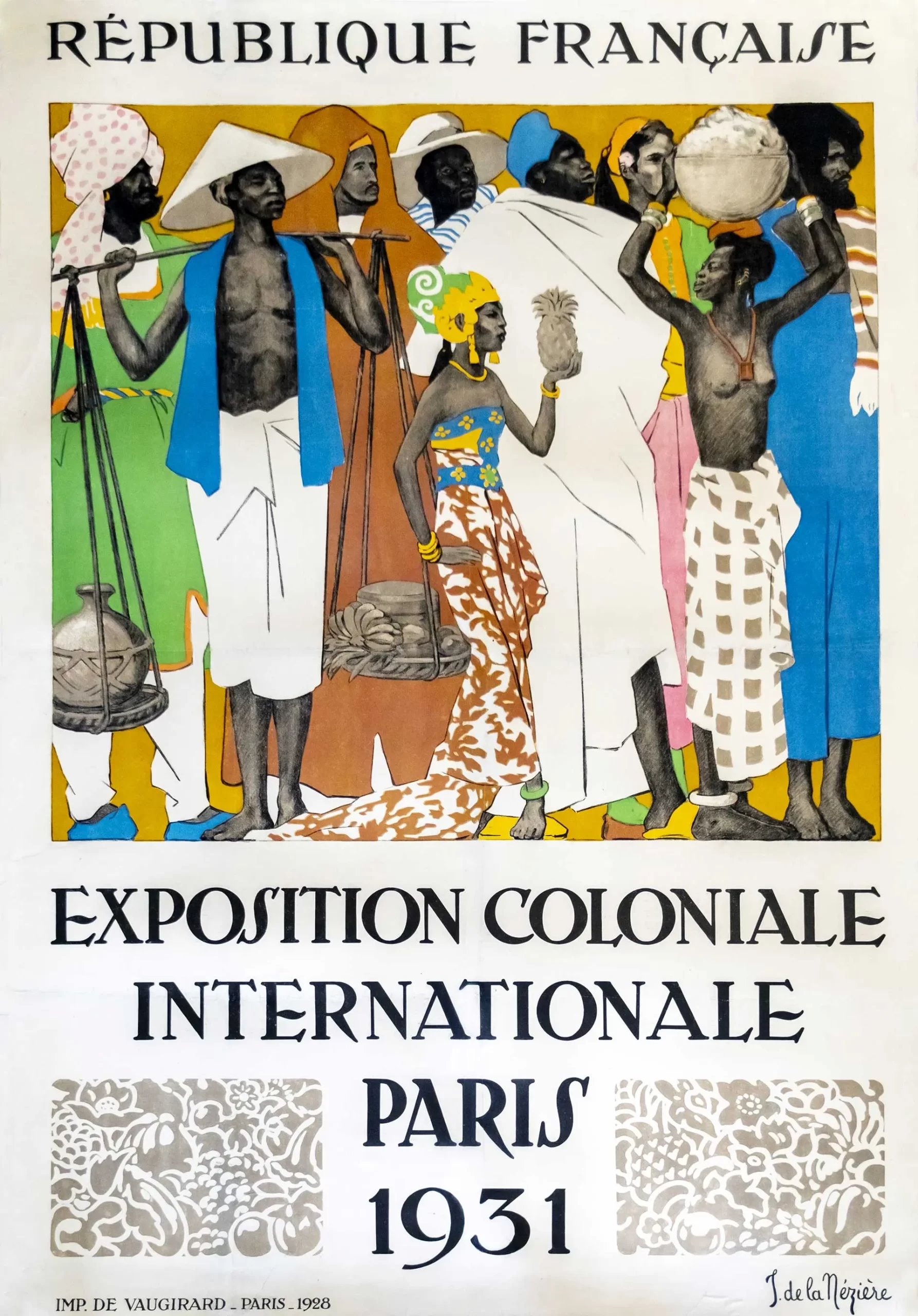
Colonial Expositions were a variant of the International Expositions held across the European colonial empires during the second half of the 19ᵗʰ century and the first half of the 20ᵗʰ, designed to garner support among urban populations for colonial expansion while stimulating trade during the age of New Imperialism. Many of these exhibitions presented spectacular reconstructions of natural environments and monuments from Africa, Asia, and Oceania, allowing visitors to encounter carefully staged visions of colonial territories at monumental scale. After reaching their apogee with the 1931 Paris Colonial Exposition, which attracted nearly ten million visitors over the course of six months, colonial exhibitions disappeared in the wake of the Second World War and the subsequent movements for decolonisation.
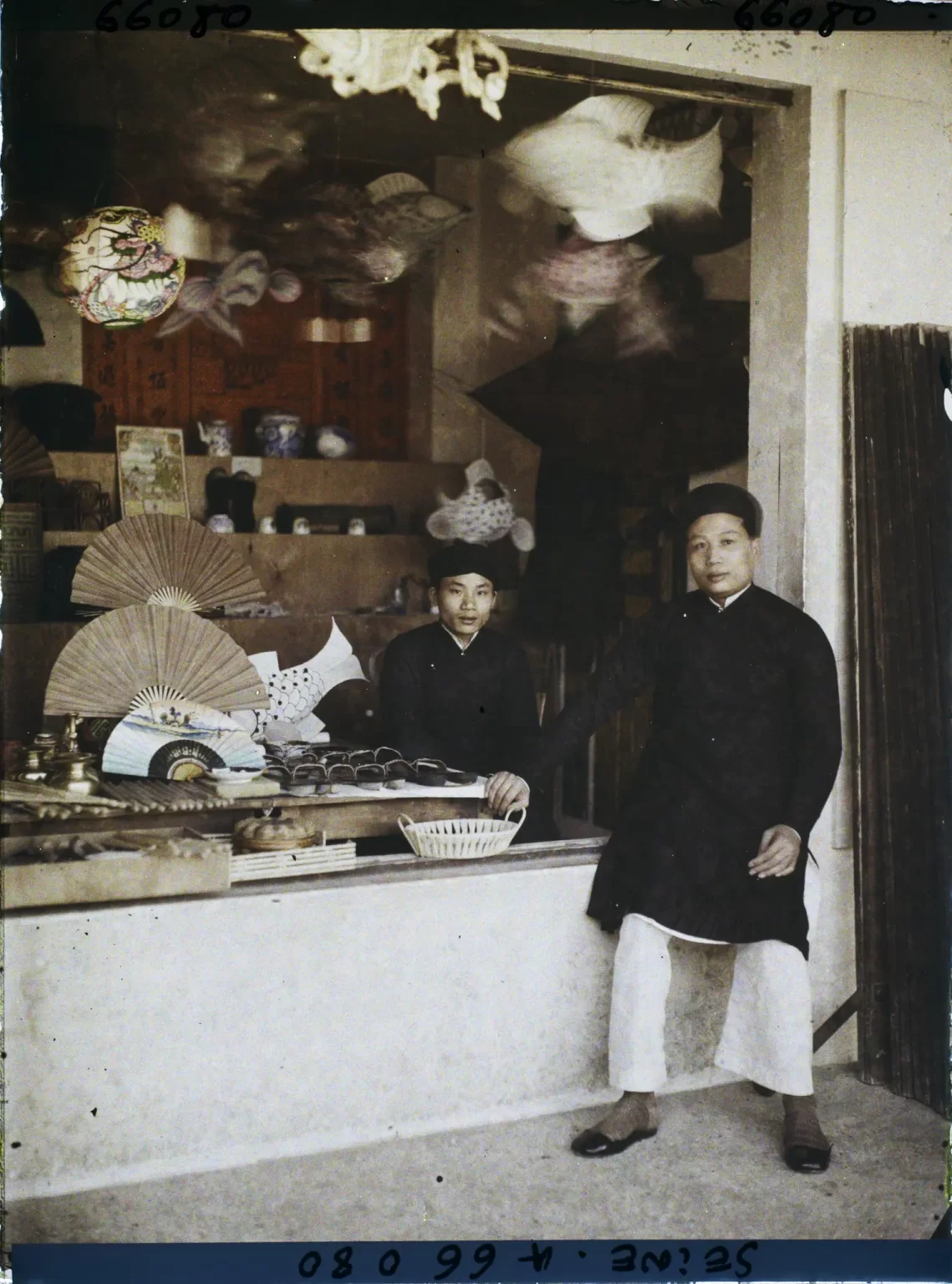
In 1931, the Paris Colonial Exposition functioned as a major public showcase of the French colonies for audiences in metropolitan France. Within this setting, Indochina was constructed as a “vitrine” – a display case in which architecture, commodities, people, and art were orchestrated to produce the image of a territory that was at once steeped in tradition and rich in economic promise. Alongside monumental reconstructions such as Angkor Wat and pavilions devoted to agriculture, commerce, and transportation, Indochinese handicrafts occupied a particularly significant place, allowing the colonial administration to present a form of beauty understood as “native”, exquisite and culturally distinctive.
Within the Indochina section, three rooms were designed specifically to introduce the artistic activities in the colonies: one devoted to arts indigènes, or “indigenous arts”; a second presenting French art produced in Indochina; and a third exhibiting works from the region’s art schools.
At the time, handicrafts were commonly grouped under the category of arts indigènes, a term that may be understood as “native art” or “indigenous art”. The organisers did not merely seek to display traditional artefacts, but also wished to demonstrate a form of “living art” capable of adapting to modern life. Works associated with traditionalist perspectives, as well as ancient objects, were therefore presented within a retrospective exhibition organised by the École française d’Extrême-Orient (French School of the Far East).
The handicraft industries were divided into clearly defined categories: wood arts, including sculpture, furniture-making, inlay, and lacquer; metal arts such as bronze casting and jewellery; textile arts encompassing embroidery and carpet weaving; alongside ceramics and porcelain. This classificatory structure revealed both the richness of Indochinese artisanal production and the broader ambition of the exposition itself: to transform traditional crafts into objects that could be viewed, evaluated, traded, and absorbed into the French market. Artisans appeared not simply as custodians of tradition, but as producers of artistic commodities within an exhibitionary system fundamentally shaped by commerce.
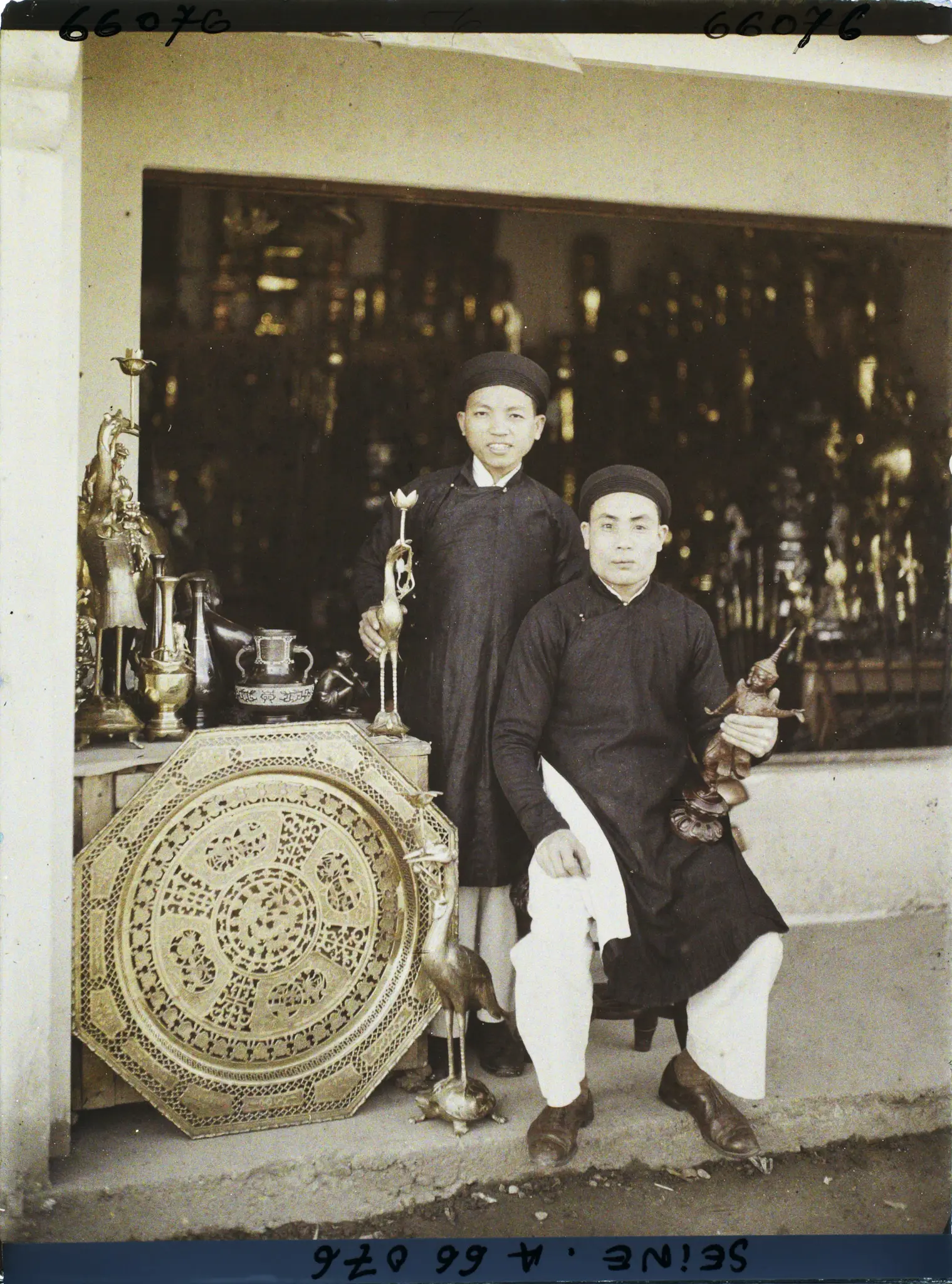
The role of art and applied-arts schools in Indochina was likewise foregrounded through a regional selection system, with works drawn from institutions in Hanoi, Gia Dinh, Thu Dau Mot, Bien Hoa, and Phnom Penh. The Hanoi school presented woodwork in the traditions of Tonkin, bronze statues and vessels, ironwork, decorative drawings, embroidery, and lacework. The Gia Dinh school specialised in painting, decorative drawing, and engraving; the Thu Dau Mot school distinguished itself through wood sculpture; the Bien Hoa school was recognised for innovations in bronze and ceramic arts; while the Cambodian art school in Phnom Penh exhibited woodwork, silk, bronze, and jewellery evoking the legacy of Angkor. These schools functioned not only as centres of training, but also as institutions reshaping traditional craft practices according to the tastes and demands of the colonial period.
Particular emphasis was placed on the École des Beaux-Arts de l’Indochine in Hanoi, presented as a key centre for the training of artists and artisans alike. At the exhibition, the school occupied a large dedicated gallery displaying furniture, wrought iron, paintings, silk works, sculpture, embroidery, textiles, jewellery, and carpets. Figures such as Nam Son, Le Pho, Le Van De, Nguyen Phan Chanh, Vu Cao Dam, and Georges Khánh were highlighted in the sections devoted to painting and sculpture. The display reveals how the boundaries between “fine art” and “handicraft” remained far from fixed at the time: silk painting, lacquer, woodwork, carpets, jewellery, and sculpture were all mobilised to demonstrate that Indochina possessed an artistic culture that was simultaneously rooted in tradition and capable of entering modernity.
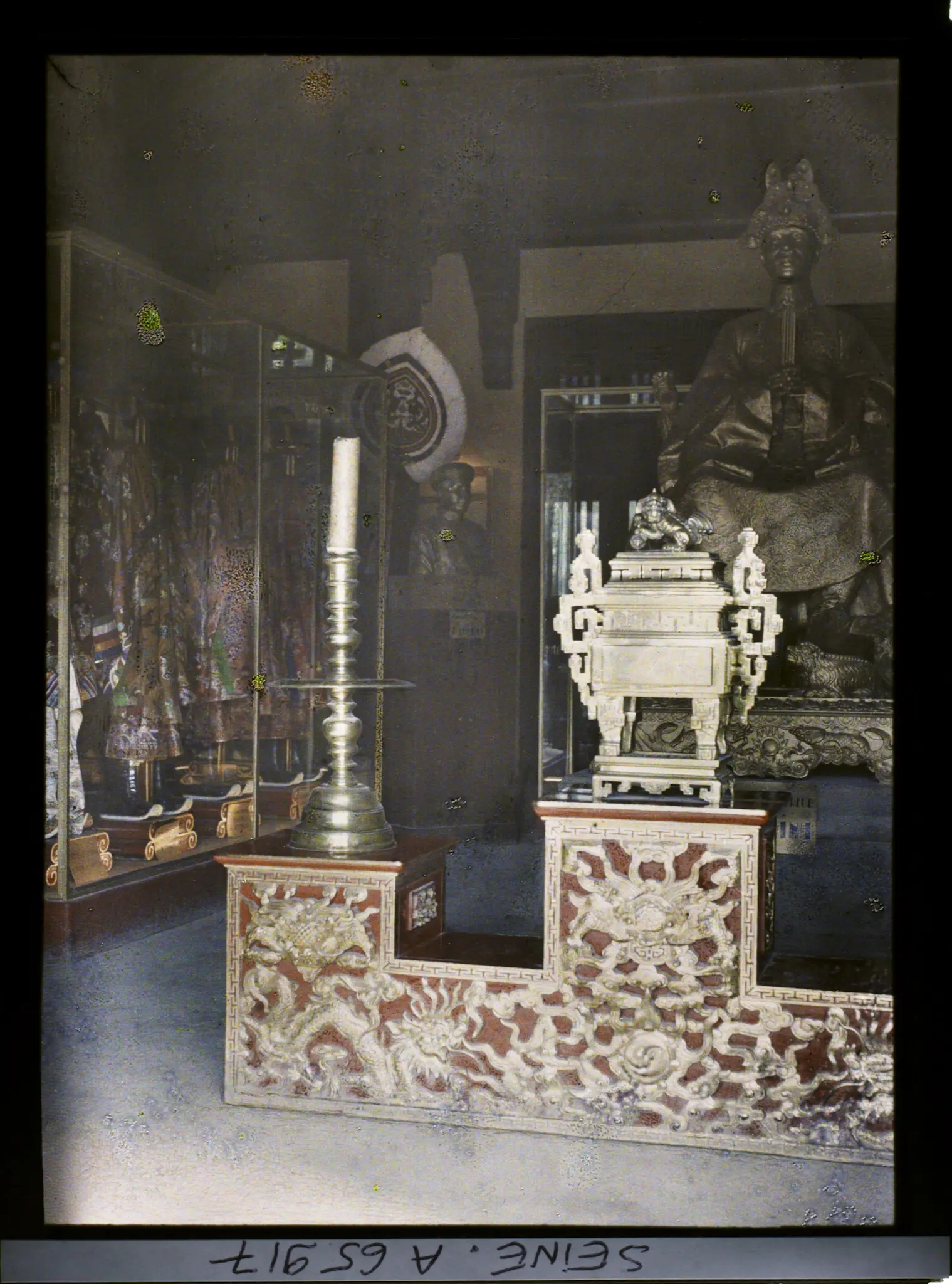
Lacquer, in particular, offers a telling example. An article in the daily newspaper “l’Avenir du Tonkin” (Future of Tonkin) released on 2 July 1931, refers to a “salon de la laque” – a lacquer salon – that reportedly made a strong impression on the artistic circles of France. The space suggested that lacquer was no longer merely a traditional decorative technique, but had been elevated into a modern artistic form capable of shaping interiors, producing luxurious environments, and appealing to Western tastes. This moment also marks an important chapter in the history of Vietnamese art, as lacquer gradually shifted from artisanal craft to a recognised artistic medium, due in large part to the influence of art schools and artists trained within French Indochina. Artists and artisans such as Le Pho, Thang Tran Phenh, Le Van De, and Do Duc Thuan were noted for the harmonious arrangement of lacquer wall panels that produced salons of balanced proportions and refined elegance.
Beyond the art schools, the exhibition also featured the direct presence of artisans and craftspeople. The “l’Avenir du Tonkin” article notes that groups of craftsmen and merchants from Tonkin brought a wide range of goods for display and sale, leaving visitors with a strong impression of the refinement and dexterity of Tonkinese craftsmanship. Their products sold so quickly that demand often outstripped supply. This suggests that the exhibition functioned not merely as a site of cultural display, but also as a testing ground for the market, where Indochinese handicrafts were introduced directly to French consumers.
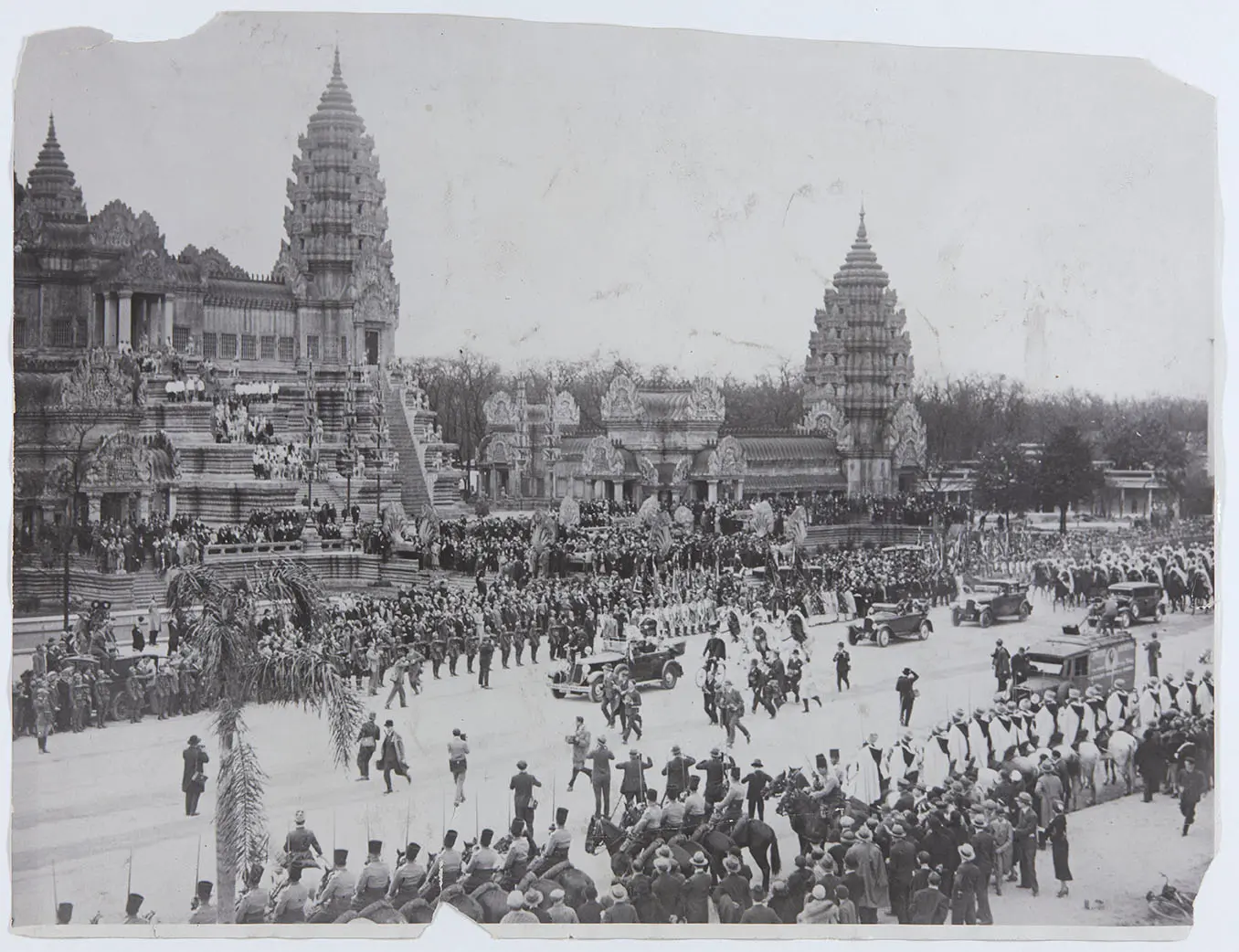
Yet this success must be understood within a more complex framework. On one hand, the exhibition allowed objects such as woodwork, lacquer, ceramics, bronze, silk, embroidery, and jewellery from Indochina to gain far broader visibility among the French public. It also contributed to the recognition of the talents of Indochinese artisans, students, and artists. On the other hand, such recognition unfolded within an unequal colonial structure: indigenous peoples themselves were exhibited as part of the “colonial landscape”, while the artistic value of their work was frequently interpreted through the lens and standards imposed by the French administration.
The handicrafts of Indochina at the 1931 Paris Colonial Exposition therefore carried a dual significance. They stood as evidence of the vitality of traditional crafts, the sophistication of artisanal skill, and the innovative capacities of Indochinese art. At the same time, they formed part of a colonial propaganda apparatus in which culture was selectively curated, arranged, and staged in order to reinforce the image of a French empire seeking to “civilise” its colonies. Yet even within this colonial theatre, these handicrafts continued to reveal a powerful creative force, deeply rooted technical traditions, and the distinct aesthetic identities of Vietnam, Cambodia, and Laos within the space of early 20ᵗʰ-century Indochina.
Words: Thảo Trần
Translation: Art Nation