Đọc phiên bản tiếng Việt tại đây.
Vu Cao Dam’s biography
“All his life, Vu Cao Dam was inspired by a harmonious world that a thousand-year-old civilisation had brought to completion. This world, of which he remained one of the last survivors, he would paint for the rest of his life. This would be his way of waging war against obscurity; he would be the herald of peace and love; he would experience loneliness, but his moral principles would be unalterable, and his faith in the generous nature of man would remain intact, even when the world descended into darkness.”
— Yannick Vu, daughter of the artist
Born in Hanoi on 8 January 1908, Vu Cao Dam was one of the pioneering figures of modern Vietnamese art and a leading member of the generation of artists trained at the School of Fine Arts of Indochina (École des Beaux-Arts de l’Indochine).
Vu Cao Dam grew up in an intellectually distinguished household. He was the fifth child of Vu Dinh Thi and Pham Thi Cuc, in a family of fourteen children, nine of whom survived to adulthood. His father was a scholar, educator and founder of the Hanoi School of Interpreters. Proficient in Chinese calligraphy and deeply knowledgeable in Chinese literature, he also studied Latin, Spanish and French, while retaining a profound veneration for Confucius and the classical Chinese tradition. From 1886, he trained interpreters, mandarins and French teachers in Hanoi, and in 1889 represented Vietnam at the Universal Exhibition in Paris.
A strong patriarch, Vu Dinh Thi instilled intellectual discipline in the family, while Vu Cao Dam’s mother was remembered for her extraordinary kindness and devotion to her children. This combination of scholarship, cultural tradition and close family bonds profoundly shaped the young artist.
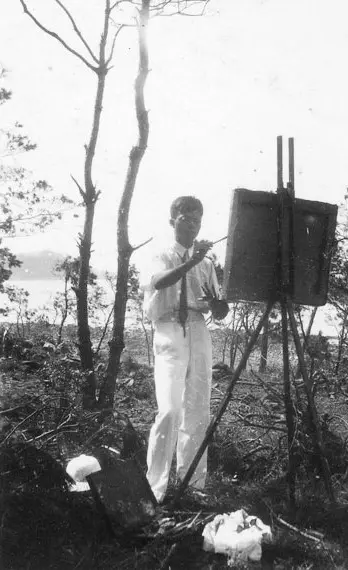
In 1926, after successfully passing the rigorous entrance examinations, Vu Cao Dam entered the second graduating class of the School of Fine Arts of Indochina, studying there from 1926 to 1931.
He took classes in drawing, painting and sculpture under Victor Tardieu (1870–1937) and Joseph Inguimberty (1896–1971), alongside future luminaries of Vietnamese art including Nguyen Phan Chanh (1892–1984), To Ngoc Van (1906 or 1908–1954) and Thang Tran Phenh (1895–1973). He also formed close and lifelong friendships with Le Pho (1907–2001), Mai Trung Thu (1906–1980), and Le Thi Luu (1911–1988).
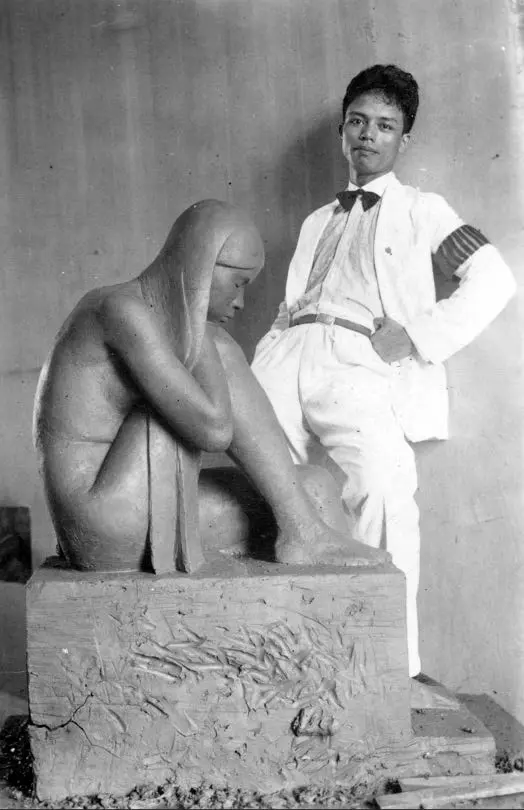
From the beginning of his studies, sculpture held a particular fascination for Vu Cao Dam. Under Tardieu’s encouragement, he devoted himself to modelling and portraiture. His sculptural talent received early recognition: one of his busts of a young woman was praised at the 1931 Paris Colonial Exhibition, while a bust of Victor Tardieu was later donated by the Tardieu family to the Fine Arts School of Hanoi in 1997.
From Hanoi to Paris
The young artist’s interests were remarkably broad. He admired the Italian Primitives, Paul Gauguin (1848–1903), Vincent van Gogh (1853–1890) and the French Impressionists, particularly Pierre-Auguste Renoir (1841–1919), as well as Pierre Bonnard (1867–1947), the Fauves, Henri Matisse (1869–1954) and Amedeo Modigliani (1884–1920). His sculpture was informed by the traditions of Khmer art and Chinese sculpture, creating an early synthesis of Asian and European influences that would remain fundamental to his career. The year 1930 brought a profound personal loss, when Vu Cao Dam lost both of his parents. In June 1931, he completed his studies at the School of Fine Arts of Indochina and was awarded a scholarship that enabled him to travel to France to continue his education.
Before leaving Vietnam, he had already participated in the Paris Colonial Exposition Paris, which ran from 6 May to 15 November 1931. He left for France in November, carrying with him the recognition he had already gained as an artist. In Paris, Vu Cao Dam continued his education at the École du Louvre, where from 1932 to 1934 he attended courses in art history in the Far Eastern Arts section. His studies gave him free access to two of the city’s most important cultural institutions, the Louvre Museum and the Musée Guimet, allowing him to study European and Asian art at first hand. In December 1931, his work was also shown in Rome at the Exhibition of Colonial Art.
His reputation as a sculptor grew rapidly. In 1932, when Bao Dai travelled to Paris, he commissioned Vu Cao Dam to create his portrait bust. During these years, the artist participated in exhibitions at the Indochina Economic Agency (Agence Économique de l’Indochine or Agindo) and continued to produce portraits of notable individuals and government ministers. His works were critically well received and commercially successful, establishing him as a serious young sculptor in the Parisian artistic milieu. According to Thiebault-Sisson on Le Temps, “The artist has borrowed his methods from the West, from which he has taken the happiest parts […] but nothing in his works is attached to ours through style, and it is in the ancient sculptures of Cambodia that we must look for the source of their inspiration.”¹
The transition to painting during wartime
In 1936, Vu Cao Dam met Renée Appriou at the university campus. A young pianist, she would become his lifelong companion, and the couple married in 1938. That same year, Vu Cao Dam’s artistic career entered an important new phase. In 1939, he exhibited at the Romanet Gallery, beginning a long association with the gallery and its owners. The outbreak of war in Europe in September of that year, however, made the already difficult business of selling paintings considerably more challenging.
The war had a decisive effect on Vu Cao Dam’s artistic development. Bronze casting became impossible: the fusion of bronze was forbidden and the metal was requisitioned by the German occupying forces. As a result, his career as a sculptor was severely interrupted. He increasingly devoted himself to painting, only occasionally returning to sculpture through clay models that were fired and given a distinctive patina.
At the beginning of the 1940s, the Romanet family, owners of the eponymous gallery, developed a particular interest in the artists of the School of Fine Arts of Indochina. Vu Cao Dam, Le Pho and Mai Trung Thu were invited to exhibit at the Romanet Gallery in Algiers in 1941 and 1942.
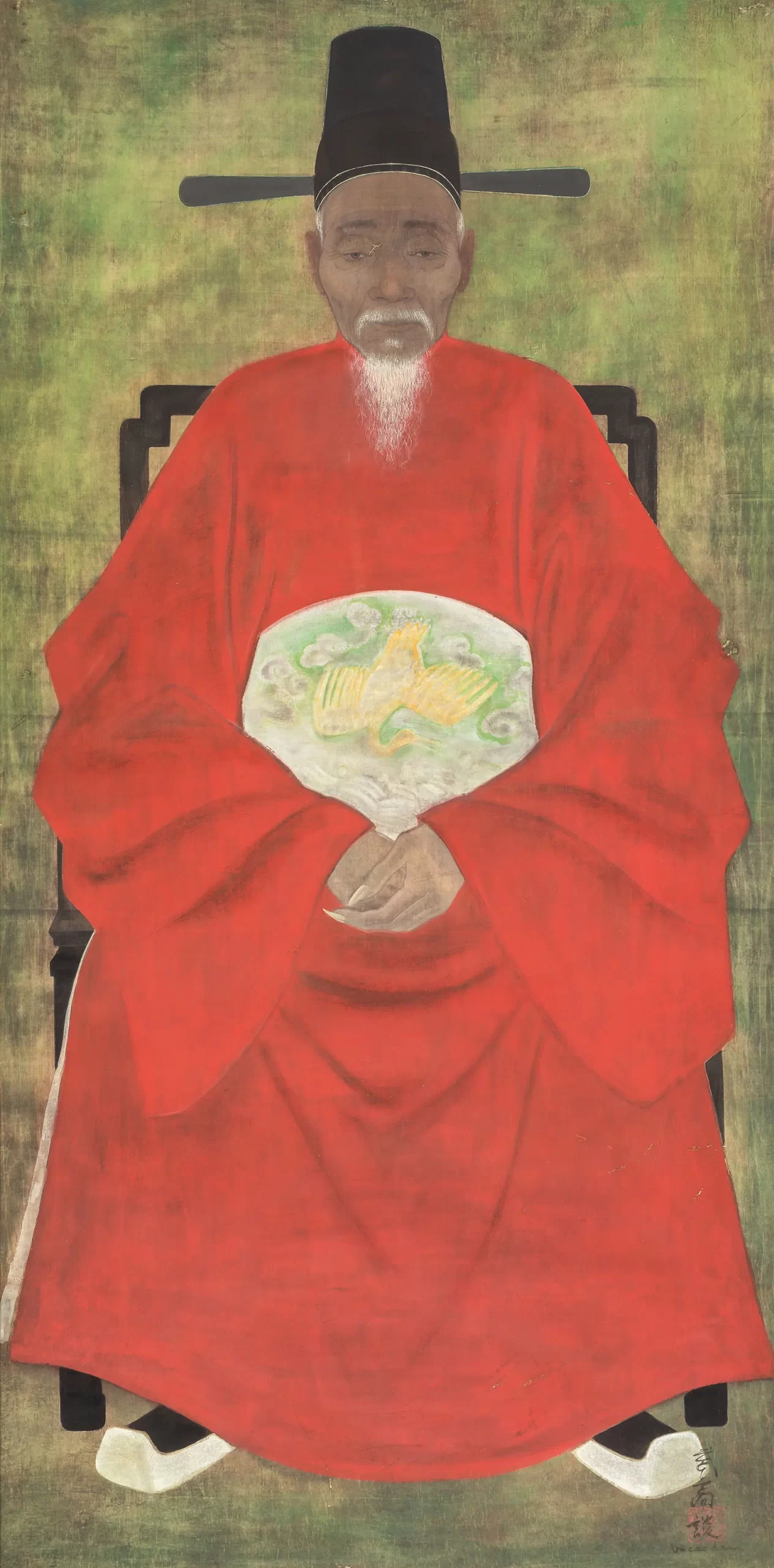
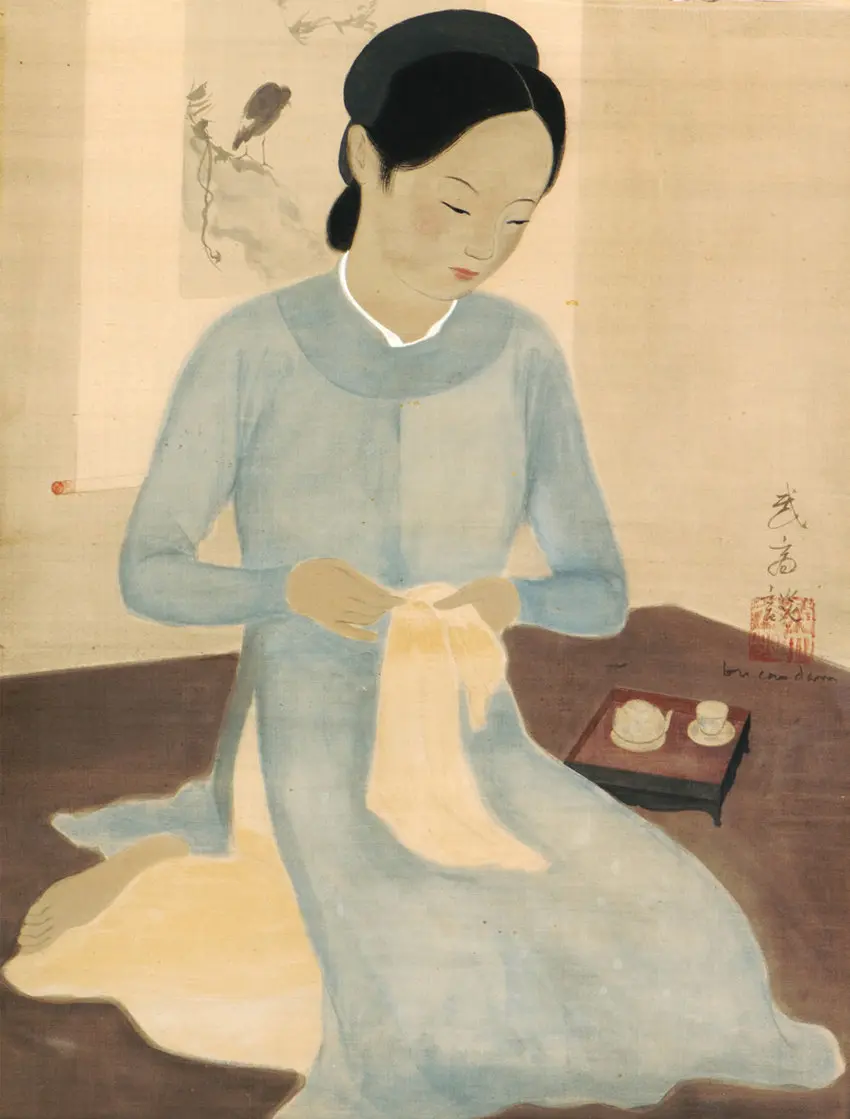
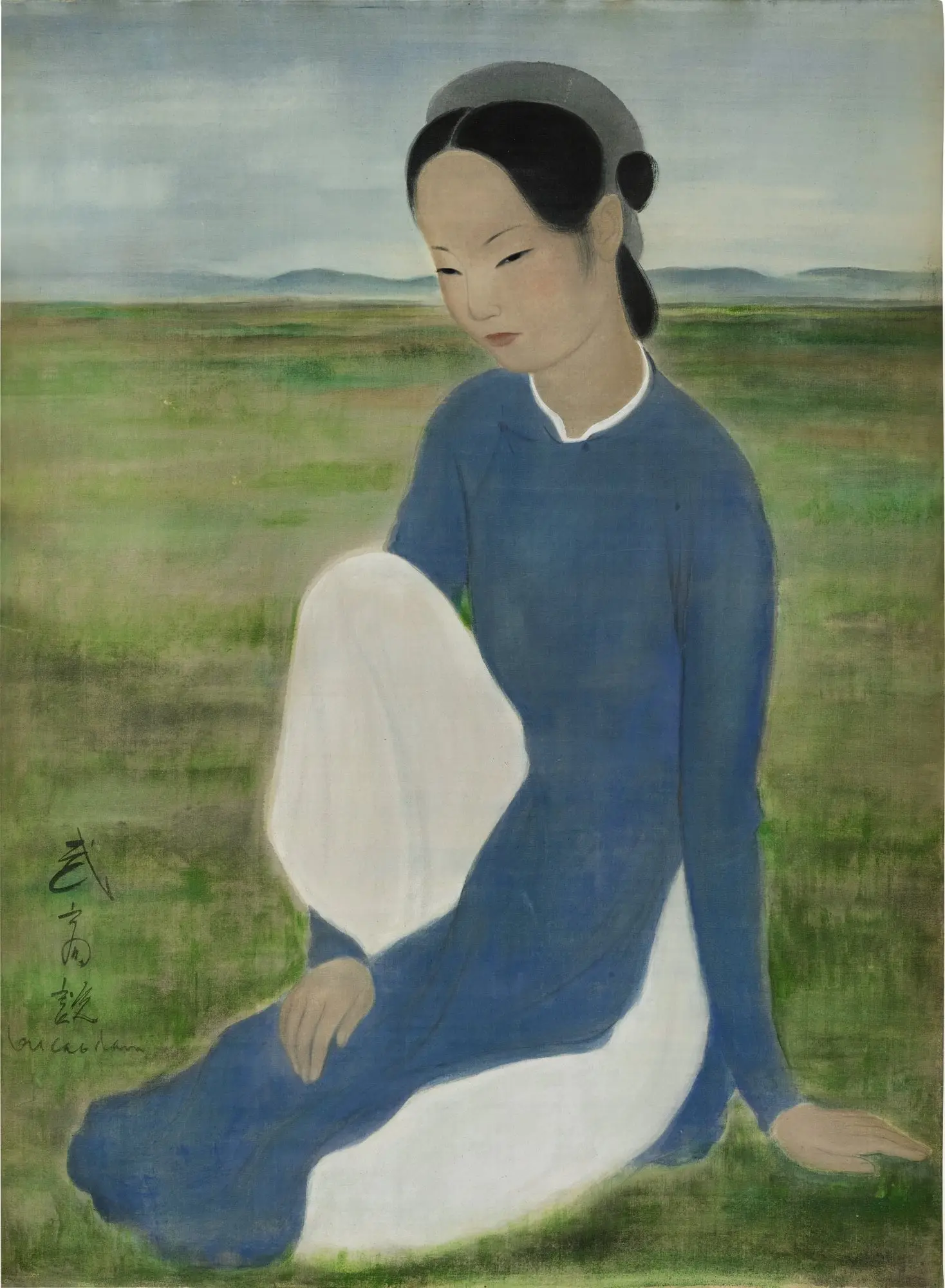
During the early 1940s, Vu Cao Dam also became increasingly visible in the Parisian art world. He exhibited at the Salon des Artistes Indépendants and the Salon d’Automne, where his work attracted the attention and praise of contemporary critics. At the same time, he was increasingly turning towards painting on silk, a medium through which he could combine the linear qualities of his sculptural training and the fluidity of Chinese calligraphic tradition with the lessons of European modernism.
Comparatively few of these silk paintings survive today, making them among the rarest and most coveted works in Vu Cao Dam’s oeuvre. Their importance lies not only in their scarcity, but also in the way they represent the artist’s successful synthesis of Eastern and Western artistic languages during one of the most significant periods of his career.
Moving from Paris to the South of France
In 1946, Vu Cao Dam’s sculptural practice briefly returned to the centre of his work when Ho Chi Minh visited Paris. He created a bronze bust of the Vietnamese leader, a low-relief medallion, now lost, and a commemorative bronze medal. That same year, his paintings on silk were the subject of a laudatory article by Jeannine Auboyer in France Illustration, while he presented a solo exhibition at the Van Ryck Gallery in Paris.
By the end of the 1940s, however, Vu Cao Dam’s health had begun to deteriorate. He decided to leave Paris permanently and settled in Béziers in the south of France. Removed from the intensity of the capital, his painting underwent a new transformation. The southern light encouraged a more naturalistic approach, while his engagement with French Renaissance painting introduced new qualities of modelling, colour and atmosphere. In 1952, Vu Cao Dam moved to the Côte d’Azur and settled in Vence. His new surroundings brought him into close contact with some of the most important artists of the European avant-garde. He lived near the Chapelle du Rosaire, associated with Henri Matisse, and only about a kilometre from Marc Chagall. He also encountered artists including Pablo Picasso and Max Ernst, further immersing himself in the creative atmosphere of the French Riviera. Chagall, in particular, exerted a profound influence on Vu Cao Dam’s mature painting. From this period onwards, he devoted himself almost exclusively to oils, embracing a more expressive palette and increasingly vibrant compositions. Yet his mature style remained rooted in the delicate lyricism of his earlier silk paintings and in his lifelong dialogue between Eastern tradition and Western modernism.
In 1959, Vu Cao Dam permanently settled in Saint-Paul-de-Vence, where he would remain until his death in 2000. His international reputation continued to expand. In 1963, he signed a contract with the Wally Findlay Galleries, leading to exhibitions in Chicago, Palm Beach, New York and Los Angeles and introducing his work to a wider American audience.
Today, Vu Cao Dam stands among the foremost figures of modern Vietnamese art and as one of the artists who most successfully translated the cultural and artistic heritage of Vietnam into an international language. Vu Cao Dam has been the subject of recent museum exhibitions including Le Pho, Mai Thu, Vu Cao Dam: Three Vietnamese Artists in France (Le Pho, Mai Thu, Vu Cao Dam, Trois artistes vietnamiens en France), Musée Cernuschi, Paris, October 2024 – March 2025 and City of Others: Asian Artists in Paris 1920s–1940s, National Gallery of Art, Singapore, April – August 2025. According to Anne Fort, the curator of the Cernuschi Museum, “He meets Marc Chagall, whom he admired and whose concerns he shared: to paint a world linked to childhood and universal myths, celebrating joy and love, so as not to sink into despair. And above all, not to give in to the surrounding din, to stay the course, to remain oneself, all while remaining curious.”² On France Illustration, Jeannine Auboyer once wrote: “[Vu Cao Dam] was going to try to regenerate Indochinese painting while conserving what was essential of its qualities of the past, adding certain characteristics of Western painting, operating a synthesis so well balanced that it would appear natural.”³
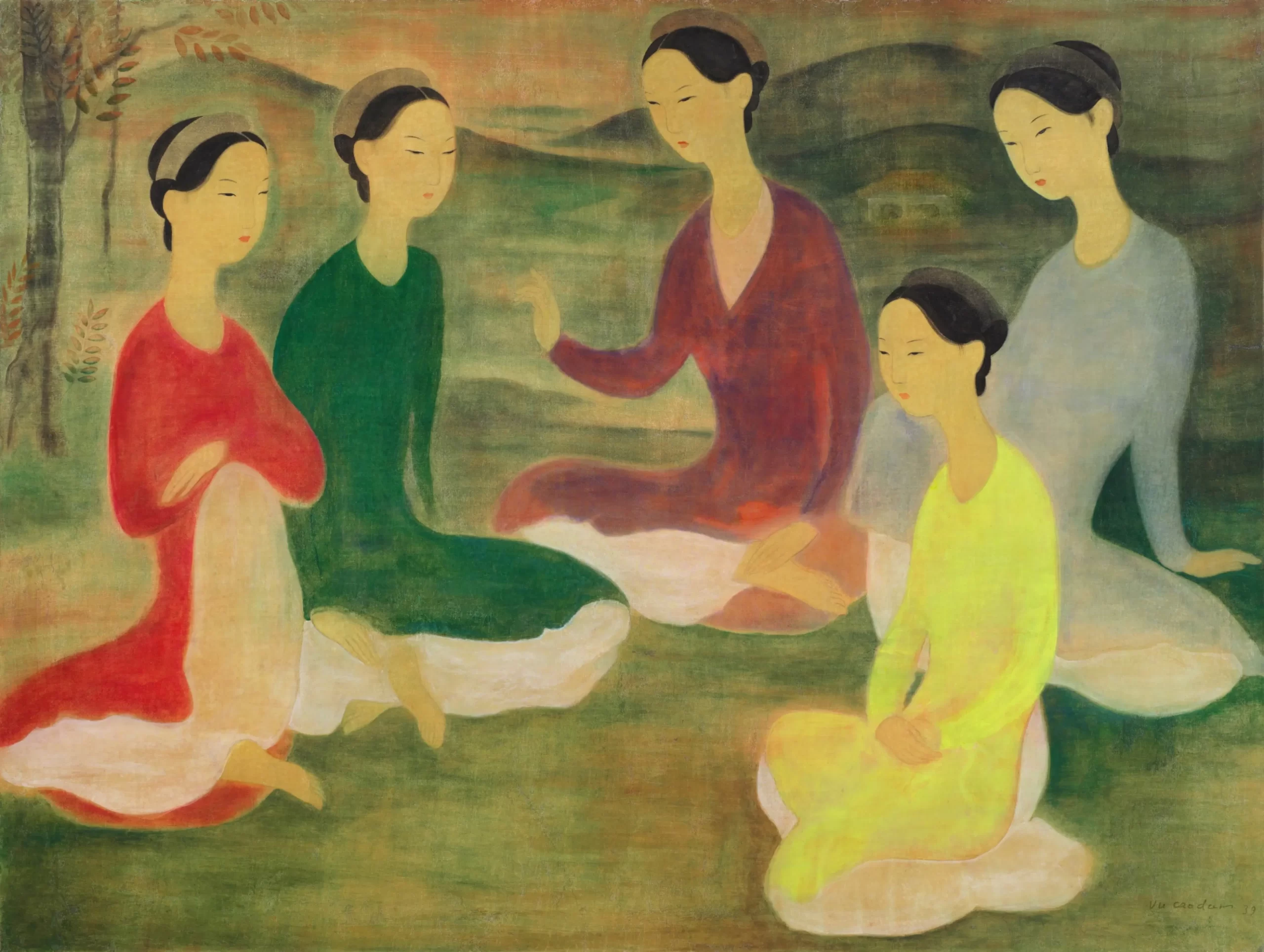
“This painting for me is a high point in Vu Cao Dam’s work. It portrays an ideal and Eden-like vision, one that symbolises to perfection the Far Eastern archetypal image of happiness. It also bears moving and precious witness to a high point of civilisation and refinement. As well, it is a moment of refined happiness that was soon to evaporate. The war, the revolution, the otherness of foreigners were soon to combine to destroy all of that. I also notice the beauty of the faces that Vu Cao Dam painted at the time. He was truly animated by a sort of grace.”
— Michel Vu, son of the artist
A notable work of Vu Cao Dam’s early career
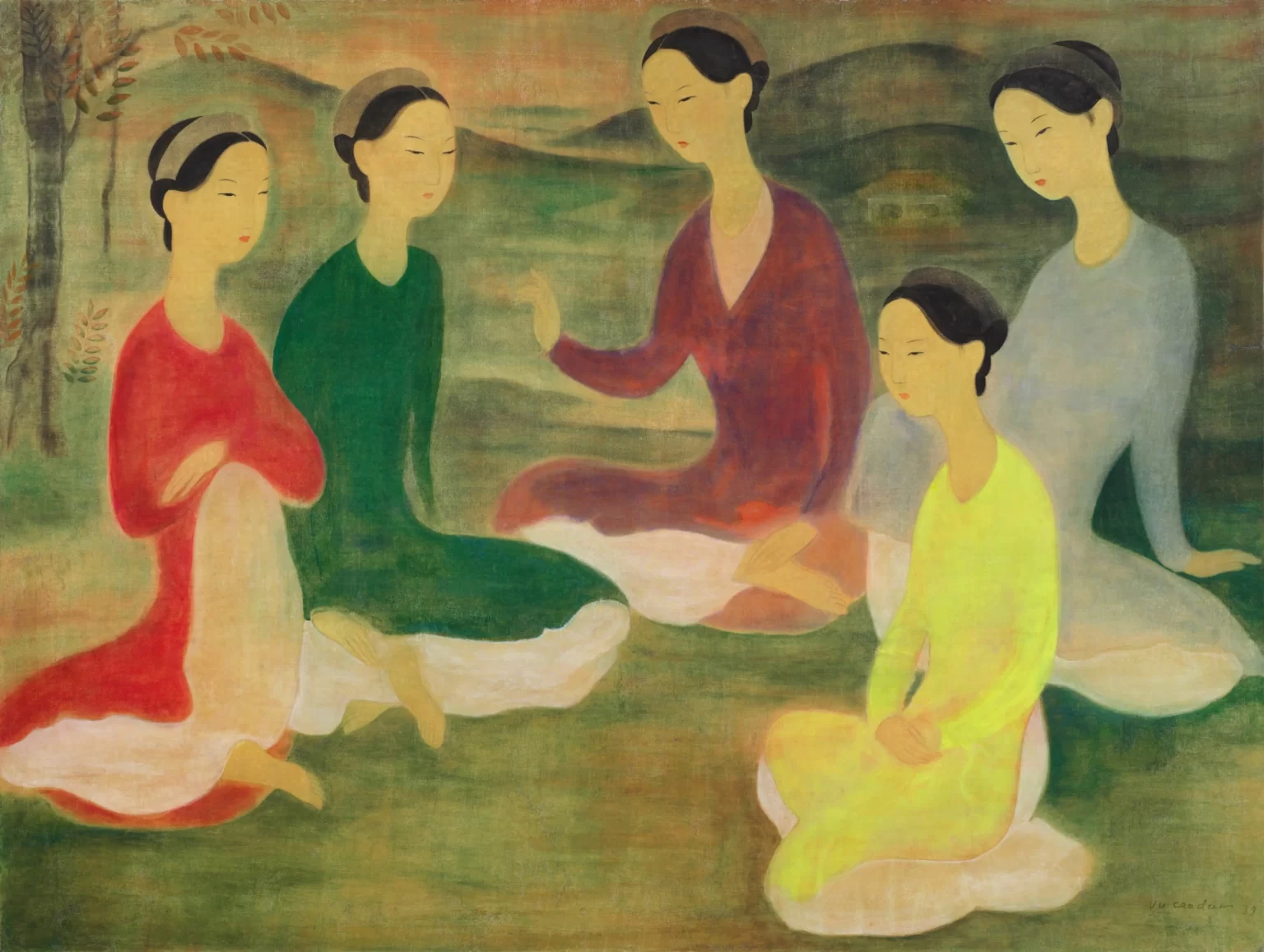
Painted in 1939 at the height of Vu Cao Dam’s Paris years, Elegant Gathering in the Garden is arguably the defining achievement of the artist’s early career and the largest known multi-figure composition on silk by the artist. Monumental in scale, exceptionally rich in colour and infused with a quiet lyricism, the work represents the culmination of Vu Cao Dam’s celebrated silk oeuvre, before war would fundamentally alter the course of his life and practice. Few works so fully embody the artist’s extraordinary ability to reconcile the traditions of East and West, transforming an ancient Asian medium into a vehicle for a distinctly modern vision of Vietnamese identity.
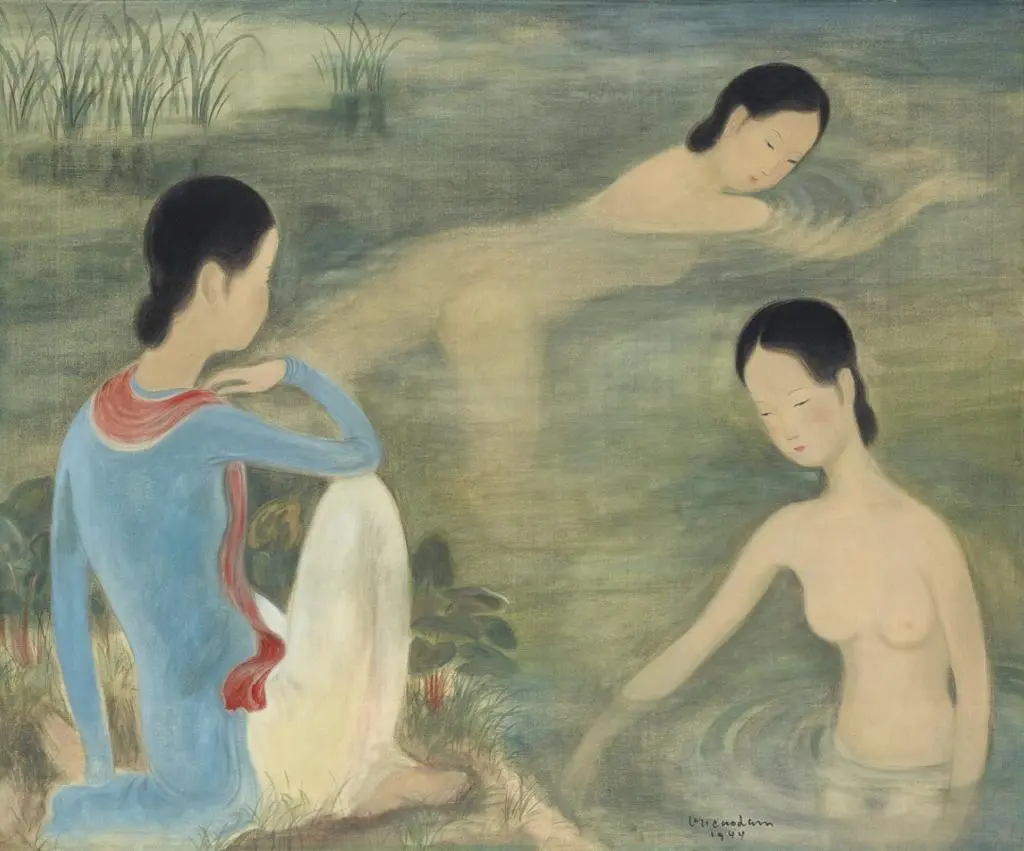
The extraordinary scale of the present work (85.6 by 114.5 cm; 33¾ by 45 in.) is matched by its rarity. According to the catalogue raisonné,⁴ only four other works on silk by Vu Cao Dam exceed one metre in dimension. Of these, three are single-figure seated portraits, while only one is a multi-figure composition: a depiction of two bathers, which was sold at Sotheby’s Hong Kong in 2018. Elegant Gathering in the Garden therefore occupies a singular position within the artist’s silk oeuvre – not simply as a large work, but as the largest known multi-figure silk composition by Vu Cao Dam. Its expansive format allows the artist to develop a complex interplay of figures, architecture, foliage and colour on a scale rarely encountered in his surviving works.
Executed in 1939, the painting was created during a pivotal moment in Vu Cao Dam’s career. Having moved to Paris in 1931, he had immersed himself in the artistic and intellectual life of the French capital, studying at the École du Louvre and gaining direct access to the collections of the Louvre and Musée Guimet. His years in Paris brought him into contact with the masters of European painting and sculpture, while his own Vietnamese heritage remained central to his artistic identity. By the late 1930s, these diverse influences had crystallised into a highly personal language. The present work stands at the very height of this development.
That same year, Vu Cao Dam exhibited at the Romanet Gallery, beginning a long association with the gallery and its owners. His works were also shown in Paris at the Indochina Economic Agency alongside those of Le Pho and Mai Trung Thu. Such exhibitions were important early platforms for Vietnamese artists working in France, placing Vu Cao Dam within the wider story of Asian artists establishing themselves within the cultural capital of Europe. Among the works exhibited, Elegant Gathering in the Garden was distinguished by its imposing scale and ambitious multi-figure composition.
The year 1939 was also a deeply significant moment in Vu Cao Dam’s personal life. Completed just one year after his marriage to his lifelong partner, Renée Appriou, Elegant Gathering in the Garden is believed to have been painted for his young wife. It was a period of great happiness and artistic promise: Vu had only recently begun exhibiting with the Agindo alongside Mai Trung Thu and Le Pho, while his association with the Romanet Gallery was also beginning to take shape. Yet this optimism was set against growing uncertainty in Europe. The Agindo exhibition had taken place in April and May 1939, only months before Germany invaded Poland in September and the Second World War erupted. Seen against this backdrop, the painting’s luminous garden, vibrant colours and gathering of elegant women acquire an added poignancy – a celebration of love, family and beauty created on the eve of profound upheaval.
The outbreak of the Second World War would soon make sculpture increasingly difficult to produce. Vu Cao Dam had initially established himself as a sculptor, but the war severely restricted access to bronze, which was requisitioned by the German occupying forces. He consequently devoted himself increasingly to painting, turning to silk as a medium through which he could continue his artistic exploration.
The resulting works belong to a relatively brief but extraordinarily important chapter in his oeuvre. By the 1950s, following his move to the South of France, he would turn almost exclusively to oil. The silk paintings of the 1930s and 1940s thus represent a distinct and finite body of work, and their survival in such monumental formats is exceptionally rare.
Family, memory, and the image of the Vietnamese woman
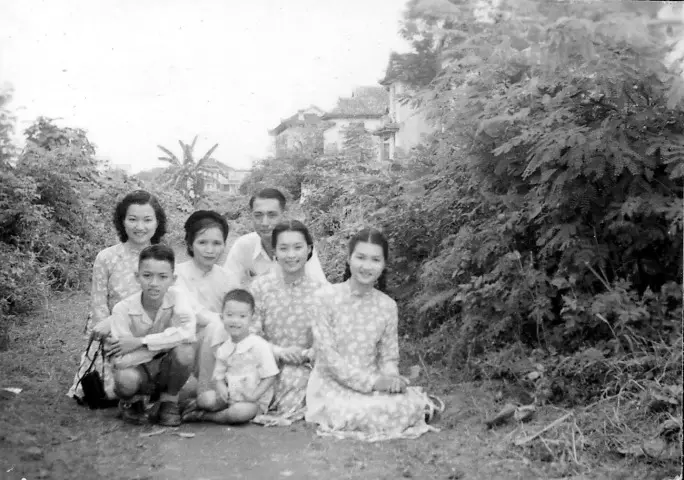
Yet beneath this vision of modernity lies a deeply personal dimension. The composition recalls a photograph of Vu Cao Dam’s own family, particularly his beloved sister Vu Thi Thuc and her family, who remained in Vietnam after the artist moved to France. The parallels are striking: the figures gathered outdoors, the arrangement of the family group and the traditional Vietnamese architecture glimpsed in the background. Vu Cao Dam was particularly close to his mother and sister, and the women of his family remained an important source of inspiration throughout his life. In transforming this private memory into an idealised scene of feminine companionship, the artist turns personal recollection into a universal image of familial intimacy and harmony.
At the heart of Elegant Gathering in the Garden is the remarkable gathering of five elegantly dressed women. Whereas Vu Cao Dam’s silk paintings of women in landscapes typically feature just one or two figures, the present work brings together five elegantly poised women. Seated together in a garden, they appear at once relaxed and self-assured, embodying an emerging vision of Vietnamese femininity in the 1930s. Their modernised ao dai reflects the changing fashions and ideals of the period, particularly the influence of Parisian fashion and innovations associated with the modern ao dai popularised by artists and designers of the era.
The title’s reference to the Élégantes is significant: these women evoke a new generation of educated, fashionable urban Vietnamese women, increasingly visible within public life and associated with sophistication, grace, intellect and confidence.
“The silks had been carefully prepared. The fabric, a fine pongee, had been treated with Indian ink and water, endowing it with a great depth. It was then mounted on paper using a fish-based glue, which had a most distinctive smell. Once dry, the papers were pressed with a weight to flatten them. Next, he would temporarily affix them to a wooden panel, and the real work could commence on the easel.”
— Yannick Vu, the artist’s daughter
The work also reveals the profound influence of French Impressionism on Vu Cao Dam’s visual imagination. The languid gathering of elegantly dressed women in a garden recalls the outdoor scenes of Claude Monet (1840–1926) and Pierre-Auguste Renoir (1841–1919), in which fashionable women at leisure became a common subject for exploring light, colour and modern life. The connection is particularly resonant with Renoir’s garden compositions, which Vu Cao Dam greatly admired during his formative years. Yet the present work is no imitation of European painting. Instead, Vu Cao Dam takes a distinctly French modern subject and translates it through a Vietnamese artistic vocabulary. The women’s ao dai, facial features, architecture and cultural setting root the composition firmly in 1930s Vietnam. The result is a sophisticated dialogue between Impressionist modernity and Vietnamese identity.
This synthesis extends most powerfully to the medium itself. Silk has an ancient and deeply rooted tradition in Asian art, prized for its delicacy, luminosity and refinement. Vu Cao Dam transformed this traditional medium into a sophisticated vehicle for modern painting. The fine pongee silk used for works of this scale would have been specially prepared and, given the rarity and dimensions of the material, likely sourced from Vietnam. Its delicate surface demanded a distinctive sensitivity of touch: unlike canvas, silk absorbs pigment and ink immediately, leaving little room for correction. Every mark therefore carries an extraordinary degree of intention.
This quality of immediacy is particularly evident in Vu Cao Dam’s line. Trained in the traditions of Chinese calligraphy, he understood the expressive potential of the single brushstroke. His calligraphic education taught him to regard the line not simply as a means of describing form, but as a vehicle for emotion and character. In Elegant Gathering in the Garden, the elegant contours of the women, their garments and the surrounding foliage are articulated through economical, fluid strokes. The restraint of the drawing is counterbalanced by the extraordinary richness of the palette.
Indeed, the colour of the present work is exceptional within Vu Cao Dam’s early silk oeuvre. Each of the five women is distinguished by the bold and individual colour of her ao dai, creating a rhythmic progression across the composition. Rather than relying on the subtle tones of blues and greys more commonly associated with his silk paintings, Vu Cao Dam here embraces a particularly vibrant palette. The colours give each figure a distinct presence while simultaneously binding the group together, heightening the sense of youthful confidence, vitality and modernity.
Ultimately, Elegant Gathering in the Garden is a work about cultural translation. Vu Cao Dam takes the visual language of European modernism – its interest in leisure, fashion, colour and the experience of modern life – and filters it through the aesthetics, materials and cultural memory of Vietnam. The result is neither wholly Eastern nor Western, but something distinctly his own: an image of Vietnam seen through the eyes of an artist who had made Paris his home while remaining profoundly connected to his origins.
The importance of the painting is further underscored by its distinguished provenance. It was the highlight of Sotheby’s landmark 2008 sale, An Important Collection of Vietnamese Paintings, featuring The Philip Ng Collection, and has remained in private hands since. More than eight decades after it was painted, Elegant Gathering in the Garden remains an extraordinary testament to Vu Cao Dam’s artistic ambition at the height of his early career. The painting stands as one of the most significant surviving achievements of the artist’s celebrated career.
“…he has given free rein to his sensibility and has endeavoured to be sincere. He has thus created a personal style in which the Western eye detects, with delightful wonder, European reminiscences assimilated to Asian forms.
From Asia, he has retained the graphic sense and the graceful silhouettes, stylised in supple movements; evolving in landscapes which, like architectural constructions, follow the laws of Western perspective, but in which the horizon, set high up in the canvas, evokes Persian miniatures and the ‘Kakemono’ of the Far East. His portraits, delicately modelled and in which the graphism reveals a high degree of refinement, are set against a green lush and sombre background, reminiscent of the Primitives, whom Vu Cao Dam so much admired, and to whom he feels drawn.
His technique remains attached to the subjectile of his ancestors: silk, in which Vu Cao Dam values the delicacy of the grain and the softness of the colour’s absorption. It’s in his choice of colours that Vu Cao Dam comes across as perhaps his most personal and subtle.”
— Jeanine Auboyer, attachée to the Musée Cernuschi, France Illustration (1946)
Top auction results for Vu Cao Dam
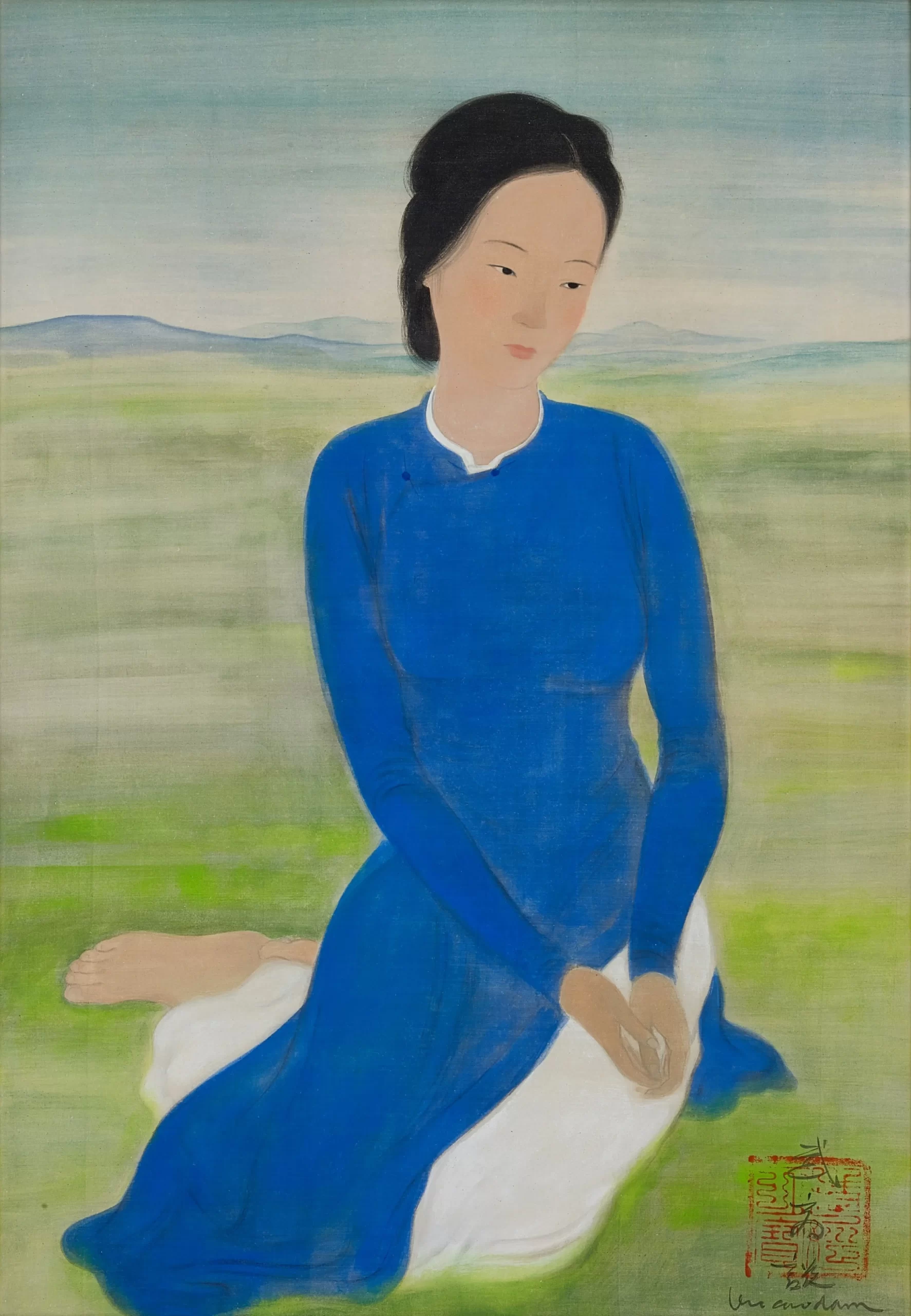
Information on the Modern & Contemporary evening auction
Time: 6:30 PM HKT, 28 September 2026, Hong Kong
Location:
Sotheby’s Maison, Hong Kong
Landmark Chater, 8 Connaught Road Central, Central
Exhibition:
22–28 September 2026
Opening hours:
From Monday to Saturday | 11:00 AM–7:00 PM
Sunday & Public Holiday | 11:00 AM–6:00 PM
(Close at 6:00PM on 28 September)
Words: Sotheby’s
Translation: Art Nation
[1] Thiébault-Sisson, “An Annamese Sculptor”, Le Temps (1932), p. 6.
[2] Anne Fort, Vu Cao Dam the Alchemist of Memory: Between Oriental Tradition and Western Modernity.
[3] Jeannine Auboyer, “Vu Cao Dam”, France Illustration (1946).
[4] Catalogue raisonné: a complete, annotated list of all known artworks by an artist across their entire career.