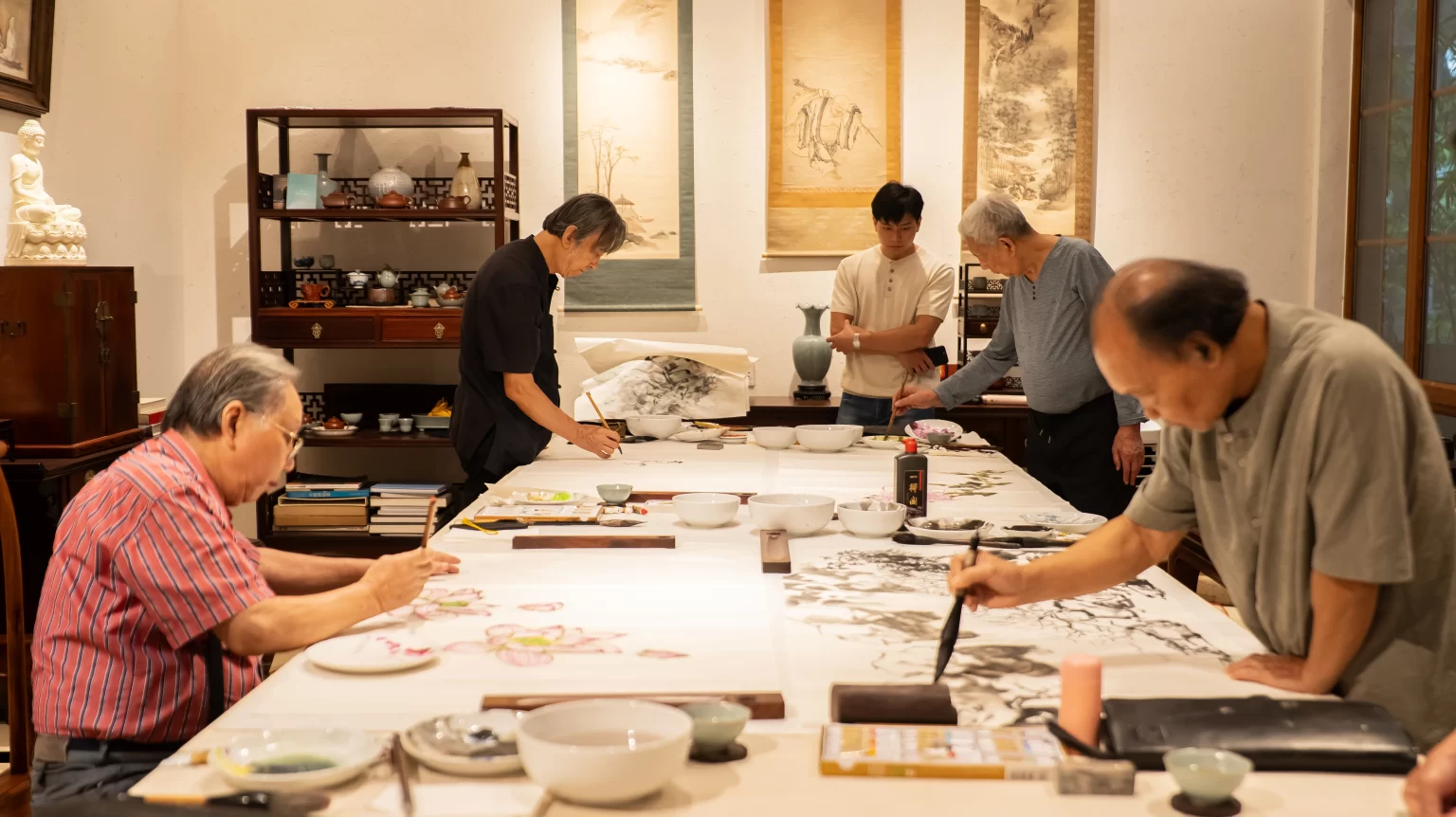
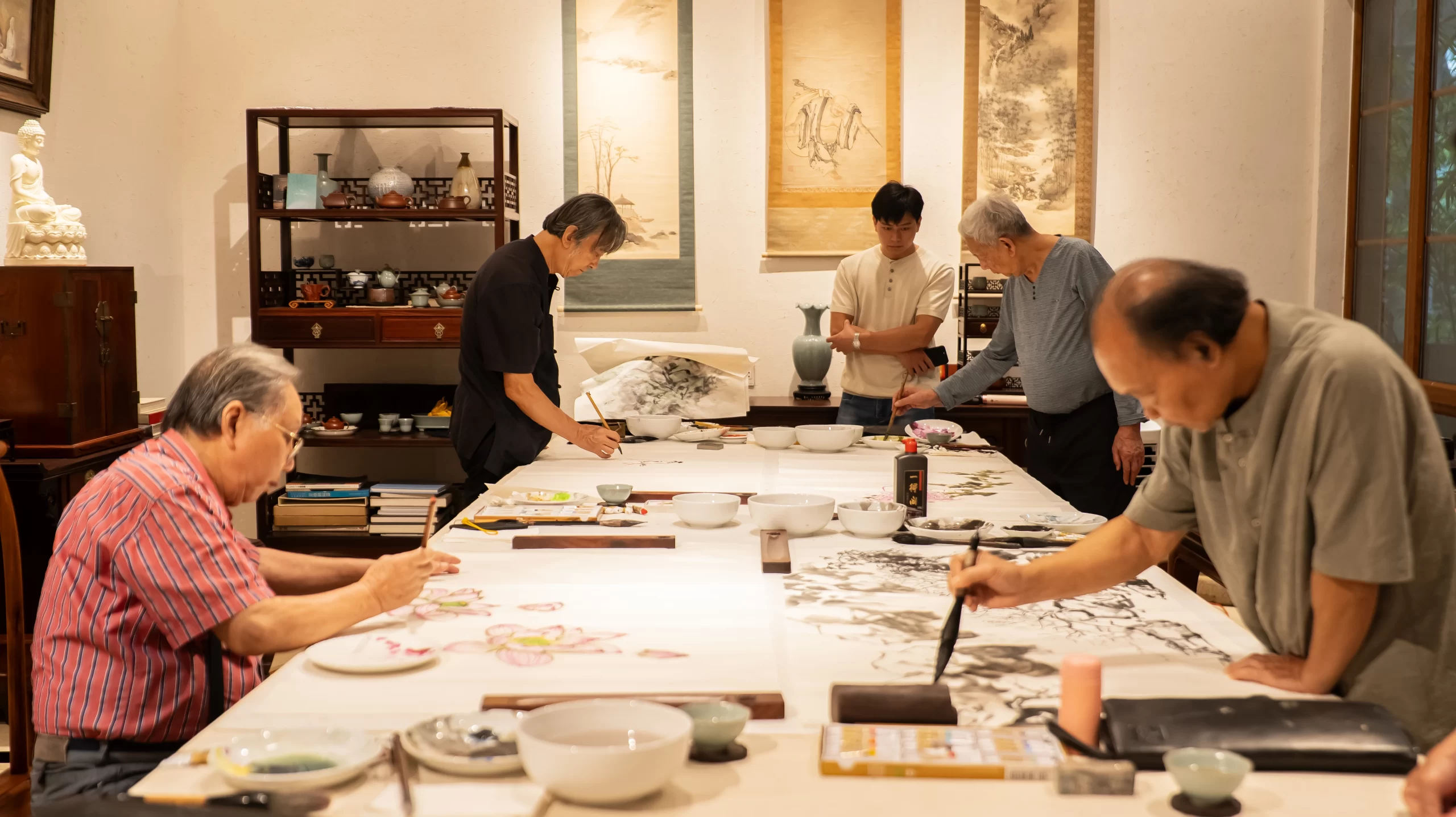
For the first time, Tita Art has organised a journey through Vietnam, combining sightseeing with artistic creation. Co-curated by Tita Art and Guo Yong (郭勇), the event brings together four masters of traditional Chinese painting: Chen Yong Kang, Ye Quan, Lu De Ping, and Sun Ge. Among them, three are counted among the few remaining “Nine Elders” of the Lingnan School – one of the six major schools that define the landscape of Chinese fine art, alongside the Shanghai School, the Beijing-Tianjin School, the Lingnan School of (Guangdong); the Chang’an School (Shaanxi), the Jinling School (Nanjing), and the New Zhejiang School.
Artist Chen Yong Kang (陈永康) specialises in the genre of flower-and-bird painting. Born in 1944 in Guangzhou—with ancestral roots in Shunde, Guangdong—he is a senior artist at the Guangzhou Painting Academy. He holds the title of National First-Class Artist, is a member of the China Artists Association, and serves as a council member for the Art Committee under the Central Research Institute of Calligraphy and Painting in China. In both 1989 and 1999, he was honoured with the special invitation to create large-scale traditional Chinese paintings to commemorate the 40th and 50th anniversaries of the founding of the People’s Republic of China. These monumental works are currently prominently displayed on the rostrum of the Tiananmen Gate. In 1999, his painting “Spring Breeze Brings Success” (春风得意) was awarded the Gold Prize for Peace Educators at the “World Peace Calligraphy and Painting Exhibition,” organised by UNESCO.
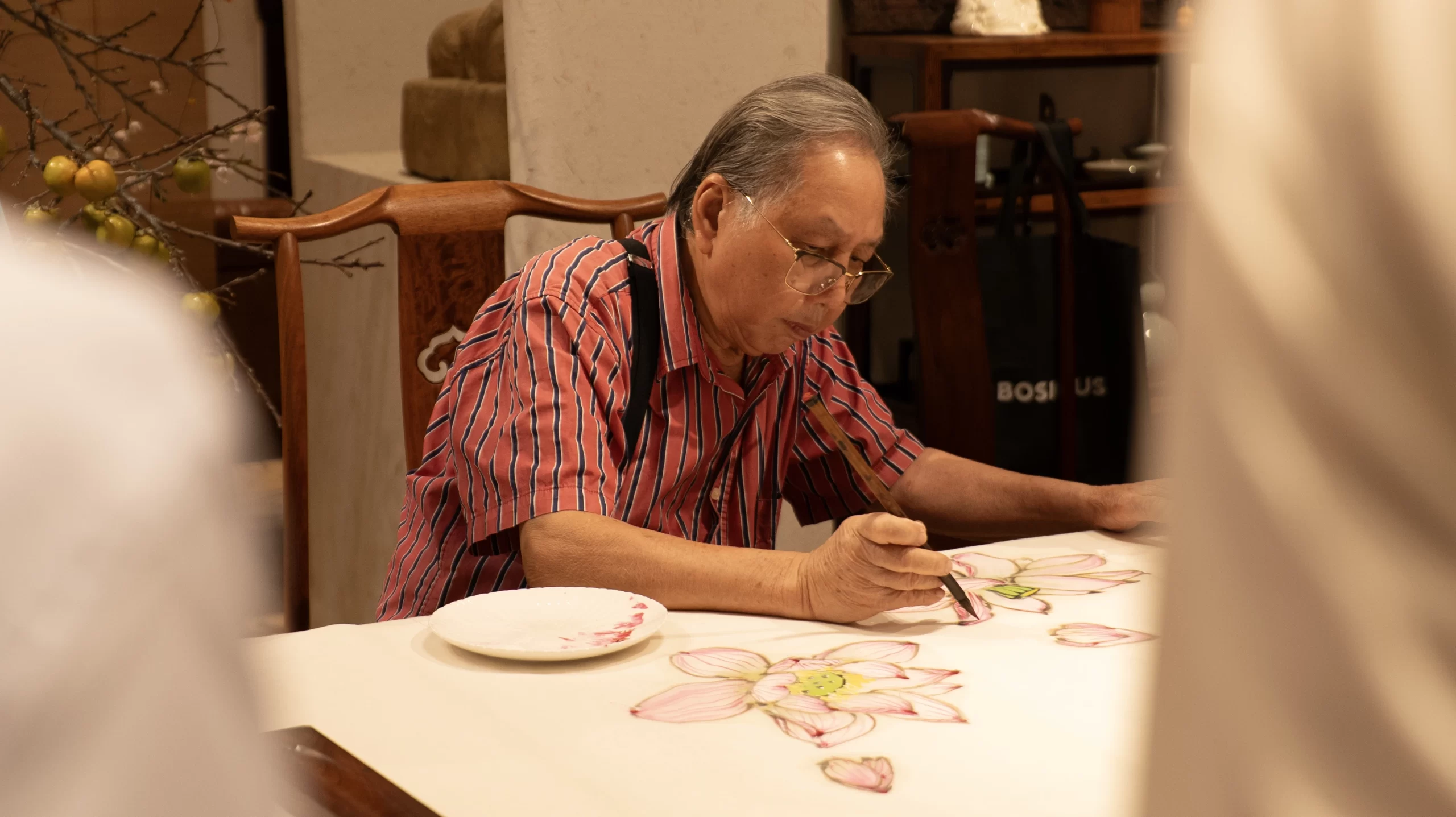
Artist Ye Quan (叶泉) specialises in the genre of “flower-and-bird” painting and is affectionately known as the “Little Prince of Chrysanthemums.” Born in January 1943 in Guangzhou – with ancestral roots in Dongguan, Guangdong – he relocated to Macau in 1980. Between 1981 and 1984, he pursued further studies in France and resided in Paris. He returned to Macau in 1985, and subsequently moved back to Guangzhou in 2000. Throughout his career, he had the privilege of studying directly under four renowned masters: Shen Zhongqiang (沈仲强), Li Gemin (黎葛民), Guan Shanyue (关山月), and Li Xiongcai (黎雄才). Currently, he holds several prestigious positions within the art circles of the Guangdong-Macau region, including: Member of the Guangdong Traditional Chinese Painting Association; Vice President of the Macau Traditional Chinese Painting Institute; Honorary President of the Guangzhou Calligraphy and Painting Art Exchange and Appraisal Association; Vice President of the Guangzhou Traditional Chinese Painting Association; Member of the Macau Education, Culture, and Arts Association; Director of the Macau Branch of the Art Institute under the Guangzhou-Hong Kong-Macau Economic and Cultural Development Promotion Association; and Member of the Southern International Friendship Liaison Association.
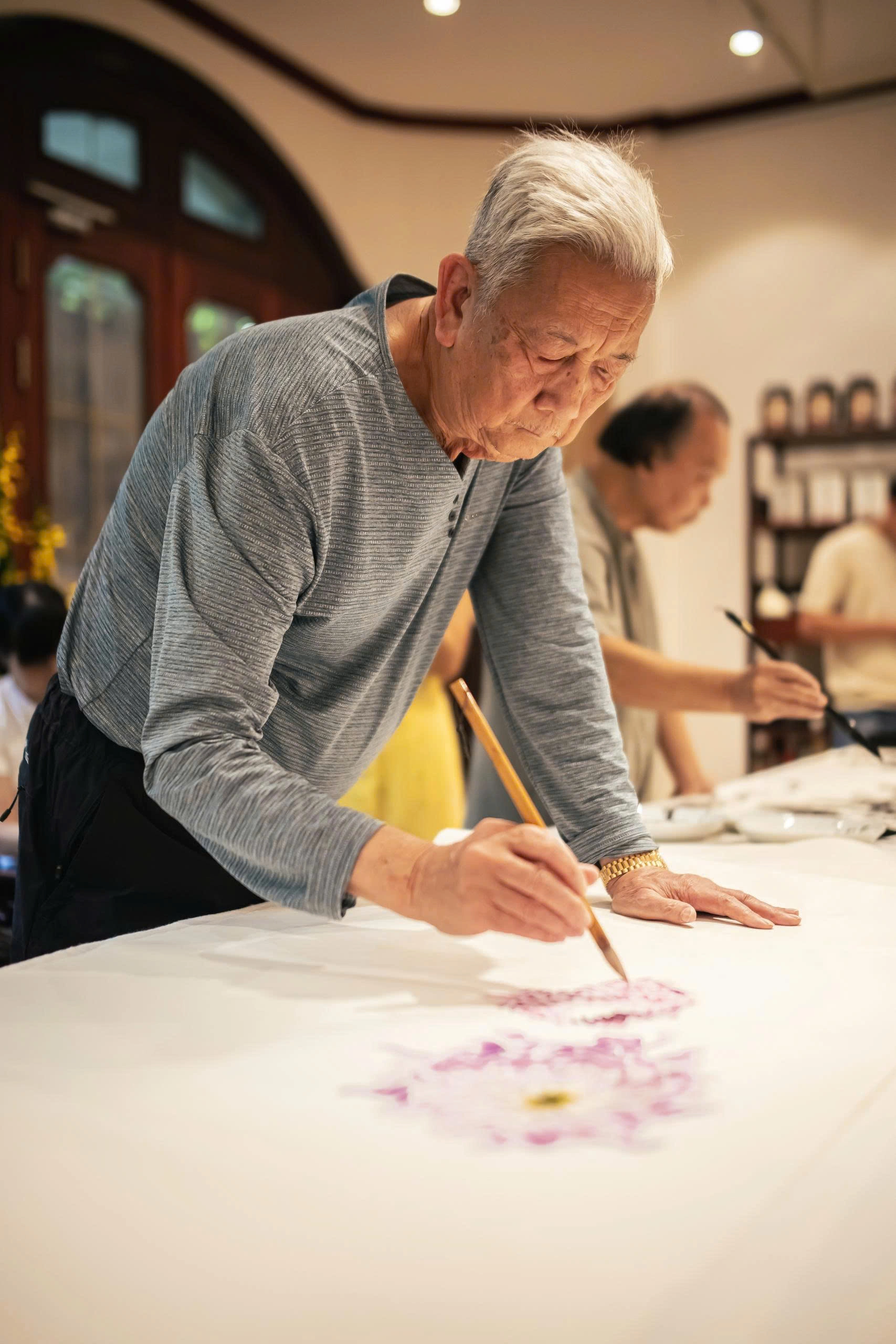
Artist Lu Deping (卢德平) specialises in shan shui (landscape) painting. Born in 1944 and a native of Shunde, Guangdong, he is a master of the genre with a long-standing career and significant influence within the art circles of Guangzhou and Guangdong. He currently serves as Honorary President of the Guangzhou Landscape Painting Research Association; Honorary Committee Member of the Guangdong Traditional Chinese Painting Association; a member of the Guangzhou Research Institute of Culture and History; Honorary Dean of the Kaiming Art Academy (affiliated with the China Association for Promoting Democracy) in Guangzhou; a member of the editorial board for the journal Guangzhou Art Research; and a member of the Guangdong Artists Association. Previously, he held positions as a Standing Committee Member of the Guangdong Artists Association, Deputy Director of the Landscape Painting Art Committee under the Guangzhou Artists Association, and Deputy Editor-in-Chief of the journal Guangzhou Art Research.
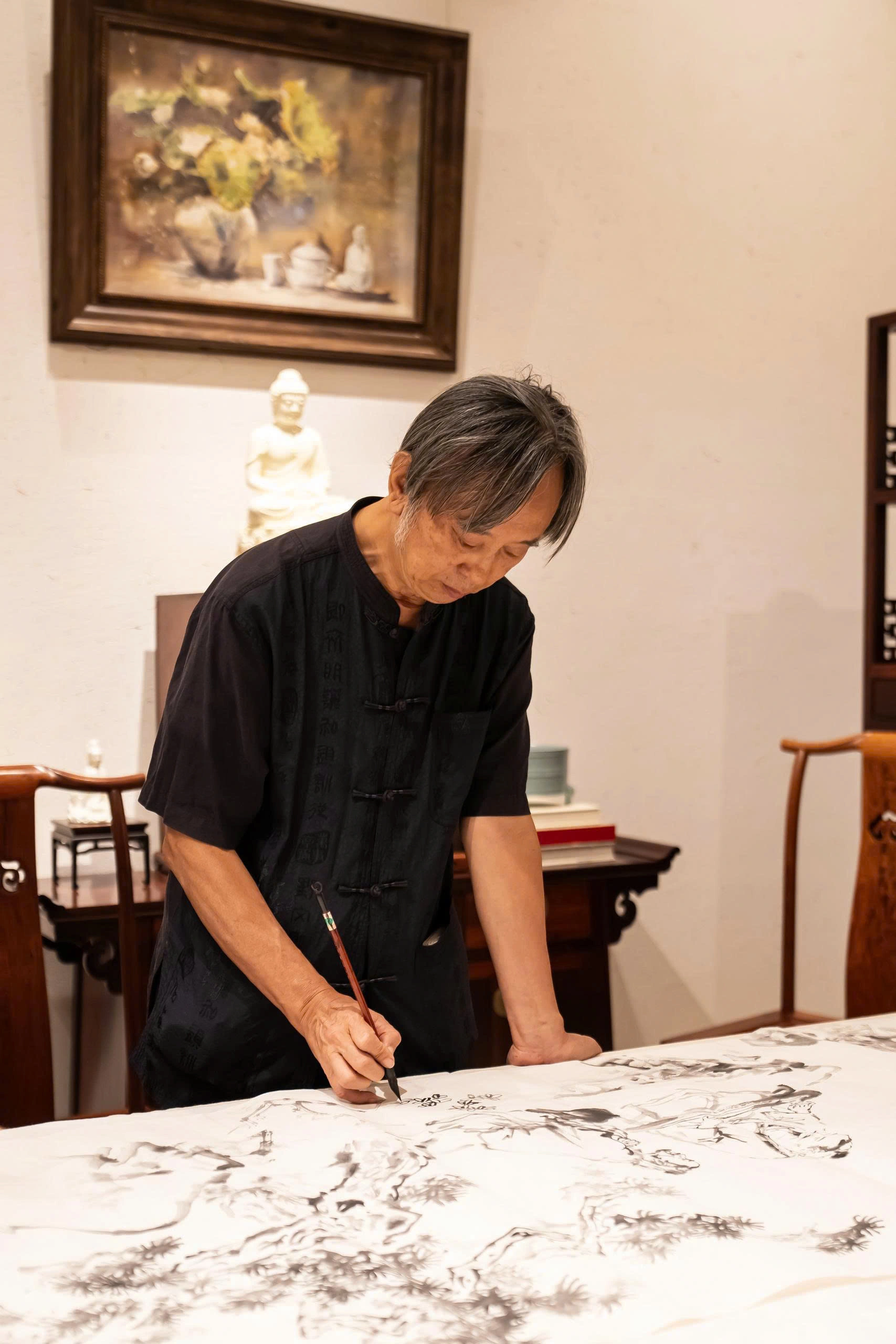
The artistic practice of Sun Ge (孙戈) centres on figure painting. Born in 1953 in the city of Harbin, he is a National Class I Artist, a member of the China Artists Association, and a member of the China Federation of Literary and Art Volunteers. He currently holds numerous positions, including: Research Fellow at the Calligraphy and Painting Academy under the Central Research Institute of Culture and History; Vice President of the China Tongze Calligraphy and Painting Academy; Committee Member of the China Great Wall Calligraphy and Painting Academy; Vice President of the West Lake International Artists Exchange Association; Vice Chairman of the Art Council of the Guoyun Wenhua Calligraphy and Painting Academy; member of the Guangdong Research Institute of Culture and History (serving concurrently as Deputy Director of its Art Creation Center); Deputy Director of the Youth Fine Arts Committee under the Soong Ching Ling Foundation of Guangdong Province; member of the Guangzhou Research Institute of Culture and History; and Director of the Guangzhou Sketching Art Research Center. Previously, he served as Vice President of the Guangzhou Artists Association (5th and 6th terms); Vice President of the Guangzhou Federation of Literary and Art Volunteers; member of the Senior Professional Title Evaluation Committee of Guangzhou; Secretary and Vice President of the Guangzhou Calligraphy and Painting Research Institute; and Vice President of the Guangzhou Painting Academy.
To date, cultural exchange in the realm of ink-wash painting between China and Vietnam remains relatively nascent. In contrast, such artistic exchanges have flourished among China, Japan, and South Korea; this is notable given that Vietnam was historically an integral part of the East Asian cultural sphere. Due to various objective factors – such as the impact of war and climatic conditions – the extant heritage of ink-wash painting in Vietnam is modest, both in comparison to other East Asian nations and when viewed against the backdrop of Vietnam’s own long history. Consequently, reviving the tradition of ink-wash painting in Vietnam holds significant value for cultural exchange.
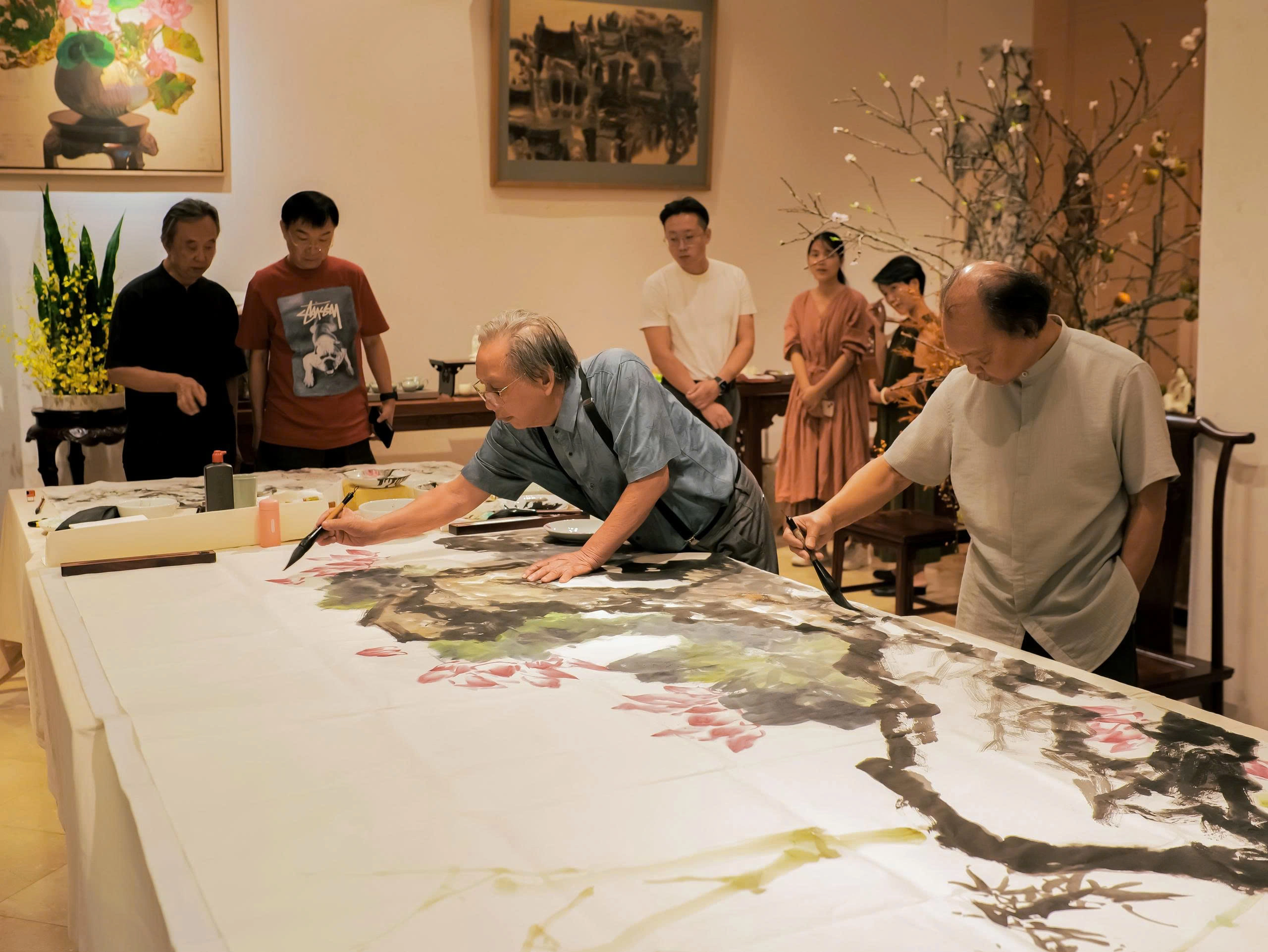
This exchange serves as a testament to the idea that art transcends borders, and that ink-wash painting, in particular, knows no frontiers. After visiting various scenic landmarks across Vietnam – including Hanoi, Ha Long, Ninh Binh, and Ho Chi Minh City – the veteran artists captured their impressions in new works centred on Vietnamese themes. Notably, the four masters collaborated on a large-scale piece to commemorate their artistic dialogue. Although all of them are over the age of 80, their brushwork remains remarkably steady, while retaining a graceful, fluid elegance.


Words and translation: Art Nation