Between 1993 and 2024, curatorial approaches evolved considerably, and the first three editions of the Triennial are often regarded as having forged the deepest bonds and relationships between the two nations. Interestingly, APT1, APT2 and APT3 highlighted the influence of folk and rural traditions, street culture and vernacular art forms on Vietnamese contemporary art. Although the APT doesn’t have an overarching theme to influence the selection of works, it is possible to see how some of these threads resonate with the group of five artists featured in APT11 from Vietnam and its diaspora: Le Thuy, Bui Cong Khanh, Le Giang, Truong Cong Tung and Mai Nguyen-Long. In their works, nuanced explorations of tradition and innovation, memory and materiality, continuity and return, are visible, tracing complex genealogies across personal and cultural histories.
In-person curatorial travel and research is a crucial element of the APT, and artist selection occurs in advance to allow new works to be developed and loans to be facilitated. In November 2022, I began my APT11 research travel to Vietnam, visiting Truong Cong Tung in his studio on the outskirts of Ho Chi Minh City. Tung combines his training in lacquer painting with a keen interest in science, ecology and cosmology, melding elements resonant of nature and culture. His practice is influenced by his upbringing in Dak Lak province and his ongoing relationship with the indigenous Jrai people from the Central Highlands of Vietnam, whose customary beliefs are grounded in place. Tung works with a range of media, including installation, sound and found objects, to reflect on, in his words, “the cultural and geopolitical shifts of modernisation, as embodied in the morphing ecology, beliefs or mythology of a land.”
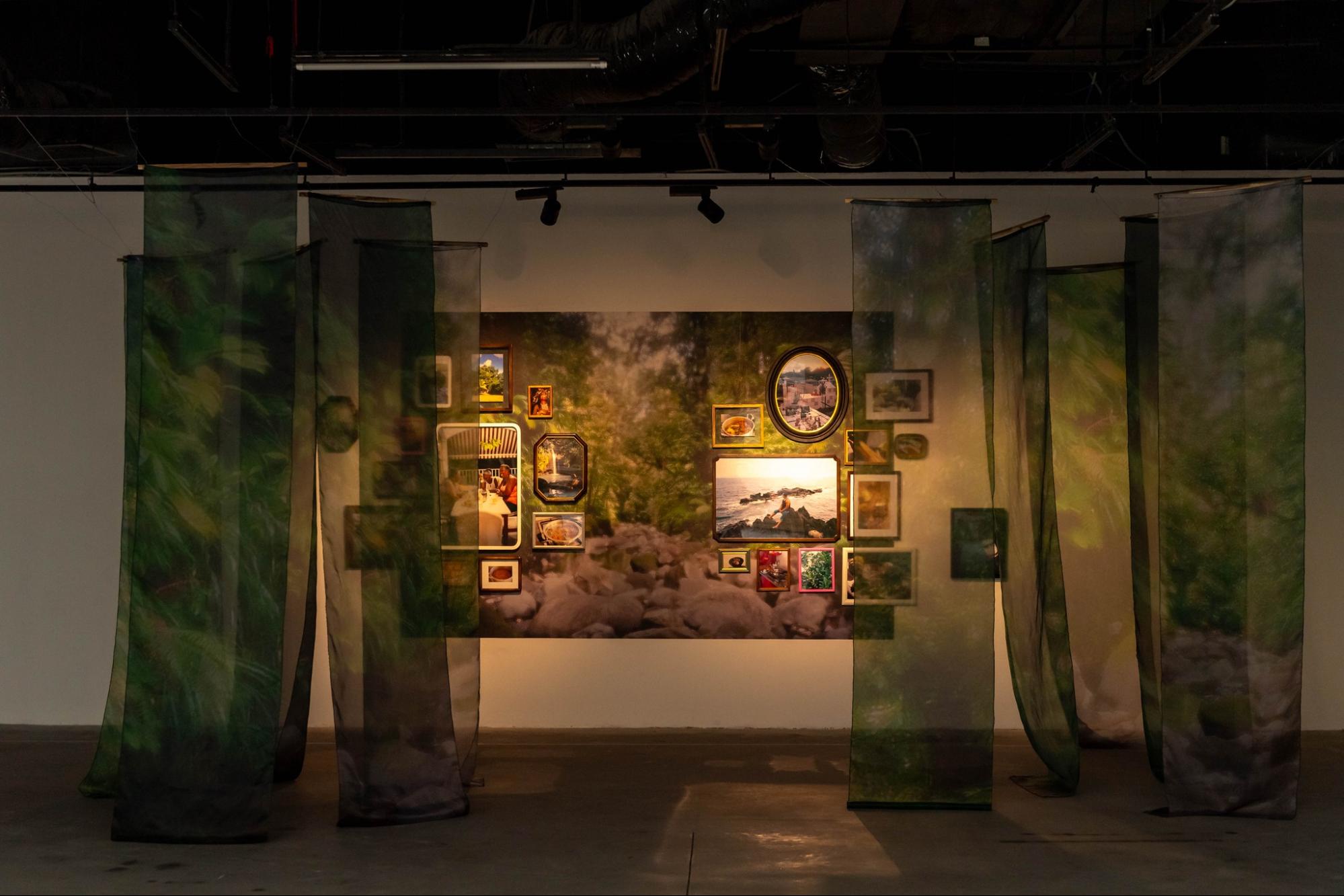
His site-specific “A disoriented garden” (2024), created for APT11, includes a garden of gourds – one of the oldest cultivated crops of Southeast Asia, traditionally used to carry water or to form the body of musical instruments. Suspended lacquer spheres reference archival photographs of landscapes impacted by human and natural disasters, from forest fires to war. Across from the garden beds, a series of wooden grids, once inhabited by silkworms, are inset with stones gathered all over Vietnam, resembling constellational maps.
Tung travelled to Brisbane in 2024 with his assistant and brother, Tu, to install his work onsite. Together, they arranged lacquered gourds across beds of sand, connecting them to an arterial network of plastic tubing that fed into a pond of ink-darkened water. Various gourds held distinct materials: turmeric for its scent and vibrant hue; tiny green mung beans, which quickly sprouted; rice, meticulously swept into place with a wide brush; red kidney beans, added for their weight; and dishwashing liquid, replenished daily to generate frothing mounds of kinetic bubbles. Motion sensors triggered speakers that emitted the ambient hum of insects – bees, cicadas and others – adding an aural layer to the installation’s sensory landscape.
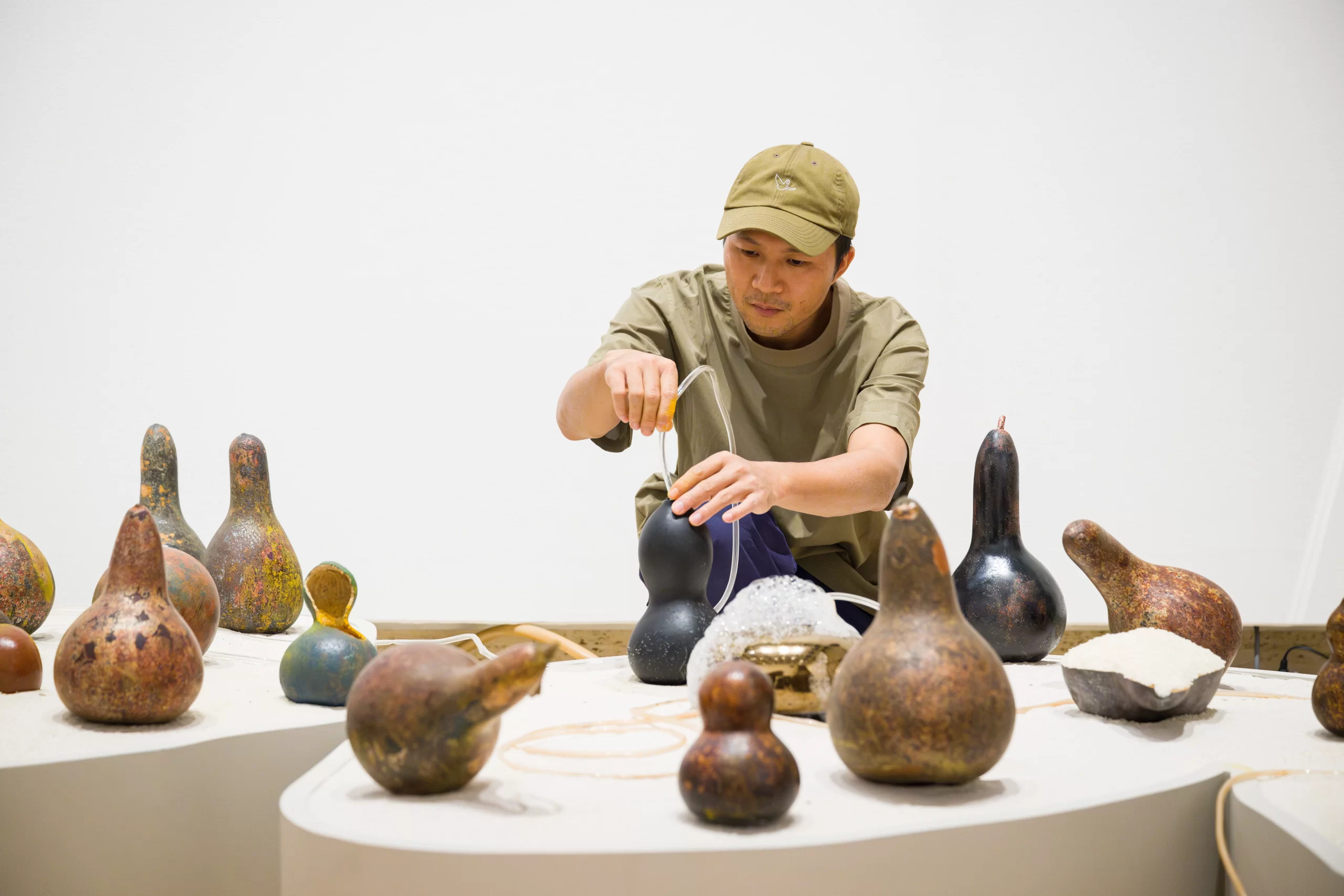

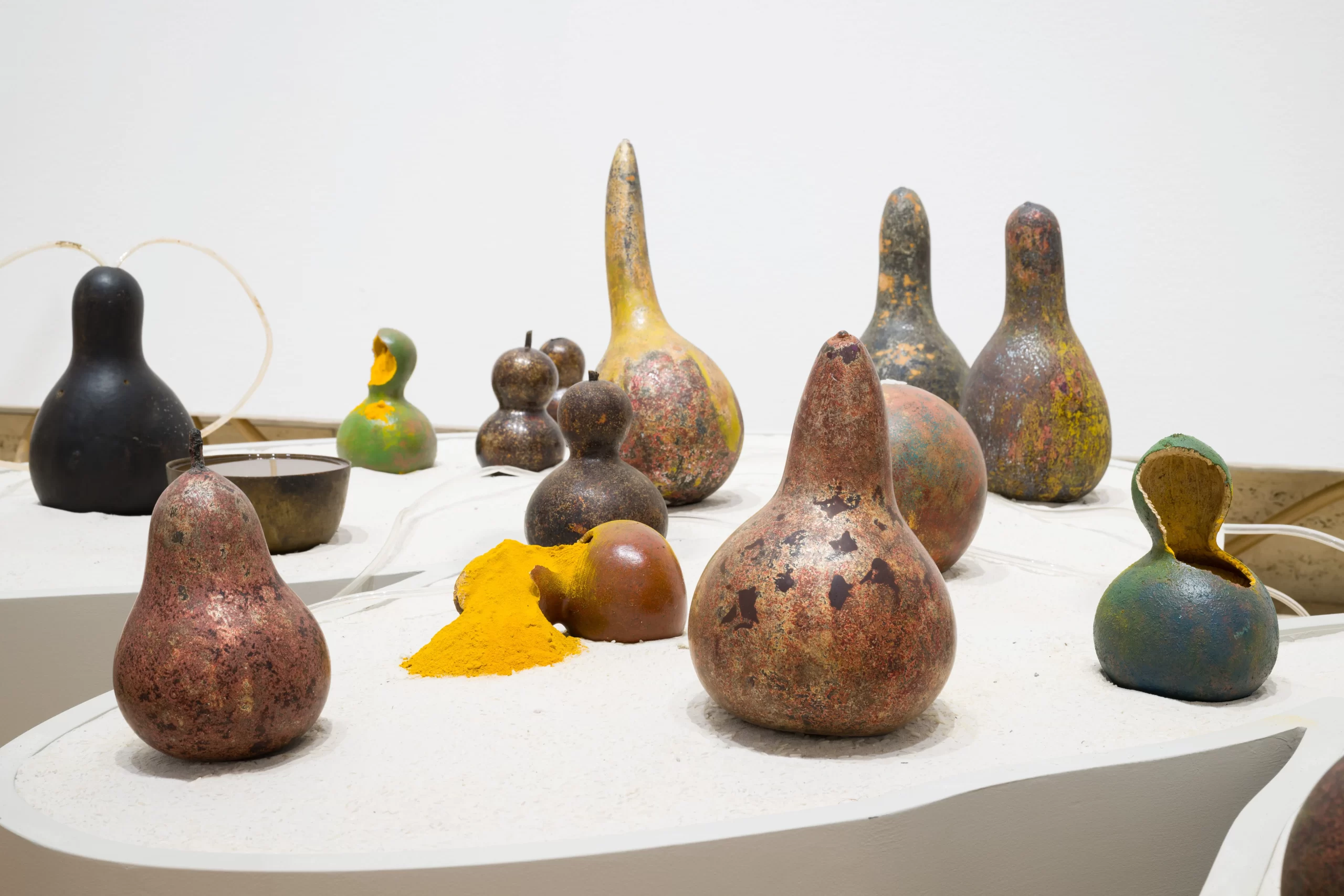
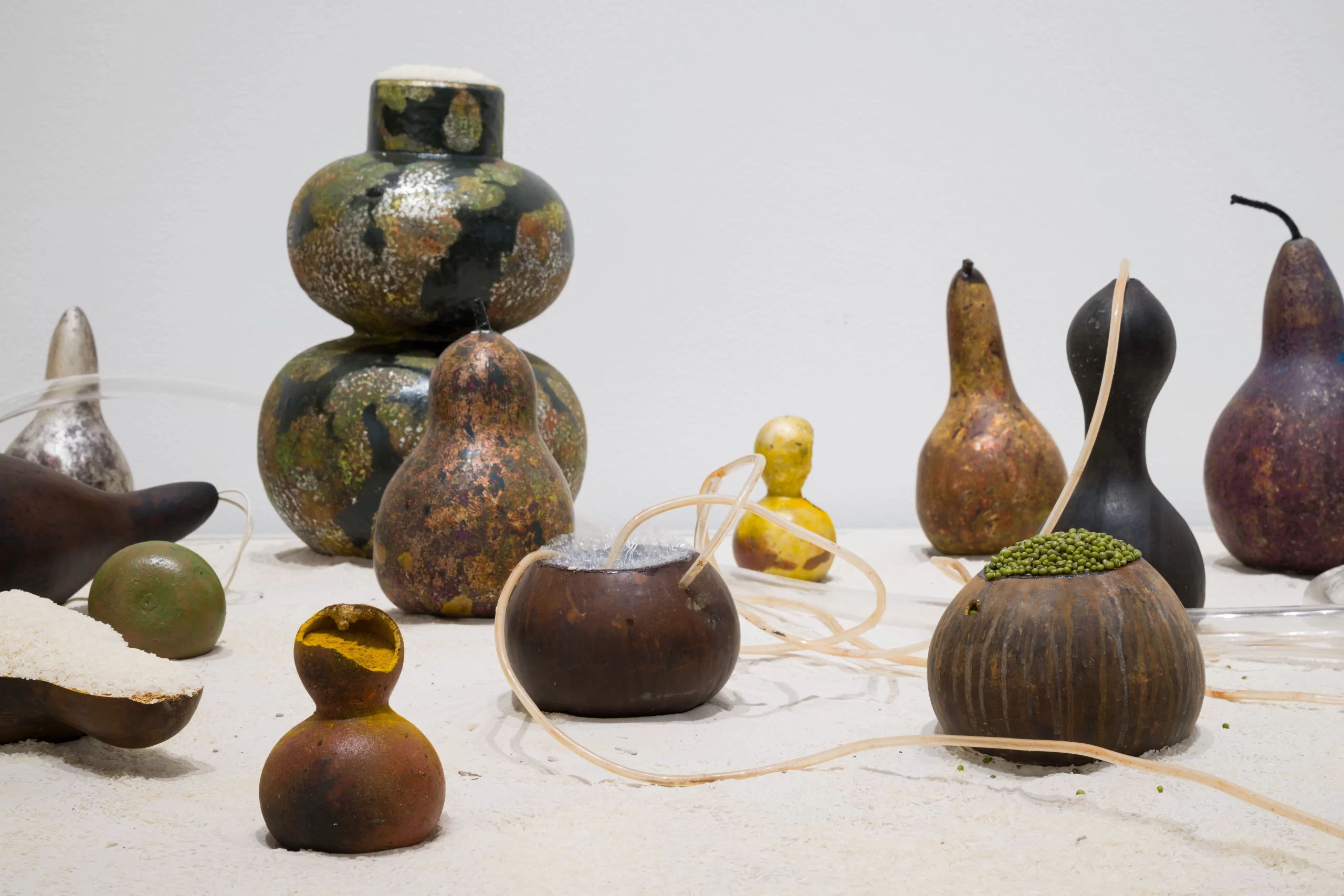
For Truong Cong Tung, creation is a cyclical and collaborative process in which time, temperature, erosion and spirituality play equal parts. Each element in his “A disorientated garden” implies a process of transformation, suggesting an organism whose constituent parts become meaningful and alive through their interaction and the viewer’s presence. Through poetic juxtapositions, the work acknowledges the broader impact of modernisation and industrialisation on Vietnam, the legacies of chemical warfare and ecological disaster, as well as those who have been dislocated from their homes and places of worship. Nevertheless, the work does not act as a memorial but instead suggests hybridity and growth – a communal existence in which objects take on new significance when subjected to subtle processes of natural and cultural transformations.
In Hanoi, I visited Le Giang at her studio where she shared with me several bodies of work. Across her broader practice, Giang has captured the architecture of communal houses, interrogated their colonial histories, and – like Tung – explored shifting cultural perceptions of the natural world. With a strong interest in Vietnamese artisanal traditions and customary beliefs, she works across a diverse range of media, including vernacular techniques such as plaster casting, inlay, paper embossing and more recently, “painting” with gemstones.
In 2020, Giang conducted research in the provinces of Yen Bai and Nghe An in northern Vietnam, both now significant centres of the gemstone trade. There, she observed the process by which artisans create intricate paintings using the discarded, “impure” fragments of gemstones – sorted by size and colour, ground into fine powder and carefully applied over a perspex sheet following a drawing beneath. The pigments are fixed with glue, then scrubbed until they glisten. Giang was particularly struck by the popularity of a genre known as “Majestic mountains and expansive rivers”. While often considered “kitsch”, the paintings hold wide appeal and are believed to symbolise the purity of the natural world, as well as conferring prosperity, longevity, and other blessings to their owners.
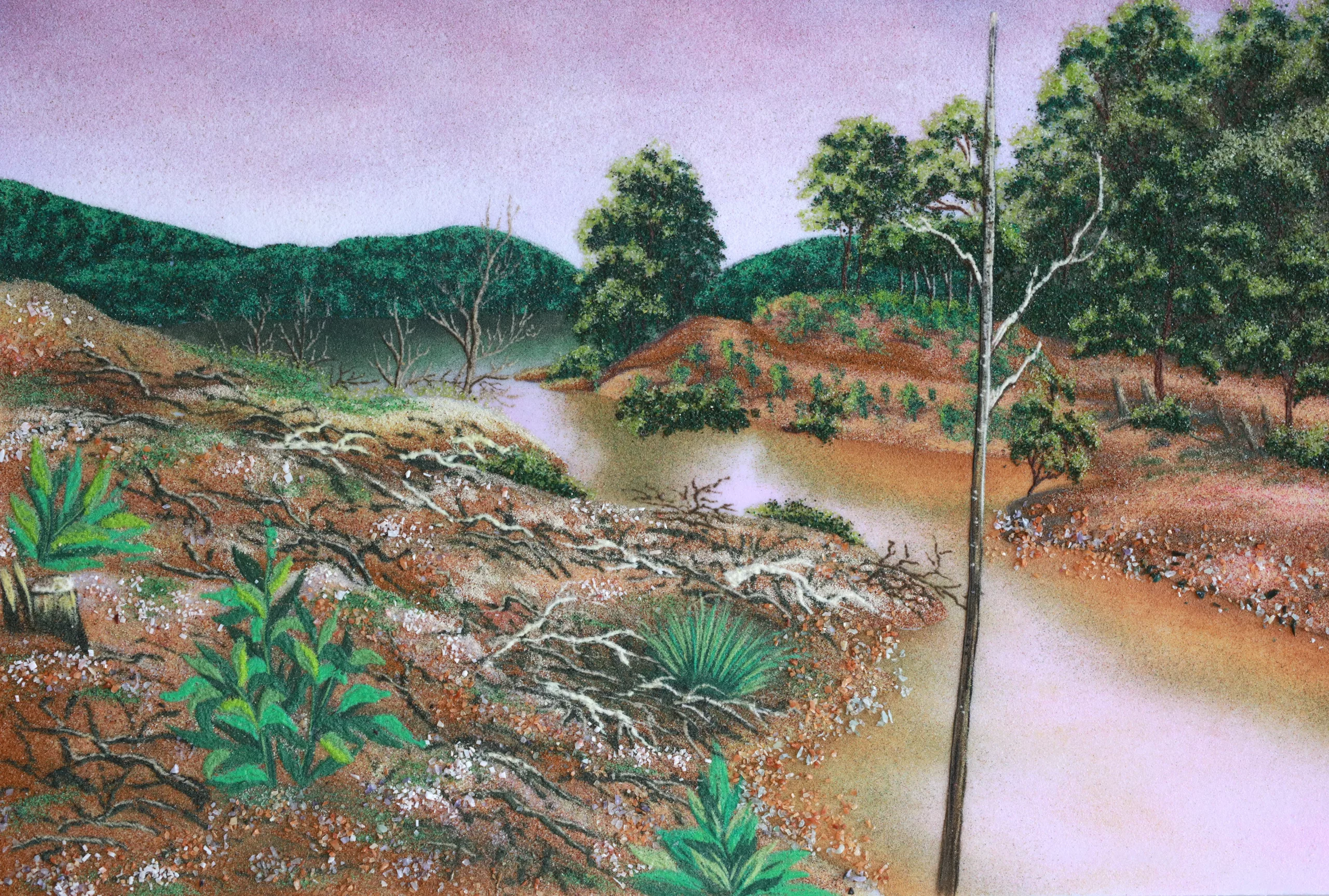
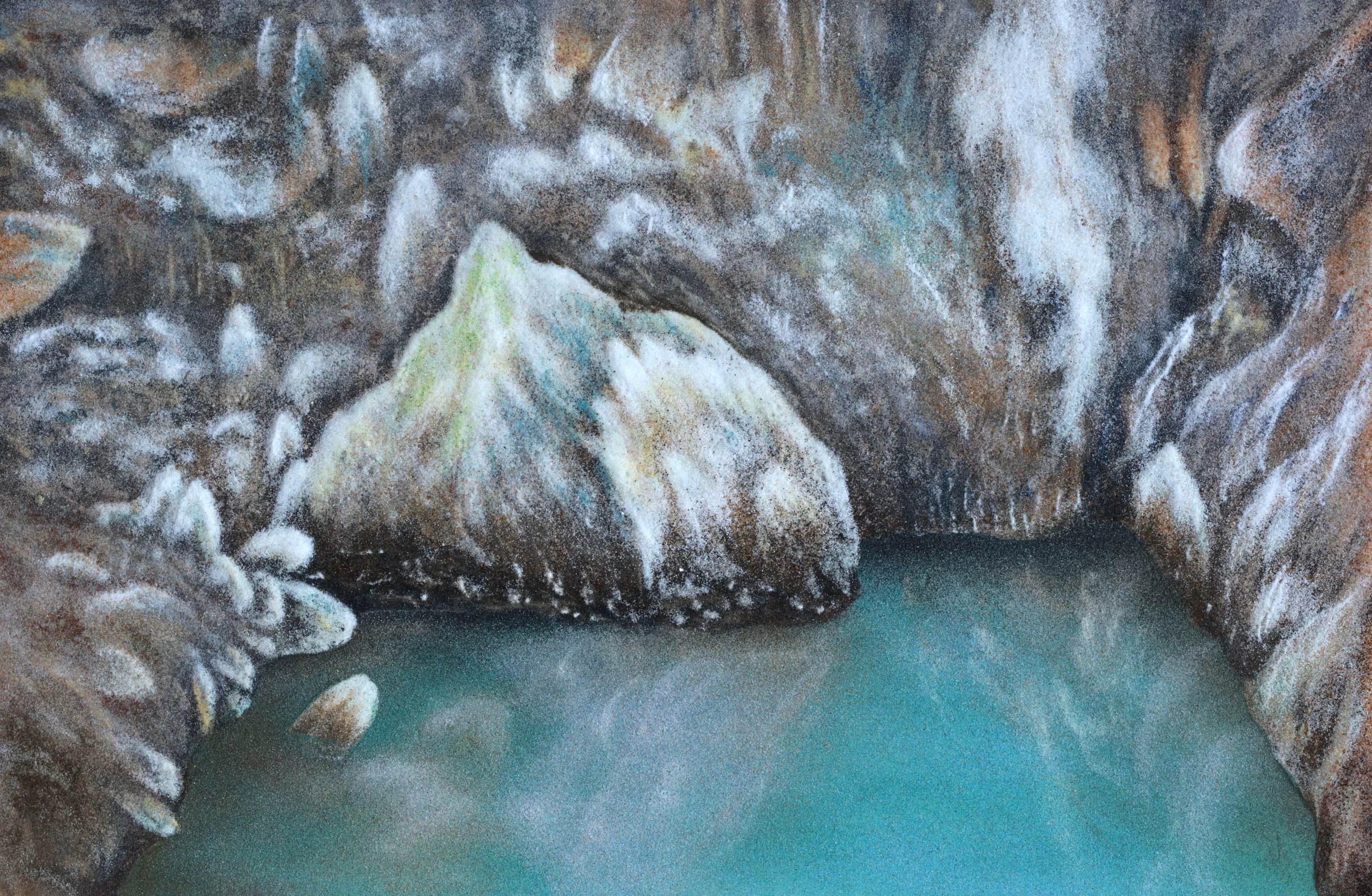
Le Giang’s series of gem paintings, titled after this genre, points to the irony in such cultural perceptions of the natural world. Gem mining has led to erosion, the pollution of lakes and the deforestation of areas considered sacred in local spiritual practices. Some of her gem paintings appear abstract, replicating the surface of the cut gemstones to imply the process of their extraction in the gouging of the Earth. Departing from the distant, awe-inspiring view of a sublime nature, these works use an intimate lens to reveal flaws and fissures. Contrasting with these is a series of representational landscapes that depicts areas ravaged by open extraction mining and pollution. Initially enchanting, with their shimmering surfaces and seductive colours, on closer inspection it becomes apparent that the trees are sickly, barren of leaves; weeds flourish while erosion is widespread. The landscape is suffering. Through this tension, Giang exposes the dissonance between the pristine images of towering mountains and flowing rivers and the darker environmental, social and economic realities that they obscure.
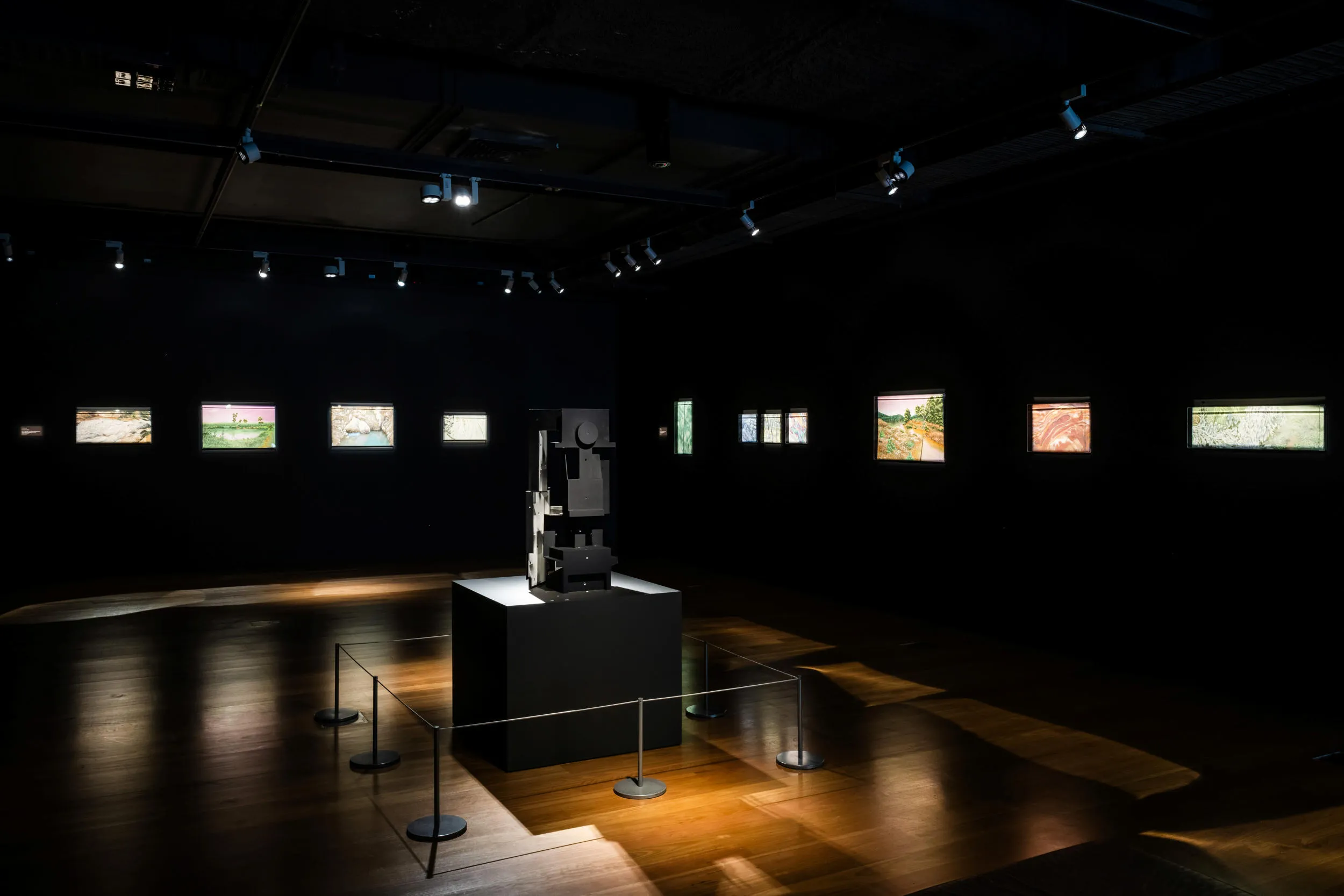
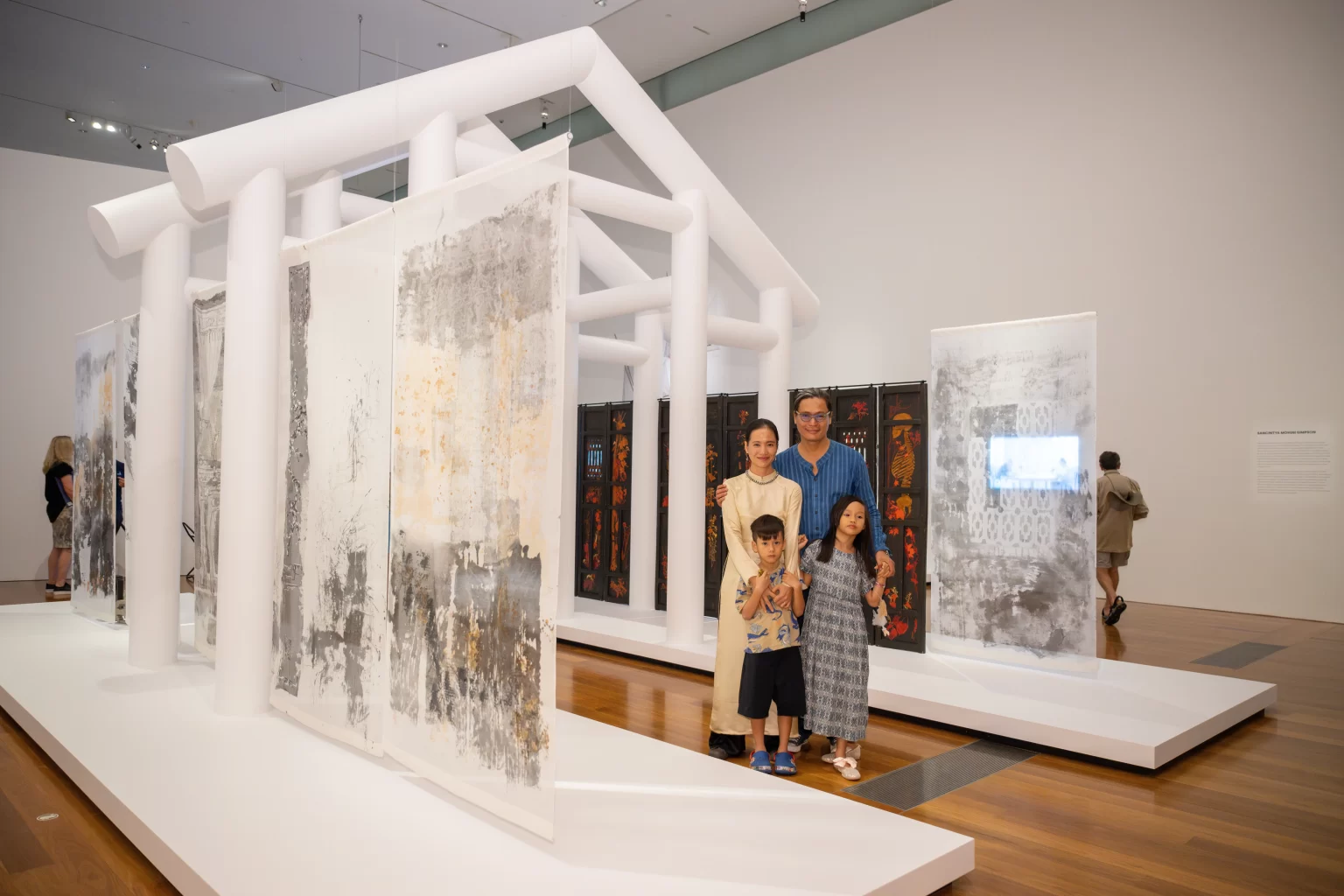
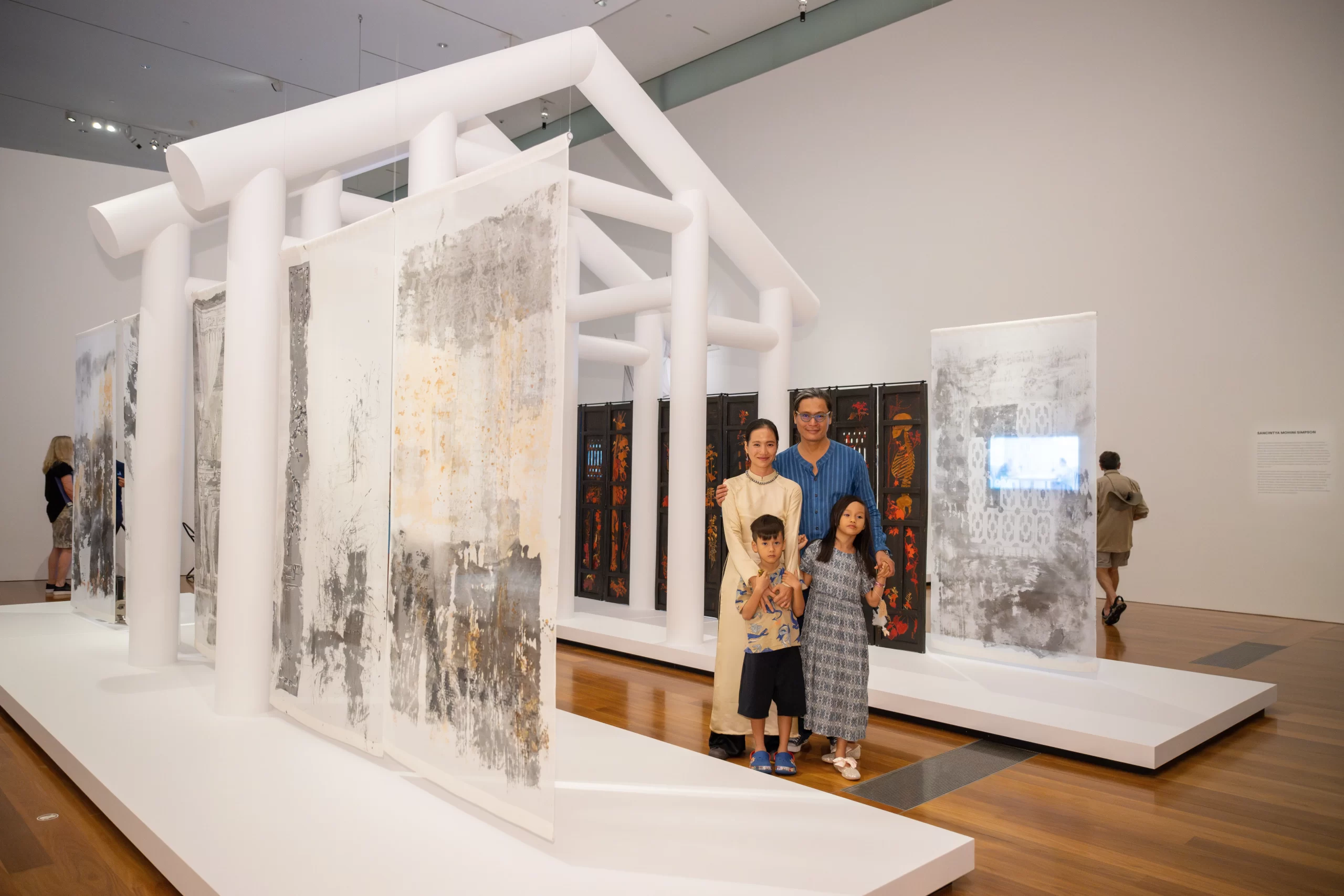
In 2020, Le Thuy and her family left behind their busy life in Ho Chi Minh City and relocated to Hoi An. Her ambitious installation “Echo” (2023) was completed following this move and evokes a ruined house, drawing from the architectural and cultural history of this ancient trading port which has been shaped by centuries of interactions between Vietnamese, Chinese, Japanese, and French influences. Mindful of the threats to Hoi An’s heritage posed by rapid urban development, Le Thuy salvaged nine doors from a dismantled traditional house. Over the course of a year, she transformed them in her studio, applying lacquer and gold leaf to create layered works referencing botanical forms, historical memory, “memento mori”, and pan-Asian religious iconography. The skeleton of a house, comprising roof and supporting posts, was built at QAGOMA to the artist’s specifications, creating a frame for the various components of “Echo”.
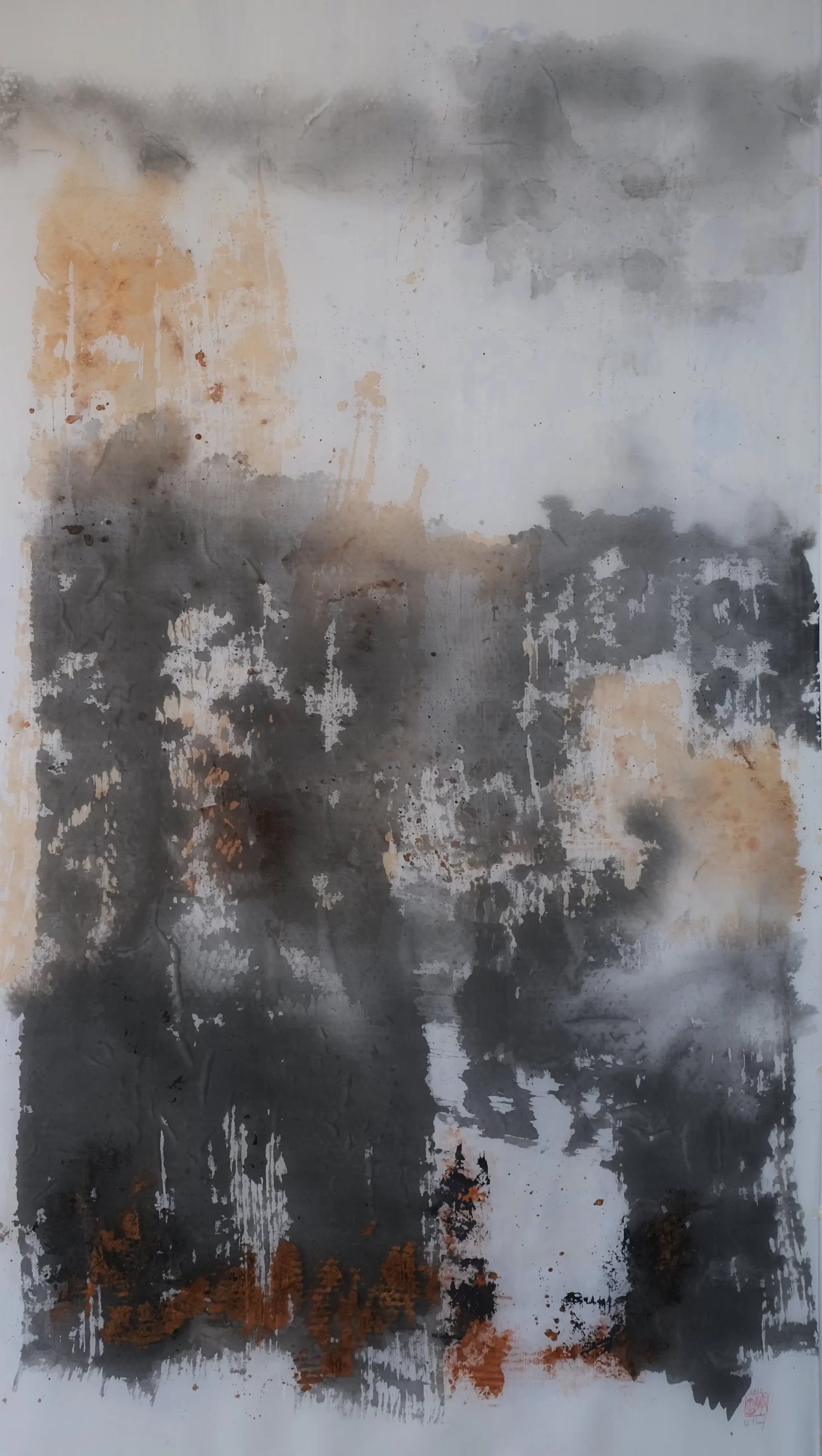
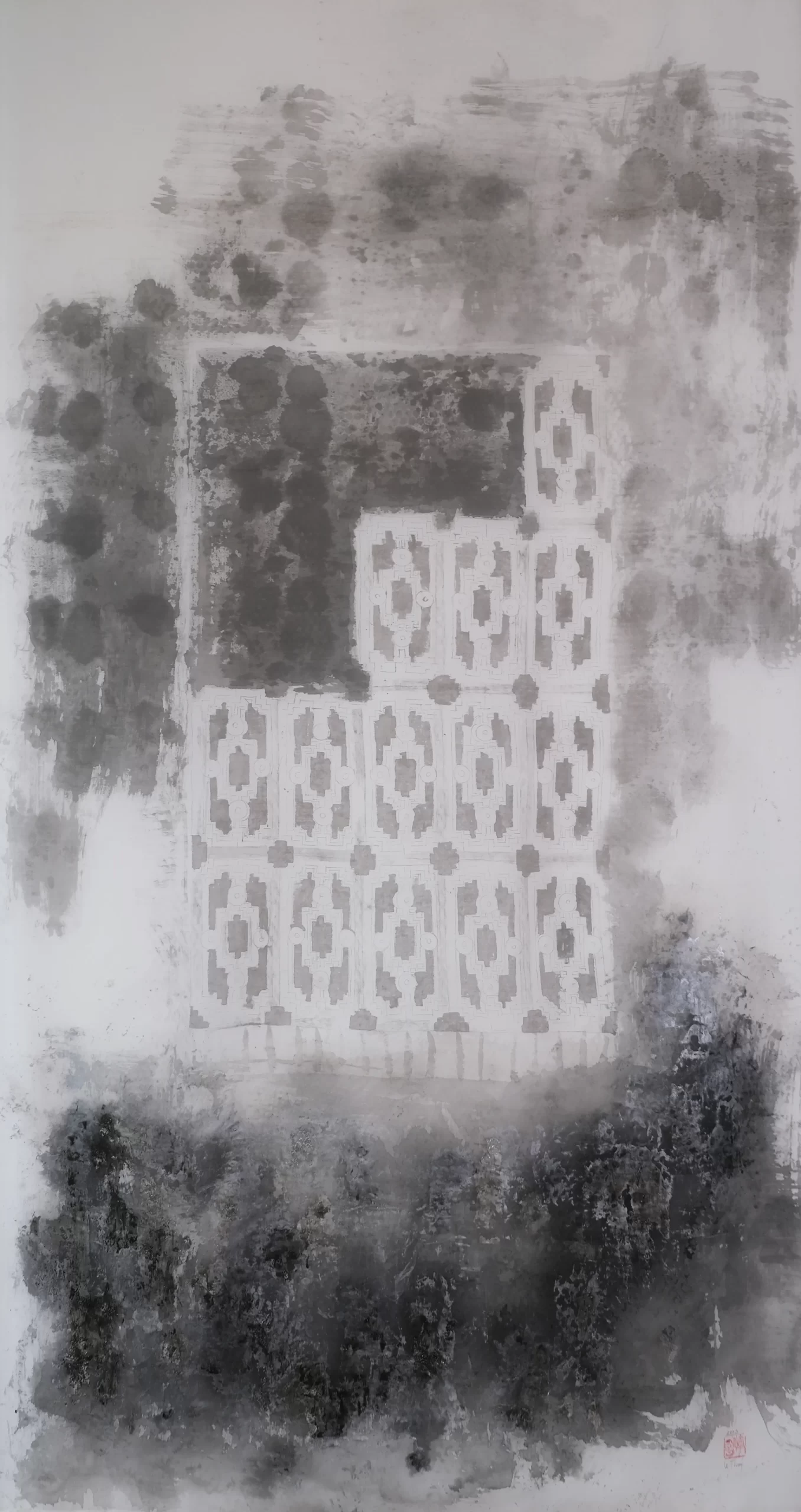
Le Thuy, “Echo” (2023), ink, calligraphy, synthetic polymer paint, and embroidery on silk, 220 x 112 cm. Purchased 2024 with funds from Tim Fairfax AC through the QAGOMA Foundation. Collection: QAGOMA Foundation.
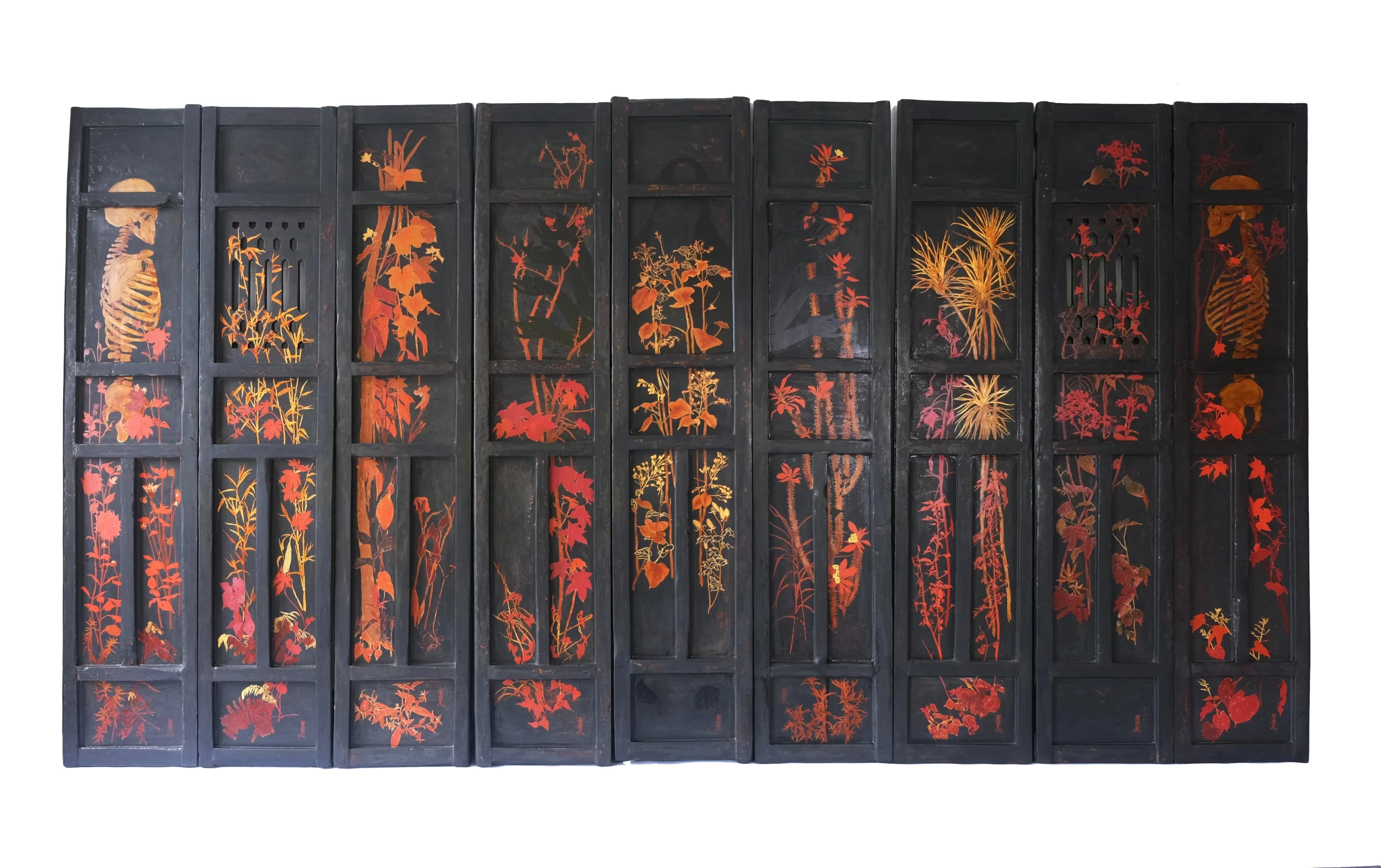
Forming a single wall of the house, each side of the doors offers a counterpoint to the other. One surface bears imagery of war, death and catastrophe, while the other presents scenes of dreams, landscapes and hope. Together, they embody a tension between destruction and renewal, opening and closure. The trees, flowers and animals depicted carry symbolic weight: for example, some plants are medicinal and are associated with healing, yet others are toxic and life-threatening. At the centre of the nine assembled panels, Le Thuy painted a single shadowy female figure with multiple arms, representing the nurturing and protective aspects of the Vietnamese Mother Goddess Worship that has syncretically merged with the worship of the Buddhist bodhisattva Guanyin.
A series of ink and silk paintings form the opposite wall of the house. Combining gestural and representational details, poetry and hand-sewn embroidery, they show family shrines, architectural ornamentation and treasured memorabilia – objects that evoke the presence of absent occupants and offer glimpses into their values, beliefs and aspirations. Nearby, a small grouping of fragmented bricks adorned with lacquer and gold leaf grounds the installation. These tactile remnants echo the brickwork seen in the silk paintings, providing a material counterbalance to their delicacy. The transience of memory and vulnerability of heritage are at the heart of Le Thuy’s “Echo”. In the artist’s words, “It is my hope that through this exploration, we may find beauty in the overlooked and meaning in the forgotten.”
Like Thuy, Bui Cong Khanh lives in Hoi An, though he works for several months a year in Bat Trang where I met up with him. Khanh first became acquainted with the ancient pottery village as a student, and since establishing himself as an artist has returned there to create works in a production house alongside families of intergenerational potters. Khanh started creating his own ceramics in the early 2000s. Referencing the traditional Vietnamese blue-and-white wares, he replaced their characteristic vegetal and foliate motifs with drawings of contemporary Hanoi life at a moment when the impact of globalisation was particularly felt. His early vases were exhibited at APT6 (2009–10) as part of the Mekong Project co-curated with Richard Streitmatter-Tran.
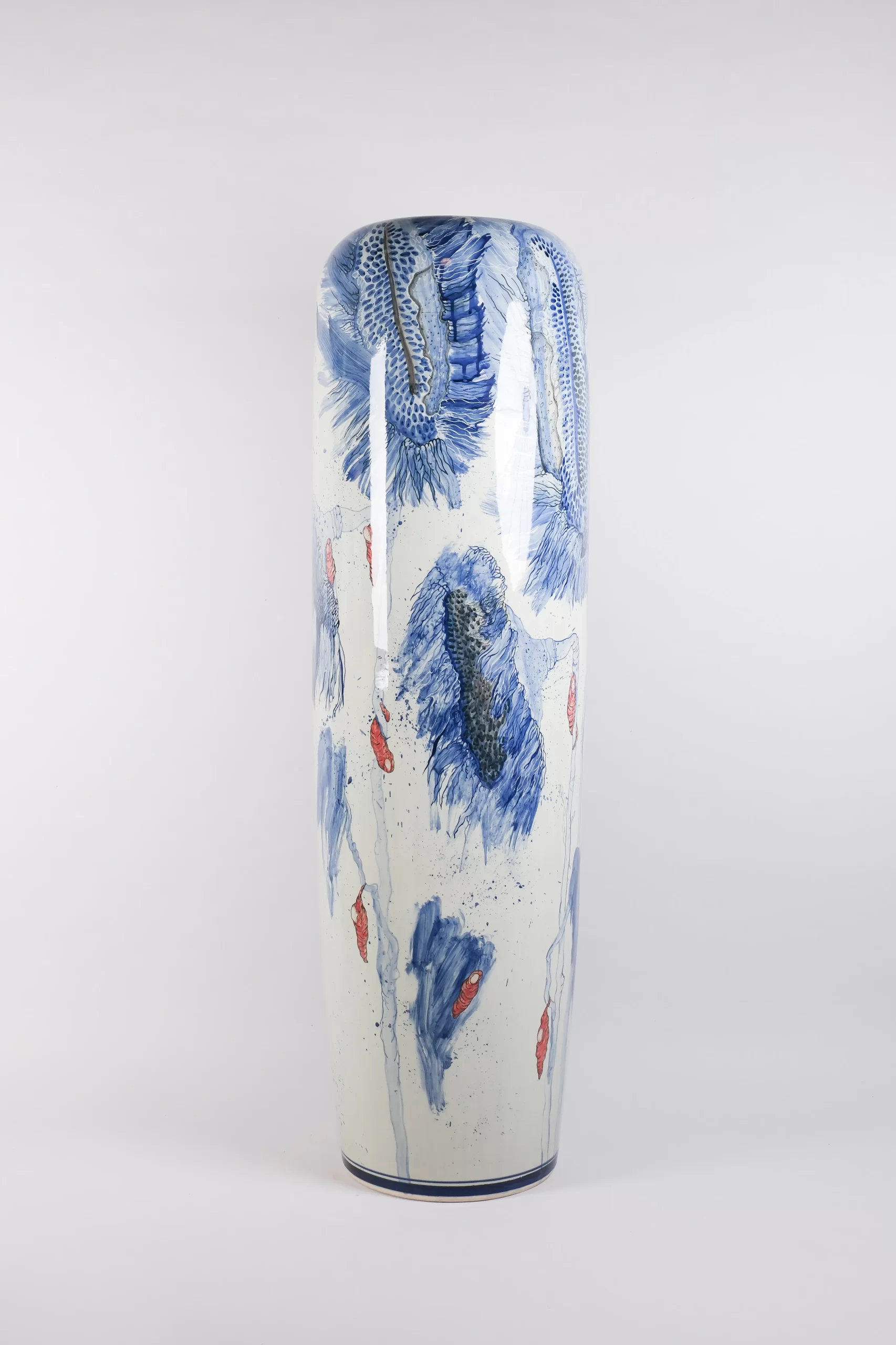
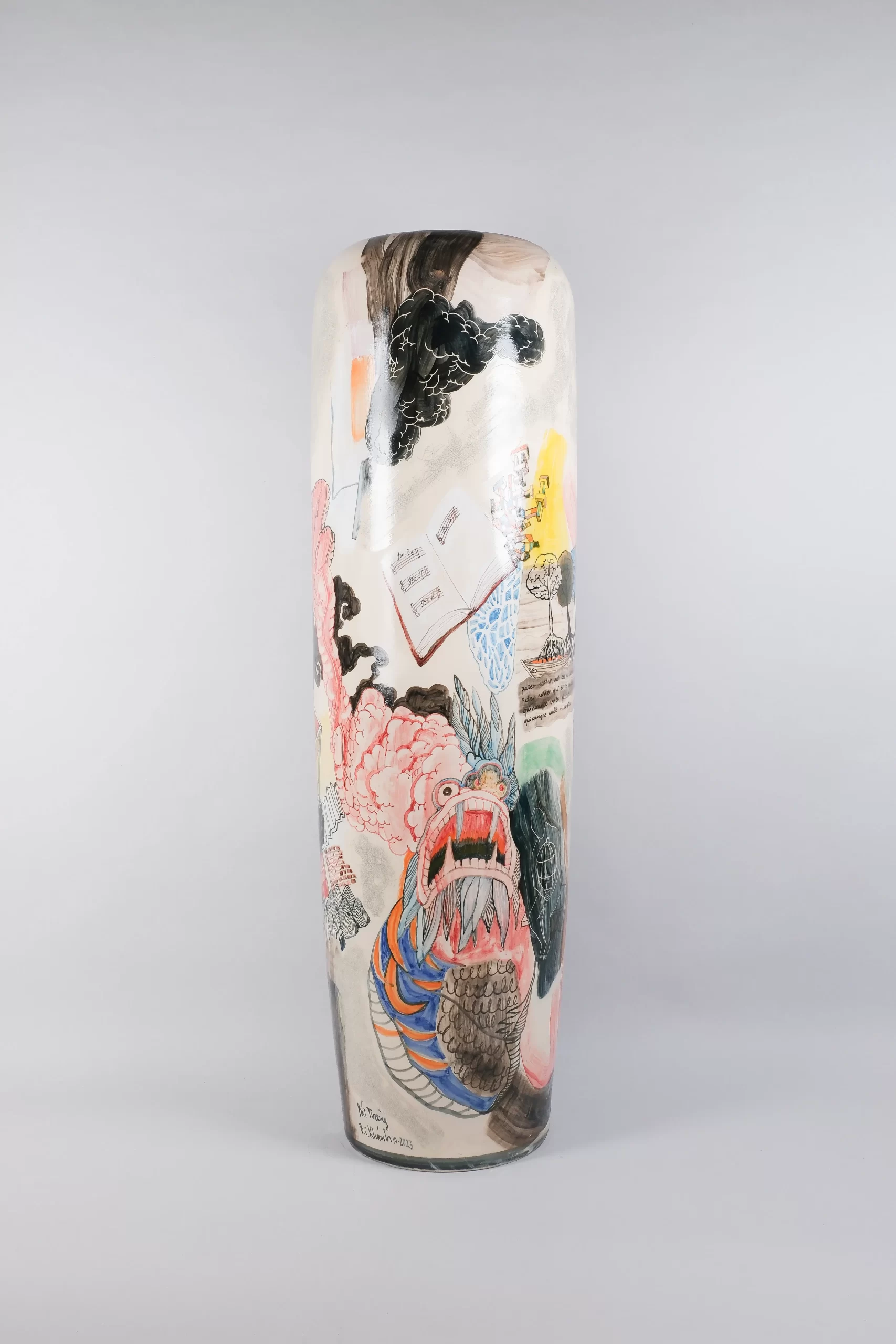
Ever since, the artist has continued to refine his techniques, which result in remarkable bodies of work that are varied in scale, concept and expression. As part of his representation in APT11, Khanh exhibited a group of vases made between 2022 and 2023 alongside a new video work made in Bat Trang. Standing approximately 1.5 metres tall, each of the five vases has a distinctive curved shape and rounded top intended to resemble a bomb. Some display the beautiful ivory-white crackle glaze characteristic of Bat Trang, while others have a glossy finish. Hand-painted dragons, cityscapes, smoke, clouds, colourful human figures, drooping cobalt sunflowers and chrysalis-like human forms adorn them.
The artist’s first venture into film, “Bat Trang Documentation – version 2” (2024) was inspired by the story of how the Latin alphabet came to Vietnam through Jesuit missionaries. Khanh felt the story encapsulated the broader cultural heritage of his country and how it has absorbed multiple influences through trade and exchanges over centuries while still retaining its own distinct identity. The film, also featured in APT11, is both a love letter to Bat Trang and to the unique tonality of Vietnamese language. Blending personal stories with metaphor and references to cultural heritage, his works reflect the legacies of colonisation, war and rapid economic transformation that continue to shape both individual and communal lives in Vietnam.
Born in Australia, Mai Nguyen-Long’s experience of growing up in different countries, including Papua New Guinea and the Philippines, left her eager to discover more about Vietnam – the country of her father’s birth. In the early 1990s, when Vietnam reopened to the outside world, she seized the opportunity to live and study in Hanoi. Upon returning to Australia, she struggled to connect with the Vietnamese diasporic community here. Subsequently, an exhibition of her work at Casula Powerhouse Arts Centre in Sydney resulted in protests and censorship. This was a deeply distressing experience for the artist that cut her off from her Vietnamese heritage for many years. Ironically, despite her role in developing the artist selection for APT2, I first became aware of Mai’s ceramic works through Hanoi-based curator Do Tuong Linh who included her work at the 12th Berlin Biennale.
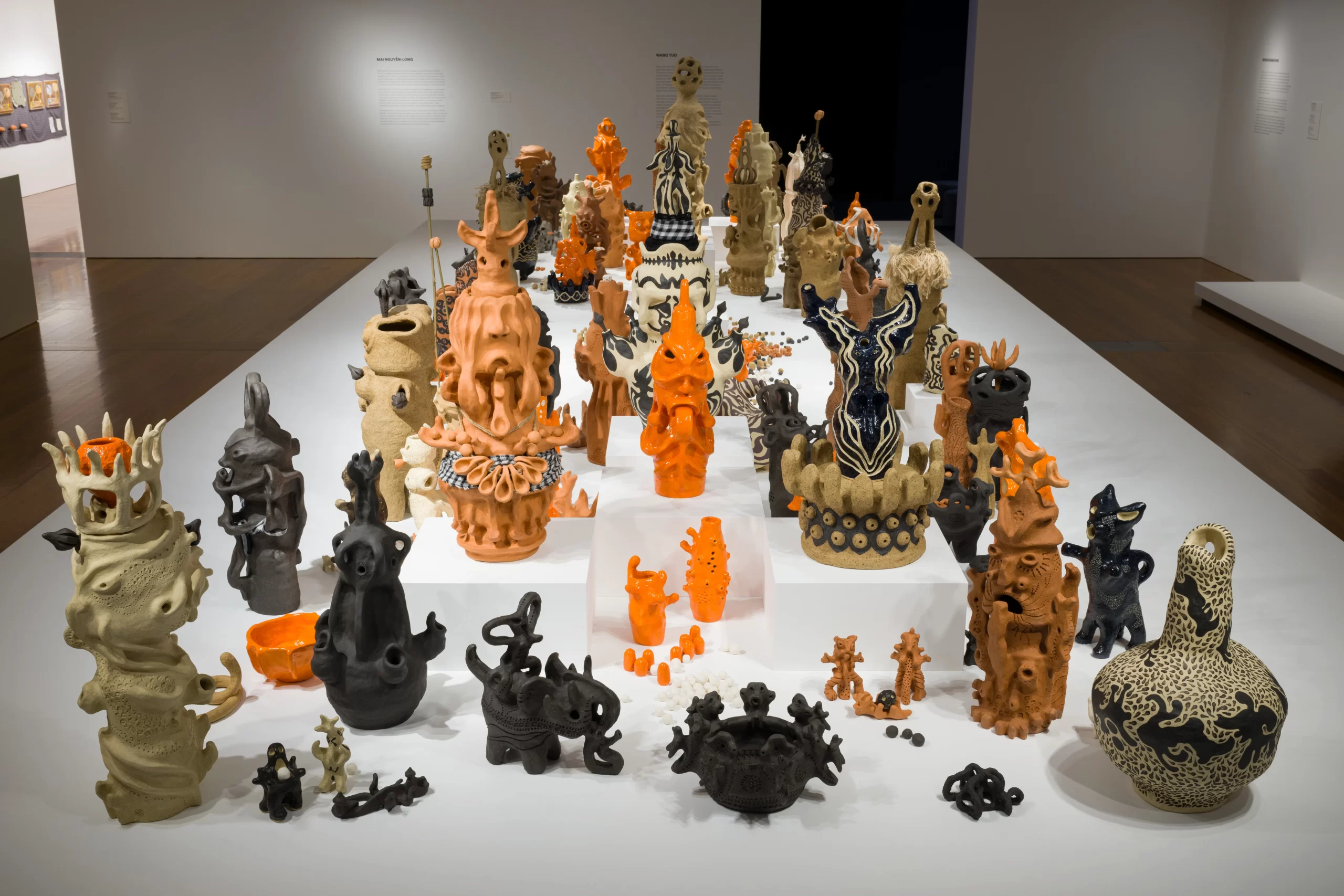
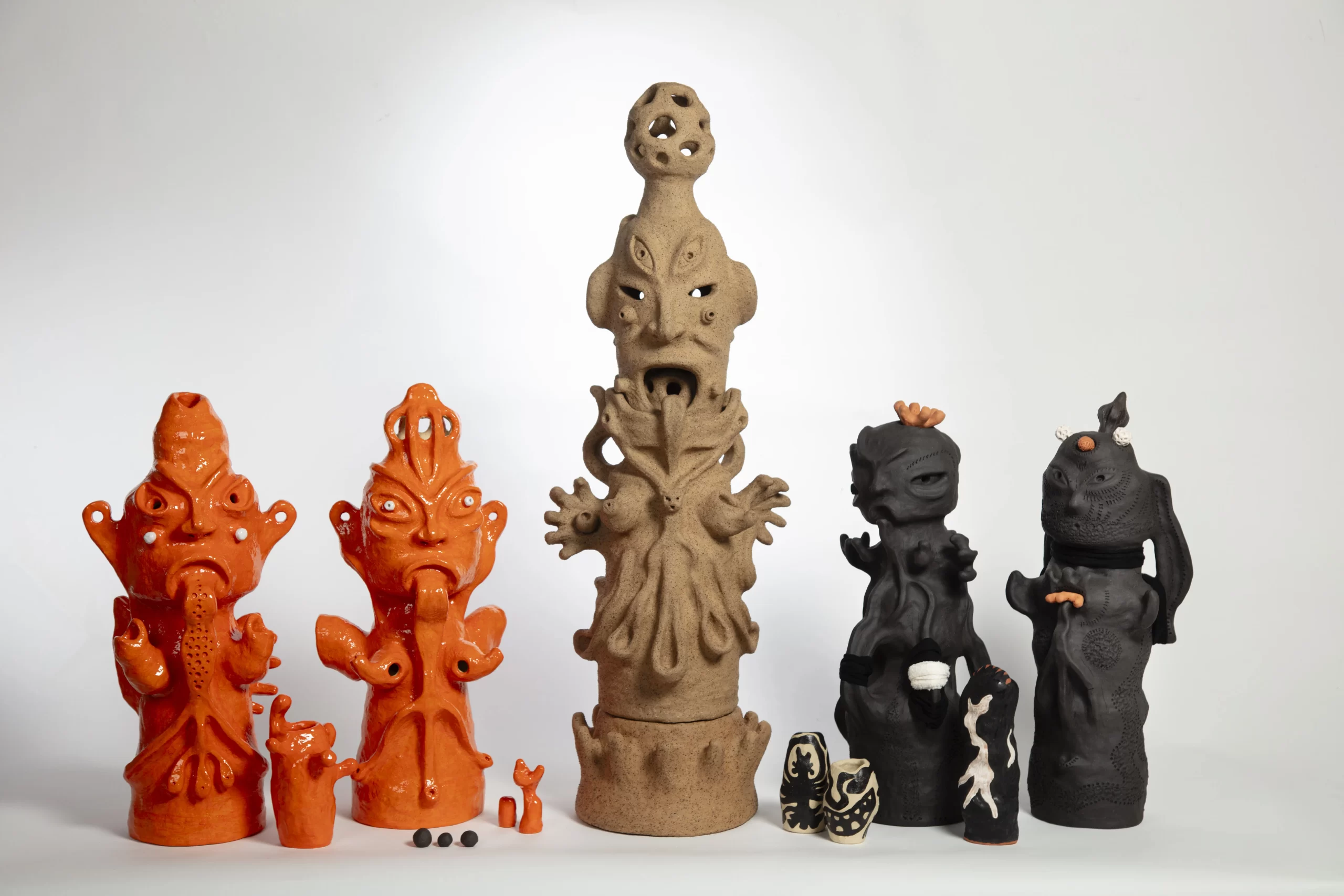
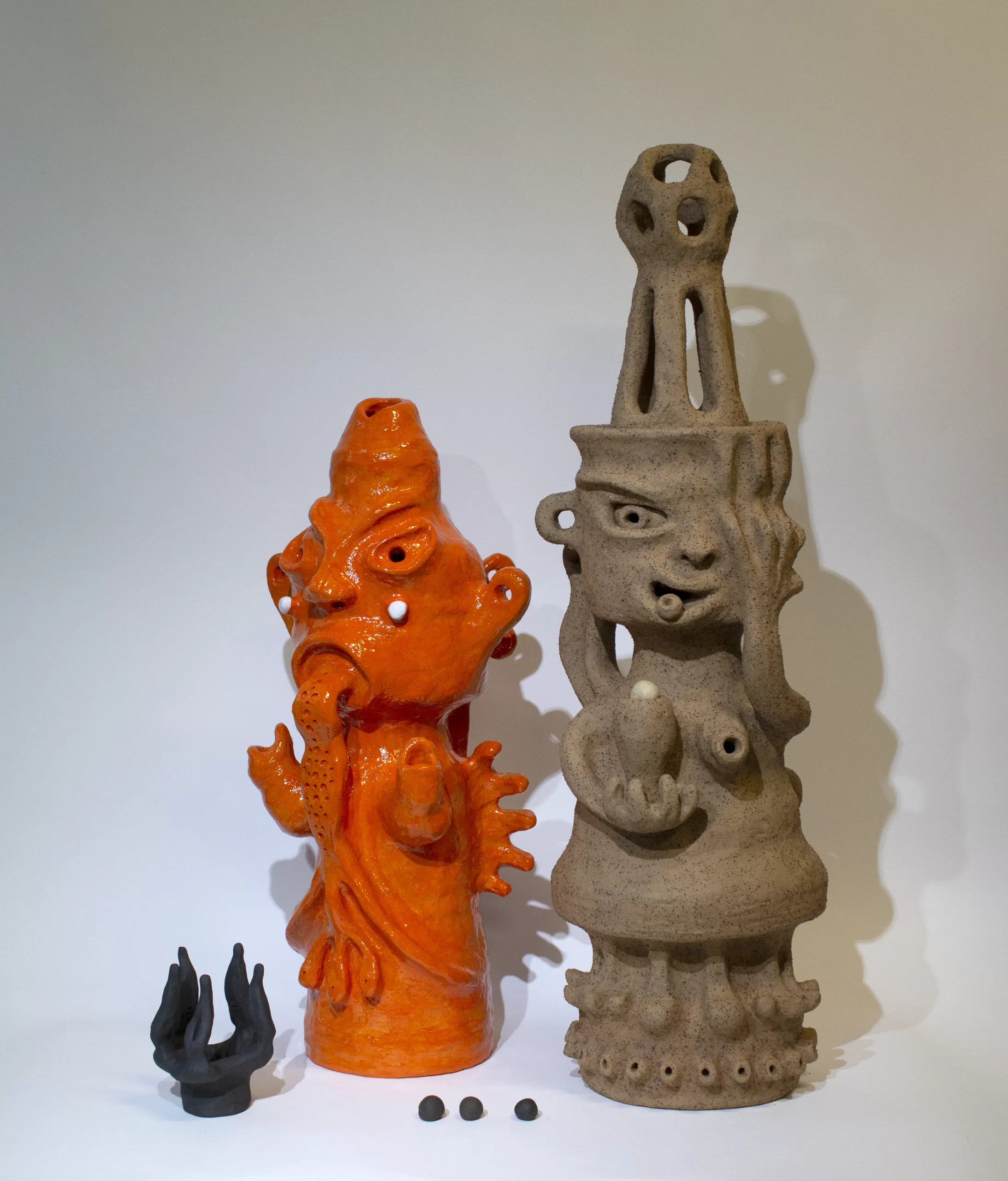
“Vomit Girl” first emerged in the artist’s paintings and drawings as a visceral response to her experience of rejection, signifying not only voicelessness and silencing, but also resistance and a means of healing and reconnecting through humour, wordplay and creative mis-translation. In developing this body of work, Mai returned to Vietnam in 2014, the first time in over a decade, and a year later started working with clay in Bat Trang. She describes her rustic village-associated aesthetics as “moc mac” – an earthy embrace of imperfection in all its manifestations. As a means of reclaiming her cultural heritage, Mai also pursued her interest in Vietnamese folklore and a fascination with the little-known wooden “dinh” (communal house) carvings that decorate local village halls that she first encountered in the 1990s.
Mai regards her “Vomit Girl” ceramic sculptures as “contemporary folkloric forms” and proposes that “contemporary art can draw from folkloric strategies to open up spaces for suppressed, hidden, and new stories to emerge beyond diasporic trauma.” The basis for the body of every “Vomit Girl” is the “Doba” (“dinh” bombshell bell axis) form, a reference to a real bombshell that had been repurposed as a village bell, a gesture of hope and resilience. Elephant fairies, toads, warrior cats, dancing birds, buffalo riders, mudskippers and screaming chickens are some of the captivating forms that emerge to create a refined, systematic and deeply engaging visual language. “The Vomit Girl Project” (2024), shown at APT11, includes many new works from small objects that can be held in the palm of the hand to multi-part figures more than one metre tall, created specifically for the Triennial. Through the medium of clay, Mai forges new connections and associations as a form of decolonisation and creative resistance.
While these artists offer only a glimpse of the breadth of artistic production in Vietnam, several thematic threads can be drawn through their representation of works at APT11. These include the use of local materials; references to vernacular beliefs and folk art forms; responses to the trauma of displacement; the invisibility of minorities; and reflections on the human cost of globalisation. The inclusion of Bui Cong Khanh and Mai Nguyen-Long traces a line of continuity that connects past and present. Their presence in the exhibition speaks to the enduring relationships nurtured over time through the Triennial, and to the evolving, generative conversations that continue to unfold.%
Translation: Hương Trà