Đọc phiên bản tiếng Việt tại đây.
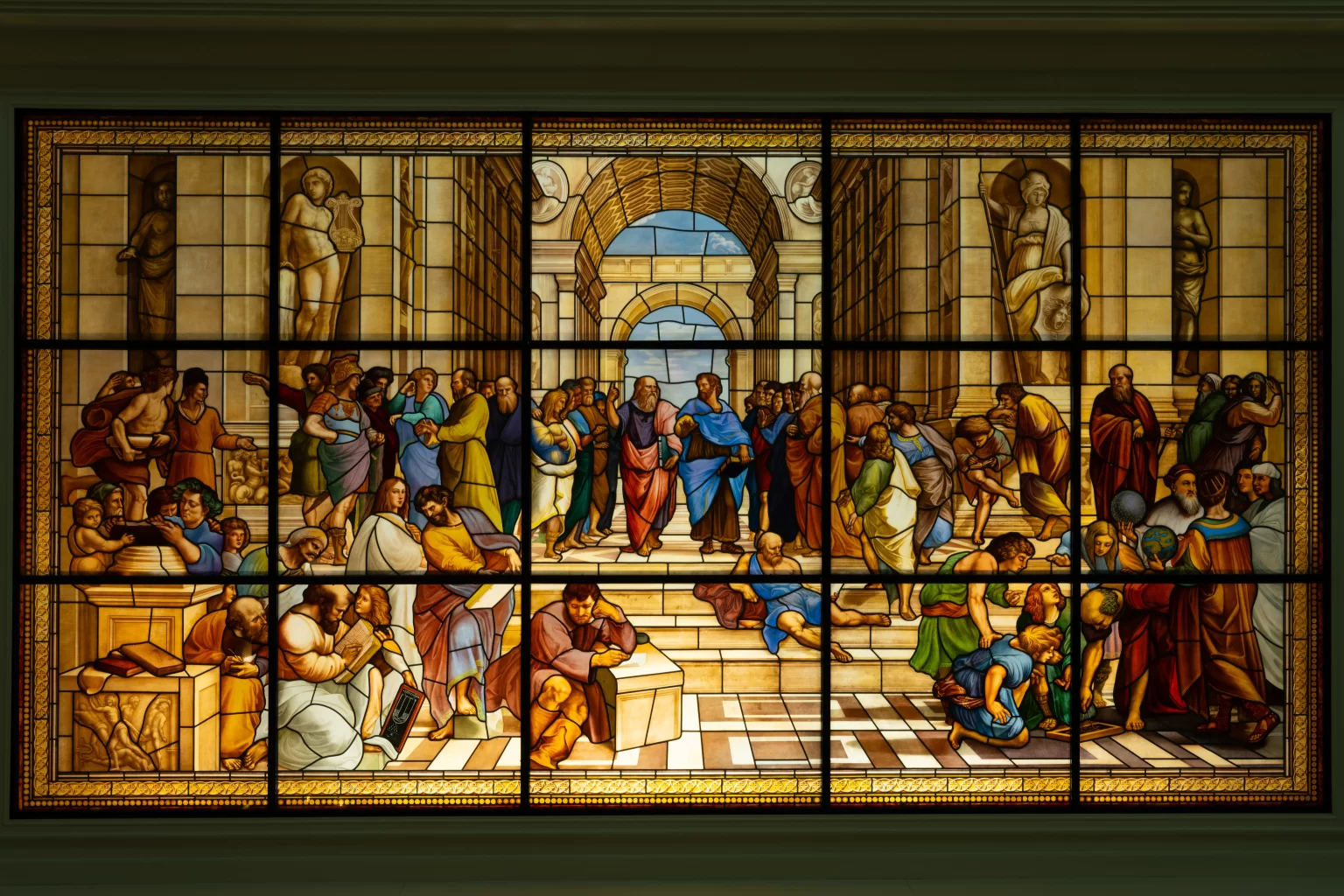
As light passes through the meticulously crafted glass made with layered vitreous enamels, the stained glass version of “School of Athens” at Da Vinci Camp at Vietnam Art Glass Museum comes alive with vivid intensity. Ancient philosophers emerge amidst subtle tonal gradations, breathing renewed vitality into a Renaissance masterpiece, while the original fresco in the Apostolic Palace gradually fades along with the passage of time.
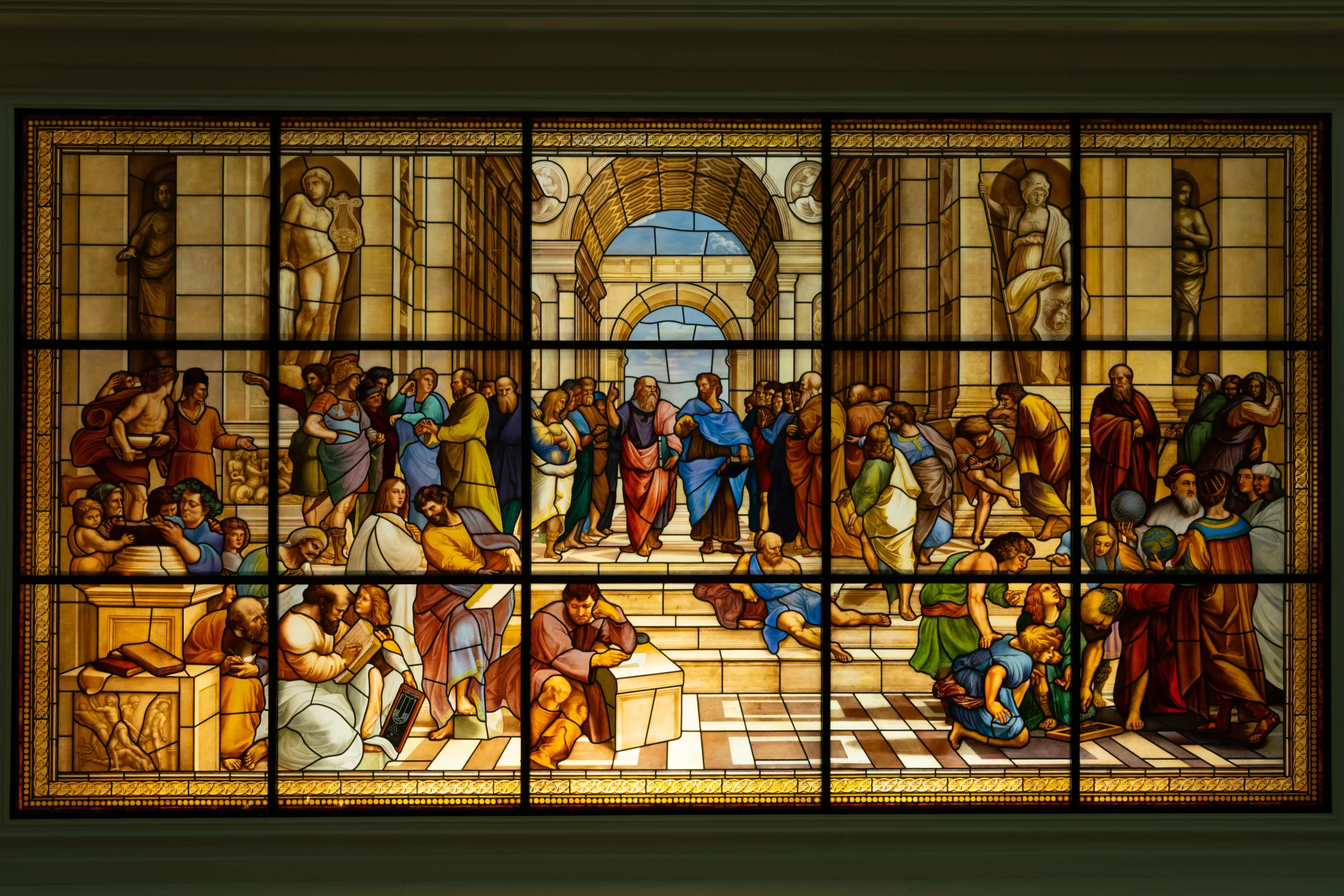
This is a truly unique stained glass adaptation worldwide, derived from Raphael’s fresco begun in 1509 and positioned opposite “Disputation of the Holy Sacrament” to form a harmonious pair symbolising the balance between faith and reason. This concept is credited to Mr Nguyen Xuan Thang, a diplomat, collector, and founder of the Museum, who had pioneered a bold creative endeavour without precedent, driven by his desire to bring a world heritage masterpiece to Vietnam through the medium of stained glass.
As a tribute to mankind’s intellect, “School of Athens” assembles over fifty outstanding figures from Greco-Roman antiquity including Plato, Aristotle, Pythagoras, Euclid, Socrates, Heraclitus, and Ptolemy. Raphael had ingeniously borrowed the likenesses of Renaissance luminaries to embody these classic icons, with Leonardo da Vinci appearing as Plato, Michelangelo as Heraclitus, and the master himself rendered in a self portrait at the far right of the composition. The scene unfolds in a grand architectural space under soaring vaults and monumental columns. Rather than arranging figures in the familiar processional style of sacred paintings, Raphael placed them in an eternal dialogue, where ideas never cease to collide and evolve.
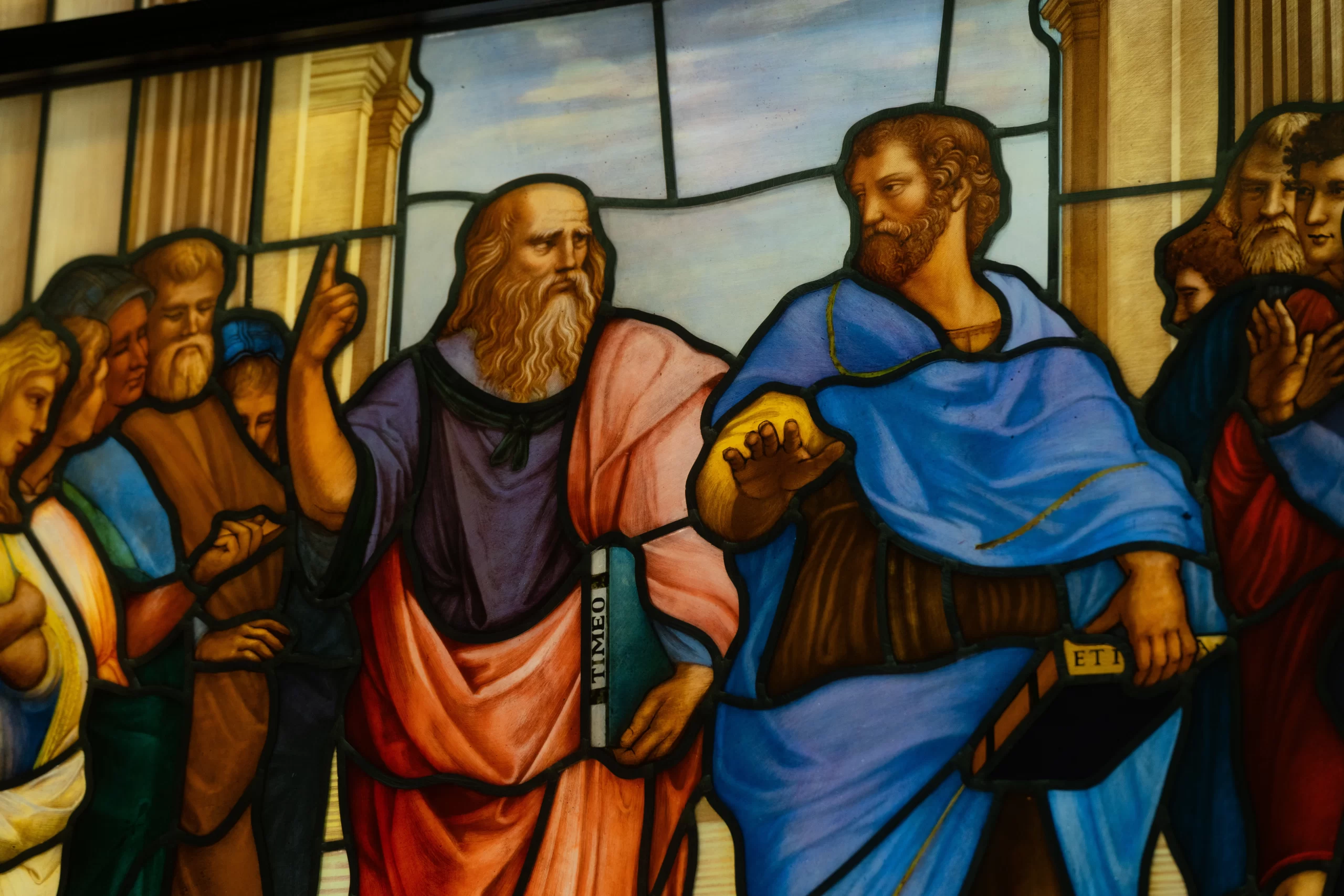
Collector Nguyen Xuan Thang has long held a profound admiration for “School of Athens” and nurtured an ambition to bring this work into his private museum space. He was acutely aware of the project’s formidable challenges, even describing it as “a reckless venture, if not outright folly,” given that the creation of stained glass differs entirely from traditional oil painting. He personally recomposed the work using digital tools, reducing its dimensions to 600 × 320 cm compared to the original 770 × 500 cm at the Vatican, shifting upper details downwards to suit the display plane while preserving the full cast of characters and the original spirit.
Guided by the paramount criterion of preserving the essence of Renaissance art, Nguyen Xuan Thang had selected artist Ho Vuong, who in turn assembled a team of young yet highly experienced painters specialising in the restoration of stained glass in churches built during the French colonial period. He placed complete trust in Vietnamese craftsmanship to execute a project deemed two to three times more difficult than classical stained glass. The outcome is the world’s first stained glass version of “School of Athens”, a unique, one-of-a-kind work that overcame immense technical risks and enormous costs to emerge as a daring, unprecedented experiment.
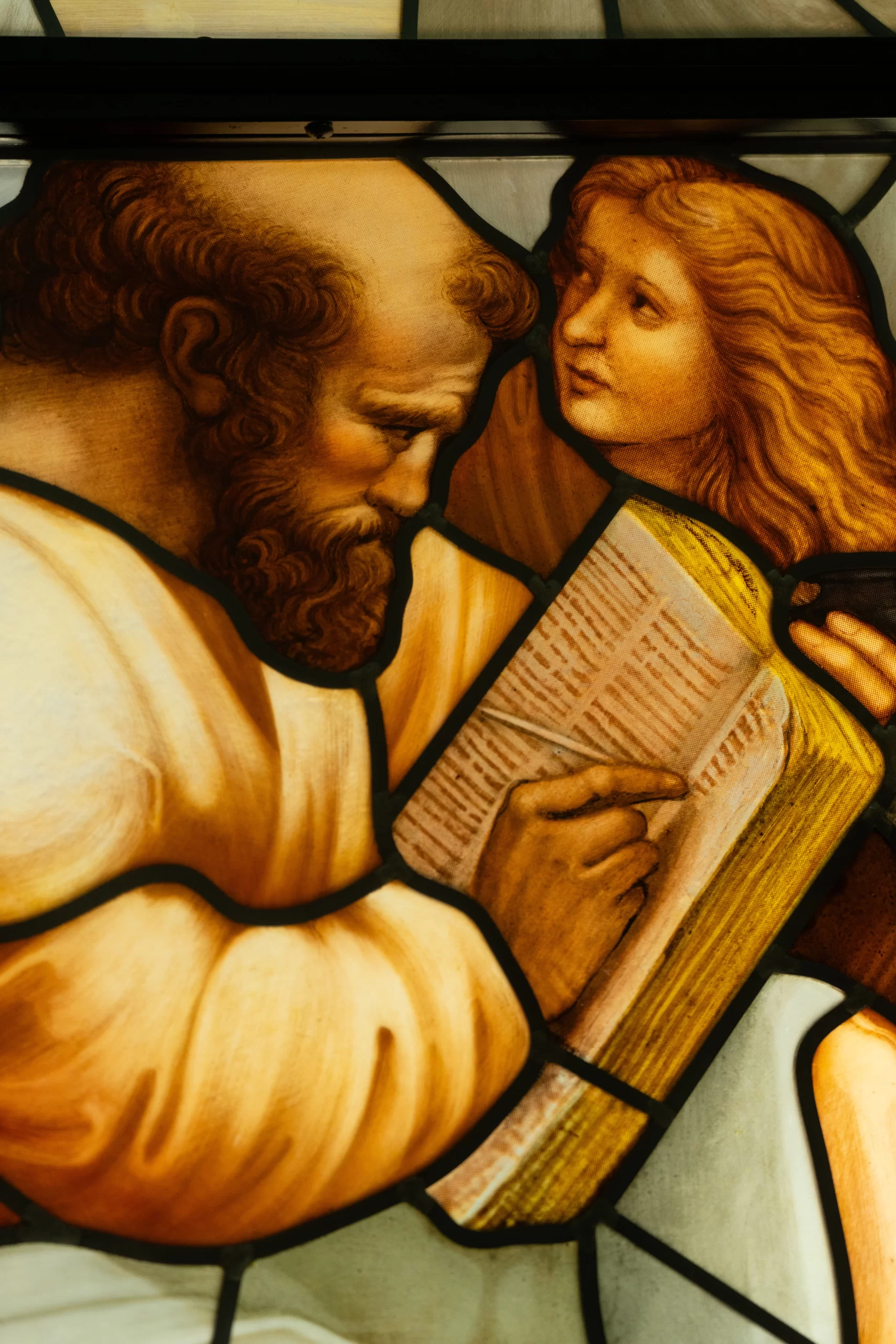
The adaptation from fresco to stained glass posed the greatest challenge which demanded near absolute precision and perseverance from design to fabrication. Raphael’s original employs oil painting with delicate, interwoven layers of colour, true to Renaissance spirit. In contrast, traditional stained glass relies on the technique of grisaille, which entails applying a vitreous paint – typically a greyish or brownish black enamel – to a monochrome or lightly tinted glass to emphasise form and volume, thereby creating a sense of three dimensionality when viewed in transmitted light.¹
For this stained glass version, the collector chose not to employ the grisaille method and instead used multi-layer enamel painting, a technique that became widespread from the 16th century onwards. This approach allows for a more complex and colourful imagery by applying multiple successive layers of coloured enamels, vitreous paints pigmented with metal oxides, to each piece of glass, thus achieving diverse and vivid hues, particularly in ranges such as deep blues, purples, greens, and others. Five to eight layers are applied sequentially and fired repeatedly at temperatures of 600 to 800 degrees Celsius, allowing the enamels to fuse into the base glass and create permanent unity.²
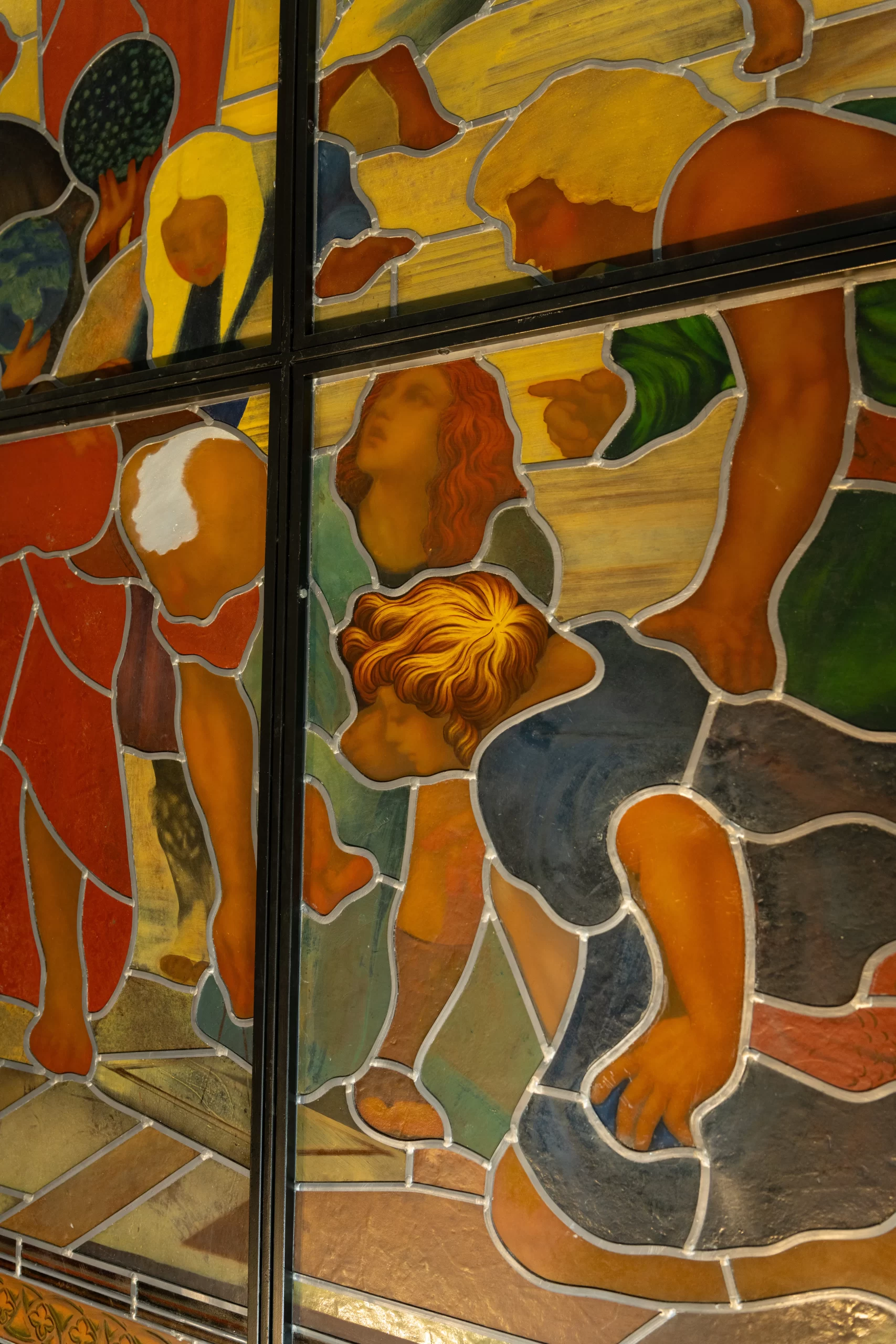
Each enamel layer requires rigorous control as colours invariably shift during firing depending on kiln temperature, dwell time, and interactions between layers. The ultimate result only reveals itself once pieces are cooled and removed from the kiln. Glass cracking or tonal deviation are constant risks, and many pieces had to be rejected despite months of meticulous labour. Altogether, the entire project spanned approximately five years, with thousands of glass pieces cut, enamelled, fired repeatedly , and cooled in a stringent process, demonstrating the scale and rigour of an unparalleled experiment in Vietnamese stained glass practice.
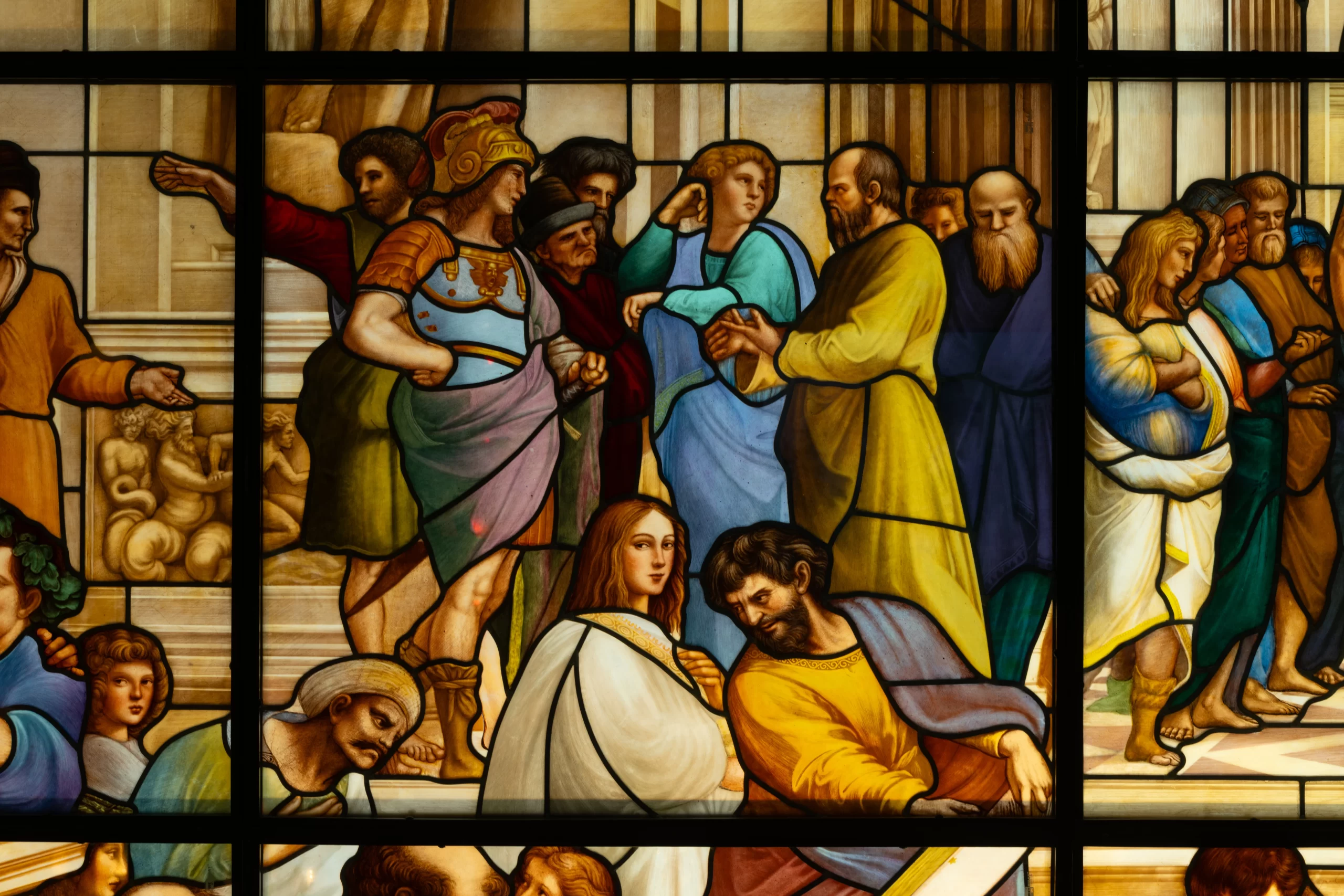
Another distinctive feature of this artwork lies in its handling of nearly fifty faces with rich and varied expressions, an approach traditionally considered taboo in stained glass art, where sacred panels rarely permit such dense concentrations of facial features and emotional nuances. Achieving this density required meticulous and sophisticated calculation of the composition, which rendered lead lines almost invisible – a feat only attainable through the team’s long-accumulated expertise in restoring antique stained glass. Consequently, backlighting not only makes the work more radiant but also revives the beauty of five centuries past. This is the unique privilege of stained glass, where light becomes an integral structural element of the artwork, unlike frescoes, which remain vulnerable to light, humidity, and the erosive effects of time.
The stained glass “School of Athens” stands as a highlight at Vietnam Art Glass Museum in Ba Vi (Hanoi), founded by collector Nguyen Xuan Thang after more than 40 years of collecting, encompassing over 2,000 works from renowned stained glass hotspots such as Tiffany, Mayer of Munich, Murano, Bohemian, etc. Spanning more than 2,000 square metres, the museum is Vietnam’s sole dedicated space for stained glass, extending beyond exhibition to encompass research, education, encouragement of contemporary creations, and promotion of East-West cultural exchange.
Words & Translation: Luu Nguyet Linh
[1] Noemí Carmona, M.A. Villegas, and J.M. Fernández Navarro, “Study of glasses with grisailles from historic stained glass windows of the cathedral of León (Spain),” in “Applied Surface Science,” Vol. 252.16, Elsevier (2006), pp. 5936–5945.
[2] O. Schalm, V. Van der Linden, P. Frederickx, S. Luyten, G. Van der Snickt, J. Caen, D. Schryvers, K. Janssens, E. Cornelis, D. Van Dyck, M. Schreiner, “Enamels in stained glass windows: Preparation, chemical composition, microstructure and causes of deterioration,” in “Spectrochimica Acta Part B: Atomic Spectroscopy,” Vol. 64.8, Elsevier (2009), pp. 812–820.