Đọc phiên bản tiếng Việt tại đây.
In contemporary art, artists increasingly enrich their creative language with diverse mediums such as the body, installation, multi-channel video, found objects, everyday items, or even readymades. In doing so, landscape becomes part and parcel of the work, allowing artists to interact with viewers in various ways. Through the works currently on display in Taiwan (China) by three artists – Ljalje’elan Patadalj, Ciwas Tahos, and Tuan Mami – this article explores how the spatial, material, and ecological landscapes within these works engage with viewers. It argues that the viewer’s experience of “viewing-reading” the artworks takes shape and transforms through sensory and imaginative engagement as they move alongside and within the artwork.
Traversing through Temahahoi
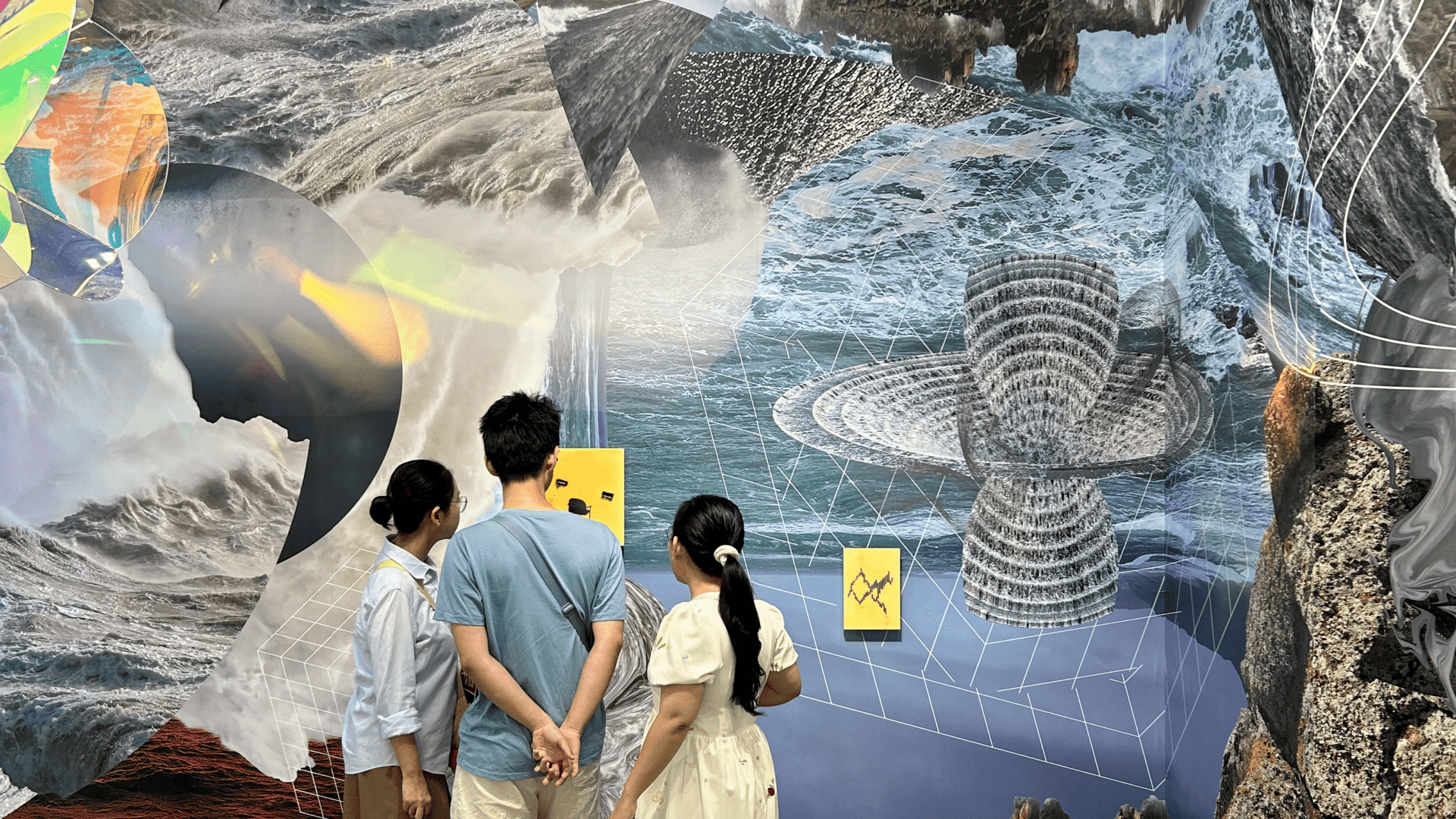
In the exhibition Yuri – Until We Touch Our Emotional Quadrants in Hsinchu City, two video works sharing the title Pswagi Temahahoi (the 2022 and 2026 versions) by Ciwas Tahos are displayed at two separate venues – UP Gallery and the Hsinchu City Art Gallery. A similar approach is taken with works by artists Petra Totten and siren eun young jung, fostering a dialogue between multi-channel projections across different spaces.
According to Ciwas Tahos, the word “Pswagi” in the Atayal language implies the use of light and shadow as a technique, while “Temahahoi” is the name of a place deep in the forest. The Atayal oral tradition has passed down many versions of Temahahoi. However, many Chinese descriptions of this place are based on a binary view of gender, and some Japanese anthropological archives even categorise this narrative as mythology. In the form of contemporary art and moving images, Ciwas Tahos retells these stories through the lens of an Indigenous artist and member of the LGBTQ+ community.
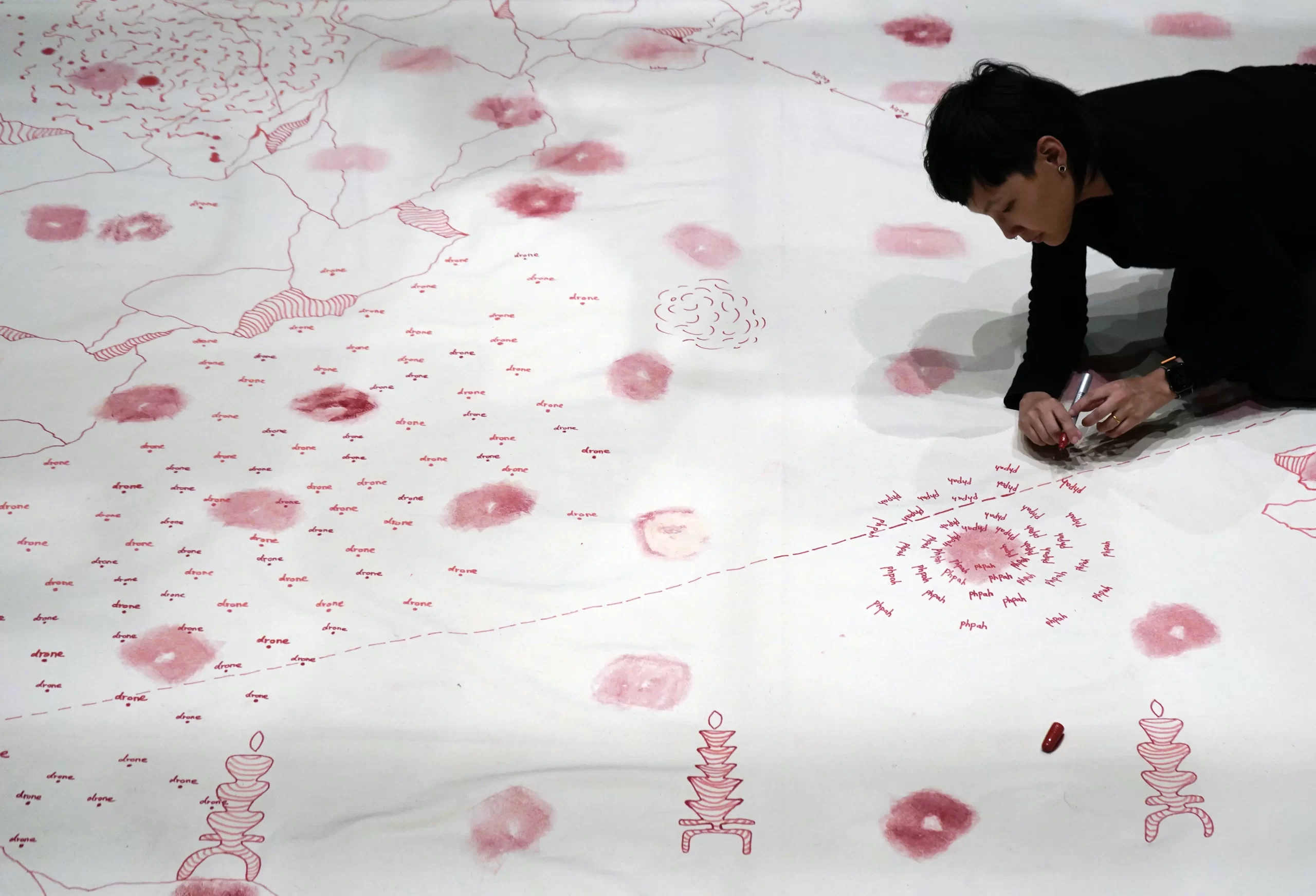
In Finding Pathways to Temahahoi series, the 2022 video tells the story of a group of women living deep in the forest who can conceive through the wind and are protected by wild bees. The 2026 edition continues the Temahahoi story through another version, a recount of a male hunter who wanders into this deep forest area and disappears. In addition to narrative elements, the videos incorporate sound and performance footage depicting a group of gender-nonconforming performers playing multi-pipe ocarinas together.
Following the journey, viewers are left wondering: Is this place real? Will the artist find Temahahoi? In the video at UP Gallery, Yumin, an Atayal elder, takes both the artist and viewers into his search for wild honey through the indigenous knowledge of observing sunlight and shade on the mountains. Meanwhile, the 2026 version exhibited at the Hsinchu City Art Gallery continues to take viewers on the same journey, but this time guided by the artist. As viewers move from one gallery to another, the images seen in the video, installations in the museum, and the outdoor landscape are all remembered and interwoven in their memory.
Instead of exhibiting the two video works in a linear chronological order, this curatorial approach transforms the exhibition space into part of the artwork itself. The works appear fragmented when viewed individually at each location; conversely, they become multilayered and polysemic when experienced across both venues. Notably, bodily movement becomes a condition for engaging with the work, and the act of walking allows the depth of the two videos to emerge. Viewers do not stand outside the artwork but move within it, and their reading of the artwork reveals the path which has led them to that interpretation.
Material voices in Ljalje’elan Patadalj’s visual language
First exhibited at the 2025 Green Island Biennial, artist Ljalje’elan Patadalj’s work Hundred Forms, Constructed Histories (2025) is inseparable from its original context. Memories of Green Island recall the journey of resilient souls who fought through periods of historical upheaval and societal change. As both the source of inspiration and the site of its debut, the island serves not only as a backdrop, but also as a medium for evoking memories. Without representing any specific event, the work weaves together numerous details that allow viewers to creep subtly into the past.
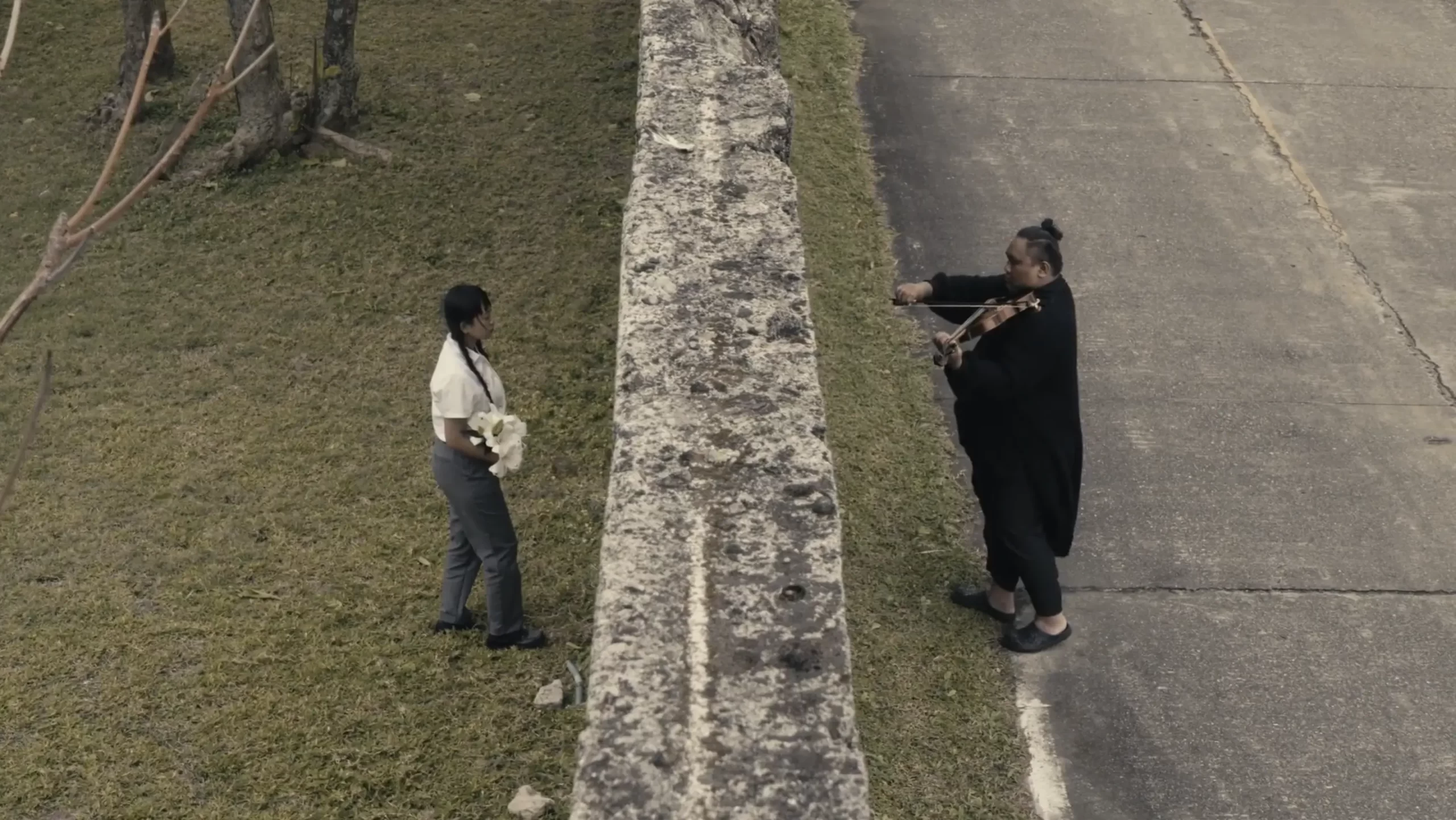
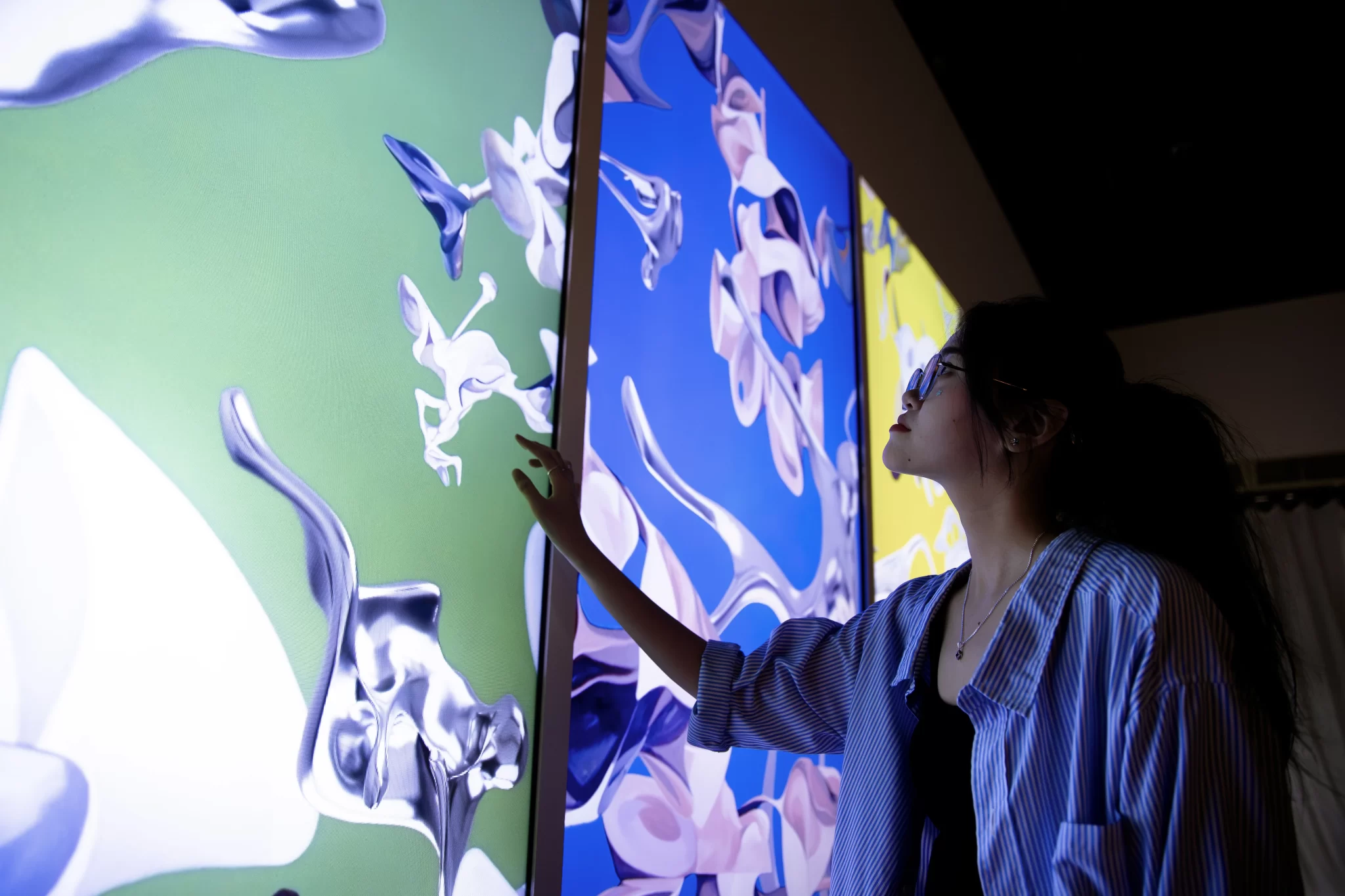
The work consists of a three-channel video in the form of an experimental and fictional archive, continuously summoning visual materials that evoke the past in fragmented rhythms. A woman in a white shirt and trousers holding lilies appears repeatedly across the channels. Although the artist drew inspiration primarily from the attire of women on Green Island in the past, the white lily also functions as a potent motif that harks back to the vivid memories of the intellectual youths and the spirit of the age in late 20th century Taiwan (China), with the white colour implying a quiet contemplation on society following an extended period of turbulence.
Besides the woman, lifelike human figures appear in a static state. A high-angle shot brings the viewer behind one of these figures, seated at a table with documents and pens. The figure is positioned as if about to write or take notes, yet remains completely motionless. This interruption between gesture and intention also creates a temporal discontinuity, as if the act of writing itself has been held in suspension.
In another scene, the viewer’s gaze is directed downwards from a high wall towards the woman holding white lilies on the left side of the wall, while a violinist stands on the opposite side. The woman hears the music but doesn’t know who is making it, while the violinist is unaware of her presence. This visual language prompts viewers to reconsider how the eyes view and perceive their surroundings. Ljalje’elan Patadalj once emphasised that “viewing” is not simply the reception of images, but also an evocation of memories, where the past returns and dialogues within the images themselves.
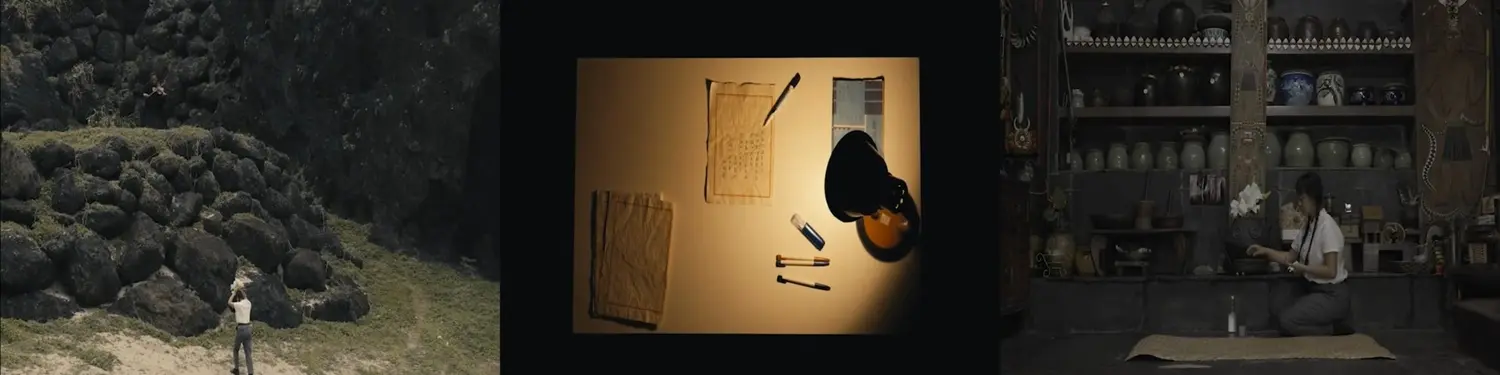
Other objects related to the Paiwan culture, such as ceramic pots with twin snake motifs, rice wine, betel nuts, and tobacco also appear in the video. They perhaps carry their own spiritual, cultural, and historical meanings that transcend immediate recognition. In this context, the nature of materials becomes fragmented – parts survive in the viewer’s memory, the remaining left unmemorised and unsaid.
At the Taichung Green Museumbrary, the installation expands to include a confined iron structure, scaled to fit a single body. This addition stages the act of viewing as a decision in which viewers have two choices: to remain outside as an observer, or to enter and experience the visual confinement within that segregated structure. Moreover, although all three videos carry sound, viewers can only hear one channel at a time. Ljalje’elan Patadalj stated: “Seeing one’s freedom confined, one realises that freedom, after all, is free only within its own boundaries.” The statement reveals the artist’s grappling with the innate ambiguity of interpretation. The viewer’s freedom of interpretation is not external to the scope of the work; it becomes something negotiated within the act of perception itself.
Vietnamese Immigrating Garden: A living archive of community and movement
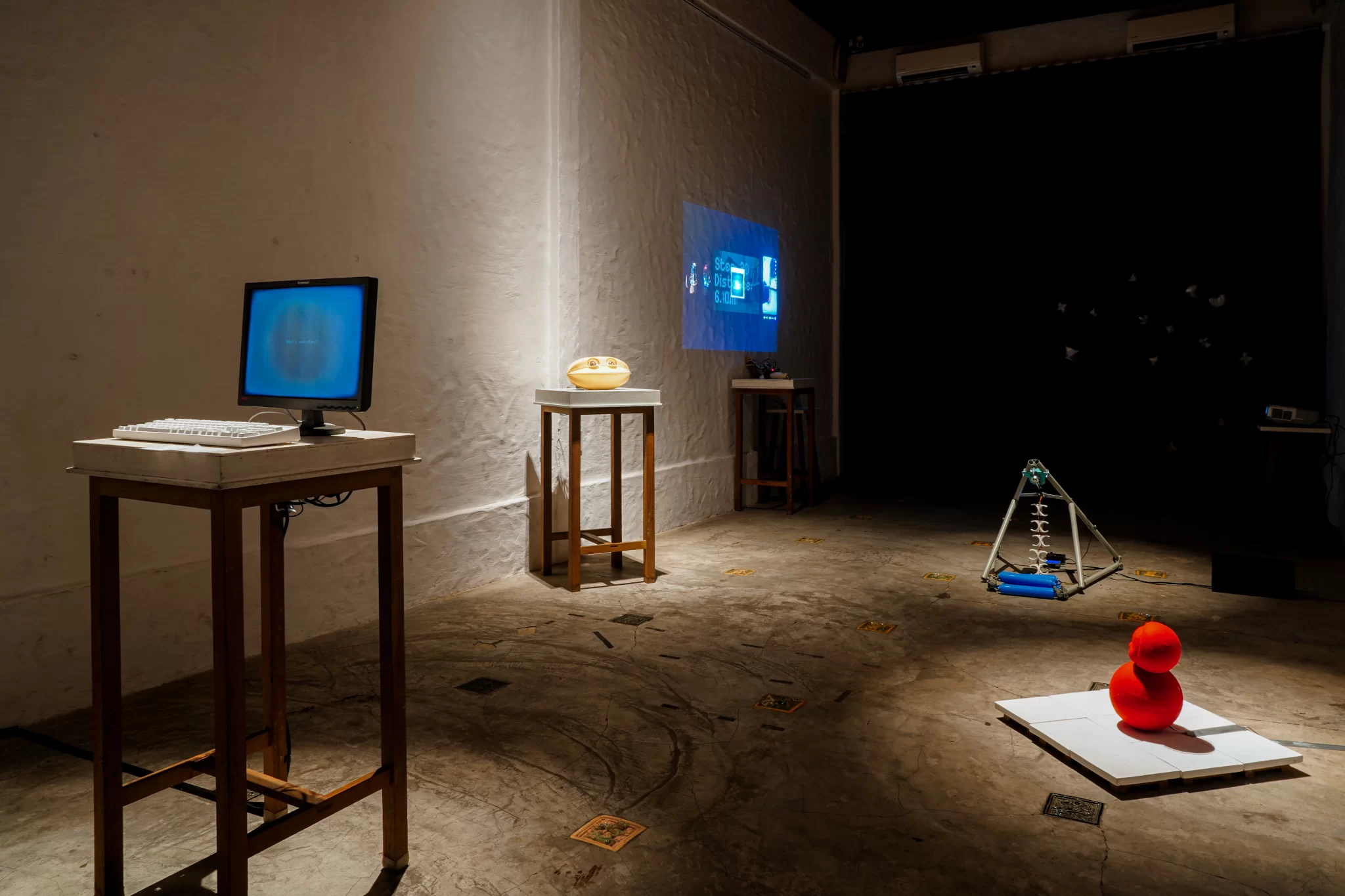
Tuan Mami’s Vietnamese Immigrating Garden (2021–present) was developed as a ten-year project, exhibited at the Kuandu Museum of Fine Arts from 2021, under the leadership of curator and critic Huang Chien-Hung. Following institutional transitions, in 2026, part of the work migrated to the Taiwan Contemporary Culture Lab (China) and was subsequently commissioned to the Taichung Green Museumbrary, where the garden continues to transform through migration.
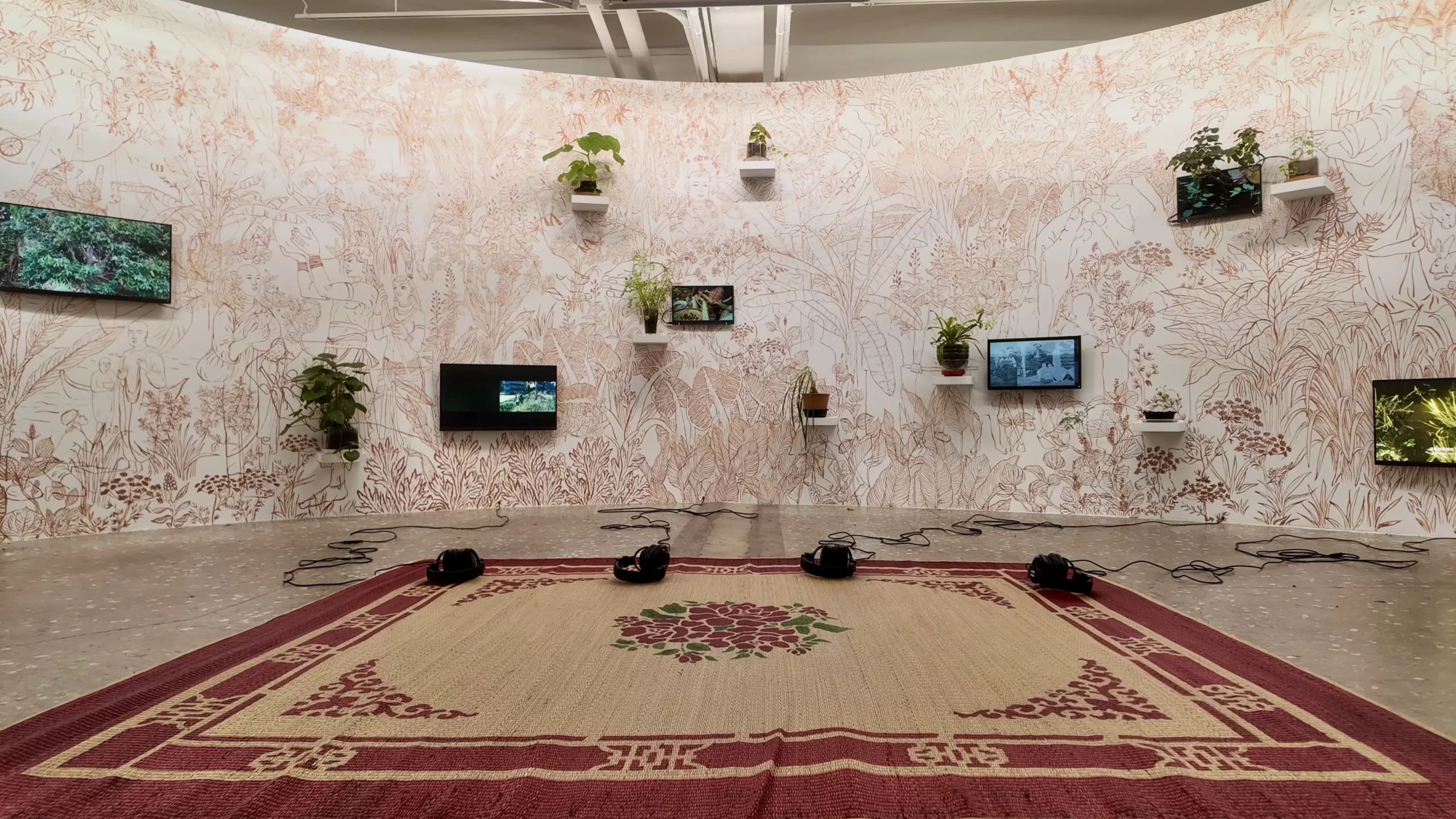
Migrating across different contexts, this garden, which grows
Vietnamese immigrating plants also function as a living archive in which images and text are continuously created by the community that nurtures it. By tending to these plants, participants cultivated mutual understanding through relationships beyond the museum walls. These shared experiences found expression in poems, performances, and public events, transforming the garden into a shared space for creation and experimentation. The garden also reveals and reshapes how the museum’s institutional structure governs viewers’ engagement with art. During its five years at Kuandu, visitors and museum staff gradually learned that besides its status quo as an artwork, the garden also cultivates edible plants, and so frequently stopped by to care for it. The boundaries between the roles of viewer, practitioner, curator, and artist are broken down in a space where “sowing” and “blooming” occur simultaneously.
Vietnamese Immigrating Garden fosters connection across linguistic and class boundaries. Community activities take place every Sunday, offering migrant workers with limited leisure time to participate. Situated within the multilingual and creative environment of the museum, the garden has transformed into a gathering place for Taiwanese-Vietnamese families, Vietnamese students, and international communities to “return to”. Underlying social regulations and constraints reveal themselves in an artistic form where the garden appears at the centre as a space for reflection.
Understanding in motion
The aforementioned works create a viewing and reading experience that goes beyond conventional images and words. Walking becomes an act of beholding, bringing the corporeal body into a realm of overlapping memories. Objects unlock historical sediments when perception becomes freed. And a living archive comes to life as one dives oneself into it. Viewers are no longer passive observers; they move around, through, and within the space of the artwork for an aesthetic experience. This, in turn, also reflects how artworks constantly invite viewers to move in order to feel their movement.
Words and Translations: Xuân Quỳnh
[1] Green Island is a volcanic island located off the eastern coast of Taiwan (China). Under martial law (1949–1987), it served as a site of detention for political prisoners. Today, the former prison grounds have been preserved and transformed into a human rights memorial park.
[2] Shi Jialing, “‘I Haven’t Screened What Hasn’t Happened Yet’ – Solo Exhibition by Emerging Indigenous Artist Ljalje’elan Patadalj”, Timing News 台銘新聞網 (2025).