Đọc phiên bản tiếng Việt tại đây.
The exhibition “The Timekeepers – Co Lai Hy” at Chillala – House of Art brings together twelve veteran painters whose names have become integral to the landscape of post-1975 Southern Vietnamese modern art. Among them are three artist couples – Quach Phong and Huynh Thi Kim Tien, Doan Quoc and Ta Kim Dung, as well as Le Trieu Dien and Hong Linh. Distinct in artistic temperament yet inseparable in spirit, they embody a union in which two singular voices move in resonance with one another.
The works selected for the exhibition reveal a rich diversity of mediums and artistic approaches, unfolding in parallel within a turbulent chapter of Vietnamese art history. Through decades of devoted artistic practice and deeply personal experience, each painter’s vision has gradually been shaped, distilled, sedimented over time, and quietly permeated their works, giving rise to the singular spirit that defines each artistic oeuvre.
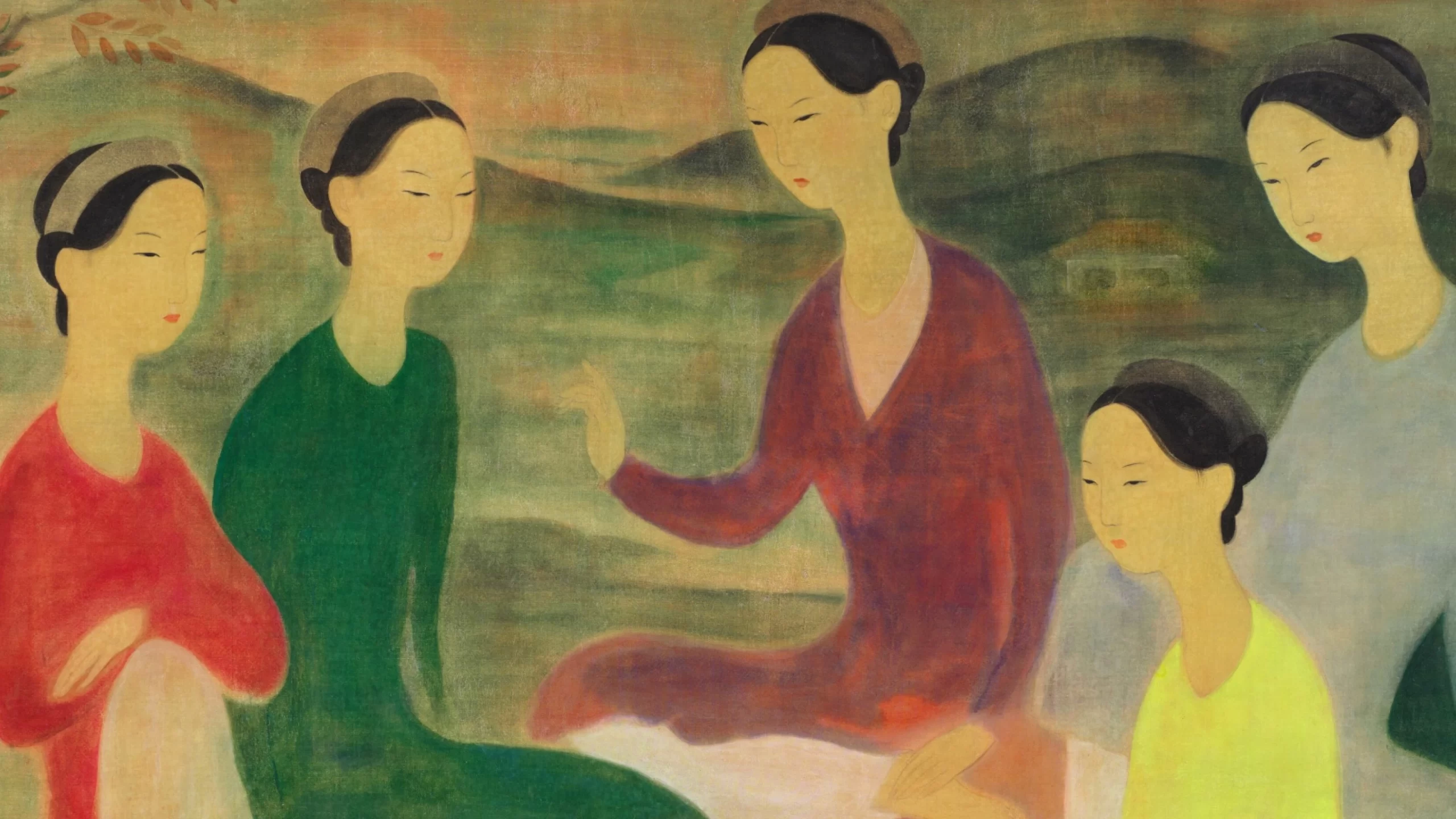
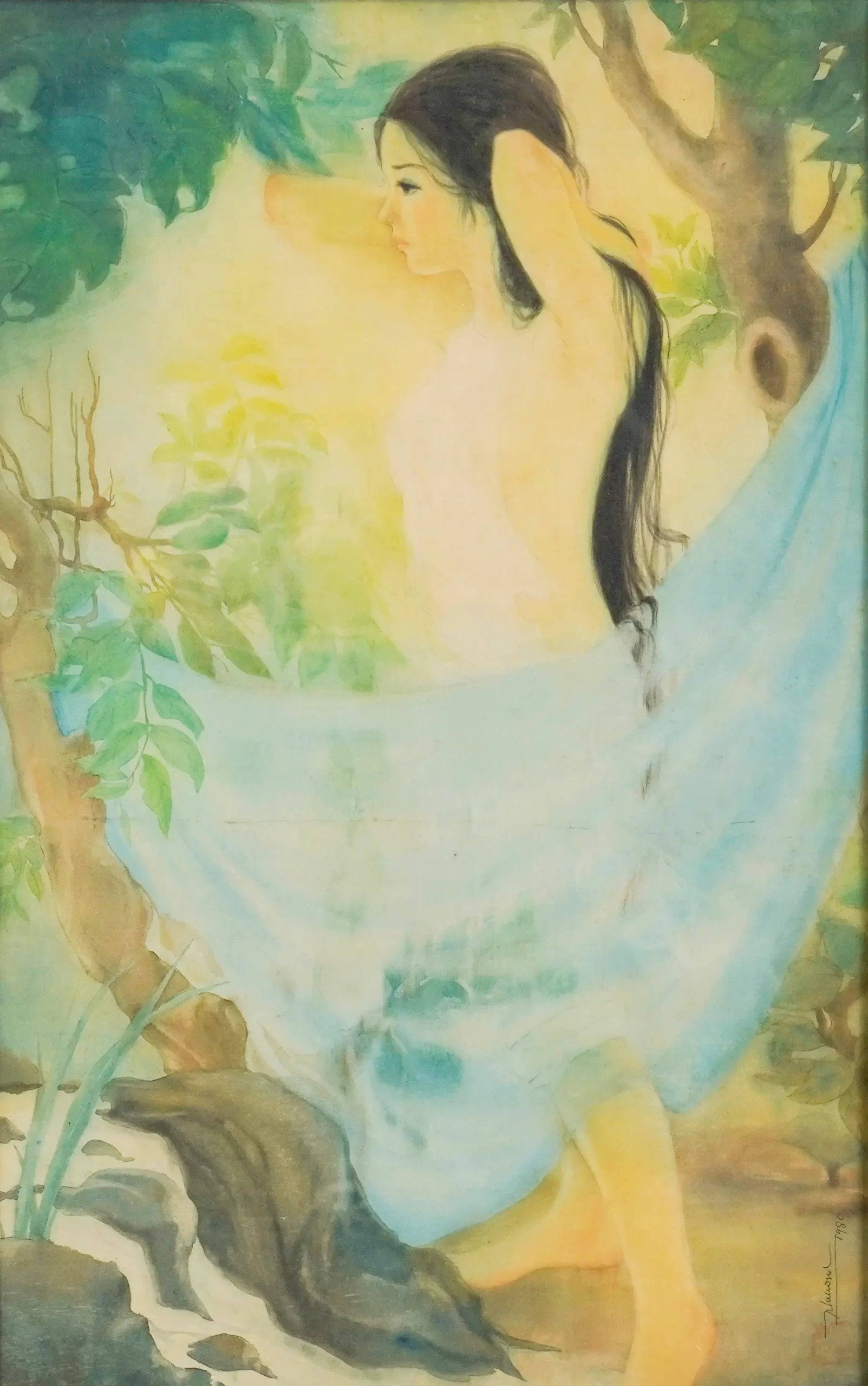
Viewed closely, the exhibition reveals three distinct groups of artists, each defined by its own creative language. The first comprises painters grounded in a traditional formalist approach, forged through long-standing engagement with academic artistic environments. Do Thi To Phuong (1936–2026) stands among the definitive figures of Vietnamese silk painting. Her compositions are restrained yet deeply evocative, often centering on moments of everyday life and the tender rhythms of young womanhood, capturing intimate vignettes such as bathing in streams, embroidering, or resting.
A contemporary of Phuong at the former Saigon National College of Fine Arts and, likewise, a master of silk painting, Nguyen Thi Tam (b. 1936) presents instead a series of oil paintings, including “Thac Bao Loc” (Bao Loc Waterfall) and “Rang ro mua sen” (Radiant Lotus Season) – a subject that has long occupied her artistic imagination. The natural landscapes in her works appear ethereal, delicate, and pared down, evoking a profound sense of serenity. Such quietude stems from her philosophy of release in artistic practice, for, as she has reflected, “only then can a painting fully contain the emotions of its maker.”¹
Similarly, Ta Kim Dung (b. 1944) imbues her oil paintings with lyricism and femininity through works such as “Tuoi thanh xuan” (Youth) and “Giua cac nang tho” (Among the Muses). Each image and chromatic nuance is distilled with measured restraint.
For Uyen Huy (b. 1950), whose real name is Huynh Van Muoi, structure remains the central axis of his artistic practice. His paintings are marked by clarity of organisation and compositional coherence, informed by an academically grounded visual language. Employing a symbolist mode, his works invite contemplation, while their nuanced orchestration of colour lends a compelling visual unity across the canvas.
The second group comprises artists who embrace restraint and visual reduction, privileging emotional resonance over descriptive detail. Quach Phong (b. 1938), widely recognised for his historical paintings and wartime sketches, presents lacquer and engraved lacquer works marked by a deliberate economy of form and colour. Eschewing overt drama, his compositions leave a lasting impression through their bold, decisive geometric lines and carefully controlled visual rhythm.
Reserved in temperament, Hoang Minh Hang (b. 1946) channels her inner world into large-scale silk paintings – a demanding format that requires exceptional compositional balance and technical fluency. Her works revolve around landscapes drawn from memory and immediate surroundings, where forms are reduced to their essence, allowing silence, solitude, and a quiet melancholy to inhabit the empty spaces of the canvas. After decades of practice, she developed her own technique of “unwashed silk painting,” using broad brushwork in place of the traditional silk-rinsing process, thereby preserving the fabric’s natural sheen and achieving surfaces of remarkable softness and translucency.
Huynh Thi Kim Tien (b. 1952) gravitates toward humble and familiar subjects from everyday life, as seen in works such as “Me con” (Mother and Child) and “Hoa luc binh” (Water Hyacinth). Her silk paintings possess both depth and clarity, distinguished by a finely calibrated harmony between form and colour.
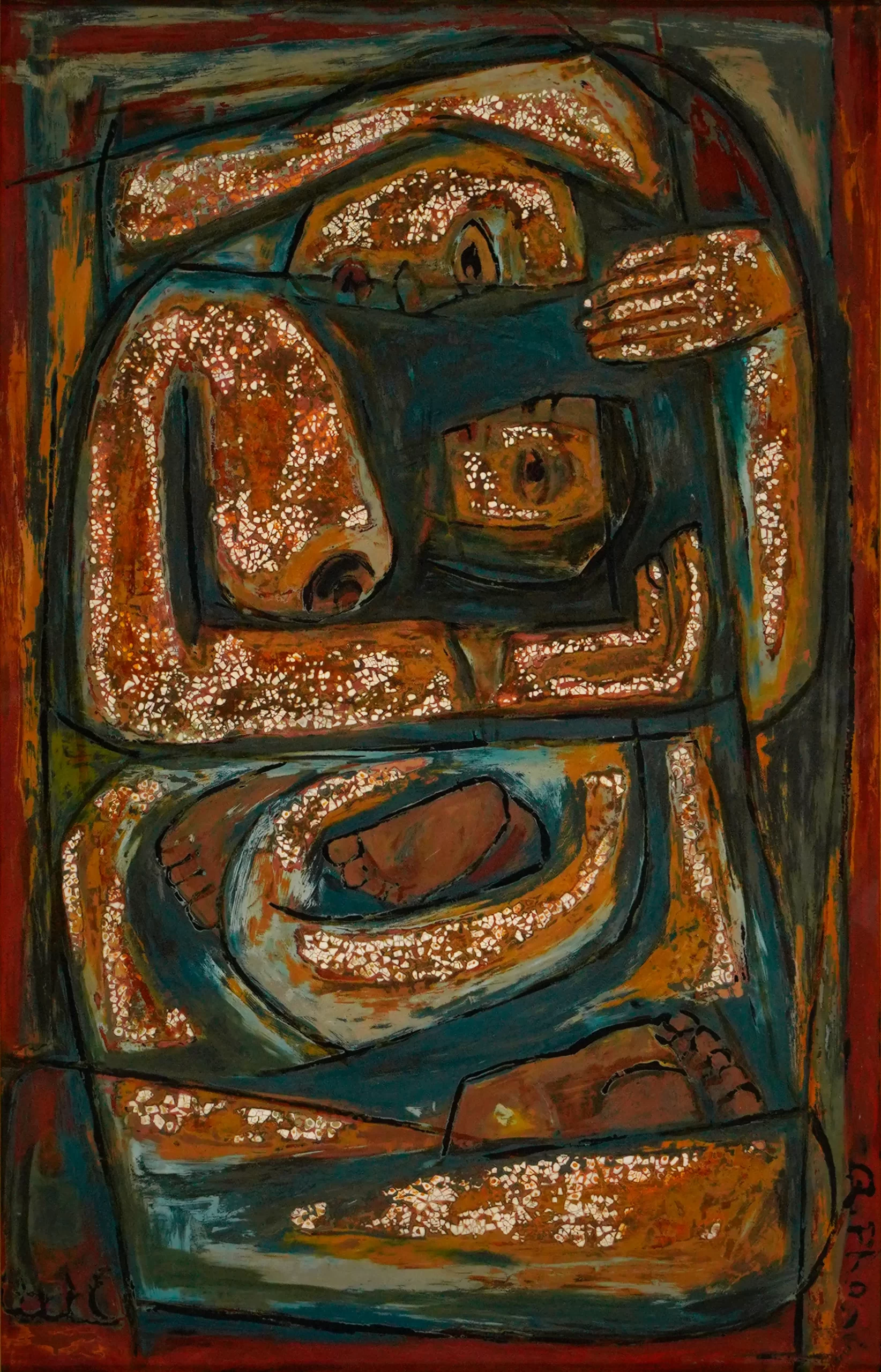
The third group consists of artists who have expanded the boundaries of expression through the languages of Expressionism and Abstractionism. Working beyond academic conventions and long subjected to divergent critical responses regarding his artistic style, Le Trieu Đien (b. 1943) has nonetheless remained unwavering in his commitment to artistic practice and research. His paintings are marked by sharp contrasts, vibrant colours, and rough, forceful strokes charged with angular energy. Interwoven with symbolic forms inspired by Khmer, Funan, and Chenla cultures, his visual language reveals both an untethered spirit and profound inner turbulence.
Before turning towards Abstractionism, Ca Le Thang (b. 1949) had acquired a rigorous academic foundation through years of study at the Vietnam College of Fine Arts. To establish a distinct voice within abstract painting, he deliberately learned to “forget” classical techniques to embrace a more distilled and exploratory mode of abstraction. His “Mua nuoc noi” (Flood Season) series is particularly emblematic, with its condensed planes of colour and gestural textures evoking the sensation of “waters rising overnight” – a poetic recollection of the riverine landscapes of Dong Thap Muoi. For the artist, Realism alone could never fully convey the atmosphere and emotional memory of the Southern flood season.
The paintings of artist-poet Hong Linh (b. 1953) are imbued with a meditative and autobiographical quality, intertwining lyrical poetry with abstract compositions. Through verses inscribed upon the painted surface, one encounters reflections on nature and existence in works such as “Mua xanh” (Green Season) as well as contemplations on human destiny in “Ve toi” (Paint Myself).
Beyond pictorial language, the exhibition also extends into investigations of materiality: surface, volume, and spatial presence. As one of the few female sculptors in Vietnamese art, Phung Chy Thu (b. 1942) only entered her fullest creative flourishing in sculpture and relief work after 2010, once freed from the burdens of livelihood and family obligations. Her works are graceful, romantic, and deeply impassioned, drawing inspiration from Vietnamese literature and folk arts, as well as from the emotional landscapes of love and human affection. The pinnacle of her practice lies in her ability to convey “the distinctive visage of Vietnamese women through the cheekbones and jawline, thereby imbuing the essence of cultural identity into the portrait”, as observed by painter Nguyen Lam.²
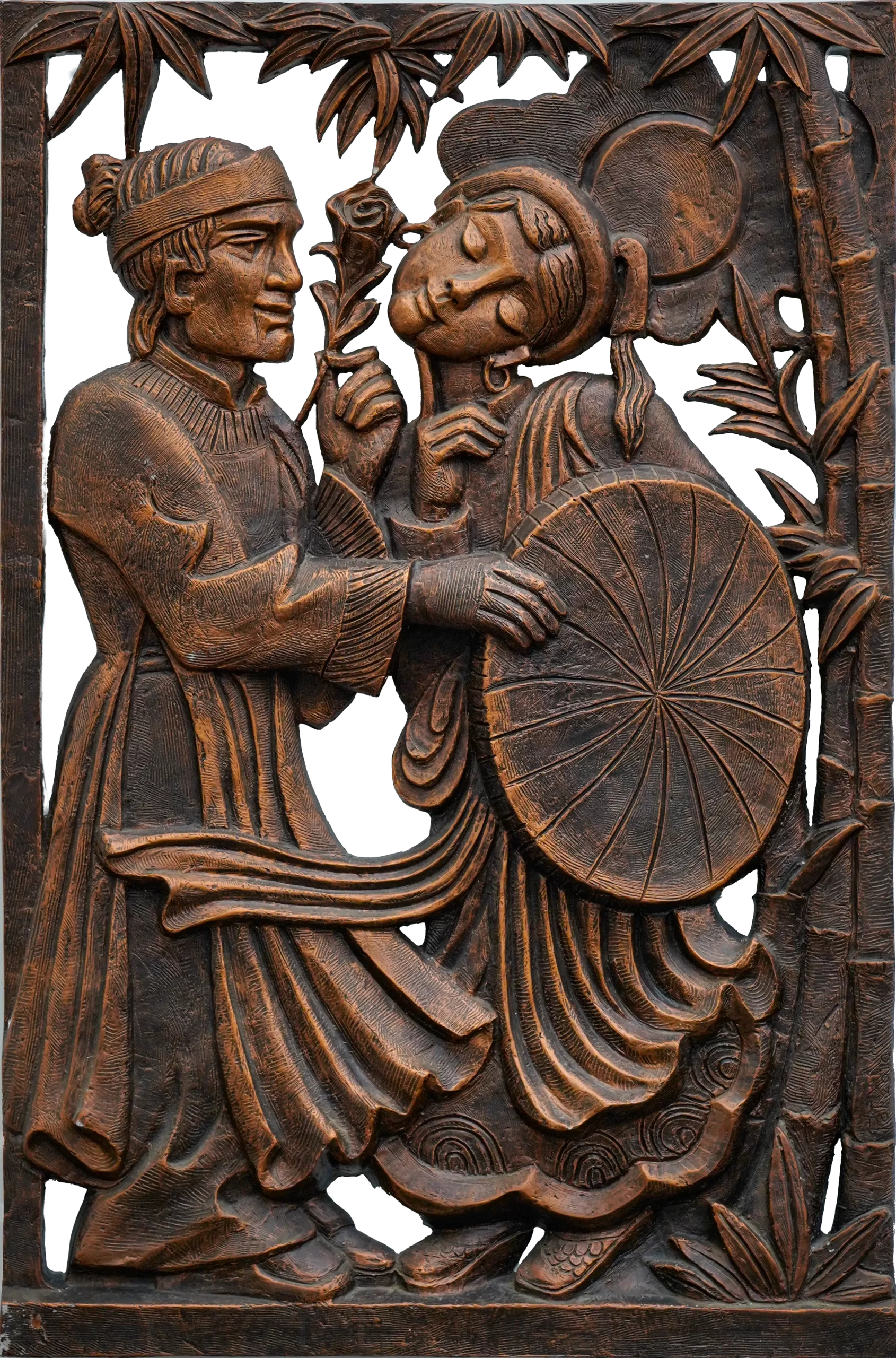
Through the technique of repoussé – shaping flat aluminum sheets into three-dimensional forms through applied force – Doan Quoc (b. 1943) transforms a material often perceived as rigid and cold into compositions of supple rhythm and sculptural vitality, articulated through powerful structural forms.
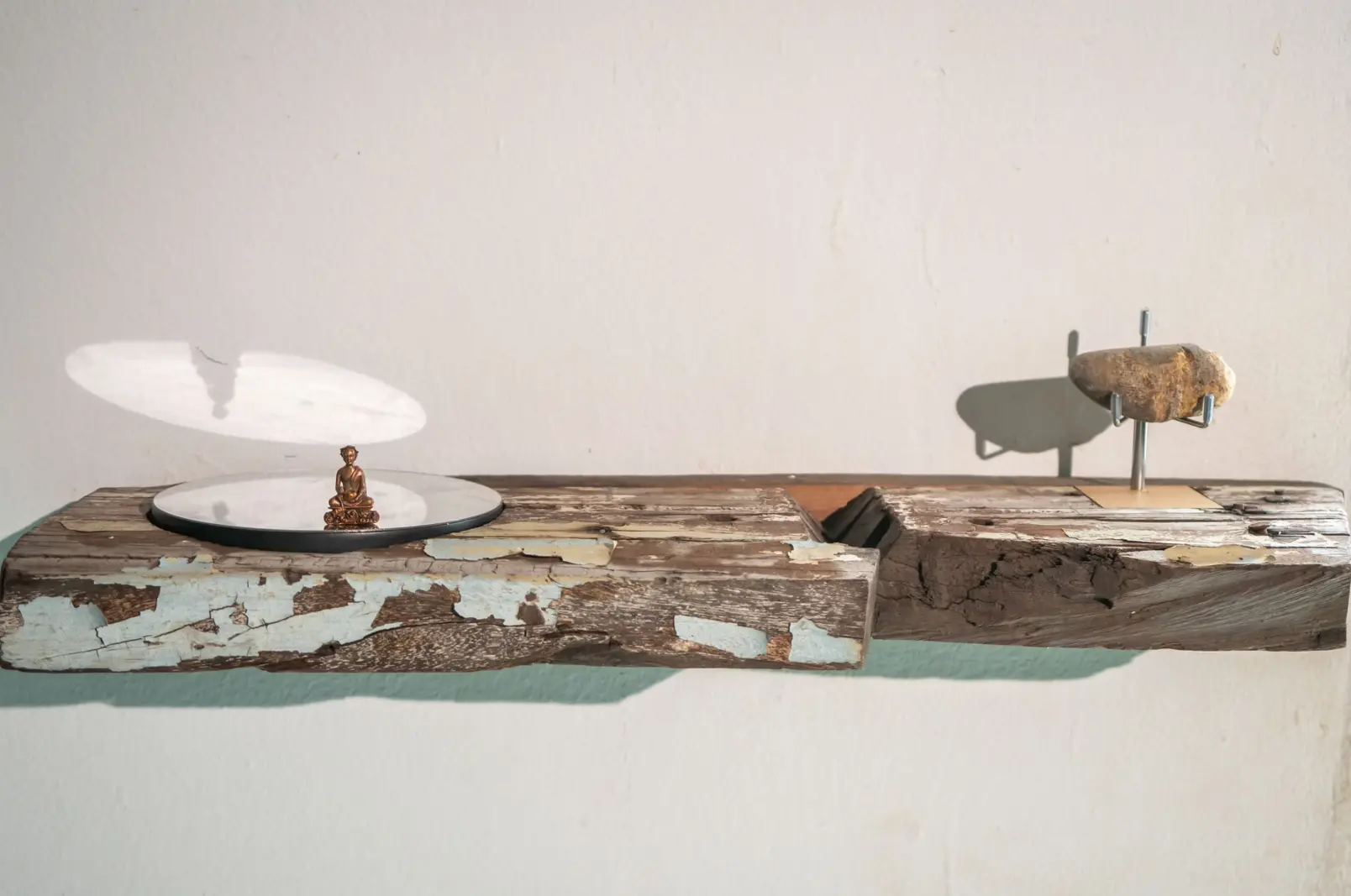
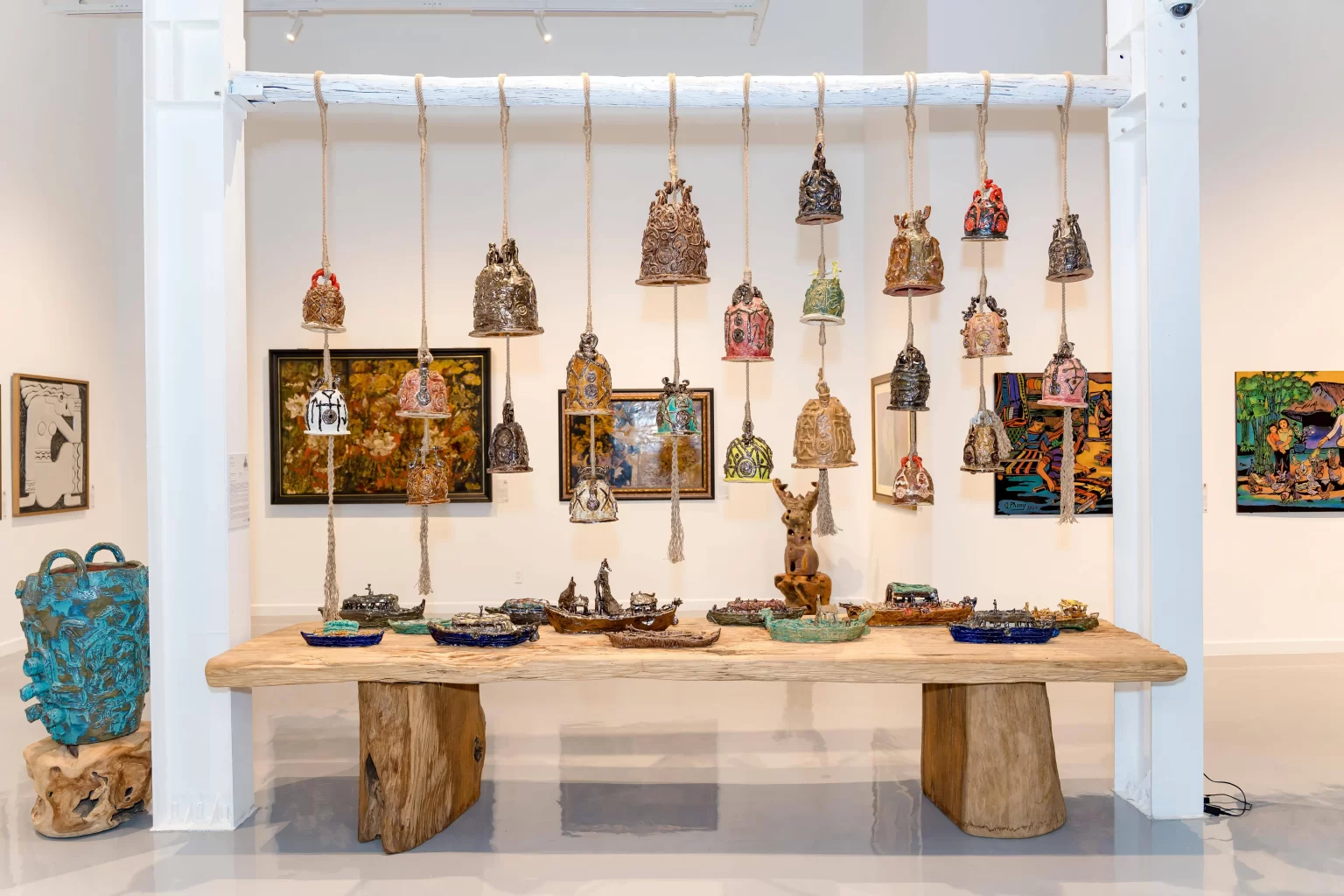
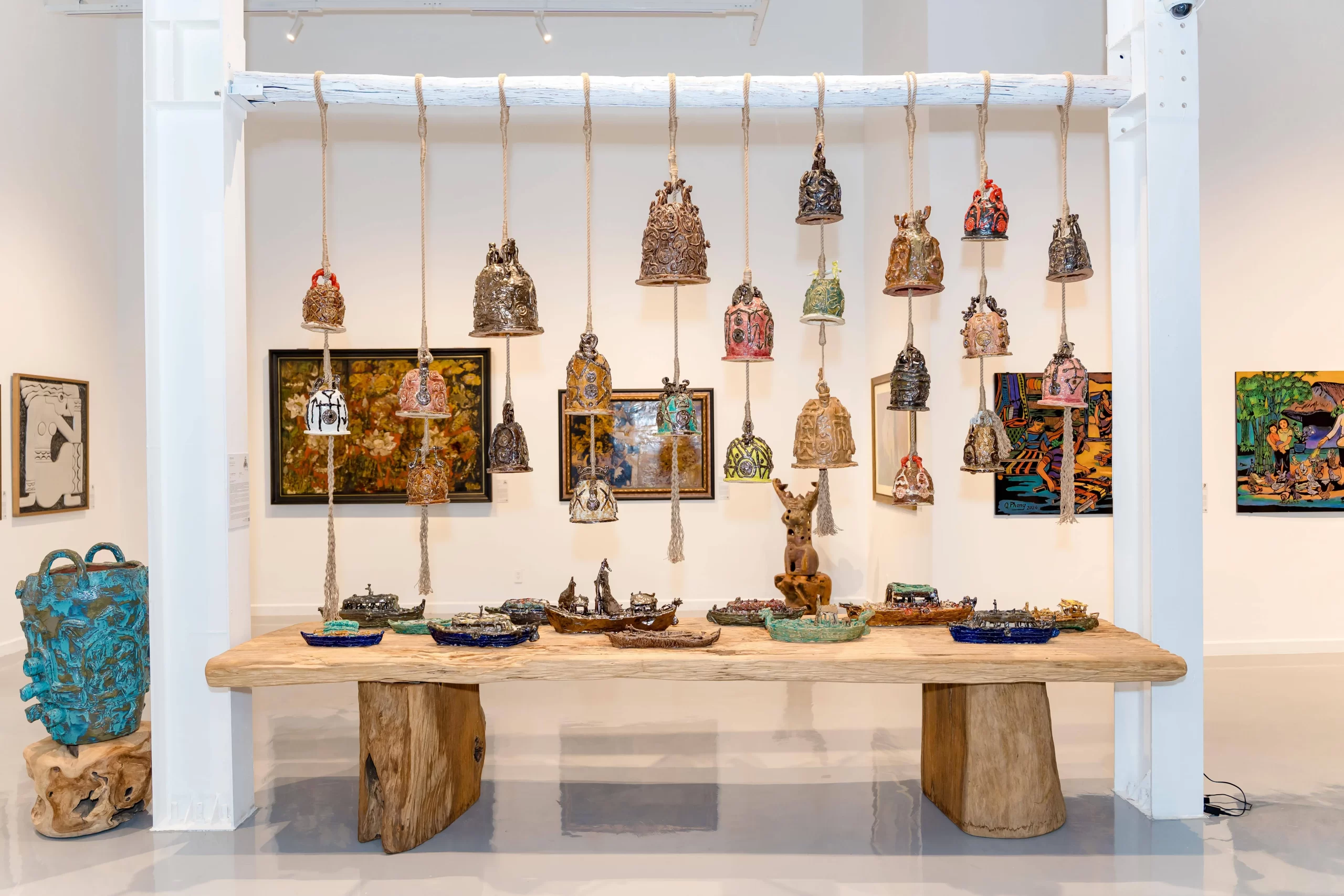
Alongside his paintings, Le Trieu Dien also presents the ceramic installation “Giu lai nhung dong troi” (Holding the Passing Currents). During one of the most difficult periods for Vietnamese art, he was among the first artists to independently build kilns and experiment with ceramic firing techniques on his own. Rustic and unadorned in form, the work resonates with the same spirit of “returning to memory” that permeates his oeuvre.
It may be said that this gathering of “timekeepers” guides viewers through an artistic journey drawn from memory and the soul’s quiet wanderings over a lifetime. Within that journey, one finds not only admiration for each contour, gesture, and painterly mark, but also a profound respect for the artists’ enduring devotion to creative labor – sustained patiently and passionately across the passage of time.
Words and Translation: Hùng Nguyễn
[1] Excerpt from the interview “Veteran Artist Nguyen Thi Tam – A lifetime wide awake for silk painting,” written by Le Minh Ha, published in “Bao phu nu” (Women’s Newspaper) (2025).
[2] Mai Thuy, “The waiting wharf’ Vietnamese women,” in “Tuoi Tre Newspaper” (2020).