Đọc phiên bản tiếng Việt tại đây.
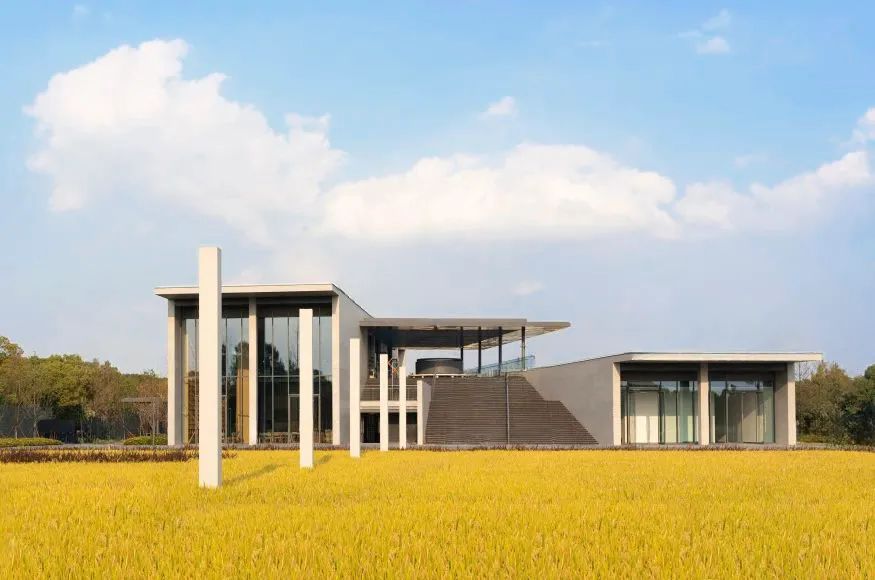
Located amid rice fields and vineyards in Malu Town, Jiading District, on the outskirts of Shanghai, Jiayuanhai Art Museum, designed by architect Tadao Ando, stands as a statement on dissolving the boundaries between the constructed space of art and the natural ecological rhythms of its local surroundings. The project was initiated with the aim of connecting contemporary art with rural life and Haipai culture, a convergence of East Asian traditions and modern Western thought. Running from November 12, 2026, to February 6, 2027, exhibition “Nine Happenings in Jiangnan”, curated by Jiang Jiehong, extends the museum’s ethos, offering points of encounter through which to explore the complex dimensions of memory, time, and identity. Bringing together ten artists – Ding Yi, Liu Jianhua, Liu Yichun, Lu Pingyuan, Peng Wei, Song Dong, Xu Jian, Yang Zhenzhong, Yin Xiuzhen, Yu Guo – and through a curatorial composition approach, the exhibition does not define Jiangnan as a fixed place. Instead, it reconstructs an imagined Jiangnan – a new possibility woven from events that have happened, might have happened, or are entirely fictional.
Reconsidering memory through the nonlinearity of space and time
From a historical perspective, archives, historical records, and material documentation are organised according to a linear logic, progressing from one year to the next, from one era to another. However, “Nine Happenings in Jiangnan” overturns this order entirely, employing art as a time machine to convey messages from the future or from some parallel dimension.
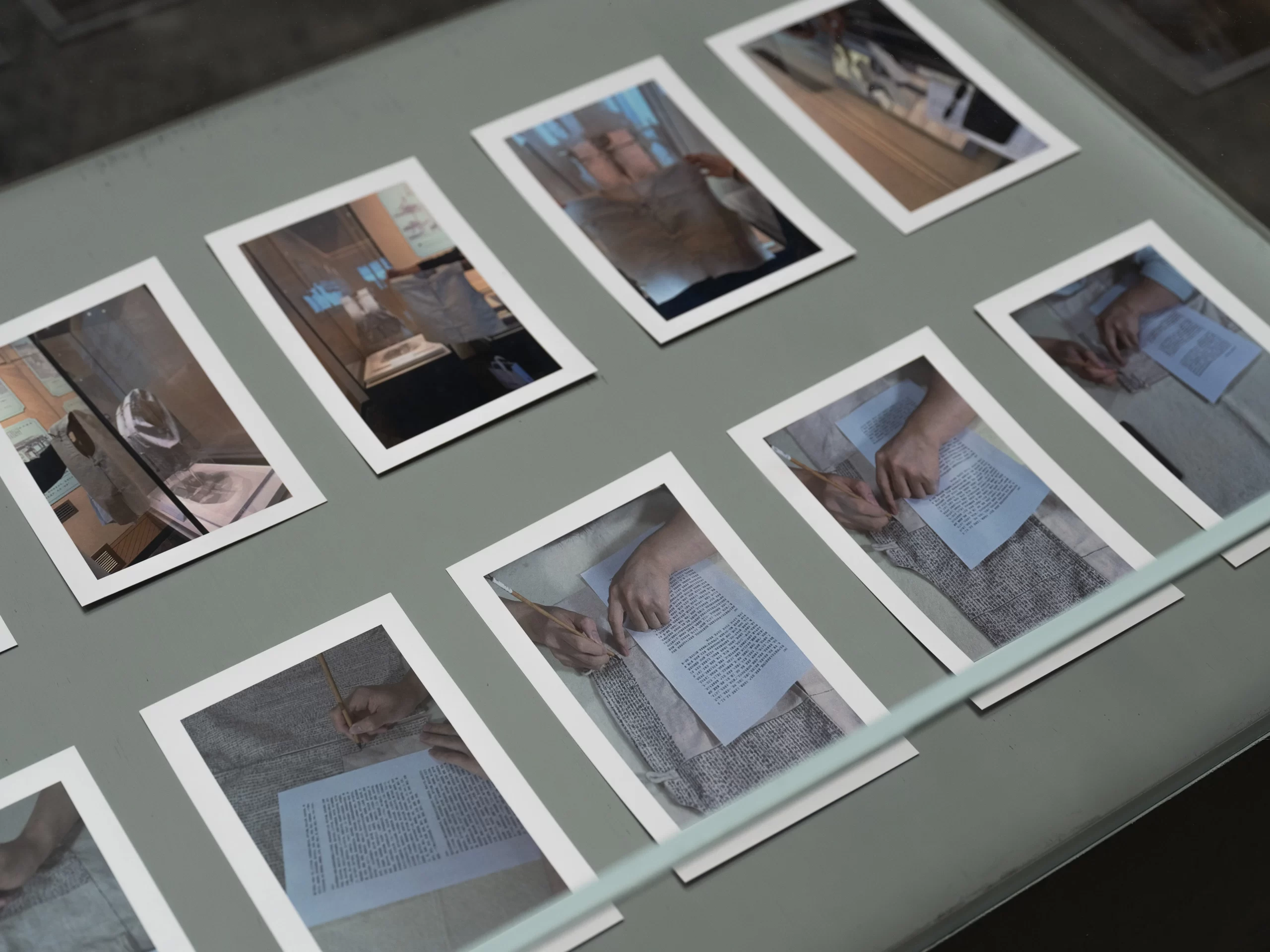
A case in point is the story of “The Second Vest”, a work by artist Song Dong. In this narrative, Song Dong assumes the role of a collector living overseas. He donated a Qing dynasty linen vest to his hometown. The vest is subsequently studied and authenticated through material and chronological analysis. Yet, rather than being covered with the “eight–legged essay” used for cheating, as was the original garment, this second vest is inscribed with the evolving language of Chinese society over the following seven decades. “The Second Vest” introduces a surreal hypothesis: its author was not an examination candidate, but a clairvoyant prophet who foresaw the collapse of the feudal system and recorded the language of the future, incomprehensible to anyone in his own time.
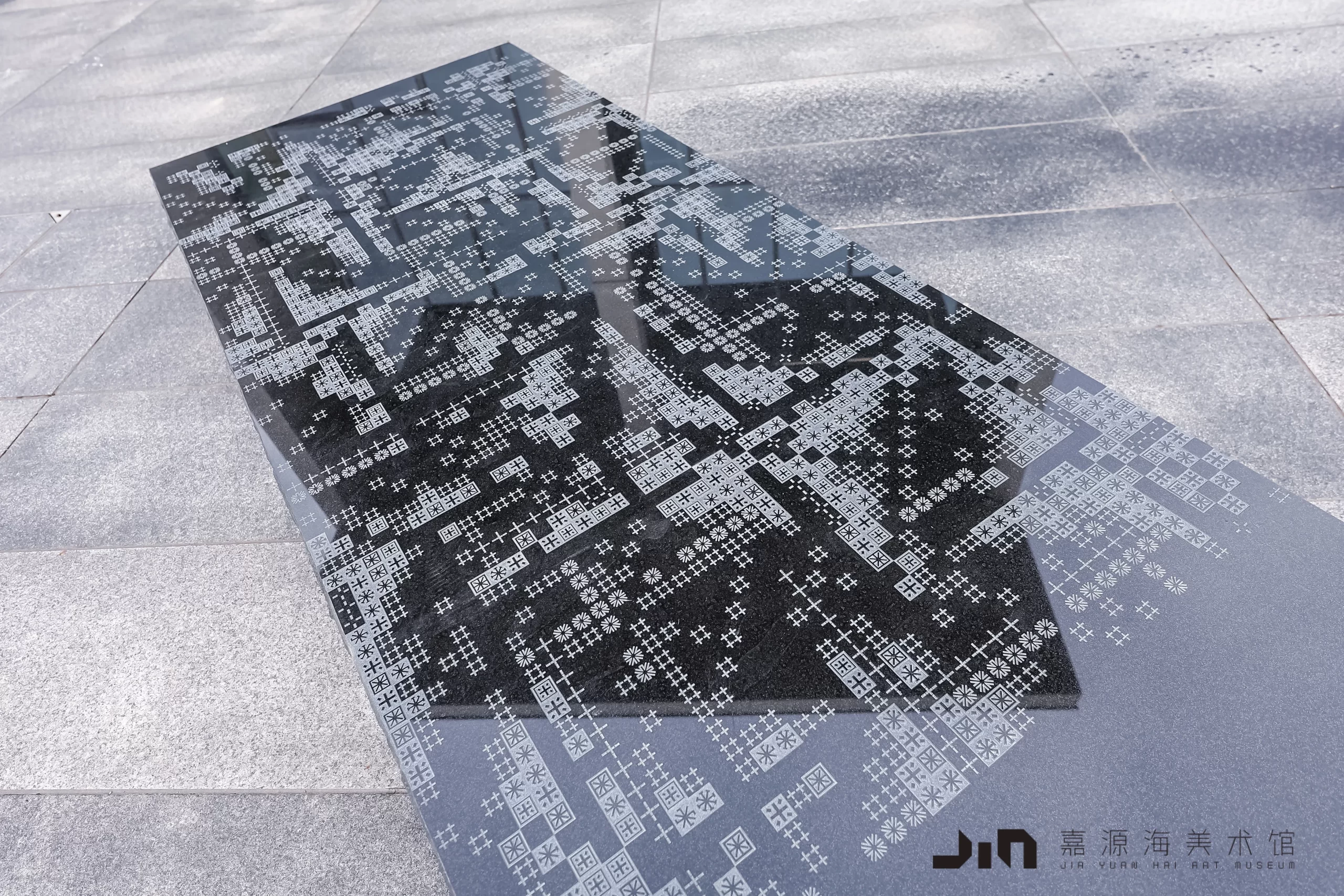
The temporal paradox is further expanded in the event “Future Steles”, a work co-created by artists Ding Yi and Liu Yichun. The story originates from a UFO incident in Jiading in 1987, when eight stone steles bearing the symbols “+” and “x” were discovered, containing not traces of the past but undeciphered information from the future. By transforming these matrices of symbols into variables of colour and spatial structure, the two former students, Ding Yi and Liu Yichun, inadvertently created masterpieces of abstract painting and contemporary architecture in the form of the stele pavilion.
Beyond temporal ruptures, exhibition also questions the integrity of physical space. In the event “The Wind Catcher”, a journalist responsible for the “Bygones” column is drawn into a fissure in the Mizhinang stone (a magical stone believed to produce rice milk). Through that, a parallel, mirrored dimension opens up, where he discovers evidence of a fruit–laden ginkgo branch dating back 900 years. Throughout this sequence of narratives, art serves as a material anchor, rendering irrational events and fictional memories tangible and accessible to touch.
Demystifying artist’s identity and returning to the simplicity of folk life
Drawing on Joseph Beuys’s seminal declaration that “everyone is an artist”, curator Jiang Jiehong brings the identity of those engaged in academic art practices into a more accessible, everyday perspective. In “Nine Happenings in Jiangnan”, no visual artists appear in the conventional sense. Instead, they assume the roles of journalist, archaeologist, airline captain, mathematician, taxi driver, biographer, collector, student and children immersing themselves in everyday life. Each narrative is developed by Jiang Jiehong concurrently through exchanges during the artists’ process of creating their works. In this way, this co–creative curatorial approach allows stories and artworks to emerge simultaneously, authenticate one another, and bring art into the vibrant world of folk life (minjian).
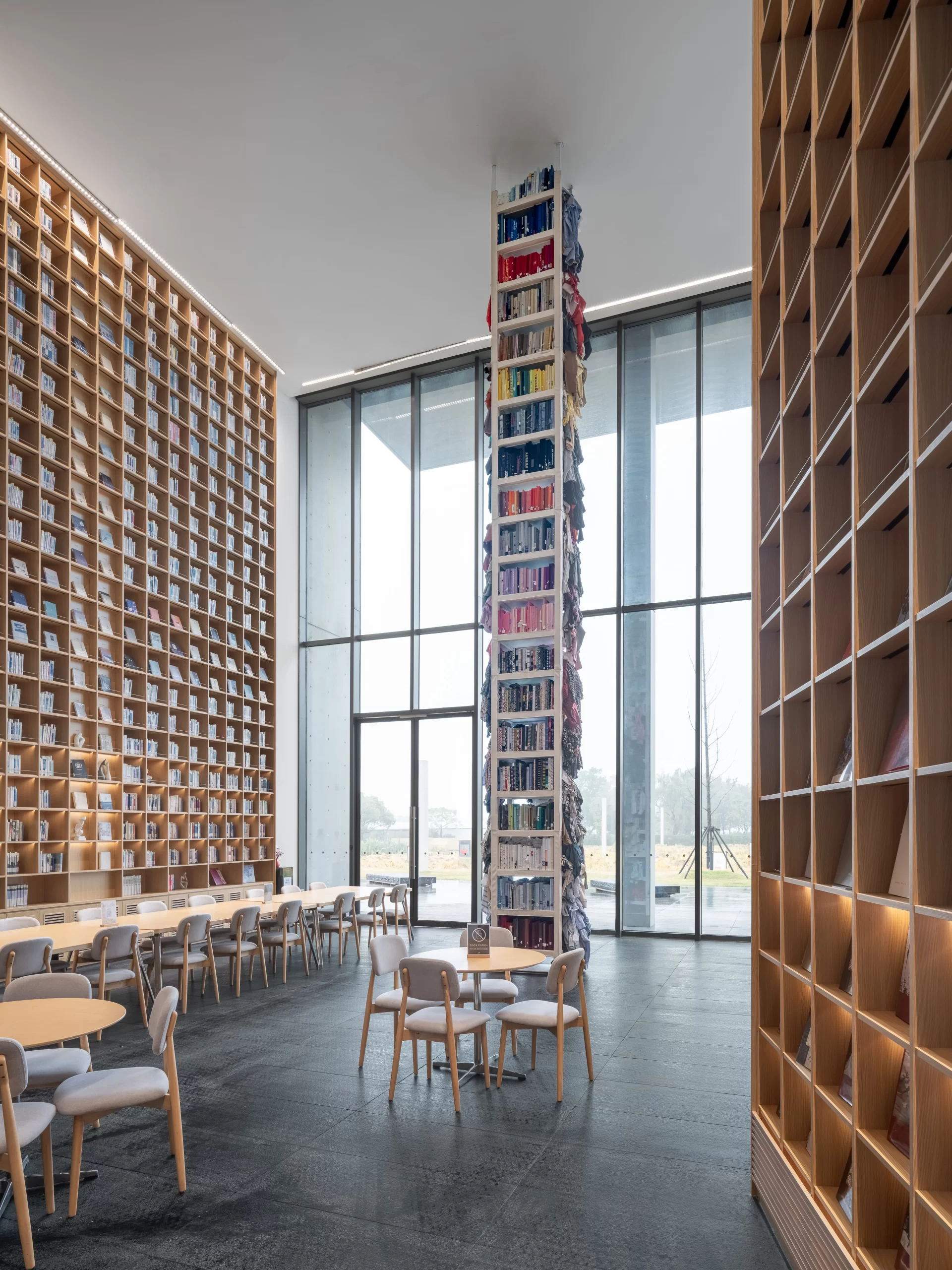
In the narrative of “Biographies of the Ordinary”, initiated through the use of hundreds of thousands of words to write biographies of notable figures, Yin Xiuzhen collects old garments bearing the memories of ordinary people: a shirt with a button sewn askew, belonging to a daughter who left home; a sweater worn thin at the elbows, belonging to a wife with Alzheimer’s disease; or a military uniform embroidered with its owner’s name in red thread, etc. Notably, these garments were collected from residents living in the vicinity of Jiayuanhai Art Museum and are carrying the intimate fragments of lives embedded in the local community. Through cutting, folding, and stitching these wordless texts into an untitled book, she transforms an archive of human lives into a material ladder in the form of an upright bookshelf standing at the centre of the museum, connecting finite lives into an eternal prayer.
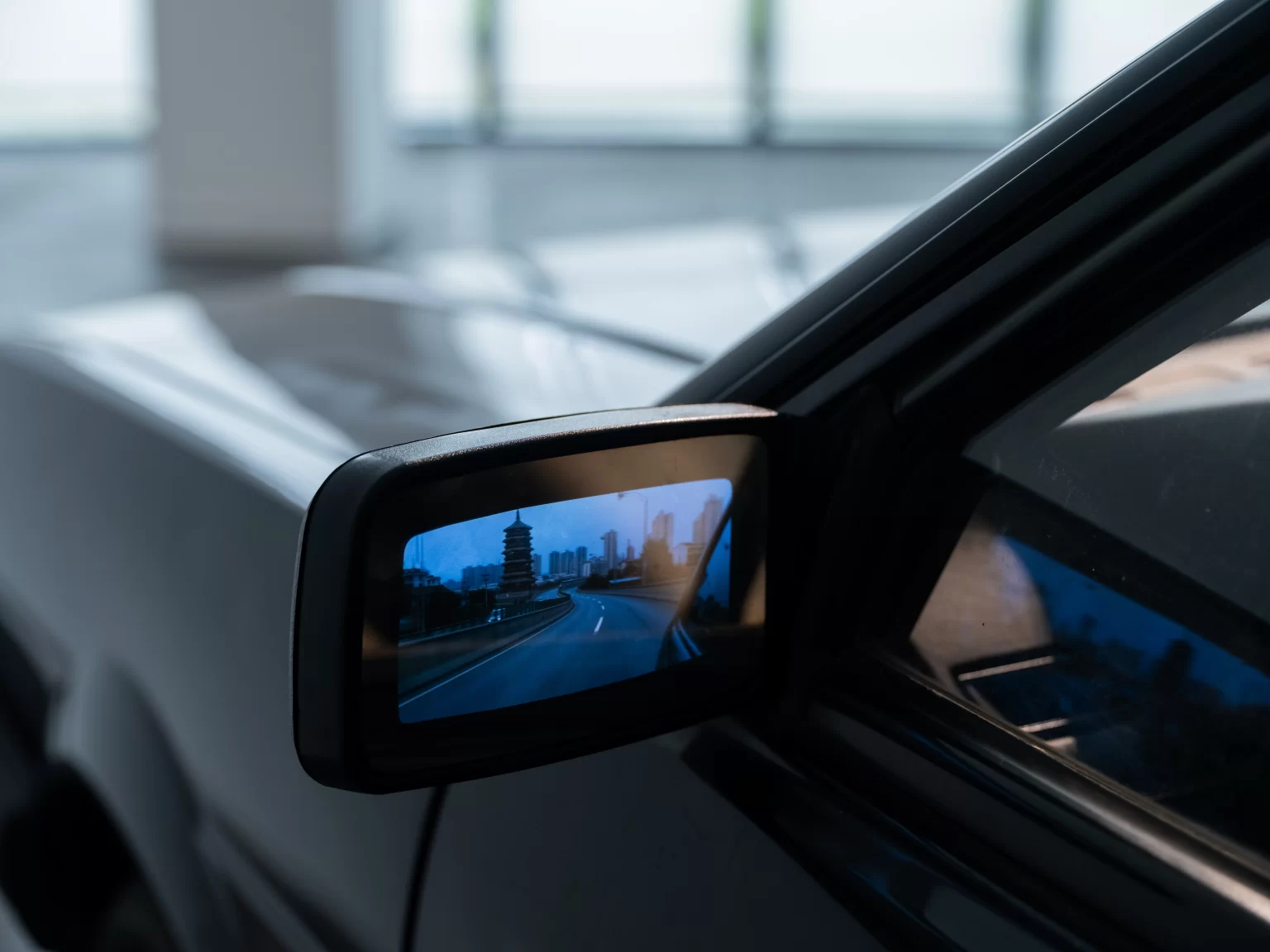
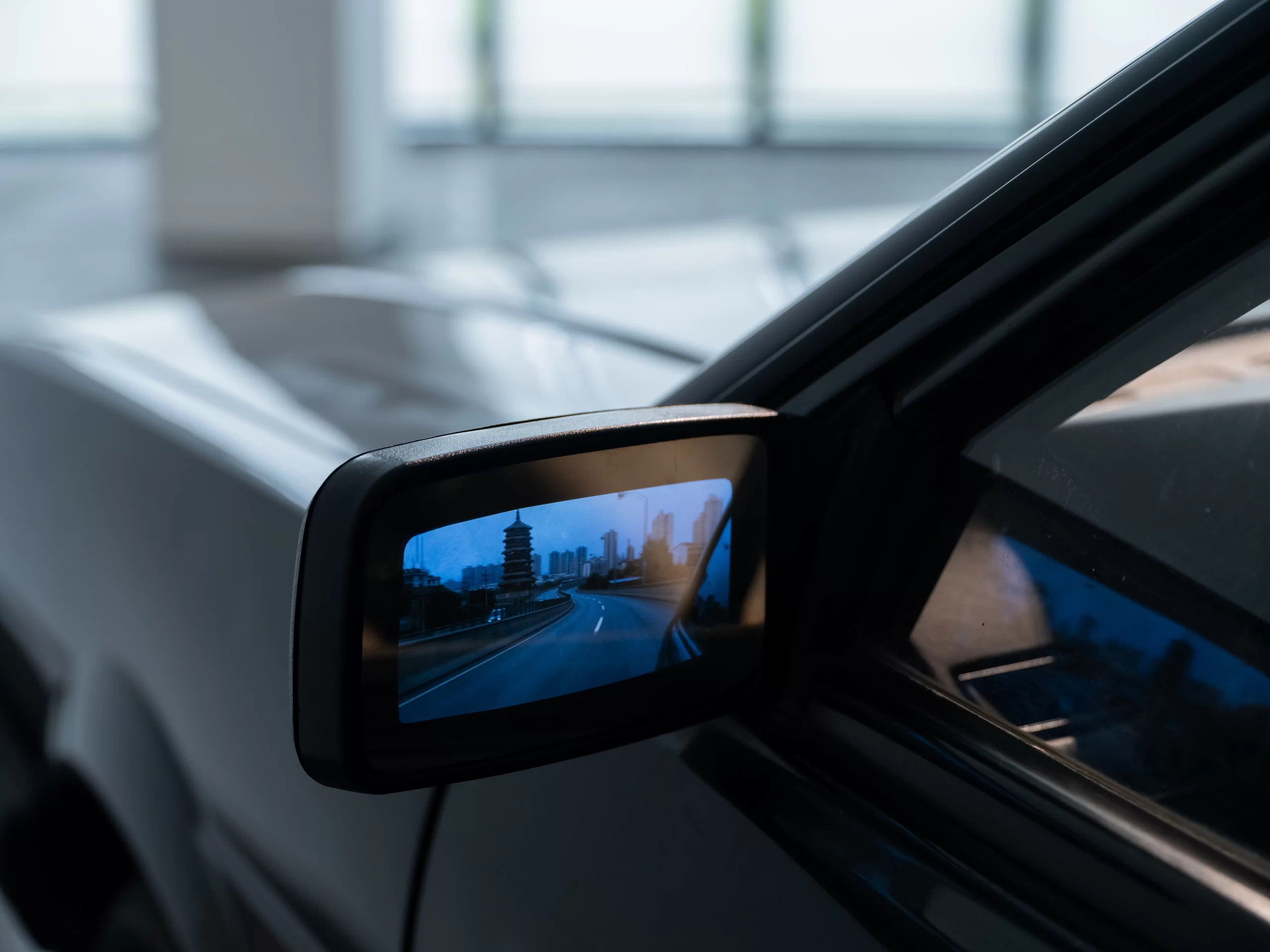
Resonating with this pursuit of eternity is Xu Jian’s journey through the narrative of a taxi driver, “The Pagoda as the Finish Line”. Stripped of his dream of becoming an F1 racing driver and confronted with the rapid transformation of his hometown amid urbanisation, the taxi driver finds an immutable monument in the Fahua Pagoda. His journeys in search of ancient pagodas, viewed through the rear–view mirror, are not merely an expansion of an inward racetrack, but also an act of resistance by individuals against the relentless erosion of time and the changing tides of an era.
This curatorial approach takes art beyond predetermined contexts or meanings, allowing the stories themselves to participate directly in the production of meaning and become testimonies to events that have taken place in a particular place.
The cycles of Jiangnan
Bringing the 9 stories involving 10 artists to a close, curator Jiang Jiehong shares that this exhibition marks the beginning of an open-ended series of projects at Jiayuanhai Art Museum. Rather than following the fixed model of a biennale or triennale, future exhibitions at Jiayuanhai may flexibly evolve into six, eight, or even thirteen happenings. However, this openness and flexibility carry significance beyond the methodology of artistic practice; they also respond to the ever-changing historical context of Jiangnan as a whole, and Malu Town, Jiading District, in particular.
Between 2007 and 2011, the Jiading authorities experimented with a model that sought to attract independent contemporary artists to establish studios in Malu Town, with the expectation of cultivating cultural resources and assets for the suburban area. However, this model was discontinued although the initiative represented an attempt to integrate contemporary art into local development. Subsequently, the Jiading authorities shifted their approach towards public investment in established cultural institutions and landmark architectural projects during the 2013 – 2016 period as a means of strengthening the area’s cultural infrastructure and promoting long–term cultural identity.
The reverberations of this strategic shift remain clearly visible throughout the exhibition. Although the entire fieldwork and creative process of the 10 artists originated in Jiading, the exhibition’s final title was broadened to Jiangnan. This caution is also directly reflected in the presentation of the artworks. Song Dong’s “The Second Vest”, which features excerpts from press coverage, was not granted permission for public display. Rather than withdrawing the work from the exhibition, the artist chose to present an empty mannequin alongside archival images documenting the research process. The original artefact is kept separately in the museum director’s office.
Ultimately, “Nine Happenings in Jiangnan” is not merely the revival of a cultural institution in Jiading that has remained dormant for years, but also a declaration of the land’s own inherent vitality. Jiading or in a broader sense, Jiangnan is precisely as Jiang Jiehong concludes: “Jiangnan has its time, Jiangnan has its happenings, Jiangnan is elsewhere”. Despite historical detours, institutional shifts, and gaps imposed by censorship, art in this region continues to find openings through which to write the next chapter in its own cycle of regeneration.
Words and translation: Tam Pham