Đọc phiên bản tiếng Việt tại đây.
A central question by curator Brian Doan appears in the exhibition’s wall text: “What kind of sediment settles upon the surface of a photograph, leaving the viewer with an unforgettable ache?” Sediment refers to solid matter settling at the bottom of rivers and oceans, gradually accumulating into layers over time. Meanwhile, The Sediment of Light suggests light as a crucial element through which an image is formed. Bringing together artists from within and beyond Vietnam’s geographical borders, the exhibition uses sediment as a metaphor for the accumulation of time and memory in a photograph – whether captured in a single moment or constructed through different methods of editing or collage in photographic art. The metaphor can be read in two ways: sediment beneath the water, evoking memories of geographical distance, and sediment of light where time and memory accumulate upon a photograph.
In Camera Lucida: Reflections on Photography (1980), Roland Barthes noted that the photograph “does not necessarily say what is no longer, but only and for certain what has been.”1 Yet, what happens when it survives beyond the moment it captures? Layers of mediation around the photographic process emerge: the photographer’s and subject’s positions, historical and political context, development process, editing, distribution, also private or public consumption. Beyond what a photograph shows, the significance also lies in what it represents, or what kinds of nostalgia and emotions it evokes from the spectators.
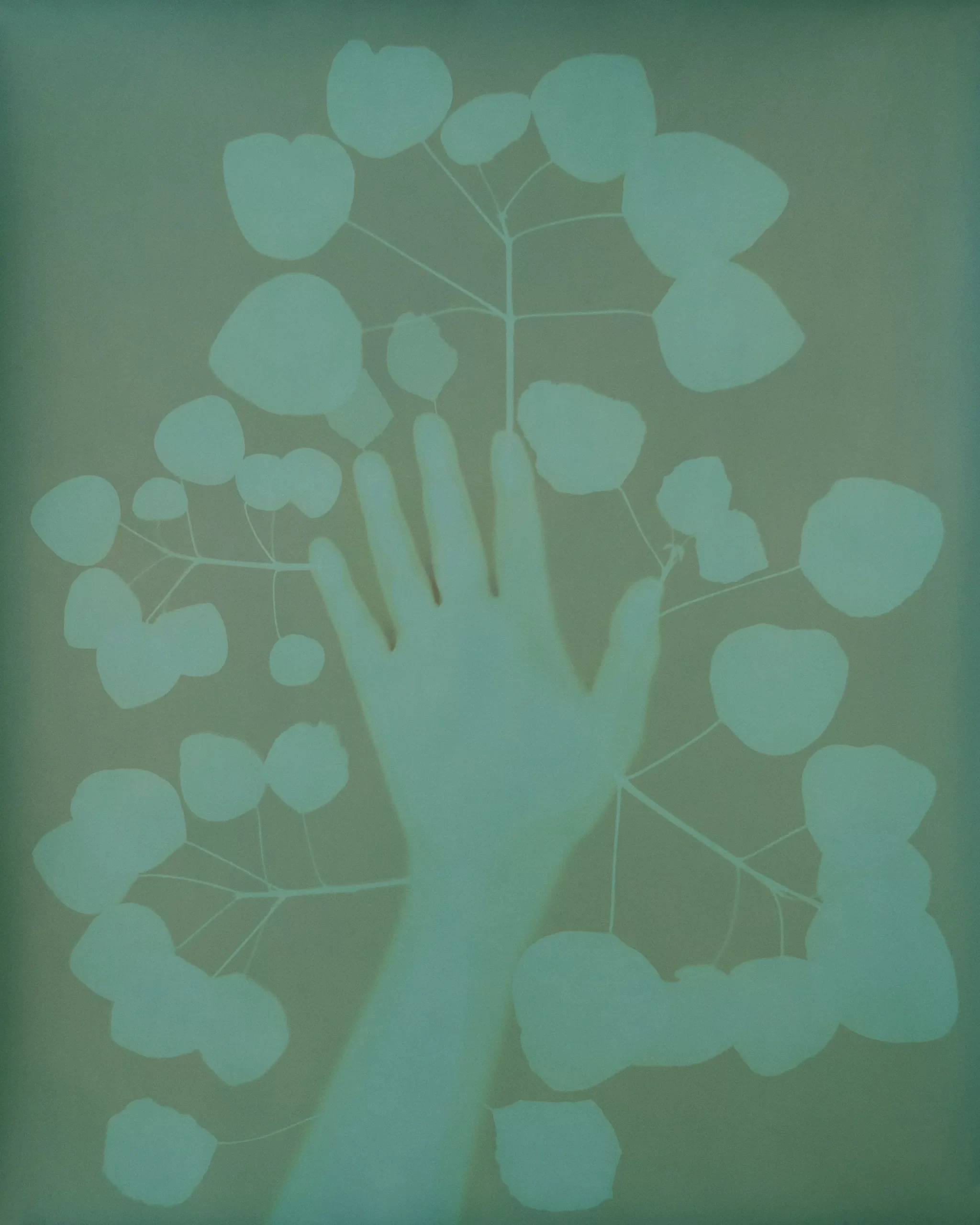
The beginning of the exhibition shifts the visitors back to the early days of photography. Employing cameraless photography, Han Nguyen created a series of poetic photograms by laying objects on photographic paper and exposing them to light, notably Tracing shadow (2023-2024) and Untitled (2016) – a unique collage made of watercolour on black-and-white fibre-based gelatin silver print, which was featured as the exhibition’s poster. While the images’ results may appear simple, their making requires careful pre-visualisation and conceptual planning. Meanwhile, Boris Zuliani’s large-format collodion2 portraits, using techniques that date back to the 19th century, “absorb the depth of minutes, the tension of the model, and the whims of light through silver salts.”3 The patience demanded by the slow process of photographing allows authentic human expression to emerge through the forced stillness of the photographed model. Shot on film, Thy Tran’s staged photoshoots featuring objects and anonymous bodies, all were carefully planned with cinematic lighting, while trials and errors became crucial in the making. Rather than merely evoking nostalgia, the analogue approaches highlight artists’ experimentation with the unpredictability of image-making, challenging the presumed stability of how photographs are made in the digital era.
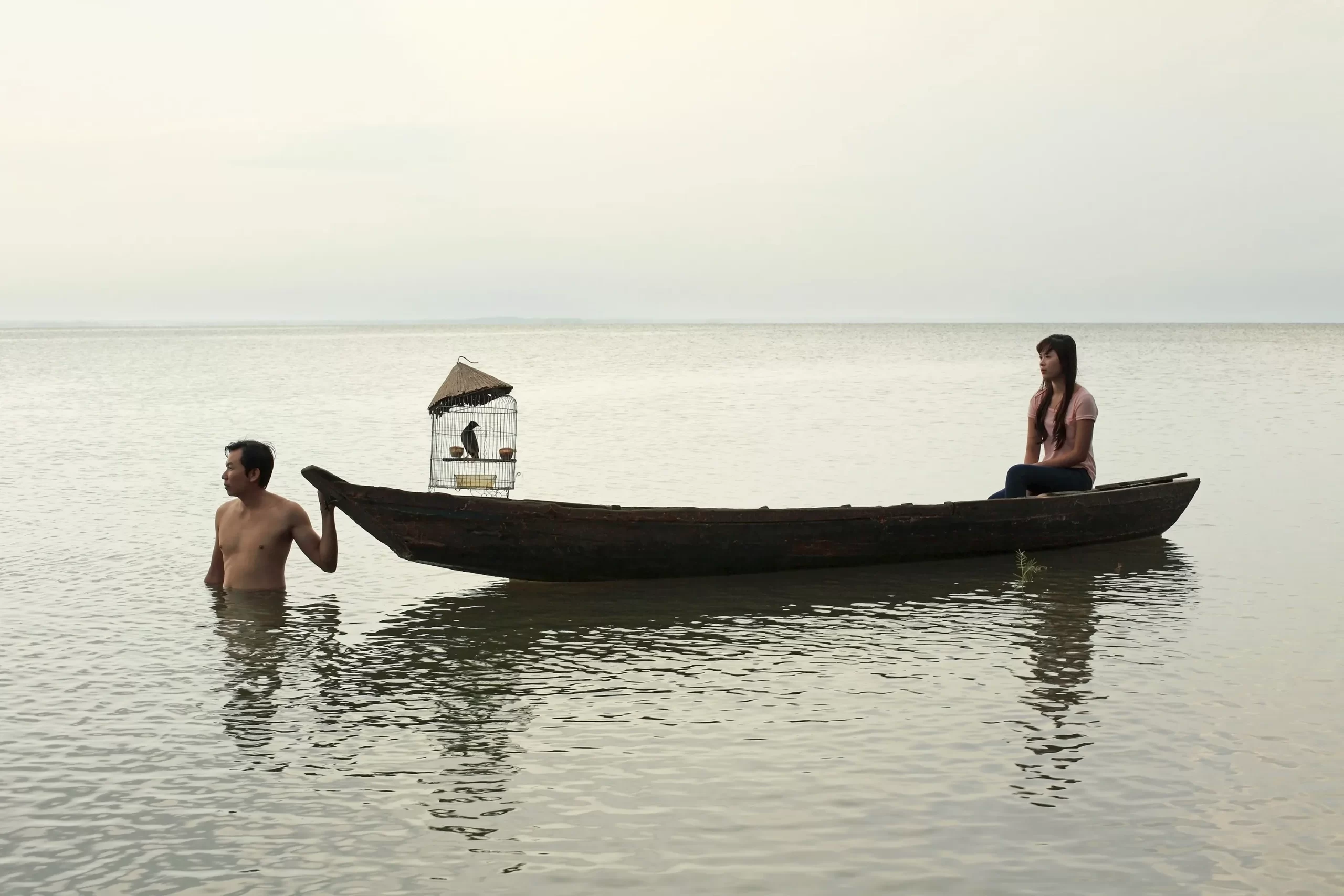
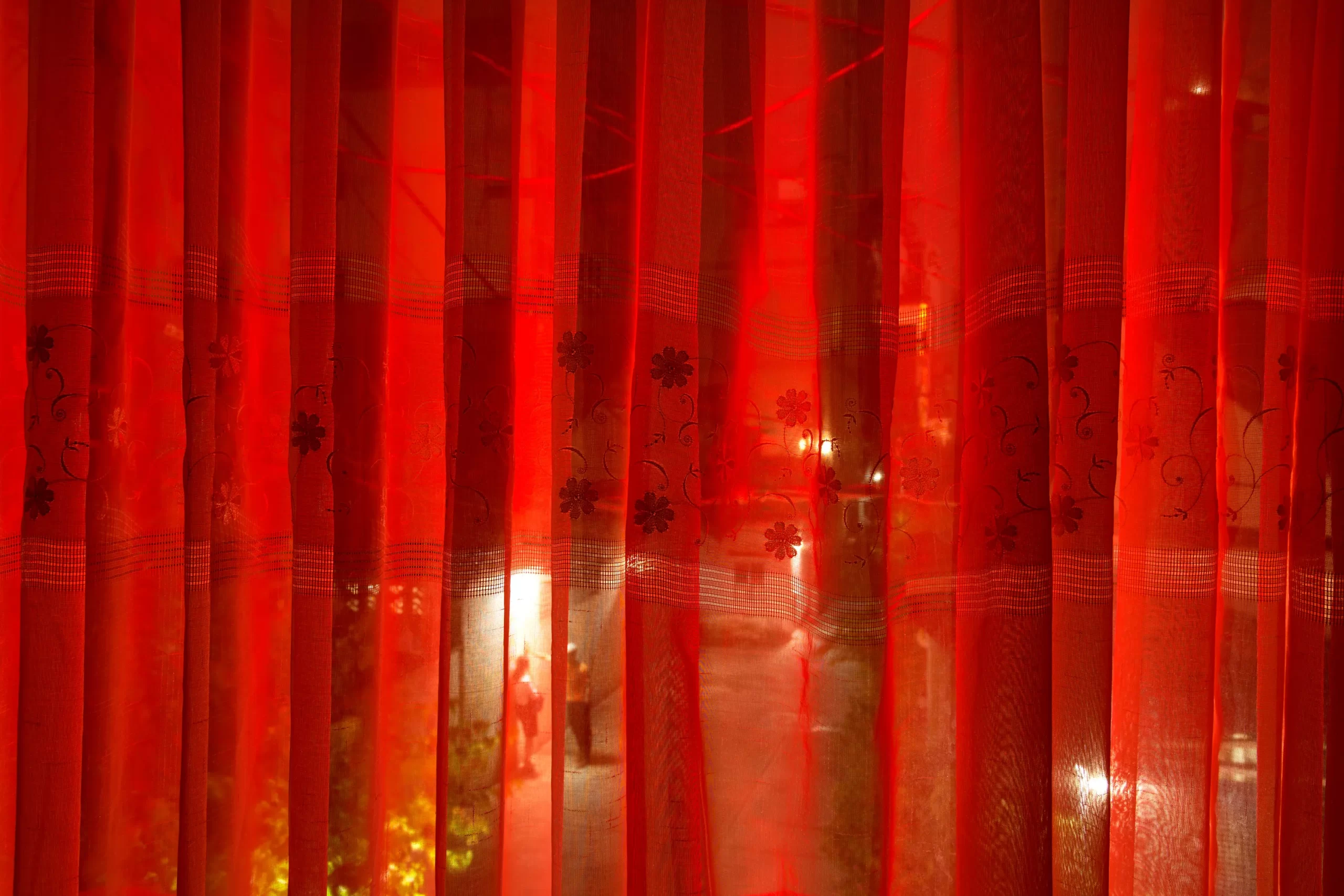
The space that exists within the photograph, no matter how real or majestic they appear, is always regulated and controlled.4 It is through the photographer’s intention, innovation and invention that they construct such realities into certain memories, or “documentary fiction.” Drawing from the imagined East and the ‘exoticised’ Asian experience, Jamie Maxtone-Graham’s series of The Desiring Garden (2011) features staged portraits of strangers in Hà Nội surrounded by nature appears fictional and exotic, inspired by the carte-postale from French colonial era. Duy-Phuong Le Nguyen’s documentary series Holding Water (2010–2015) lingers between reality and fiction, depicting the community living near Tri An lake while evoking a sense of suspension within the dreamlike waterscape. Setting up his camera behind the hotel window’s curtains, Vietnamese American artist Pipo Nguyen-Duy recorded locals’ activities and movements in a neighbourhood in Ho Chi Minh City through Hotel Window (2016–2019) series, addressing trans-cultural identity and site specificity through his outsider’s perspective, with the hotel room becoming a metaphor for an in-between place.5 Tran Anh Dung’s black-and-white photographs frame his models and subjects through intimate and cinematic perspectives, with a hazy atmosphere that subtly detaches them from reality. Together, their works reveal photography is more than a means of recording truths. Through staging, framing and perspectives, it constructs particular ways of creating and viewing alternative realities.
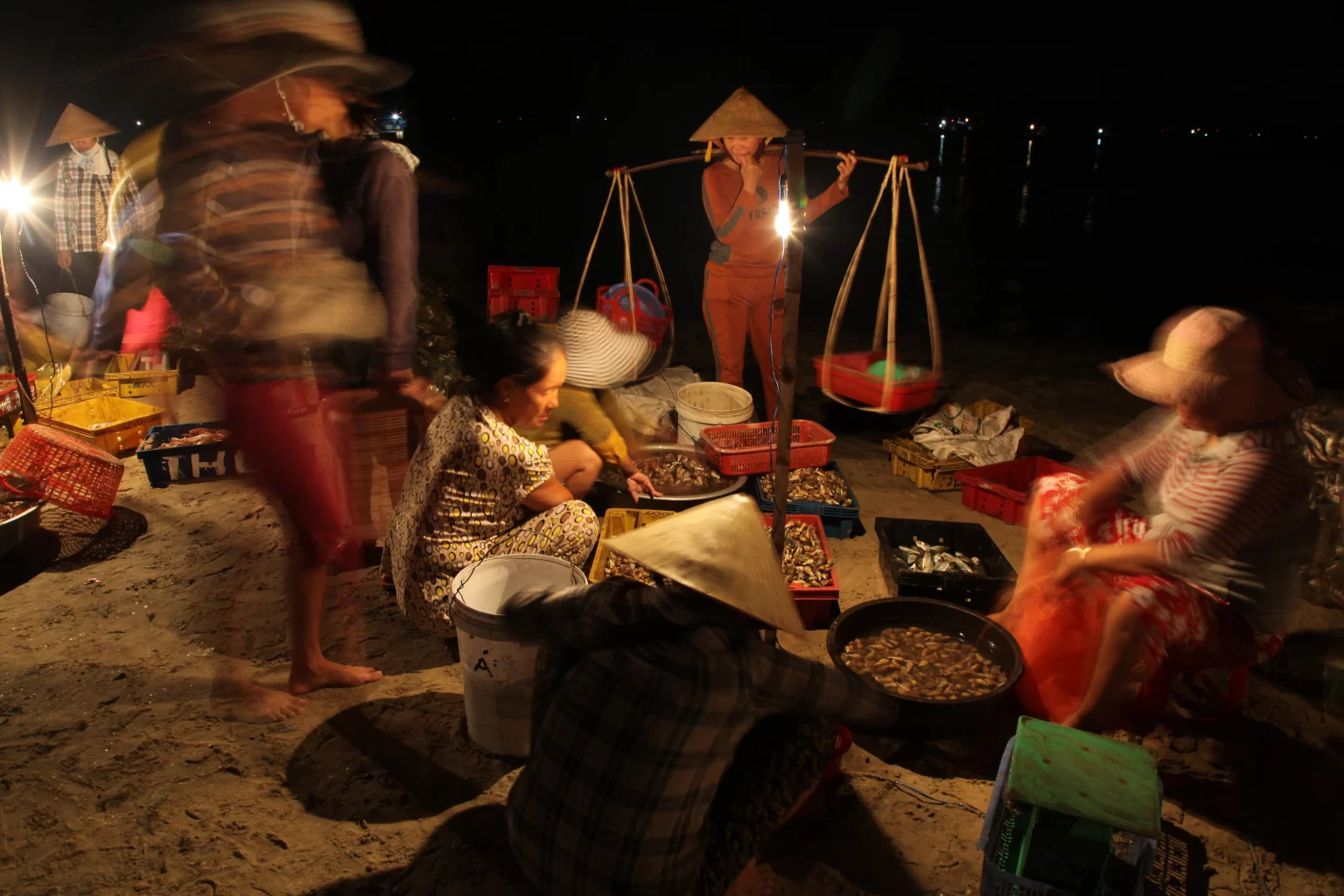
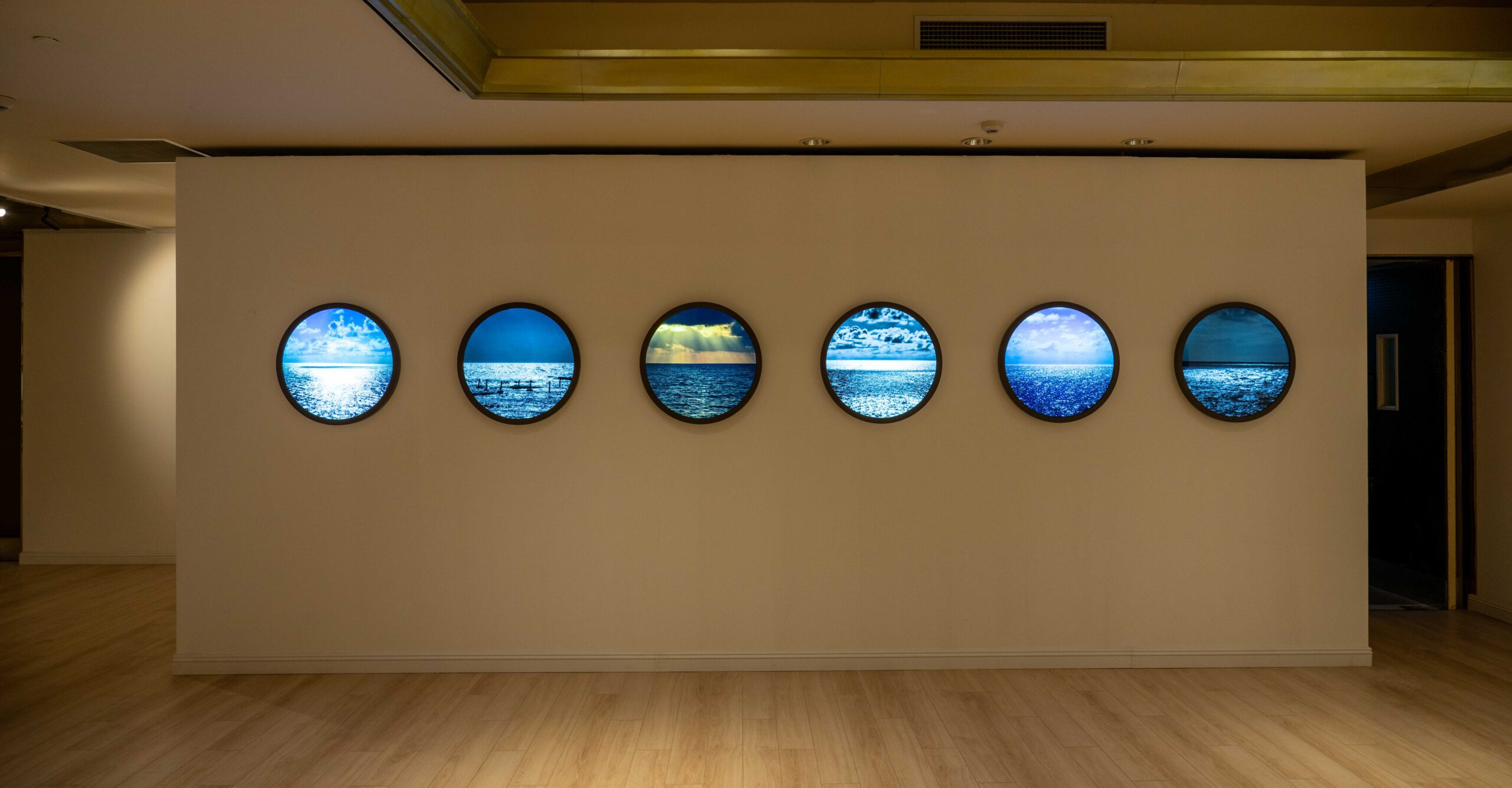
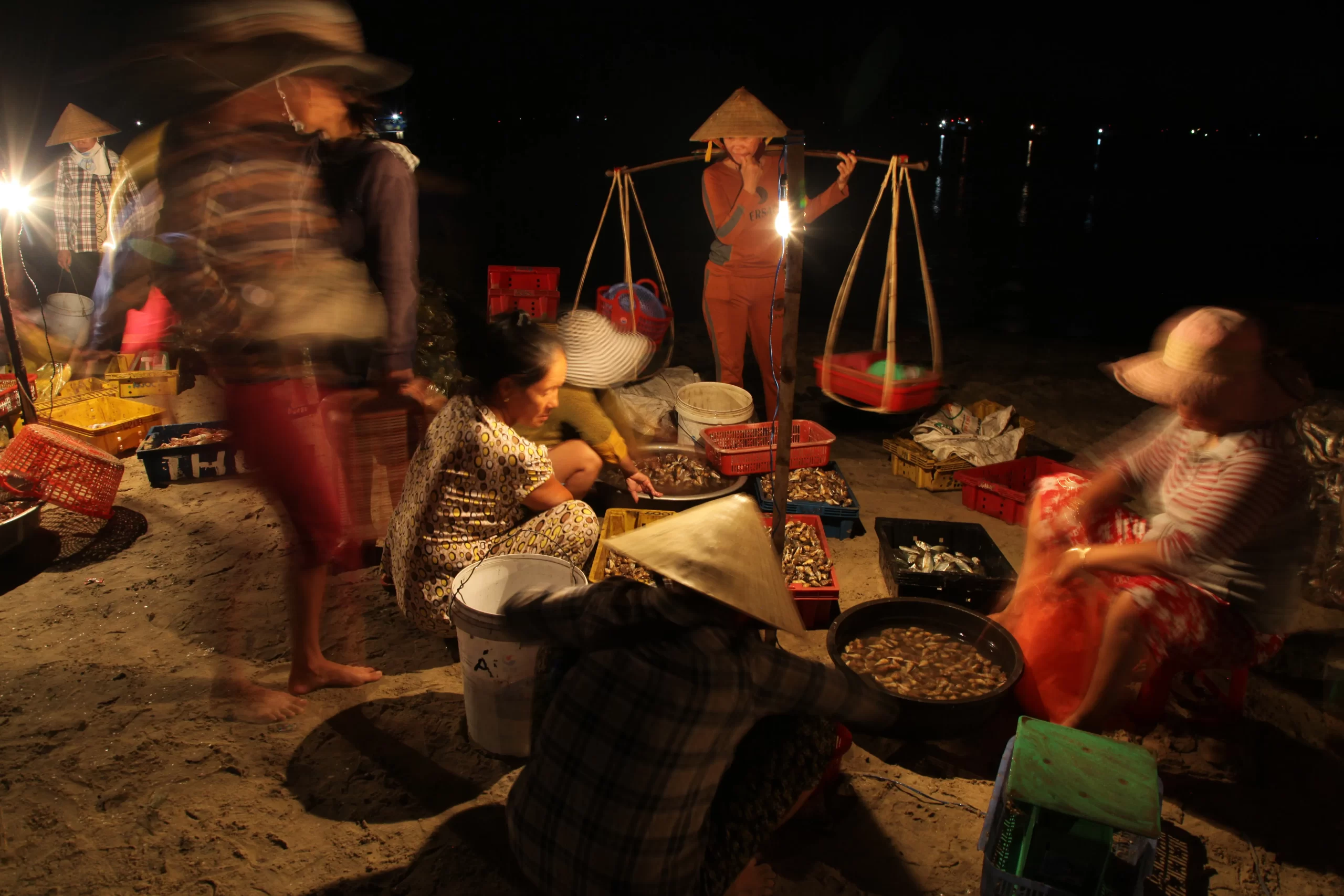
The exhibition also features photographic works capturing real lives and landscapes taken both within and outside of Vietnam. Explorer and photographer Hoang Le Giang presents photographs taken on his adventures in faraway places, notably Amdo Bone (2025) and Isfahan Carbon (2025), depicting natural landscapes or their fragments, evoking a raw yet dreamy feeling at first glance. Seascapes through Nguyen The Son’s series Go to the East (2019) was created during his ten days of observation in the East Sea. The photographs are framed in round-shaped light boxes, resembling the experience of viewing the ocean through a ship’s window on a sea voyage. Hoang The Nhiem captures vast landscapes through the careful framing and the use of light, shadow and contrast in black-and-white, revealing the co-existence of nature and inevitable urban development in works such as Starting Point for a New City Park (2020) and Spend Life to Develop New Life (2020). Huynh Anh’s documentary photographs focus on people and environments in Central Vietnam, capturing ordinary lives and landscapes that may be on the verge of disappearance, as in Early Morning Market (2016) and a partly demolished temple in Blessing (2016). Here, landscapes are not necessarily entirely related to nature or a vast space typically recorded through a photograph, but can be closely tied to our everyday experiences or practices, revealing the close relationship between humans and the land, whether untouched or in the midst of urbanisation.6
Images of elegant women or the depiction of beauty have long been a common topic for photographers. However, beyond this familiar realm, have we considered the labour involved, the stereotypes around these representations? How can photographic practices resist or challenge the patriarchal gaze? Black-and-white photographs of models posing femininely in traditional ao dai, presented in a romanticised manner through Summer noon (late 1990s) and Graceful (early 2000s) by Hoang Truong embody the conventional ideals of gentle and modest beauty of Vietnamese women. Coincidentally, on the same floor, his photographs are confronted by Hanh Thi Pham’s Self Portrait/Hairy/Pipe (1985), featuring herself also wearing áo dài, holding a smoking pipe and directing a fierce gaze towards the viewers, challenging the patriarchal gaze with an assertive confrontation that makes us reconsider traditional notions of femininity. Ha Dao’s series of Non-certified Copies (2022–on-going), meanwhile, features close-up views of acrylic nails painted by technicians from salons from across Hanoi to Berlin, where fluid colours resemble abstract landscapes. The meticulous beauty of these patterns does not merely represent beauty, but also reveals the labour, care and skills behind their production.
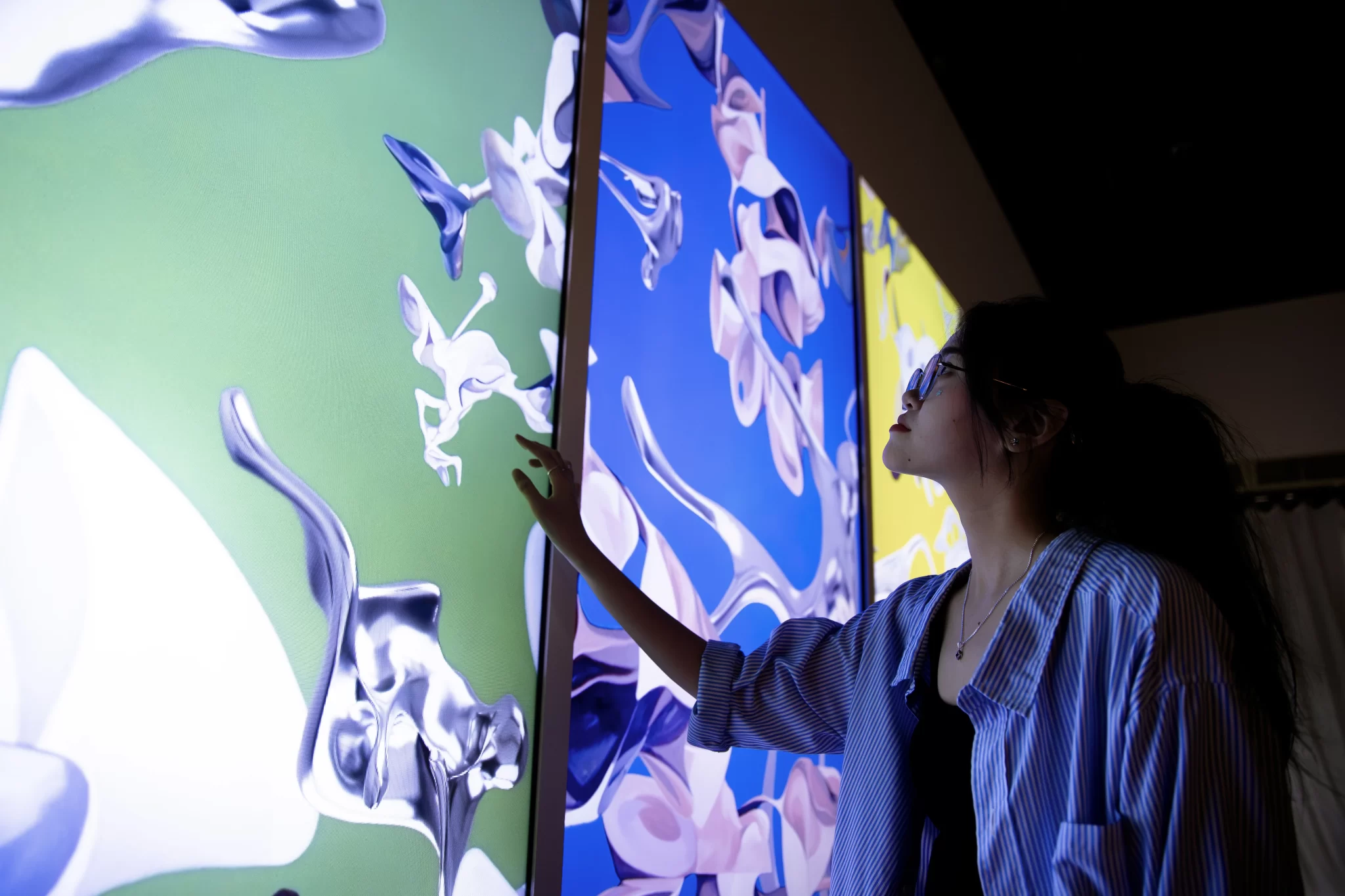
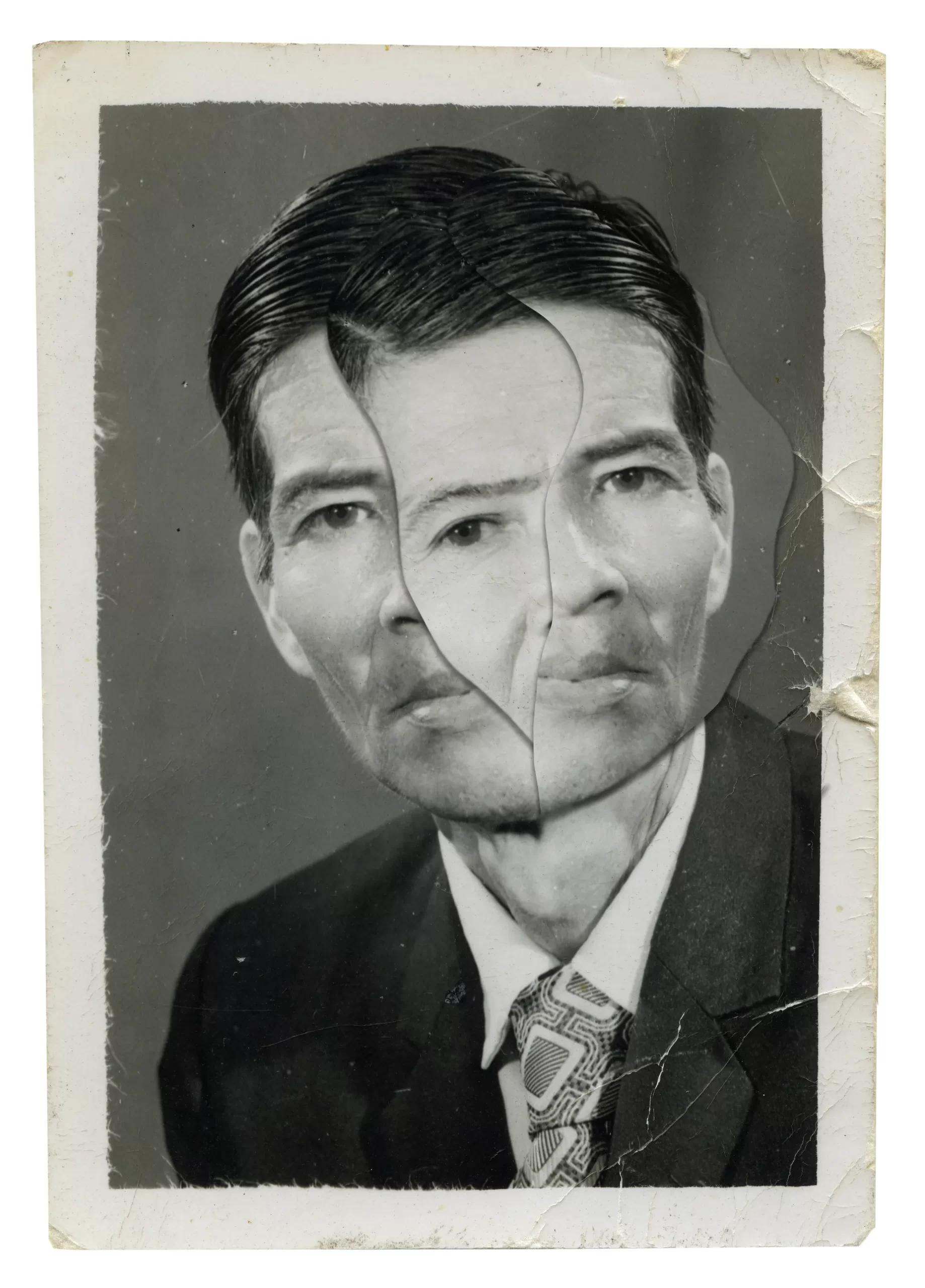
Beyond photographs depicting real images, the exhibition also features both analogue and digital photographic works created through image manipulation and editing techniques. As a second-generation diaspora, Ann Le worked with photomontage on archival photographs of her Maternal Grandfather (2017), Dad (2017) and Paternal Grandfather (2017) who lived through the war. The portraits appear fragmented, reassembled as patchworks, while the artist intentionally preserves the fractures on the surface as a “cartography of remembrance” for future generations to reflect on identity, inheritance, and belonging.8 Meanwhile, Que (Nguyen Duc Hung) presents his digital photographic art, notably Elles (2017–2022) and Goddess of a Satyr (2019), creating dark, emotional and mysterious inner realms rooted in his personal memories of his family and himself. Through cropping, collaging, editing and recomposition, these works deal with the complexity of personal trauma, history and identity without showing explicit representations of them.
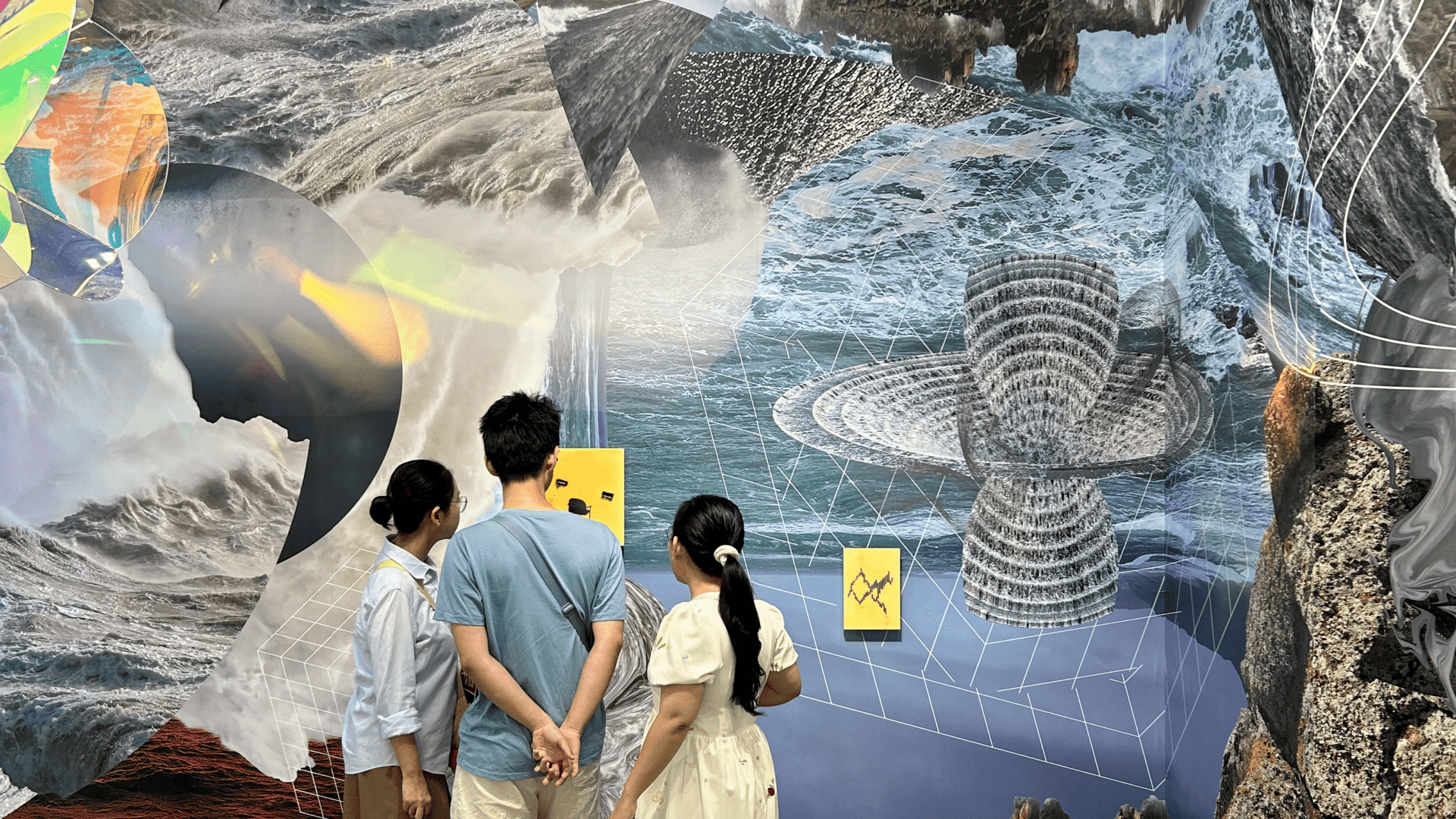
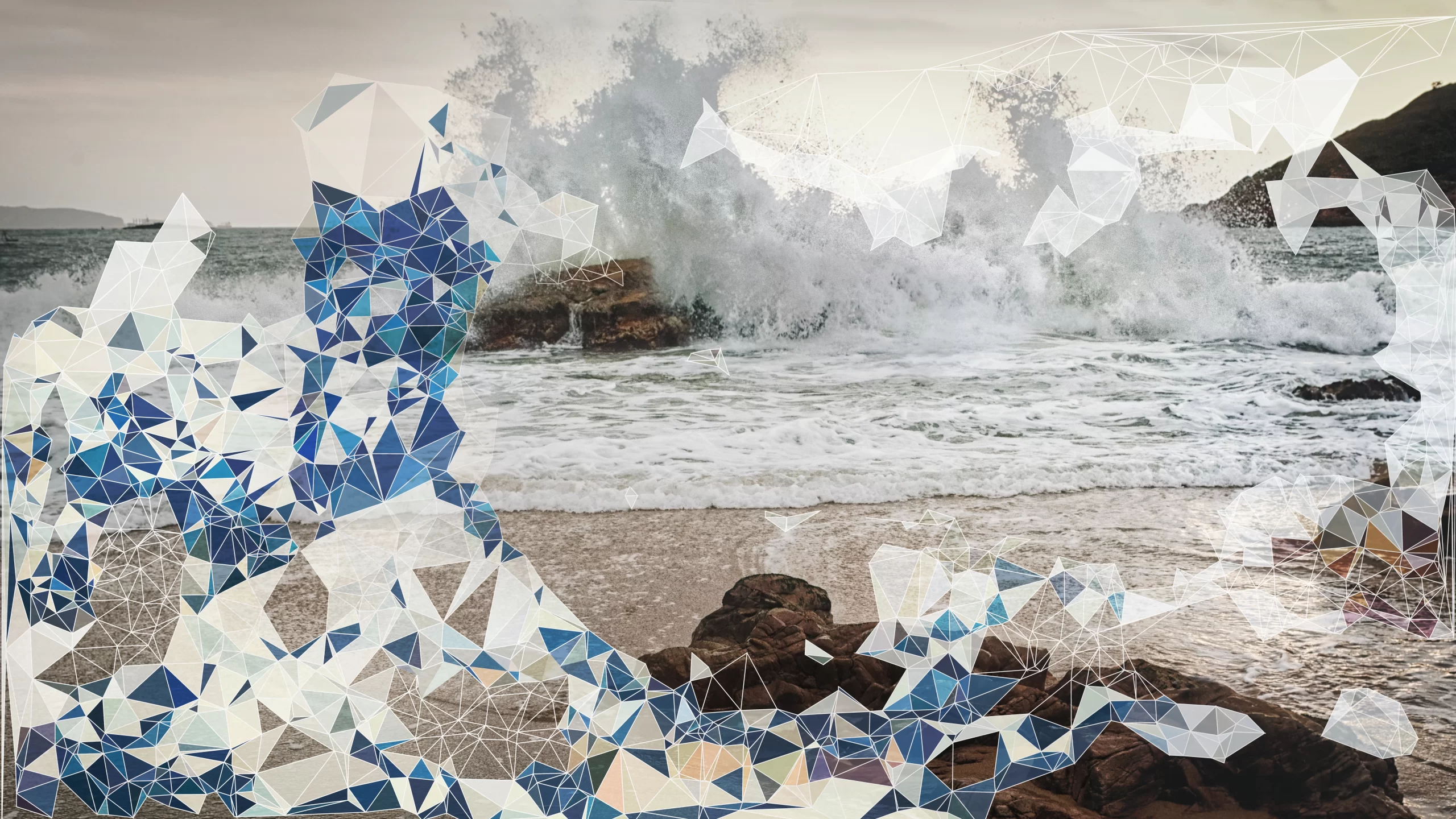
Finally, photographic images have expanded beyond their original medium, no longer being contained on a flat surface but transformed into installations that evoke spatial encounters. Nguyen Phuong Linh’s Brilliant Sun Carbon (2026) was made of a colourgraded photograph printed on a large PVC sheet, transforming an unknown landscape into something resembling skin and flesh when viewed up close. Suspended by a fish hook and supported by a four-legged metal table, with one sharpened leg piercing on a durian, the work’s visual appearance creates the sensation of a breathing body. For Quang Lam, photography is an instrument for investigating the future while preserving the past, and his practice of collecting old archives becomes a way of reviving history.9 His digital photographic series Meta-far-East (2023) overlays geometric graphics in motion, resembling terrains, waves and maps onto archival photographs of landscapes and cities of the Far East from the French colonial era. Archives crosswords (2025) consists of photographs and accompanied by an expansive installation of an index cabinet, stacks of old books, circuit boards, LED screens and scattered dragonfruits, which are all interconnected with red threads. By extending photographic elements into physical space, both artists expand photography beyond the medium itself, allowing audiences to encounter the works from different distances and angles.
The curatorial narrative takes a poetic approach, rooted in the Vietnamese American curator’s nostalgia towards Vietnam. Alongside the idea of East-meets-West, this approach explains why the exhibition was partly shaped through the diaspora gaze, positioning memory and geographical distance as central to its understanding of Vietnamese identity. However, the perspective becomes slightly less convincing as the exhibition aims to unify 18 artists under the notion of “we are one voice; we are Vietnam”, potentially reducing diverse practices into a singular narrative.
Excerpted artists’ quotes are displayed alongside the artworks, with wall labels consisting of titles and artists’ biography. While this gives greater visibility to each artist’s voice, some excerpts seem to be removed from their original context in the publication’s interview. Without reading the publication, the audience would find it difficult to comprehend the works and their context, which concerns the inconsistencies of production and presentation, rather than curatorial decision-making. Moreover, the curatorial framework could have been further developed with more attention to some of the photographic techniques employed by the artists, which may have strengthened audiences’ engagement with the works’ material qualities alongside their sentimental meanings.
The 21st century marks the age of digital media, with editing software and A.I. increasingly shaping the way an image is produced and consumed. Rather than functioning as a mere object to be distributed or passively consumed, photography can be understood as socially active, participating in exchanges between individuals, systems, and wider networks of human relations.10 Although the exhibition may not have been the most comprehensive exhibition on contemporary photography, it remains a significant contribution to Vietnam’s photography discourse, which has largely been left out from art history. The exhibition connects the past, present and future—inviting audiences to reflect on personal and collective memories through an evolving visual archive shaped by artists who stayed, travelled across the ocean, and returned home.
Words and Translation: An Trần
[1] Roland Barthes, Camera Lucida: Reflections on Photography, translated by Richard Howard, Hill and Wang (1981), p. 85.
[2] Photographs made using a 19th-century wet-plate process, requiring long exposure times on glass or metal plates coated with light-sensitive silver salts.
[3] Brian Đoàn and Boris Zuliani, “Boris Zuliani,” The Sediment of Light: Contemporary Photography in the Vietnamese Continuum, Vietnam Women’s Publishing House (2026), p. 269.
[4] Charmaine Toh, “The City Under Control,” Living Pictures: Photography in Southeast Asia, 1st ed., edited by Charmaine Toh, National Gallery Singapore (2022), p. 329.
[5] Brian Đoàn and Pipo Nguyễn-Duy, “Pipo Nguyễn-Duy,” The Sediment of Light: Contemporary Photography in the Vietnamese Continuum, Vietnam Women’s Publishing House (2026), pp. 173–179.
[6] Liz Wells, Land Matters: Landscape Photography, Culture and Identity, I.B. Tauris & Co Ltd (2011), p. 21.
[7] Brian Đoàn, “The Light of Dual Heritage,” Art Nation 9, Vietnam Women’s Publishing House (2025), pp. 148–149.
[8] Brian Đoàn and Ann Lê, “Ann Lê,” The Sediment of Light: Contemporary Photography in the Vietnamese Continuum, Vietnam Women’s Publishing House (2026), pp. 106–107.
[9] Brian Đoàn and Quang Lâm, “Quang Lâm,” The Sediment of Light: Contemporary Photography in the Vietnamese Continuum, Vietnam Women’s Publishing House (2026), pp. 91, 95.
[10] Brian Đoàn, The Sediment of Light: Contemporary Photography in the Vietnamese Continuum, Vietnam Women’s Publishing House (2026), pp. 26–27.