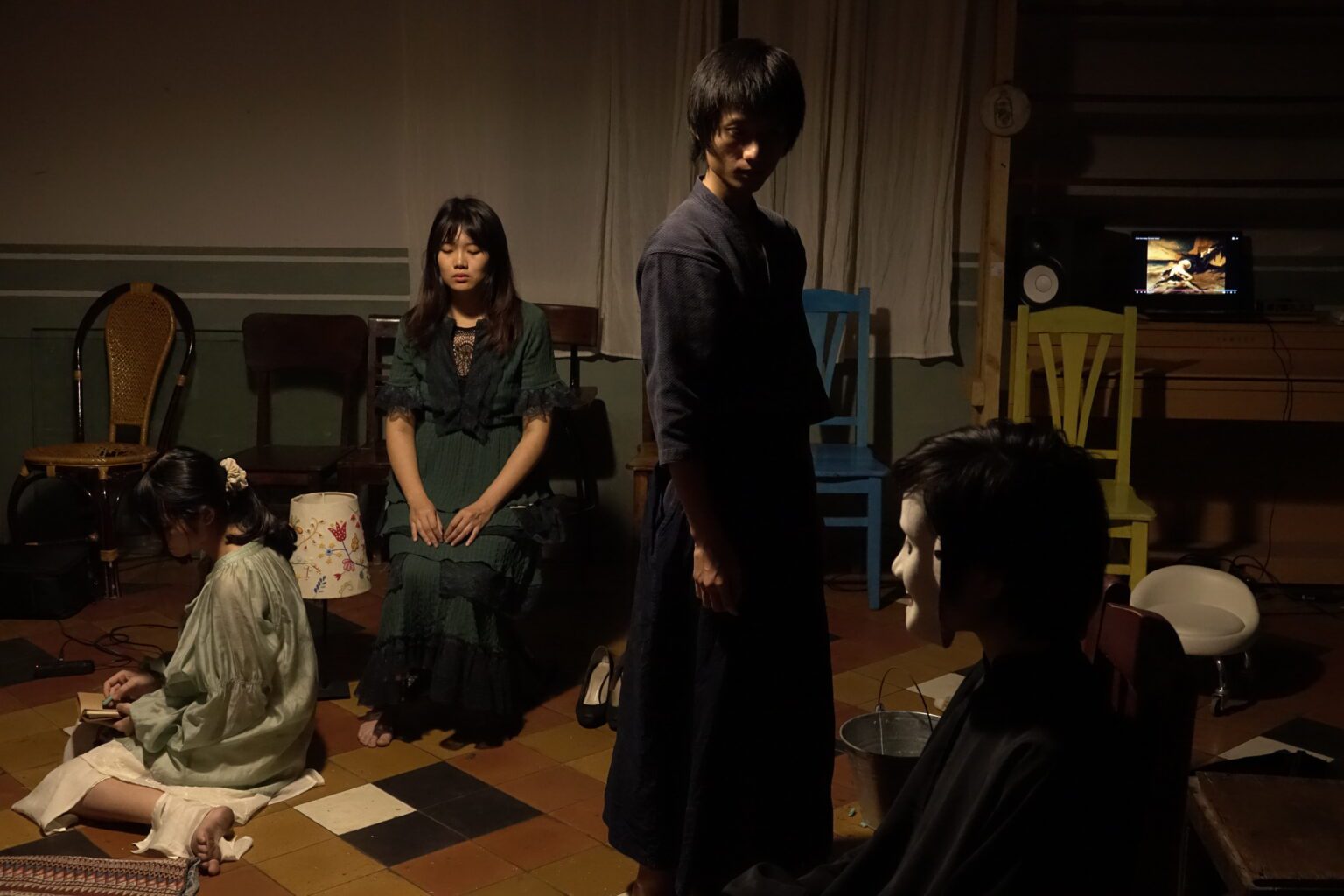
Composed by Albert Camus and premiered in France in 1944, the play “Le Malentendu” (The Misunderstanding) was recently staged in a new production by Unbox Theatre, based on the Vietnamese translation by Bui Giang (Literature & Arts Publishing House, 2006).
“After many years, the prodigal son returns to the village where his mother and sister live in hope of bringing them wealth and happiness. Unable to disclose his true identity, he remains for the night in the guise of a lodger. That night, the mother and sister murder him to steal his money. In his wish to return as a saviour, he ultimately fails due to his inability to communicate in the same transparent language as those he intends to help.”
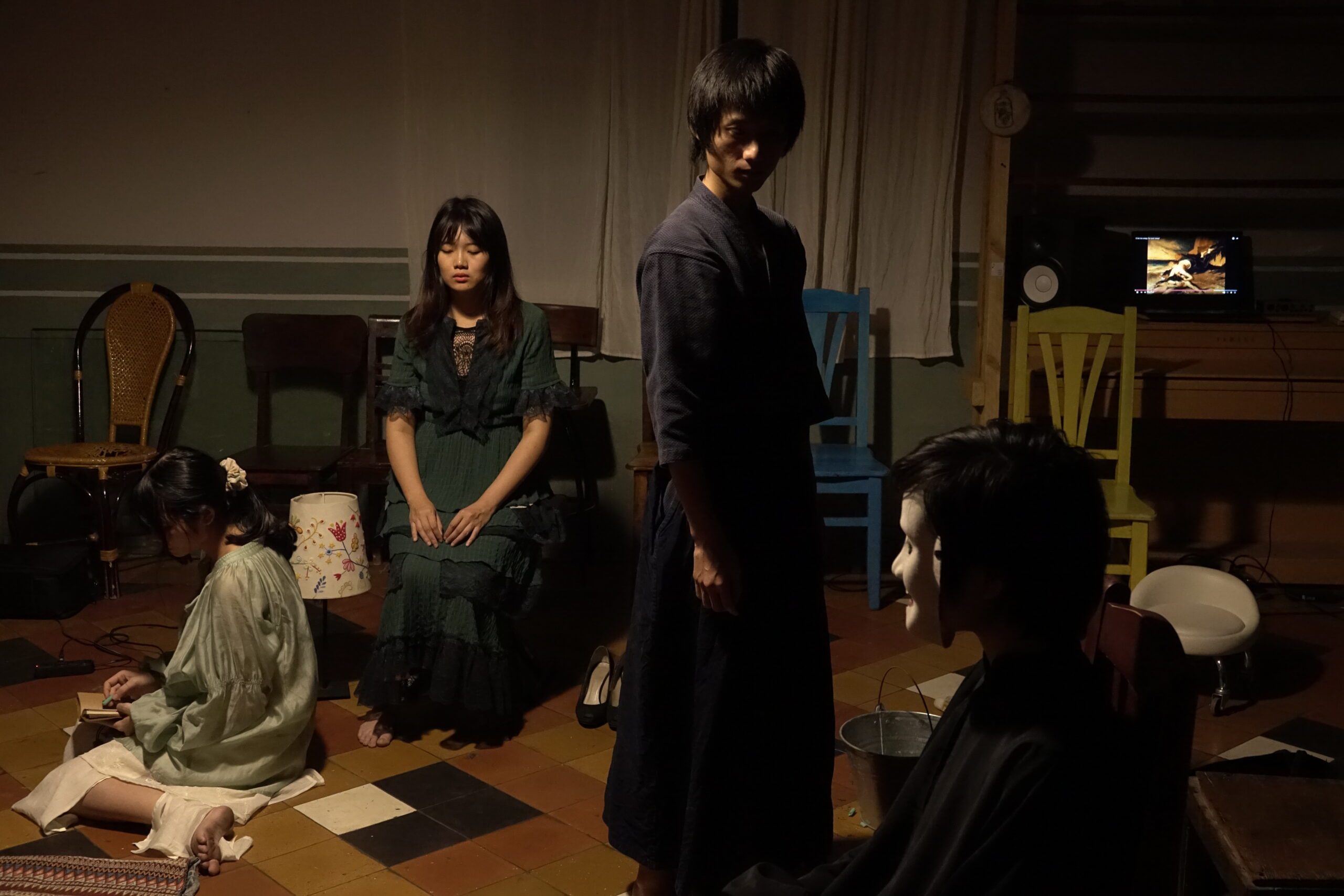
Unbox Theatre’s production of “The Misunderstanding” was set on a compact, circular stage, designed for a chamber with the capacity of nearly 40 spectators. In the absence of wings, actors remained perpetually present on stage, regardless of whether they were active in a scene. Props, sound, and lighting were handled with deliberate restraint, leaving ample space for the acting.
“I hesitated somewhat when asked to participate in this play. I had just returned from a long sojourn, longer than my hands could grasp. I reached out too far and got myself uprooted. My body withered, my existence suspended. I wavered between staying put or stepping into yet another long sojourn. I was uncertain. I began to wander.
After the warm-ups came an exercise called “Coming on Stage.” And to speak and to move. Surely that is the essence of acting? To speak and to move. To give motion to speech. I heard the air vibrating around me, felt lines flowing into my skin, and moved. At times I spoke aloud my perennial anxieties, at others I vocalised a dialogue with the air. My voice and the air responding to each other, sweeping me away. In the stream, I turned mute.
I drifted along that unceasing stream towards an unceasing infinity.”
– Reflections by the actor who played Jan (the brother), after the initial rehearsals.
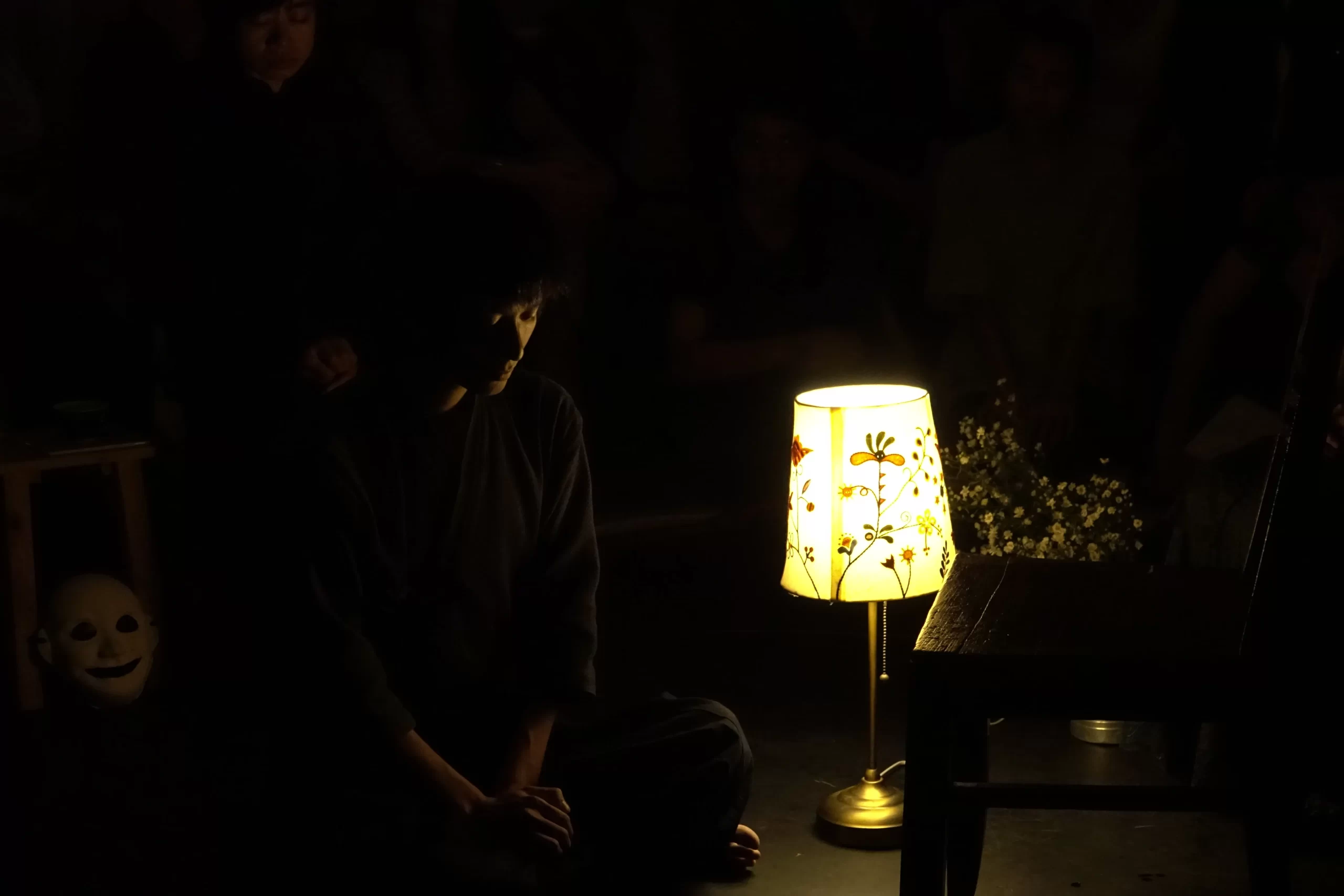
Our rehearsals began with exercises designed to build our awareness of space, of our own corporeality and psyche. They laid the crucial foundation that allowed performers to understand what they would want or need to do on stage.
Regarding space, our first task was to walk around and observe our surroundings to learn what or who was present, or how it was like. As for the body, we began with the hand, exploring the full range of its movements. For the mind, we looked into each other’s eyes and voiced our feelings. An exercise could be as simple as listening and responding. Slowly or swiftly. We could spend hours doing just that, listening and responding.
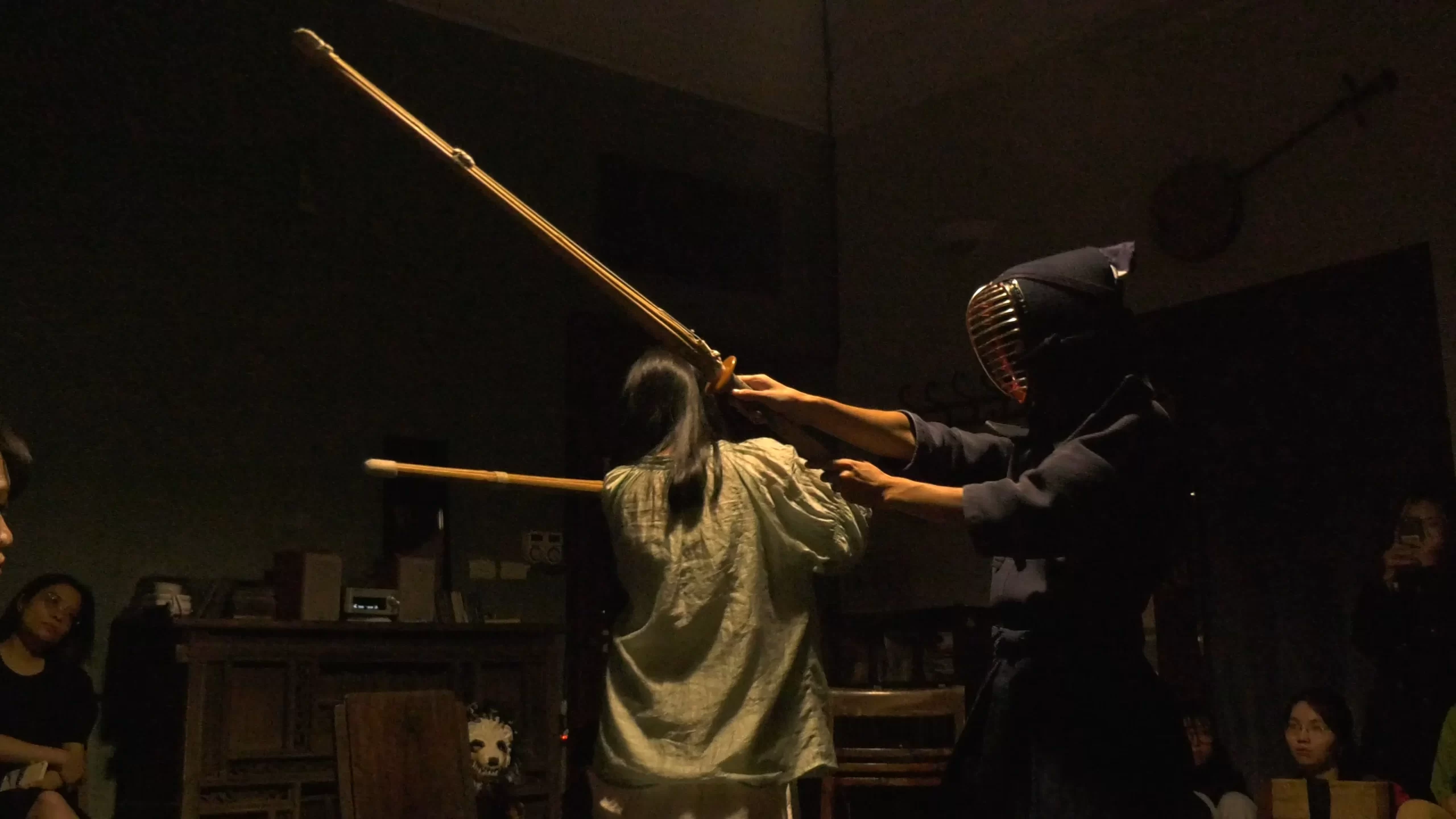
In listening, I realised I had stopped paying attention to my surroundings entirely, perhaps not even looking or formulating any emotion. I no longer noticed the others. I noticed myself with unsparing scrutiny. I evaded everything and found my mind contracting narrower than ever before. All my being and consciousness became present. All those lofty and beautiful high-minded ideals. Yet when I, an ordinary person, grappled with my own exhaustion and internal chaos, I only found my perception reduced to fragments. I responded to my own mind with a movement. Movement as though to speak, speaking as if flowing like water, the current propelling my mind forwards and I started to move.
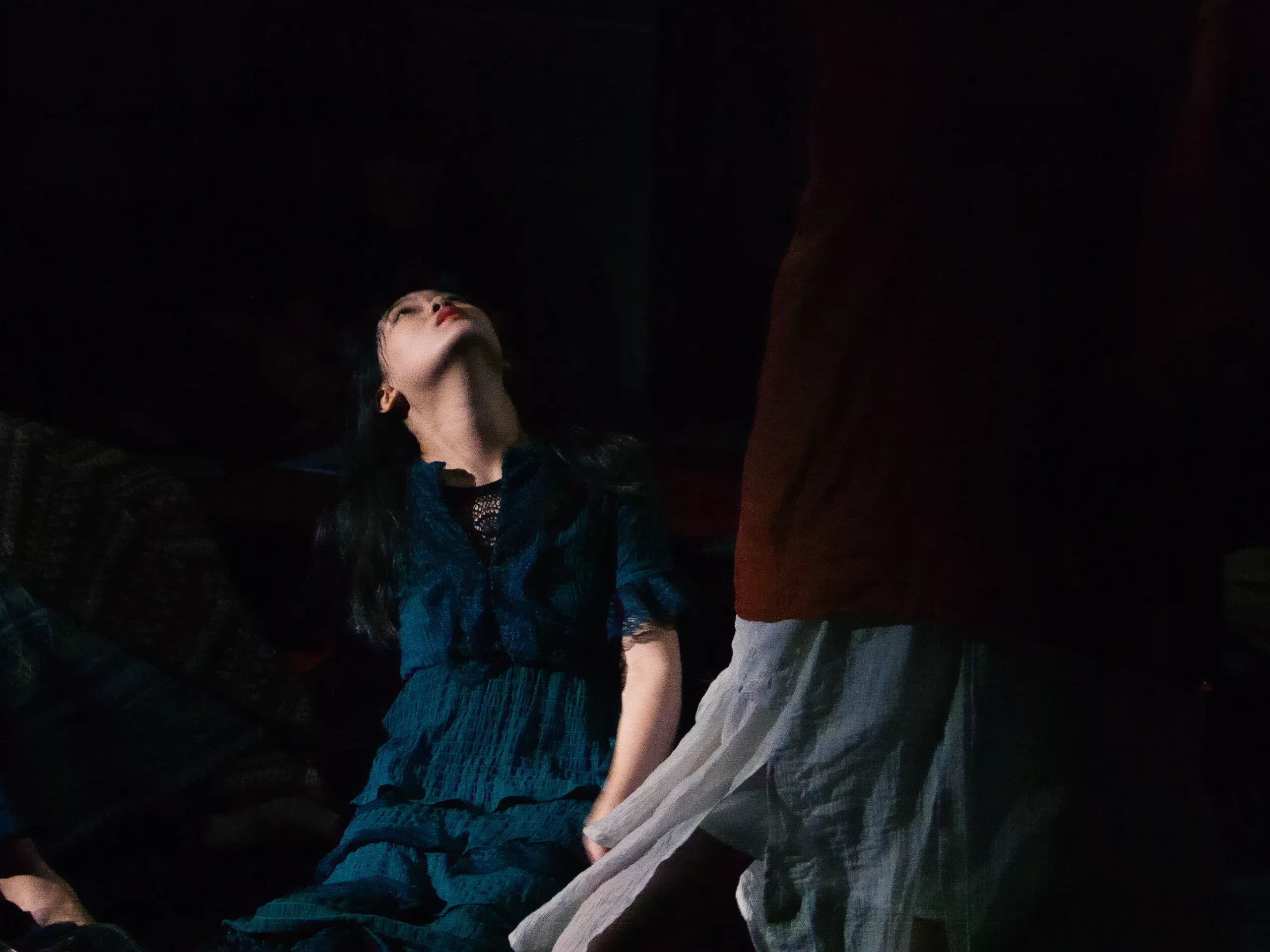
Practicing allowed me to see clearly just how little I knew. Because I knew nothing, therefore I had to put myself into a state of search. Continually. Every moment on stage, every performance became a confrontation with the unknown: not knowing what would happen next, how I would utter a line, what to do, where to go, what to receive from this space, what I would hear or see, whether I would want to tell or not to tell, to play or to challenge. A never-ending mutation.
An exciting aspect of practicing is the sense of learning something which exists only fleetingly. This ungraspability is vital in steering the performer away from becoming a prisoner of habit: a familiar gait, a rigid vocalisation, a gimmicky act to elicit emotions, repetitive hand movements no longer suited for the moment – all of which would dismantle an actor’s sustained response to the unfolding present.
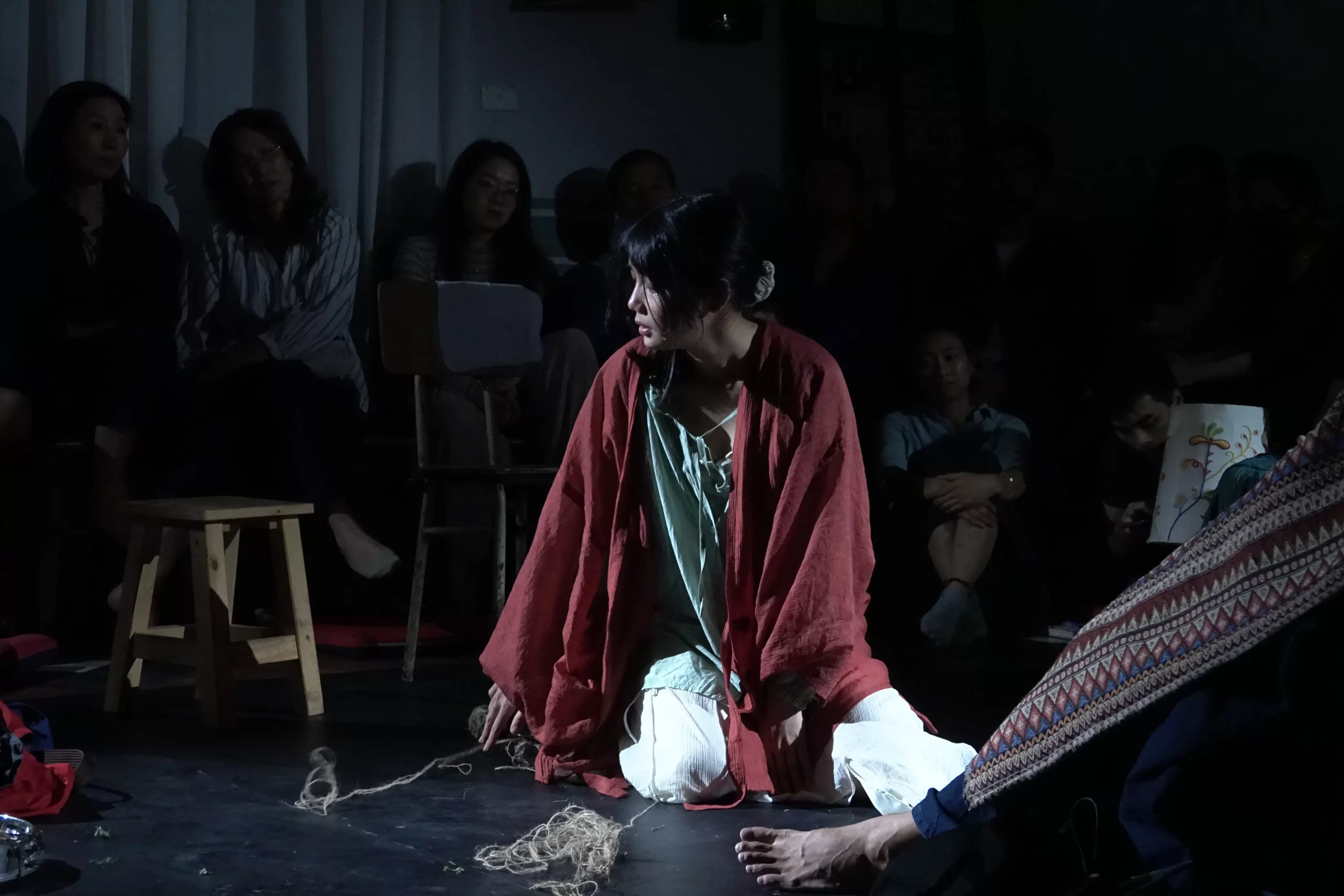
During the staging process, performers simultaneously explored their characters and the various ways to apply these exercises into the performance. On stage, every action must possess either meaning or deliberate meaninglessness. What for? Ask. How to? Ask again. One need not reach an immediate conclusion but instead simply continue to practice, unveiling different possibilities and, at times, relying on instinct alone to draw closer to the answer.
This process required performers to move constantly: to explore, to learn and to dismantle one’s own understanding. Listen to the inner voice. More frequently. More deeply. More widely. More closely. Inspect. Rummage. Every performance was different because, despite fixed dialogue and events of the script and a set arrangement of props and stage décor, it was up to each performer to decide what to do and which element to utilise. Performing while surrounded by the audience, with them seated in intimate proximity, how may one maintain a sense of distance and enigma so central to theatre, while simultaneously inviting the audience to partake in the play’s internal world? This communion between performers and spectators does not come naturally but requires conscious intent. Thus, an actor must learn to rouse the atmosphere and agilely command attention, showing up or retreating as the moment demands.
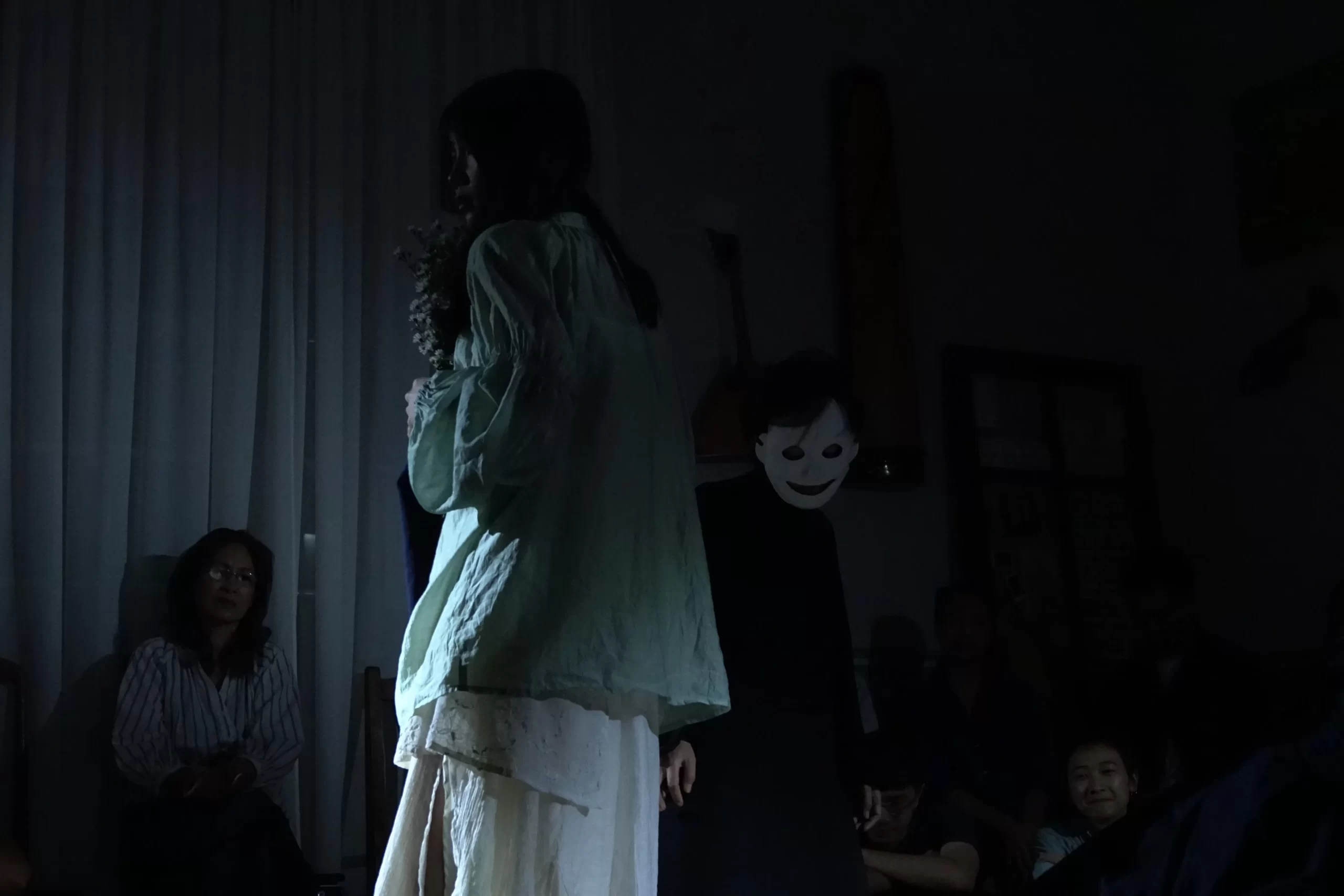
In the final stage before the premiere, our exercises gradually shifted towards helping us embody our characters. To play Martha, I began to weave in movements I had discovered during practices. It started with the hands. My hands spoke on my behalf. Their contorted movements rippled through my arms, shoulders and spine. My whole body shrunk and sank and I saw myself as a creature dwelling in the shadows, one that uttered Martha’s words and became her vessel. Martha immersed herself in a game with her own footsteps, tapping with wooden sticks, drawing with chalk, ringing the bells scattered around the stage. More robustly, more joyously, and more fervently. Then, a dance was warranted. Anything could become an expressive vocabulary, but no single gesture could serve as a catch-all. I can’t recall how many times I had had to remind myself not to remain static, nor allow any exercise to settle into habit. I could celebrate a breakthrough but had to recognise that it was never the destination. Even once on a night when everyone’s performance fell short of our expectations, we could all sense that something, at least, had shifted.
“The Misunderstanding” unravels at an intersection of crisscrossing motives. Its characters fail to understand each other because they all want to speak within their own conversational vacuum. None realises that, and thus, the play spirals towards an inevitable tragedy. Unbox Theatre’s directorial theme was flowers and monsters. Three acts, exactly four characters, and a fifth one who remains formless. Maria is the flower. The mother is the monster. Jan is the monster that becomes a flower, Martha the flower that becomes a monster. None of them are human.
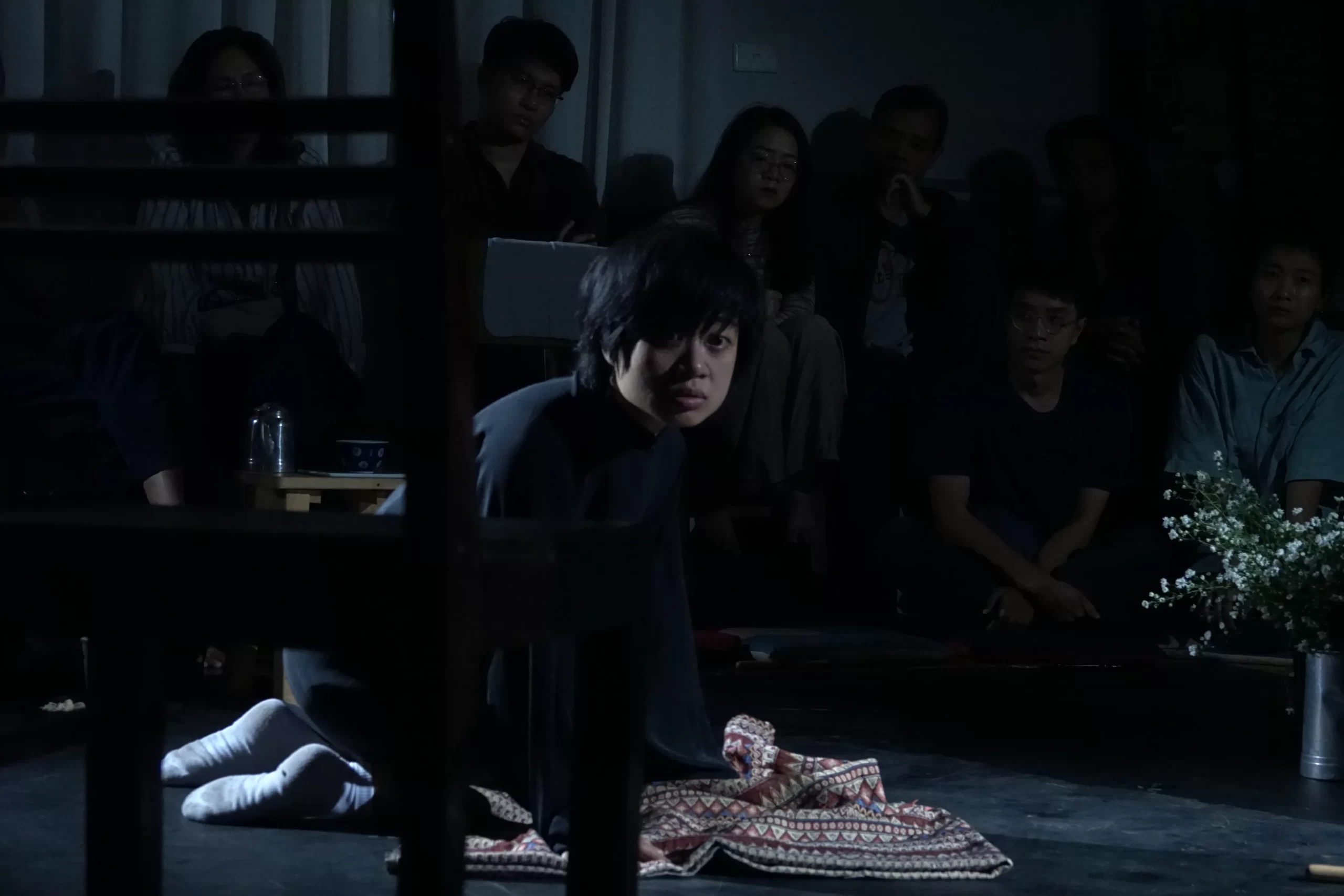
“The flower. An out-of-place species that blooms solitarily in the dreary world of the dark realm. The flower. So arduous to acquire. Immensely expensive and rare. The flower is preserved for those that would have to lose their life in a gesture of respect and gratitude.
Martha sacrifices the lodger for the greatest love of her life. She prepares everything with an attentive reverence.
To sacrifice is to invite a dormant part and a floating soul wandering in space.”
– Reflections on character study by the actor for Martha.
When we first came together to form Unbox Theatre, every member carried a personal goal. We began without a rigid conception of drama, acting, or the stage. In other words, we drew no borders. Those who embrace Unbox Theatre as their home can find the freedom to explore anything their heart desires at the core of their practice.
Words: Yết Yết
Translation: Nhật Anh