Đọc phiên bản tiếng Việt tại đây.
At the river’s source
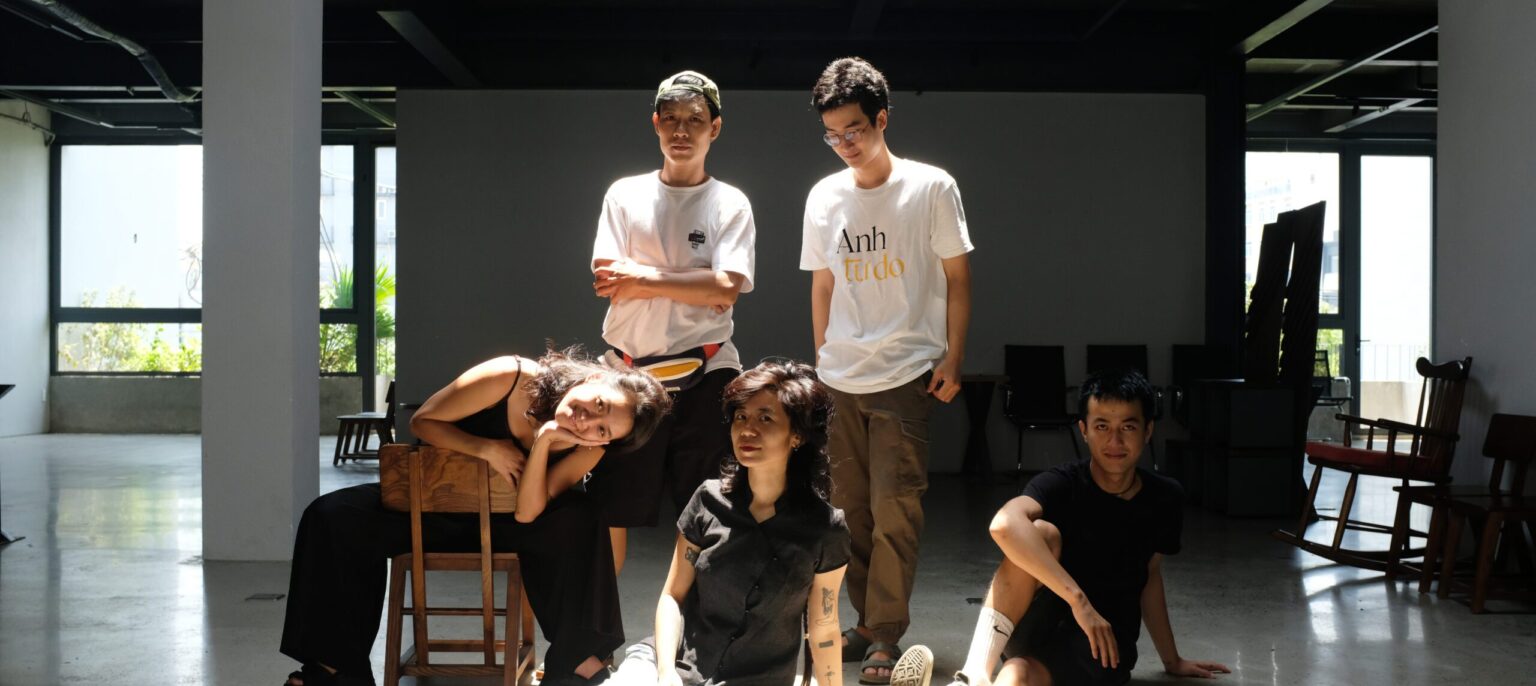
Xuan Ha founded A Sông¹ immediately upon returning to Danang as a legitimate reason to continue reflecting on and maintaining her artistic practice. A Sông’s artistic practice, therefore, is intimately intertwined with that of its founder – a dedicated community-based approach. A Sông exists and evolves like a watercourse: at times a gentle trickle, at others a torrential surge. In its name, the “A” expresses both an exclamation of joy upon a new discovery and the English indefinite article “a”; while “Sông” (River) represents a flow that is fluid, pervasive, without a fixed location. Thus, A Sông is a collective without rigid boundaries, operating instead by the flexible interconnectedness of its relationships.
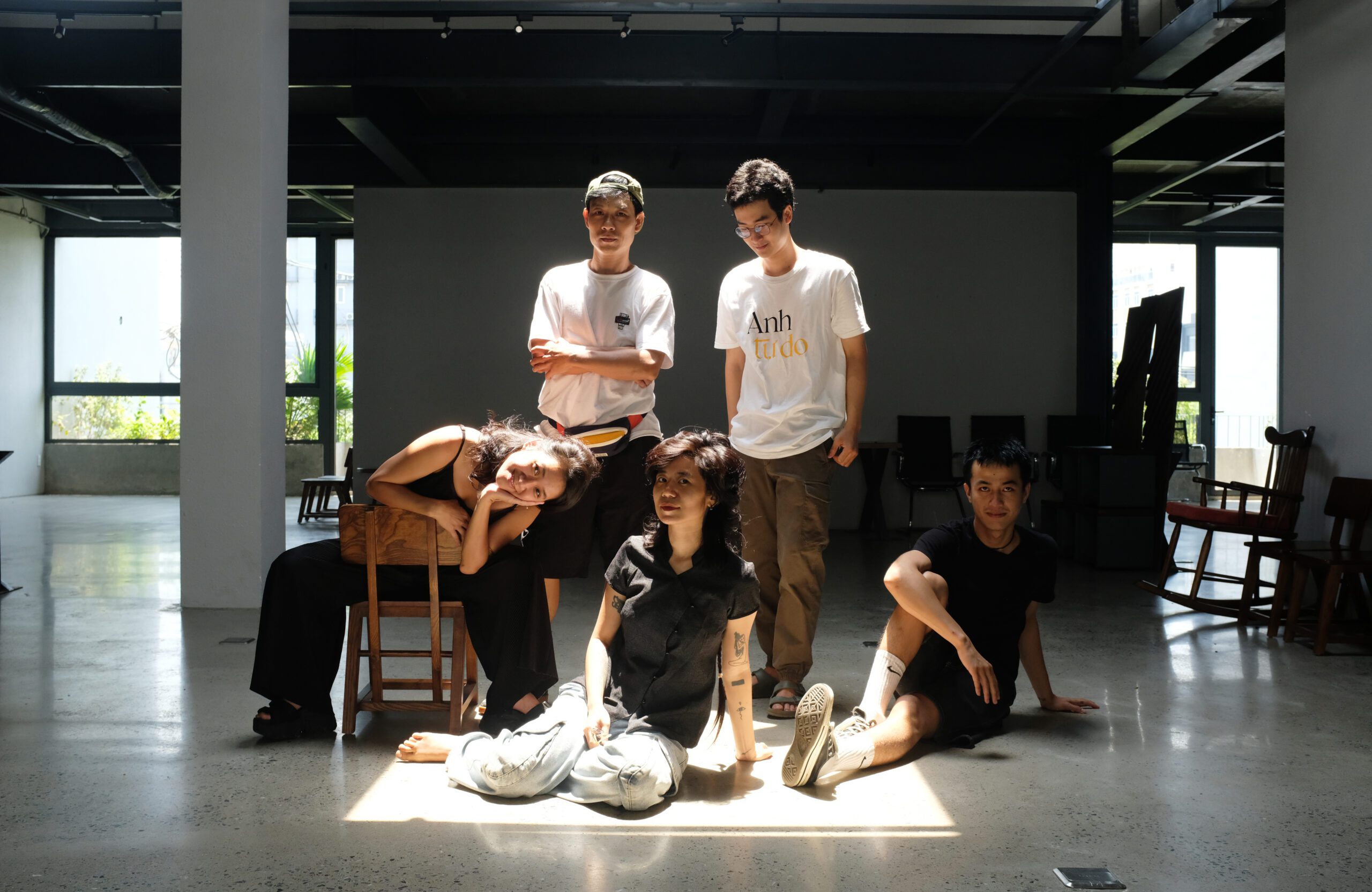
The collective’s activities can be categorised into two primary phases. During the initial stage (2019–2022), guided by the ethos of “to be-to play-to perceive” and a non-curatorial philosophy, A Sông functioned as an art club where participants could participate in cultural and recreational activities centred on art, with the primary audience being students and young people interested in the arts. At this point, the collective focused on the praxis of living with art: experiencing, encountering, and participating in gatherings of local practitioners, while simultaneously unlearning preconceived notions regarding the boundaries between art and everyday life. With an open and largely spontaneous range of programming – beginning from studio visits and hip-hop sessions to field trips and artist residencies – A Sông chose to permeate the rhythm of art organically, allowing the community itself to lead and shape the club’s activities.
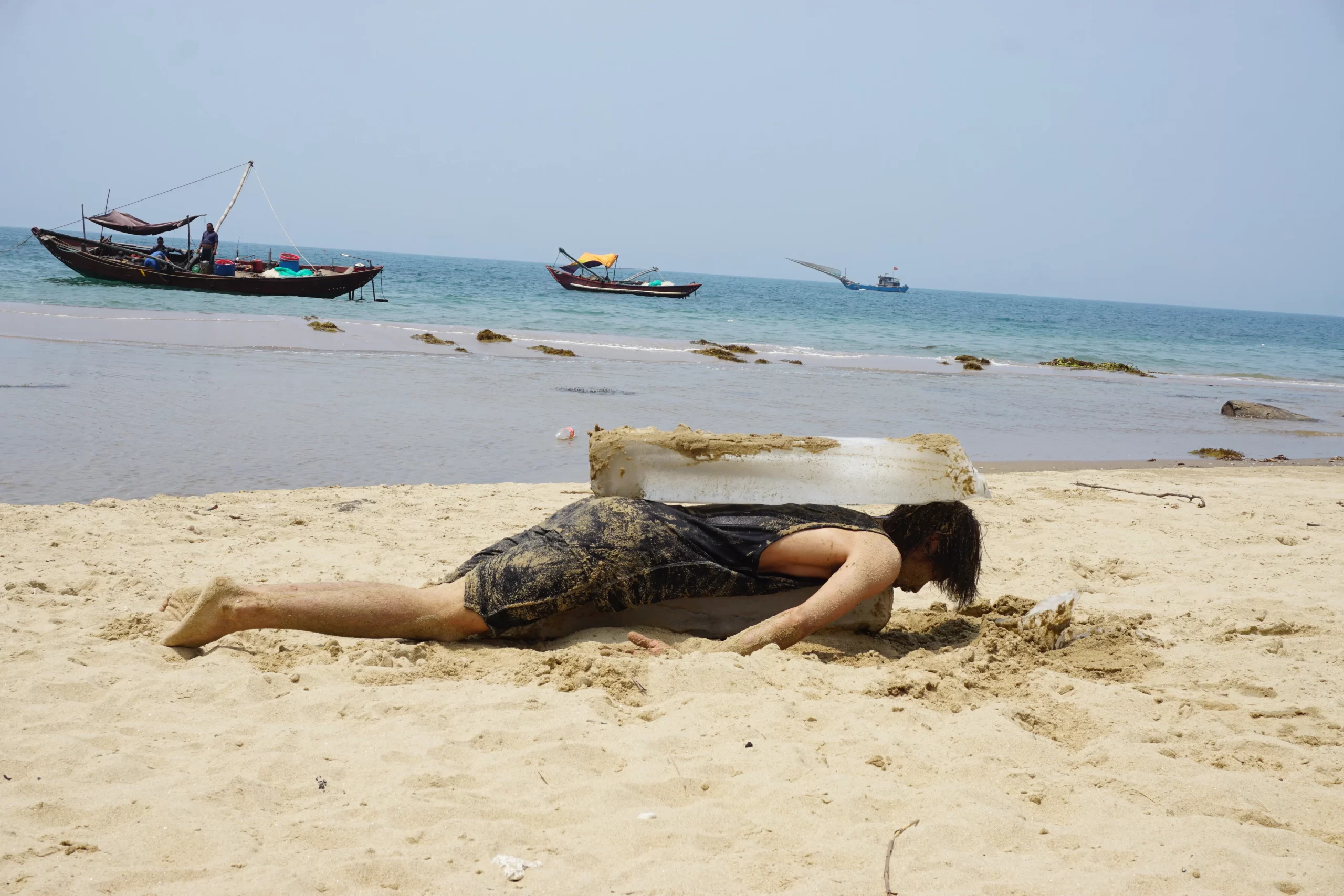
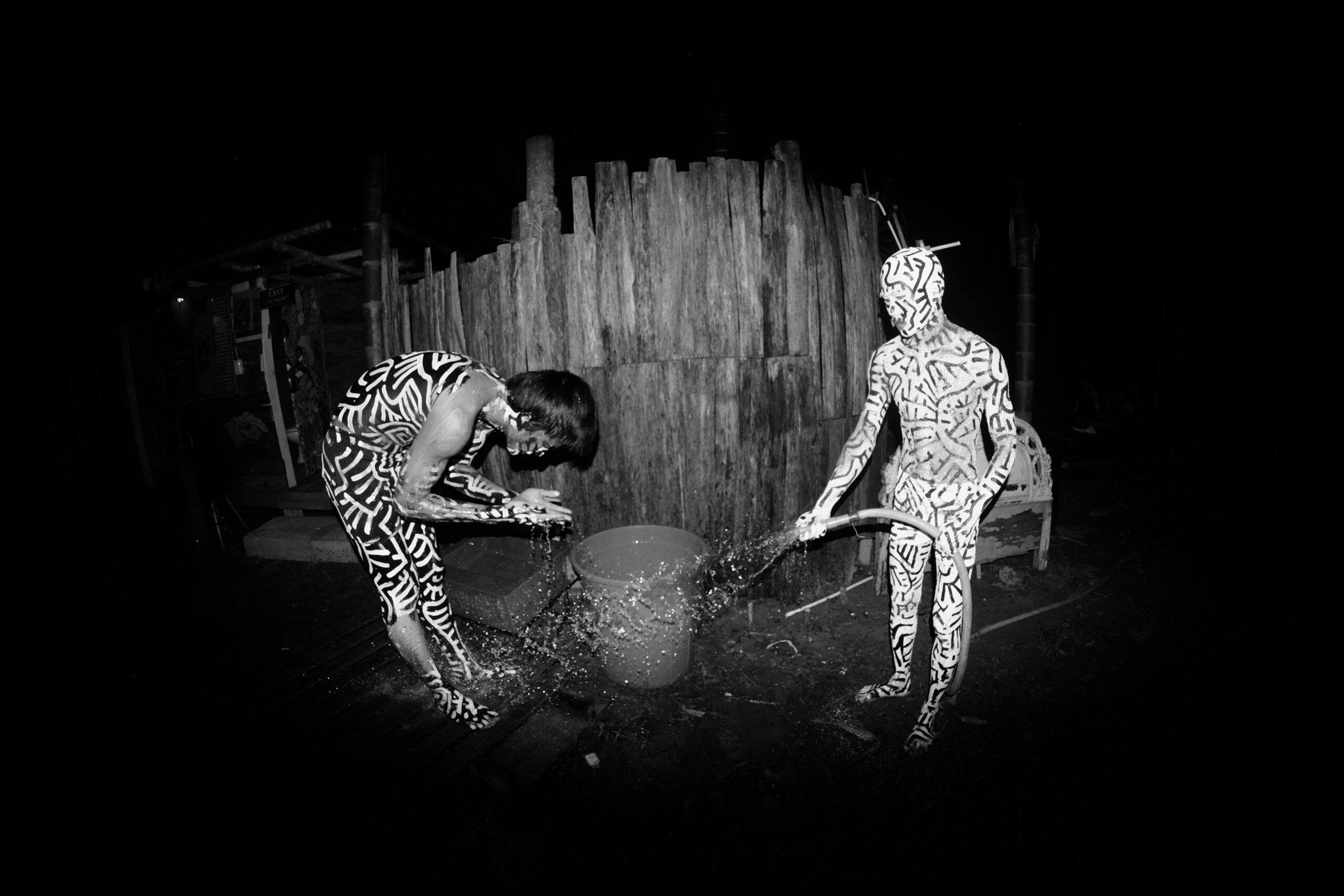
Projects such as “Is that so? (Rua hi)” and “Echoing resonance (Vang am dieu)” embraced hip-hop, street culture, musical exchanges and community interactions, reflecting the free and genuine spirit of local artists who embody a unique poetic and melodic essence of Central Vietnam. Besides, the project “A Song Thu Bon”, initiated by Pham Giang and Tan Ngoc and co-organised with A Sông, offered a distinct formal experimentation. The project took the form of a week-long voyage along the Thu Bon River, bringing together more than twenty artists from various places to create art communally on the water.
By 2023, A Sông had transitioned into its second and current phase by reconstituting itself as a proper collective of six members, a clearer programme direction, and a more structured curatorial approach. Its programming is now defined into two main branches: projects initiated and operated internally by A Sông, and collaborative ventures with external units and organisations.
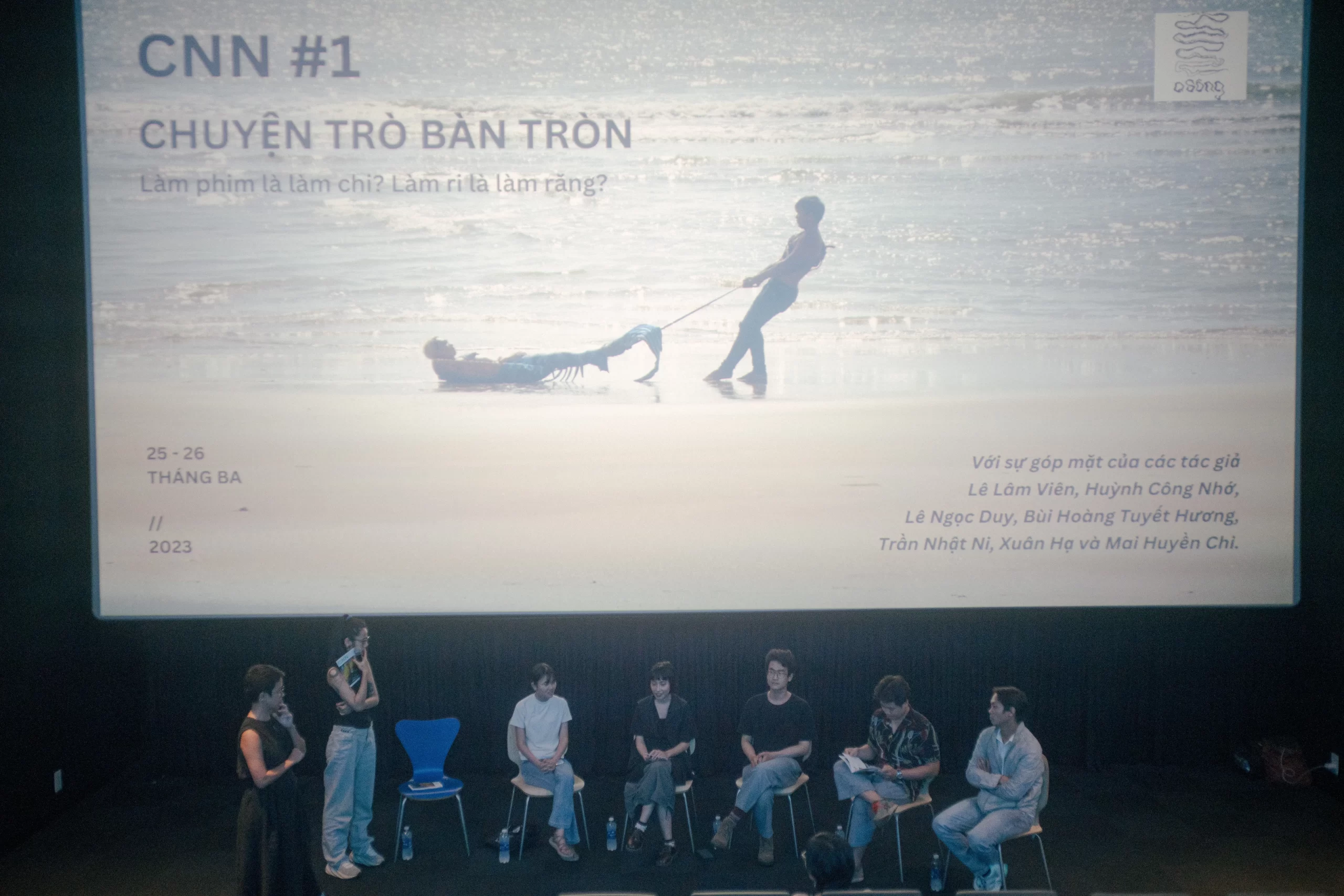
‘The collective has adopted the keywords “empowerment”, “attachment to the place”, and “fluidity” – evoking a flow that easily adapts and evolves seamlessly over time. Most prominent is the annual Cinema of Peasants (CNN) screening and discussion programme, organised and curated by filmmakers Mai Huyen Chi and Le Ngoc Duy with the support of A Sông. Spanning six seasons over three years, Cinema CNN has gradually established itself as a familiar independent film space in Danang, dedicated to uplifting Vietnamese filmmakers, particularly practitioners based in the Central region. Among its iterations, Season 3, “Dreamy mountains” (2024), co-organised by A Sông and To Dam, left the most resonance.
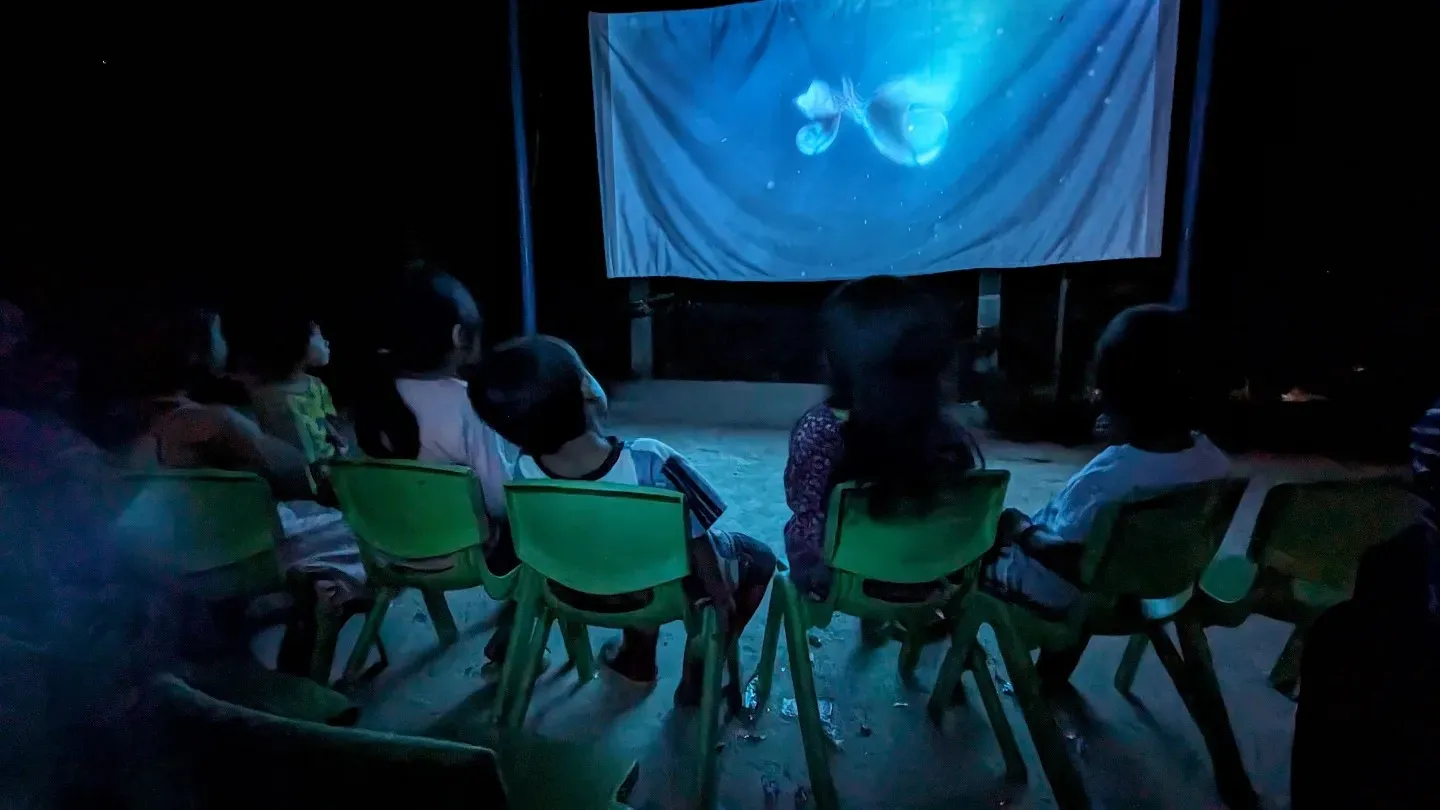
In this edition, cinema has transcended its role as a distant cultural event to become an occasion to connect and share joy and affection. The programme was deeply rooted in the resource-scarce terrains of Nam Tra My (Quang Nam), where field research and school-painting projects intertwined with screenings of animated film and intimate dialogues between teachers, parents, and children at Long Mu and Mang Di kindergartens. This is just one example of the curatorial approach that A Sông pursues: a departure from institutional physical spaces to extend its inquiry into the human and environmental complexities of the Quang Nam region.
Anchoring by the Community
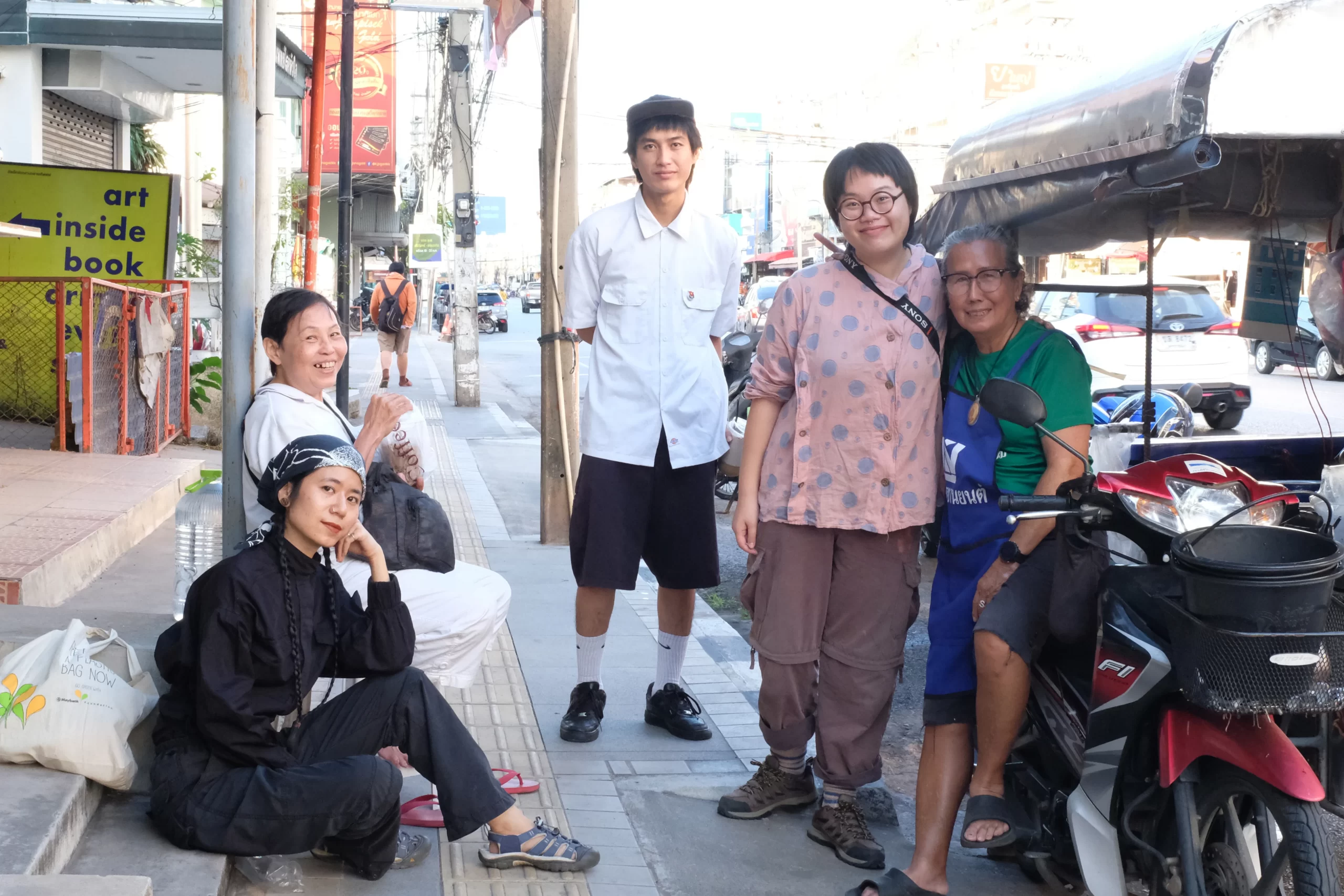
Despite nearly a decade of activity, A Sông still lacks a fixed physical address. Social media has become a vital space for archiving information, sustaining the collective’s identity and vitality, while situating it within the broader ecosystem of Vietnamese art. However, this reliance on “virtual space” also poses significant challenges to sustainability: how can its operations be systematised in the absence of a stable funding source and a physical anchor?
Faced with this challenge, A Sông’s operational strategy flexibly extends its collaborative methods to independent practitioners, socio-cultural organisations, and public institutions. The group chose to enter into dialogue with the authorities and public institutions as a shareable resource. Paradoxically, with the lack of formal art infrastructure in Danang, the open-minded spirit here has facilitated easier cooperations. Danang Art Fair (DAF), co-presented by A Sông and Danang Museum, is a testament to leveraging institutional “nodes” to open up spaces for contemporary art. DAF was conceived to foster exchanges between artists, collectors, the public, and the local artistic community, laying a solid foundation for a symbiotic relationship that nurtures future large-scale art events in Central Vietnam.
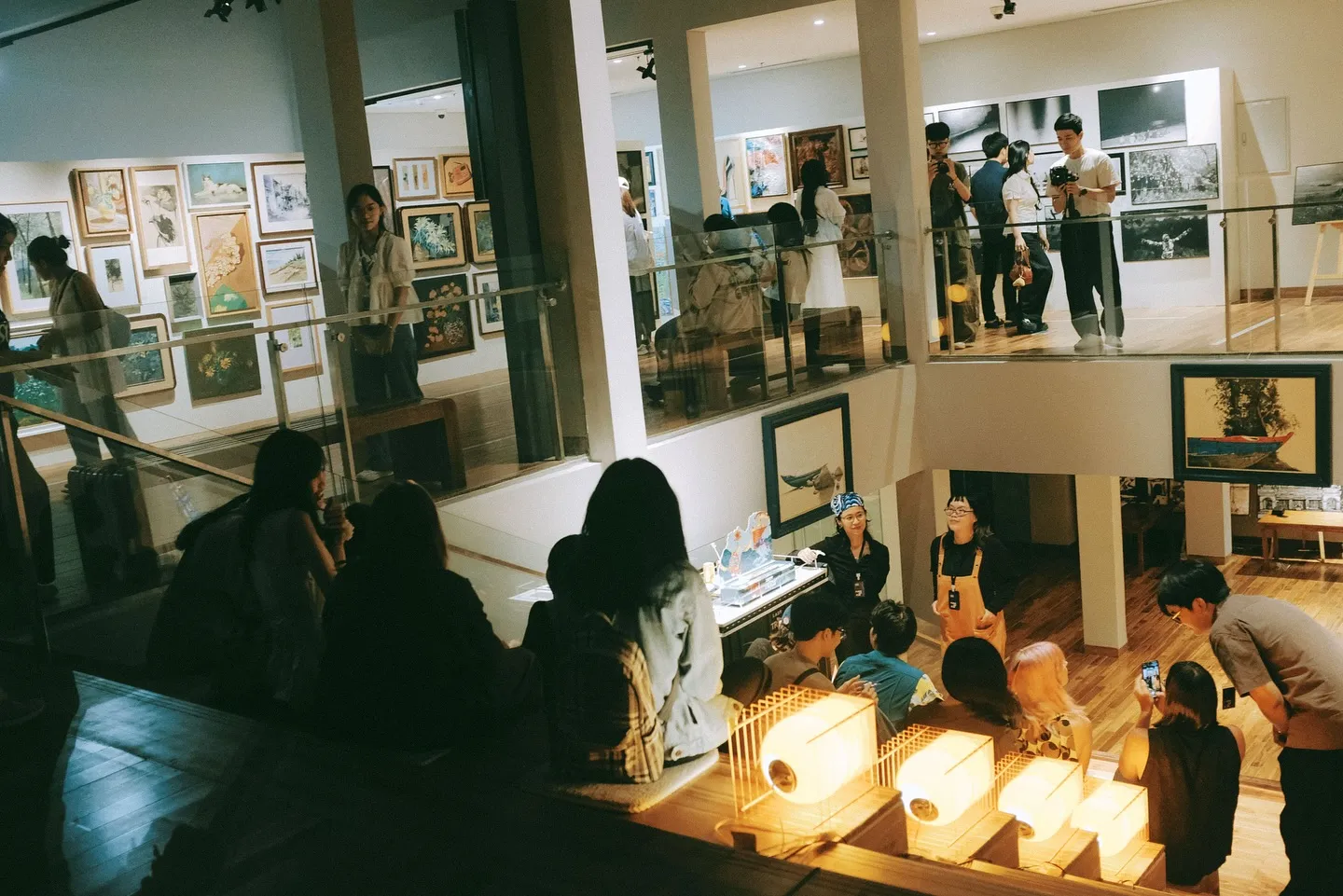
Besides support from international cultural bodies such as the British Council, the Goethe-Institut, and the Japan Foundation, self-fundraising remains a common practice for art spaces and collectives in Vietnam. At the 2024 No Cai Bum Art Week, held simultaneously in Hoi An and Danang, in addition to enthusiastic support from private entities, the programme also utilised personal resources for community crowdfunding and artist self-contributions. This element further reinforces the ideal of an art ecosystem operated by artists and for artists, returning them to the centre of the artistic orbit.
A self-sustained flow
Within the Central region, independent artist-run collectives and art spaces such as Sao La (Dalat), MORUA (Hoi An / Nha Trang / HCMC), and AirHue (Hue) share with A Sông the same challenges regarding resources. A defining factor in their endurance is the ability to forge unique identities based on programming directions refined to fit with local cultural currents.
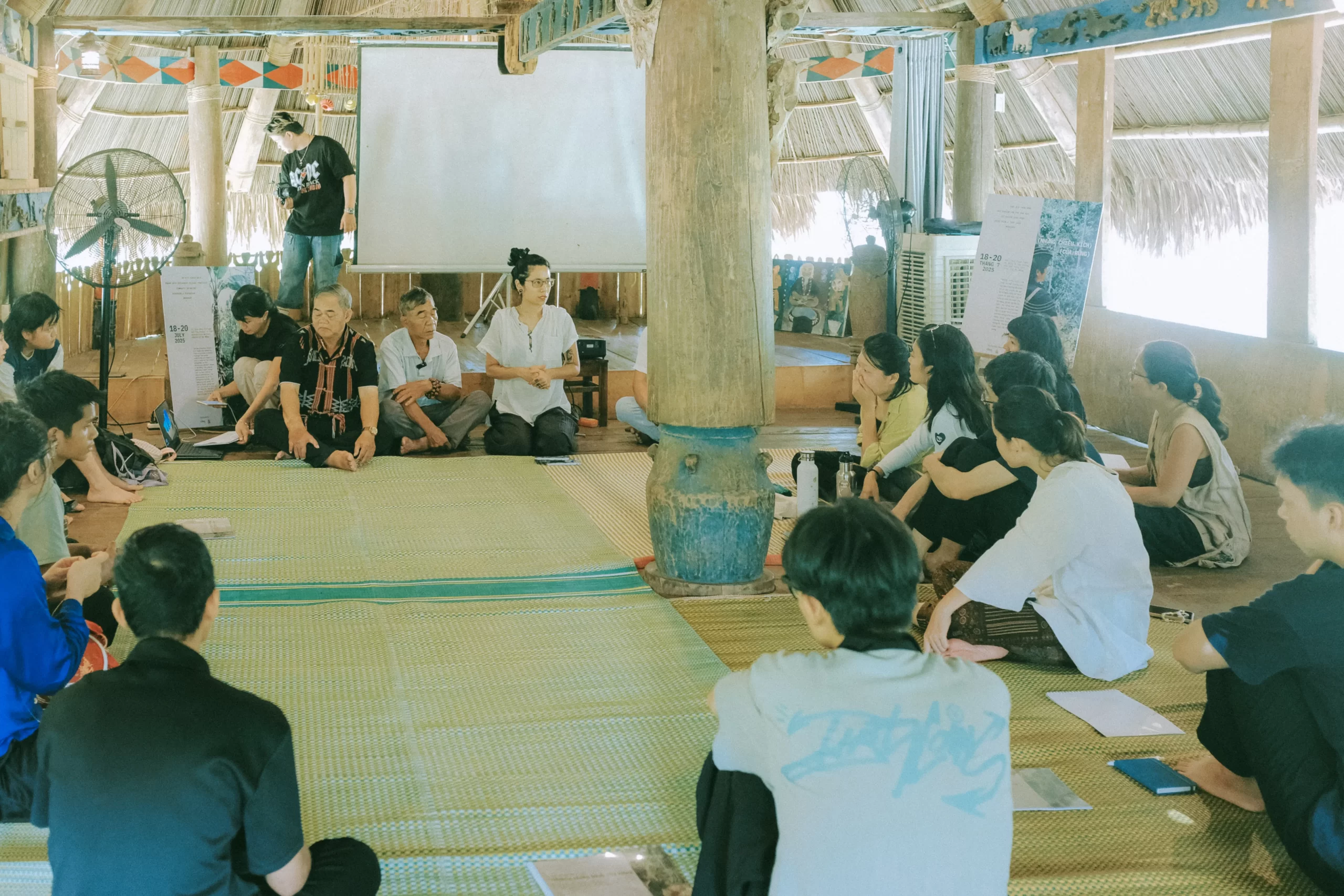
To date, the existence, evolution, and succession of these collectives have nurtured many generations of young Vietnamese artists. Compared to Chaosdowntown Chao (HCMC), A Sông emerges as a subsequent chapter in Xuan Ha’s artistic journey. If Chaosdowntown Chao – Xuan Ha and Thien Thanh’s (Nu) debut project in 2015 – represented an initial rebellion to establish a non-academic safe zone in the heart of the city, then A Sông has fully inherited and transposed that spirit into the specific context of Central Vietnam. A living environment in close proximity to nature has inadvertently led A Sông’s interests towards site-specific practices in dialogues with the social, historical and communal contexts in the region, exemplified by the community learning programme “The multifaceted forest”.
On the other hand, when positioned alongside collective practices in Hanoi, A Sông distinguishes its stance through an ethos of care and a drive for self-learning. The intersection between A Sông and a contemporary initiative such as ba-bau AIR (founded in 2019 by Dinh Thao Linh) lies in the need to create self-reliant communities where “eating together”, studio visits, and supporting young artists become core practices. The act of cooking serves to cultivate intimacy and temporarily dismantle the hierarchical structures established and reinforced within the formal art system. The communal dining table opens up a safe and equal environment where barriers to the market value of artworks or individual authority are gradually blurred, giving way to direct and sincere connections.
Setting sail with a distinctive practice
Through fieldwork and local study trips, A Sông has gradually formed a consistent anthropological practice: a leisurely approach to local art, venturing into areas lacking artistic awareness, and broadening the definition of artistic practice beyond “white cube”, academic institutions.
A Sông harbours no ambition of transforming Danang into a new artistic epicentre. The founder’s decision to depart from bustling metropolises is an organic act of decentralisation. The collective’s aspiration is more modest: they hope to see more artists and cultural practitioners returning to their hometowns to start their own initiatives, and to not feel like they are situated on the periphery of a perceived “centre”.
A Sông is also acutely aware of the impermanence of the collective model. They accept that the group may eventually dissolve – just as a river will inevitably flow into the sea. The legacy they leave behind may not be necessarily found in monumental physical works, but rather in intangible efforts: the threads of human connection, shifts in community consciousness, and an artistic spirit ignited under the loving roofs of households across Central Vietnam.
Writer & Translator: Trao
[1] In a departure from Art Nation’s usual editorial conventions, the diacritics in the collective’s name have been retained at the collective’s request.