I left Vietnam on an early flight just before Christmas, the year I had just turned twenty. In the early morning mist, the city lay in serene slumber, but my heart was throbbing. I didn’t know when, or if, I would return. Like many immigrants arriving in America, I carried a rich tapestry of memories from my homeland. Many years later, they would become a treasured asset that fueled my personal growth and shaped my identity as an artist in this new land. Throughout more than twenty years of teaching Photography, I have often encountered reflections of my initial self in each of my students, particularly those from immigrant backgrounds.
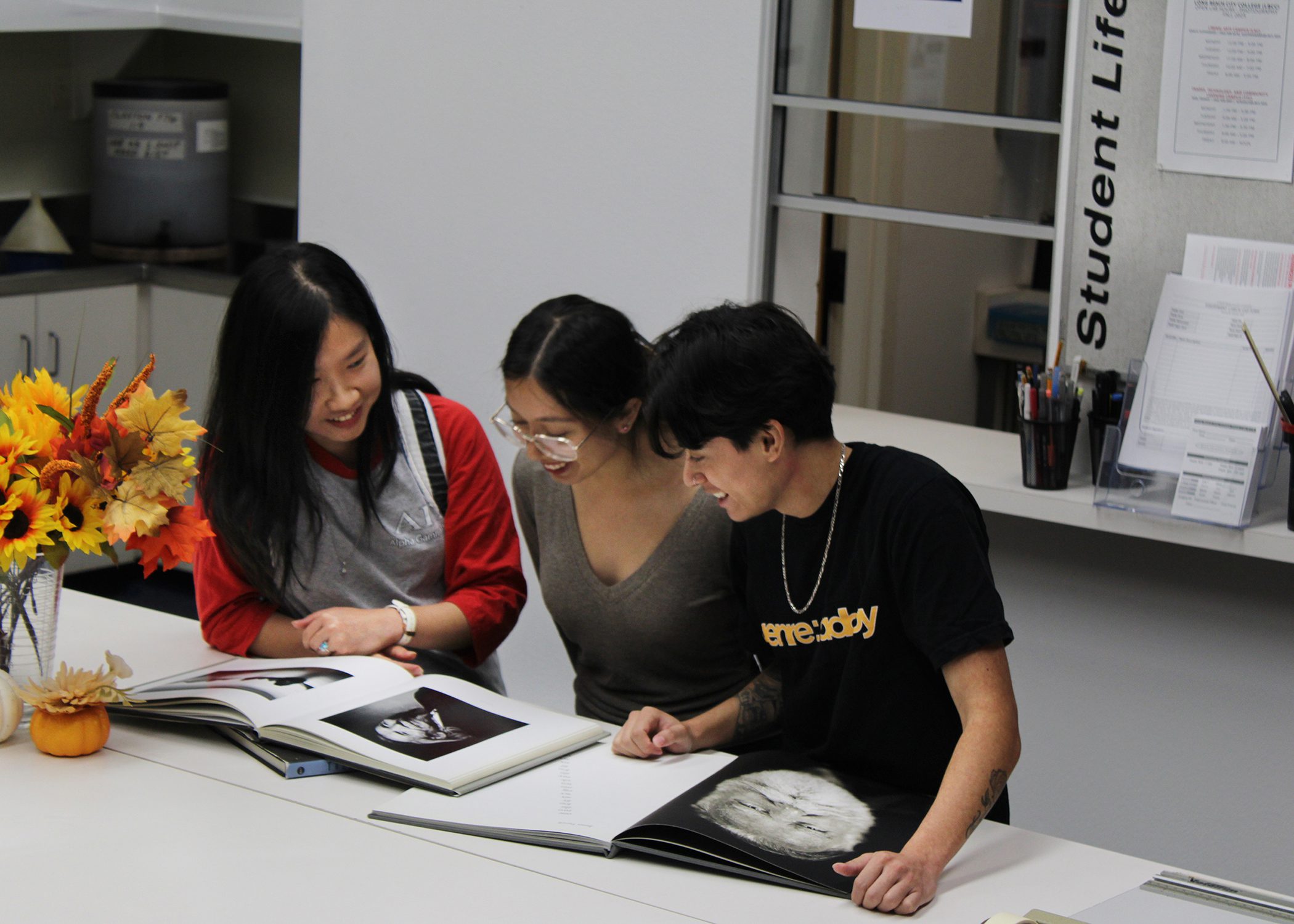
To me, an image serves as a mirror, a window, and every photograph is a self-portrait, subtly concealing the photographer’s perspectives and personal history. It is also a useful medium for individuals to express, learn, and connect. This medium also fosters my connection with outstanding Vietnamese American photographers, among them Hanh Thi Pham and Han Nguyen. In the fields of art and education in the United States, their works are luminous diamonds radiating light from two sources: East and West.
HANH THI PHAM – THE BODY IN THE UPRISING
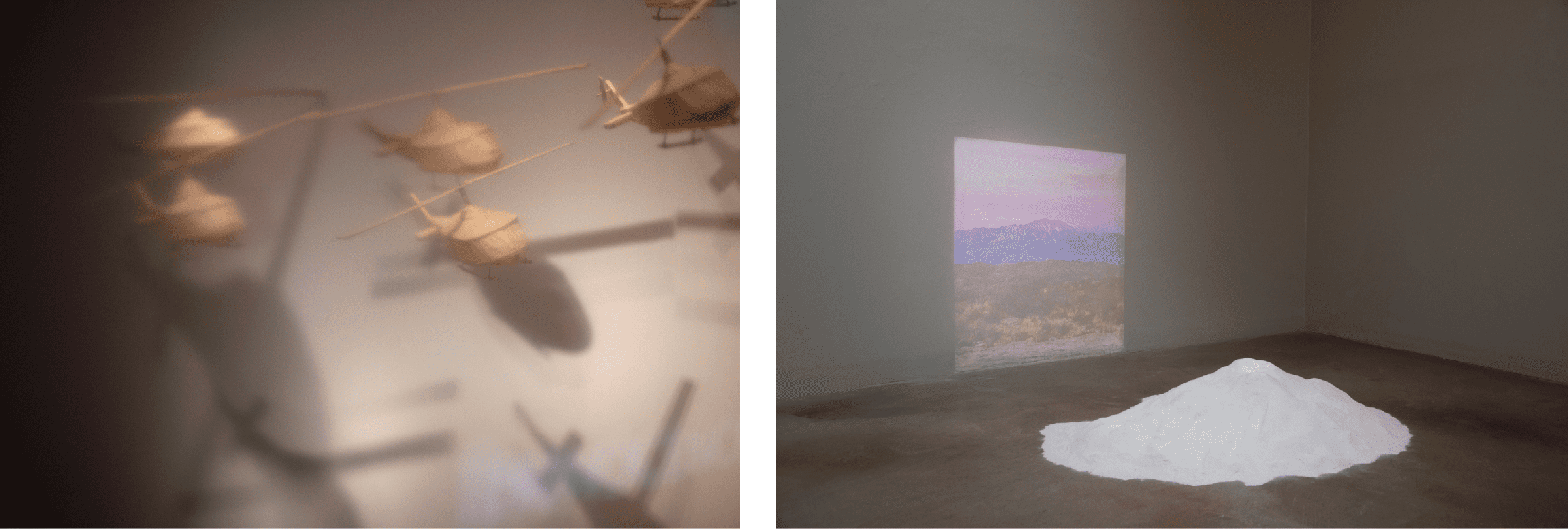
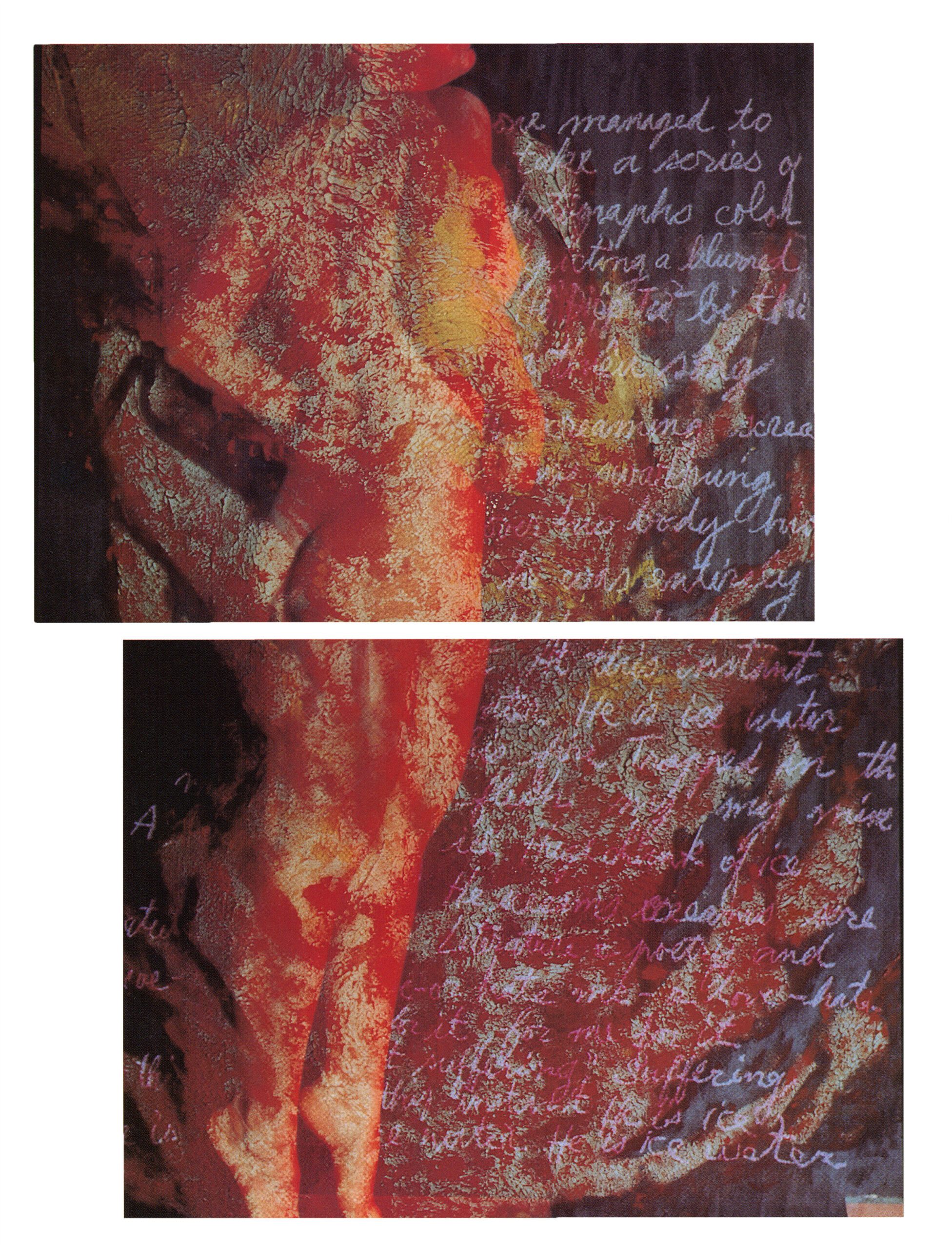
In her solo exhibition “A Vietnamese: The body in revolt” at the Fukuoka Art Museum in Japan in 1996, Hanh Thi Pham employed the term “Amerikkka” in her artist’s statement to refer to the US. Her candid and courageous personality had immediately captivated and compelled me to learn more about her. Hanh Thi Pham and her family left Saigon in the final days of the war, settled in Orange County, and studied photography at California State University, Fullerton. Her works encompass self-portraits, narratives, and performances, serving as a cry and a struggle for identity, rooted in the innocence of adolescence that was stripped away by brutality and war. Pham utilises her own image and body as the medium for creation to escape dependency and achieve absolute freedom.
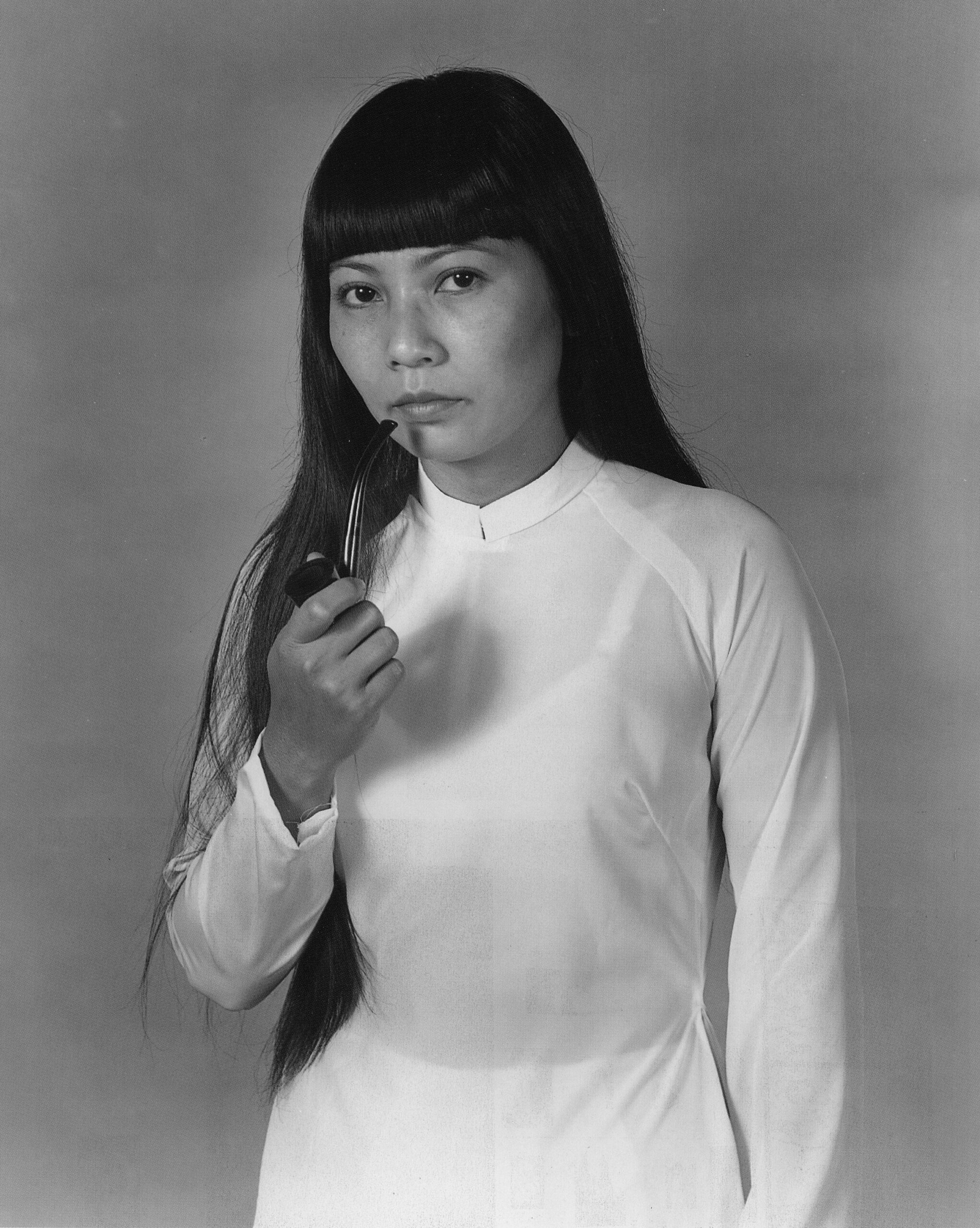
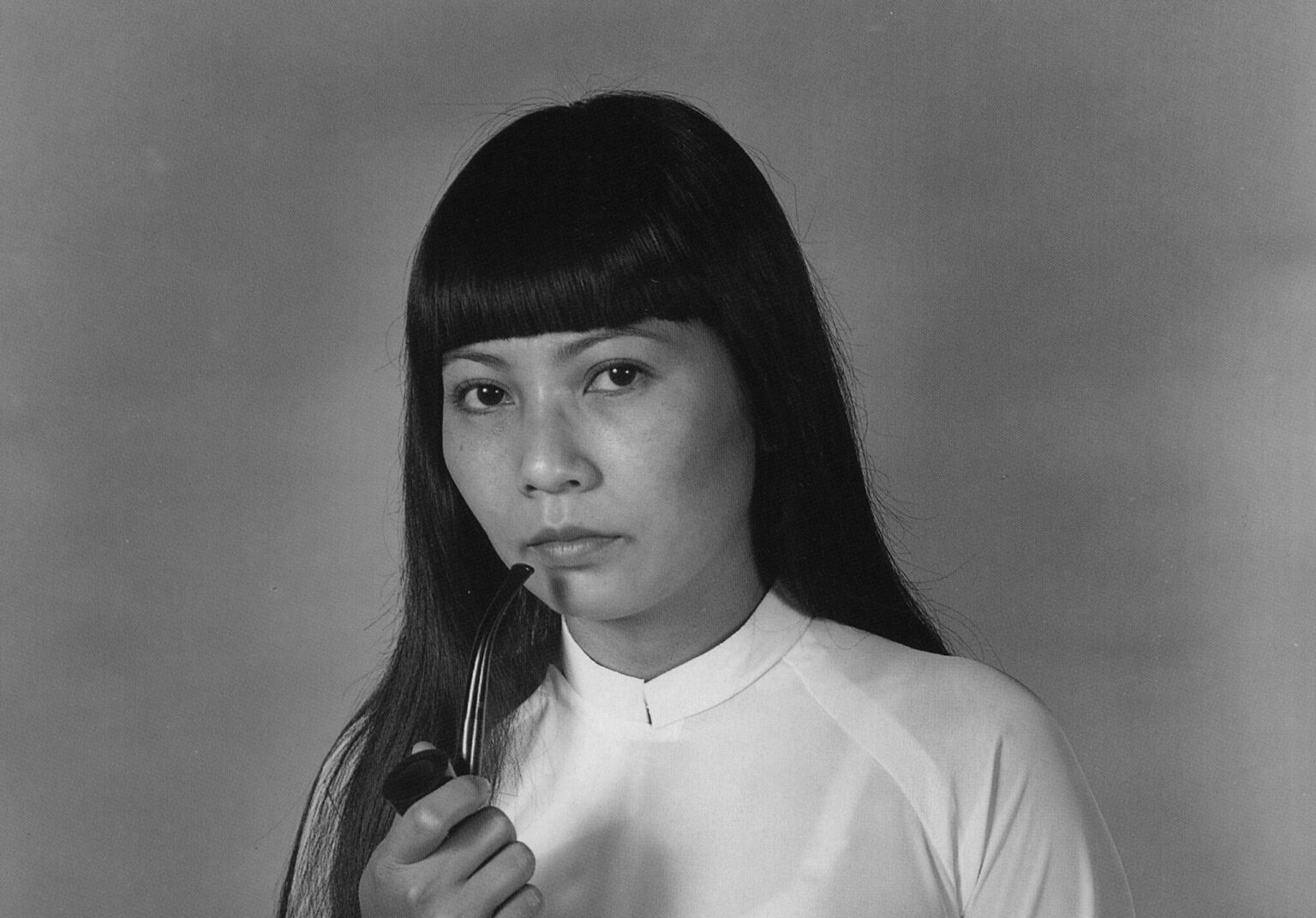
The artist’s most well-known and emblematic work is “Self-Portrait / Hair / Pipe”, photographed in April 1984 when she was 30 and after nine years in the US. In this series of 4×5 film portraits, she wears black and white ao dai, recreating her youthful days in Saigon. She notes that every detail was meticulously calculated, and the process of setting up and capturing each shot took a long time to complete. In the final portrait, Pham, wearing a white schoolgirl ao dai with her hair cascading down her back, holds a pipe in her hand, her eyes filled with confrontation. Using body language and symbols, intertwining personal history and art, Hanh Thi Pham poses the question, “Who am I in 4,000 years of revolution?” With the smoking pipe in her hand, she also challenges the viewer’s traditional notions of femininity and the enjoyment of pleasure reserved solely for men.
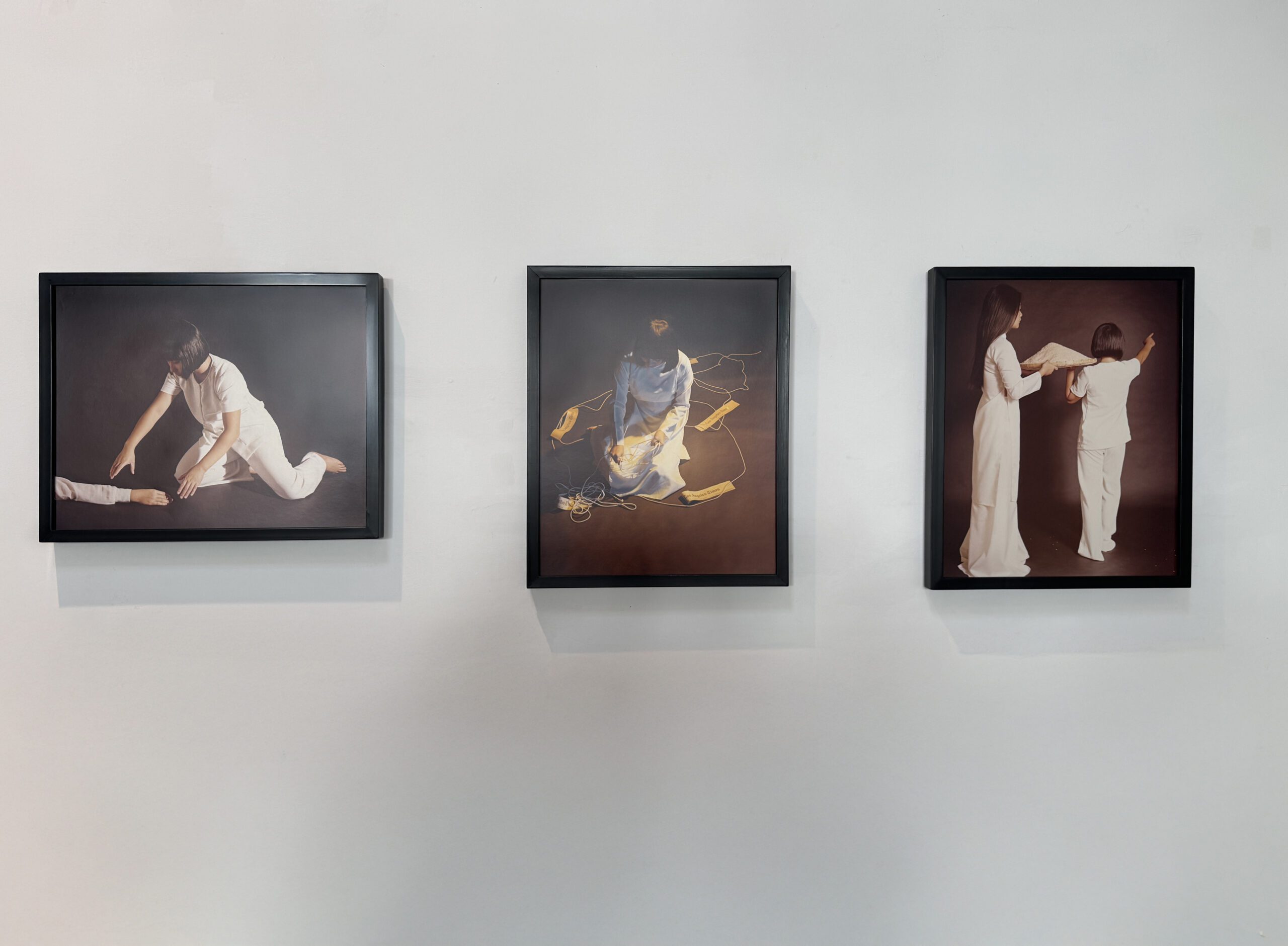
The work “Self-Portrait / Hair / Pipe” is a bold manifesto representing Vietnamese American women, especially the lesbian and transgender communities. It embodies a deliberate and necessary rebellion in the process of self-reconstruction and gender affirmation. While Hanh Thi Pham’s work received recognition in the art world and is held in prestigious collections globally, she did not receive similar acknowledgment or support from her own community in Orange County. At the height of her career – being the first Vietnamese American artist to achieve fame in the US – in the late 1990s, she withdrew from the art world and chose a life of seclusion. In a conversation in 2010, the late artist Dinh Q. Le (1968–2024) asked Pham if she continued to create after entering monastic life; she responded that once you are an artist, you will create for life. Currently, despite facing health challenges, she continues to write regularly. All of Hanh Thi Pham’s works and writings will soon be exhibited to the public at the Smithsonian Museum in Washington, DC.
HAN NGUYEN – THE POETIC VOICE IN THE WORK
Upon returning to California after a pleasant summer vacation in Vietnam, I visited the studio of photographer Han Nguyen in the coastal city of San Diego, approximately 100 miles south of Los Angeles County. He is a talented yet reserved photographer, one of the few artists in the world who adopts a camera-less technique to create his works. After settling in the US in 1975, Nguyen switched from Journalism to studying Art Photography at San Diego Community College. If Hanh Thi Pham’s work is a resonance, Han Nguyen’s creations resemble a tranquil lake that reflects the inner self.
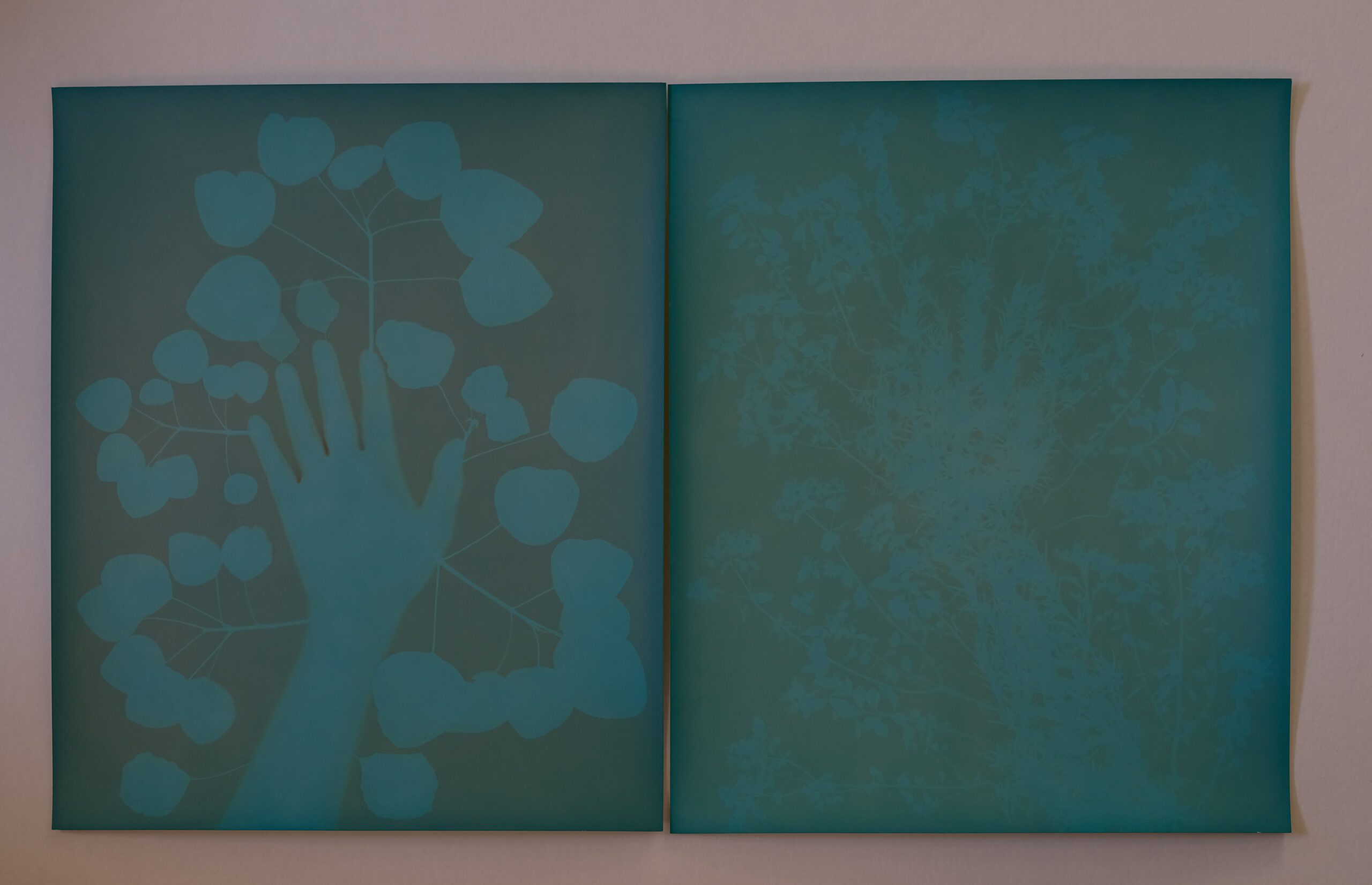
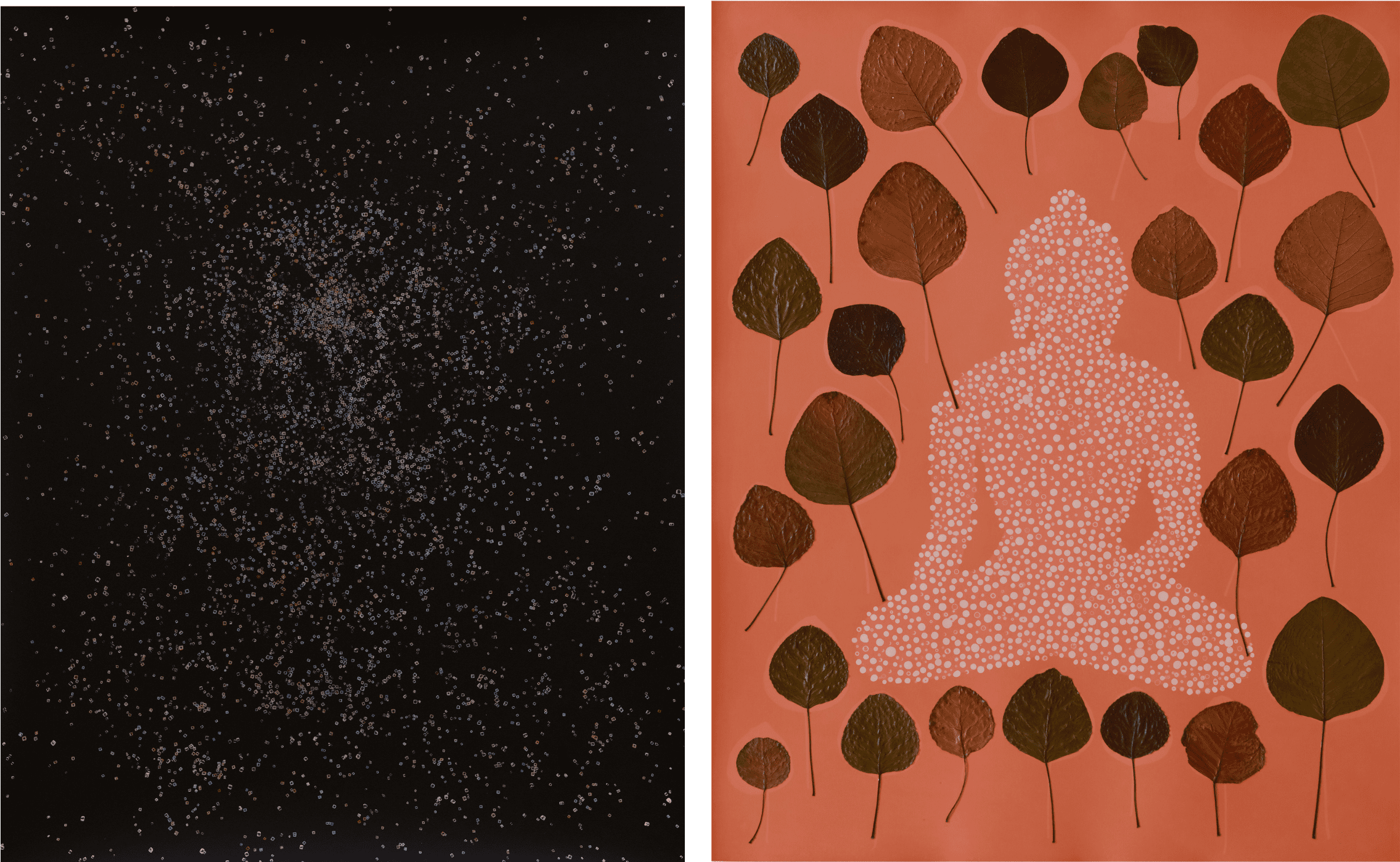
In the series “Eclipse”, he sits for hours like a Zen master, meticulously drawing small, multi-coloured squares on photographic paper, creating the sun from countless tiny particles. Nguyen often employs plants from his garden and his own body in his work. Coming from a family specialising in fashion, he skillfully applies traditional techniques learned from his family trade. He utilises dyes and fabric motifs to create visual effects in each photograph. “Gesture” is a series depicting the male body, which was composed with an obscure camera known as the ancestor of modern cameras. His works are tranquil, like a Zen poem: elegant and hauntingly beautiful, reminiscent of Hue – the city where he was born.
IN CONCLUSION – PHOTOGRAPHY AS BEAUTIFUL AS A MELANCHOLIC VERSE
So here I stand, in the hush of dusk
My heart aches with nostalgia for my homeland.
(Vietnamese verse)
Much like my youthful self bringing memories aboard a plane, artists Hanh Thi Pham and Han Nguyen have employed photography to reconstruct their inner worlds following the war and migration. They serve as reflections not only of my own self but also of countless immigrant students I have taught. Their works transcend mere personal declarations or artistic rebellion; they offer the most valuable lesson: Photography is an authentic mirror that allows individuals to see themselves, connect with fragments of history, and ultimately, create their own unique nuances from diverse origins. Hanh Thi Pham employs rebellion to assert feminism and identity, while Han Nguyen uses tranquility to depict the cosmos. Whether through the explosion of resistance or the stillness of Eastern meditation, both artists have harnessed their art to transform memories into a precious resource. They have proven that the light shining from Eastern and Western roots does not cancel itself out but instead intertwines to create multifaceted, brilliant, and enduring artistic diamonds within the heart of American culture.
Words: Brian Doan.