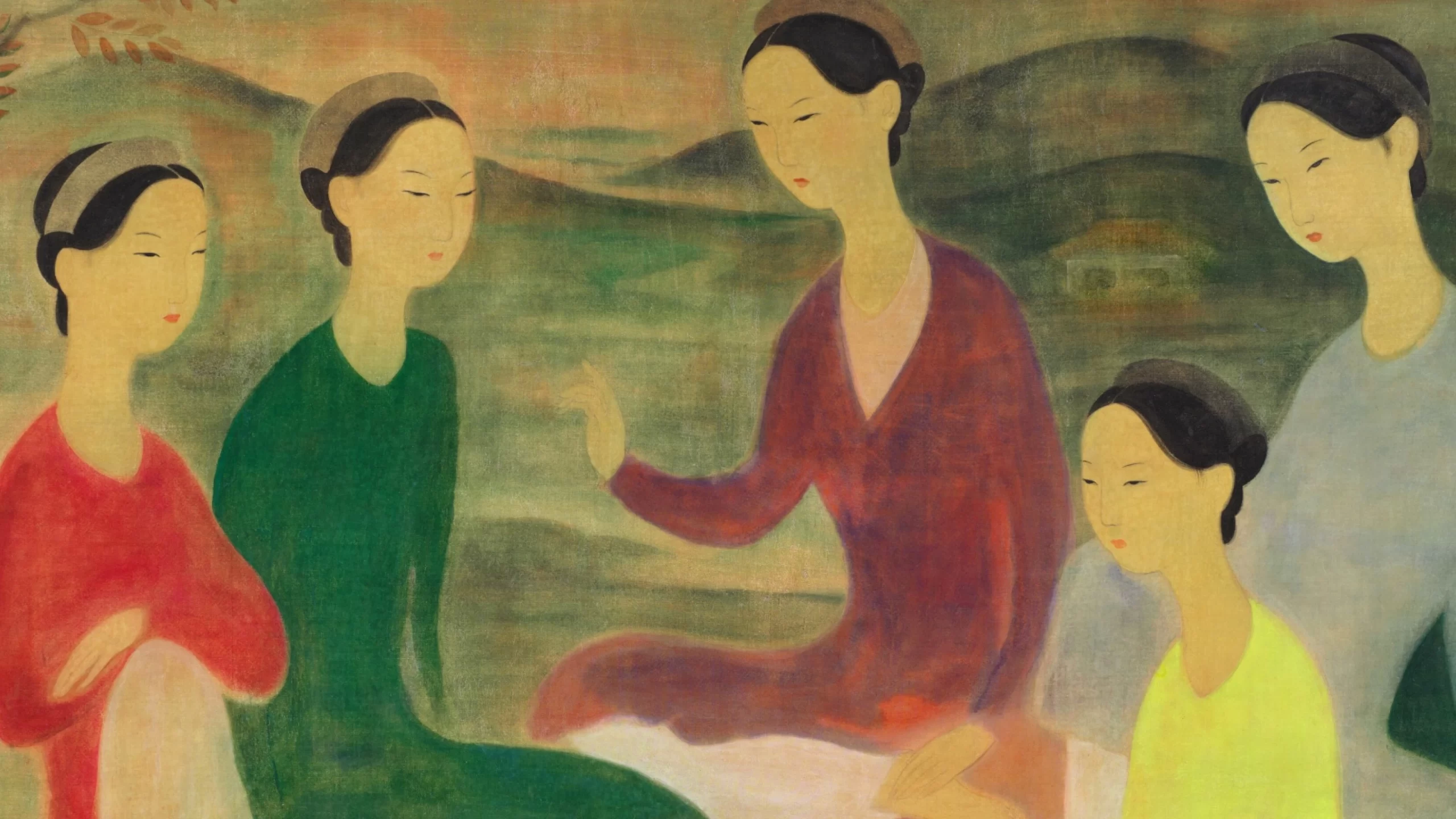
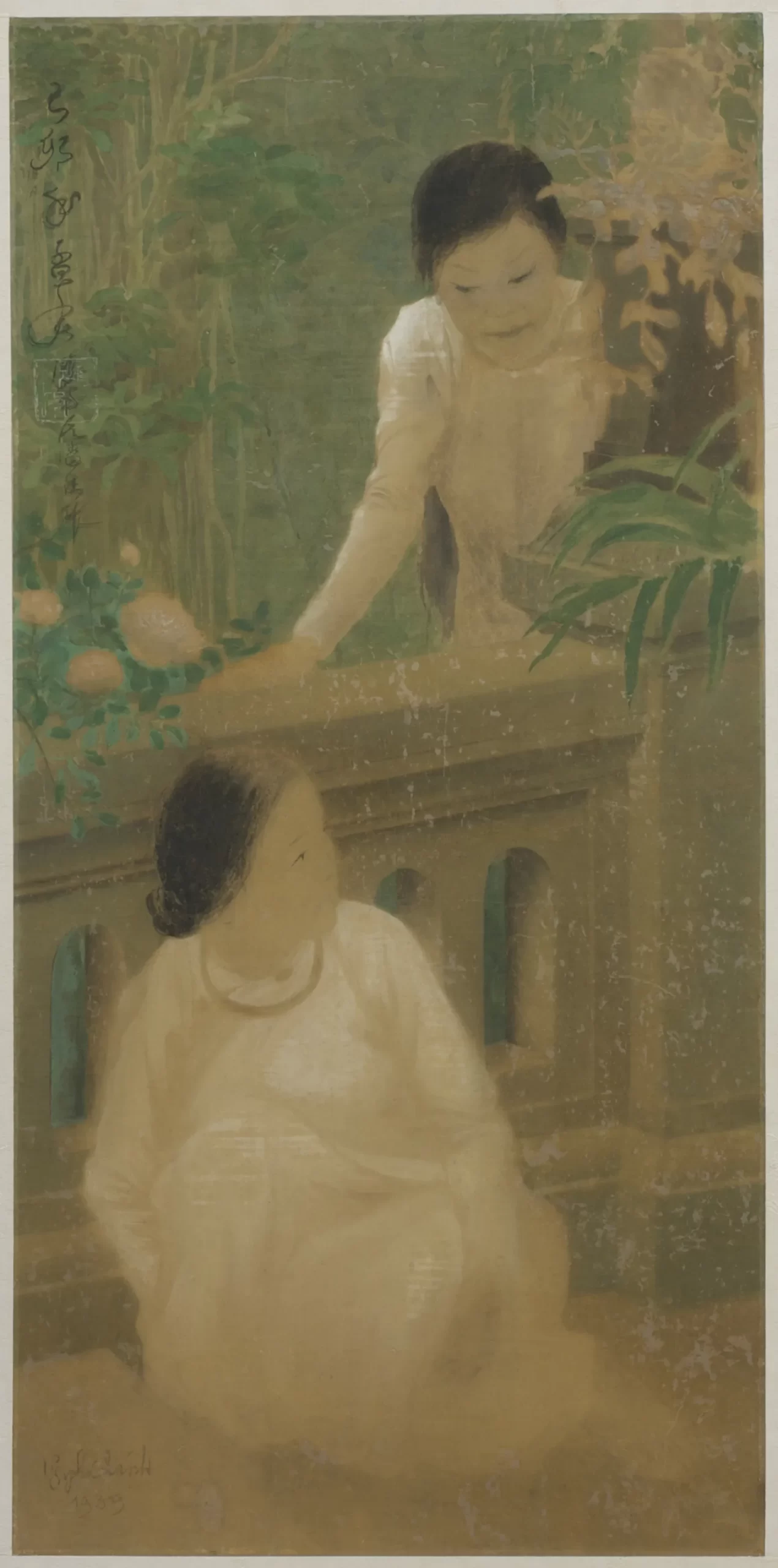
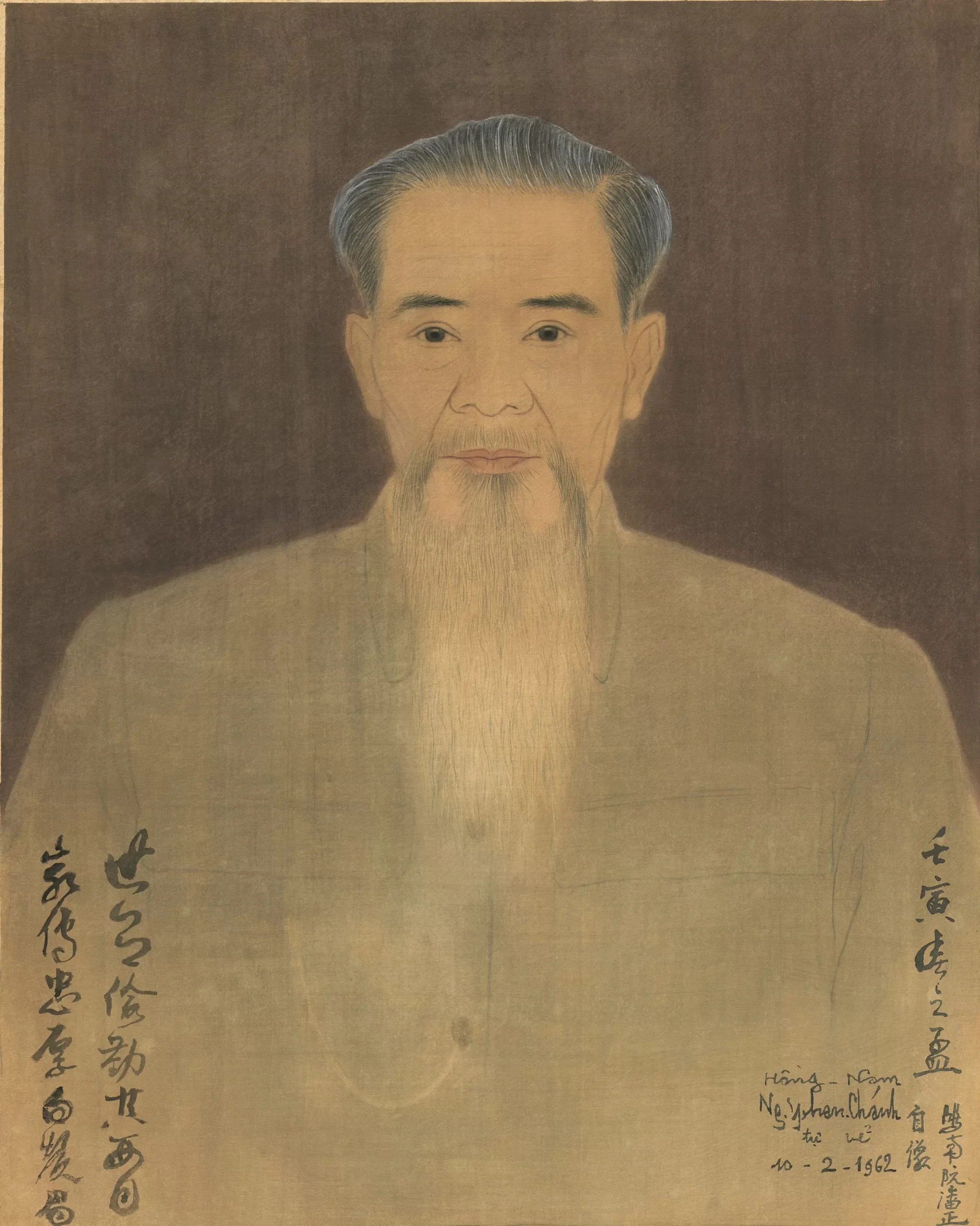
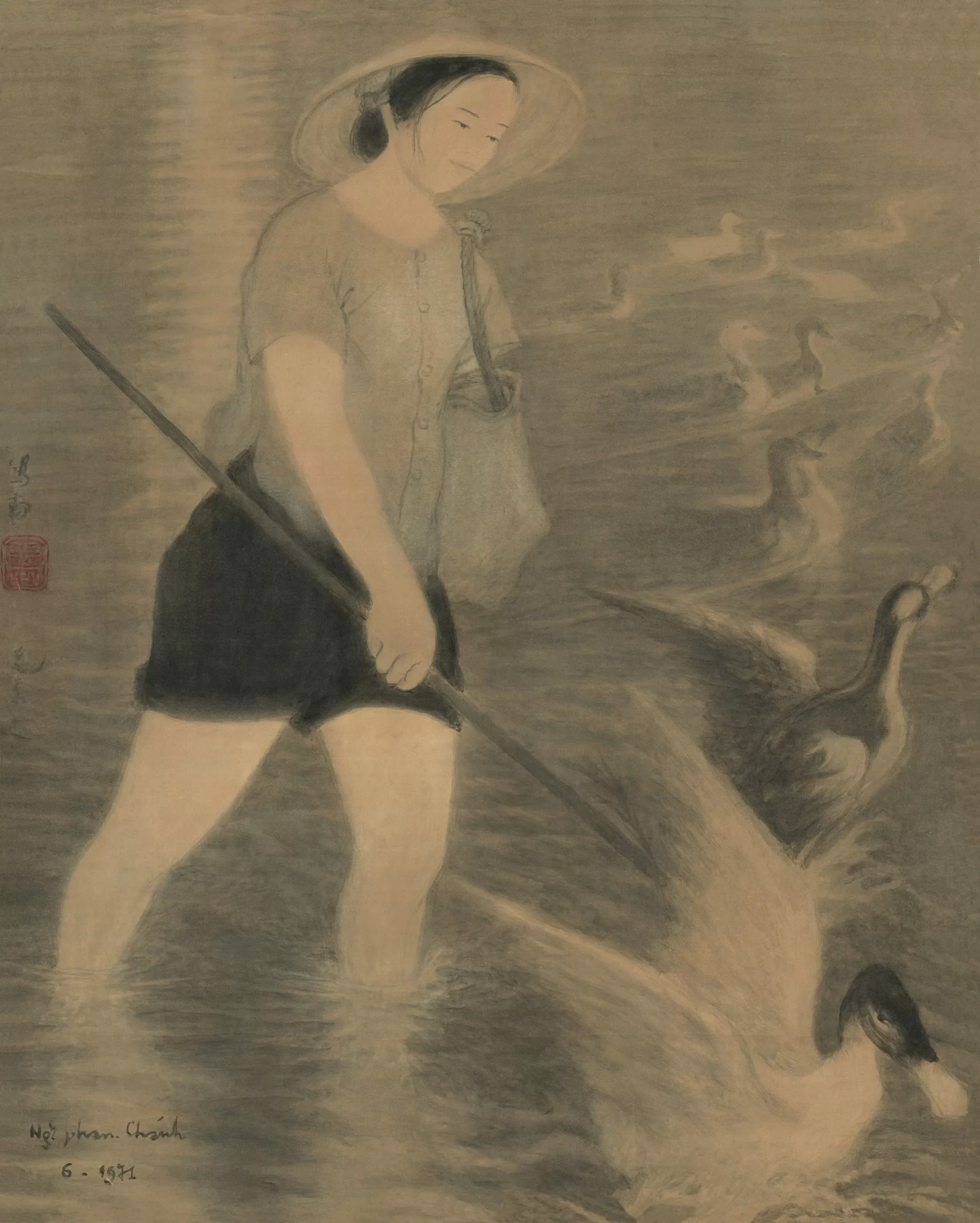
Nguyen Phan Chanh (1892–1984) is a prominent Vietnamese painter famous for his exquisite silk paintings that beautifully depict rural life and the cultural essence of Vietnam. His works often feature scenes of women and children engaged in daily activities, showcasing a unique blend of traditional Vietnamese aesthetics and modern artistic techniques.
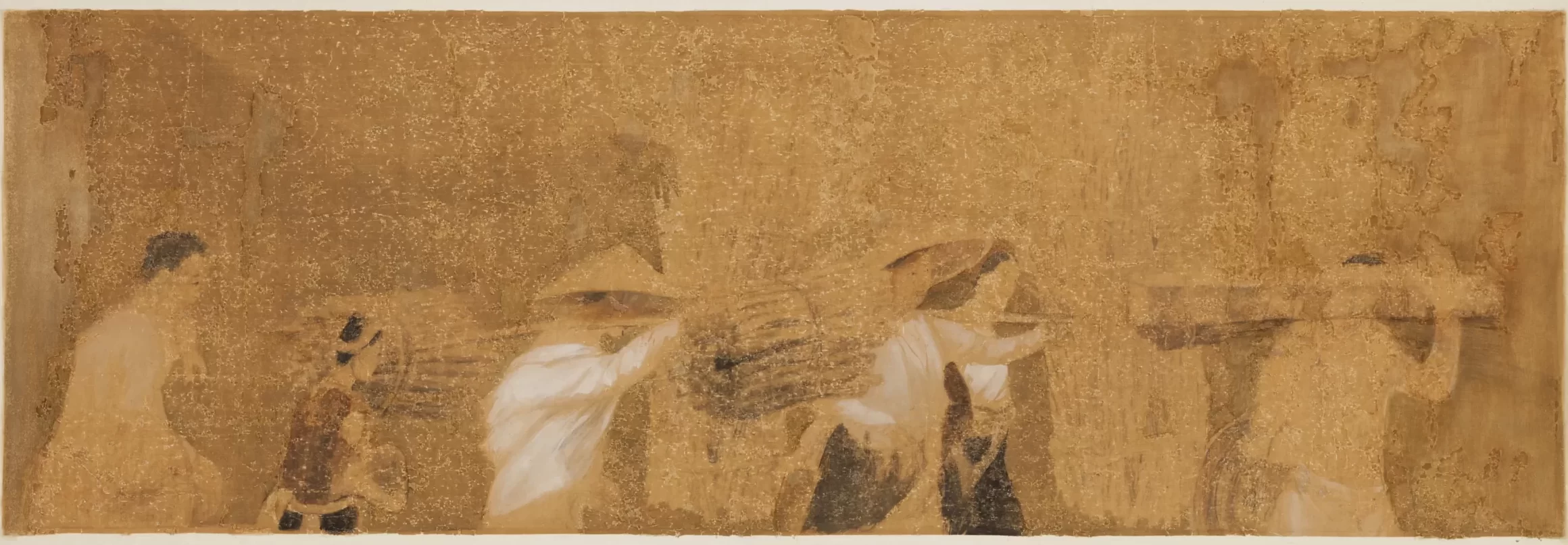
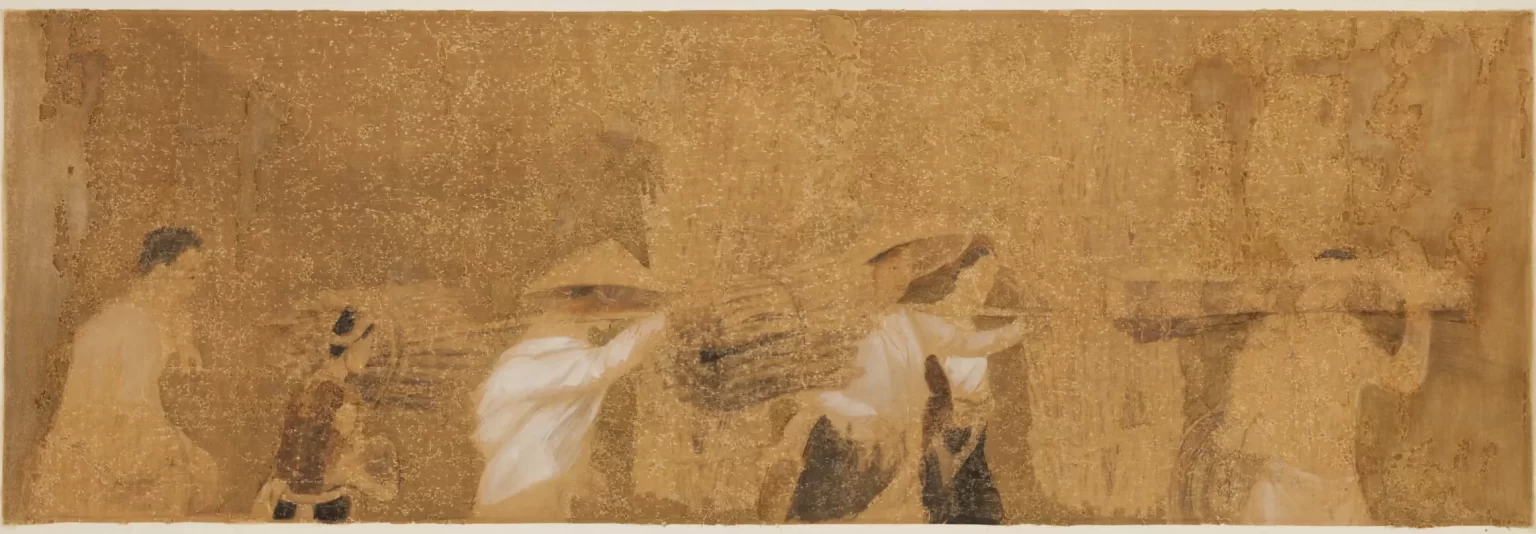
Nguyen Phan Chanh’s silk painting techniques are appraised to be unique. Starting with silk as the base, he painted with watercolour, then washed it with water, and repeated this painting process multiple times. However, the downside of silk paintings is their vulnerability to temperature, humidity, and light. Due to the hot and humid climate of Vietnam, his silk paintings deteriorate quickly, suffering from serious issues like pests, mold, and fabric cracking.
Appreciating the significant contributions of Nguyen Phan Chanh to Vietnamese art and also recognising the concerning situation that his silk paintings are currently facing, Mitani Sangyo Co., Ltd. undertook a restoration and conservation project for his silk paintings for more than 10 years before officially establishing Mitani Foundation for Protection of Cultural and Artistic Properties (Mitani Foundation) in 2021. The foundation takes over the responsibility for restoring and conserving Nguyen Phan Chanh’s works by using advanced techniques and collaborating with Japanese experts. This project aims to ensure that his legacy continues to inspire future generations and to promote the beauty of his art both in Vietnam and internationally.
Under what circumstances did you become acquainted with Nguyen Phan Chanh’s silk paintings and decide to help restore the damaged works to pass on to future generations?
In 2007, while visiting Vietnam for work, I came across a silk painting printed on a desk calendar in the office. I became curious about the artist, and after conducting research at Vietnamese museums and through literature, I discovered that the artwork belongs to artist Nguyen Phan Chanh. Later, I had the opportunity to meet directly with Ms Nguyet Tu, the eldest daughter of the artist. During our conversation, she asked me if I could use Japan’s advanced techniques to restore her father’s damaged paintings and conserve them for future generations. Her request marked the beginning of my restoration activities for Nguyen Phan Chanh’s silk paintings.
As I learned that Nguyen Phan Chanh’s creative period overlapped with the anti-French resistance and the Vietnam War, I also felt a sense of responsibility as a Japanese person who indirectly became involved in the war, since United States bombers took off from bases in Japan during the North Vietnam bombing campaigns. This made me want to do something for Vietnam as an apology.
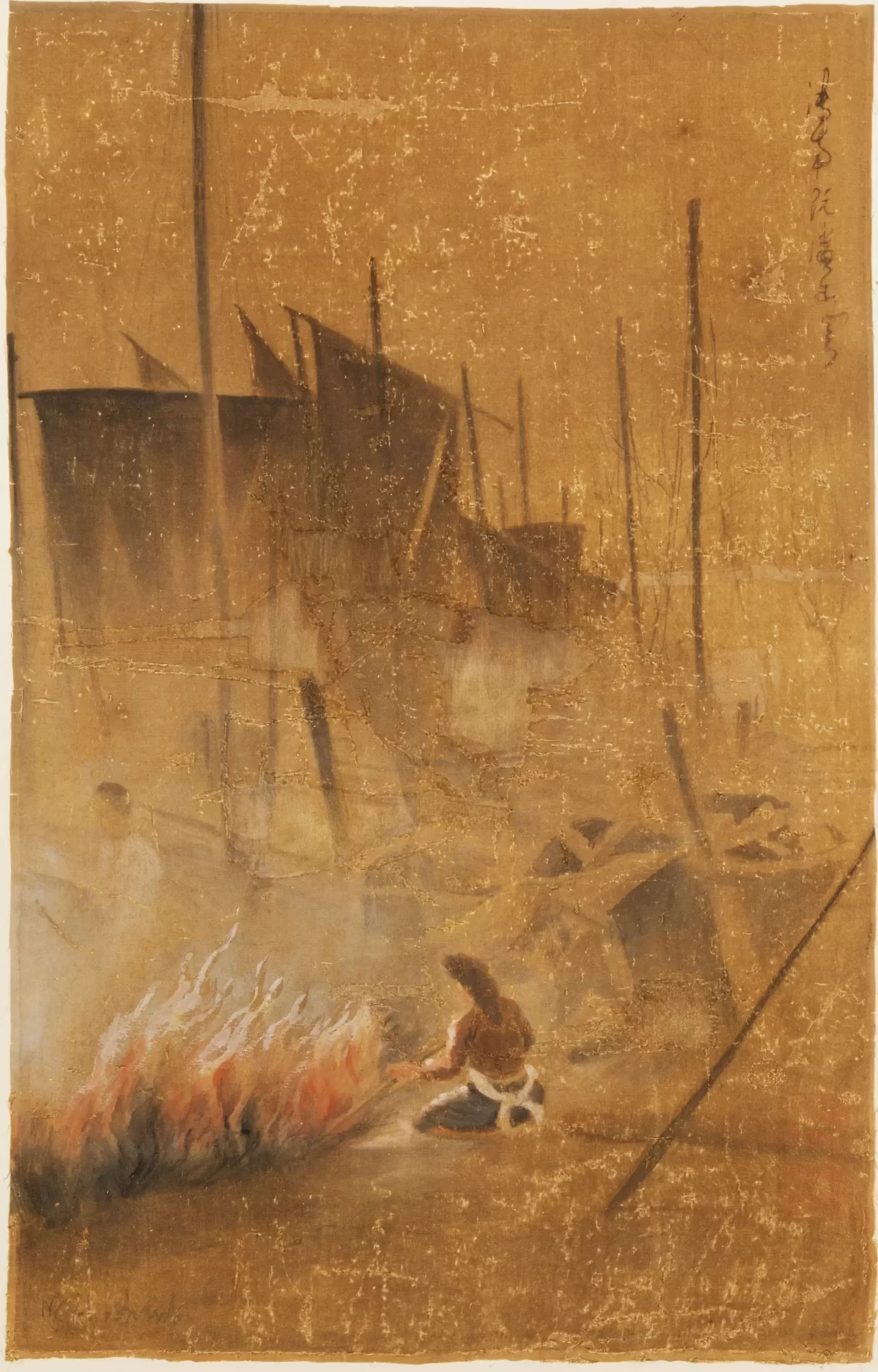
Nguyen Phan Chanh, “Smoke the board” (1938), watercolour on silk, 43.9 x 27.8 cm. The artwork is currently stored at the artist’s family.
During your exploration of Nguyen Phan Chanh’s silk paintings, did you also research the silk paintings of other renowned Indochinese artists? (For example: Le Pho, Mai Trung Thu, Lê Thi Luu, or Vu Cao Dam). Why did you choose to restore Nguyen Phan Chanh’s silk paintings instead of those by other renowned artists?
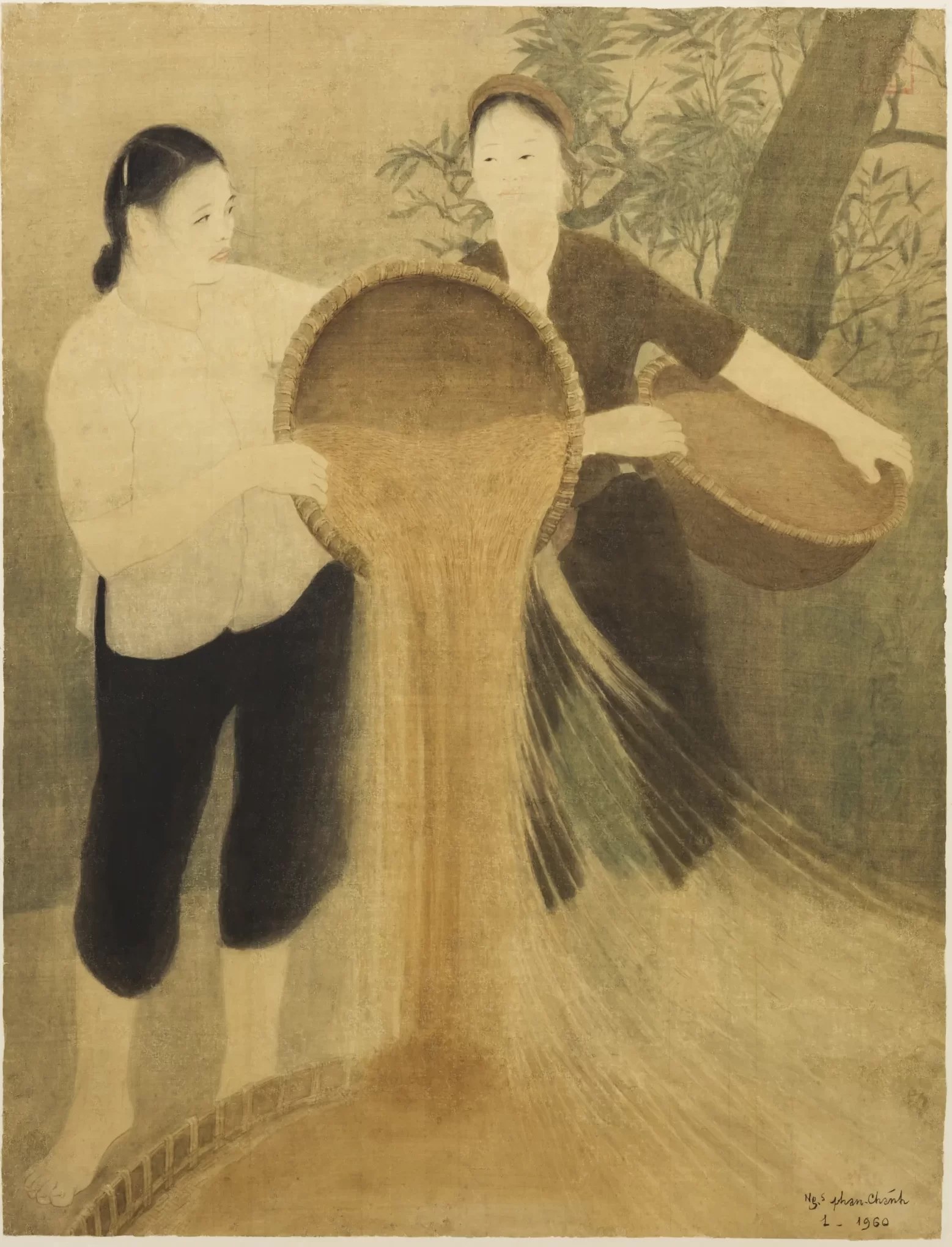
I did not specifically investigate other artists. However, by researching Nguyen Phan Chanh, I became aware of many famous artists associated with the Indochina Fine Arts School (École des beaux-arts de l’Indochine) and their fascinating works. Among them, I was particularly drawn to Nguyen Phan Chanh’s depictions of women and children working in rural villages, conveyed through a quiet and unique sense of dignity. I felt that the artist’s deep affection for his models was expressed in his gaze. Meeting Ms Nguyet Tu also reinforced my belief that Nguyen Phan Chanh’s works should be conserved for future generations.
“I felt that the artist’s deep affection for his models was expressed in his gaze. “
How did you come to meet Ms Iwai Kikuko – Director of the Iwai Art Restoration and Conservation Institute? When directly interacting with Nguyen Phan Chanh’s silk paintings from the artist’s family, what were her thoughts and assessments regarding the condition of the paintings conserved by the artist’s family?
After receiving the restoration request from Ms Nguyet Tu, I began searching for someone who could be entrusted with the project. Initially, I looked for Japanese painters and traditional craftspeople who handle the mounting of screens and hanging scrolls, but I soon realised that the silk paintings of Vietnam, using a special technique, were different from Japanese paintings. I inquired with public art museums in Tokyo and Fukuoka, which had previously held exhibitions of modern Vietnamese paintings. I was then introduced to Ms Iwai Kikuko, a conservator who had been responsible for restoring Nguyen Phan Chanh’s works in the 1990s, by Mr Ushirokoji Masahiro, who was the curator at the time and is now the director of the Kitakyushu Municipal Museum of Art. Ms Iwai accompanied me to Hanoi for a survey. She was left speechless upon seeing the severely deteriorated paintings, and I heard that she felt a strong sense of fear and responsibility, knowing that if she let go of the opportunity, the works would be lost forever.
After the recent phase, what are the Mitani Foundation’s next plans for the restoration of Nguyen Phan Chanh’s silk paintings?
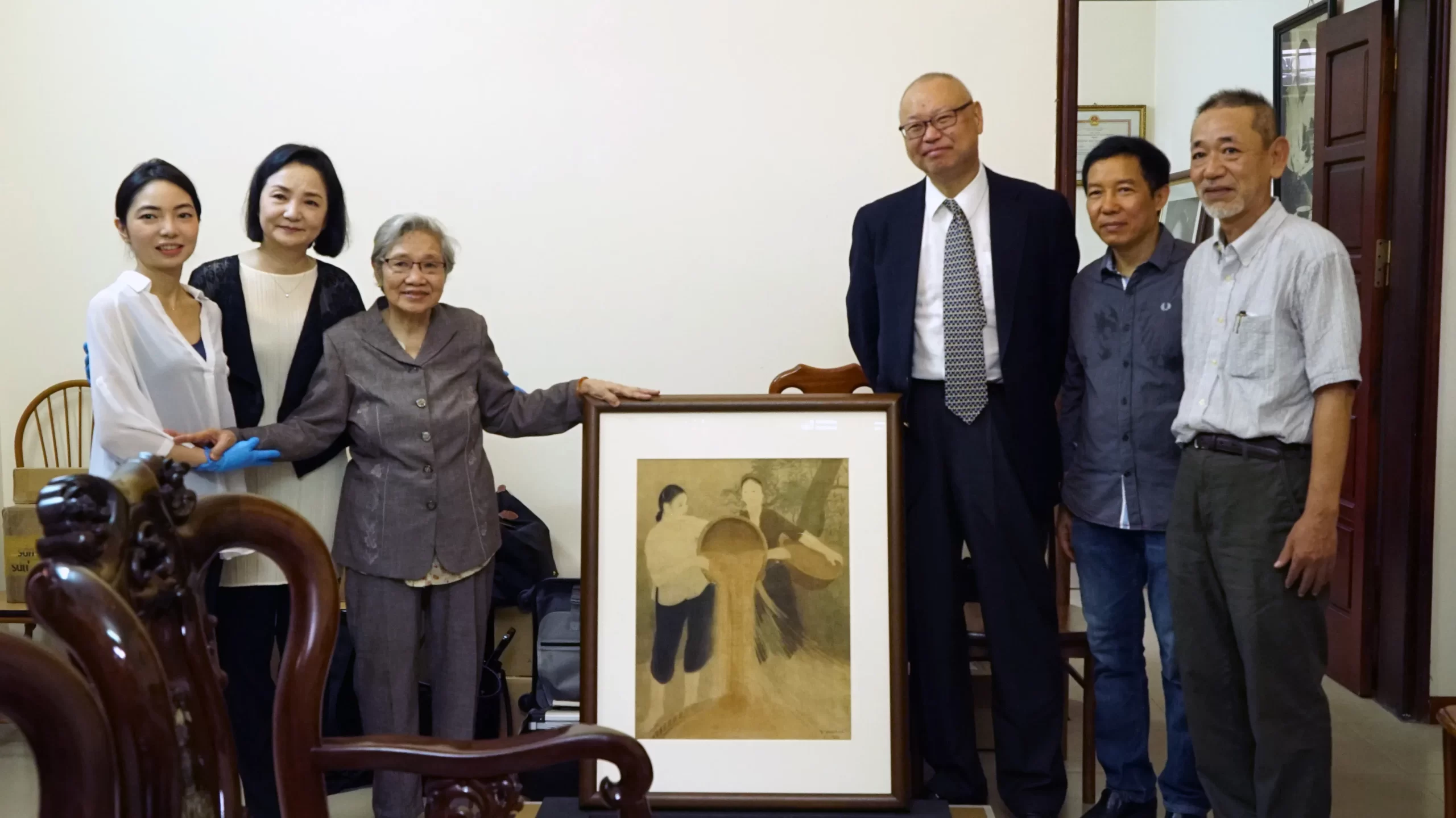
Over the past 15 years, the Restoration and Conservation Project restored 16 silk paintings by Nguyen Phan Chanh. Mitani Foundation has recently selected four new pieces for restoration. While the restoration project will continue, we also plan to deepen our efforts by exchanging opinions with the people of Vietnam about restoration and conservation by promoting the beauty of Nguyen Phan Chanh’s works to a broader audience.
In the future, will there be any exhibition in Japan or Vietnam to showcase the successfully restored silk paintings by Nguyen Phan Chanh for the public to appreciate?
Mitani Foundation organised the exhibition “Tellers of Love: The Story of Those Who Bridge the Artist’s Vision” – showcasing the restoration and conservation of Nguyen Phan Chanh’s silk paintings, from 28 April to 19 May 2023, at Gallery B, 21st Century Museum of Contemporary Art, Kanazawa City, Ishikawa Prefecture, and we plan to continue holding exhibitions in Japan as we make further progress in restoring the works. In the future, we hope to hold exhibitions in Vietnam as well. We want to increase opportunities for various people to view the artworks.
On behalf of the Vietnamese art-loving public, we thank you and Mitani Foundation!
Words: Hùng Nguyễn
Translation: Hùng Nguyễn