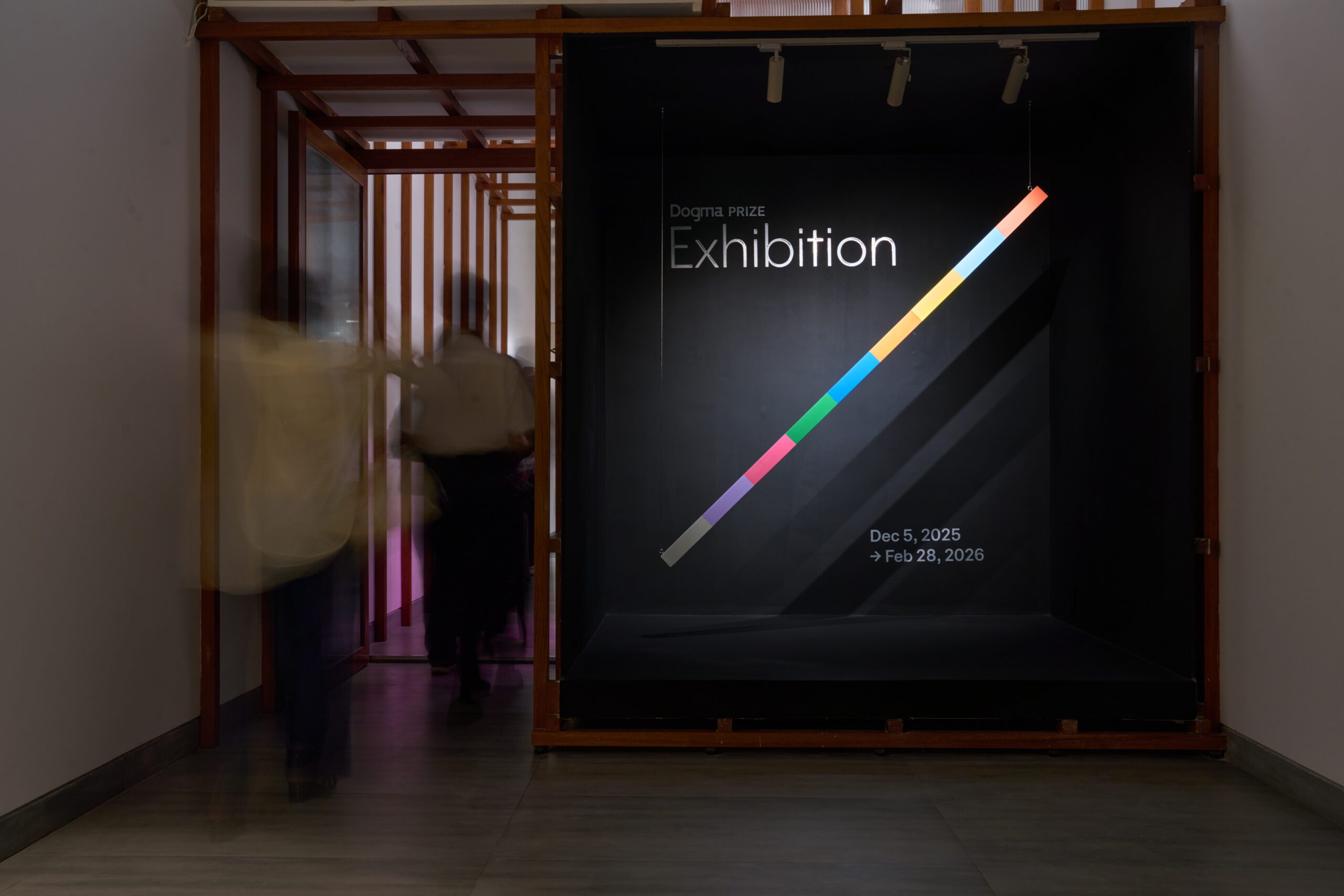
This year, the Dogma Prize 2025 continues its mission of fostering and promoting the development of contemporary art. The exhibition features works by nine winning artists from Vietnam, Laos, and Cambodia: Thuy Tien Nguyen, Bi Tuyen, Nguyen Duc Tin, Willie Xaiwouth, Hang Hang, Hul Kanha, Ha Dao, Le Tuan Ry, and Do Van Hoang. The submissions were evaluated by a distinguished jury, including artist Thao Nguyen Phan, curator Bill Nguyen, and art historian Dr Pamela Corey. Selected for their diversity in profession, interests, and backgrounds, the artists contribute to a rich tapestry of personal experiences and historical memories within the exhibition.
The nine artists stand as testament to the diversity of contemporary practice, spanning a vast spectrum of career stages, mediums, and thematic inquiries. “The jurying process was a formidable challenge,” the jury noted. “We were profoundly moved by the audacity and raw sincerity of their work – how they navigate intricate narratives while staying deeply anchored in their communities and heritage. They offer unique perspectives that help us better comprehend contemporary art and how it mirrors the complexities of our modern world.”
Each work serves as a profound manifestation of the past, where personal and collective memories are materialised into the physical realm. Through the evocative interplay of sound, imagery, and matter, the nine exceptional artists bring these intangible histories to life.
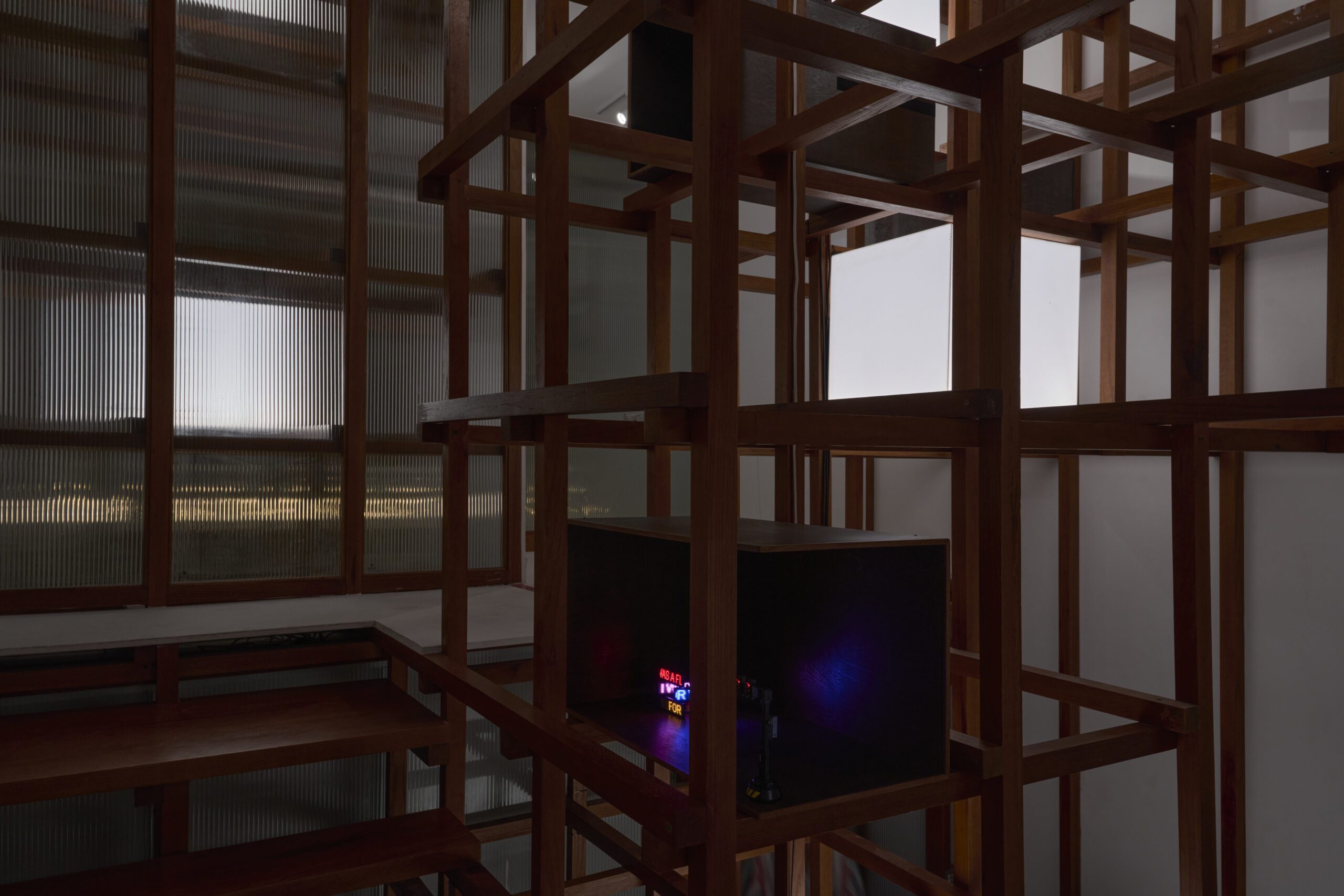
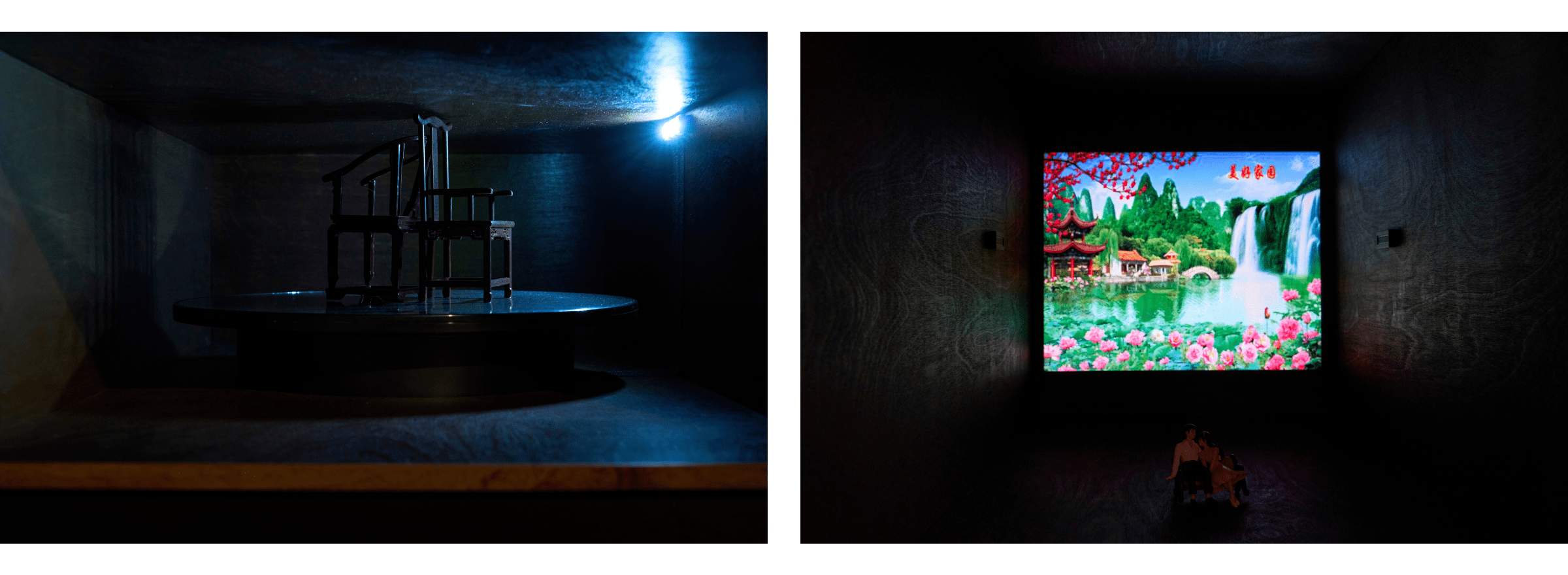
The first memory begins with the resonant echoes of Thuy Tien Nguyen’s “Untitled (Notes on romance and cities)”, featuring six wooden blocks staged along the building’s staircase. Renowned for a contemporary practice centred on the fluidity of memory, Thuy Tien explores how our memories distort, drift, and restructure themselves over time. These wooden blocks are far more than mere miniature sculptures of everyday life – like a song, street noises, flickering LED lights, or the vintage chairs and shanshui landscapes that are so deeply ingrained in East Asian decorations. Each box is a world itself: a modular assembly of memory, integrated with feedback systems and sound to create a perpetual loop. These memories, though imperfect, remain brimming with evocative echoes and resonant meanings.
Flowing from the sonic memories of “Untitled (Notes on romance and cities)” is Bi Tuyen’s monochromatic painting, “Seven Green Beans”. Displayed within a quiet corridor, the piece merges into the exhibition space as a continuation of remembrance, where memories crystallise into a profound, silent image.
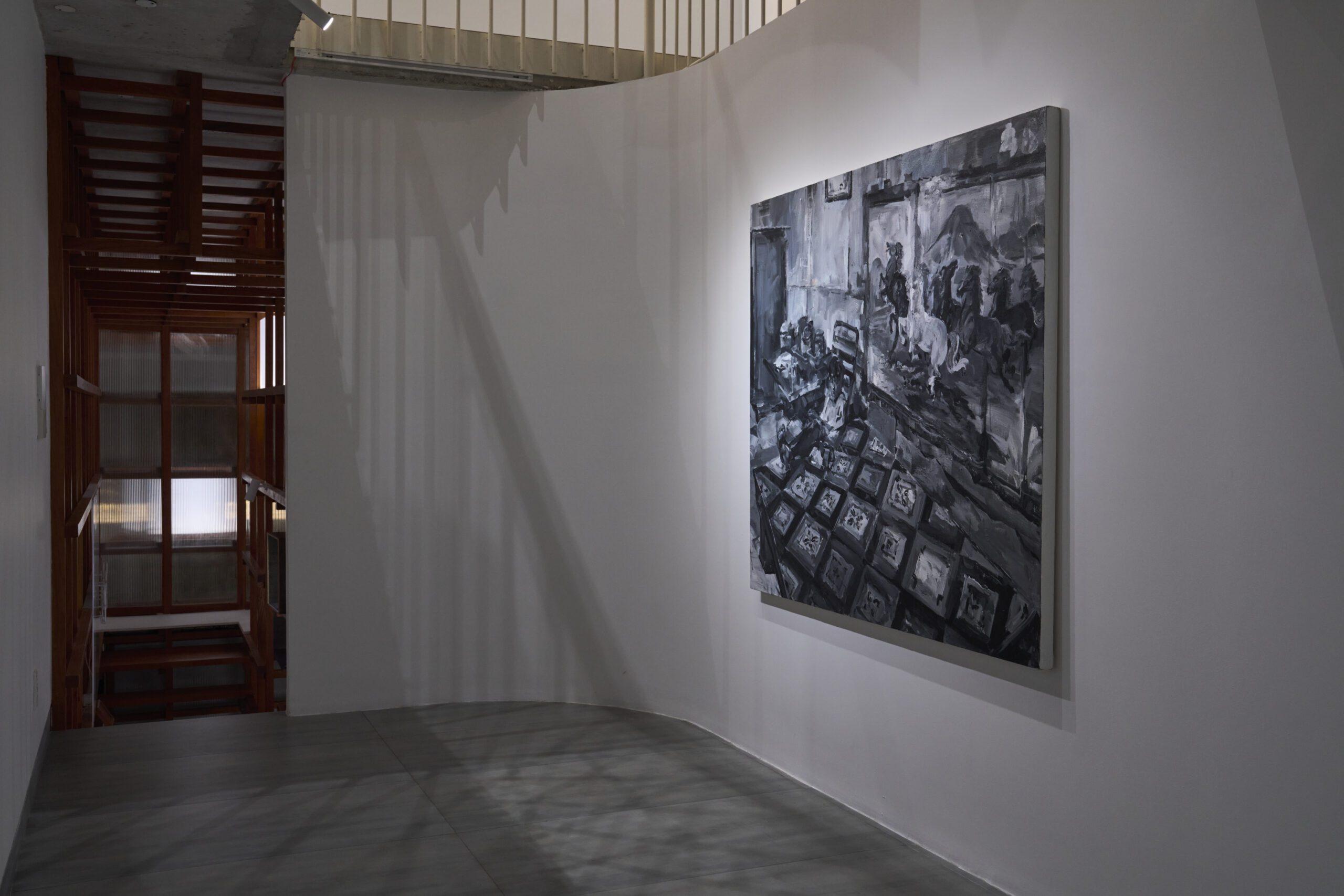
A graduate of the HCMC University of Fine Arts, Bi Tuyen has pursued her path in figurative painting that sets her apart from her contemporaries. “Seven Green Beans” captures a scene from her family home, featuring her younger brother seated before a traditional “Success Arriving on Horseback” painting. The title “Seven Green Beans” derives from a comforting remark meant to soothe Phat – the boy in the painting – during a moment of distress following a dog bite. From this intimate memory, the work unfolds into a broader narrative of deprivation, portraying a child who, in the absence of resources, is left to navigate and confront the world’s challenges almost entirely on his own.
Through her energetic brushwork embraces impasto and the monochrome tones, “Seven Green Beans” emerges as a familiar memory – hazy yet indelible, mirroring the shared nature of memory itself. The choice of a minimalist palette is deeply intentional; black and white hold an inherent narrative power and a heightened sense of universality. This chromatic restraint allows the viewer to engage in a full contemplation of every figure and detail within the frame, undisturbed by the distractions of colour.
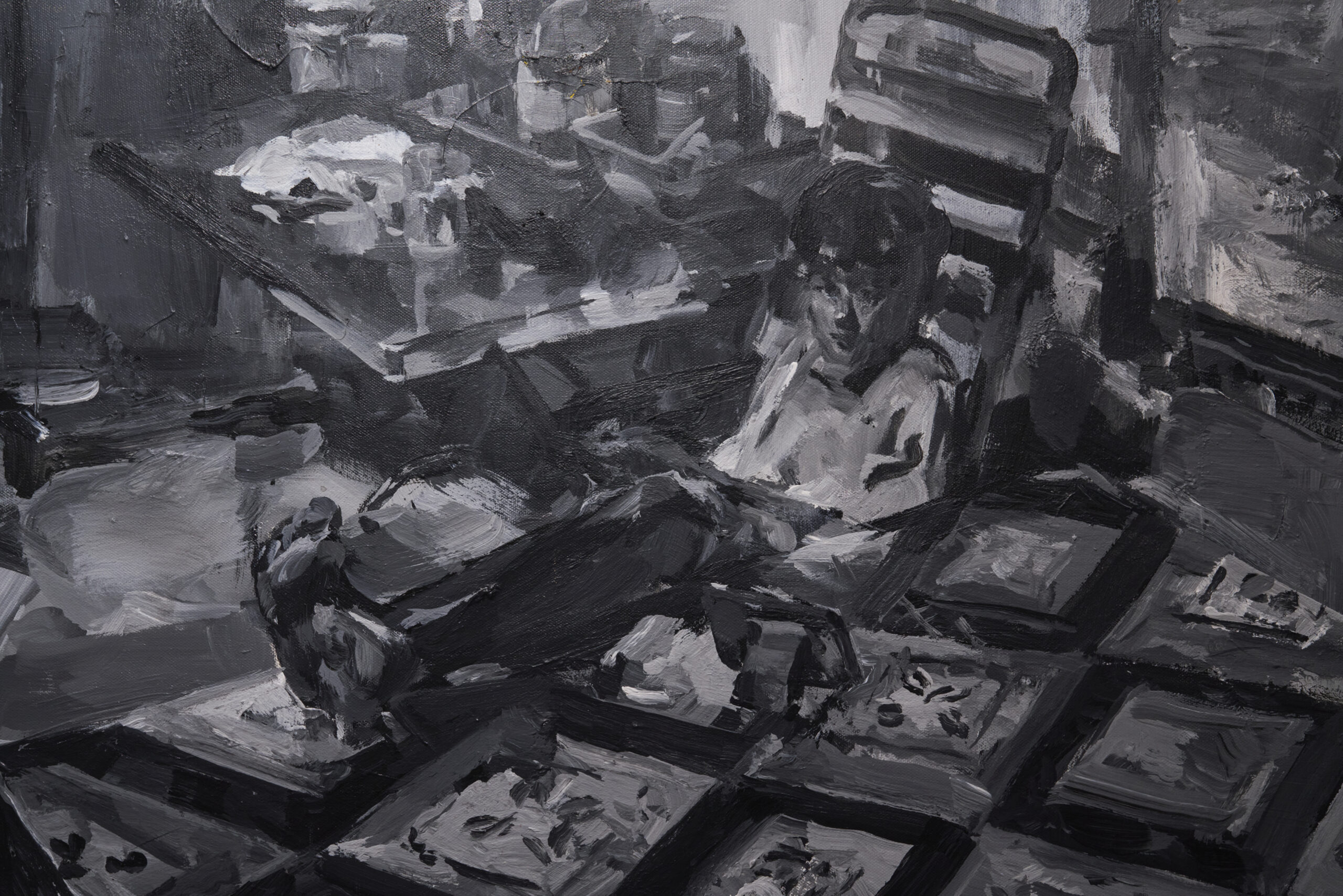
For Bi Tuyen, painting is a means of looking more deeply into the images and symbols that are so ubiquitous we often take them for granted. Consequently, “Seven Green Beans” functions as a reductive distillation of memory; by stripping the scene down to its essential light, shadow, form, and brushwork, the artist allows her original memory to gradually reveal itself.
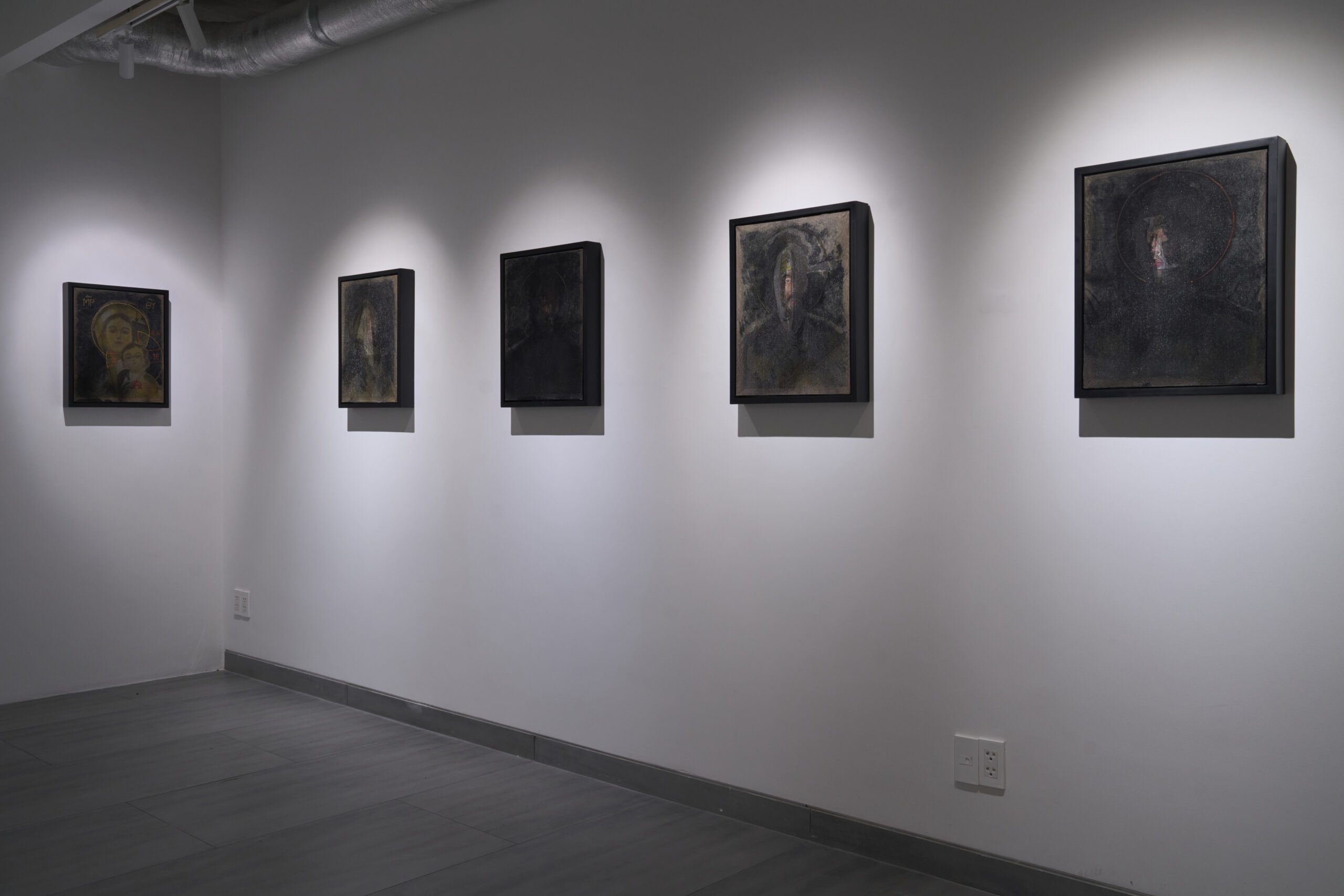
Parallely to these echoes of the past is Nguyen Duc Tin’s profound exploration of faith in his series, “Faith”. Secluded within a private room, the work exists in deliberate isolation from the lingering resonance of Thuy Tien Nguyen’s soundscape. Centred on the obscure figures among the 117 Vietnamese Martyrs, the collection leads the viewer through the corridors of the artist’s own memory, retracing his personal pilgrimage within the Catholic faith.
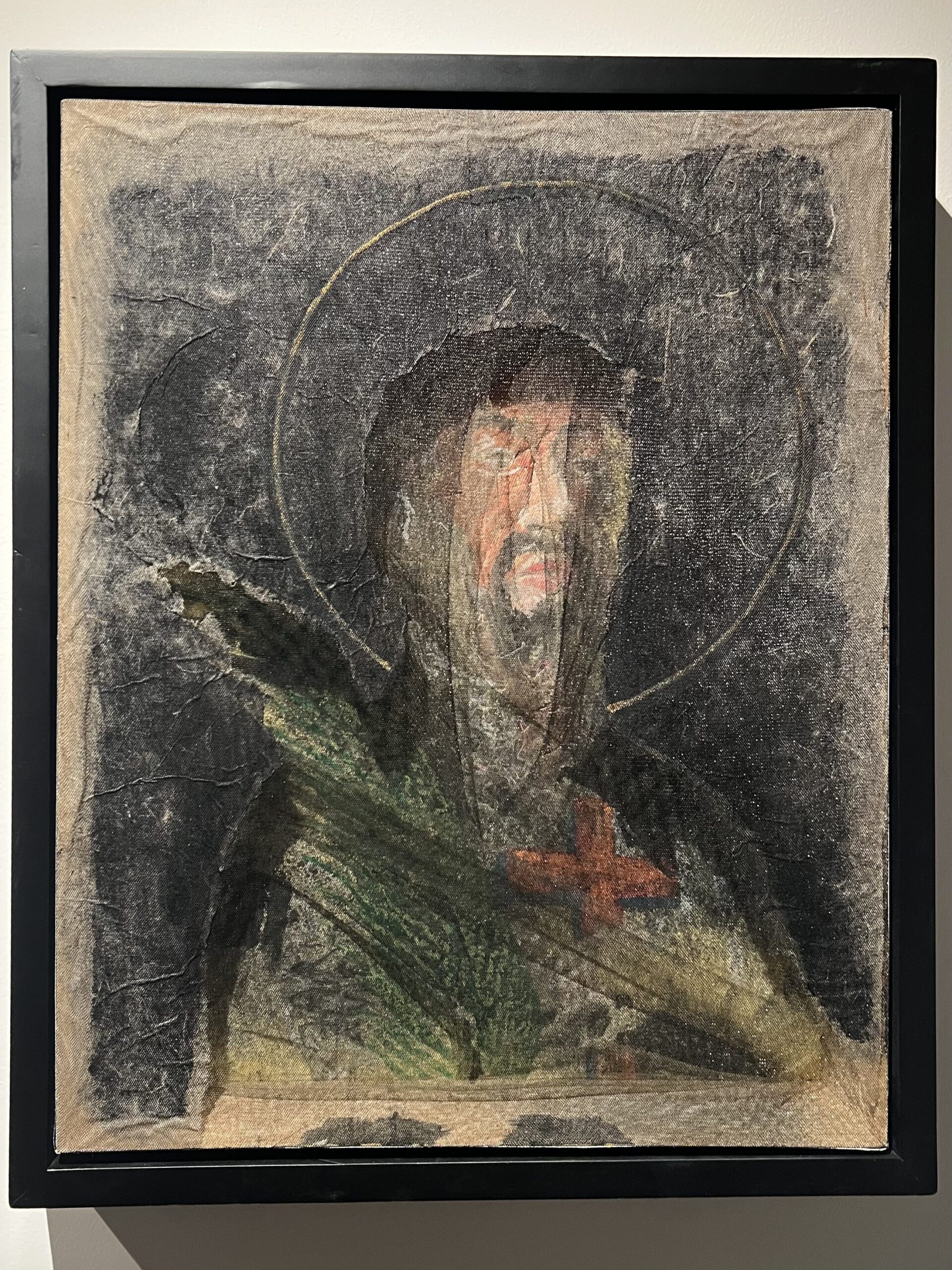
The series opens with the character “Faith”, sewed in Nom script upon a mosquito net, followed by portraits of eight martyrs. Among them is Luke Vu Ba Loan, who, at eighty-four, remained steadfast in his conviction and accepted his martyrdom under Emperor Minh Mang as a profound testament to his devotion to God. Executed on Do paper and shrouded behind heavy black mosquito net, these works transcend traditional portraiture to invite an interactive dialogue with the viewer. This unconventional medium – born of financial necessity and a gift from the artist’s mother – is manipulated with precision; the lacerations in the fabric serve as a barometer of remembrance. The tears part wide for the well-known saints, yet draw closed over the faces of those who have been eclipsed by time. While the atmosphere is undeniably sombre, it eschews the macabre, opting instead for a poignant grief – a lament for those historical figures whose significance is slowly dissolving within the collective consciousness.
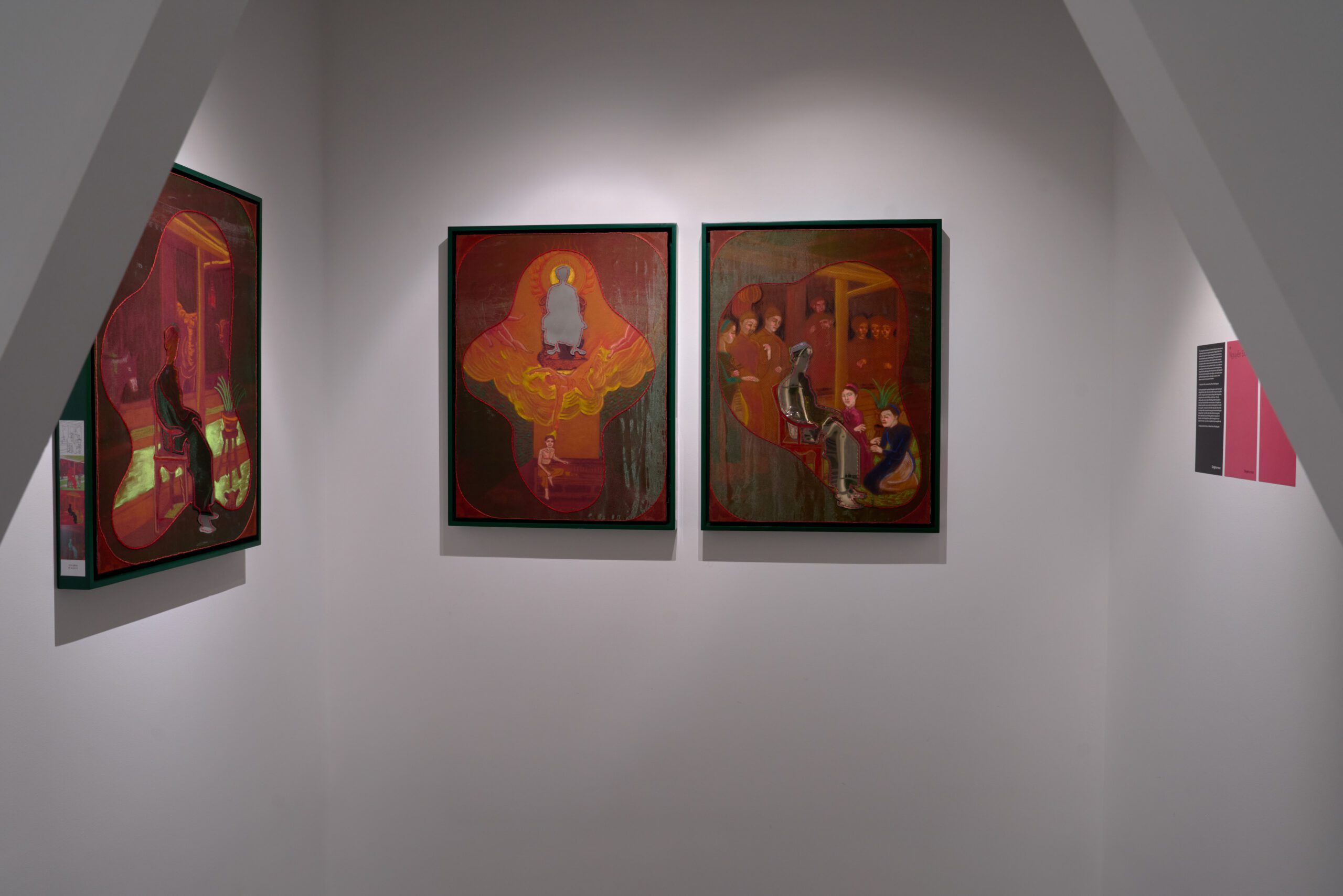
This same artistic methodology was also used in his earlier twelve-piece series, “DUCTIN”, where he explored a similar materiality of mosquito net, coloured acrylic, and stainless steel. In an adjoining room connected to the “Faith” collection, three pivotal works from his “Heart” series invite the audience to revisit his journey of exploring sacred themes within contemporary art.
The story of the origins of his inspirations for exploring sacred themes, and the deliberate choice of materials in his practice were recently unveiled by Duc Tin in an interview with Art Nation.
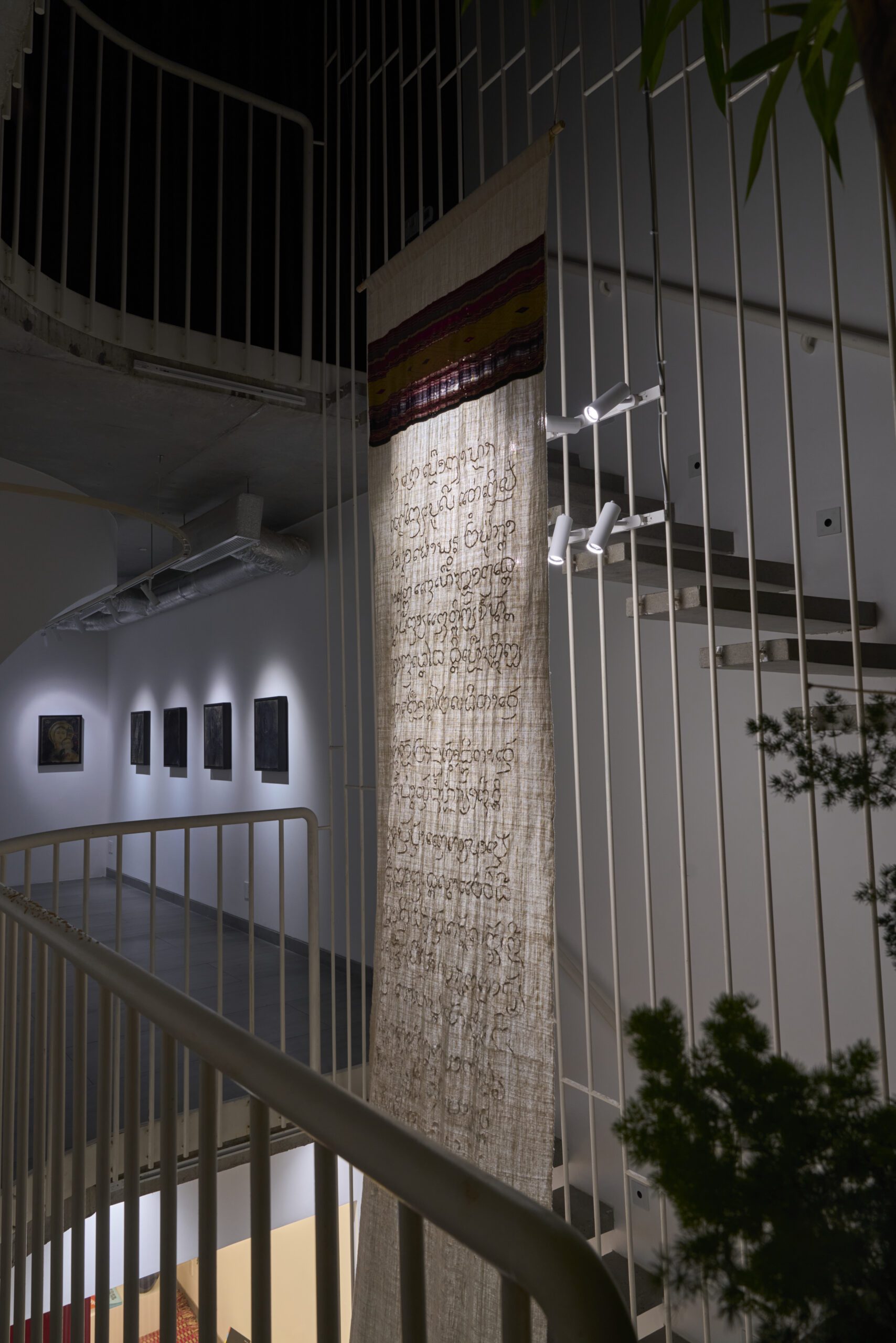
Situated at the heart of the exhibition is the work of Laotian artist Willie Xaiwouth. Much like other artists, Willie possesses a profound interest in cultures and languages, particularly as his native tongue faces the encroaching erosion of modernisation. “The Fading Breath of Forgotten Words” takes the form of a hand-embroidered letter upon calico, stitched with bamboo flowers gathered from his hometown in Sainyabuli, Laos.
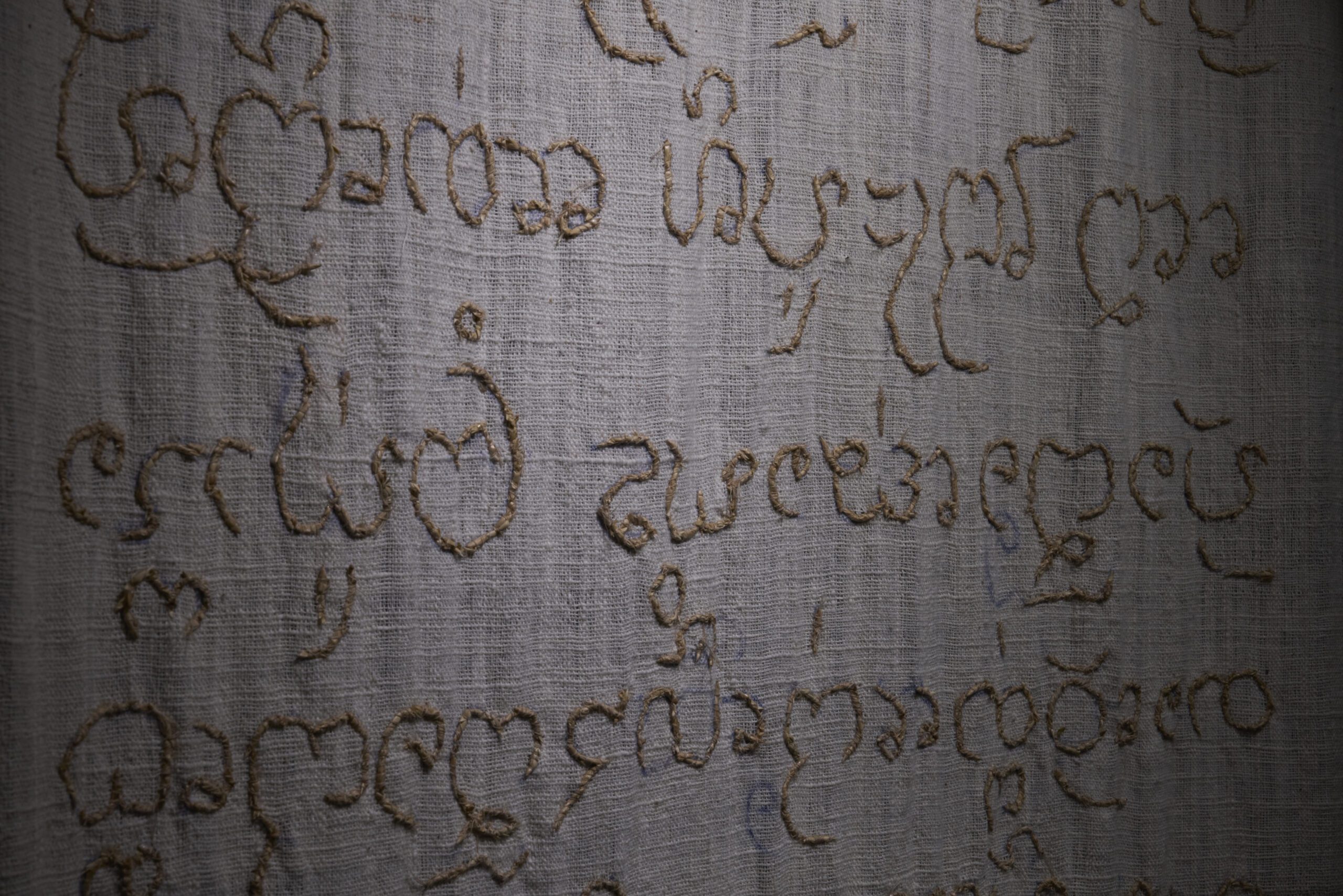
Suspended within the atrium amidst the transition of the stairwell, the work is accompanied by scattered bamboo flowers. At first glance, the piece appears as a normal script unfurling across a length of fabric rather than an undeciphered letter. The encounter with this letter is fleeting, much like a trace of memory, as the profound meaning veiled behind the characters remains an enigma. Through this, Willie seeks to ignite a dialogue on the struggle to preserve traditional values and the dissipating cultural heritage of the Tai Yuan people – descendants of the Lan Na Kingdom – as well as other ethnic groups dispersed across Laos and Thailand.
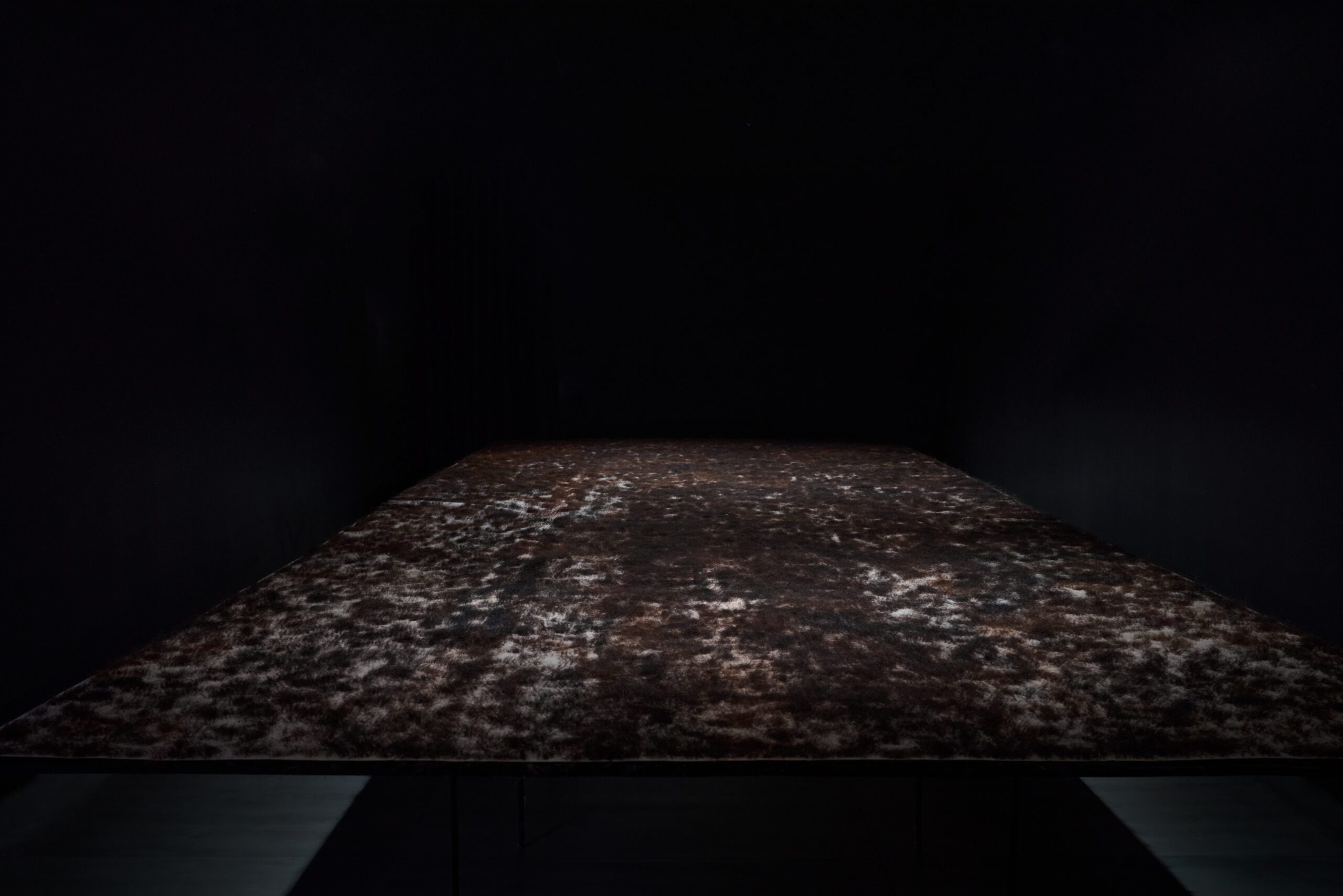
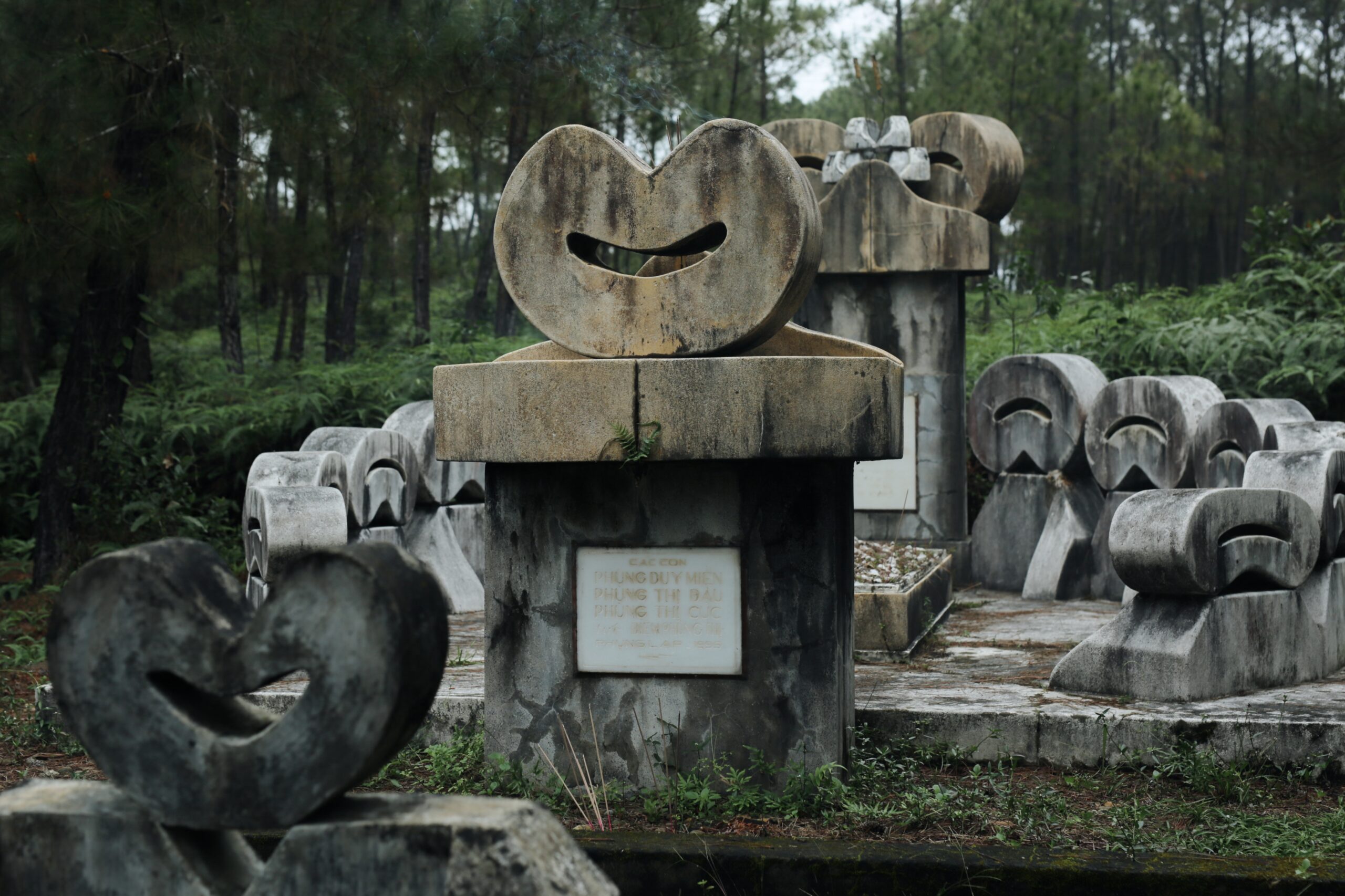
Emerging from the shadows of oblivion, Hang Hang’s “Unforgotten Land” stands as a haunting reminder of the past. Exploring themes of war and migration, the installation is crafted from faux leather fabric and intricately attached with genuine human hair. These strands were salvaged by Hang Hang from her mother’s salon and the surrounding community; subsequently, the artist and her family meticulously hand-punched each needle hole, threading every single hair onto the leather surface. In this sense, “Unforgotten Land” transcends its physical form to become a testament to the collective labour, resilience, and devotion of her entire family.
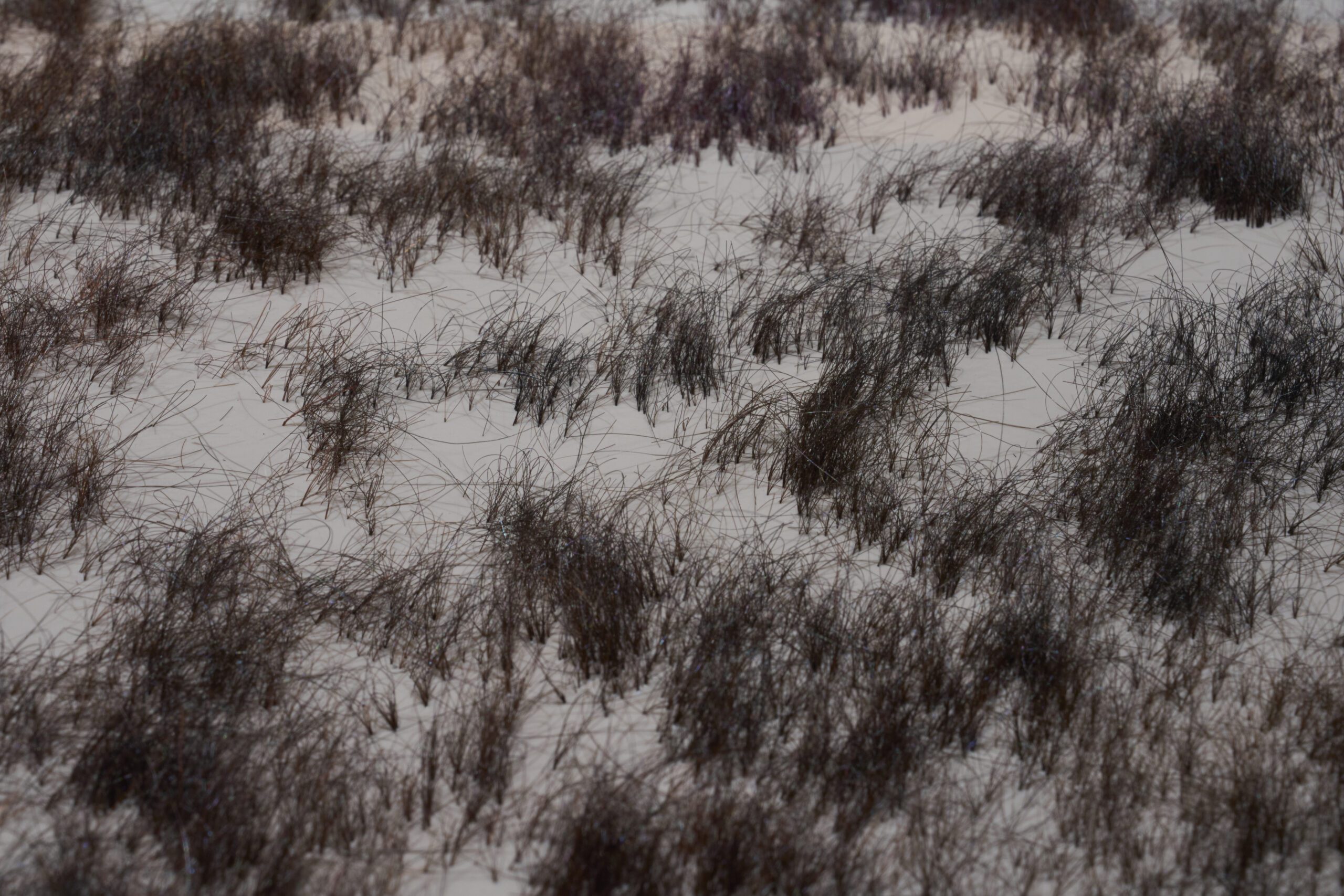
Displayed within a darkened room, the work is illuminated only by a sliver of light piercing through a gap in the curtains. From a distance, the shadows cast by the hair appear to reconstruct the topography of a haunted terrain: parts barren and desolate, others dense and brooding. Far from a lush forest, this landscape is scarred by the spectral traces of a horrific wartime era. These strands of hair – inherently soft yet piercing the leather with a sharp, visceral intensity – act as conduits for heavy, lingering memories. They conjure images of a ravaged woodland: charred by the fire of bombardment, with embers of conflict still glowing a residual red. These anonymous fibres embody the narratives of war and strife that continue to fester as open wounds today. Yet, beneath this prickly exterior lies the true essence of memory: something to be tenderly cherished and passed down through the generations.
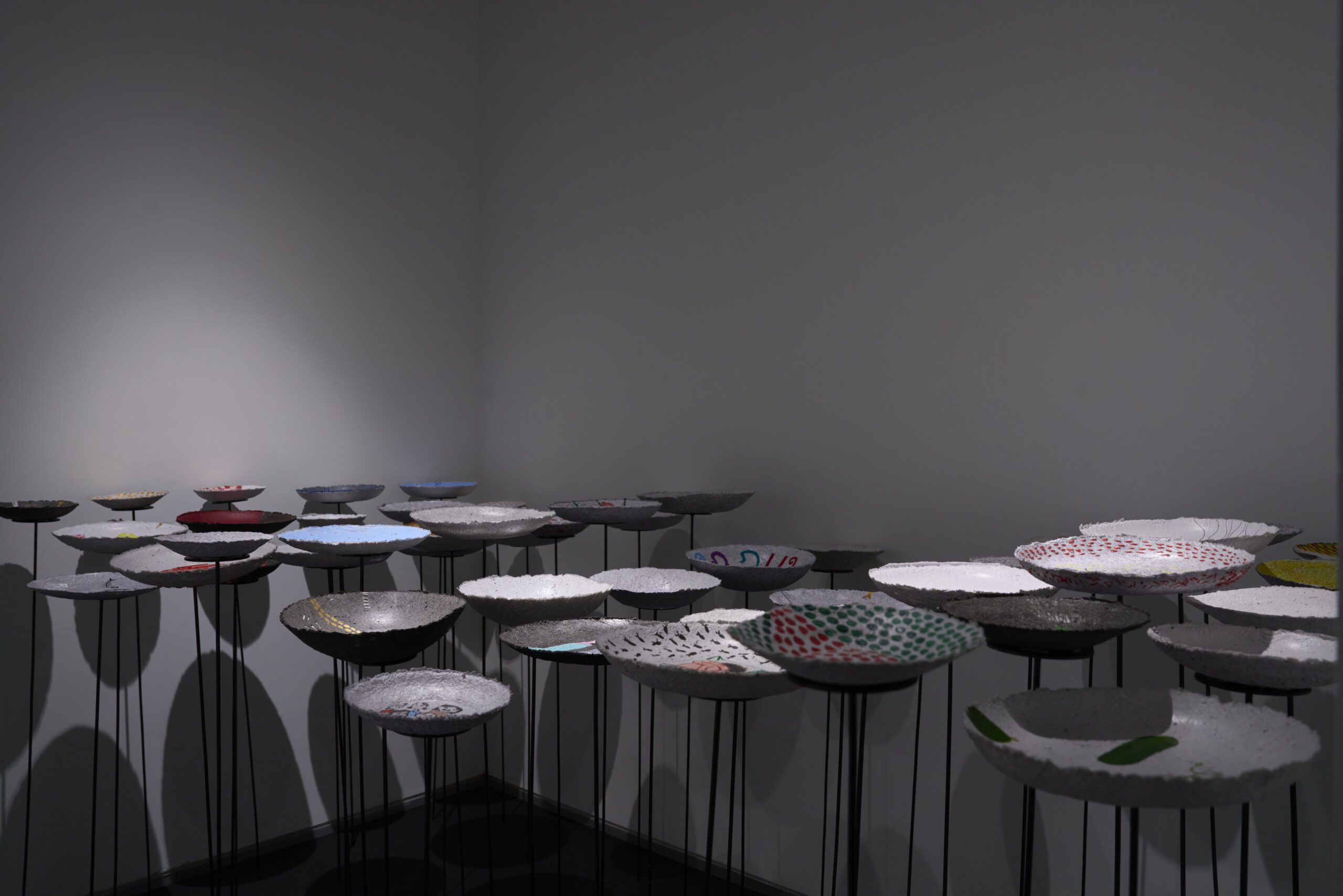
The haunting echoes of the past find further resonance in “Plates of the Passed”, an installation of fifty cycle paper plates by Hul Kanha. The work serves as a visceral manifestation of a fractured childhood and the artist’s own steadfast resilience in the face of poverty within the rural landscapes of Siem Reap, Cambodia.
Perched upon slender pedestals of varying heights – symbolic of the erratic ebbs and flows of her life – each plate is a confluence of vibrant, childish brushwork, shimmering gold leaf, and monochromatic family photographs. Through the hollow vessels, she narrates a story of scarcity, juxtaposed with a fierce will to survive embodied in the sketches of carrots and cucumbers. These disparate elements are intricately interwoven by red threads, serving as a testament to the indomitable human spirit that endures even amidst the most harrowing adversity.
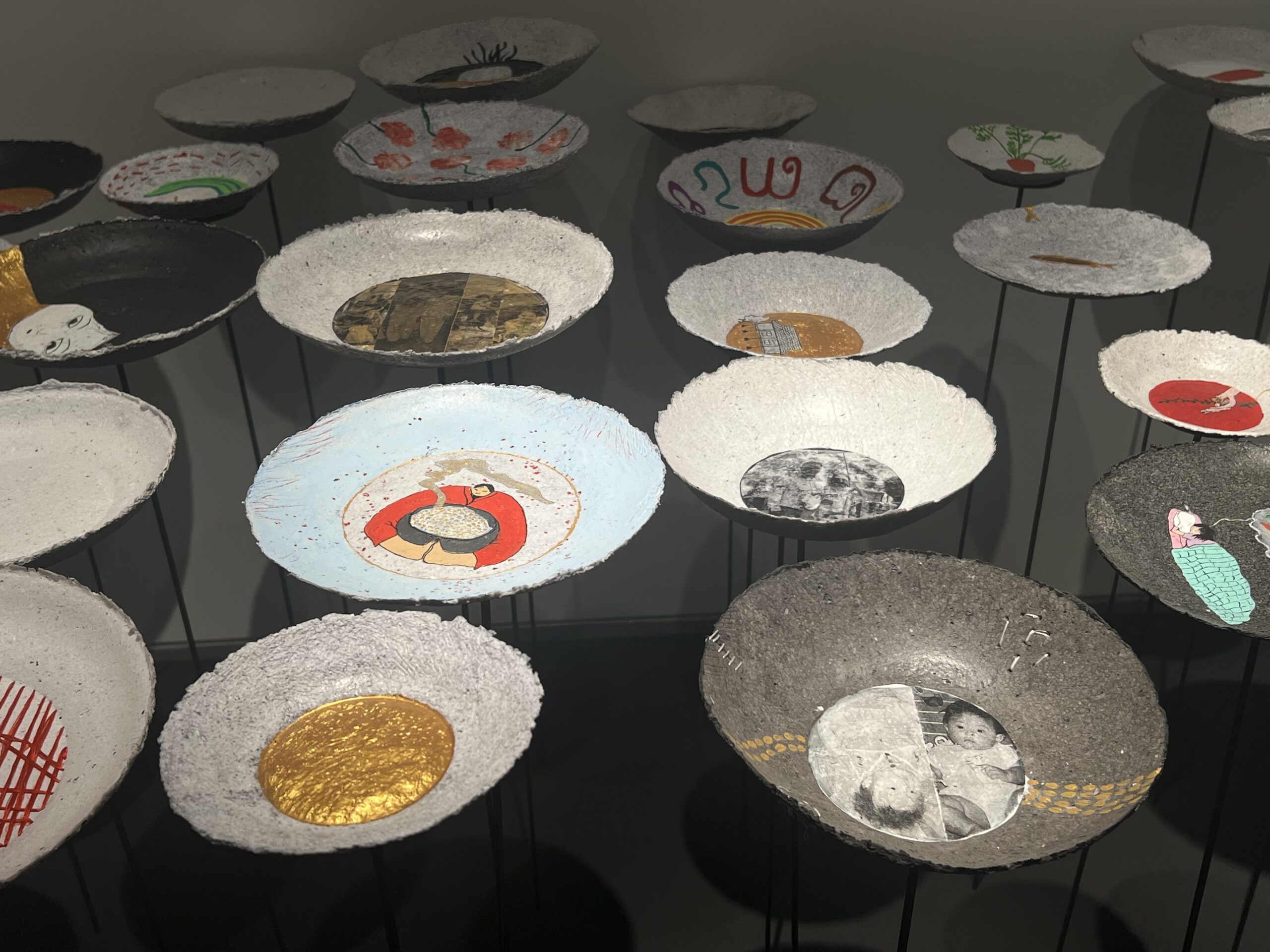
Through the medium of cycle paper – a material reborn from shredded fragments and discarded paper to take on a fresh form – “Plates of the Passed” reflects the artist’s past experiences of being marginalised and overlooked. By utilizing this specific material, Hul Kanha asserts a profound belief in the power of self-redefinition; just as these paper remnants are restructured to find new purpose and worth.
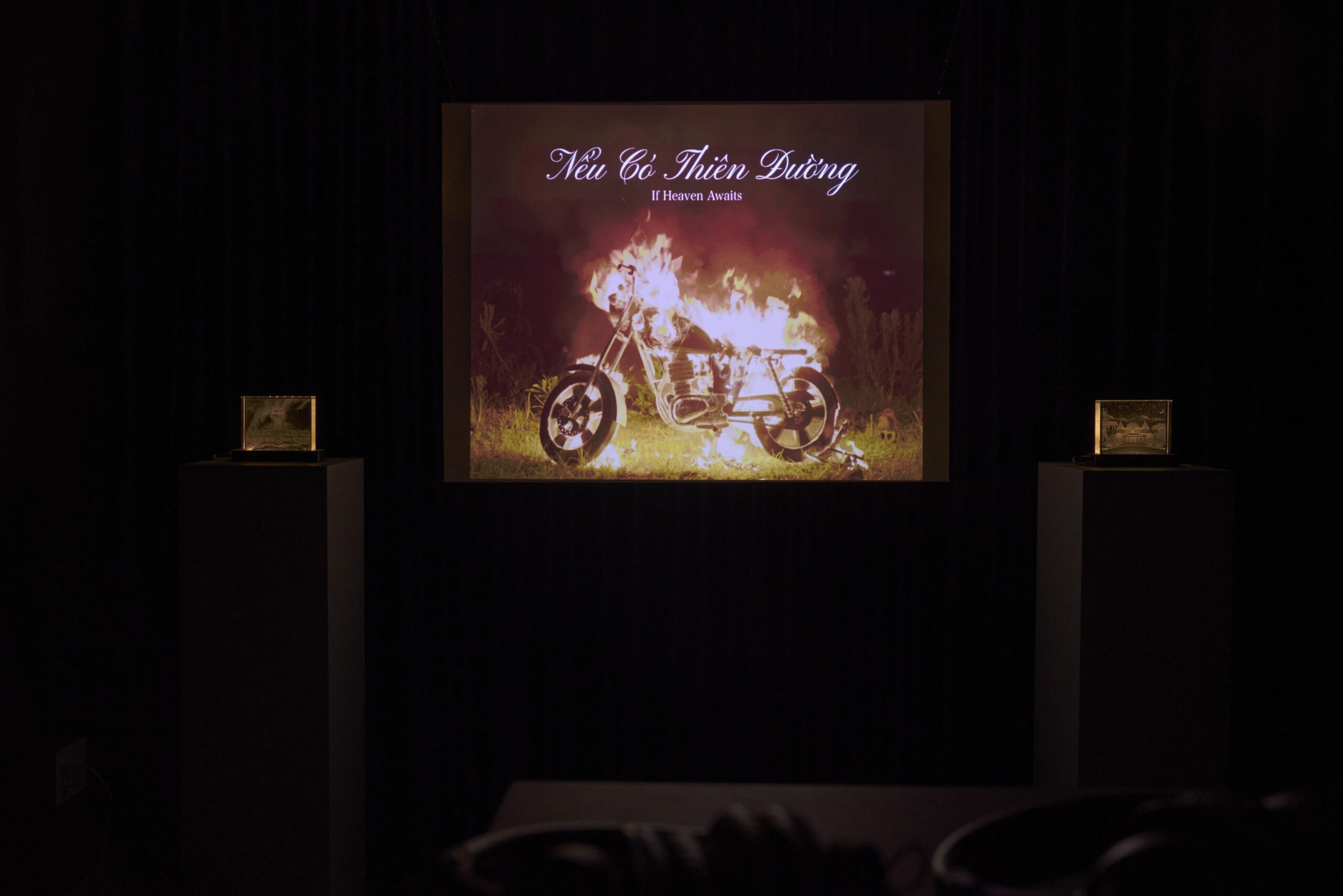
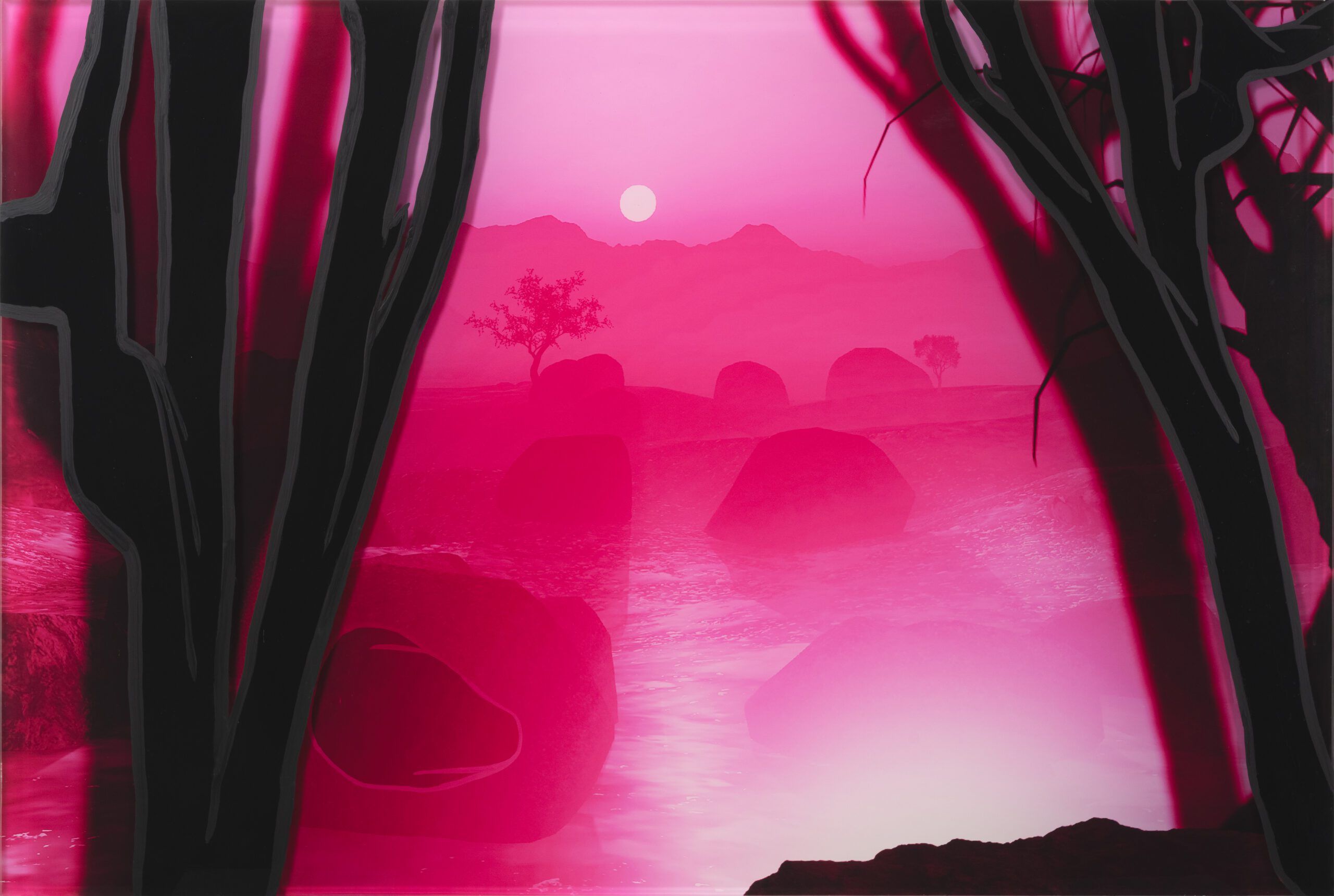
Alongside these echoes of past hardship lies a narrative seldom told – one frequently obscured within the historical annals of Vietnam’s queer community. “If Heaven Awaits” is a music video by Ha Dao, shedding light on a lesser-known facet of the notorious female gangster, Dung Ha. Rendered with an aesthetic reminiscent of the early 2000s, the work employs the period’s hit song “Dreaming of You Tonight” by Lam Truong to recount the tender love story between Dung Ha and the woman whom she loved.
In the 1990s, Dung Ha was a notorious “matriarch” of the underworld in Hai Phong, whose sexuality frequently served as fodder for tabloid speculation. Her life came to a violent end in 2000, when her assassination sent shockwaves through the underworld. Biographies and popular media have focused almost exclusively on her ruthless rise to power or her alleged liaisons with other high-ranking gangsters. Consequently, her profound connection with this particular woman is often dismissed; her identity is reduced to a caricature of masculine attire and sexual orientation, while the true depth of her affection remains largely ignored.
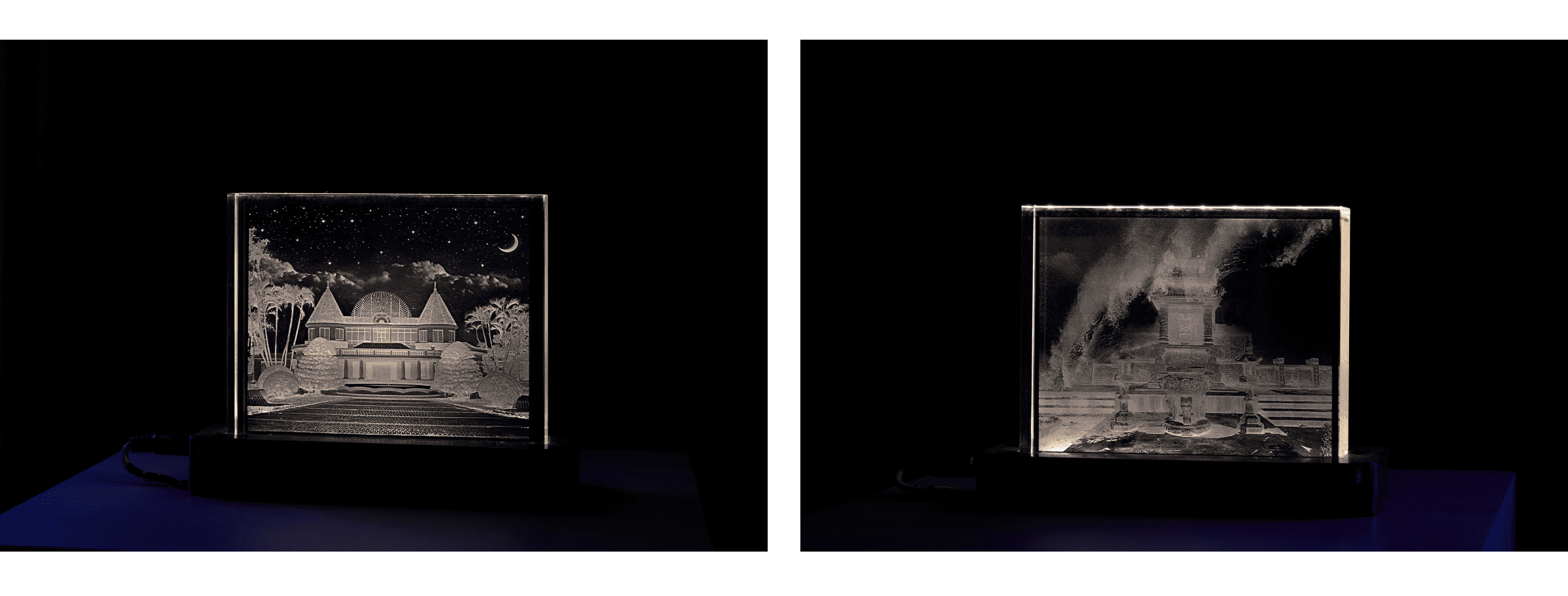
In “If Heaven Awaits”, Dung Ha is reimagined as a romantic protagonist rather than a villain. By reconstructing her life within a fictional world – where the character can finally pursue her unfinished love – Ha Dao conjures a “paradise” that was denied to the character in reality. Displayed in a private corner, the music video is screened alongside two crystal blocks, etched with the images of Vietnam’s first casino and Dung Ha’s final resting place. The installation stands as a tender gesture of solace, an attempt to soothe the turbulent legacy of the character.
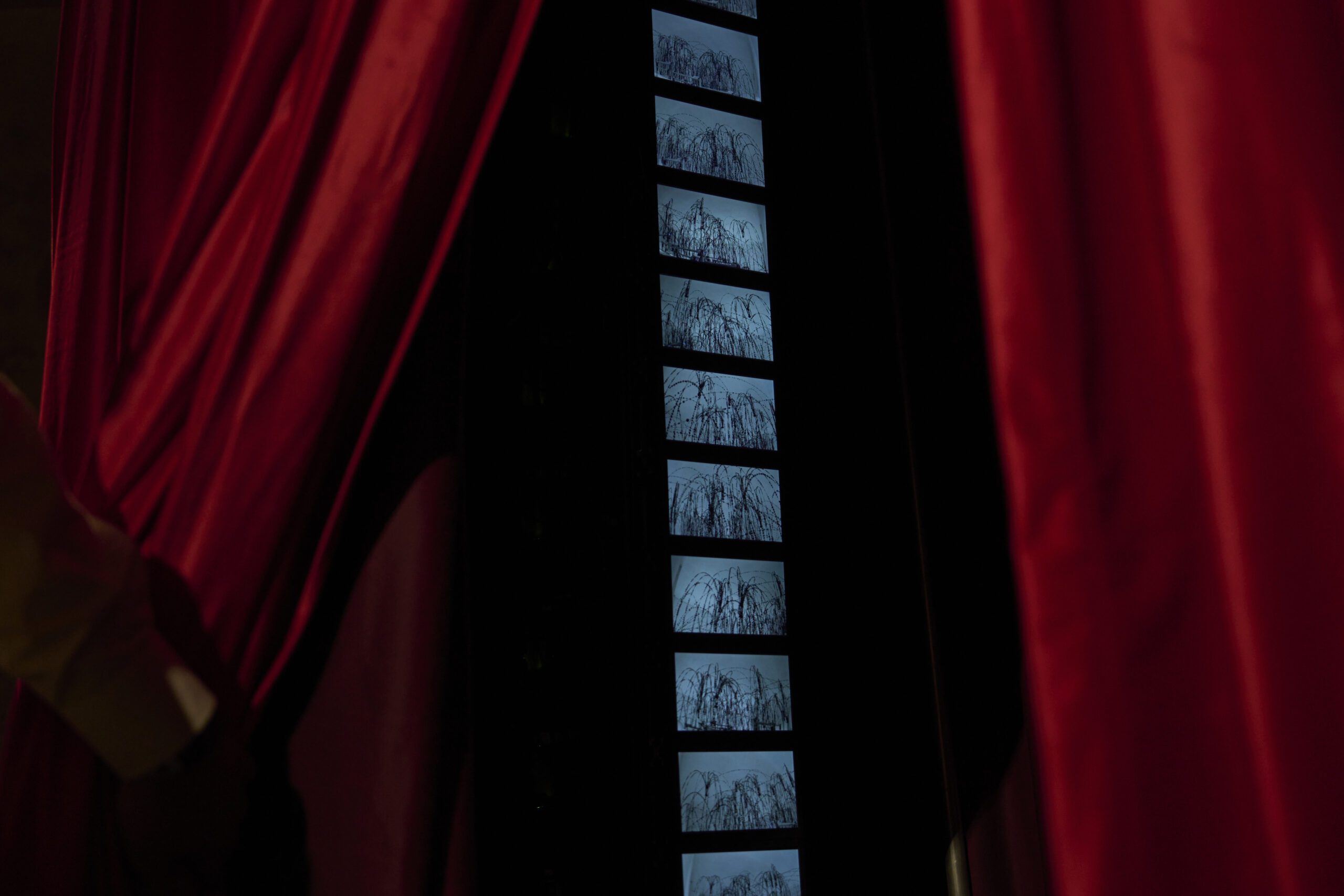
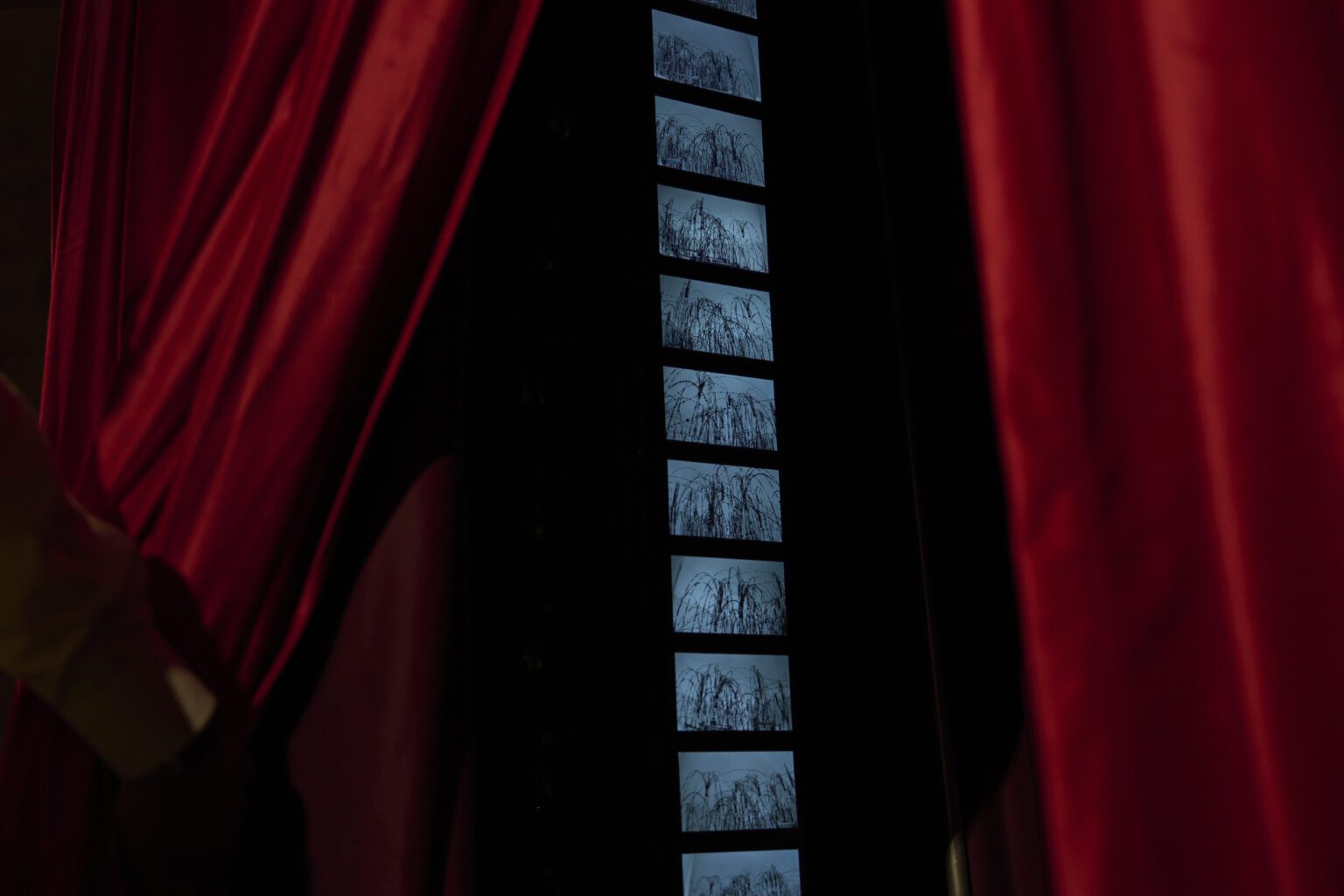
Memory, the past, the present, or the notion of space – are all the words that describe, yet insufficient to fully capture the essence of Le Tuan Ry’s installation, “18 Realms of Mound”. The work unfolds in two distinct parts: the first comprises eighteen CCTV monitors situated on the uppermost floor of the Dogma Prize 2025 exhibition, while the second resides as an installation within the artist’s own studio in Hanoi.
Haunted by the boundary between the observer and the observed, Ry interrogates the very essence of visual art: are we truly capturing a landscape, or merely replicating the optical effects displayed before us? He questions whether the laws of perspective in Western painting do nothing more than imprison the world within a rigid frame, or if Chinese shanshui is simply a re-enactment of a panoramic gaze from above. Can the rigid application of technique and tradition – the very elements that define “landscape” – ever truly encapsulate the soul of nature? In this installation, Ry transforms the landscape from a static, relative simulation into a surreal, shifting vista – one that is perpetually altered by the presence and intervention of the viewer.
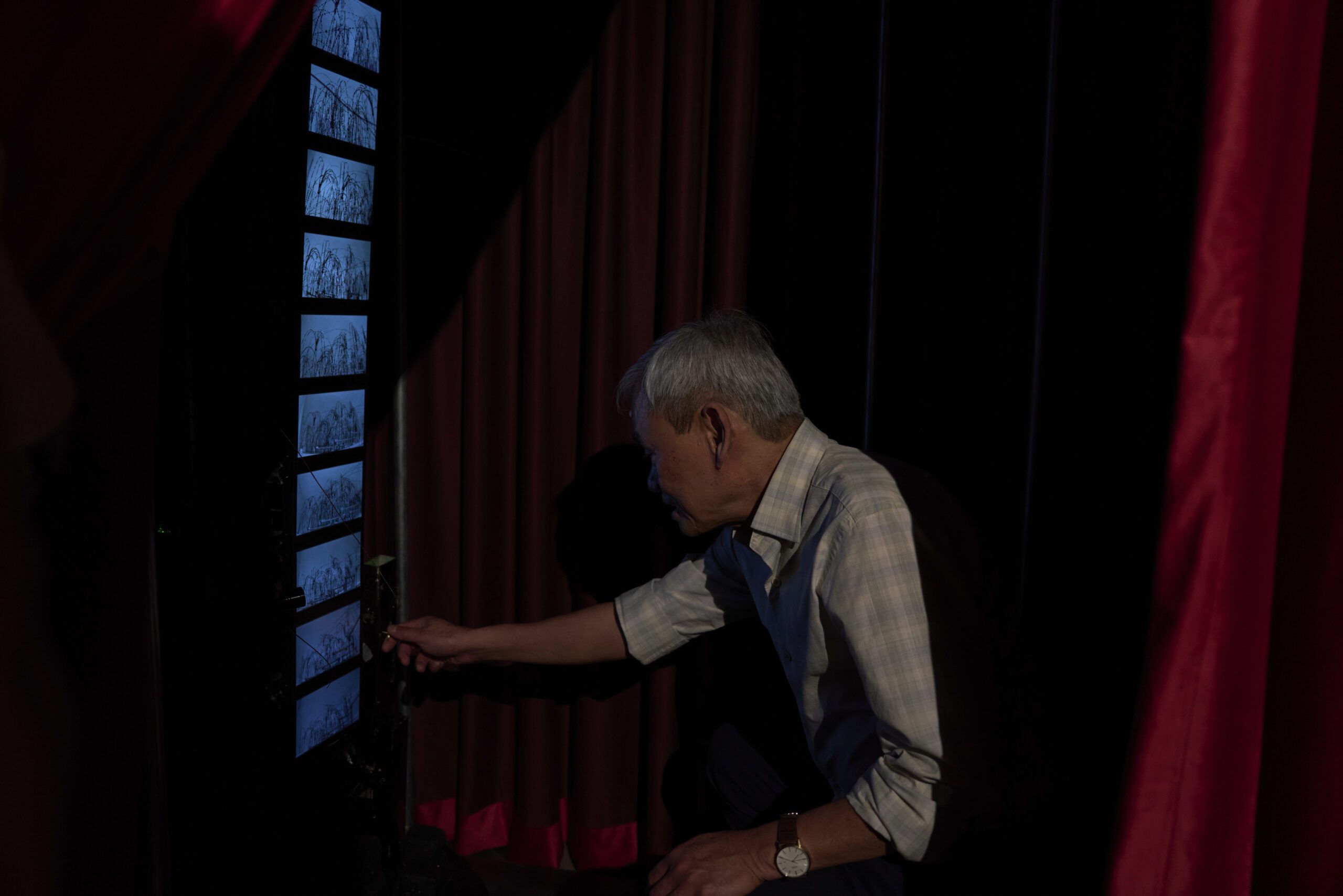
Concealed behind a red velvet curtain, eighteen CCTV monitors present a multi-faceted gaze upon a singular subject: a monumental sculpture crafted from thousands of discarded X-ray films salvaged from local hospitals. These fragments of biological memory have been meticulously carved and interconnected to form an imposing mass – a collective silhouette of anonymous internal anatomies, suspended within a secluded void. By winding a music box, the viewer assumes the role of an observer, manipulating the sculpture from myriad angles; their touch triggers a real-time kinetic response within a small studio space over a thousand kilometres away, transmitted back through the CCTV feed. In doing so, Ry reconstructs a panoramic “landscape” – a multi-dimensional tableau in a constant state of flux, embodying the essence of “Qi-yun Sheng-dong” (Spirit Resonance) that the artist so fervently pursues.
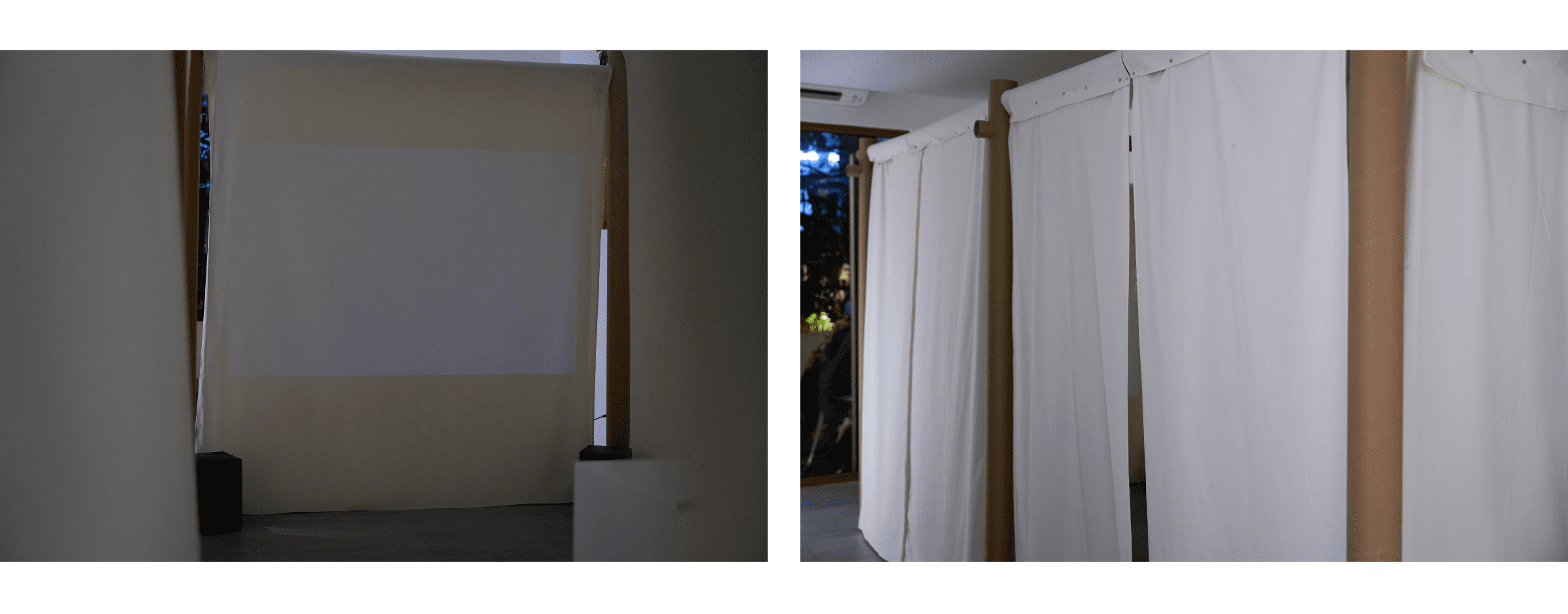
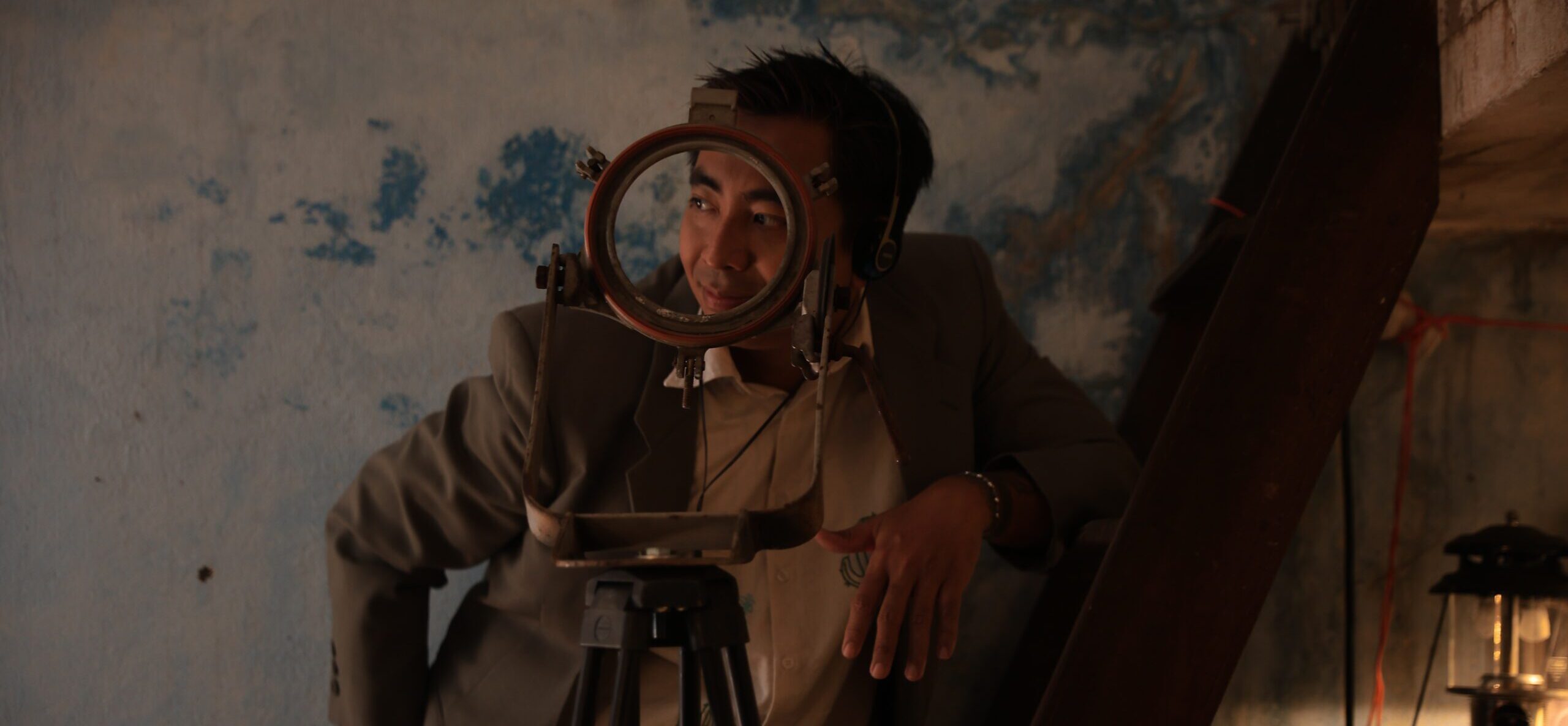
Concluding the exhibition is the resonant echo of memory in Do Van Hoang’s “The Tofu Maker’s Son”, screened with the sonic presence of his previous work, “Water spinach, garlic, chillies, coca”.
Situated on the ground floor within a paper chamber – entirely isolated from the outside world – these two works conjure a private world, recounting the artist’s childhood as a refugee in Hong Kong, the trauma of displacement, and the bonds of family. Drawing inspiration from Shigeru Ban’s Paper Partition System, Hoang pays homage to humanitarian compassion and relief efforts, gently guiding the audience back through the corridors of his own forgotten solitudes. Even as the visual fades, the work leaves behind a melodic lingering of wind and waves, haunting the viewer’s consciousness long after they depart.
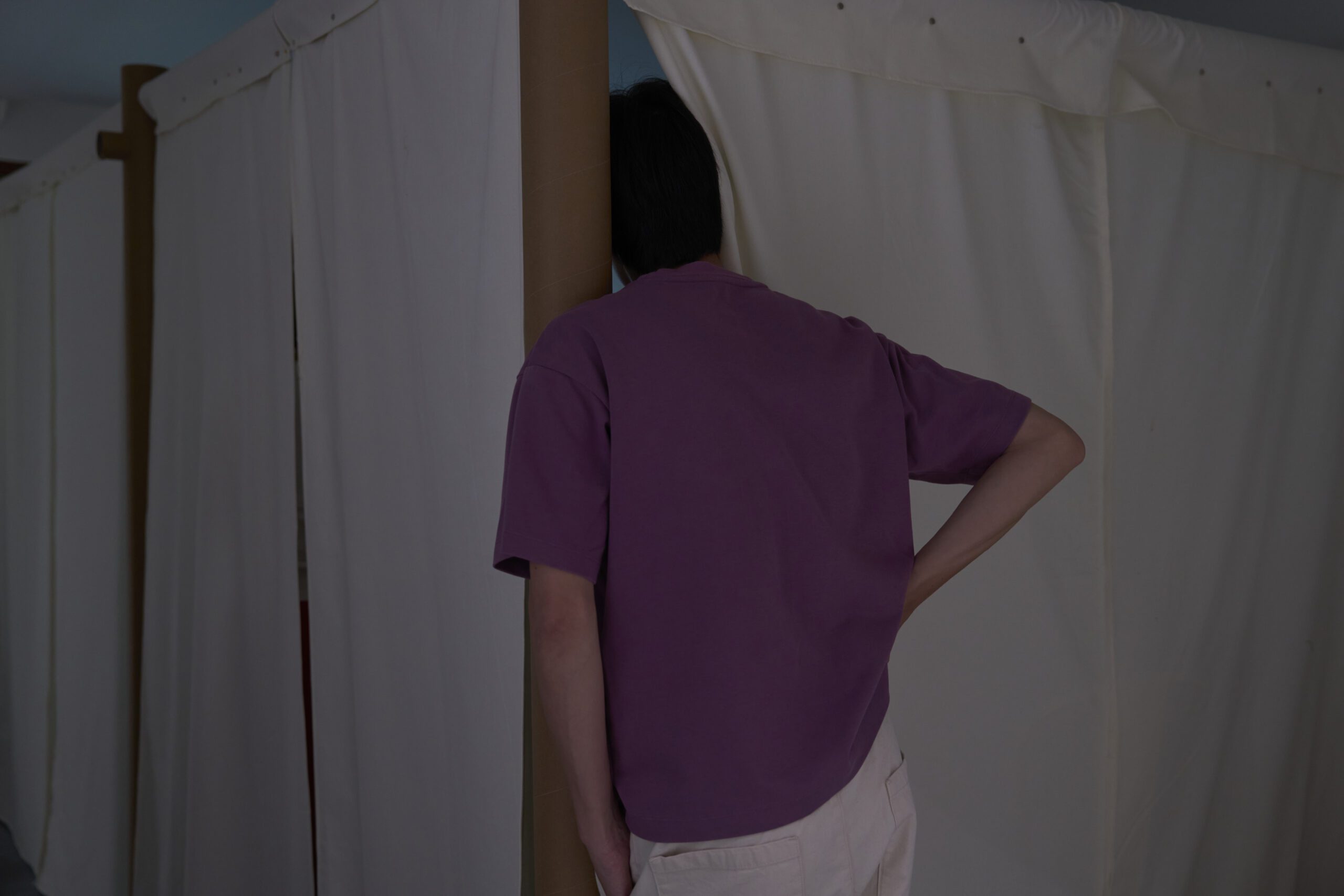
The Dogma Prize 2025 exhibition is a curated odyssey through memory, traversing narratives that range from the nostalgic and consoling to the haunting and sorrowful. This year’s collection stands as a resolute testament to the diversity of contemporary art; it showcases a profound mastery in articulating experiences that often elude words – even when those memories are jagged, painful, and difficult to confront.
ABOUT DOGMA PRIZE 2025 EXHIBITION
Address: 27A Nguyen Cu, Thao Dien, Thu Duc, Ho Chi Minh City
Opening hours: 11:00–18:00 | 05.09.2025–28.02.2026 (Thursday – Sunday)
Free Entry
Words & Translation: Khoa Dương