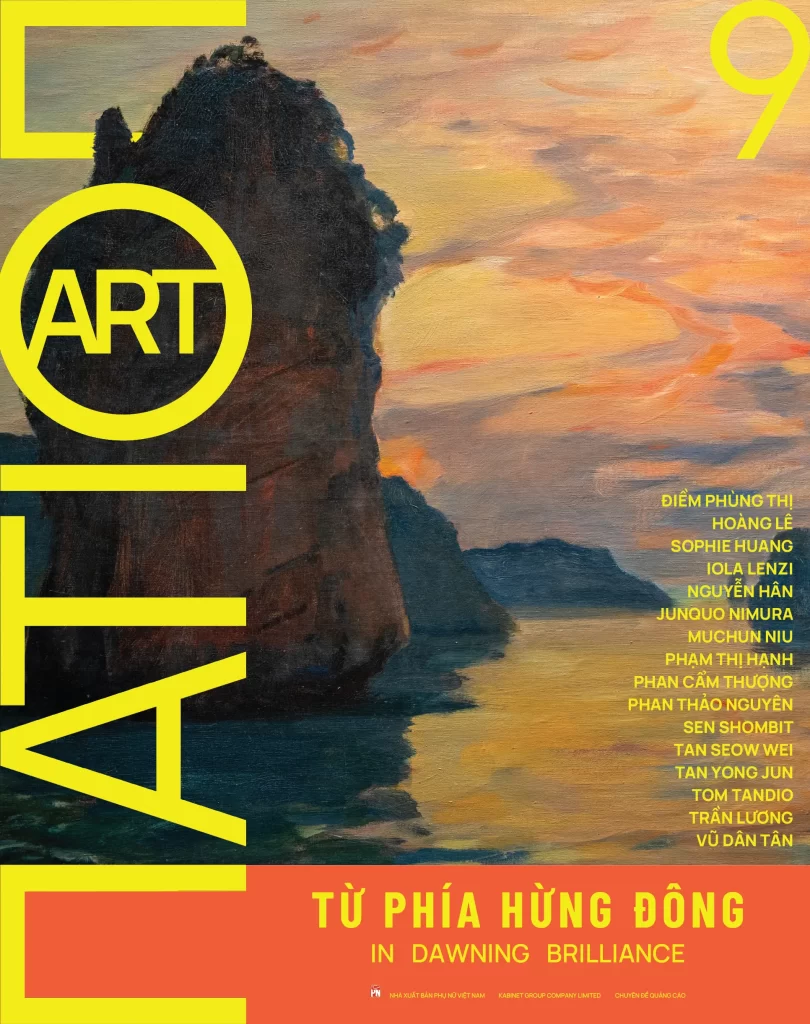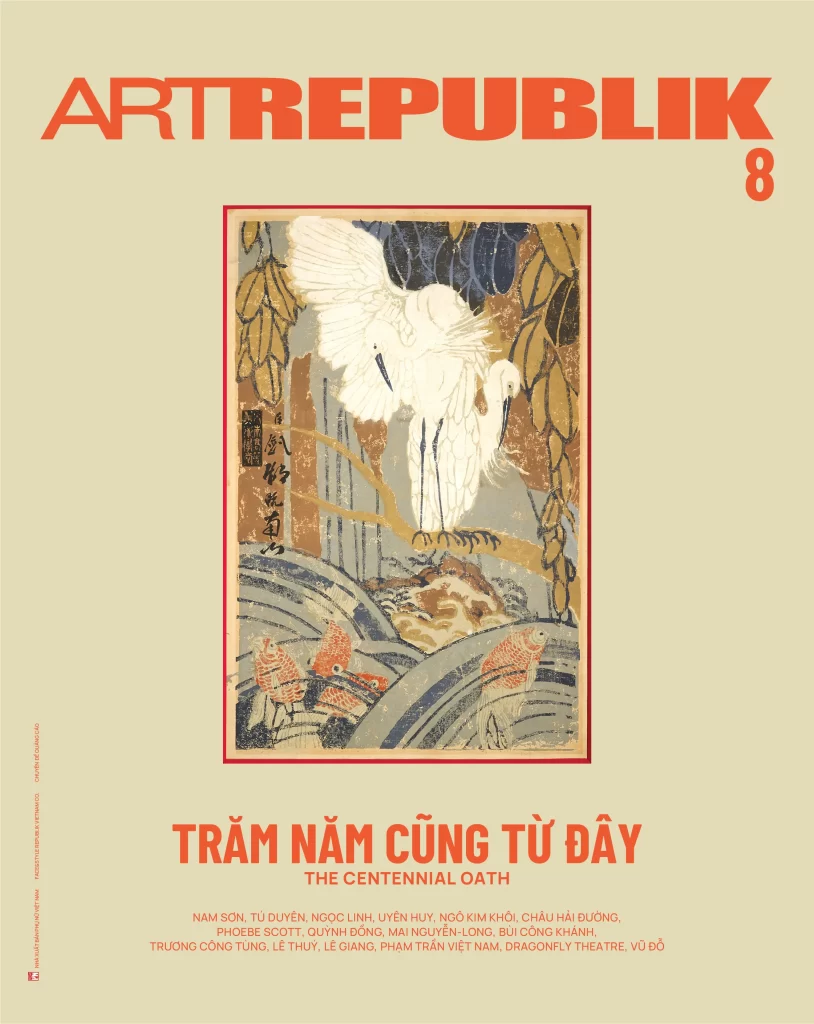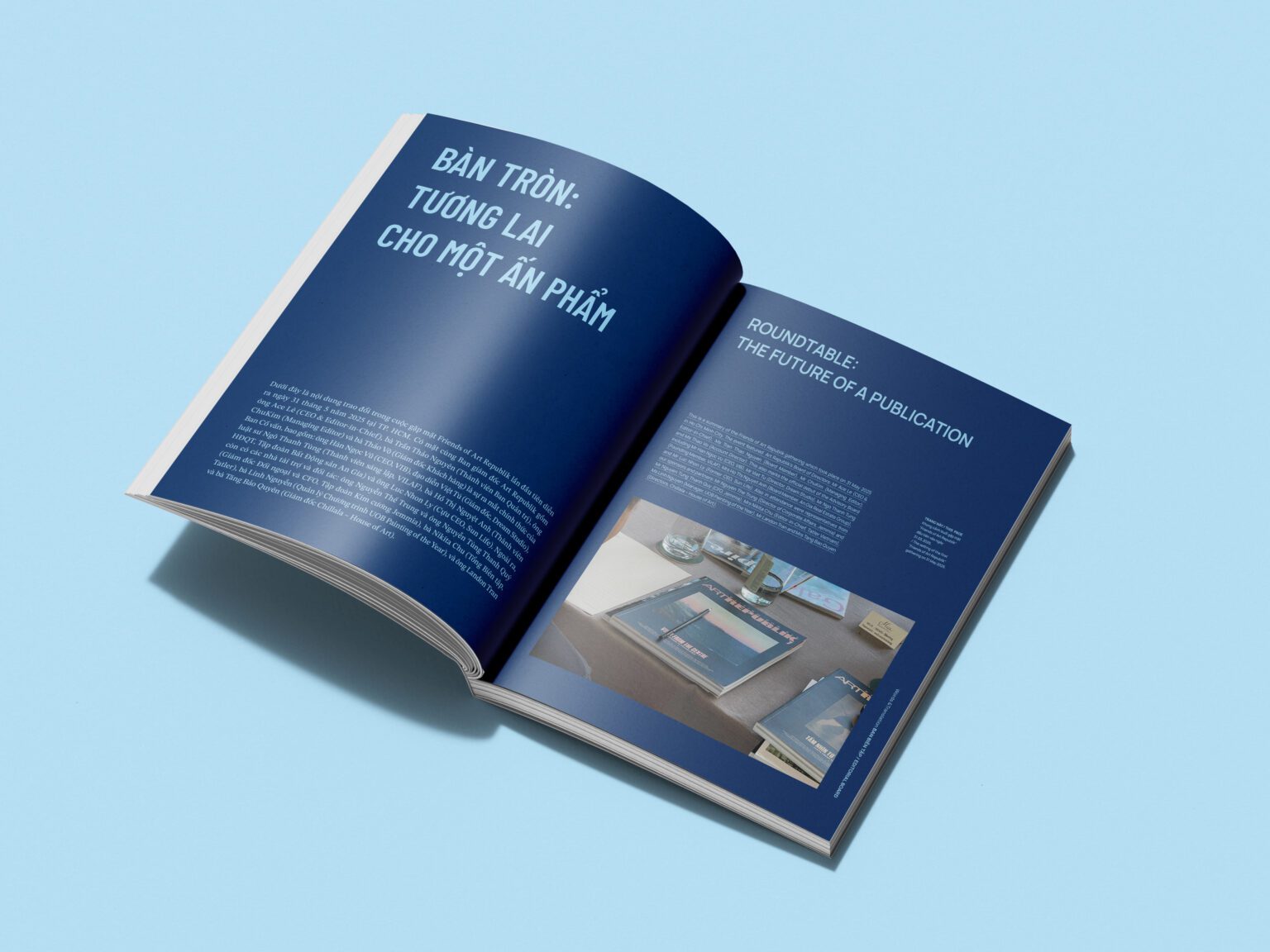
Ace Le: Today, we’re gathered in an intimate salon to reflect on the current state of specialised publishing and the larger artistic lifestyle in Vietnam, and what Art Republik can do to help bridge the gaps in this context. 2025 is a pivotal year for Vietnamese art as it marks the centenary of the Indochina School of Fine Arts (École des Beaux-Arts de l’Indochine – EBAI), while also bringing many positive macro developments in both public policy and the private sector, whose strong art patronage movement are represented by our esteemed guests here. With the mission of removing barriers to art – which remains relatively unfamiliar to the general population in Vietnam – Art Republik is eager to hear your insights.
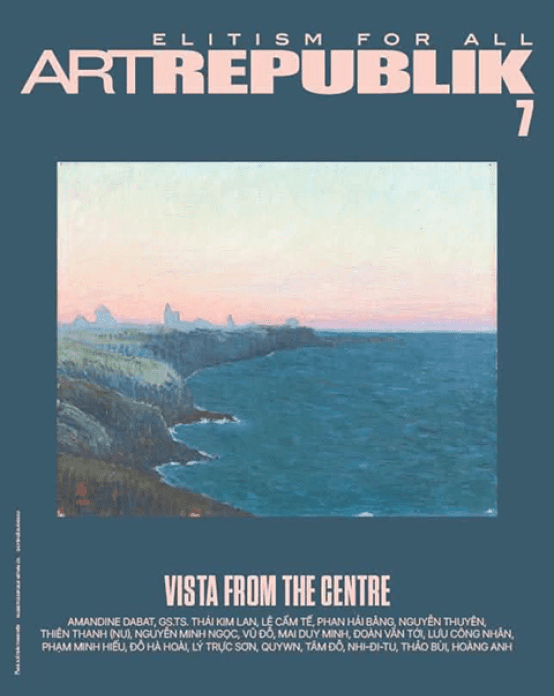
Thao Nguyen: When Mr Ace Le, Mr Nguyen Huu Hon, and I joined Art Republik, we identified three key pillars for restructure: people, publications, and projects. In terms of people, we’ve established for the first time an Advisory Board to work alongside us on strategic planning. In addition, Art Republik aims to develop a diverse range of publications that promote a cultural-creative lifestyle. As for projects, we will collectively strive to create signature events of international standards with the “Allusive Panorama” exhibition in Hue as a prime example. ChuKim: Over the past six months, Art Republik has undergone a major overhaul in personnel and a comprehensive revamp of its content strategy, which are clearly reflected in Issue #7. At the same time, we’ve been working to push beyond the boundaries of a print publication to establish our presence across various spaces through distinctive event series, community initiatives, and online activities.
Han Ngoc Vu: I trust the Art Republik team and their vision. As societal demands rise, the need to express personal identity through traditional physical assets is no longer the main trend; instead, assets rooted in intellect, culture and history will be on the rise. Many initiatives and meaningful activities have emerged in our current society, but only a handful manage to “stay alive” in the long run. Some falter due to a lack of operational capacity, while others fall short because of insufficient dedication. That said, I believe it is important to set our ambitions at a moderate, realistic level to go the long way, one that is aligned with our capabilities and financial means.
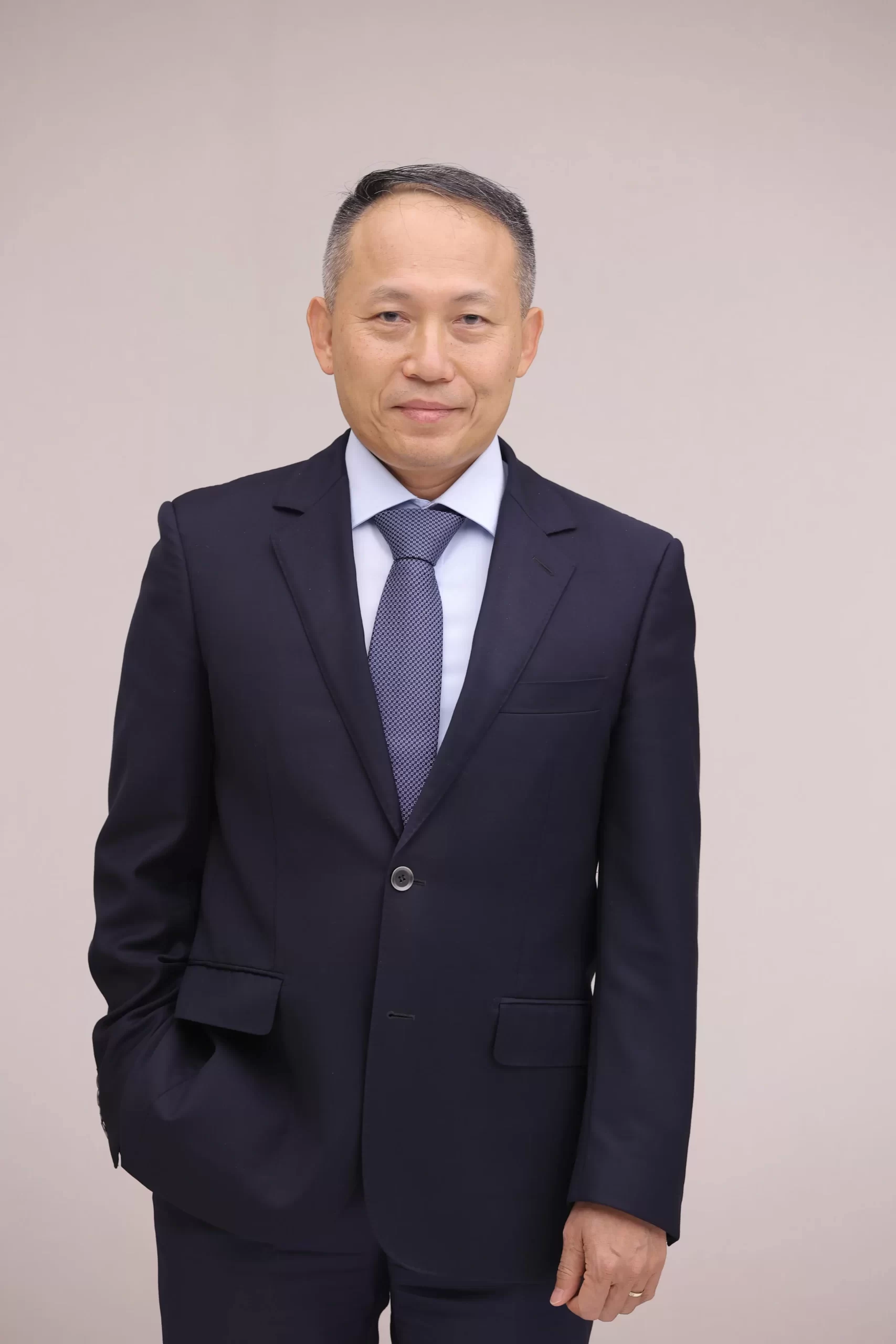
I believe that “think big, start small, act specific, move fast” is a philosophy highly relevant to business.” – Han Ngoc Vu
Viet Tu: From my experience working in the field of contemporary art, I agree with Mr Ace Le about making curatorial content more accessible to the public, and with Mr Han Ngoc Vu on ensuring the sustainable development of the publication as well as artistic activities. Firstly, this will specifically require strong commitment from the owners. Secondly, it takes time for art to become deeply embedded in public life. Art collecting, another important aspect, is not only a pastime but also a venue for generating socio-economic values. Art has always led to inspirations and enriched the value of both material and spiritual assets. To achieve that goal, we must uphold quality to the highest standards, and any compromise or trade-off will cause Art Republik to lose its identity. We need to define and build a dedicated readership – those who genuinely love and understand art. It is not necessary for Art Republik to become a mass publication; instead, we should focus on targeted readers with knowledge and a hunger to read and engage deeply, thus engendering a much deeper and larger sphere of influence. That, I think, is the sustainable pathway forward.
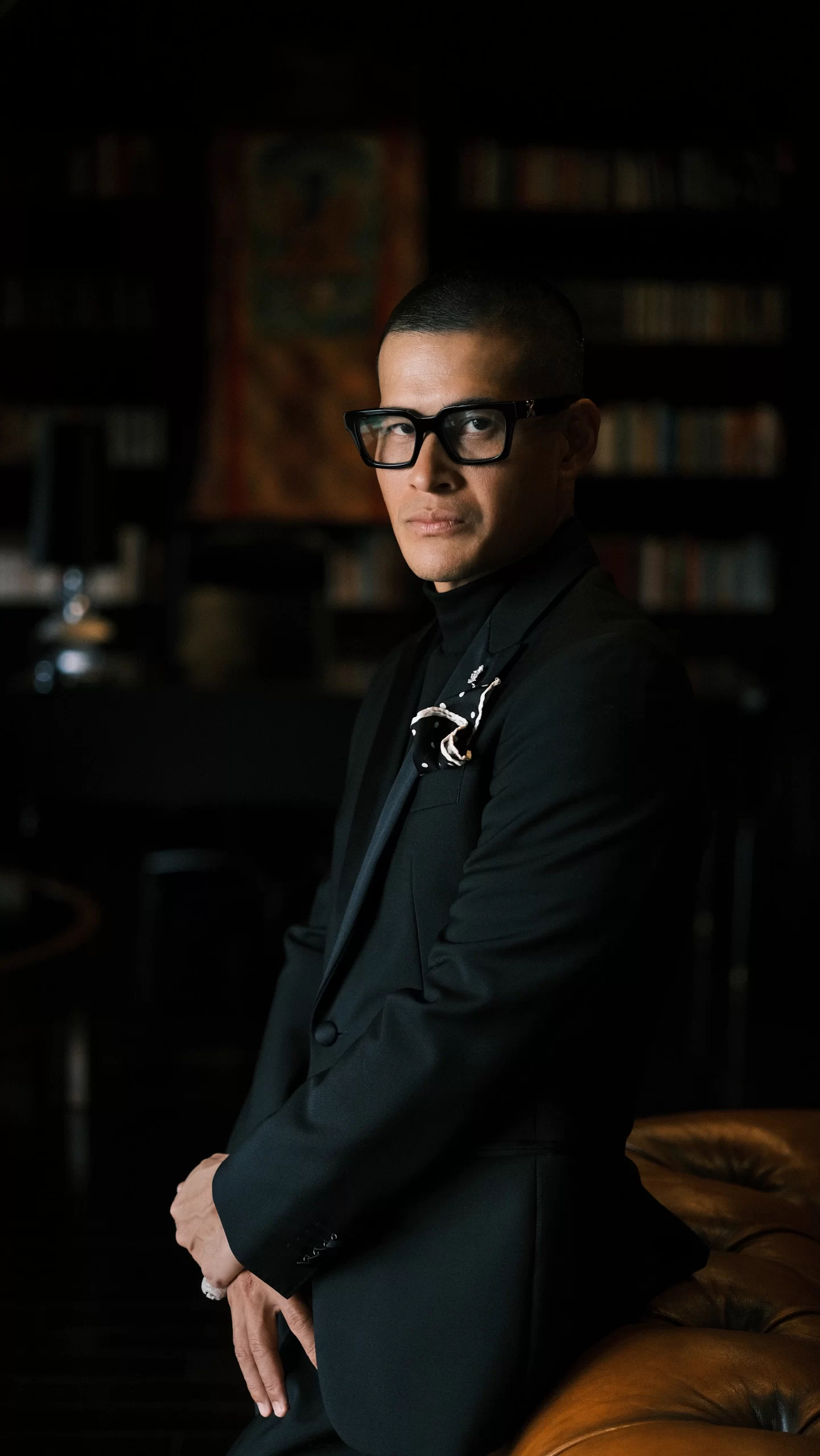
Tung Ngo: I strongly agree with the insights shared about the importance of consistency and sustainability – two qualities that are incredibly difficult to achieve. However, I believe we should think boldly because this moment calls for a long-term vision. Even occasional failures can offer valuable lessons for us to build something great – brick by brick. Moreover, I believe one of the most pressing crises in today’s society is a crisis of aesthetics. Due to historical and social circumstances, Vietnamese people have not fully embraced beauty – from architecture and urban planning to interpersonal conducts and even our relationship with nature. Therefore, I truly believe that our mission is to use art as a powerful catalyst for social transformations, and this is completely possible. Another mission of Art Republik is how to gradually enhance the public spiritual life.
Art Republik has excelled at building a strong brand identity and establishing a unique voice that captures the public’s attention. Fundraising efforts through sponsorships and commercial revenue are vital for the survival and sustainable growth of any enterprise. However, we need to avoid the pitfall of “launching with much fanfare, closing in silence.” Last but not least, product quality must always be prioritised at the core of our values. Even a single misleading interview or untruthful piece can erode the public trust and damage Art Republik’s credibility.
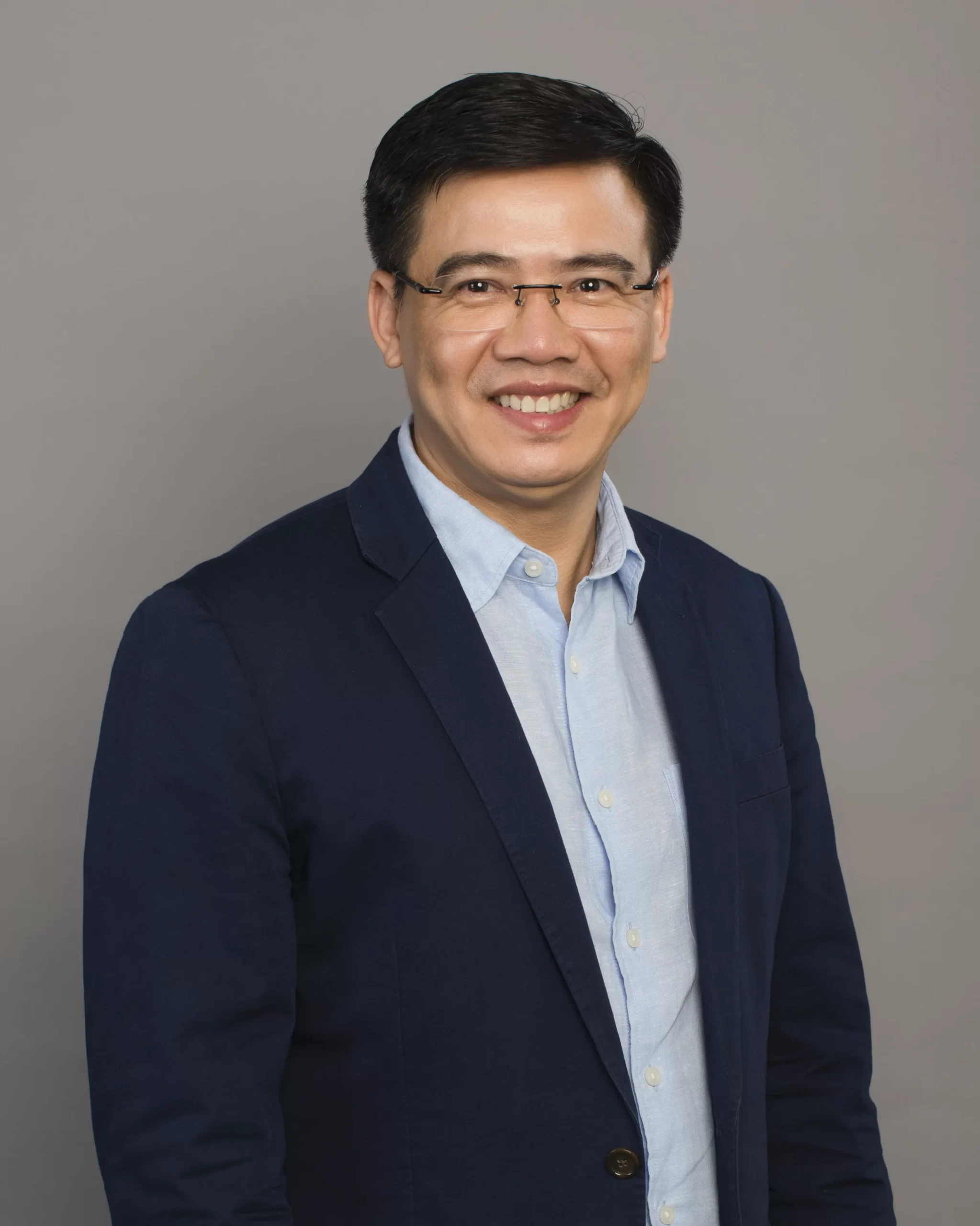
Nguyet Anh: Although I don’t have a formal background in art, my passion for it gradually grew as I pursued my business career. When I first started at An Gia, people often thought real estate had no direct connection to art. However, I realigned my vision as not only selling a house but also an entire living experience, a lifestyle and a cozy home imbued with artistic perspectives. That’s why I expanded into other fields like film, through which I realised a problem that Mr Ace Le once mentioned: artists often struggle to focus on the “survival” aspect when doing business. They become too engrossed in creative works and overlook the commercial side. This underscores the essential need for business professionals to support artists, enabling them to both survive and thrive.
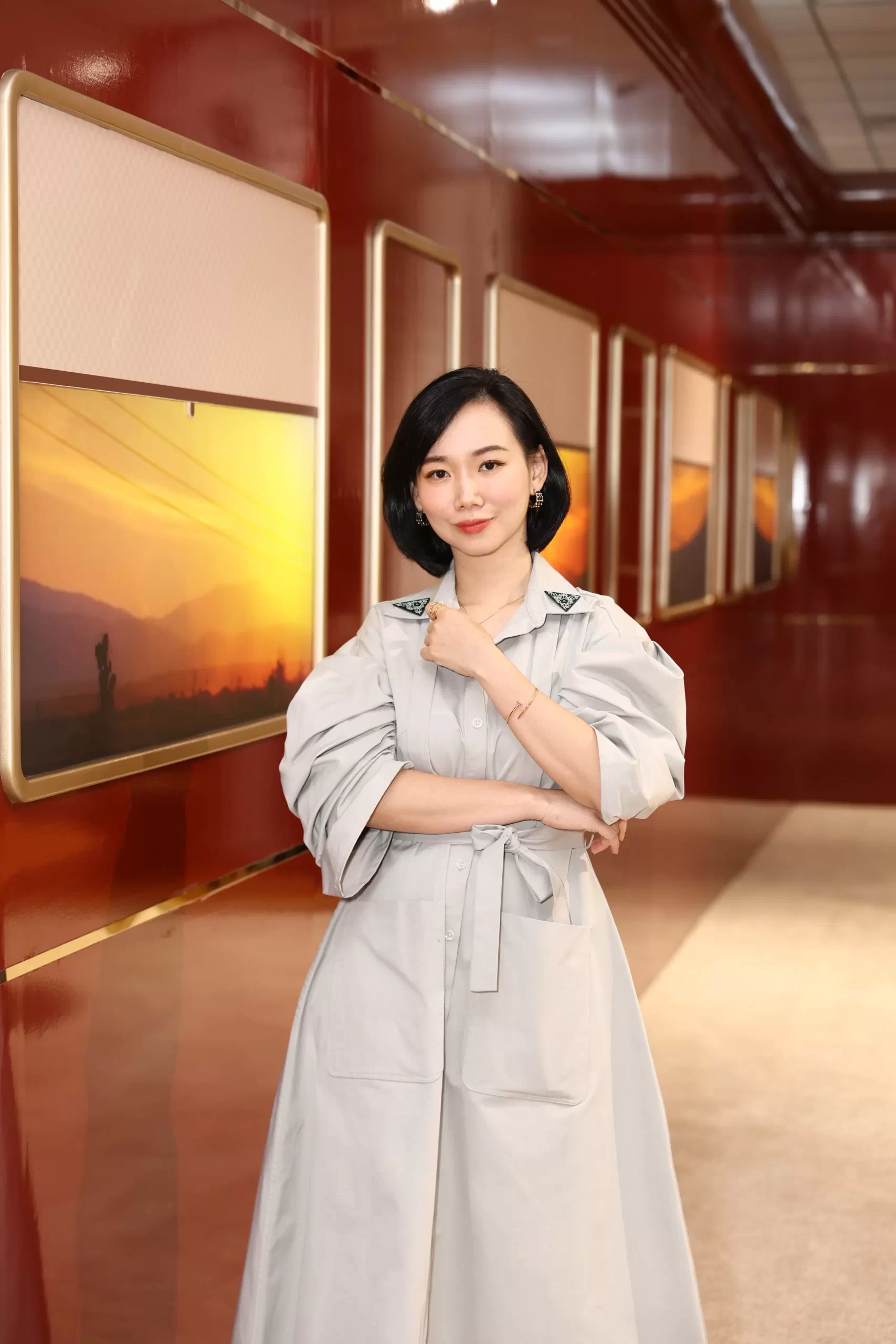
“Art Republik is more than just a publication; it’s also the collective voice of the art community in Vietnam.” – Landon Tran
Trung Nguyen: I share the same observations as Ms Nguyet Anh. We are currently overlooking the small and medium-sized enterprise (SME) segment and the mass market. This demographic also needs information and has a desire to learn about culture and history. They represent the current majority in society, and with time, they will gradually move up Maslow’s hierarchy. In partnering with the exhibition of Emperor Ham Nghi’s paintings or future projects with Art Republik, the team at Jemmia sees our role as storytellers who bring culture to the broader public.
Luc Nhon Ly: Despite my background in finance, I’ve always had a profound passion for art. About 10–12 years ago, I began experimenting with integrating art into business operations. Surprisingly, the more I incorporated art, the more successful my ventures became. I often wonder if this is due to the power of art and culture, or simply because I was being more authentic to myself. When I returned to Vietnam and worked with Sun Life, my first strategy was to find ways to bring culture and art into an insurance company. For instance, we created spaces for art exhibitions, offering direct experiences and encouraging customers to share these moments on social media. This is a clear example of integrating art and business to create realistic and sustainable impacts.
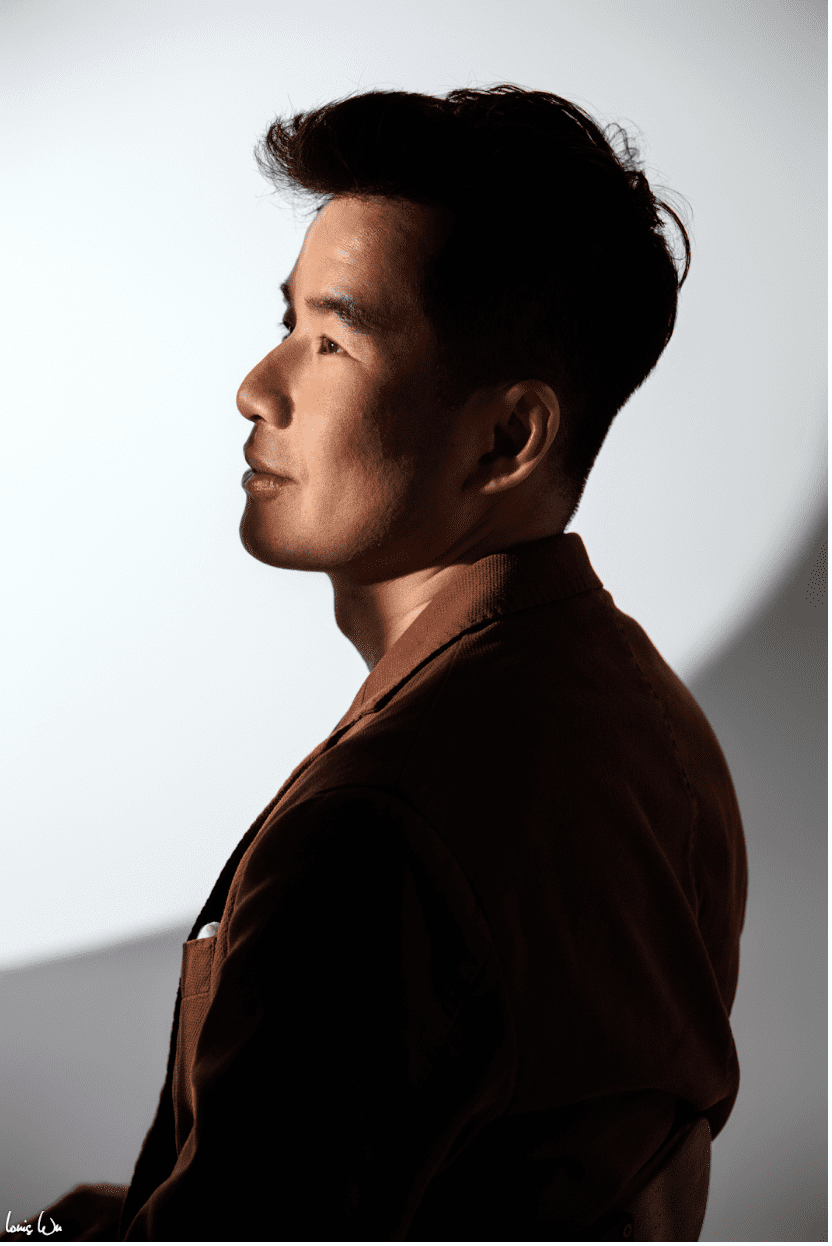
Linh Nguyen: UOB is another prime example of art and business going hand-in-hand. The primary goal of UOB Painting of The Year is to help artists in the region, such as Singapore, Thailand, Indonesia, and now Vietnam, discover their innate talent and pursue art professionally, regardless of their formal training. UOB positions this competition purely as a community initiative with the vision of building a thriving art ecosystem. In my perspective, art can flourish through brand collaborations. For instance, we could partner with high-end establishments in the F&B and hospitality sectors, integrate art into fashion collections, or develop art tours for tourists. Furthermore, I believe we should consider collaborating with the Department of Fine Arts under the Ministry of Culture to organise a major art fair in Vietnam. Once we successfully leverage and combine both the public and private sectors, the reach for artists and the overall potential of Vietnamese art will expand exponentially.
Han Ngoc Vu: I believe that “think big, start small, act specific, move fast” is a philosophy highly relevant to business. I always begin by identifying the core product, the target users and buyers. Then, we can define what features the product should have to ensure its sustainability. Another crucial factor is the product’s applicability. While many people might want to read and access it, the question is: who will pay for it? Perhaps readers are not the direct payers, but rather organisations or subscribers in large droves. For instance, banks with premium personal banking departments could become large-scale subscribers to offer to their clients. The goal isn’t wealth accumulation but to create a positive impact and ensure the product operates continuously without interruption. This requires us to move beyond just focusing on vision and mission, and to concretise our financial strategies.
Thao Vo: I particularly love Art Republik because it’s one of the few publications that still preserves genuine core values. Art Republik focuses on in-depth, long-form stories about artists, businesses, and people working in the arts. We don’t just sell products; we sell values that make clients feel seen and heard. Client outreach is a major challenge. We can’t sell an advertisement if it doesn’t fit the level or the style and may negatively affect the publication’s credibility. In a project partnered with a famous automotive brand, they posed a crucial question: how could we build a logical connection between their brand and Art Republik? At that point, we had to dig deeper into their identity to search for common grounds and methods for synchronicity.
Additionally, I realised that publication distribution is extremely important. I constantly wondered if our visibility was sufficient. Without Art Republik’s presence in locations like resorts and airports, it would be very difficult to demonstrate impact. Therefore, we need to expand our coverage, thereby securing support and sponsorships from our partners, and gradually developing a readership, especially one that appreciates slow reading.
Landon Tran: In my opinion, print publications face numerous challenges worldwide; continuing their existence and development is an entirely different story. However, Art Republik is more than just a publication; it’s also the collective voice of the art community in Vietnam. It’s critical that we fulfill the aspirations of those working in the arts, as they need significant support from business operations and sponsors. With the achievements that the Art Republik team has accomplished recently, I believe you will last for a long time.
Tang Bao Quyen: My extensive collaboration with the creative community has enriched my experience in production, thus enhancing the quality of aesthetically valuable products. Our initial idea behind Chillala – House of Art was born from hearing artists’ concerns about their creative work. They needed a space to display professional, artistic, and high-value pieces. Furthermore, as experts in our respective fields, we need to collaborate to spread artistic value and organise even more activities. These very activities will help shape Art Republik’s name, leaving a profound mark on the community, the youth, and even those in business.
“Art Republik is more than just a publication; it’s also the collective voice of the art community in Vietnam.” – Landon Tran
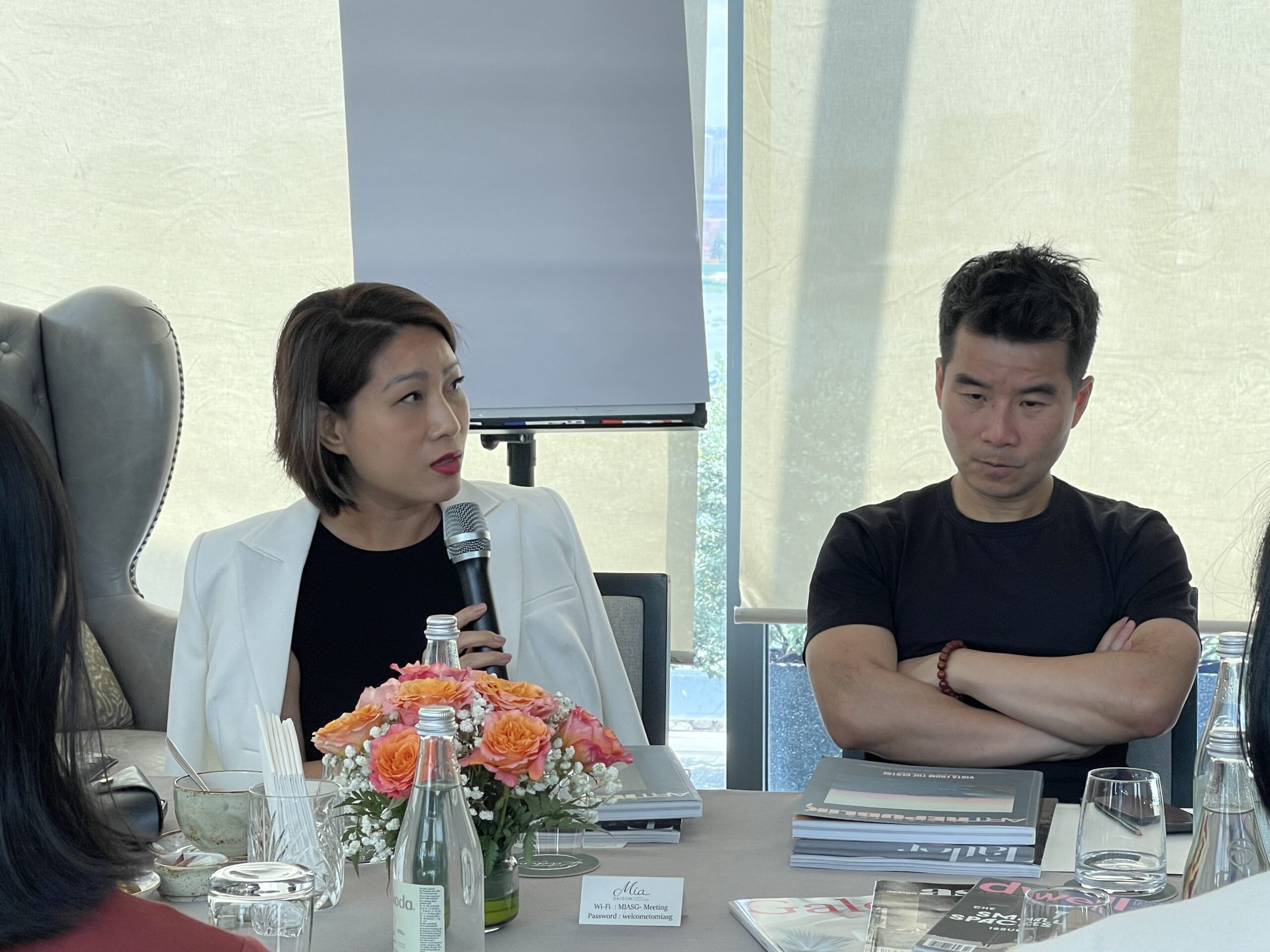
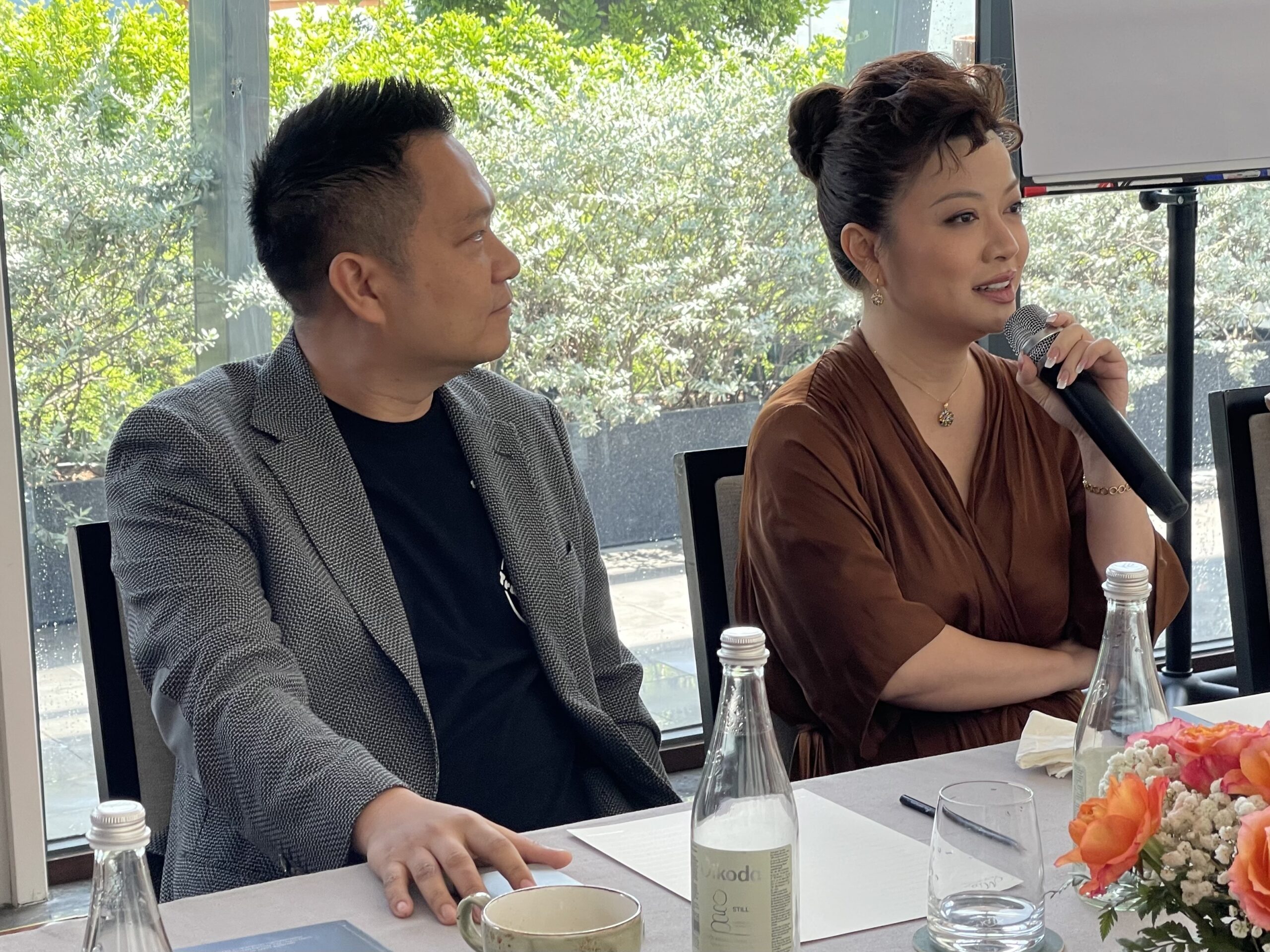
Nikita Chu: Working in the publication publishing industry has never been easy. Mr Ace Le and I bear the weighty responsibility of not only continuing the legacy of our predecessors but also deepening it within a rapidly changing world. Therefore, we must prepare thoroughly and engage in continuous dialogue to gain profound knowledge and financial acumen. The most touching aspect of today’s sharing session is the spirit of mutual learning between veterans and newcomers. Sharing experiences is a synergistic process through which everyone learns from others and collectively preserves the spirit of our craft. The previous generation did exceptionally well, but now we need to go further and deeper with our intellect. May we all continue to sustain the vitality of the publishing industry, champion the spirit of reading, for reading is true enjoyment.
Ace Le: What a wealth of useful and optimistic views for a Saturday morning! Thank you for your valuable and diverse contributions. This marks a new chapter in our story, and we look forward to welcoming you in future Friends of Art Republik gatherings!
Words & Translation: Editorial Board