Speaking with Art Nation, Leon Le discusses the creative mandates behind the film’s current form, his refusal to equate success with international festival validation, and the profound yet unheralded narratives of Vietnamese cinema.

“Ky Nam Inn” is one of the rare recent Vietnamese films to employ a deeply intertextual narrative. Your cultural references and symbols span East to West, classical to modern. Given the dense network of allusions, you must have anticipated that some viewers might feel alienated while trying to piece these socio-cultural fragments together.
If a viewer is observant and possesses a certain cultural literacy, they are rewarded with the hidden Easter eggs spread throughout the film. Those unfamiliar with the historical, cultural, or social contexts mentioned will miss such connections, and I accept that. On one hand, as an artist, especially within this specific genre, I must have the discipline and confidence to follow my vision to its terminus. On the other hand, I want to encourage autonomous thinking rather than dictating the viewer’s perspective. I feel this habit of “self-censorship” is quite common among Vietnamese audiences.
Even the decision to utilise “The Little Prince,” for example, was weighed heavily. I understood I couldn’t assume universal familiarity with the text – yet, to recognise the parallel between the protagonist Khang’s trajectory and that of the Little Prince, the audience needs to know the original story. I accept that out of ten viewers, perhaps only three will grasp the full scope, and the remaining seven will encounter gaps in their reception while watching. But if five out of those seven people are provoked into inquiry, I consider it a success of the film. Conversely, had I over-explained, the film would have become clumsy for those who already understand, when they are the very audience whose preferences for storytelling align with my own.
For instance, I originally filmed a scene where Su asks Mr. Hao the meaning of the idiom “Tái ông thất mã (The Old Man Lost His Horse)”. I eventually cut this part, even though many young Vietnamese today, let alone Westerners, are unfamiliar with the saying. I felt that given the cultural and historical backdrop of the film, such a question would break the internal logic and credibility of the characters’ world. One compromise will inevitably lead to another, and they can collapse the entire construct that a filmmaker has painstakingly created.
Speaking of engaging the audience in an immersive film world, “Ky Nam Inn” achieves this largely through its seamless, pervasive diegetic soundscape. It feels as though the viewer can always hear the rhythms of old Saigon permeating throughout. How did you research and arrange this sonic system to reconstruct the sounds of a bygone era?
This is why I always return to Vietnam and live here for a period of time after finishing every screenplay. During my first year of writing “Ky Nam Inn,” I lived in New York and relied solely on memory to envision the narrative world. Once the script took shape, I returned to Ho Chi Minh City to absorb the rhythms I once knew but had forgotten. Just as I did for “Song Lang,” I chose to live in an old apartment complex to listen to how my neighbors and street vendors go about their lives and businesses. I was curious about what would echo back if I truly paid attention. These elements are then calculated in post-production: which scene needs what sound, and how it should support the mood. Often, these sounds aren’t just to create an atmosphere – they sometimes also serve as comedic beats or emotional anchors. For example, when Ky Nam refuses to prepare monthly meals for Khang, the audience hears the school drum reverberating from afar – thump, thump – mimicing the beating of Khang’s heart.
What surprised me is that many people who lived through that era have completely forgotten its daily sounds. I’ve seen some viewers ask, “How did street hawkers even have speakers back then?” But in reality, hawkers used to walk through the neighborhoods and cried loudly with their natural voice. I once chased a hawker down my apartment block just to record their voice on my phone. If sonic memories aren’t cherished with emotion and sensitivity, we risk losing the beauty of spaces which have been deeply embedded within our consciousness. But I’m just an artist. I cannot single-handedly change a generation’s perception of collective memory. I do my part, and those who resonate with it will understand. I was surprised when some viewers expressed scepticism about the availability of plastic straws or Doublemint gum in the 1980s.
Right – in my theatre, during the scene in which Luyen gives Khang a stick of gum, I heard the viewer next to me whisper to their friend: “Is that product placement?”
People forget that in those years, foreign goods were smuggled in quite often. Chewing gum was a symbol of luxury because it was so expensive. I remember in fifth or sixth grade, my friends and I would pool our money just to buy one single strip – not a pack, a strip – and tear it into three or five pieces. We would chew until the flavor was gone. We felt that since it couldn’t be swallowed, it would be a waste not to chew it for as long as possible. Back then, adults would scare children by saying if you swallow gum, your intestines will stick together!
In the film, when Luyen offers Khang a stick of gum, it’s a gesture of affection precisely because of that luxury. It’s a pity when people forget the textures of the city they live in. Yet through art, we see different facets of an era refracted. Often, we dismiss media as “just a movie” or “just a painting,” but art allows us to realise certain truths about its time period and societal conditions – perceived, of course, through each individual’s lens.
Regarding perception, what kind of aesthetic experience do you want viewers to encounter when entering the world of “Ky Nam Inn”?
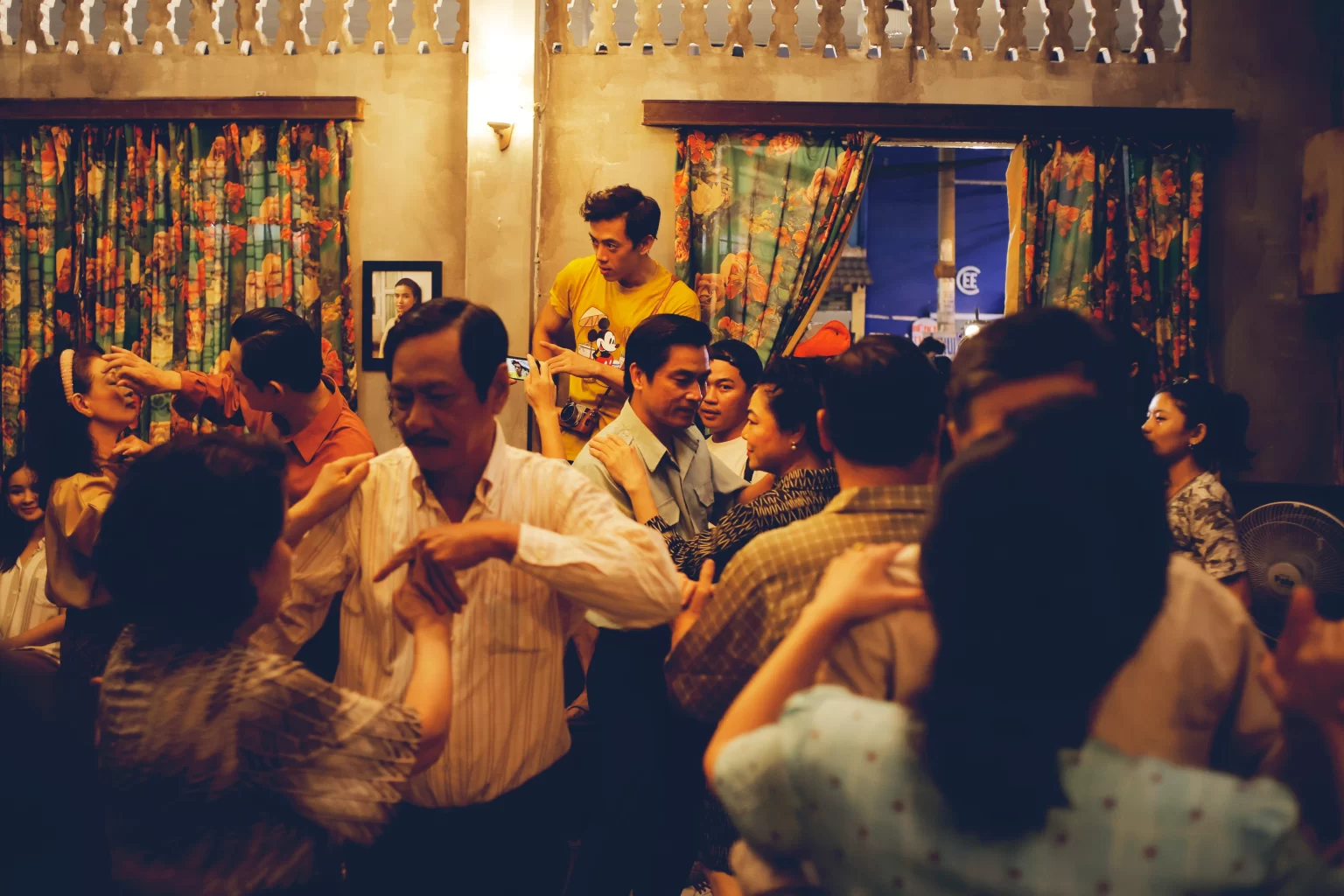
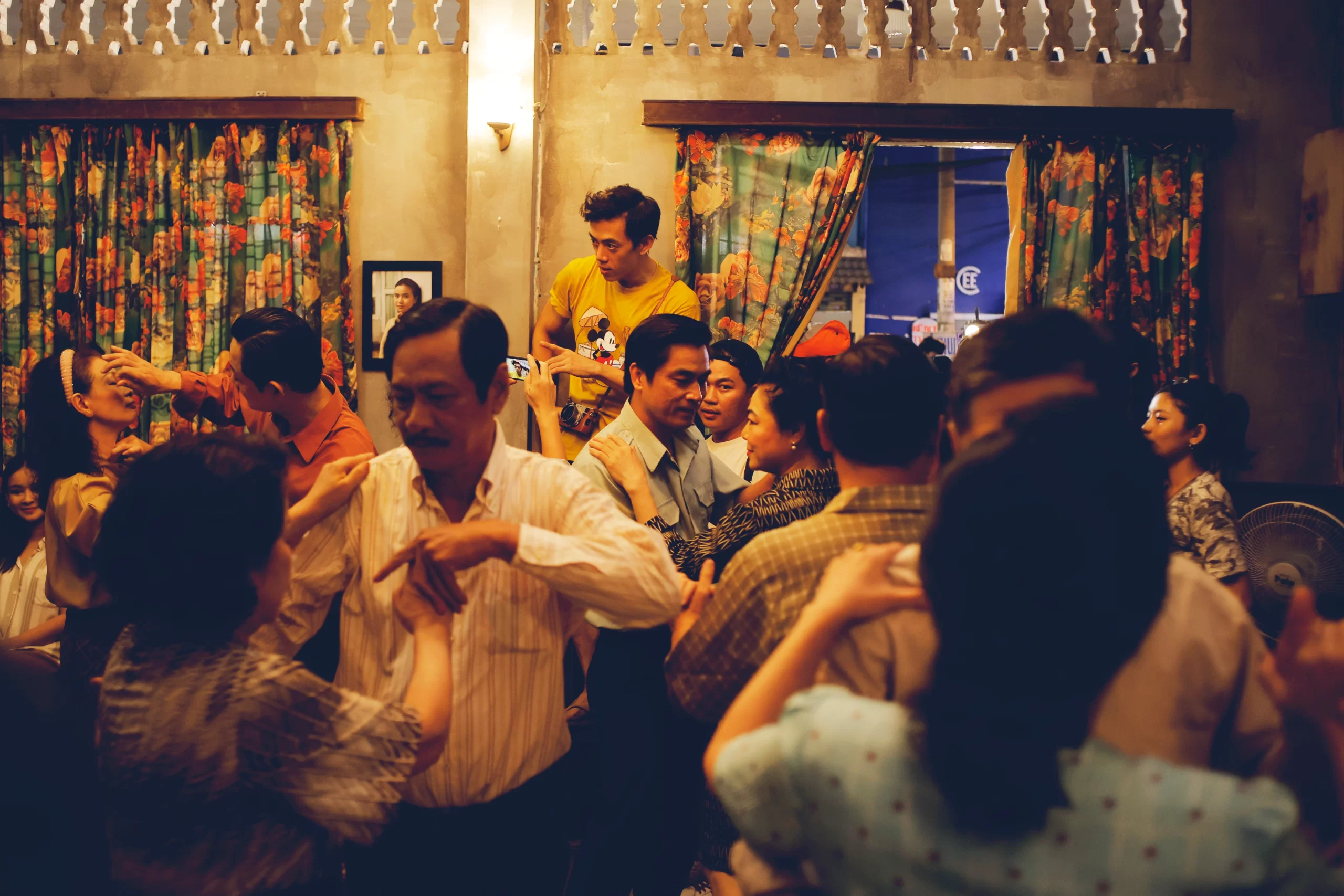
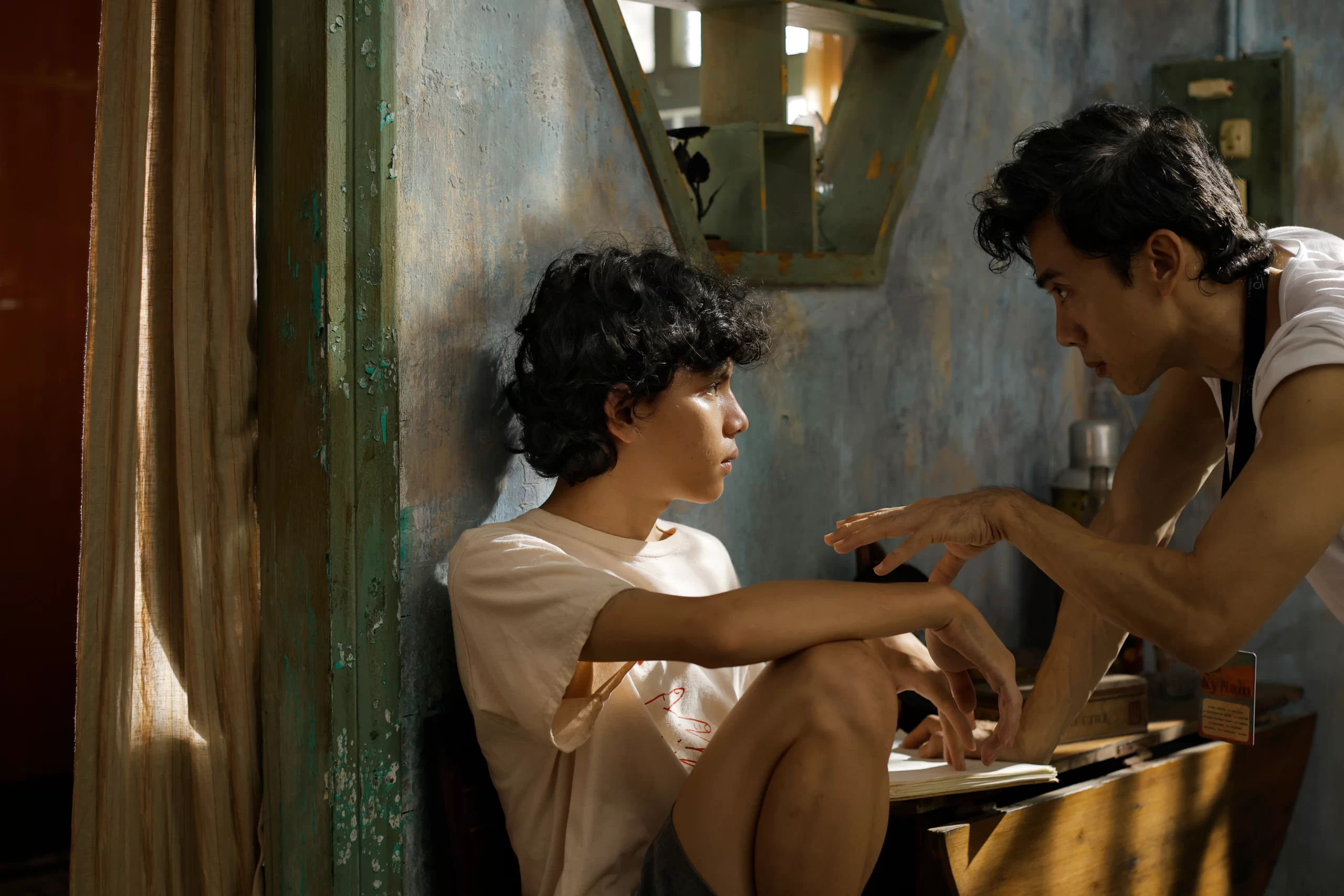
Rather than an over-orchestrated end goal, my focus was on making the film feel as authentic as possible. In production design, I cared about what objects would be used and how people behaved towards one another during the Subsidy Era. Every element must be essential to the story. For example, Ky Nam is a person who clings to memories, so there is a zither on the wall in her apartment. That’s because my home had one in the 80s. My mother wasn’t born into wealth, but she was from the intelligentsia and attended a French school. After my grandmother passed, my mother learned the zither to cheer up my grandfather. In 2025, such a sentiment might seem hard to understand, but it was the spirit of old Saigon.
But of course, ultimately, this is a memory cast over with a romantic sheen. Firstly, “Ky Nam Inn” is an optimistic film. It isn’t as raw as Tran Anh Hung’s “Cyclo” (1995) or Phan Dang Di’s “Bi, Don’t Be Afraid” (2011). It’s infused with my style, one that might appear sentimental or kitsch, because I am sentimental in real life. I put energy into making my living space poetic. Therefore, my characters, regardless of their circumstances, always possess a sense of quiet grace. Even in Ky Nam’s straitened circumstances, her house must have curtains, and those curtains must be a matched set, even if that means she has to skip meals for a month to afford them. In my case, no matter what, there must be fresh flowers in my house. When I’m away, I leave the lamps lit so that when I return, I am not met with total darkness.
Secondly, when Khang writes this story, he’s looking back at a beautiful time in his memory. If Khang wrote: “Ky Nam stood in the kitchen, shirt soaked in sweat, hair snatched into a bun, face greasy with oil” – that would be the work of a different director. In this story, Khang remembers Ky Nam in her glorious days. Her meals, even though prepared as just a modest monthly service, are supposed to be more beautiful than in reality.
When combining the architecture of old apartment blocks with cinematic framing, how did you balance the collective nature of the space with the individuality of the characters?
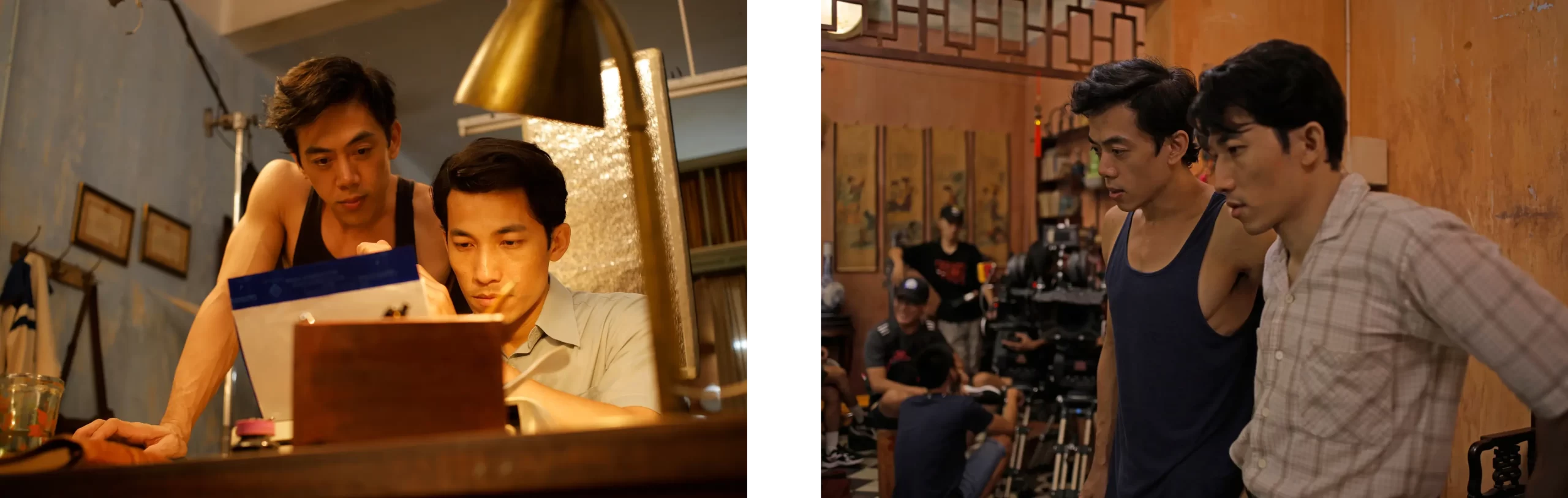
For that, I must thank my DOP, Bob Nguyen. Bob understands the story and my style perfectly. A shot might be beautiful but ultimately doesn’t fit the narrative or the character’s motivation. Sometimes, the “right” shot turns out to be the simplest one. That’s why Bob and I never use storyboards or shot lists. On set, after blocking the actors and assessing the light, we decide the angle, and at that moment I already start editing the film in my head.
Regarding how to address the individual versus the collective, we deployed many high-angle wide shots to create the feeling of a miniature world. From that bird’s-eye view, all conflicts appear small, and the characters are just grains of sand in a larger social machinery. Everyone is merely spinning within that engine.

Viewed that way, the film has strong existential undertones. Your characters constantly reveal their inner lives by referencing Camus or Saint-Exupéry, and so it appears French literary aesthetics heavily influence the narrative undercurrents of the story.
That was because my mother went to a French school. Then later, in my own youth, “The Little Prince” was very famous, almost like a mandatory text we were required to read in school. The use of literature wasn’t a premeditated theme but rather an organic evolution through years of screenwriting. To establish Khang as a translator, I had to choose a book for him to translate, something that represents an era and resonates with many people. That’s when “The Little Prince” came into the picture. From there, I realised this literary piece could parallel Khang’s own journey. The narrative layers revealed themselves step-by-step, which is why the script took five years to mature.
The moment where Su asks Khang why he needs to translate a work that already boasts two established translations – only for Khang to respond with a cryptic smile, leaving the question unanswered – is fascinating from a translation theory perspective.
In the original script, Khang did offer an answer, but I ultimately excised it. Khang is caught in a profound conflict: he venerates Bui Giang, yet is tasked with “erasing” Bui Giang’s version. This conflict occurs entirely in the interior psyche of the character. For Khang’s personal arc to “ascend” and complete itself, he must move beyond the shadow of his idol.
Now this brings me back to the idiom “The old man lost his horse.” In a deleted sequence, a character explains the saying by alluding to Saint-Exupéry, noting that if he hadn’t crashed his plane in the desert, “The Little Prince” would never have materialised. Coincidentally, on that flight, Saint-Exupéry was actually en route to Vietnam. This incident provided another way to tether the work to Vietnamese culture. However, I felt I was being too indulgent with details, so this part ended up being cut.
You and co-writer Nguyen Thi Minh Ngoc clearly are two individuals with very different life experiences. I’m curious – how did you collaborate on the script?
Chị Minh Ngoc helped me immensely with the historical context from an adult’s perspective. During the period the film is set, I was only six or seven years old. Chị Ngoc was an adult who had finished university; she witnessed the struggles and the romances of the Subsidy Era firsthand. I only remember my mother queuing for goods, but I didn’t understand the desperation of that life. I remember the currency reforms, or my mother waiting for news of my father as he was “crossing the border” (vượt biên) or visiting relatives in re-education camps, but I didn’t understand those things through the lens of an adult.
Along that vein, what messages do you hope will resonate with audiences of different generations and cultural backgrounds?
Besides the Vietnamese audience, the international perspective was a major driver for this work. I’ve always been unhappy with the one-dimensional portrayals of Vietnam in foreign films, especially those made from the 2000s onward. While a film like “Apocalypse Now” (1979) might be tolerated as a product of its time, there is no excuse for contemporary works when information is so readily available now. Authenticity is achievable if one does the research. Yet, Vietnamese culture, especially during the post-war period, continues to be presented through an exoticising lens to satisfy Western perceptions. I find this highly objectionable. That is why “Ky Nam Inn,” and “Song Lang” before it, are told the way they are, emphasising cultural elements without fetishising them. This film is my rebuttal to the external gaze, presenting a story of Vietnamese people, told by a Vietnamese person who lived through and understands the depicted historical landscape and its people.
It seems that there is still a significant blind spot in Western perception of Vietnam, perhaps due to a lack of diverse narratives and representations in mainstream media.
A glaring manifestation of this is the comparison of “Ky Nam Inn” to Wong Kar-wai’s “In the Mood for Love” (2000). Whether on Letterboxd or in international criticism, I often see descriptions such as “This film is the lovechild of ‘In the Mood for Love’ and ‘The Scent of Green Papaya’” (Tran Anh Hung, 1993). Such comments reveal how little they know about Vietnamese narrative canon. They assume that because “The Scent of Green Papaya” was Oscar-nominated, it is the sole benchmark, ignoring the many other works we can draw from.
In truth, “In the Mood for Love” was never my inspiration. My protagonist is named Khang as a homage to “When the Tenth Month Comes” (1984) as its central character is also named Khang. It’s a film that also explores a restrained, difficult romance. If people say “Ky Nam Inn” echoes Wong Kar-wai just because of the yearning, they overlook the fact that we have many such narratives in our own domestic canon. “A Time Far Past” (2004) – another study of thwarted love. Stories where characters only dare to exchange glances without ever speaking their hearts have always existed in Vietnamese cinema; we didn’t need Wong Kar-wai to invent them.
As Vietnam’s film industry is still relatively young, our filmmakers may feel that we lack a continuous body of cinematic precedents to reference and draw from when imagining the different ways to tell distinctly Vietnamese stories. What advice would you offer to aspiring filmmakers who wish to pursue similar paths?
I believe the most important thing is that your motivation must be sincere. If you are a genuine artist and remain steadfast in your vision, your chances of achieving true success are greater than if you chase trends. Chasing trends is essentially an exercise in guesswork based solely on numbers. By the time you finish your film, festival criteria or audience appetites might have changed. The most sustainable path is to choose yourself, and there will always be an audience who resonates with your work, even if that audience starts small.
To date, “Song Lang” has screened at 160 film festivals, and “Ky Nam Inn” has participated in 15, with more in the lineup. If you ask if I am proud of “Ky Nam Inn,” I am most proud that I did not sell out my culture. The film premiered at one of the four largest festivals in the world, proving that we don’t need to submit to the Western gaze to earn international recognition.
Ultimately, a filmmaker must know what they want and not lie to themselves. There is nothing wrong with aspiring to be a blockbuster director, but don’t falter halfway through; similarly, if what you want is success at festivals, you might have to compromise certain aspects of your work to meet their criteria. However, if your motivation stems from a sincere place, your art will always find its path.
So far, you have remained consistent in mining your own memories and preoccupations for materials. What trajectory do you envision for your future work?
I don’t operate by calculating my next move or long-term strategies. If I feel like it, I might very well stop making films and return to Cải lương (southern Vietnamese folk opera) – Gánh Thiên Lý, the troupe I co-founded, still stages weekly performances until now. In fact, “Song Lang” was conceived because I couldn’t do cải lương at the time, so I made a movie about the tradition, and then later “Ky Nam Inn” came along.
For me, cinema is not my sole vocation but a creative medium to express what I want to say at this moment. The great appeal of cinema is that you only have to labour once, and the work lasts forever. Theatre has its limitation in that you can only be in that space at that exact moment, then it’s gone forever. Film, however, remains long after we’ve vanished from this life. A hundred years from now, will anyone seek out my work and find themselves moved, the way I sought out “A Time Far Past” or “Nostalgia for the Countryside (1995)”? That is the question I ask myself.
The interview has been edited and condensed for clarity.