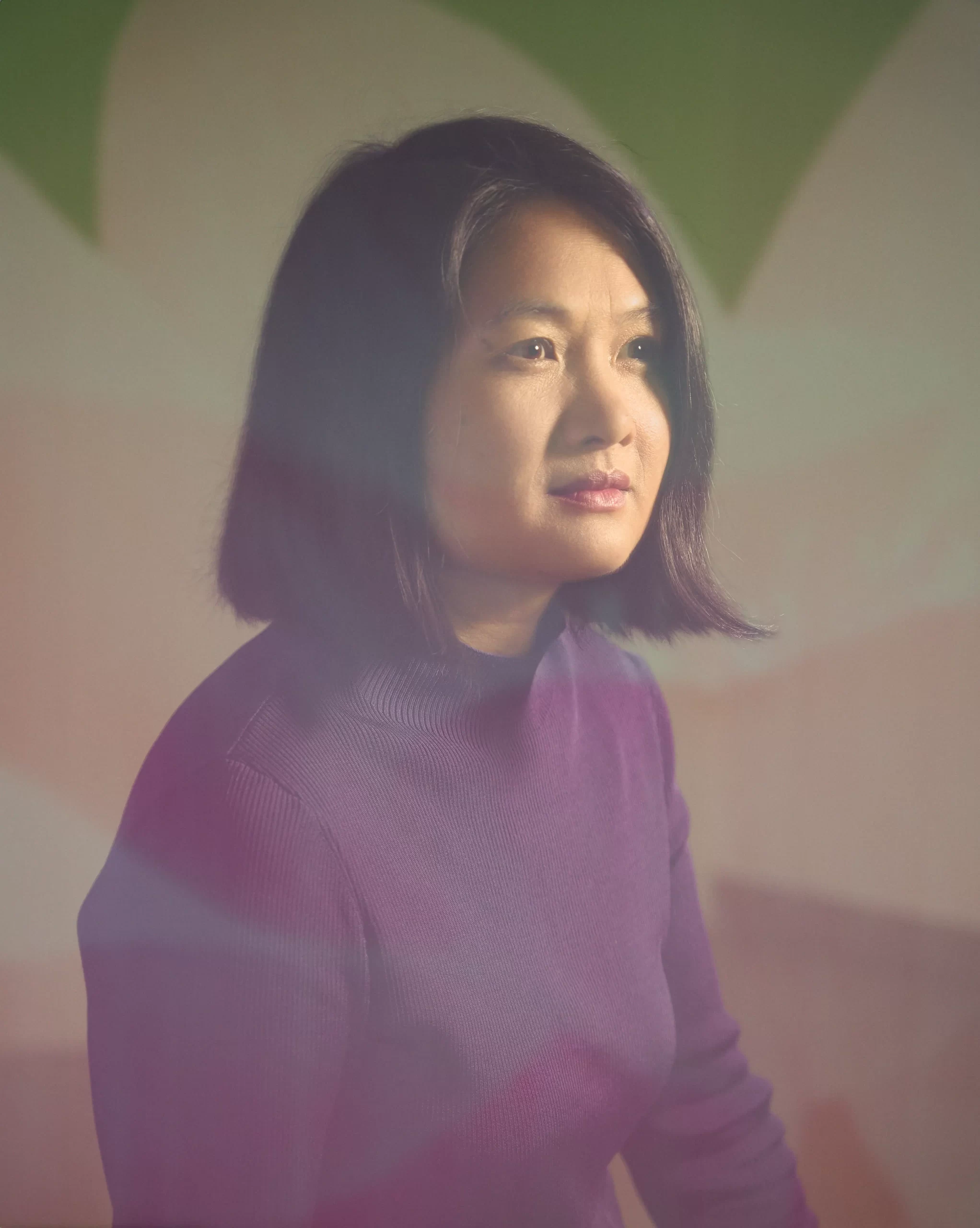
Hey sis, let’s karaoke.
Haha, okay.
In three seconds, say a song title.
Spring has come to me… (and dances)
Why do you think of that song?
Because there are many flowers in spring.
That’s right, my sister loves flowers.
Yeah, flowers are beautiful.
…
I like lotus flowers. A lot.
When I was six, I lived in a refugee camp in Hong Kong. I often went into the forest alone, to a lotus pond. I don’t know why. I just remember I felt good when I was there. It was beautiful and quiet. Totally opposite of that time.
I like the vibrancy and the variety of rs of the flowers. Maybe it is because I was born in Thuy Nguyen. When I remember my homeland, I think of that old village. There are so many flowers there. Before leaving Vietnam, I remember that I really liked sensitive plant (mimosa pudica), I really like Job’s tears plant, I really like the red color of flamboyant flowers. I remember my cousins going outside to play and pick flowers. I remember them carrying me on their backs…
But anyway, let me change into my floral dress first (laughs loudly).
I feel you are your truest self when you wear a floral dress. Yet every time I meet you, you would wear jeans and t-shirt, in gray or black and plain.
That’s true, I like wearing floral dresses. Everyone in my family dresses up. My grandfather was strict about appearance. Clothes had to be neat and ironed properly. But there are not many occasions to dress up, you know? I have no one where I live to dress up with.
In her first work, “Yesterday” (2008–2009), which depicts flowers, Quynh Dong, dressed in a hoodie and baggy thermal sweatpants, sat copying the shadow of a lotus flower onto white pages. The shadow represents memory. On each sheet of paper, the memory is redrawn. The act was repeated for an hour.
She poses questions through flowers, in “Yesterday” and other works, flowers symbolise transience, emotions, memories and history. They are monochromatic. After “Yesterday,” the flowers and the woman in her works have often become more vibrant in colour, as an exaggeration of Asian female stereotypes.
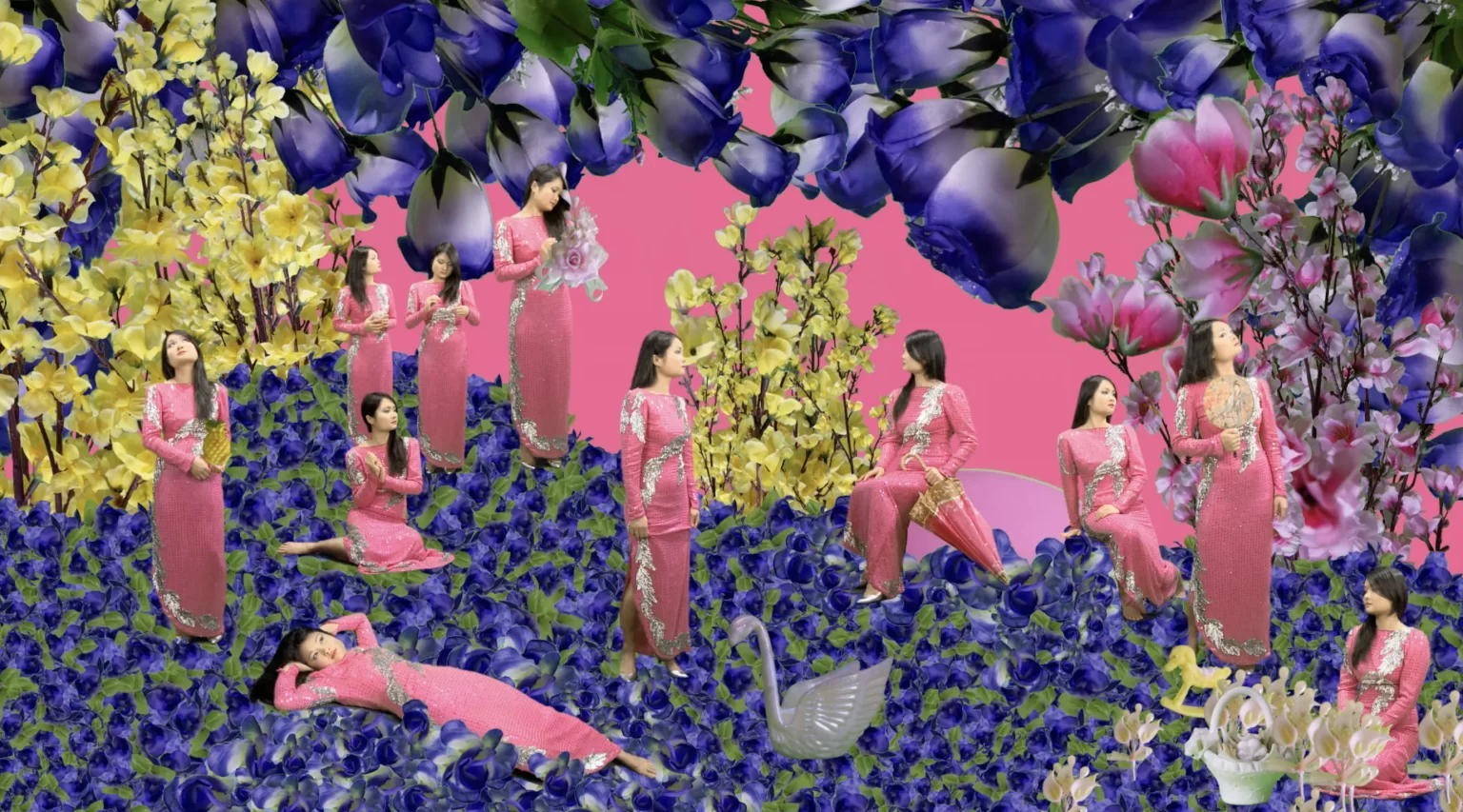
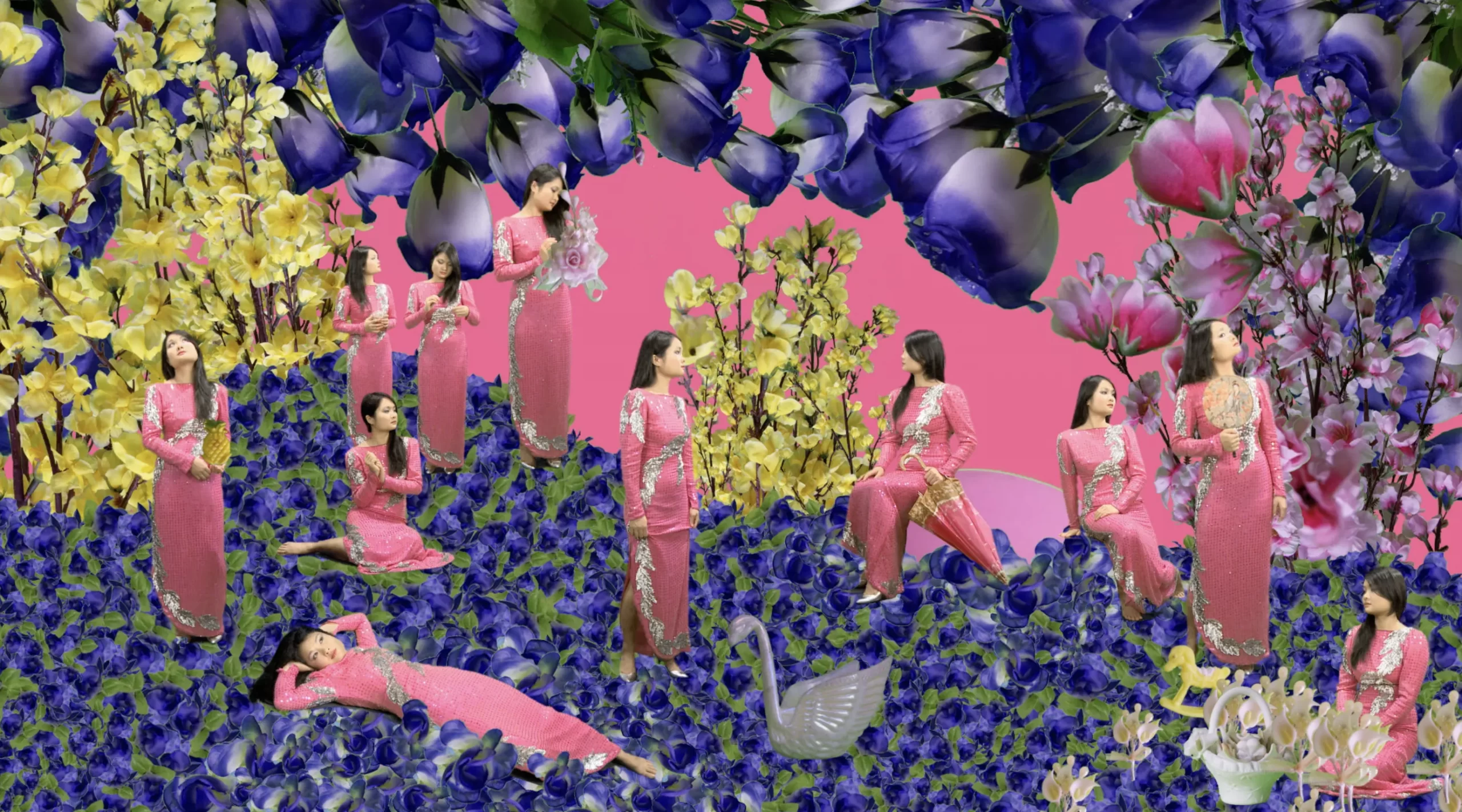
You love flowers so much, but why is “Sweet Noel” (2013) full of cheap artificial flowers?
In 2002, I returned to Vietnam for the first time since 1987. I saw the painting “Spring Garden of the Central, South, and North” by Nguyen Gia Tri, which became an inspiration for “Sweet Noel”. Other lacquer paintings of his further inspired my works. In 2012, I participated in an art residency at The International Studio & Curatorial Program in New York, where I thought about my relationship with Vietnamese art, the image of women in Asian art, and about reading an artwork when one does not fully understand its cultural context. I went to a store that specifically sells items for Sweet Sixteen, a popular cultural event in the United States and Canada for one’s 16th birthday. There, I bought artificial flowers to create a stage. Then, I copied eleven graceful poses according to feminine formulas in the painting by Nguyen Gia Tri. The work was titled “Sweet Noel” as my new interpretation of his work. It is also a connection between the past and the present, the heritage and the personal, through the lens of someone living between two cultures.
“This is an extreme case, often overlooked, of what could be called cultural elite kitsch: the bad taste of the high culture. It so happens that the elite culture tends to resist the integration and standardization which is typical of mass and consumer products. [..] For this reason, the products of the pseudo avant-garde often have, when compared with the real ones, no more than the appearance of illegibility, obscurity and a facile, deliberately shocking epater les bourgeois element. The element of falseness appears everywhere in such cases of hyper-kitsch: love, grief, birth and death are transformed into superficial emotions or hedonistic witticisms.“
– Kitsch – An Anthology Of Bad, Gillo Dorfles, pp.34, 35.
After studying Fine Arts at Bern University of the Arts (2008) and completing an MA Fine Arts at Zurich University of the Arts (2010), Quynh Dong diverged from the Western modern aesthetics. She practices camp, a concept made popular by Susan Sontag, in hyper-kitsch modes of East Asian popular aesthetics.
I think the first six years of life play an important role in shaping a person. During those six years, I lived in Thuy Nguyen, surrounded by trees, rocks, my cousins, and animals. What a girl that age likes, that’s her whole world. Plastic toys were very precious back then. When I went to Hong Kong, there were many plastic toys and popular culture was everywhere. But I was no longer in my hometown, I had to leave my grandparents behind. The vibrant colours and the repetitions, just like the abundance of flamboyant flowers, reminded me of the mass culture that surrounded me during my three years in Hong Kong. I grew up with mass culture aesthetics. I needed it, I needed that familiarity.
What do I think about “kitsch”? For me, kitsch means emotions, a longing for the past. I like kitsch. Kitsch is inside me. It encompasses many things. It is a means for me to tell stories in a straightforward way. Through kitsch, I want to have an intimate connection with the audience.
People often maintain stereotypical opinions about a culture. I choose to challenge those prejudices. More precisely, I seek dialogues through challenging them.
“But let us now consider the last case for which it is used intentionally and consciously by the very artists or people of today who, precisely because of their awareness of the existence of kitsch, make use of it for diametrically opposed ends. The attempt by some artists to redeem kitsch; in fact if this sort of operation acquires the all the more tasty flavour of ‘forbidden fruit’ for those who belong to the cultural elite…”
– Kitsch – An Anthology Of Bad by Gillo Dorfles, p. 293.
Kitsch in art is perceived differently depending on the contexts. In America, Andy Warhol and Jeff Koons used popular culture objects , which are different from the European approaches. In Vietnam, the understanding of “kitsch” is also different. I neither oppose nor ridicule any cultural view on beauty. Instead, I ask questions about the definition of beauty and who defines it; I celebrate their diversity and complexity. I see my work as a way to expand aesthetic norms, to recognise the “gaudy” beauty and the “noise” that can be found in many expressions.
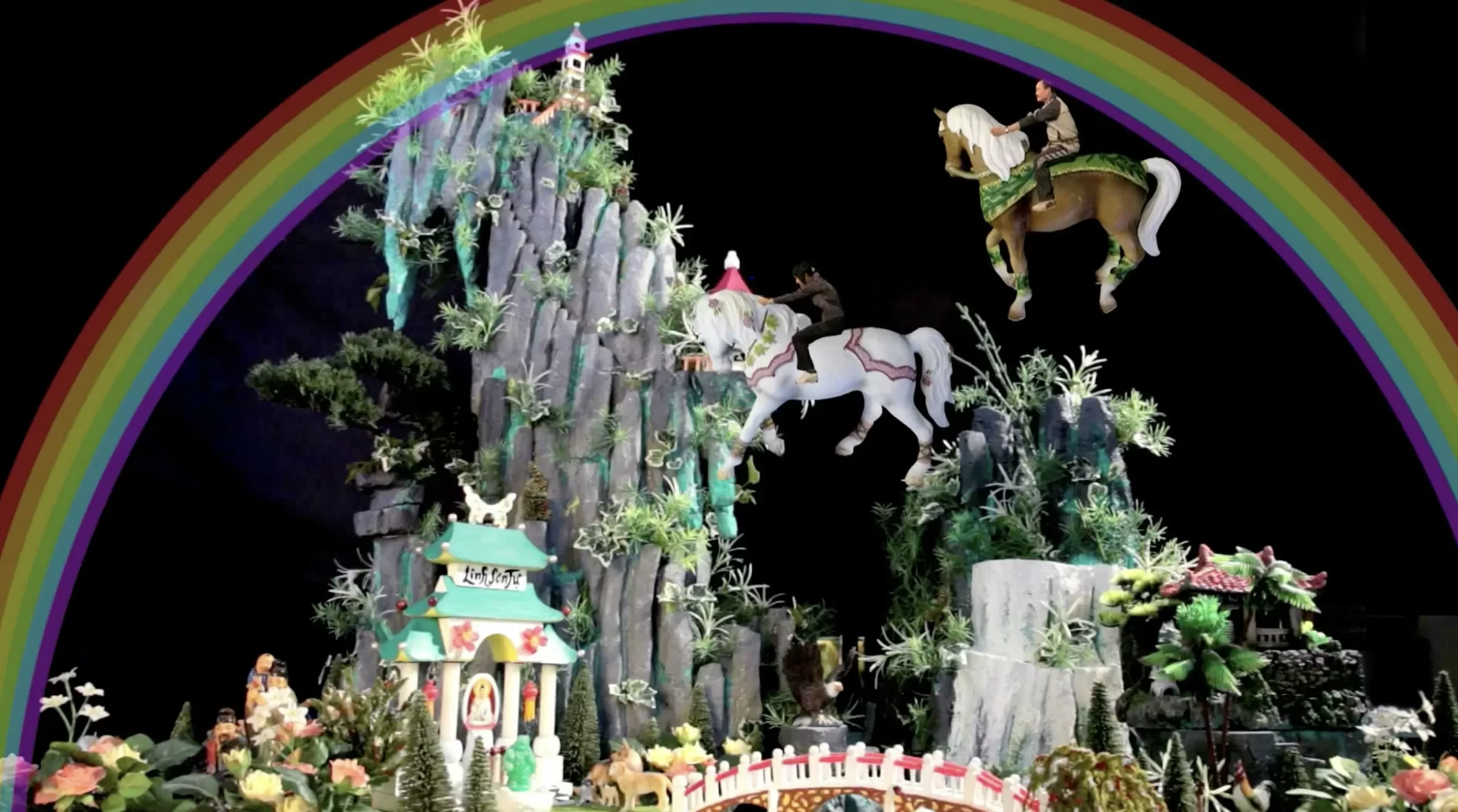
In her works, Quynh Dong arranges hyper-realistic patterns, creating a humorously chaotic order for views on femininity, marriage, family, or personal feelings, etc. These are female figures in lacquer paintings, birds, flowers, fish, scenes in Asian art, the soundtrack to the Journey to the West series, pop bands so gaudy they turn naive, tearful love songs in Paris By Night karaoke etc…. Quynh Dong loves singing. Karaoke appears in many of her performances. Thus, songs considered kitschy appear in many museums and galleries around the world.
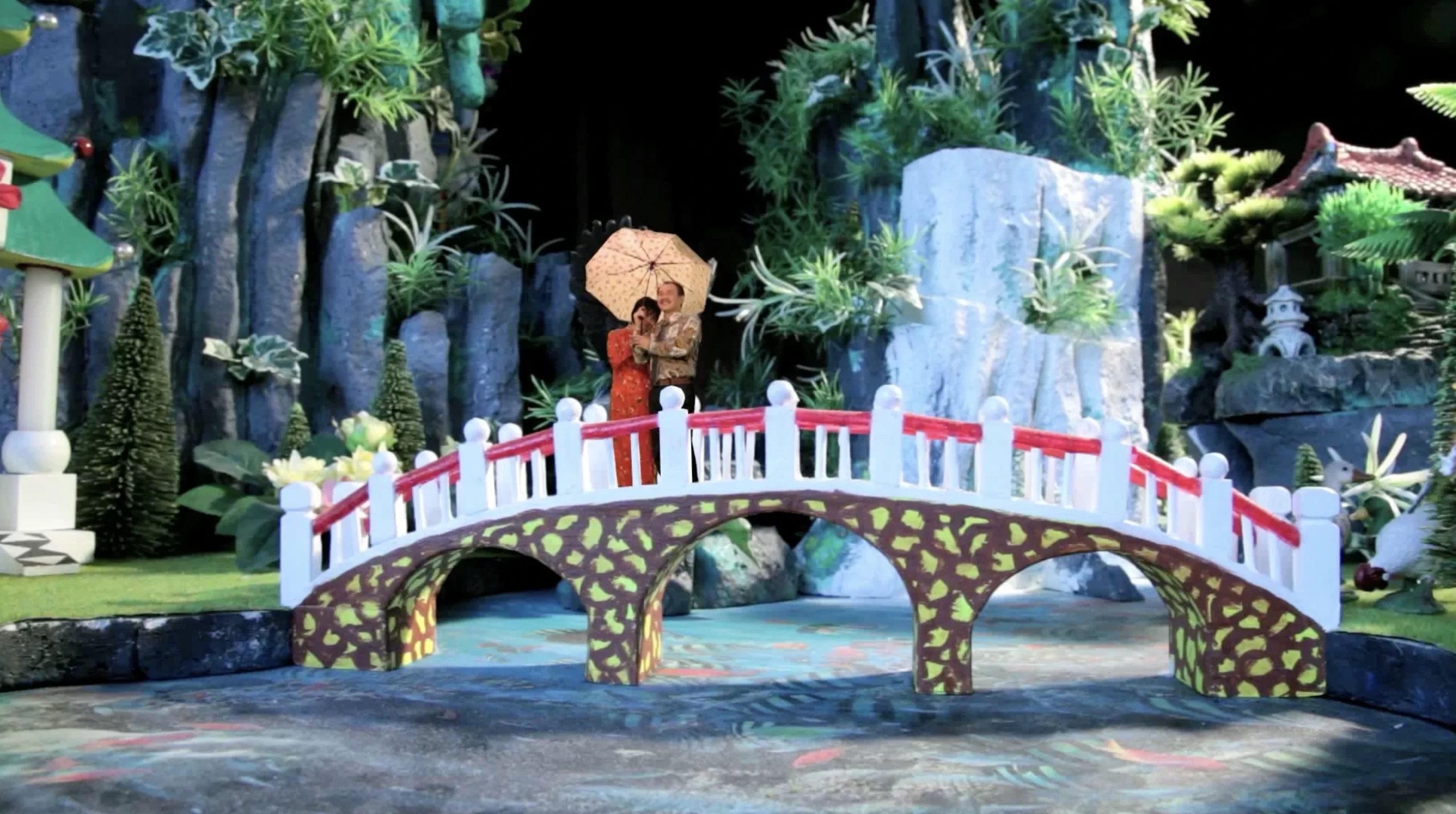
I am probably kitschy because of karaoke too (laughs loudly). In the 1990s, there was no Internet yet. My mother was hard of hearing. I grew up with karaoke and learned Vietnamese through that. My style is the style of heartbroken songs in karaoke. My memories are as big as the village loudspeaker, the singing voice always echoing back with reverberations. I like karaoke, I will always sing karaoke.
What is the reaction of international and Vietnamese audiences to your work?
Interpreting or intensifying cultural tastes is very common in Europe. The art world in Asia or in Vietnam is different. I like the art of transforming a work through my personal lens. Vice versa, I am curious about how the audience reads my works.
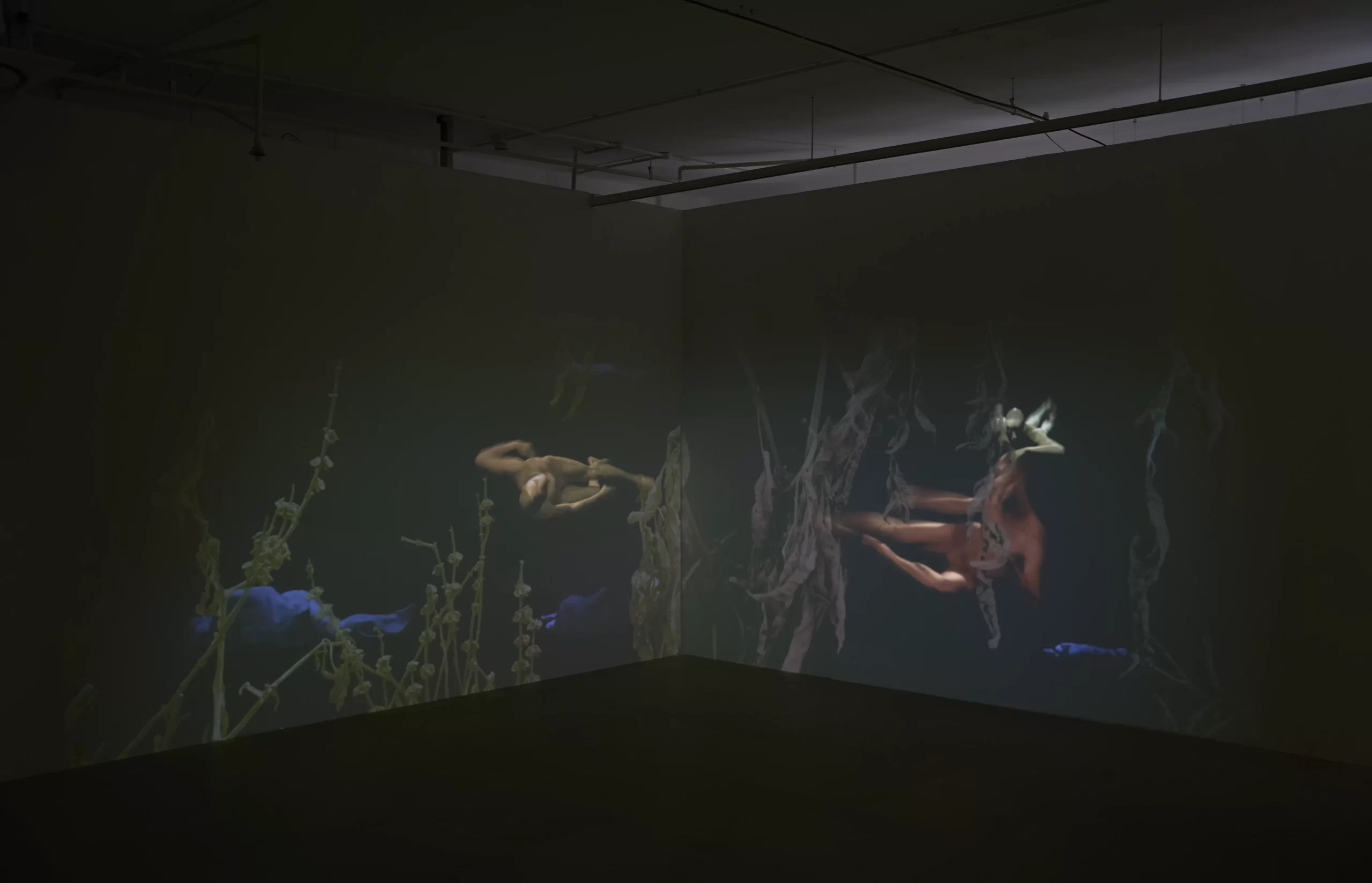
I remember when we watched the work “Black Sea with Goldfish” at the recent “The Year Is XXXX” exhibition together; someone who does not know about Pham Hau’s lacquer paintings will see it differently. Or someone who knows the butoh dancer Valentin Tszin will read their movements as waves, as clouds, a goldfish, or a crane waiting to prey. Since you understand butoh, you read the transformation between the physical and spiritual body as a ritual blending of Buddhism and animism. I am excited to learn about those readings.
Every time I have an exhibition in Vietnam, I am happy. The audience would ask questions and converse with me. During the interview, you said I could answer your questions either in English or German. I still chose Vietnamese although it is not easy for me to fully convey everything. I like expressing myself in Vietnamese. The happiness of someone far from home is to be welcomed and embraced by their homeland.
“In Vietnam, the understanding of “kitsch” is also different. I neither oppose nor ridicule any cultural view on beauty.”
Words: BUC
Translation: Luu Bich Ngoc