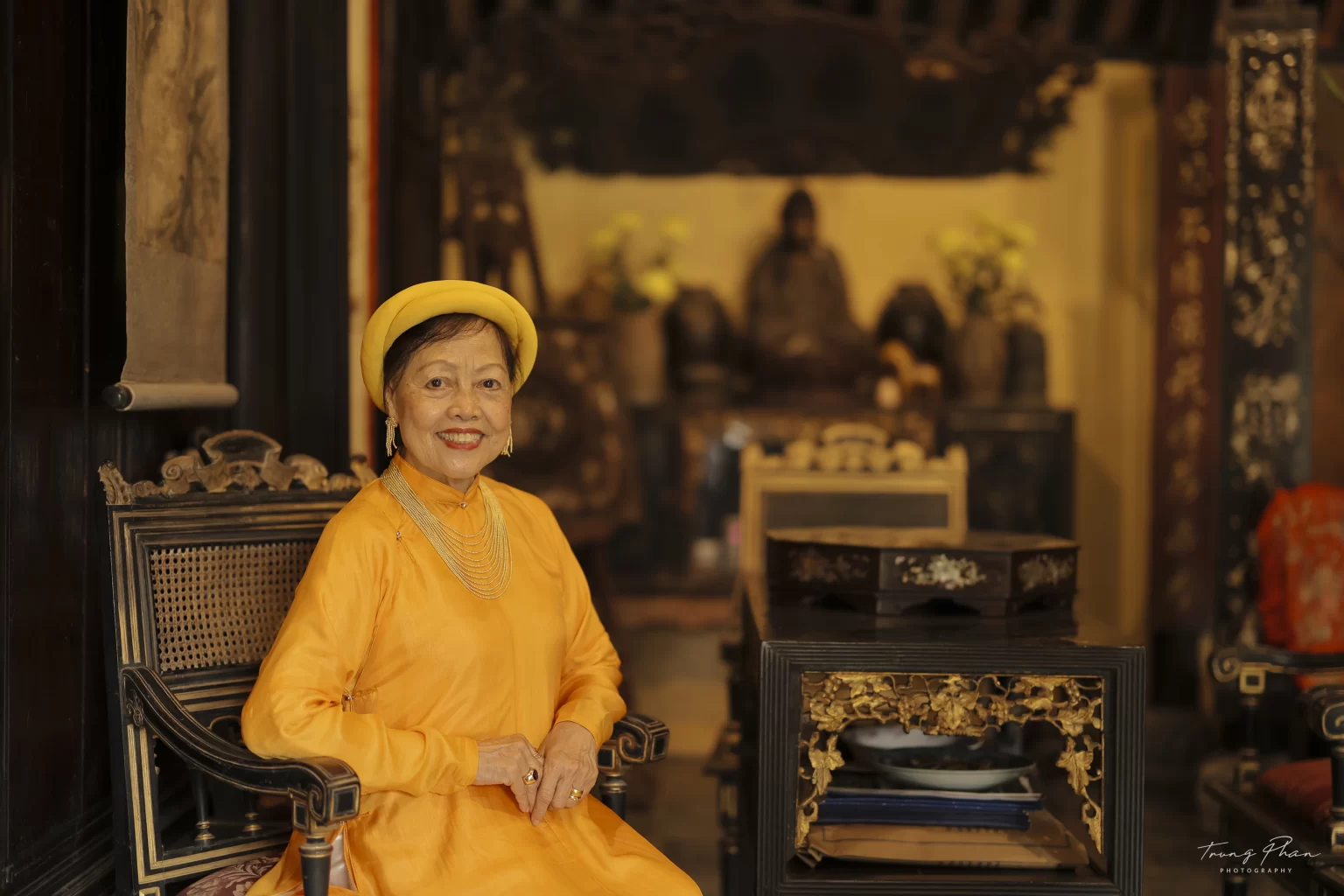
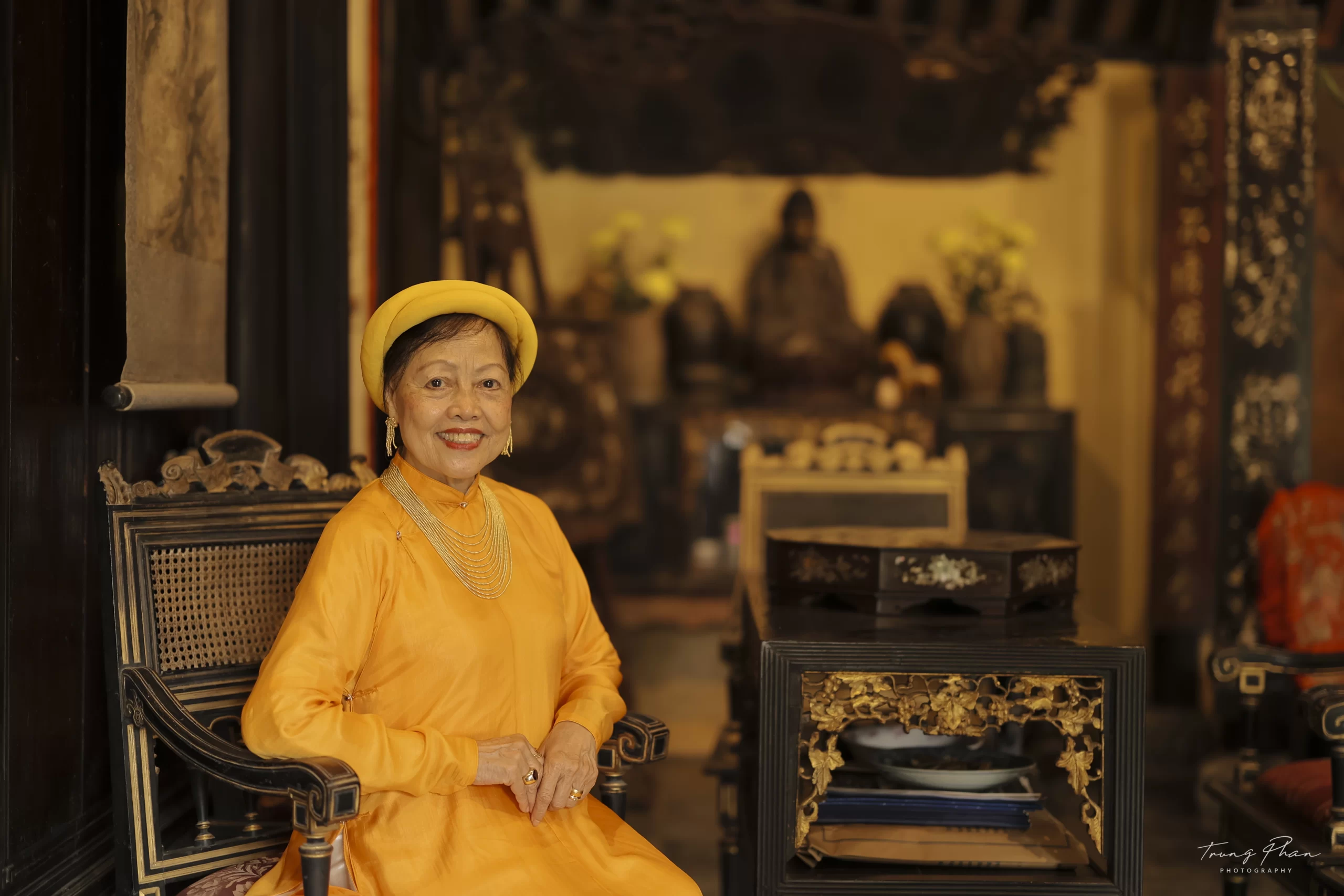
Born and raised in Kim Long ward, Hue, Professor Thai Kim Lan has attended prestigious local institutions such as Dong Khanh, Quoc Hoc (National High School of Education), and Hue University of Literature. In 1965, she travelled to Germany on a DAAD scholarship under the German language training programme of the Goethe Institute in Saigon. Later on, she became a Dokter Phil. at the Ludwig Maximilian University of Munich, Germany. However, in Hue, she is better known as a cultural worker. In 2022, she founded the Perfume River Ancient Pottery Museum, which houses over 5,000 ceramic artefacts salvaged from the riverbed, including precious ones dating back to pre-Sa Huynh Culture. She has tirelessly dedicated herself to inter-cultural activities to this day.
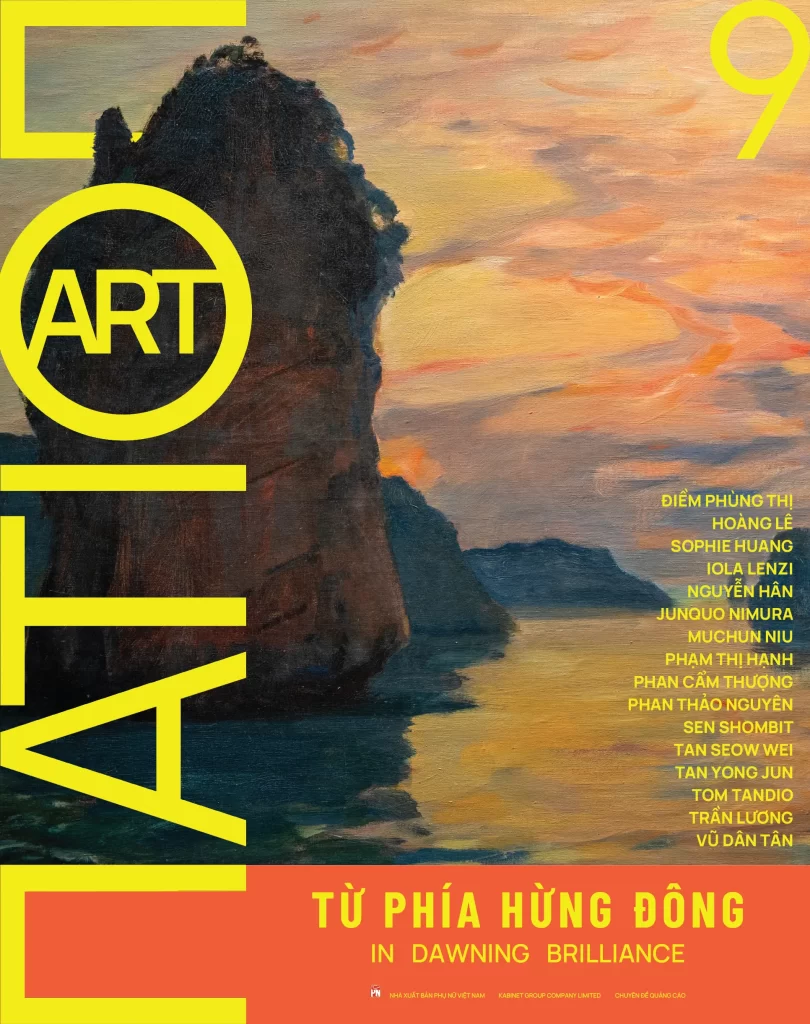
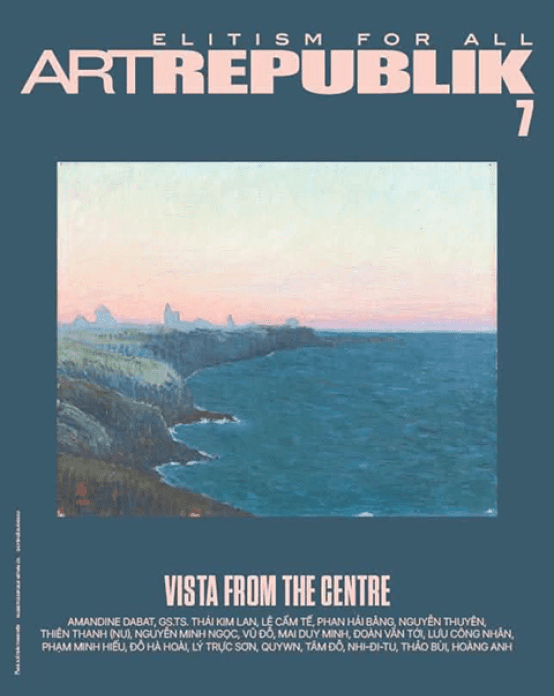
This issue of Art Republik focuses on the theme “Vista from the centrepoint”. It is inspired by one of your reflections on Hue, where you describe the city as a potential bridge in the region’s heritage map. Could you elaborate on this idea?
To understand this point, we must examine it from the perspectives of geography and social and cultural history, as this land lies at the cultural crossroads where North and South, East and West converge. This is why upon his ascension to the throne, Emperor Gia Long chose Hue as the capital, encompassing not only the four cardinal directions but all eight compass points, embodying political and cultural unity. In this vision, when referring to Hue as a “hyphen,” I intentionally highlight the “centre” that this city has inherited through past dynasties in its journey to define itself. However, one should not mistake this “centre” for centralism in the sense of a centralised, autocratic power structure (as under the Nguyen dynasty during feudal times), or imperial or party-controlled dominance. Rather, the “centre” signifies a state of being “in the middle,” reaching equilibrium among multiple forces. This notion is closely linked to the Buddhist concept of the Middle Path, which affirms the belief that “dwelling in nothing, the mind awakens.” The mind that clings to no extreme is true and pure. The “centre” is not bound to any polarity but transcends binaries to achieve balance.
How should we understand the “Hue in the middle” concept? First, “in the middle” refers to its geographical location, a strategic position for development. Just as the Nguyen lords and kings once leveraged this midpoint as a comprehensive cultural strategy, encompassing fields of philosophy, aesthetics, economy, and lifestyle – to create a peaceful territory as encapsulated in the phrase “A secure realm from the Hoanh Son range onwards”. On top of that, “in the middle” refers to cultural intersection. Hue has always embraced cultural exchange while preserving its indigenous identity. This has been the case since the fourteenth century when Princess Huyen Tran’s marriage to the Champa King Jaya Simhavarman III opened the first avenue of cultural exchange between the Vietnamese and the Cham people (admittedly unfavourable for the Cham but beneficial for the Vietnamese). Thus, Vietnamese culture has always evolved through dialogue with others, situating itself “in the middle” of multiple forces.
I must add that I have borrowed the term “in the middle” from a Western scholar’s interpretation of the theory of dependent origination by monk Nāgārjuna. Here, Nāgārjuna further expands upon the Buddha’s Middle Path, asserting that the ultimate truth lies between opposing extremes. The Middle Path advocates for openness and inclusivity, considering all possibilities as conditioned, thereby enabling the experience of freedom and the realisation of truth. I believe in this principle, and to me, Hue is its truest self when it is in the middle. Sadly, the Hue of today sometimes forgets the Middle Path, and I find that regrettable.
“The Middle Path advocates for openness and inclusivity, considering all possibilities as conditioned, thereby enabling the experience of freedom and the realisation of truth.”
So, Hue must define a clear “middle” identity, one that the city has embodied in the past. Yet this is no easy task, especially given that the identity of a place is never fixed but evolves over time, continuously shaped by cultural and social interactions.
Indeed, reciprocal interactions over time is what it means to be “in the middle”! While Vietnam has prevailed over colonialism and foreign pressure, the journey towards self-determination does not erase all past scars. The challenge lies in overcoming the inferiority complex instilled by dominant Eurocentrism. Instead of assuming that everything from the West is inherently superior to the East, we must take pride in our own identity, understanding that all cultures are equal. By respecting existing cultural traits and applying the “middle” philosophy to questions of identity and existence, a new sense of self will eventually emerge.
Take the Vietnamese identity for example: resilience and integrity are virtues that have been used to describe the Vietnamese people for millennia. But how exactly do those virtues portray Hue and Vietnamese people today? Or are we merely repeating these words like a parrot?
Rather than imposing Western romanticism onto Vietnam – whether in architecture, fashion, art, or lifestyle – why not rediscover the romantic spirit within Vietnamese roots? To do so, policymakers must study and engage with world heritage. Most importantly, they must reach a state of “emptiness” – the courage to cast aside the inferiority complex of a small city or country that has yet to be liberated by modern technology. Hue should not be forced to resemble any other place in the world with skyscrapers or oversized bridges. Instead, with confidence, we must elevate the spirit of Hue, cherishing the unparalleled beauty of its rivers and mountains.
Your approach seems like a filter, distilling the best of the West and deftly applying it to the cultural context of your homeland. Could you share how your studies and work in Europe have influenced your engagement with Hue’s cultural heritage?
Perhaps it’s the natural result of my time immersing in and learning from Germany while simultaneously maintaining and nurturing my inherent Vietnamese identity. Under the influence of German thought, lifestyle, and social relations, and surrounded by the urban and natural landscape of the city where I lived, I managed to preserve my identity thanks to my family’s traditional education, the pride in my heritage, and the humanistic foundations I had received during my time in Hue. In other words, I cultivated in me a sense of confidence. The more I absorbed the critical, free-thinking spirit of the West – the cradle of the Enlightenment – the more respect I have for the values of equality and solidarity with the world. This heightened my passion for exploring Eastern thought, especially the essence of peace found in Buddhist scientific wisdom and compassion. Venturing far into the world has allowed me to view all things through a dual East-West lens, comparing cultural, social, and economic models in search of meaningful answers for my work upon returning home.
Take urban planning for instance. I am deeply impressed by how Germans build cities that are both modern and sustainable. Where I live, the buildings in the city centre are strictly regulated, no taller than four stories, and green spaces are evenly distributed to maintain architectural harmony between nature and the urban environment. This approach left a mark on me. When encountering a bodhi tree growing at the old, shabby site we intended to transform into the intercultural hub on the ancient Bach Dang Street in Hue, I ultimately chose to preserve the tree right at the heart of the main hall. The presence of the bodhi tree, despite ongoing debates, embodies both the Buddhist message of compassion for all living beings and Western concerns for environment and architectural beauty, an aesthetic dialogue between East and West that has been grossly undermined by crude practicality over the past half-century. The quiet yet constant internal dialogue between these multidimensional perspectives has driven me to engage with the culture of Hue and Vietnam at large with more thought and care. That bodhi tree now stands strong, flourishing, thanks to the foundation of Middle Path thinking.
When recalling these events, I am struck by the current news about the imminent demolition of the historical residence of Governor Vo Ha Thanh in Bien Hoa City, Dong Nai Province, to make way for new roads. I have thought about this and voiced my concerns. Sometimes, the fleeting demands of modern life should yield to the unique heritage of a locale.
I sense in you a quiet resistance, a desire to protect the cultural values of your surroundings. Besides your deep connection to culture, where does this fierce inner current come from?
I regard myself like a seamstress, though I’m rather clumsy at it. Upon every return, I could take notice of the changes that have occurred over time and the losses that people here are enduring. That makes me more resolute and willing to resist, within the limits of my ability.
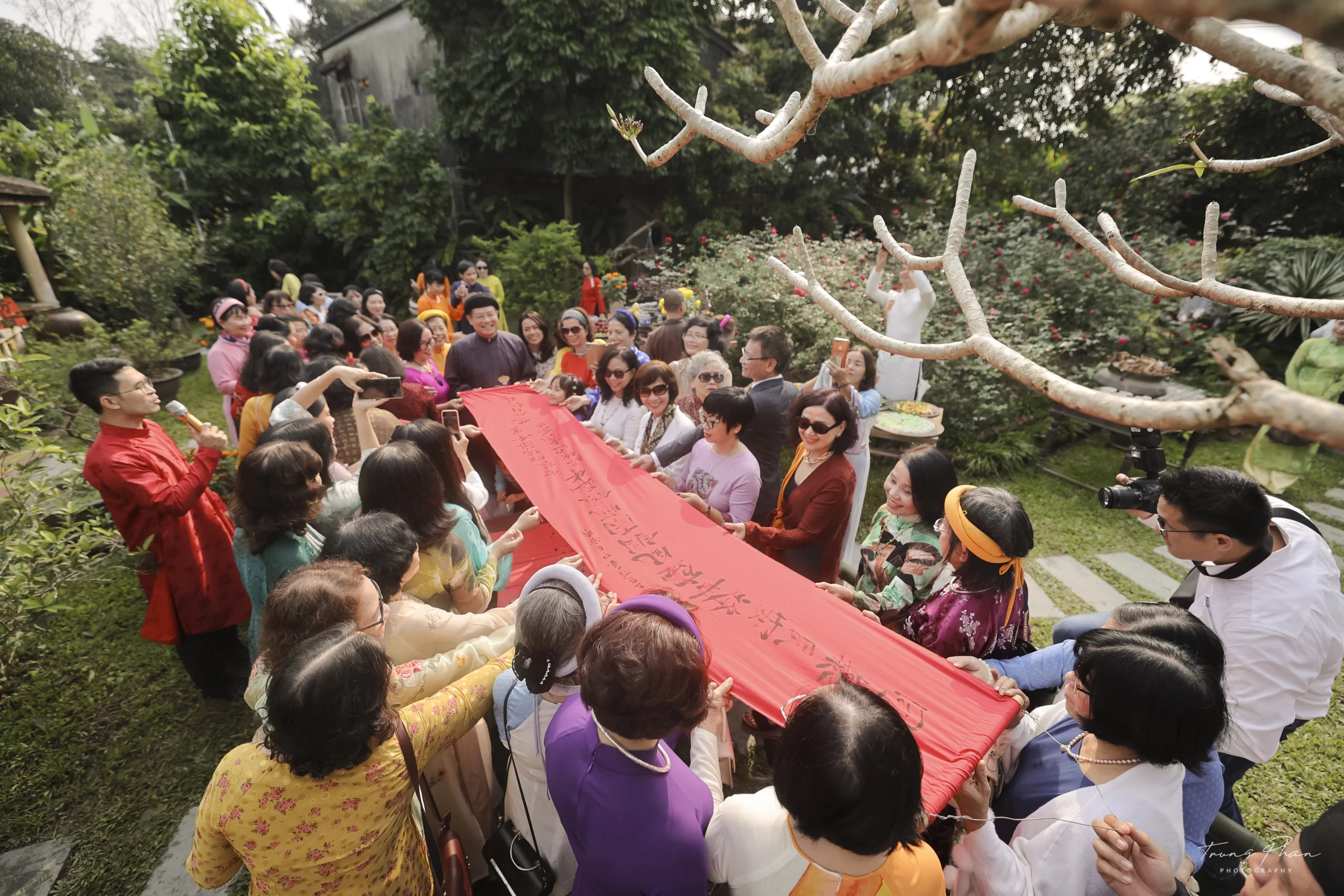
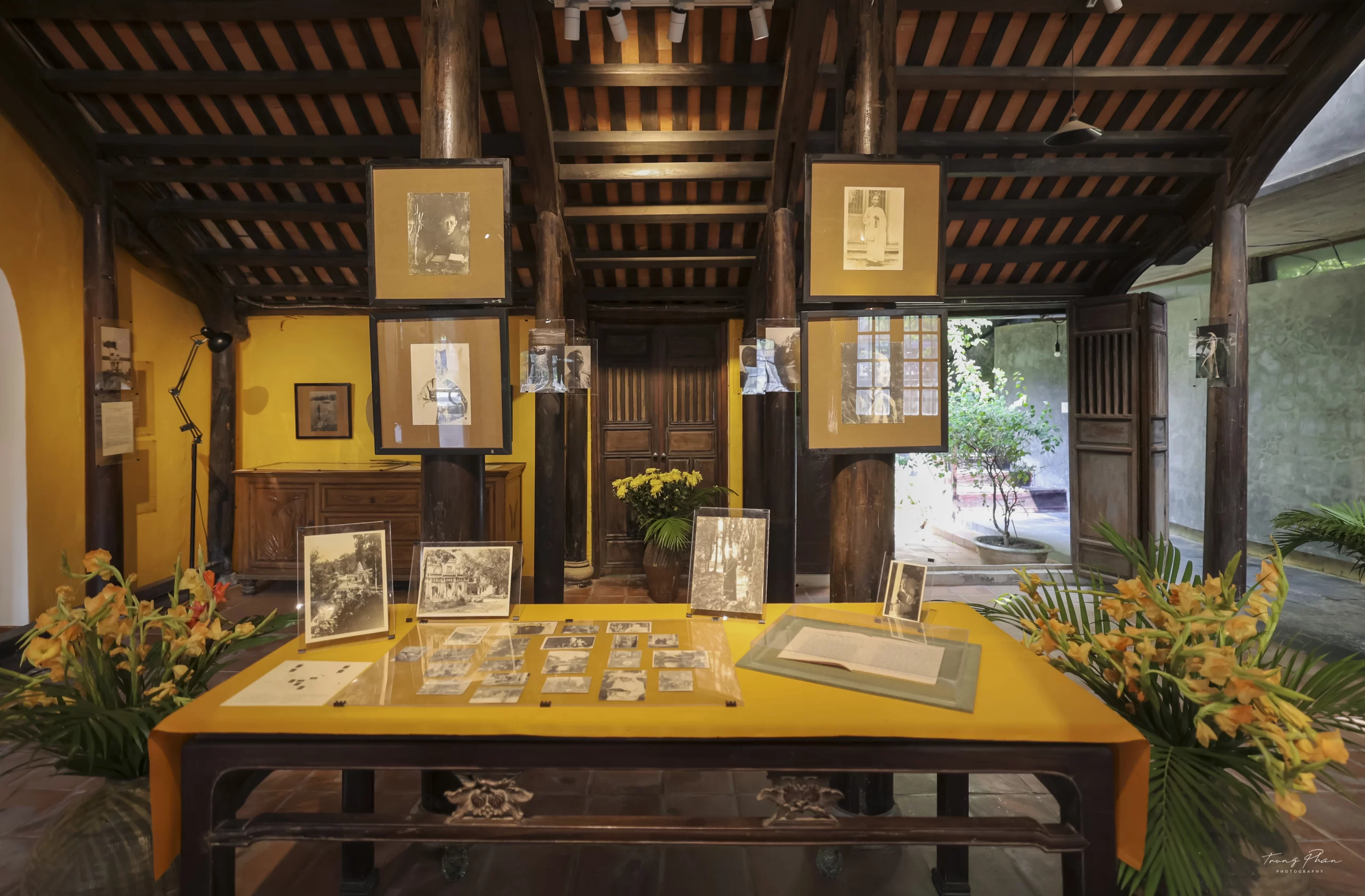
I remember after 1975 when I returned to Hue for the first time, the once-common sight of women wearing ao dai had already disappeared. Overcome with a sense of alienation, I felt a sharp pain and regret for the beautiful imagery I had once seen. So, I gathered the ao dai of the Nguyen Dynasty from my mother and grandmother and took them back to Germany for safekeeping, creating a collection of Hue’s traditional ao dai. The collection consists of 12 pieces, ranging from those worn by Queen Mother Từ Cung and Emperor Khai Dinh to those of noblewomen. By chance, I met Dr Meyer-Zollitsch, then the Director of the Goethe Institute in Hanoi, and we discussed the Vietnamese ao dai. The old garments I had stored away at my home in Germany suddenly came alive and deeply moved her. In January 2015, we organised an exhibition titled “The magnificent gold flowing over green leaves” to display these historic ao dai, which was also the opening event to celebrate the fortieth anniversary of diplomatic relations between Vietnam and Germany.
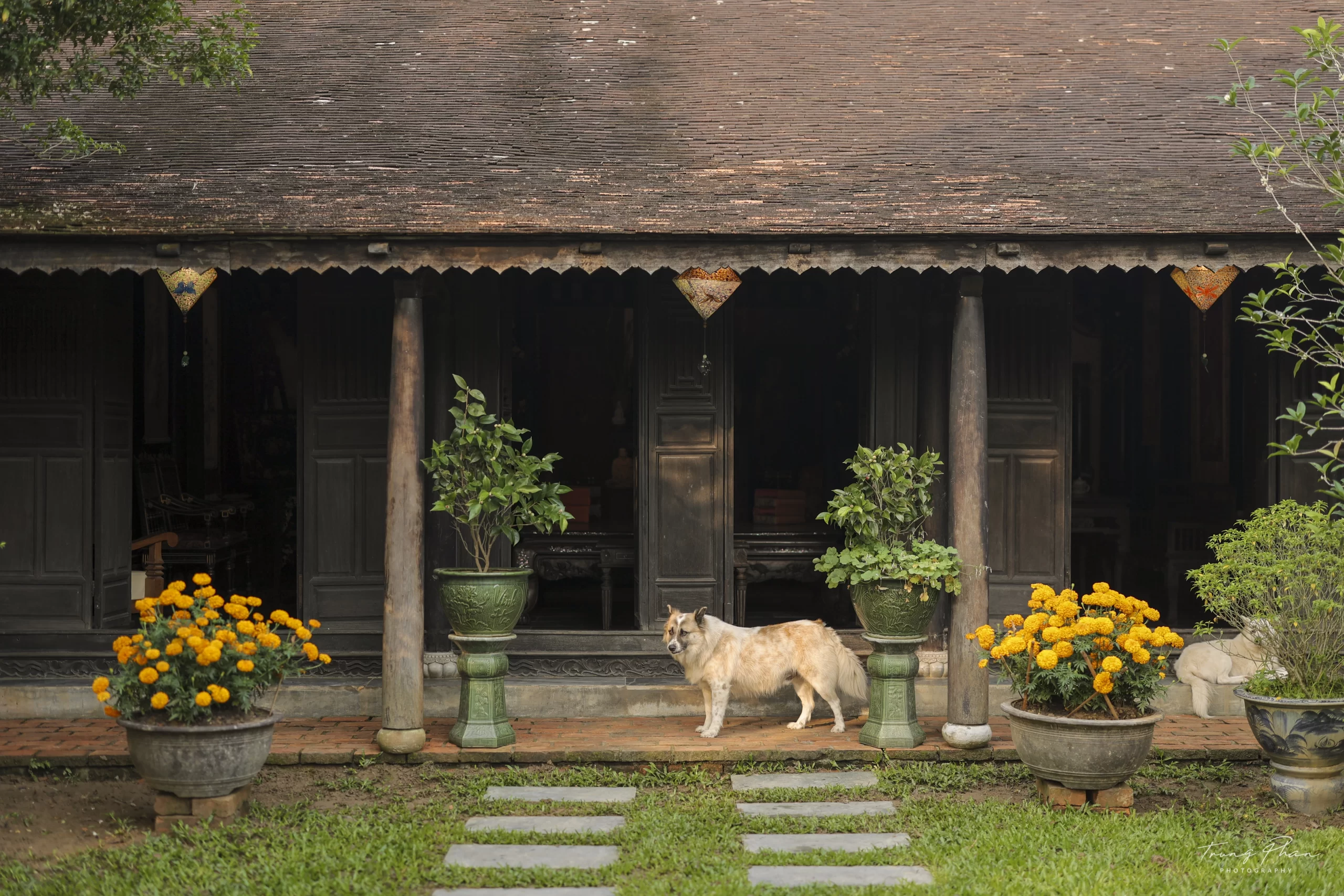
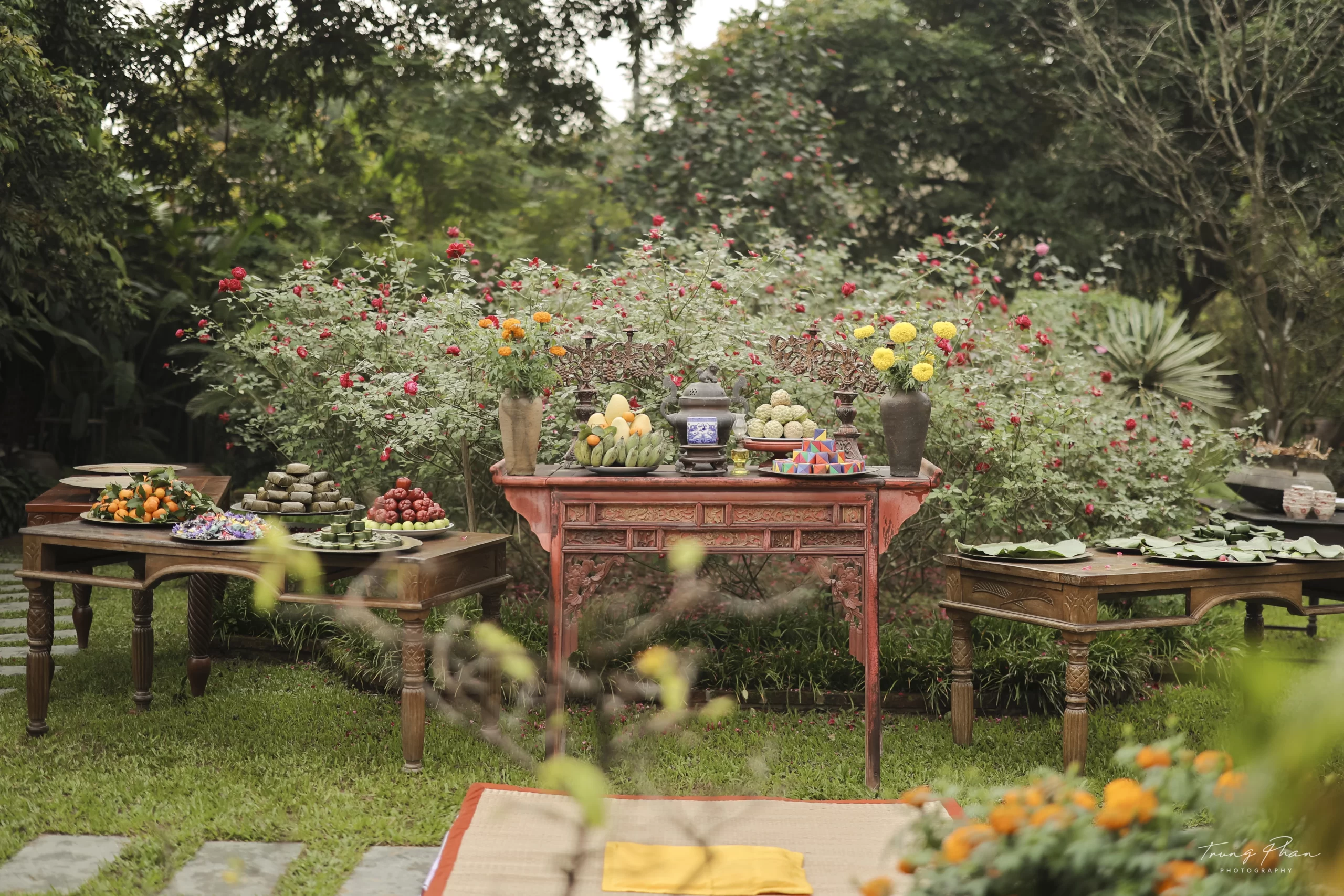
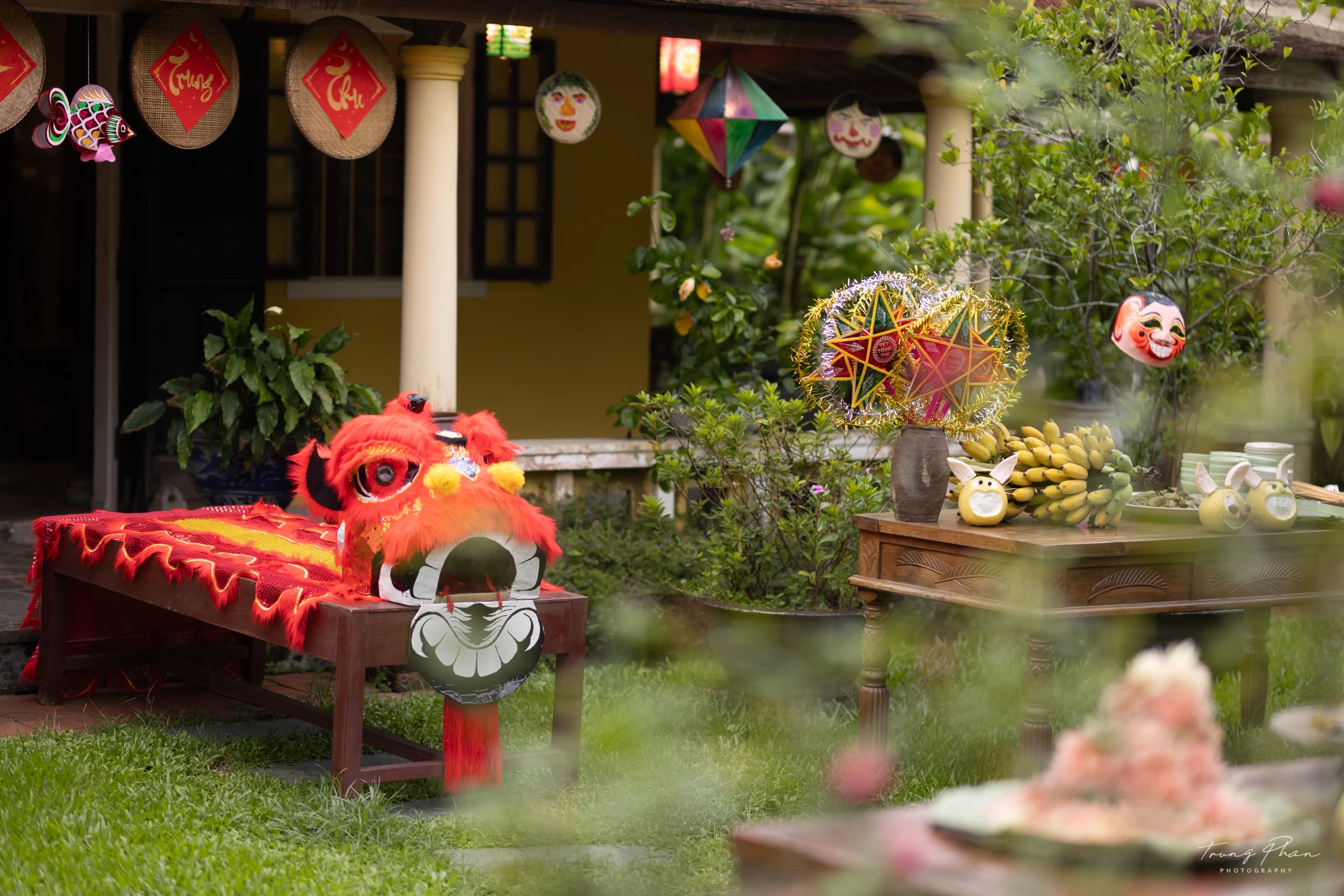
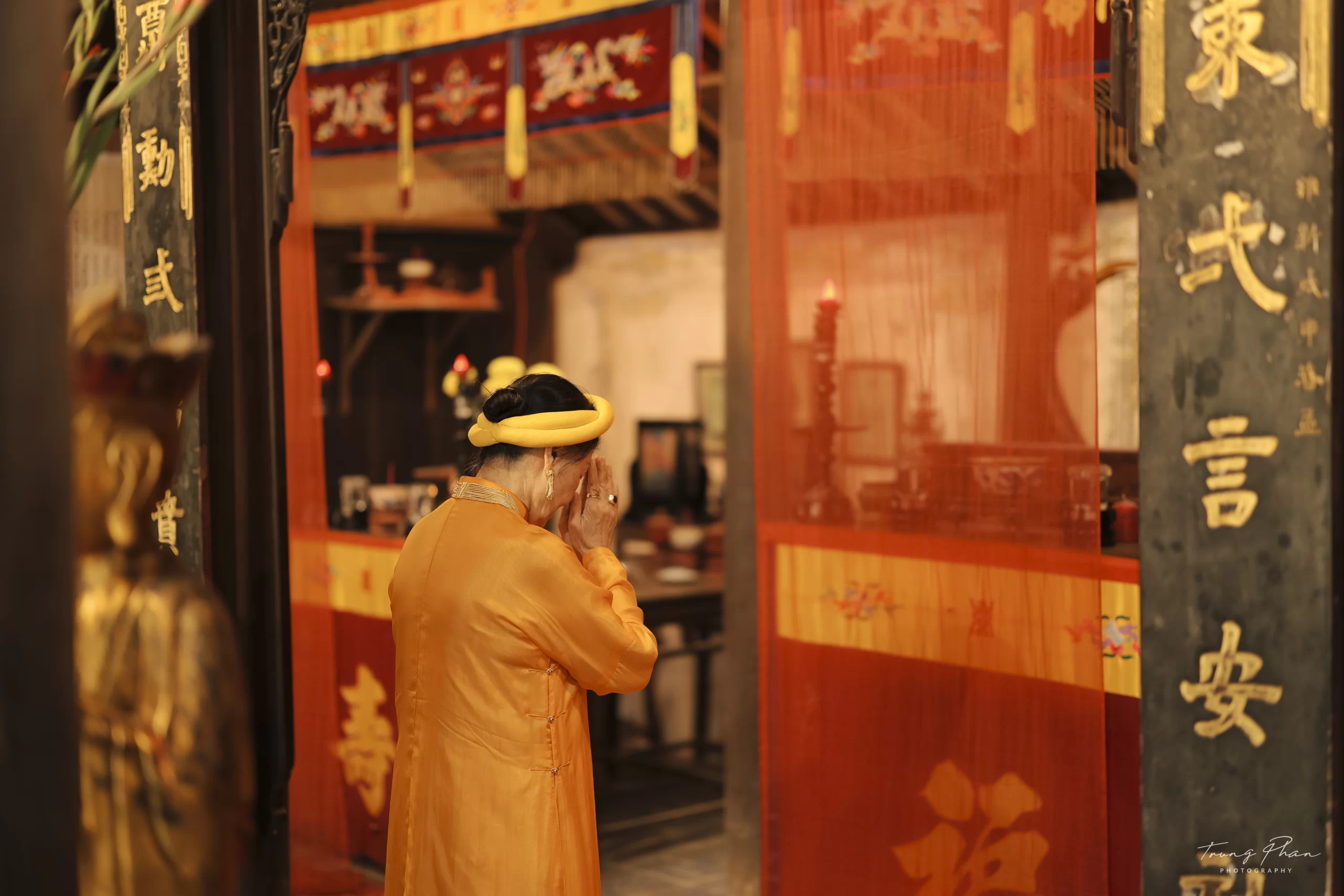
Another incident was in 2016 when I lost a lawsuit. Yes, I’m also known for having filed complaints against the encroachment of my family’s ancestral land in the Ancestral home of the Thai family, where my family had lived for centuries. This lasted for over thirty years. Upon losing the case, angry and heartbroken, I thought of never returning to Huế. But as soon as that crossed my mind, I immediately regretted it. How could I leave the ancestral home and garden to decay, or run from the injustices happening on this land? In 2019, I returned to Vietnam to celebrate the Year of the Earth Pig in the traditional way, with the underlying intent of re-examining my connection to Vietnamese culture. Then, I made a final decision: to transform Ancestral home of the Thai family into a cultural space in the former capital. During the COVID-19 lockdown, wandering in and out of the house, I gazed at thousands of ceramic pieces that my late brother, artist Thai Nguyen Ba, and I had collected over decades. I then poured my energy into establishing the Perfume River Ancient Pottery Museum that you see today.
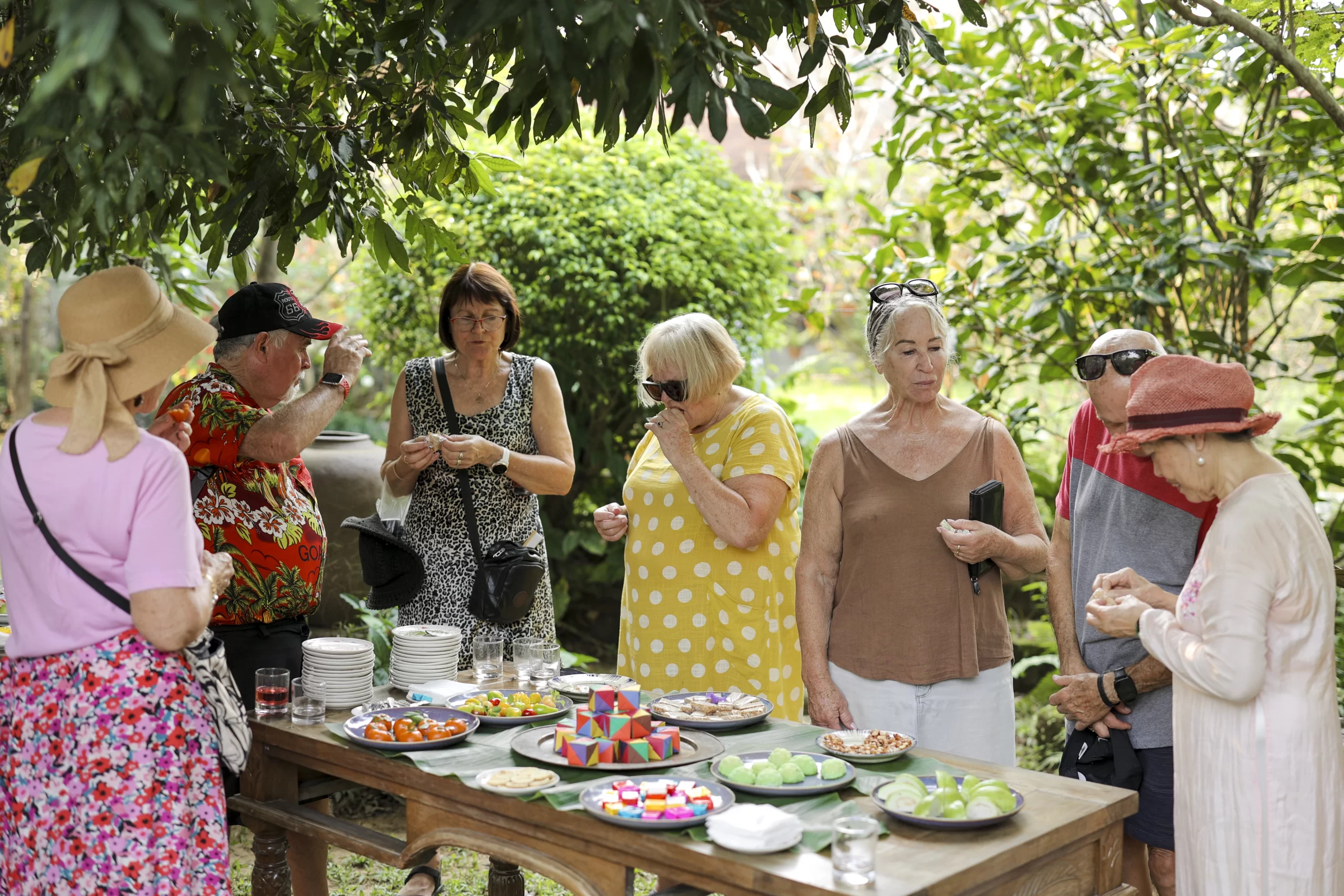
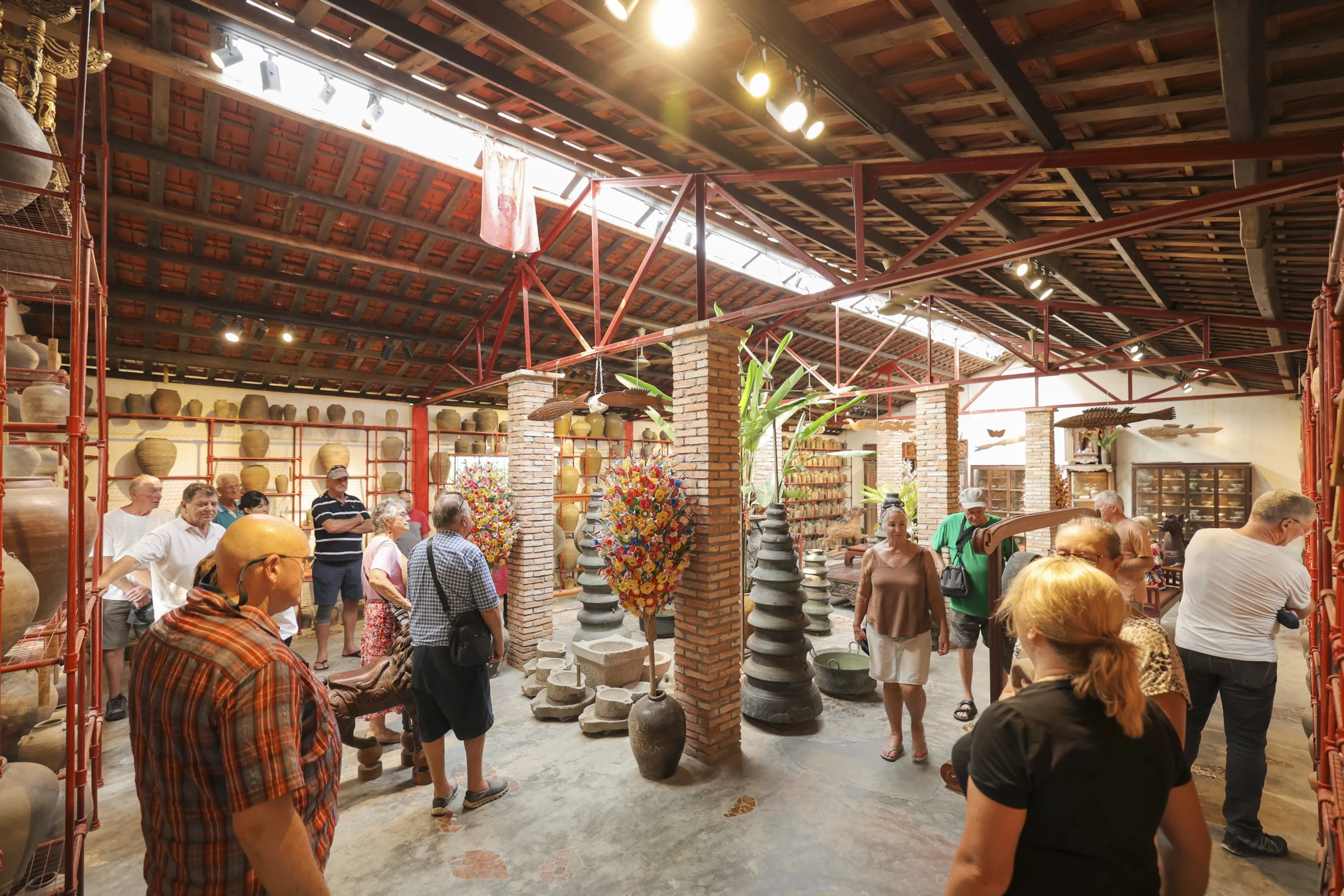
For decades, you have initiated many projects to preserve art, such as bringing artists from the Dao Tan Tuong Theater (Binh Dinh province) to perform in Germany, hosting talks about architecture, poetry, and the pottery museum within your family’s compound. Moving forward, what are you going to focus on developing?
Each idea and form of art brings me a different kind of inspiration, offering its unique flavour that quenches my thirst for beauty. Moved by all things, I don’t exclude any particular art form. The two current projects I am most passionate about are the Perfume River Ancient Pottery Museum and the Intercultural Hub.
About three or four years ago, building the Perfume River Ancient Pottery Museum was a long, persistent process of negotiating between East and West within myself. At the time, we identified the museum’s purpose as preserving family treasures for the city of Hue, but this raised a key question: What is most essential of Hue to preserve? To answer that, alongside delving into Hue’s identity, I tried looking with Western eyes, distancing myself to examine and distil the core beauty of Hue. Today, the museum is recognised as authentically Hue, free of hybridization from external influences, something we take great pride in.
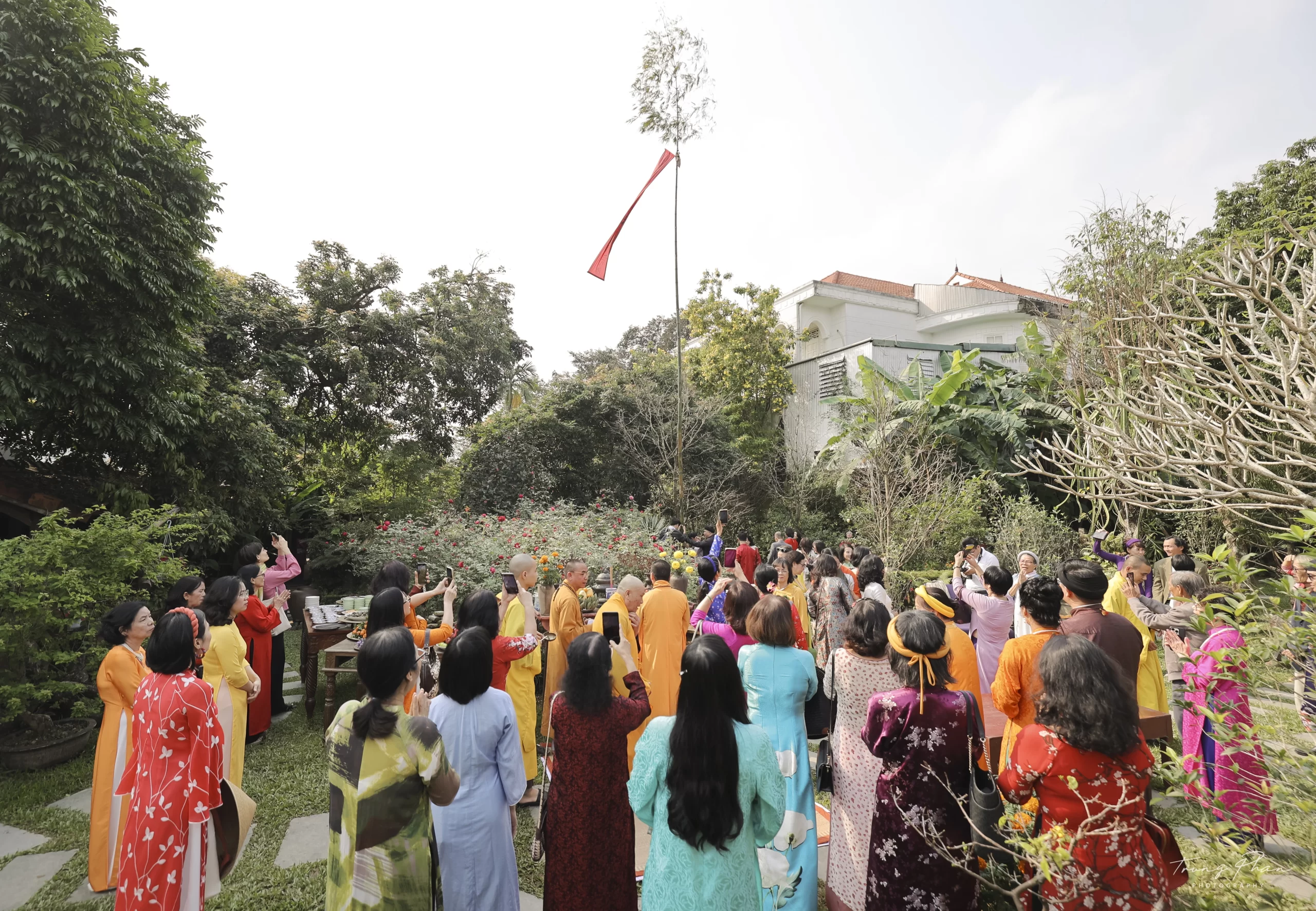
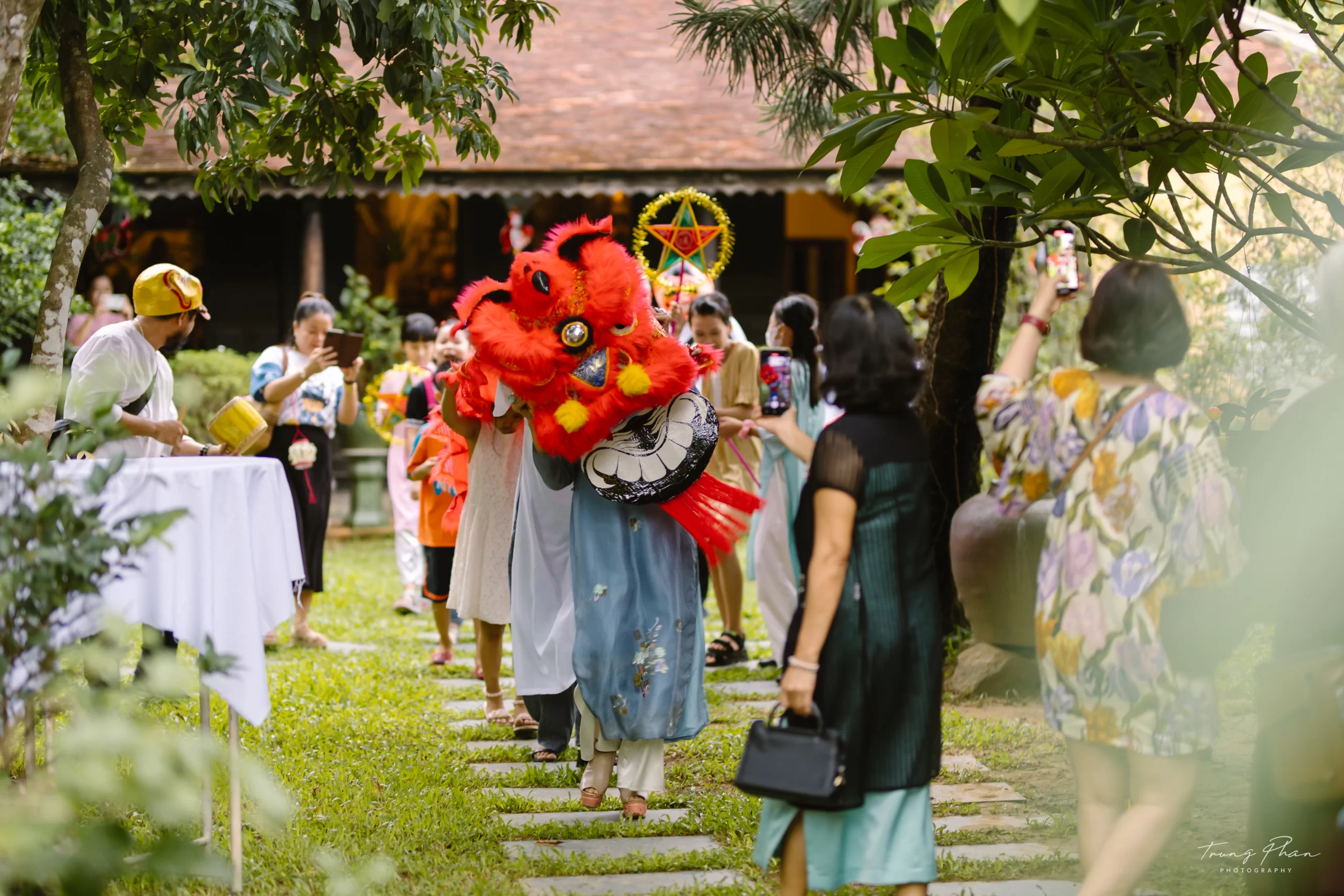
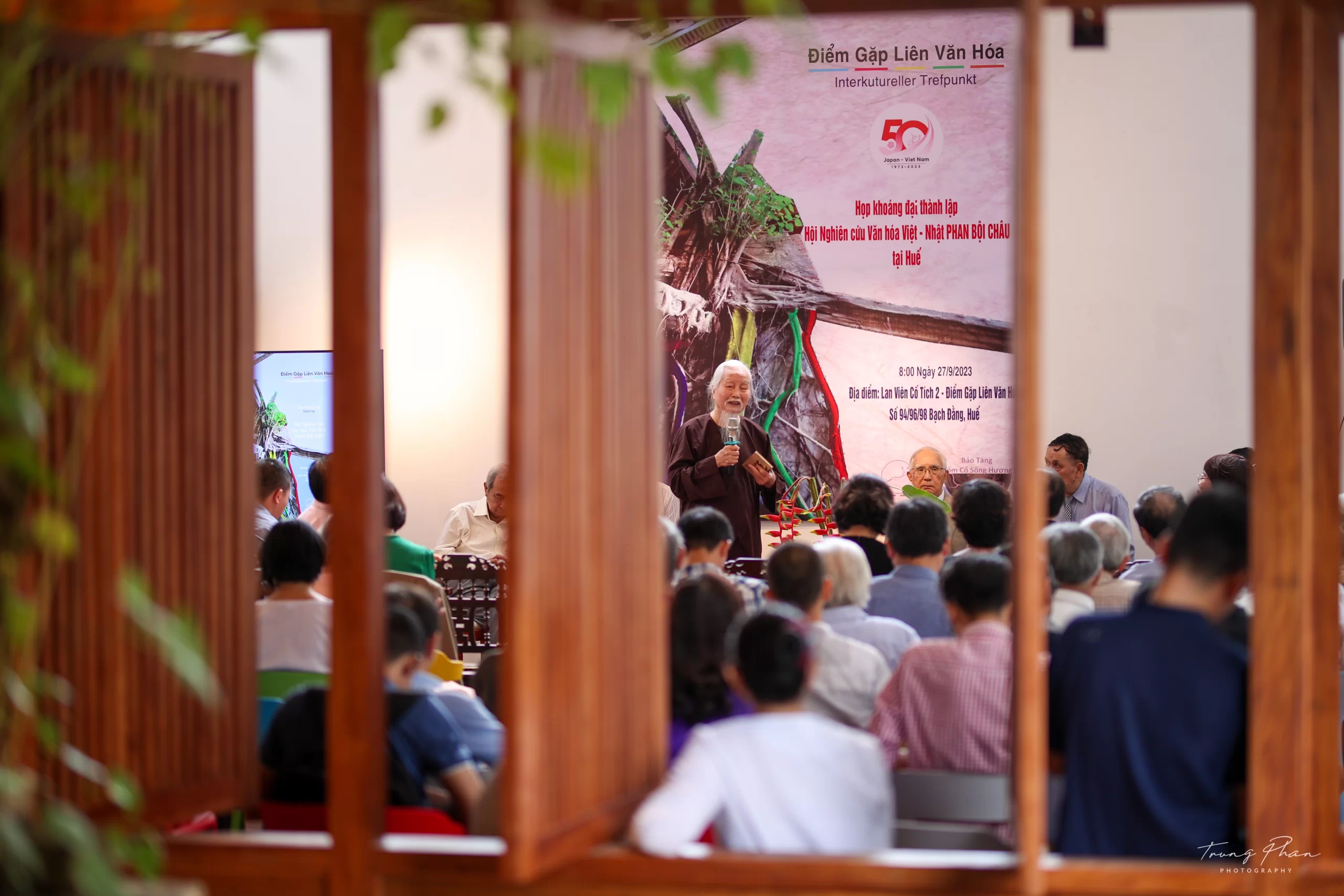
Building on this, I want to dedicate time to developing the Intercultural Hub. This space will host discussions of all topics, performances, and theatrical events featuring artists from all over the world, bringing together international friends to debate issues and exchange knowledge. At the end of 2024, the annual German Film Festival Kinofest in Vietnam will be held at the Intercultural Hub, located at 94-96-98 Bach Dang Street in Hue. Through these activities, I hope to create a space for people of all generations, especially the youth, to be inspired and explore opportunities for exchange, enriching their cultural capital and worldview. It is particularly important for Hue to innovate in its approach to beauty and creativity, as such innovation will lay the foundation for a richer, more vibrant cultural heritage.
I’ve once written that intercultural philosophy is a branch of philosophy that takes interculturality as its subject, and interculturality, in turn, takes culture as its subject. Without culture, intercultural philosophy would be devoid of substance. I practise interculturality partly to preserve heritage and partly to reinforce the theory I’ve spent years researching and teaching.
Thank you, Professor Thai Kim Lan, for such an interesting conversation. I wish you good health to continue carrying on your cultural missions.
Words: Thủy Tiên
Translation: Hà Đào