
Ace Le: In both literal and figurative senses, Lebadang Memory Space is a major work of art, reflecting the far-reaching vision of both the late artist Lebadang and the implementing team. Could you share with our readers how such a vision was formed?
Mdm Le Cam Te: Before he passed away, Lebadang left behind many unfinished ideas, including his dream of creating a “life-sized painting” that he had almost brought to fruition. Due to his health, he was unable to complete it. We could say that this “painting” had become a will of his, one that was omnipresent in my mind. Since 2014, I have been committed to bring this will to life. Fortunately, I have received unwavering support from Mdm Myshu Lebadang (Lebadang’s wife) and crossed paths with many others who admire Lebadang’s art as much as I do.
Mr Dang once proposed: “How about we create the space at Cam Te’s abode?” Although my home was a mere 200-square-meter in a modest alley, he assured me it was feasible and offered to guide me. However, I was hesitant due to the urgency and his advanced age. He was already 85 at the time. Later, Mr Vu Trung Kien (Deputy Director of the Lebadang Memory Space) and I stumbled upon a piece of land in Kim Son village. Standing for the first time on top of the ten-meter-high hill, we found ourselves in a valley surrounded by hills, realising that this was the very painting Mr Dang had envisioned. We immediately sought ways to acquire the land and began to work on it.
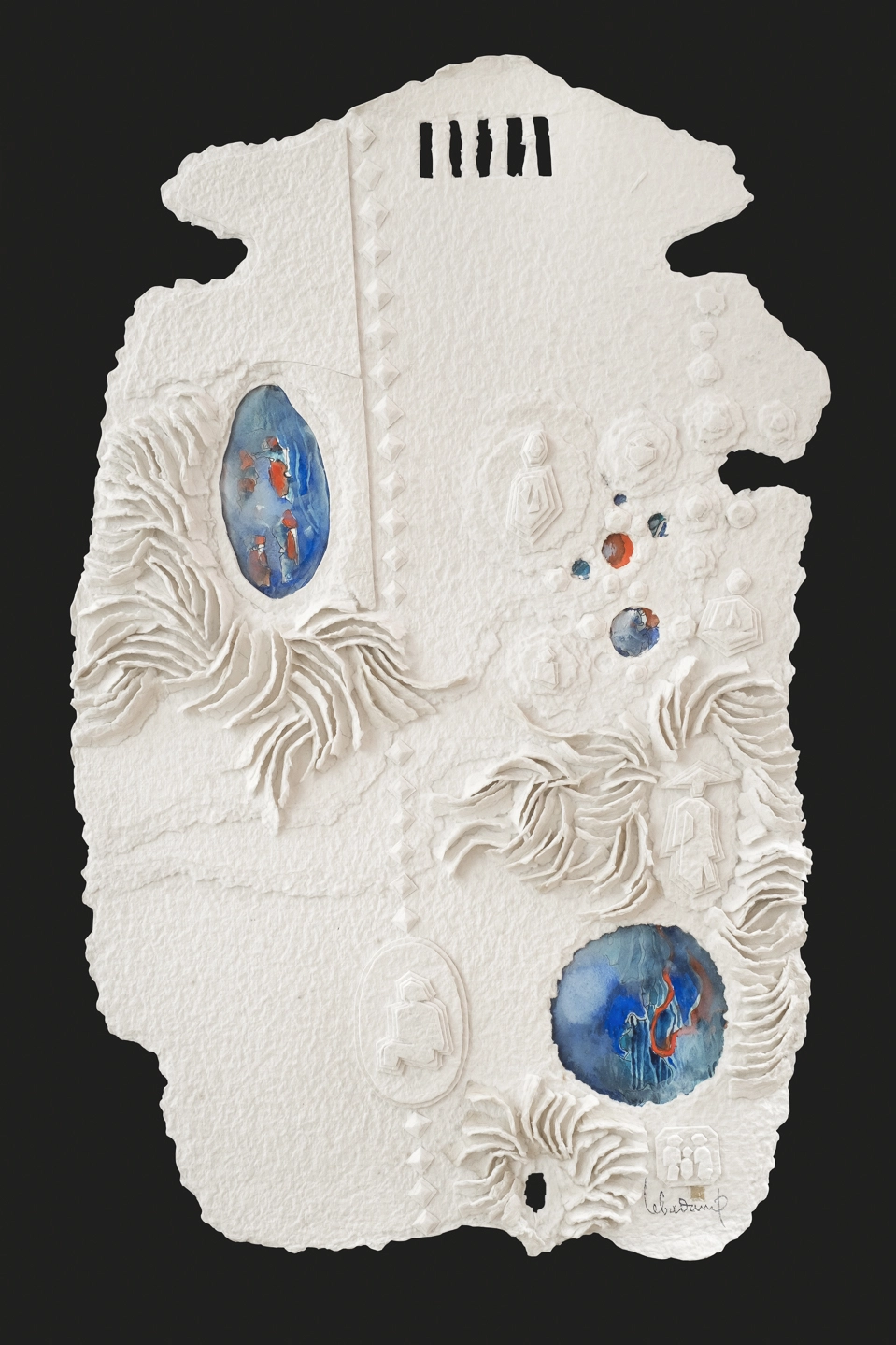
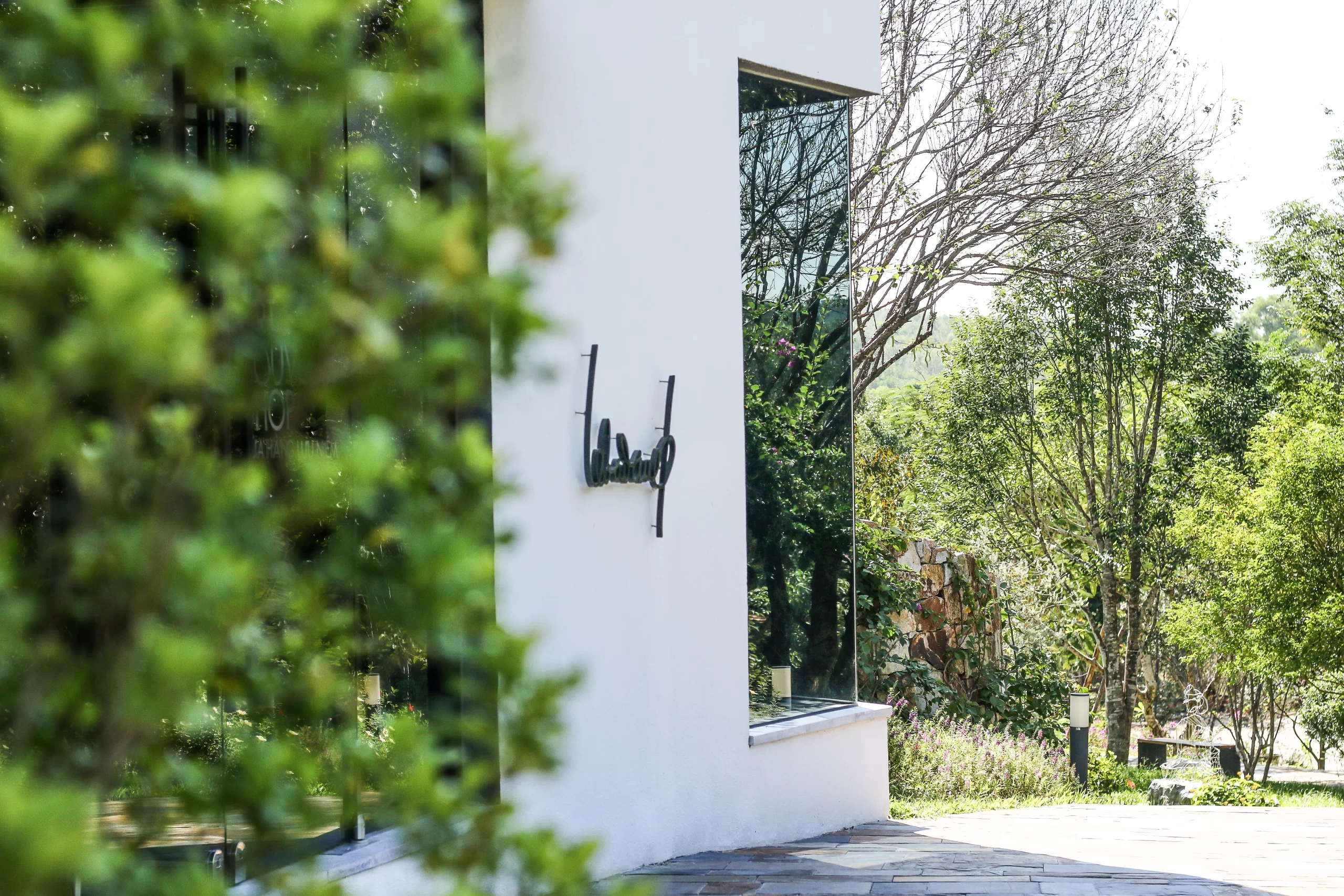
The entire design of the Space was conceived from a paper-cut artwork by Mr Dang, then actualised by architect Ho Viet Vinh under the guidance of Mdm Myshu. The Space exists as a large-scale sculptural installation, where every stone, every bush, and every visitor becomes an element in such, constantly changing and interacting with one another.
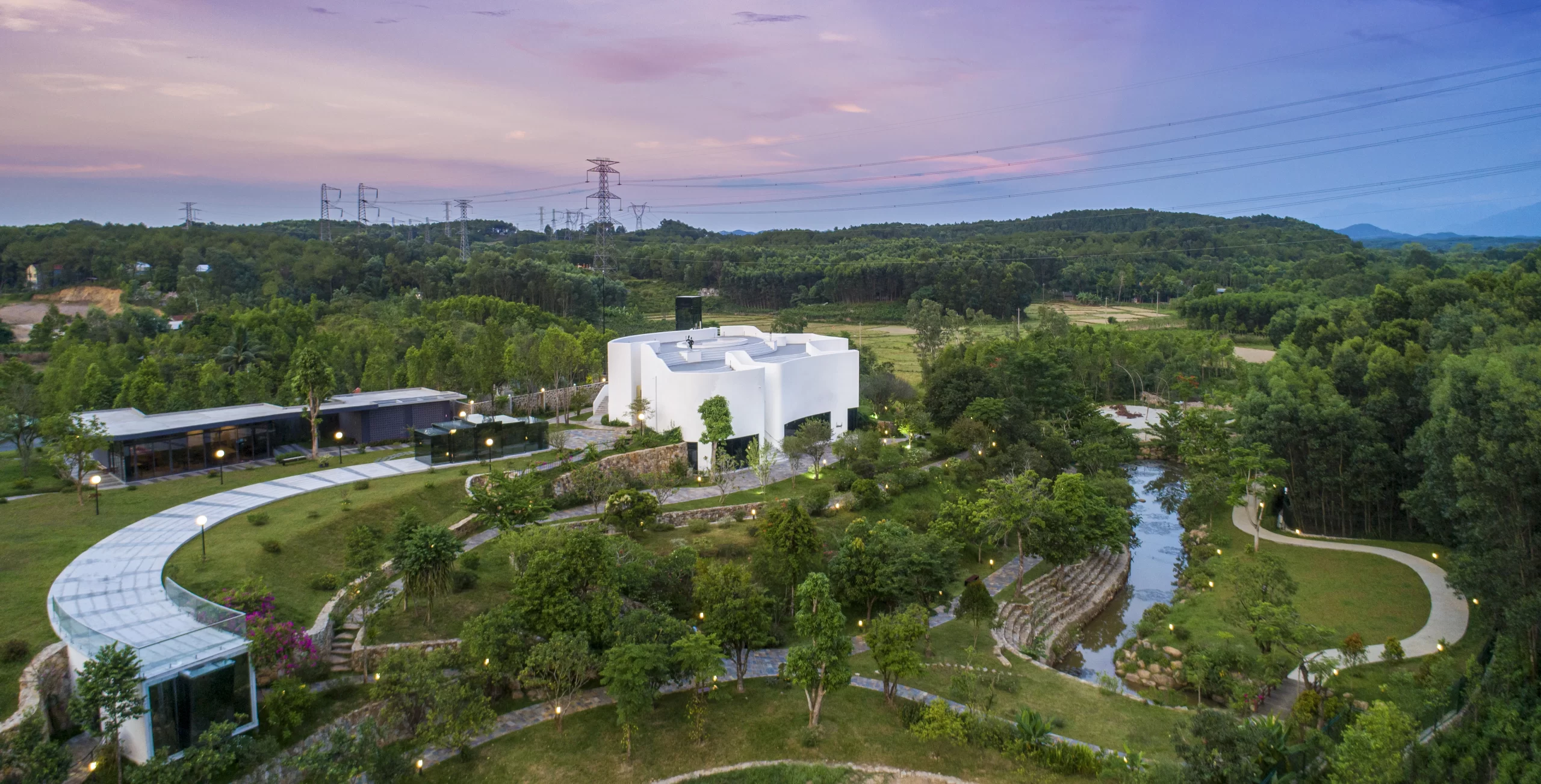
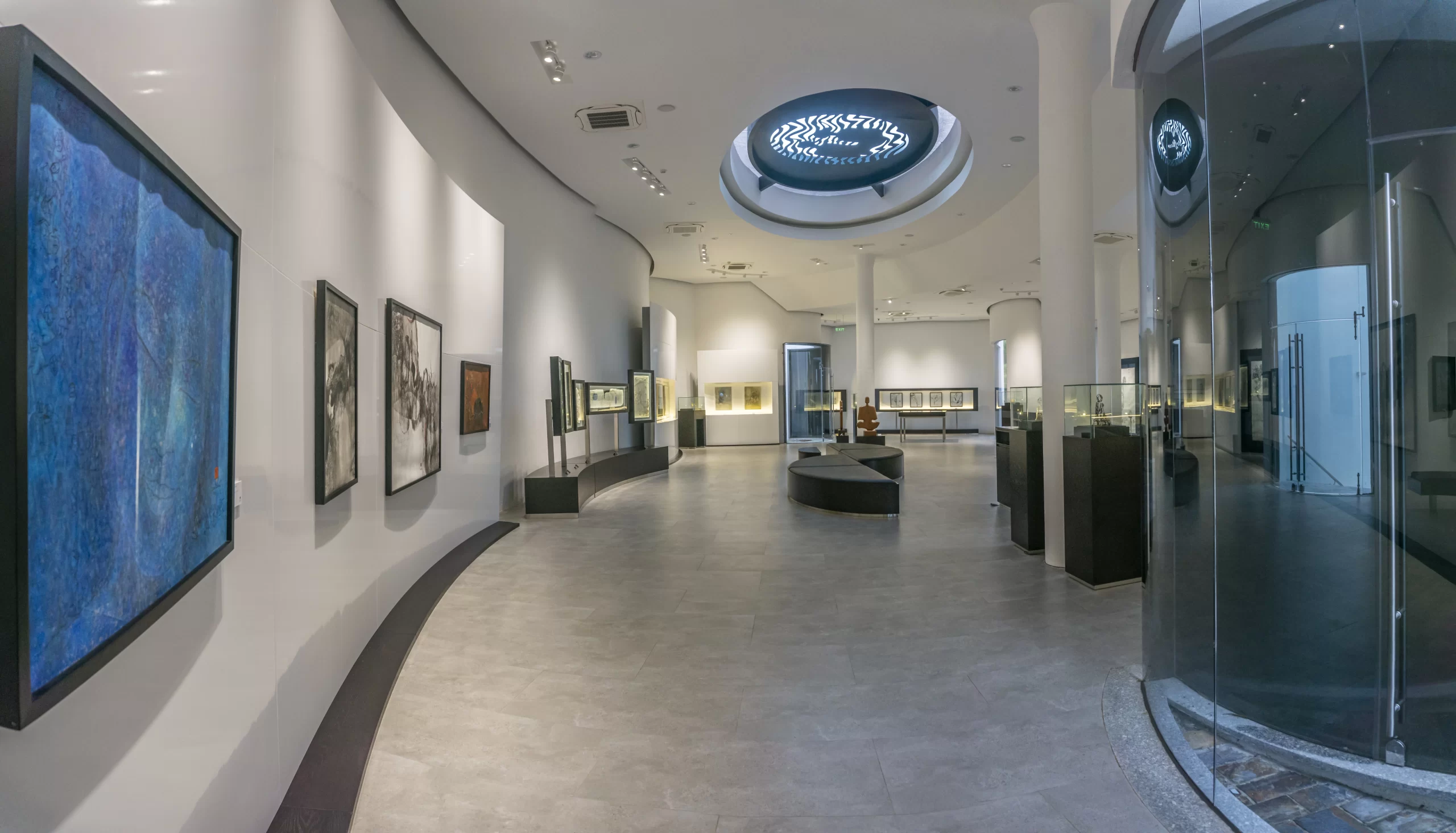
Thuy Tien: Each visit to the Space reveals ongoing improvements. From the display of recently repatriated works to the planned renovation of the basement, and even the relocation and care of each plant and flower. This reflects a profound, organic love that blossoms from within and demonstrates a disciplined precision in every aspect of its operation.
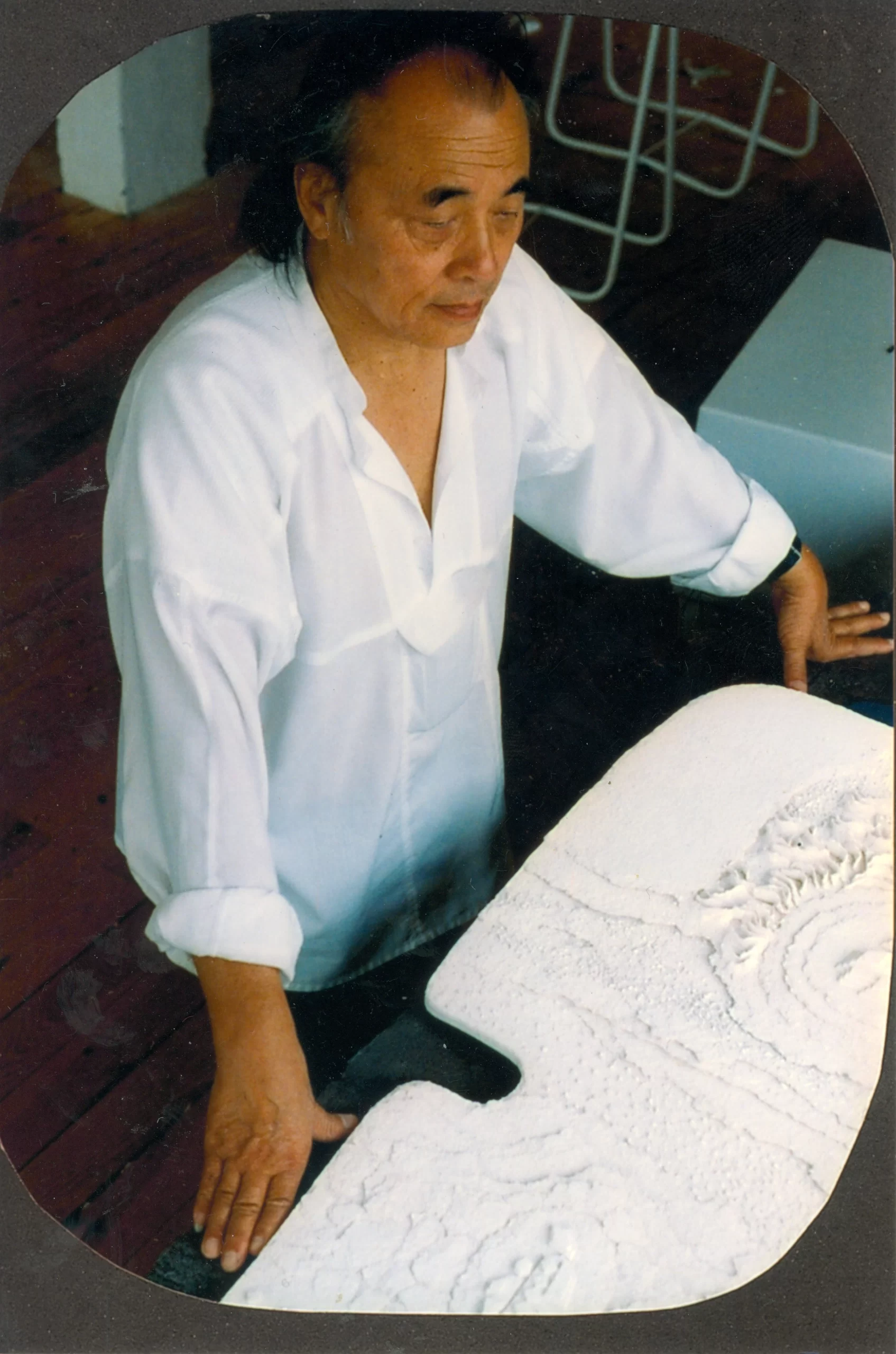
Mdm Cam Te: Indeed, love is a necessary condition, and it is nurtured through the sufficient condition of profound respect for art and those who engage with it. I learned this from my mentor, Lebadang. In 2000, he attended an exhibition where my paintings were displayed. At that time, I was an amateur painter. He immediately said: “You have a unique sense of color, if you want to learn more, I will teach you.” Throughout more than 10 years, he taught me how to perceive art, how to preserve paintings from damage, and how to handle exhibition spaces.
Back then, I was still working at the Le Ba Dang Art Foundation (under the Hue Fine Arts Museum). He was a perfectionist at work, with a short temper and high standards for precision in everything. I remember once when he required 10 paintings dismantled for transport to Hue for an exhibition at the Foundation, he set a strict 20-minute deadline and managed to complete it. In the following years, he took me on a European tour of renowned art museums, sharing his insights on Van Gogh, Picasso, and Gauguin.
Mr Dang placed his trust in me, even though I was vastly out of my depth. Firstly, I was not a professional in the field; and secondly, I had limited qualifications. Thus, I always had to overcompensate my shortcomings. Now, after so long, I have realised the transformative power of recognising and affirming one’s capabilities. If Mr Dang had not seen the potential in me, I would not have been where I am today.

“ Mr Dang placed his trust in me, even though I was vastly out of my depth “
Thuy Tien: Among Lebadang’s writings, our Art Republik editorial team is particularly struck by his declaration: “Artists must have class to be taken seriously.” What’s your take on that, Mdm Cam Te?
Mdm Cam Te: That’s a profound statement in his writings, which is often misinterpreted. In our country, and even in the world, there’s a persistent stereotype that artists must be impoverished, bohemian, or even mad. He once jokingly remarked that a successful artist should exude an aura of sophistication, even down to the fragrance they wear: such high-end perfume that its scent would spread out for at least ten metres. His humour was later misunderstood as arrogance by many people who were told of it. I believe he was making a valid point: artists must strive for success and self-sufficiency before they can truly make a lasting impact. With that in mind, I am painstakingly precise in every detail of the Space to achieve a sense of class and elegance.
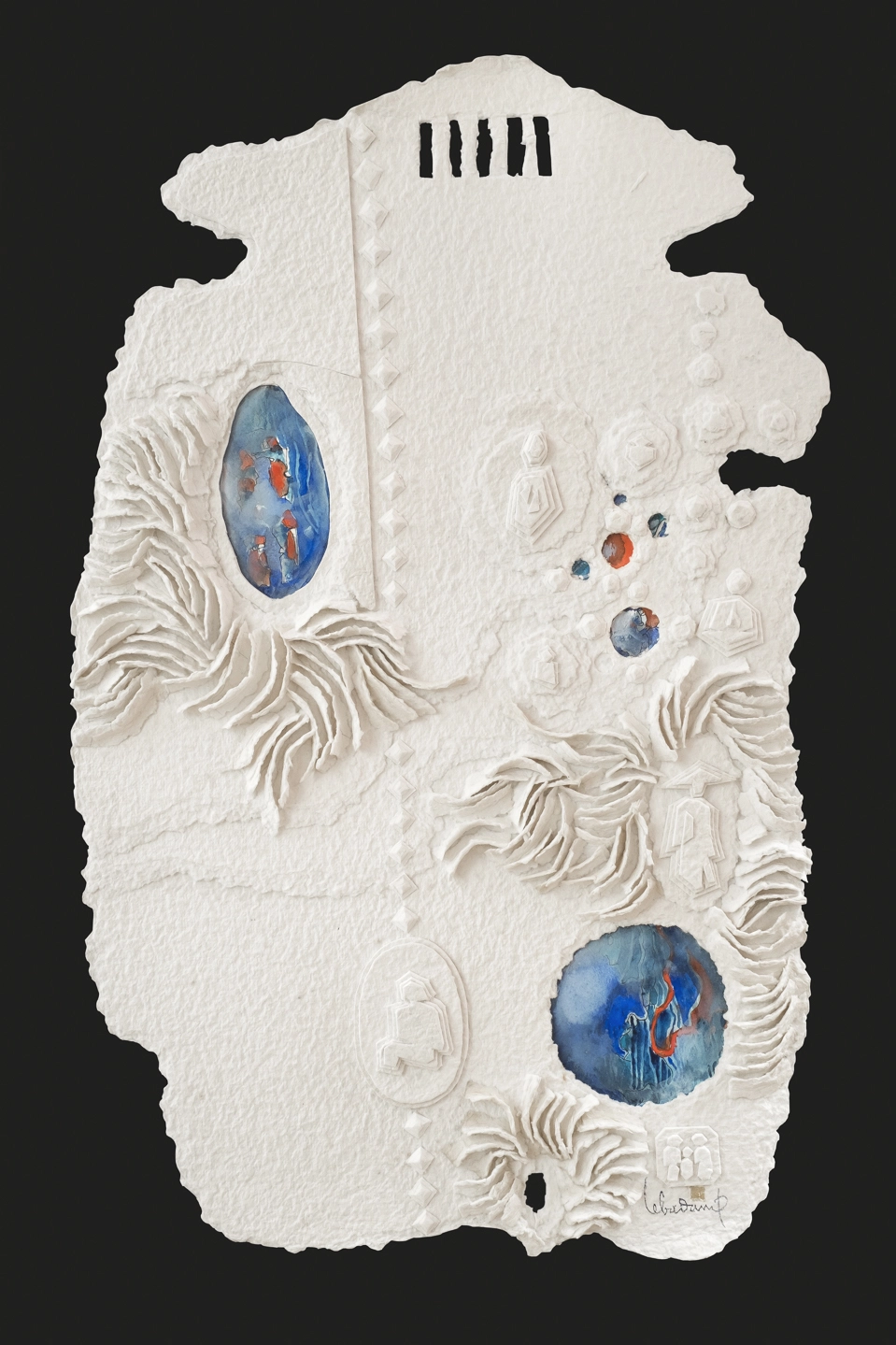
Ace Le: It seems to me that the “perfume” Mr Dang jokingly referred to is a metaphor for being meticulous, respectful of oneself and one’s art, as well as the audience and the public.
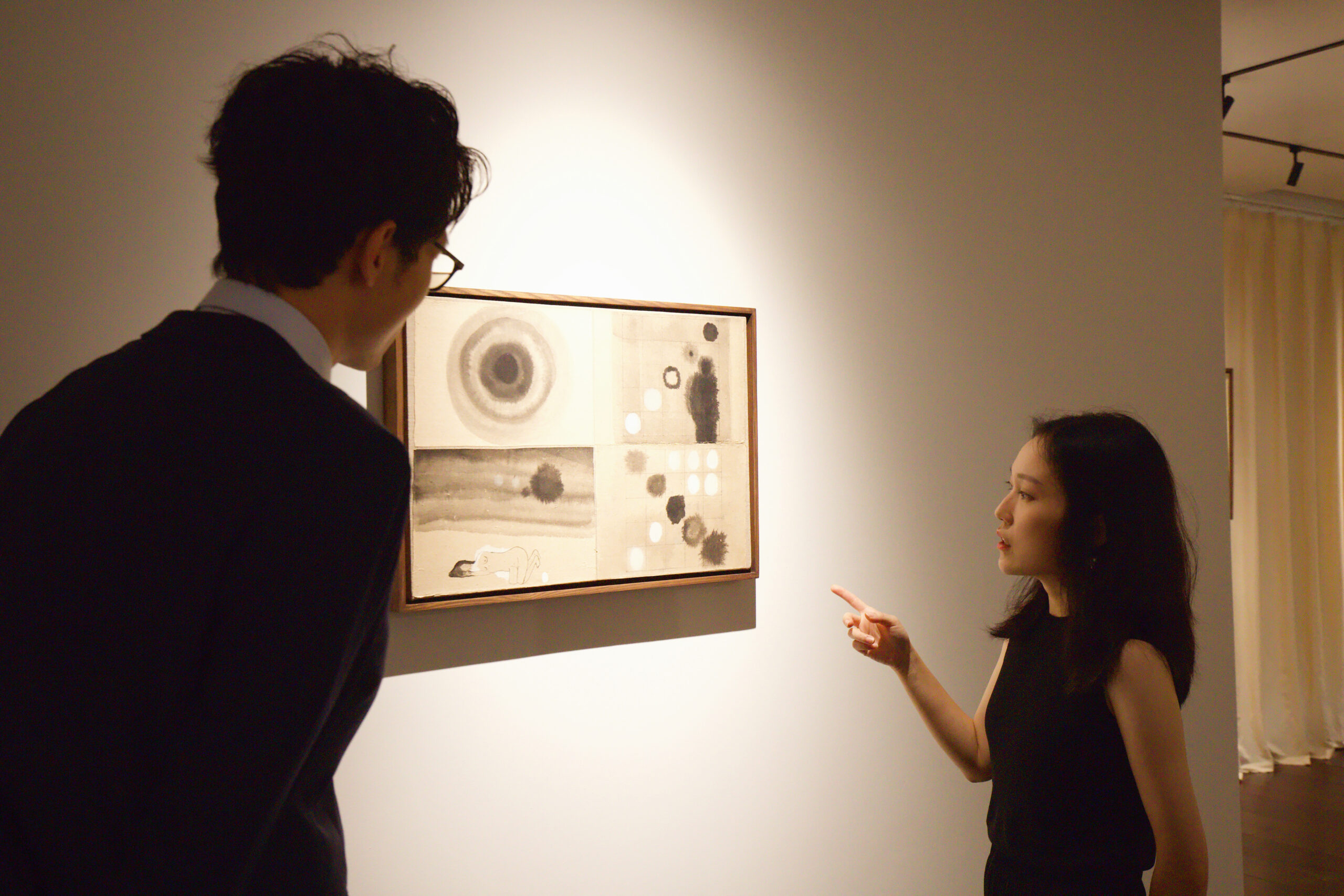
Mdm Cam Te: Exactly. Attention to detail is the key to success, not a large budget. The quantity of displayed artworks is less significant than the quality of their curation. Understanding the flow of ideas and adapting to the given space is crucial. Earlier this year, I had the opportunity to visit the “Lebadang: Mystical Topography” exhibition at Annam Gallery in Saigon. Despite the limited space, their attention to detail and refinement left a lasting impression on me. His paintings are rich in symbolism, and the way they are exhibited greatly influences the audience’s interpretation. For him, true luxury comes from subtlety and kindness, and these qualities can be found in the simplest things. This is the greatest lesson he has imparted to me.
Thuy Tien: Speaking of simplicity, Lebadang’s works utilise raw and familiar materials like paper, earth, wood, and metal… When brought together, they reveal a remarkable depth and complexity. How did he and the team led by Mdm Cam Te, work with these materials to construct the Space?
Mdm Cam Te: His works of art were driven by two key principles: firstly, a commitment to aesthetic appeal; and secondly, the belief that any material could be transformed into art. Inspiration could be found anywhere, he said so. At a gathering with friends, he opened a bottle of champagne and, in no time at all, twisted the wire cage around the cork into a remarkably lifelike, quintessentially Vietnamese water buffalo. On another occasion, while waiting for Mdm Myshu at the hospital, he spotted a leaf and, with a touch of his creativity, turned it into two miniatures: Mdm Myshu and himself. They were so delicate and beautiful. He had a way of transforming ordinary, discarded objects into something extraordinary. Talking about the materials for the Space, he said to me: “I know how much Cam Te loves flowers, so the garden will certainly be full of them. I suggest you make my sculptures out of stainless steel; they will catch the sunlight and sparkle beautifully.” I objected: “As a businesswoman in the furniture business, I know stainless steel is the coldest, most impersonal material out there. I don’t think it will work, Sir.” We argued back and forth. Finally, he sighed: “This is too tiring. Just go ahead and try doing it. By the time you finish, I won’t be around to argue anymore.” After his death, I finally began to implement the project. Remembering his words, I created a few sculptures as he suggested. And I was astonished at how beautiful they turned out. As I completed the first sculpture of Mr Dang and Mdm Myshu, the sun was setting. The light and the surroundings reflected off the stainless steel, making it seem almost invisible. I sat there alone, not being able to hold my tears.
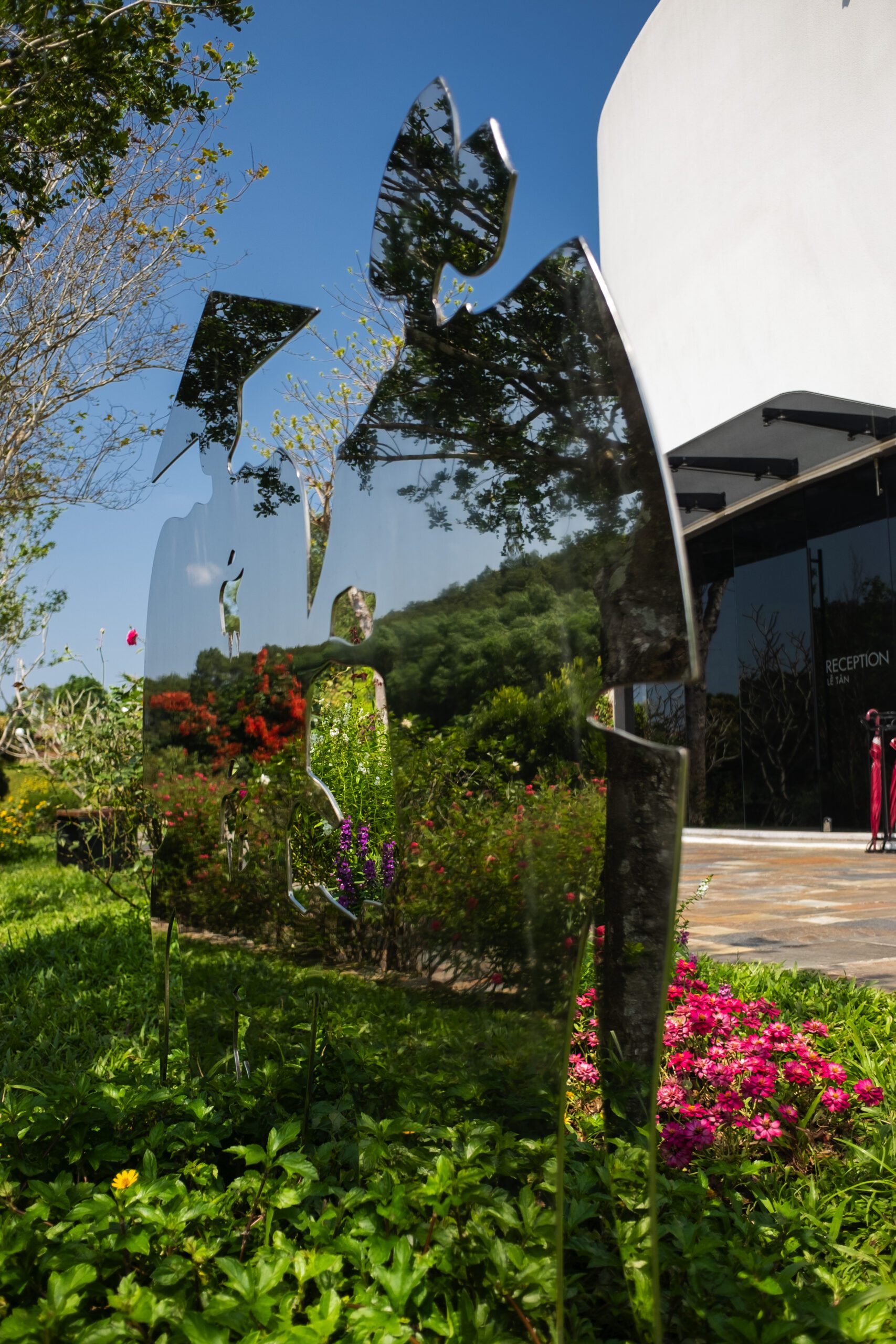
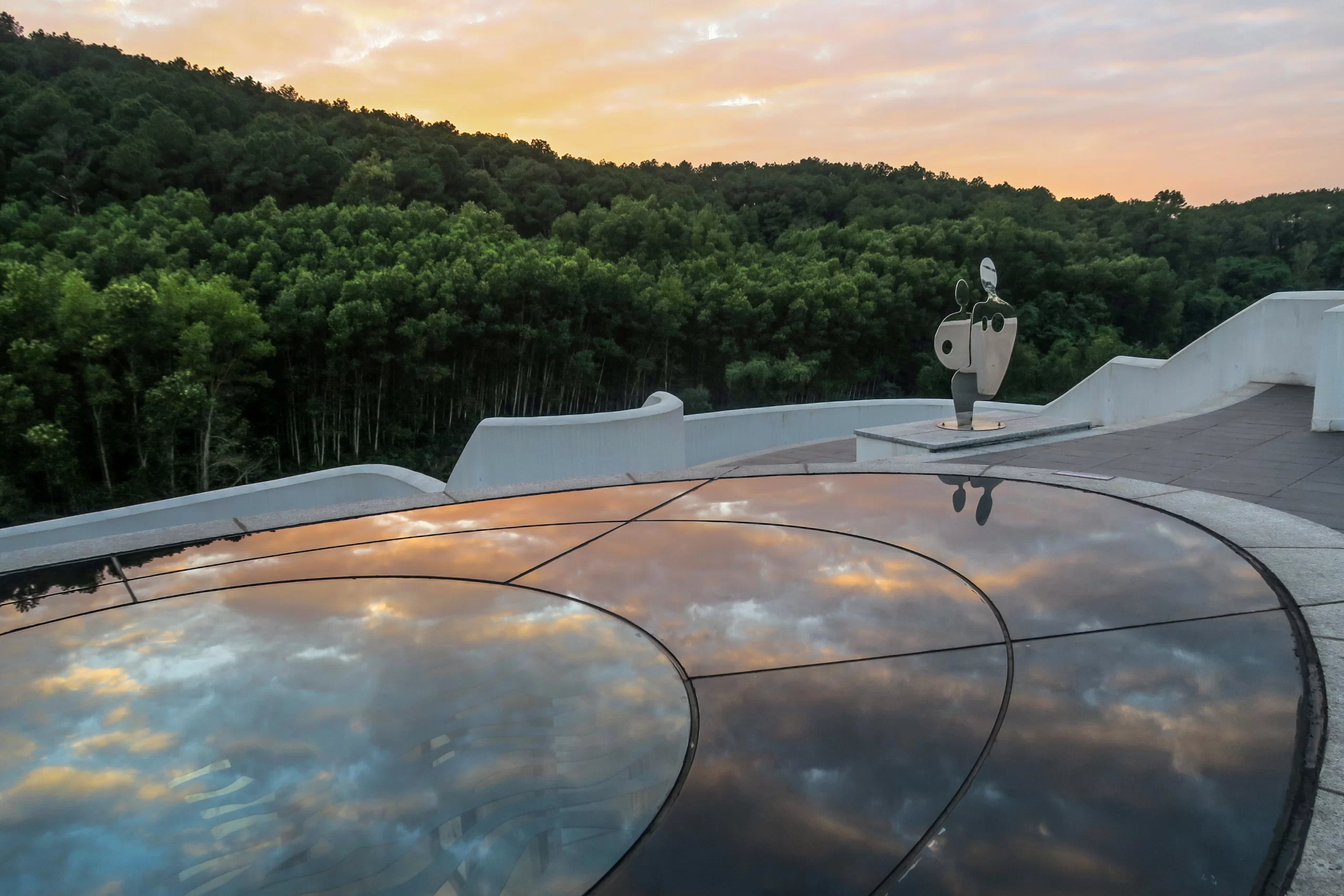
Ace Le: What helps you, Mdm Te, succeed in upholding the legacy of Lebadang is your ambitious vision and capacity for big ideas. After five years of intensive construction and another five years of fine-tuning operations, what does the future hold for the Space?
Mdm Cam Te: When we first started, I knew that working with him would be demanding, and building something new would be even more so. We had to proceed with utmost care and patience. Five years felt like a long time, but after the development, it became clear that we needed another five years to solidify our infrastructure, resources, and people. During this period, I also began to envision our direction for the next five years.
The Space, as it stands now, doesn’t fully embody his dream of a three-dimensional masterpiece. It lacks the connections to the central core above. With the art gallery’s core being ten metre high, and all auxiliary facilities scattered below, both the art and supporting elements should be interconnected and stem from that core. They should be distinct yet unified. We already have the remaining assets to create a fitting tribute to Lebadang. I’m looking for partners who can help us realise the full potential of the Space and honour his legacy. I hope that within the next 15 years, starting in 2025, we can complete his vision.
“When we first started, I knew that working with him would be demanding, and building something new would be even more so.”
Ace Le: While Lebadang and Mdm Myshu did not have children, they had you as a deserving student, a close confidant, and a true successor. The story of Lebadang Memory Space exemplifies the enduring power of art to inspire future generations. Thank you, Mdm Cam Te, for this conversation. I wish you the best in your next 15-year journey!
Words: Ace Lê, Thủy Tiên
Translation: Hương Trà