Đọc phiên bản tiếng Việt tại đây.
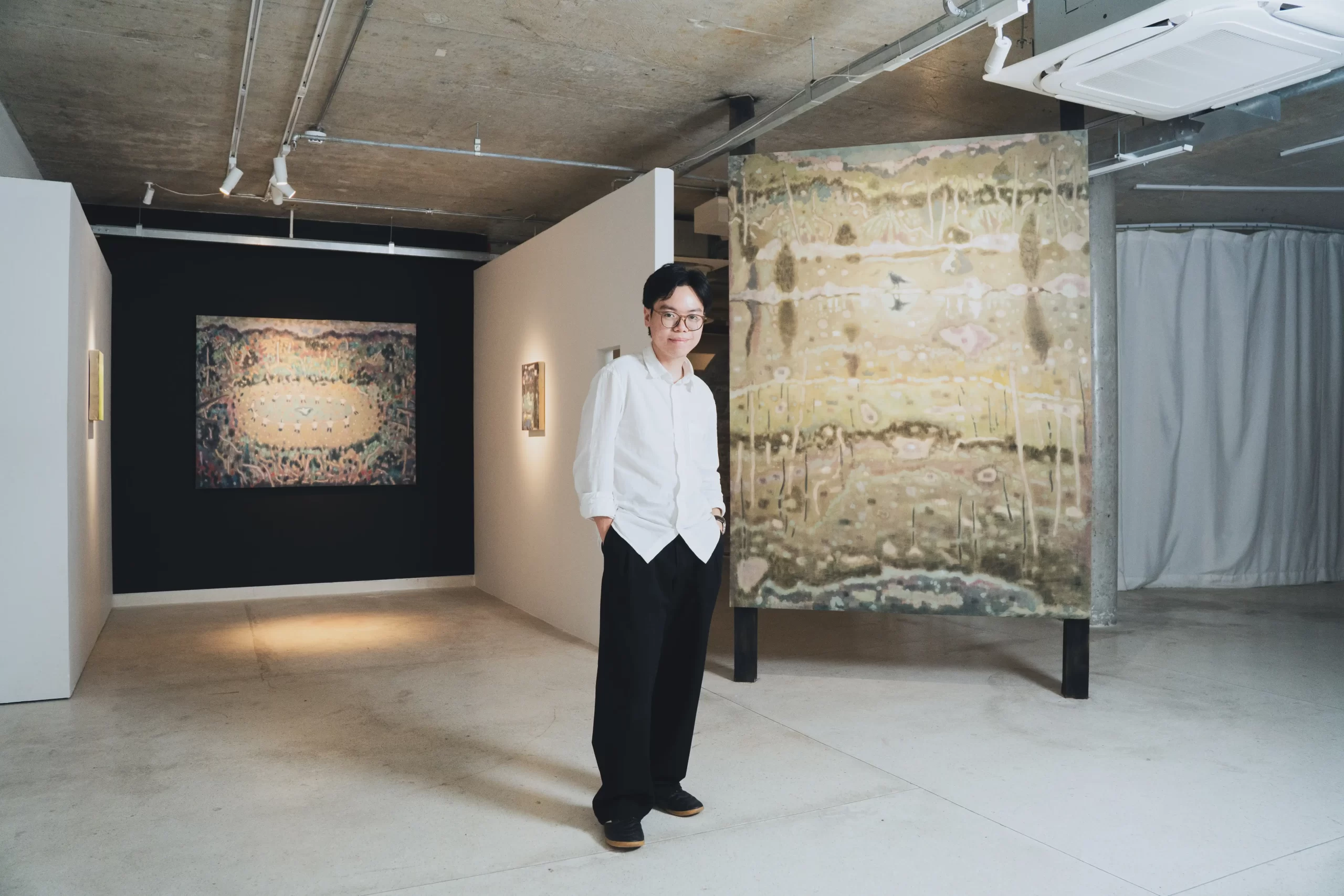
Hai Hoang, born in 2003, is a painter based in London and his hometown, Hanoi. In 2025, he graduated from the Kingston School of Art with a BA Fine Arts Degree. I had the pleasure of attending an Art Tour led by the artist and of conducting his first official interview as a representative artist under Gate Gate Gallery. In this conversation, Hai Hoang takes his audience behind the scenes of his paintings and practices.
A DEBUT, A RETURN
“Intermission” was inspired by Hai Hoang’s desire to return to oil, “to really get in touch with the […] medium.” This choice of medium seamlessly blends Hai Hoang’s thematic interests and artistic practice: “the process of layering and waiting, […] that’s what I’m really interested in. I really like the physicality of painting with a thin medium because [it reveals how nature gets involved in the process].” Balancing between controlling and following his medium, Hai Hoang strikes liminality: “the betweenness of letting the paint do its thing and being able to keep control. I think that’s what painting is about: it’s about waiting, lingering with the canvas.”
PAUSING WITH INTENTION
“Intermission” is a title charged with meaning and mission. Reflecting Hai Hoang’s desire to “slow down time with intention,” it signals a strategic pause in performance art. Hai Hoang shares: “theatre and cinema [have] a very important part in my art processes,” namely for their temporality. The curated placement of each painting, the functional architecture: every decision guides the audience along a slow and controlled movement. This flow is not mere suspension in time, just as Hai’s “Intermission” cannot be understood as a disconnect from the outside world: to stay immersed in the paintings is to pause intentionally.
“I chose that title because it […] doesn’t really get into the point. It holds you in a space that makes you linger […] It’s not about resolve, it is about having the ability to make pause, and to let that journey continue.” The importance of continuity even in pause is reflected in the interplay between “Intermission” and its Vietnamese double, “Nơi này… Nơi kia.” Hai Hoang explains: “Intermission is the middle part, and ‘Here and Elsewhere’ is the [beginning] and the end. But there is a little ‘…’ in the middle of the [Vietnamese] title, and I think this is what the English title is really about, that which is in between.”
A GENTLE INVITATION TO STEP IN (BETWEEN)
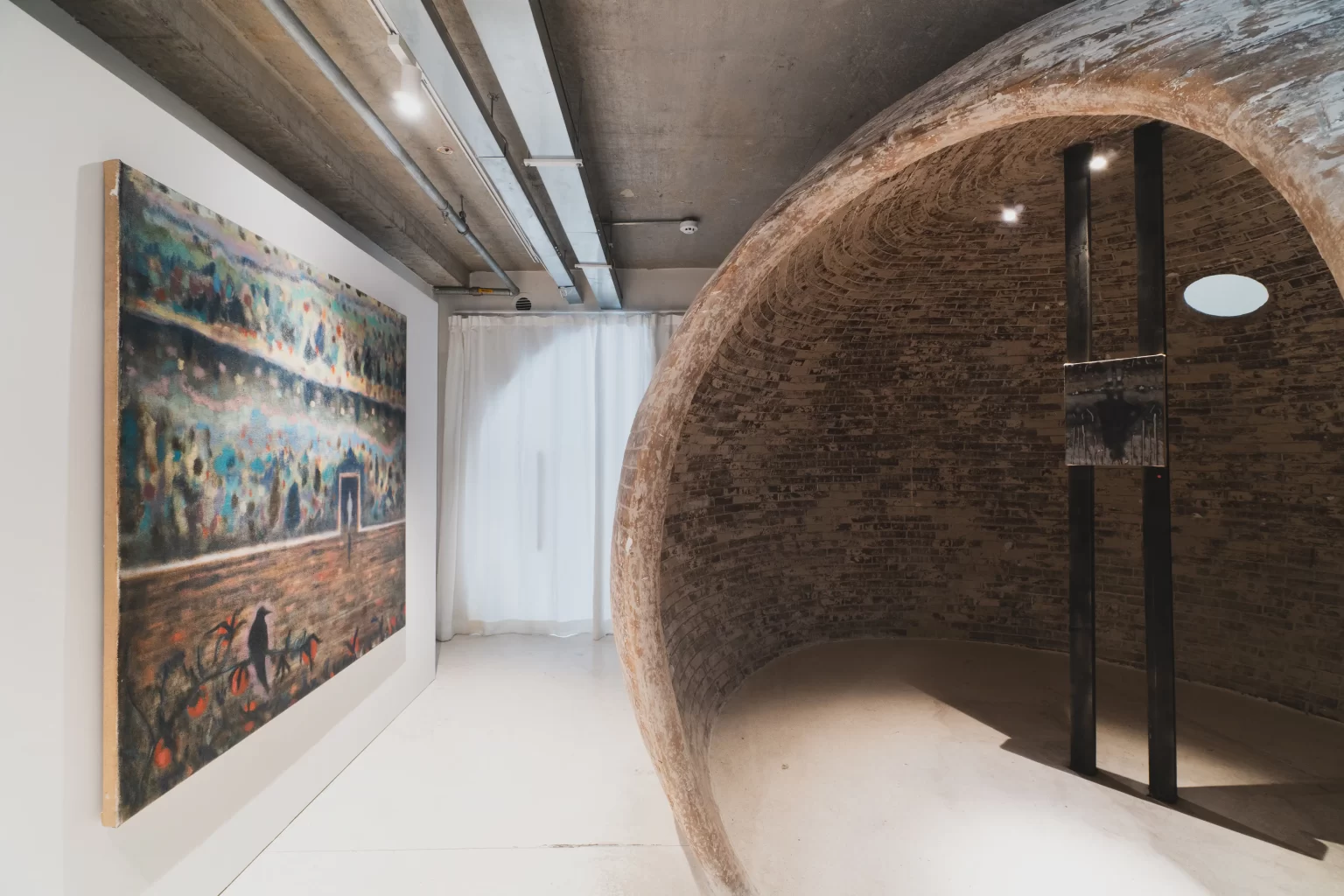
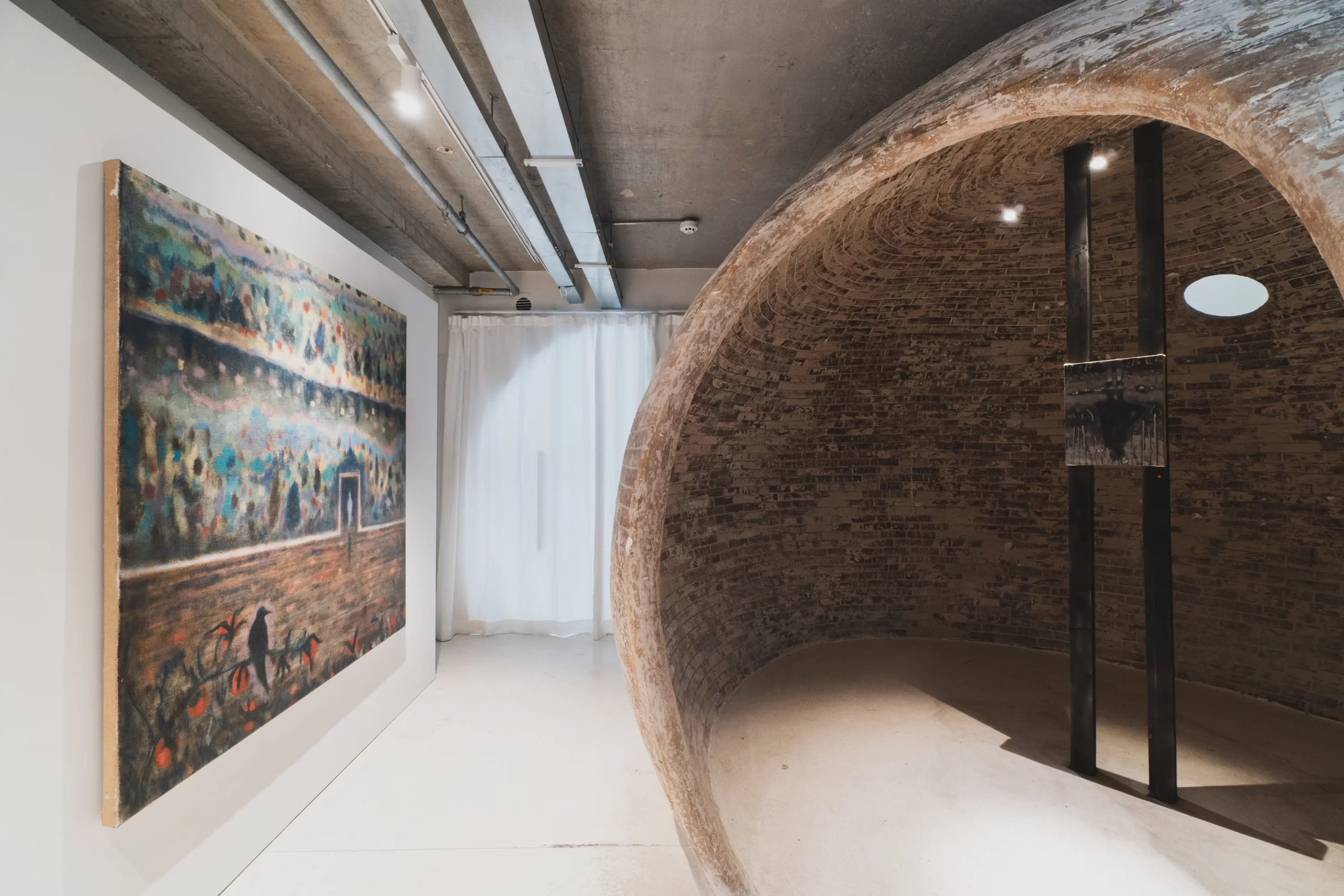
Liminality permeates “Intermission.” “Homesick,” strategically displayed in an intimate corridor by the entrance, opens the exhibition by inviting the audience into in-betweenness. A moment of contemplation and curiosity inspired this painting: “I was staring at the blank canvas, and I didn’t know what to do, but I [could] see a door. I [could] see the wideness that reminds me of the world… I think the door is a very significant thing; it represents passage and the choice of either taking, walking into it, or just staring at it.”
Urging the audience to follow uncertainty, Hai Hoang displays the painting “at that corner because people tend to walk straight in… If you put that there, then people will have to walk into ‘Soul’” which resides inside a brick bird nest. This peculiar architectural structure fulfils a double function. It forcefully and gently places the audience at a close proximity with “Homesick”, which is almost too intimate for comfort. Then, it invites the audience to surround “Soul” inside a near-enclosed space.
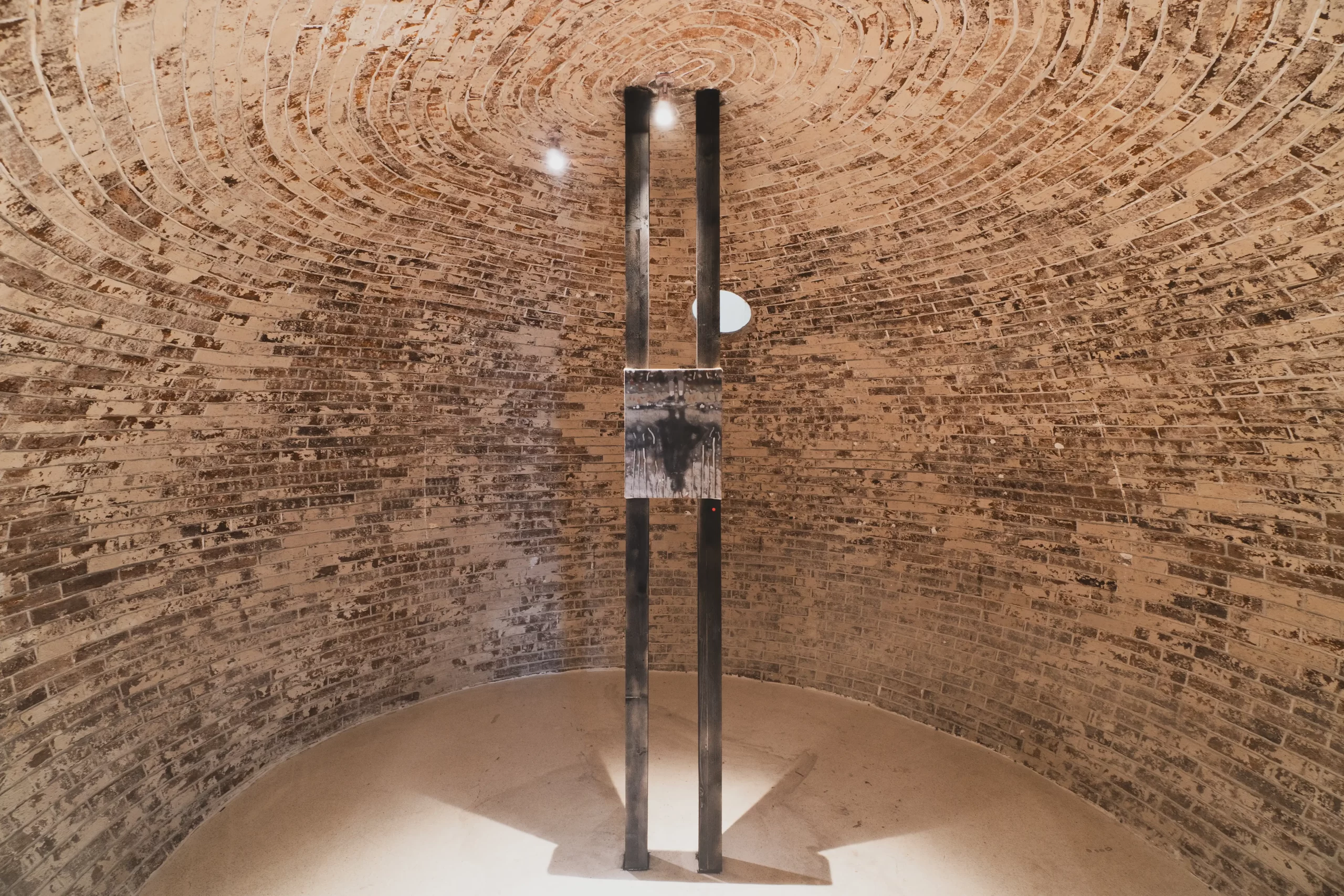
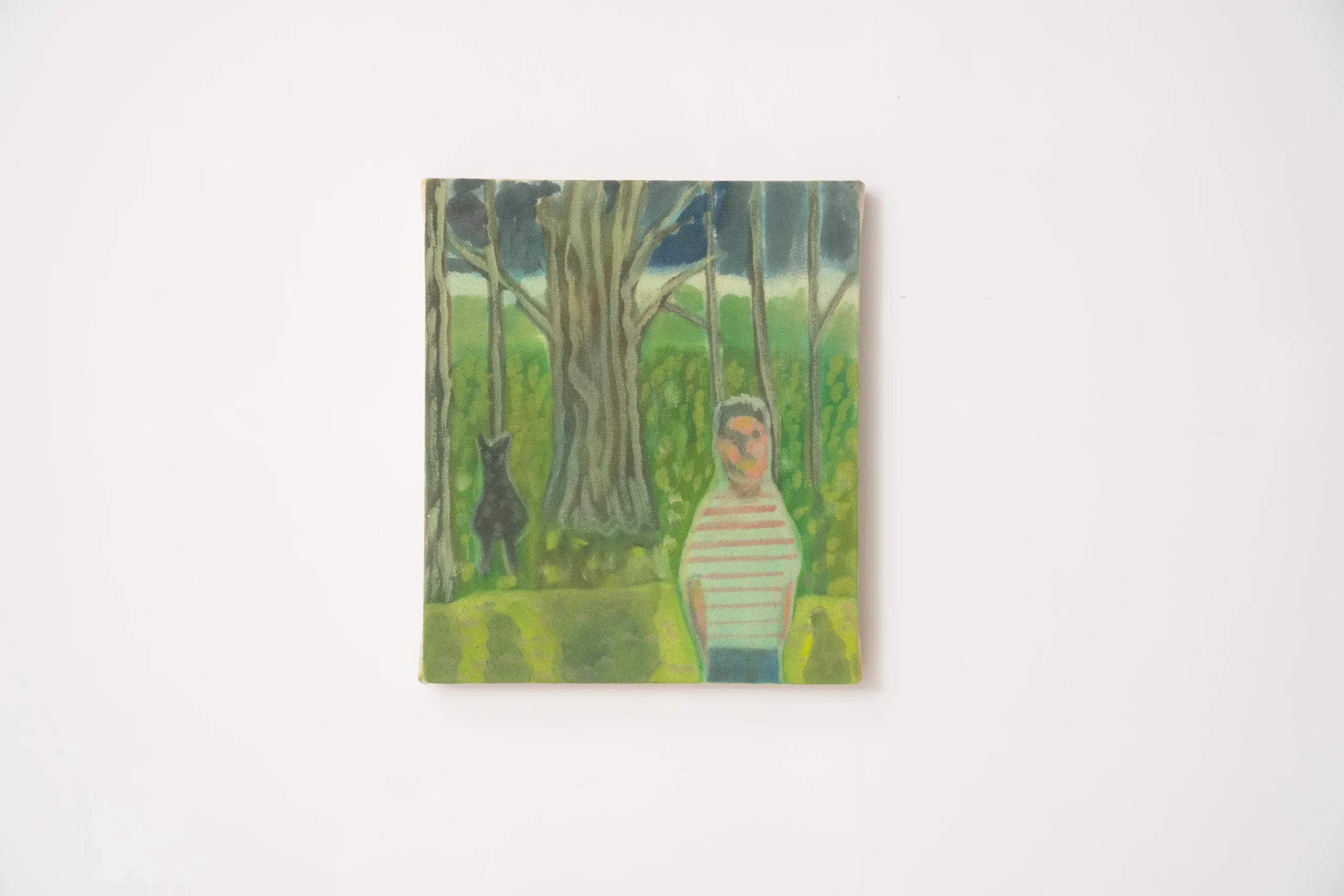
Inside the brick “birdnest,” “Soul” hangs on two slender black-painted wooden columns. This technique of display conventionally features metal columns to achieve an industrial aesthetic. Favouring warmth over sterility, Hai Hoang traded metal for wood. The back of the canvas is strikingly bare, exposed. If showcasing the back of canvases is considered taboo, Hai Hoang invites his audience to contemplate “Soul” in its entirety. In this painting, the shadow does not belong to the subject, but exists independently and wholly. This deliberate dissociation of the shadow from the host is a familiar motif across “Intermission.”
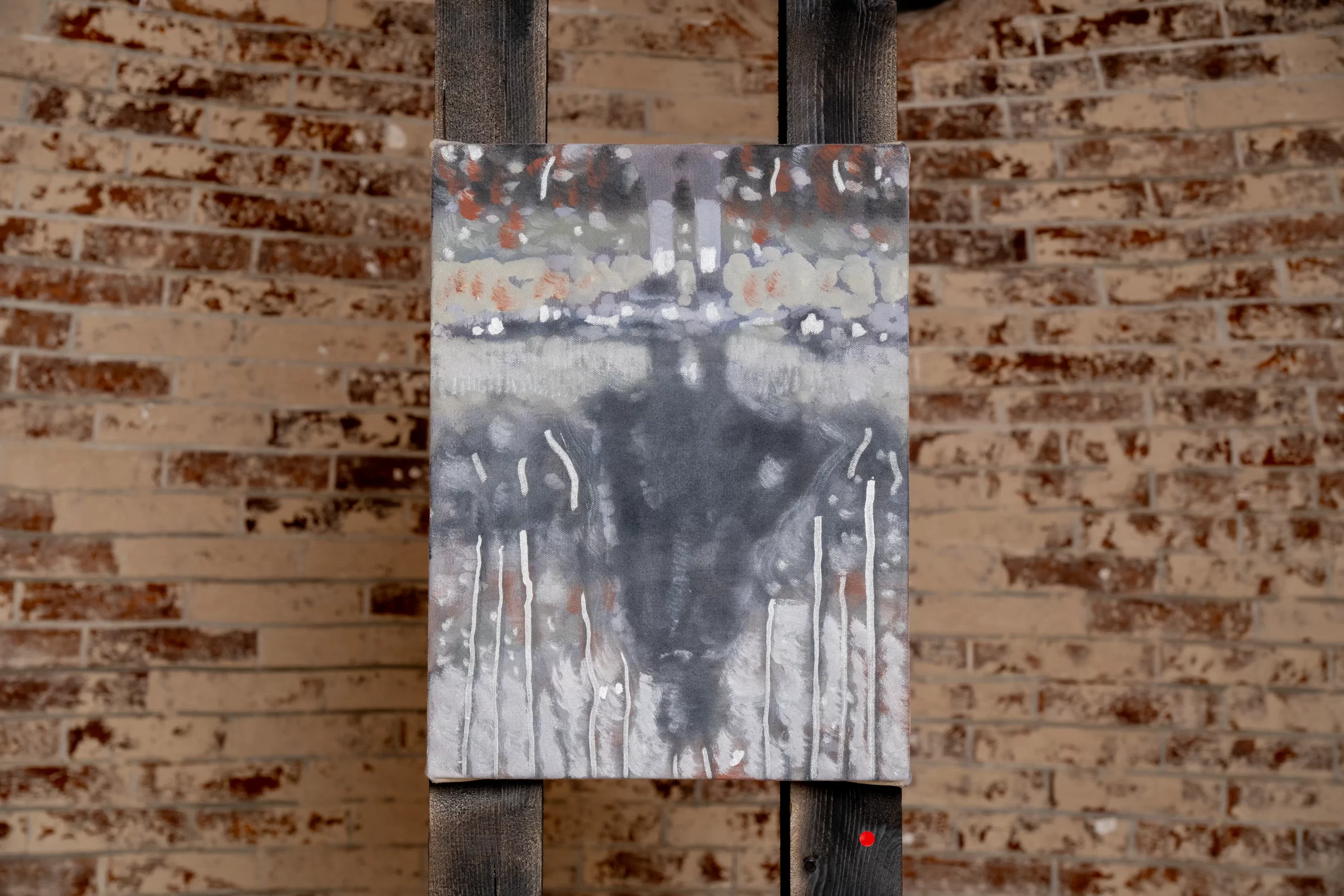
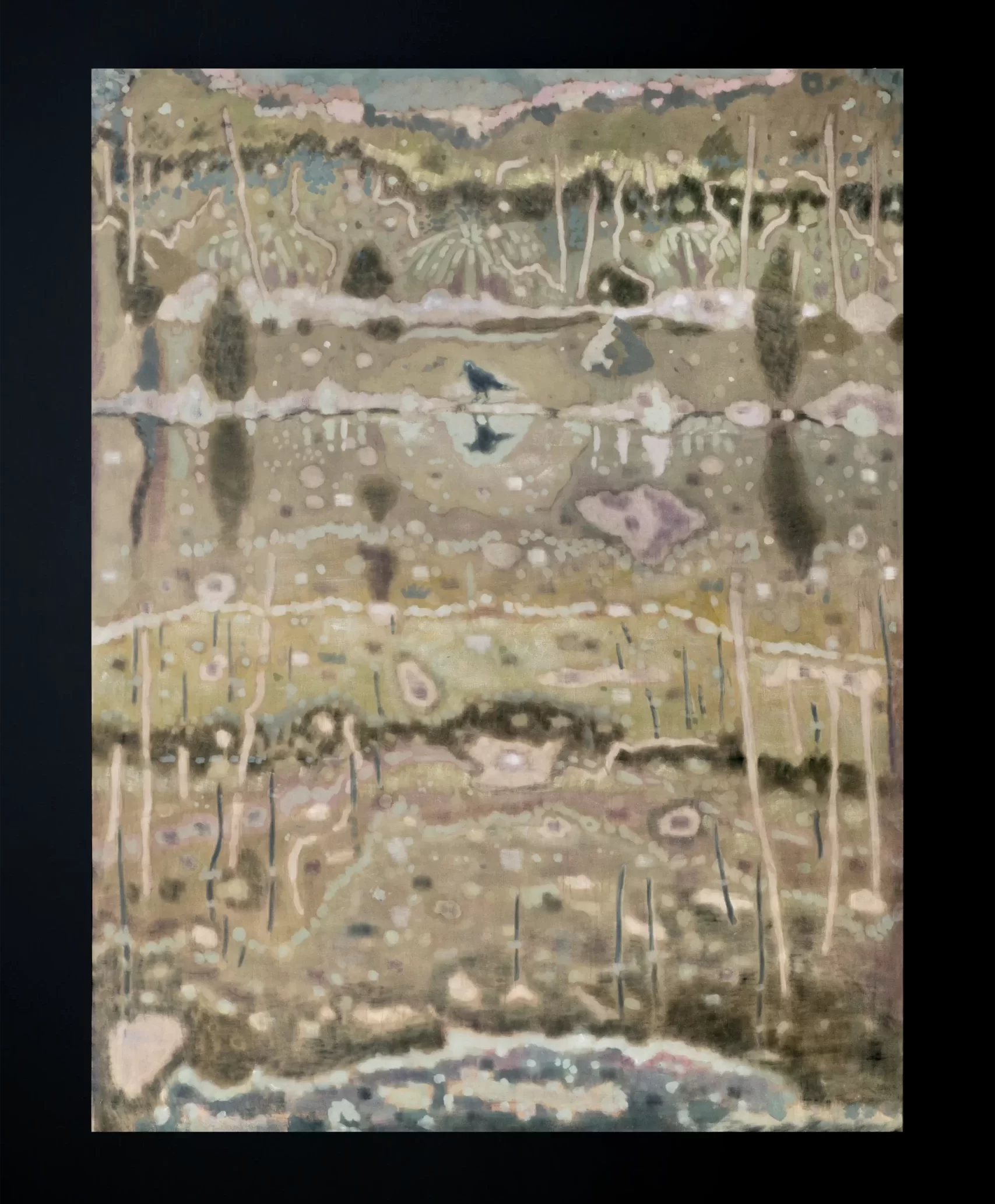
In Hai Hoang’s world, shadows and water–lakes, swamps, rivers–share a reflective quality: they provoke questions and induce doubt rather than accurately mirror the subject. The artist contemplates: “reflective surfaces have the capacity to deceive you. […] The more you look at [water], the more it doesn’t really make sense. So perhaps in this exhibition, I want to give that feeling of not being very sure, of not knowing what is true or not.”
“DREAM” AS A PLAYFUL QUESTION: WHERE ARE YOU?
“Dream” is still and light, dreamy as its title plainly suggests. Here, the quiet is a colourful tranquillity to be taken in like a deep breath. The translucent colours inspire levitation, yet a certain dynamism inhabits this seemingly undisturbed haven. The mischievous black cat, hugged by a subtle halo that renders it otherworldly, claims its place as the most animated inhabitant of the scene.
Many worlds mingle in this lively painting. Soft and vibrant strokes dance on the tapestry; the celebratory primary colours are reminiscent of Tet. This strangely familiar tapestry recalled a memory I was not entirely sure I had: that I had seen this carpet when curiously entering my parents’ room in an old family house in Hanoi as a child is as likely as it is untrue. Here is that uncertainty that Hai Hoang skilfully masters. Such disorientation embeds the audience in liminal timelines, producing delight. The white and blue vase has a similar effect: surely every Vietnamese family has had, at one time or another, this quintessential ceramic vase, decorated with flower branches or dragons on clouds, most likely made in Bat Trang.
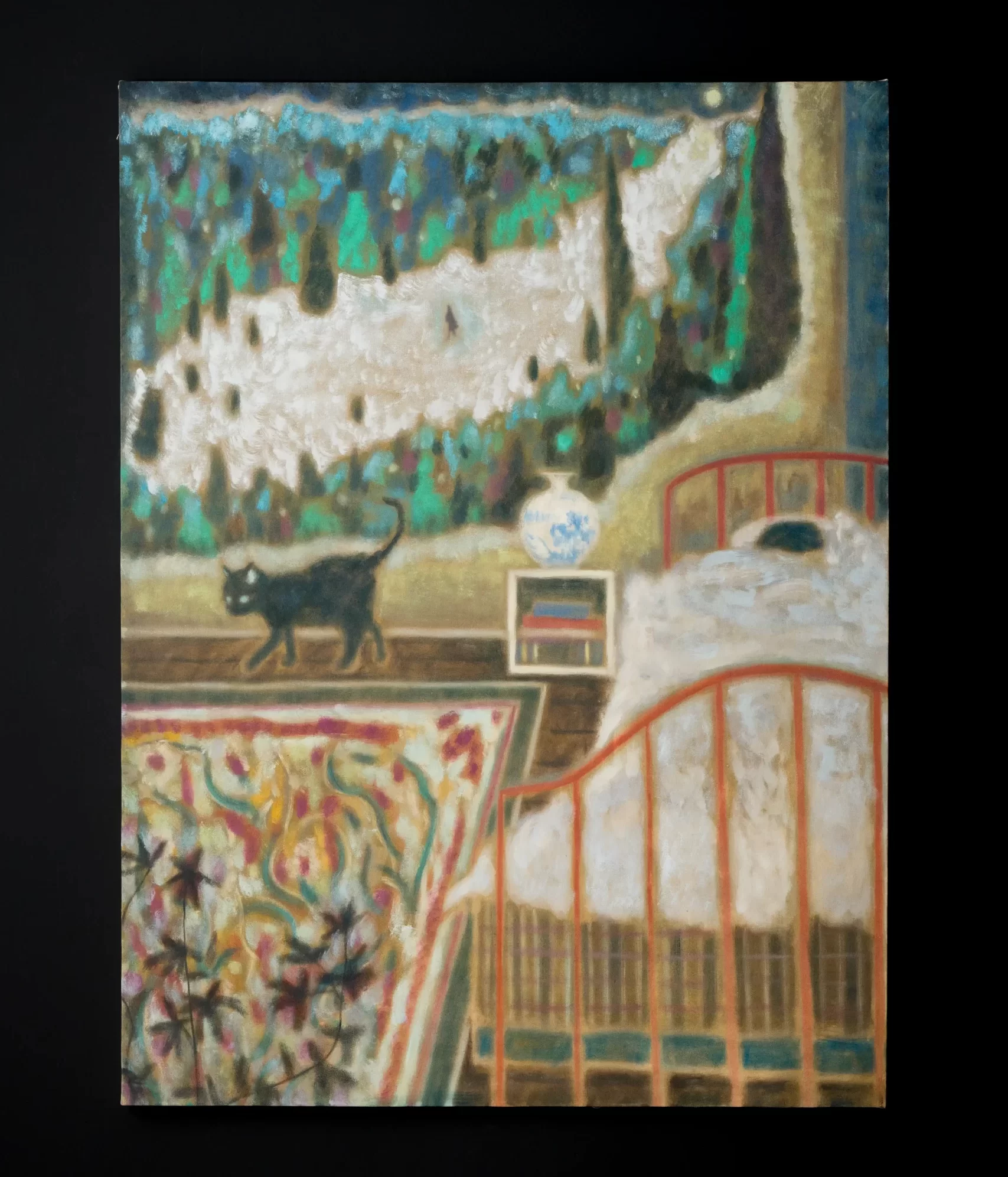
Abruptly, “Dream” interrogates us: “Where do you stand in this painting?” We realise that we are intruding, but from which corner of this bedroom we do not know. Hai Hoang achieves this effect by playing with angles and proportions; he blurs dimensions without our suspicion. The tall, pointed green cones are suggestive of pine trees, yet the absence of details prevents us from verifying our assumption. Still, these unspecified trees remove us from the Vietnamese-accented bedroom and place us towards North America or Europe. The light and atmosphere of the painting are cool; even the red, orange, and yellow accents are chilled. Such sensorial effects offer respite from geographical disorientation; unable to locate the bedroom in the world, we believe we feel its brisk temperature. Like water, the stillness of “Dream” embodies reflection as Hai Hoang conceptualises it: what we see questions what we know.
SHADOWS, FACES, COMMUNITY
Hai Hoang’s shadows “tell the form of the subject without the distraction.” Through removing colour and structure – retaining only the form of the subject, shadows acquire a “universalness.” The faces of “Intermission” also remain vague and blurry to invite the audience’s identification with the subjects. “When you paint the face, you [usually] have different planes, and in them different saturations.” Devoid of such details, Hai Hoang’s indistinct faces hold space for every member of the audience. Through this blurring effect, the artist honours accessibility: “I always think art is about everybody, and it belongs to everyone […] When an artist makes a painting, the material is borrowed from the world.” To borrow beauty and suffering is to owe, and a debt must be paid: “you cannot take away a piece of culture, a piece of message, away from people who need to hear it the most.” By inviting “everybody” to belong to and in art, Hai Hoang’s paintings redefine the art world as a collective space. This exhibition serves to “remind people of what really matters, and that is to be in harmony with yourself, with the world, and to know that solitude is also part of a collective.”
TO SOFTEN IS TO SEE
Refusing to punish his solitary subjects with desolation, Hai Hoang celebrates them. His paintings share muted, earthy colours, yet they show lively, joyous, and whimsical settings that tenderly hug the solitary subjects. The combination of bright accents of colours, layered on top of diluted foundations, enables Hai Hoang to “mellow [his previous themes] down, to depict scenes that have this kind of really quiet atmosphere, and to paint things that [don’t] really make sense but [are] not out of place in a way.” The importance of softening, or maturing, stems from the artist’s own journey: “When I graduated […] I felt small, and that’s why I wanted to mellow my voice a bit, to try to speak softly […] and to keep my eyes open to new things […] In my paintings, I think you have to keep your eyes open to see new possibilities and new shapes that come out, what goes away, what you want to keep.”
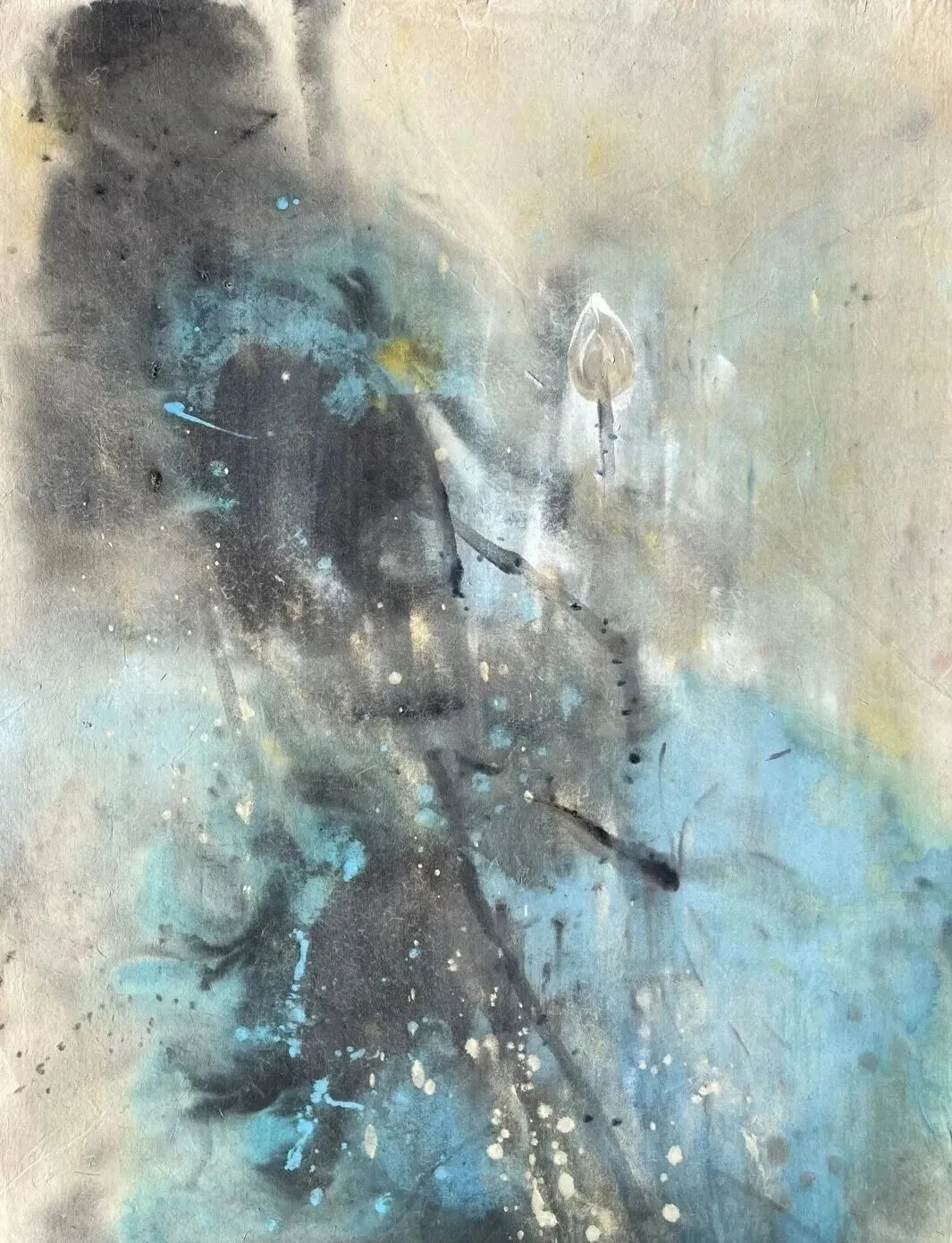
Like his faces, Hai Hoang’s shapes are elusive yet sharp in their suggestive power. In “Lonely Child,” he fills the vast canvas with hints of lotus flowers and seemingly withering stems, creating a lyrical dreamscape. These shapes, at once blurry and clear, effectively blend the known with the unknown, creating liminality: “I did not actually paint lotuses, but put shapes that suggest them to the audience.” Hai Hoang’s exhibition consistently issues gentle suggestions. The magic in his technique lies in its ability to show us possibilities without telling us of them.
TRUST AND COLLABORATION: THE FOUNDATION OF ART
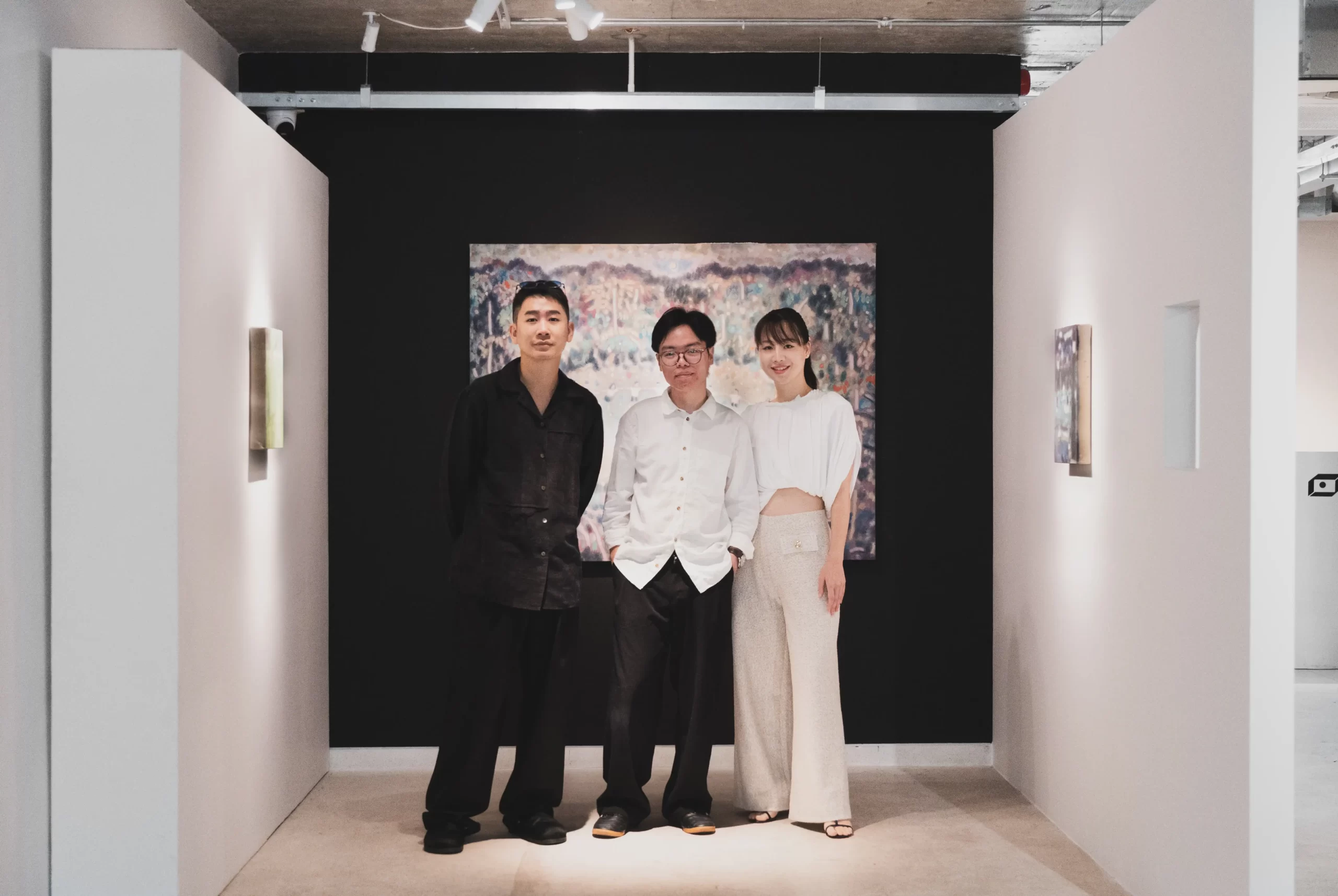
Behind the success of “Intermission” stands its artist, trusted by a team of bold collaborators. Together, Hai Hoang and Gate Gate Gallery “reinterpret the meaning of accessible art.” The Gallery’s name is symbolic of its aim: to offer an alternate door into the art space by championing new voices, talents, and perspectives. Beyond spatially embodying the message of Hai Hoang’s paintings, Gate Gate Gallery diversifies, thereby enriching the artistic landscape of Vietnam. Such an act of world-building embeds itself within a collective effort to reconfigure the world of fine art into an inclusive home to all. Through Gate Gate’s invitation, Nguyễn Vũ Thiên An joins this collective as she supports Hai Hoang, curatorially and otherwise, through each step of the creative process behind “Intermission.” The facilitation of such meaningful partnerships is a testament to the Gallery’s dedication to its representative artists.
“Intermission” displays eleven introspective canvases, each one a sanctuary designed to celebrate solitude. Calling for our curiosity, this exhibition leads us by the hand through half-open doors; even more gently, it asks us to ease into the spaces in-between, and stay. Inside Gate Gate Gallery, “Intermission” assigns temporality to the act of contemplation.
ABOUT THE “INTERMISSION” EXHIBITION
Opening hours: 10:00–12:00 & 13:30–18:00 | 12.03.2026–03.05.2026 (Tuesday–Sunday)
Address: Gate Gate Gallery, 230/18 Pasteur, Xuan Hoa, Ho Chi Minh City
Open to the public.
Words: Phạm Quỳnh Khuê Anh